HOW TO SELECT A RESEARCH
TOPIC
Dr Gulnaz Fatma, University College Al Ardah
Jazan University
Selecting a Topic
The ability to develop a good research topic is an important
skill. An instructor may assign you a specific topic, but most
often instructors require you to select your own topic of
interest. When deciding on a topic, there are a few things
that you will need to do:
 Brainstorm for ideas
 Choose a topic that will enable you to read and
understand the literature
 Ensure that the topic is manageable and that material
is available
 Make a list of key words
 Be flexible
 Define your topic as a focused research question
 Research and read more about your topic
 Formulate a thesis statement
1. Brainstorm for ideas
Choose a topic that interests you. Use the
following questions to help generate topic ideas.
 Do you have a strong opinion on a current
social or political controversy
 Did you read or see a news story recently that
has piqued your interest or made you angry or
anxious?
 Do you have a personal issue, problem or
interest that you would like to know more
about?
 Do you have a research paper due for a class
this semester?
 Is there an aspect of a class that you are
interested in learning more about?
2. Read General Background Information
 Read a general encyclopaedia article on the
top two or three topics you are considering.
Reading a broad summary enables you to get
an overview of the topic and see how your
idea relates to broader, narrower, and related
issues. It also provides a great source for
finding words commonly used to describe the
topic. These keywords may be very useful to
your later research. If you cant find an article
on your topic, try using broader terms and
ask for help from a librarian.
 Use periodical indexes to scan current
magazine, journal or newspaper articles on
your topic. Ask a librarian if they can help
you to browse articles on your topics of
interest.
 Use Web search engines. Google and Bing are
currently considered to be two of the best
search engines to find web sites on the topic.
Focus on Your Topic of Research
Keep it Manageable
 A topic will be very difficult to
research if it is too broad or narrow.
One way to narrow a broad topic
such as "the environment" is to limit
your topic. Some common ways to
limit a topic are:
 by geographical area
 by culture
 by time frame:
 by discipline
 by population group
Remember that a topic may be too difficult to
research if it is too:
a) locally confined
b) recent
c) broadly interdisciplinary
d) popular
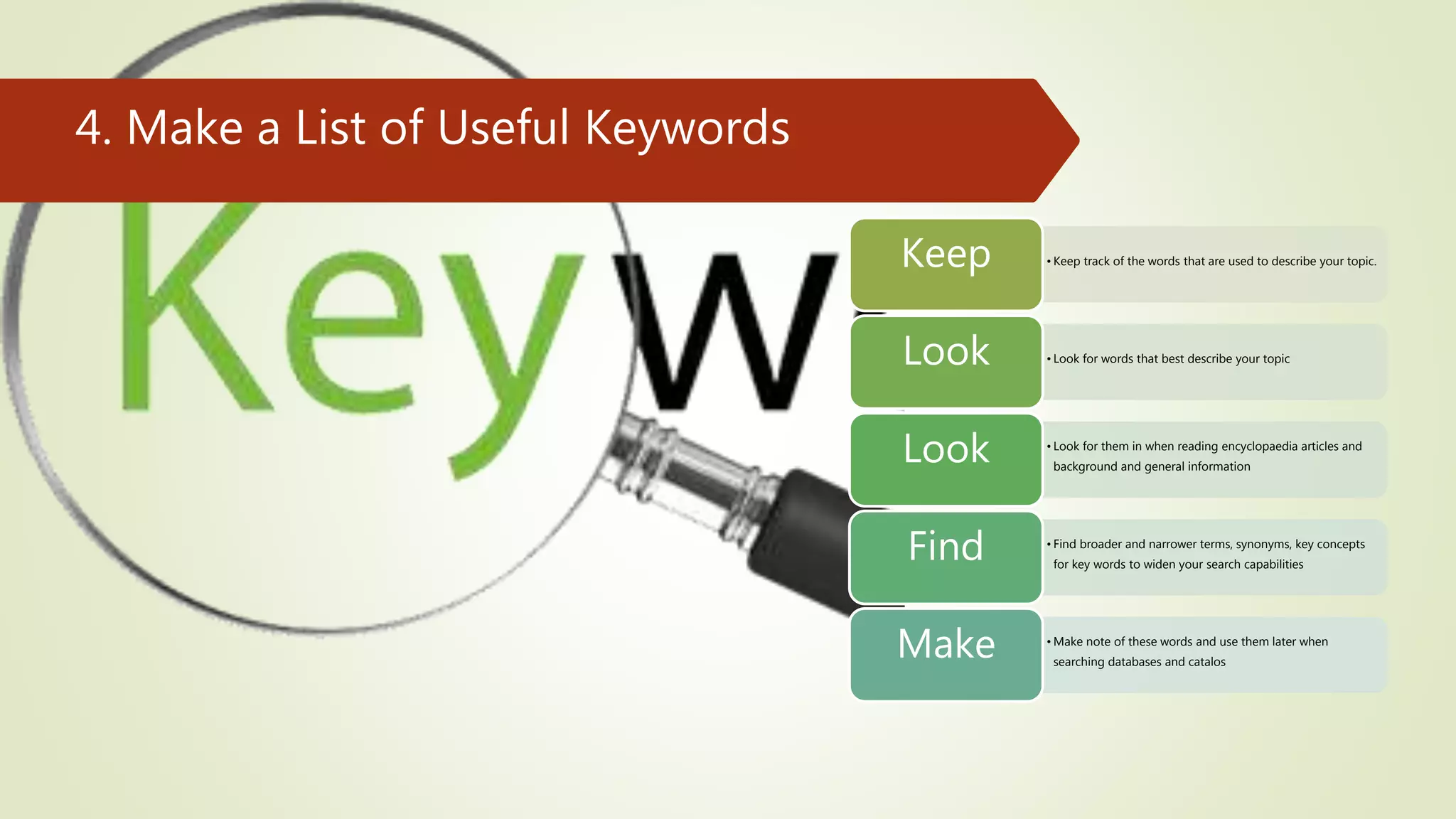
4. Make a List of Useful Keywords
• Keep track of the words that are used to describe your topic.
Keep
• Look for words that best describe your topic
Look
• Look for them in when reading encyclopaedia articles and
background and general information
Look
• Find broader and narrower terms, synonyms, key concepts
for key words to widen your search capabilities
Find
• Make note of these words and use them later when
searching databases and catalos
Make
5. Be Flexible
It is common to modify your topic
during the research process. You
can never be sure of what you may
find. You may find too much and
need to narrow your focus, or too
little and need to broaden your
focus. This is a normal part of the
research process.
When researching, you may not
wish to change your topic, but you
may decide that some other aspect
of the topic is more interesting or
manageable.
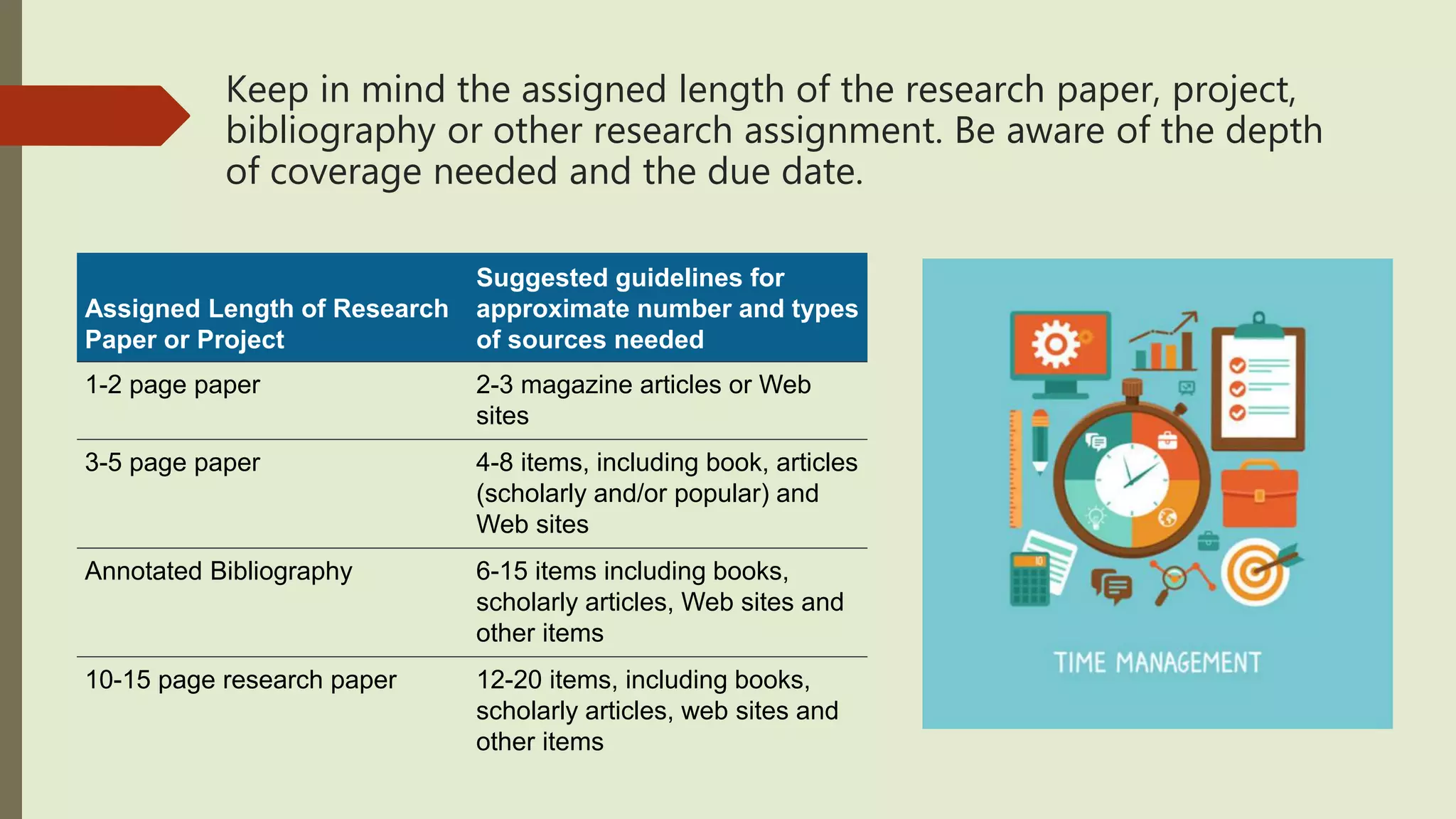
Keep in mind the assigned length of the research paper, project,
bibliography or other research assignment. Be aware of the depth
of coverage needed and the due date.
Assigned Length of Research
Paper or Project
Suggested guidelines for
approximate number and types
of sources needed
1-2 page paper 2-3 magazine articles or Web
sites
3-5 page paper 4-8 items, including book, articles
(scholarly and/or popular) and
Web sites
Annotated Bibliography 6-15 items including books,
scholarly articles, Web sites and
other items
10-15 page research paper 12-20 items, including books,
scholarly articles, web sites and
other items
6. Define Your Topic as a Focused Research Question
You will often begin with a word,
develop a more focused interest in
an aspect of something relating to
that word, then begin to have
questions about the topic. For
example:
This Photo by Unknown Author is licensed under CC BY-NC-ND
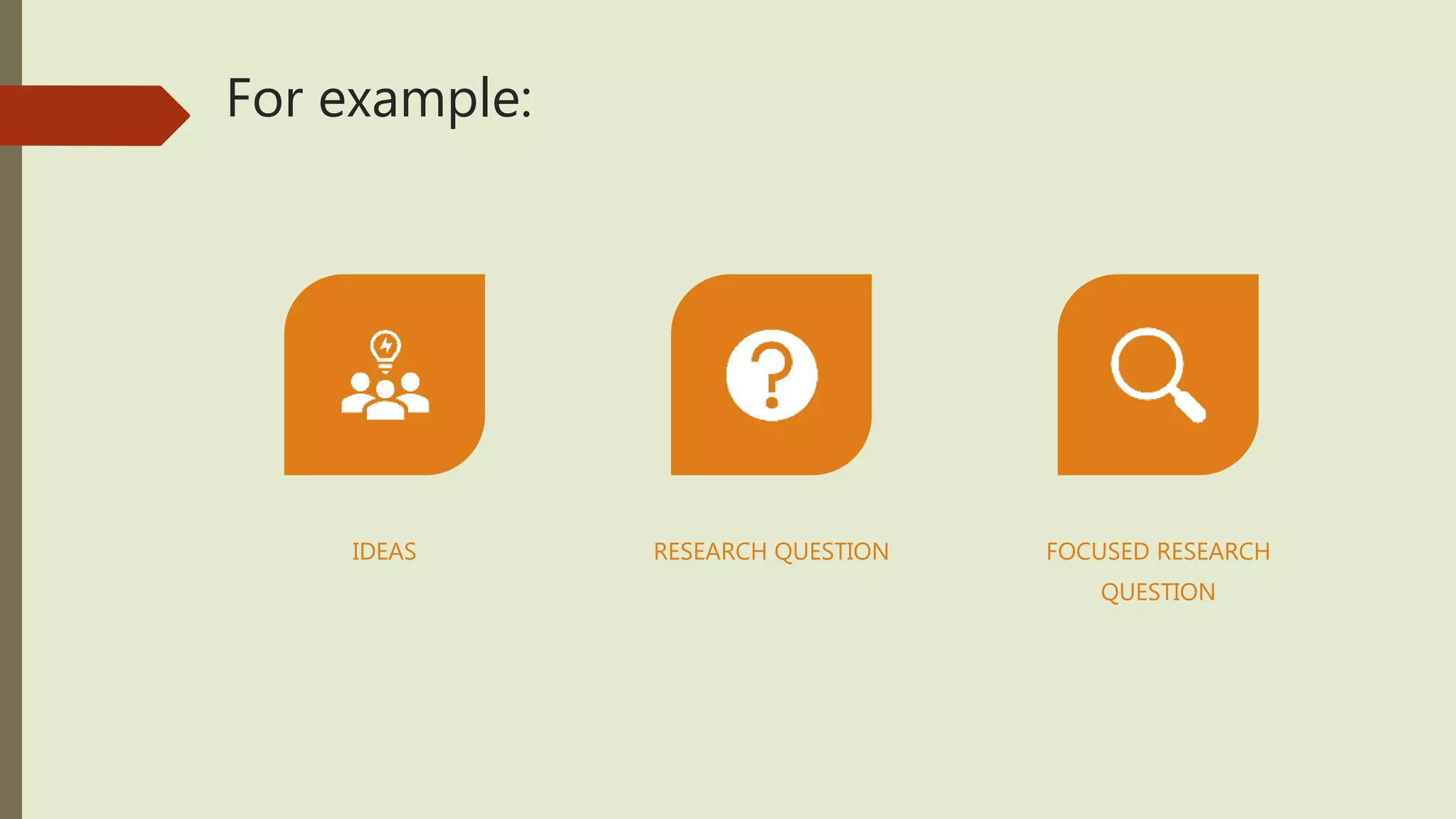
For example:
IDEAS RESEARCH QUESTION FOCUSED RESEARCH
QUESTION
7. Research and Read More
About Your Topic
Use the key words
you have
to research in
the catalog, articl
databases, and
Internet search
engines. Find
information to
you answer your
research question.
You will need
do some
research and
reading before
you select your
final topic. Can
you find
information to
answer your
research
question?
Remember,
selecting a
is an important
and complex
part of the
research
process.
Formulate a Thesis Statement for your Research
Write your topic as a thesis
statement. This may be the answer to
your research question and/or a way
to clearly state the purpose of your
research. Your thesis statement will
usually be one or two sentences that
states precisely what is to be
answered, proven, or what you will
inform your audience about your
topic.
The development of a
thesis assumes there is
sufficient evidence to
support the thesis
statement.
….continue
 The title of your paper may not
be exactly the same as your
research question or your thesis
statement, but the title should
clearly convey the focus,
purpose and meaning of your
research.
Dr Gulnaz Fatma
University College, Al Arda
Jazan University

How to Select A Research Topic

  • 1.
    HOW TO SELECTA RESEARCH TOPIC Dr Gulnaz Fatma, University College Al Ardah Jazan University
  • 2.
    Selecting a Topic Theability to develop a good research topic is an important skill. An instructor may assign you a specific topic, but most often instructors require you to select your own topic of interest. When deciding on a topic, there are a few things that you will need to do:  Brainstorm for ideas  Choose a topic that will enable you to read and understand the literature  Ensure that the topic is manageable and that material is available  Make a list of key words  Be flexible  Define your topic as a focused research question  Research and read more about your topic  Formulate a thesis statement
  • 3.
    1. Brainstorm forideas Choose a topic that interests you. Use the following questions to help generate topic ideas.  Do you have a strong opinion on a current social or political controversy  Did you read or see a news story recently that has piqued your interest or made you angry or anxious?  Do you have a personal issue, problem or interest that you would like to know more about?  Do you have a research paper due for a class this semester?  Is there an aspect of a class that you are interested in learning more about?
  • 4.
    2. Read GeneralBackground Information  Read a general encyclopaedia article on the top two or three topics you are considering. Reading a broad summary enables you to get an overview of the topic and see how your idea relates to broader, narrower, and related issues. It also provides a great source for finding words commonly used to describe the topic. These keywords may be very useful to your later research. If you cant find an article on your topic, try using broader terms and ask for help from a librarian.  Use periodical indexes to scan current magazine, journal or newspaper articles on your topic. Ask a librarian if they can help you to browse articles on your topics of interest.  Use Web search engines. Google and Bing are currently considered to be two of the best search engines to find web sites on the topic.
  • 5.
    Focus on YourTopic of Research Keep it Manageable  A topic will be very difficult to research if it is too broad or narrow. One way to narrow a broad topic such as "the environment" is to limit your topic. Some common ways to limit a topic are:  by geographical area  by culture  by time frame:  by discipline  by population group
  • 6.
    Remember that atopic may be too difficult to research if it is too: a) locally confined b) recent c) broadly interdisciplinary d) popular
  • 7.
    4. Make aList of Useful Keywords • Keep track of the words that are used to describe your topic. Keep • Look for words that best describe your topic Look • Look for them in when reading encyclopaedia articles and background and general information Look • Find broader and narrower terms, synonyms, key concepts for key words to widen your search capabilities Find • Make note of these words and use them later when searching databases and catalos Make
  • 8.
    5. Be Flexible Itis common to modify your topic during the research process. You can never be sure of what you may find. You may find too much and need to narrow your focus, or too little and need to broaden your focus. This is a normal part of the research process. When researching, you may not wish to change your topic, but you may decide that some other aspect of the topic is more interesting or manageable.
  • 9.
    Keep in mindthe assigned length of the research paper, project, bibliography or other research assignment. Be aware of the depth of coverage needed and the due date. Assigned Length of Research Paper or Project Suggested guidelines for approximate number and types of sources needed 1-2 page paper 2-3 magazine articles or Web sites 3-5 page paper 4-8 items, including book, articles (scholarly and/or popular) and Web sites Annotated Bibliography 6-15 items including books, scholarly articles, Web sites and other items 10-15 page research paper 12-20 items, including books, scholarly articles, web sites and other items
  • 10.
    6. Define YourTopic as a Focused Research Question You will often begin with a word, develop a more focused interest in an aspect of something relating to that word, then begin to have questions about the topic. For example: This Photo by Unknown Author is licensed under CC BY-NC-ND
  • 11.
    For example: IDEAS RESEARCHQUESTION FOCUSED RESEARCH QUESTION
  • 12.
    7. Research andRead More About Your Topic Use the key words you have to research in the catalog, articl databases, and Internet search engines. Find information to you answer your research question. You will need do some research and reading before you select your final topic. Can you find information to answer your research question? Remember, selecting a is an important and complex part of the research process.
  • 13.
    Formulate a ThesisStatement for your Research Write your topic as a thesis statement. This may be the answer to your research question and/or a way to clearly state the purpose of your research. Your thesis statement will usually be one or two sentences that states precisely what is to be answered, proven, or what you will inform your audience about your topic. The development of a thesis assumes there is sufficient evidence to support the thesis statement.
  • 14.
    ….continue  The titleof your paper may not be exactly the same as your research question or your thesis statement, but the title should clearly convey the focus, purpose and meaning of your research.
  • 15.
    Dr Gulnaz Fatma UniversityCollege, Al Arda Jazan University