Identification of publication
misconduct, complaints and appeals
Dr. Deivam M
Assistant Professor
Department of Education
H.N.B Garhwal University
(A Central University)
S.R.T Campus, Tehri Garhwal
Uttarakhand – 249 199
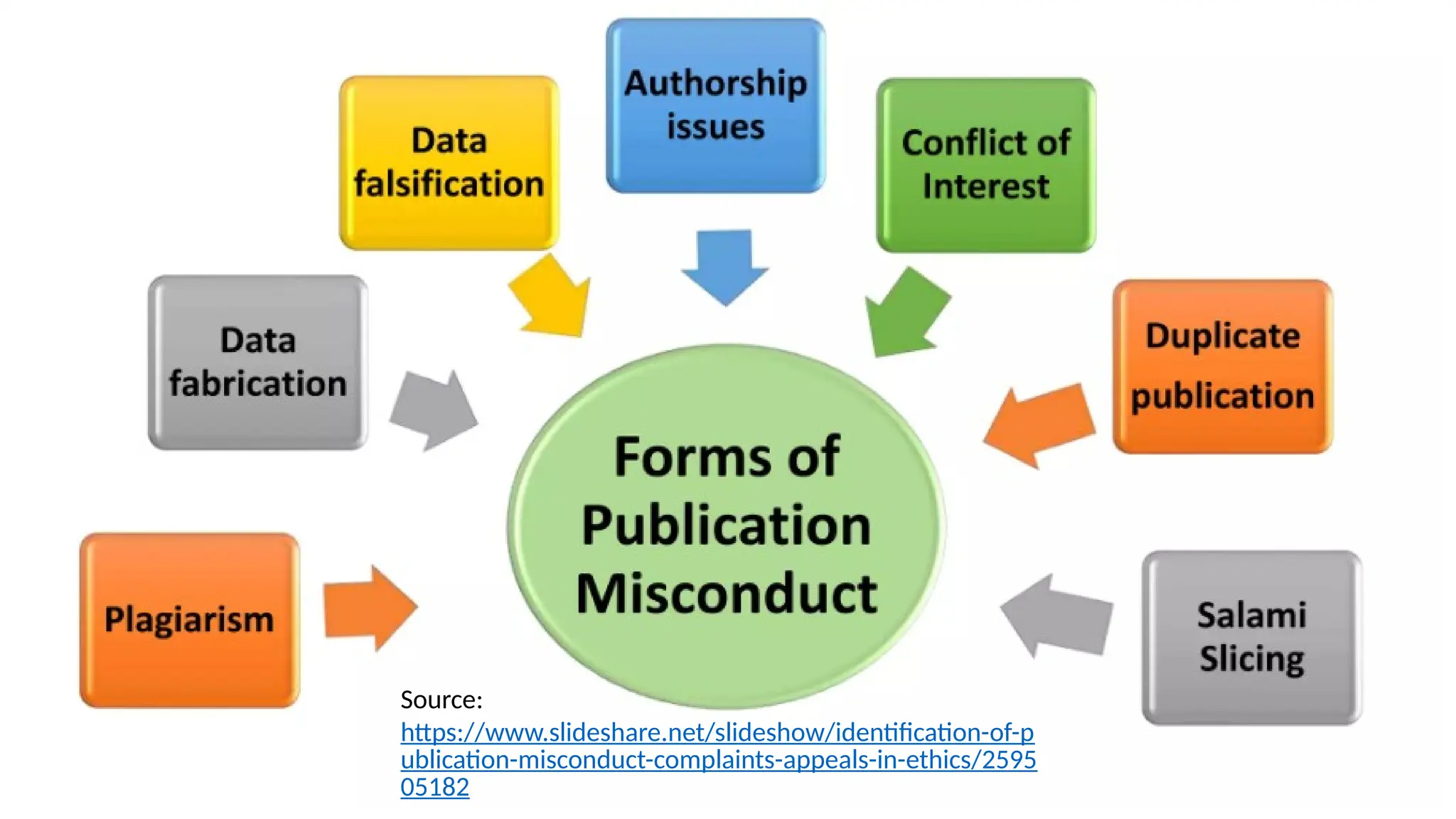
Source:
https://www.slideshare.net/slideshow/identification-of-p
ublication-misconduct-complaints-appeals-in-ethics/2595
05182
Procedures for Addressing
Misconduct
• Initial Assessment: Editors assess the evidence of misconduct and
may consult with co-authors and reviewers.
• Notification: All involved parties (authors, editors, reviewers) are
informed about the misconduct allegations.
• Investigation: A thorough investigation is conducted to gather all
relevant information.
• Decision Making: Based on the findings, actions may include:
• Rejecting the manuscript or retracting published papers.
• Informing the author's institution and funding bodies about the
misconduct.
• Imposing penalties such as a temporary ban on submissions from
the implicated authors
Source:
https://www.slideshare.net/slideshow/identification-of-p
ublication-misconduct-complaints-appeals-in-ethics/2595
05182
Steps in Complaint Process
• Initial Documentation: The process starts with gathering initial
documentation related to the complaint.
• Contacting the Journal or Publisher: The complaint is formally
submitted to the journal or publisher.
• Journal Investigation: The journal or publisher initiates an
investigation into the complaint.
• Author Response and Cooperation: The author(s) involved in
the complaint are given a chance to respond and cooperate with
the investigation.
Contd.,
•External Expert Review: If necessary, an external expert is
consulted to provide an unbiased opinion on the matter.
•Decision and Corrective Actions: Based on findings, a
decision is made, and corrective actions are recommended
or enforced.
•Appeals and Ethical Bodies: If the outcome is disputed,
appeals can be made to ethical bodies or higher authorities
for further review.
Source:
https://www.slideshare.net/slideshow/identification-of-p
ublication-misconduct-complaints-appeals-in-ethics/2595
05182
•Reviewing Journal's Appeal Policy: Familiarize yourself with
the journal’s guidelines for appeals, including eligibility and
submission deadlines.
•Preparing the Appeal: Gather necessary documentation and
craft a clear, concise argument addressing the reason for
appeal (e.g., errors in review process or misinterpretation of
data).
•Submitting the Appeal: Submit the appeal in accordance
with the journal’s guidelines, typically via an online
submission system or email.
•Editorial Review: The journal editor reviews the appeal to
determine its validity and whether it warrants further
action.
•External Review or Mediation: In some cases, external
reviewers or mediators are involved to assess the appeal
impartially.
•Decision & Communication: The editor makes a final
decision and communicates it to the author, either
upholding or overturning the original decision.
Common Penalties for Publication Misconduct
• Publication Ban: Authors may be banned from submitting new manuscripts to
the journal for a specified period, typically ranging from two years to
a permanent ban, depending on the seriousness of the misconduct
• Withdrawal of Published Work: If misconduct is identified in published
papers, those articles may be retracted, effectively removing them from the
academic record
• Notification of Institutions: Journals may notify the authors' affiliated
institutions about the misconduct, which could lead to further institutional
disciplinary actions against the authors involved.
• Loss of Funding: Authors found guilty of serious misconduct may experience
a decline in research funding opportunities, as funding bodies often take such
violations seriously.
• Public Disclosure: Some journals may publicly disclose findings of
misconduct, which can damage an author's reputation within the academic
community.
• Warnings and Reprimands: In cases deemed less severe, authors might
receive formal warnings or reprimands instead of harsher penalties
• Custom Penalties: The nature and extent of penalties can be tailored based
on individual circumstances and the specifics of each case. Committees
overseeing these matters have the discretion to impose customized
sanctions.
References
• Punam Pradhan (2023). Identification of publication misconduct, complaints
& appeals in ethics. SlideShare.
https://www.slideshare.net/slideshow/identification-of-publication-miscon
duct-complaints-appeals-in-ethics/259505182
• Vidyaprasar. (n.d.). Identification of publication misconduct, complaints and
appeals. Vidyaprasar.
https://vidyaprasar.dei.ac.in/topic/f-identification-of-publication-misconduc
t-complaints-and-appeals/
• Marcovitch, H. (2007). Misconduct by researchers and
authors. Gaceta sanitaria, 21, 492-499.
Thank You

Identification of publication misconduct, complaints and appeals.pptx

  • 1.
    Identification of publication misconduct,complaints and appeals Dr. Deivam M Assistant Professor Department of Education H.N.B Garhwal University (A Central University) S.R.T Campus, Tehri Garhwal Uttarakhand – 249 199
  • 2.
  • 3.
    Procedures for Addressing Misconduct •Initial Assessment: Editors assess the evidence of misconduct and may consult with co-authors and reviewers. • Notification: All involved parties (authors, editors, reviewers) are informed about the misconduct allegations. • Investigation: A thorough investigation is conducted to gather all relevant information. • Decision Making: Based on the findings, actions may include: • Rejecting the manuscript or retracting published papers. • Informing the author's institution and funding bodies about the misconduct. • Imposing penalties such as a temporary ban on submissions from the implicated authors
  • 4.
  • 5.
    Steps in ComplaintProcess • Initial Documentation: The process starts with gathering initial documentation related to the complaint. • Contacting the Journal or Publisher: The complaint is formally submitted to the journal or publisher. • Journal Investigation: The journal or publisher initiates an investigation into the complaint. • Author Response and Cooperation: The author(s) involved in the complaint are given a chance to respond and cooperate with the investigation.
  • 6.
    Contd., •External Expert Review:If necessary, an external expert is consulted to provide an unbiased opinion on the matter. •Decision and Corrective Actions: Based on findings, a decision is made, and corrective actions are recommended or enforced. •Appeals and Ethical Bodies: If the outcome is disputed, appeals can be made to ethical bodies or higher authorities for further review.
  • 8.
  • 9.
    •Reviewing Journal's AppealPolicy: Familiarize yourself with the journal’s guidelines for appeals, including eligibility and submission deadlines. •Preparing the Appeal: Gather necessary documentation and craft a clear, concise argument addressing the reason for appeal (e.g., errors in review process or misinterpretation of data). •Submitting the Appeal: Submit the appeal in accordance with the journal’s guidelines, typically via an online submission system or email.
  • 10.
    •Editorial Review: Thejournal editor reviews the appeal to determine its validity and whether it warrants further action. •External Review or Mediation: In some cases, external reviewers or mediators are involved to assess the appeal impartially. •Decision & Communication: The editor makes a final decision and communicates it to the author, either upholding or overturning the original decision.
  • 11.
    Common Penalties forPublication Misconduct • Publication Ban: Authors may be banned from submitting new manuscripts to the journal for a specified period, typically ranging from two years to a permanent ban, depending on the seriousness of the misconduct • Withdrawal of Published Work: If misconduct is identified in published papers, those articles may be retracted, effectively removing them from the academic record • Notification of Institutions: Journals may notify the authors' affiliated institutions about the misconduct, which could lead to further institutional disciplinary actions against the authors involved.
  • 12.
    • Loss ofFunding: Authors found guilty of serious misconduct may experience a decline in research funding opportunities, as funding bodies often take such violations seriously. • Public Disclosure: Some journals may publicly disclose findings of misconduct, which can damage an author's reputation within the academic community. • Warnings and Reprimands: In cases deemed less severe, authors might receive formal warnings or reprimands instead of harsher penalties • Custom Penalties: The nature and extent of penalties can be tailored based on individual circumstances and the specifics of each case. Committees overseeing these matters have the discretion to impose customized sanctions.
  • 13.
    References • Punam Pradhan(2023). Identification of publication misconduct, complaints & appeals in ethics. SlideShare. https://www.slideshare.net/slideshow/identification-of-publication-miscon duct-complaints-appeals-in-ethics/259505182 • Vidyaprasar. (n.d.). Identification of publication misconduct, complaints and appeals. Vidyaprasar. https://vidyaprasar.dei.ac.in/topic/f-identification-of-publication-misconduc t-complaints-and-appeals/ • Marcovitch, H. (2007). Misconduct by researchers and authors. Gaceta sanitaria, 21, 492-499.
  • 14.