Transaction of Syllabusinto
Textbooks
Dr. Deivam M
Assistant Professor
Department of Education
H.N.B Garhwal University (A Central University)
S.R.T Campus, Tehri Garhwal
Uttarakhand – 249 199
2.
Introduction
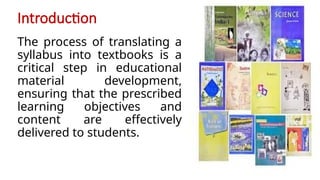
The process oftranslating a
syllabus into textbooks is a
critical step in educational
material development,
ensuring that the prescribed
learning objectives and
content are effectively
delivered to students.
3.
Process Overview
Syllabus asthe Blueprint:
The syllabus outlines the course structure,
objectives, topics, and sometimes activities
and assessments for a subject and grade level.
It is based on the broader curriculum and
defines the intended learning outcomes.
• Textbook Development:
Textbooks are created from the syllabus. They
organize and present the outlined content into
structured lessons, activities, exercises, and
assessments, making the syllabus practical and
accessible for teachers and students.
4.
Key Steps inthe Transaction
Content Selection and Organization:
Authors and subject experts carefully select
and arrange the content according to the
syllabus topics and subtopics, ensuring full
coverage in a logical sequence.
Inclusion of Activities and Assessments:
Suggested activities and evaluation methods
from the syllabus are integrated into the
textbook as exercises, projects, or self-
assessments to reinforce learning.
5.
Contd.,
Alignment with Objectives:
Textbookcontent is shaped by the learning
objectives from the syllabus, ensuring the
material matches the intended educational
goals.
Teacher and Student Usability:
Textbooks are designed to be clear and
engaging, using explanations, illustrations,
and examples to make learning easier and
more accessible.