
Ichthyosaurs

 (Extinct)
Ichthyosaurs
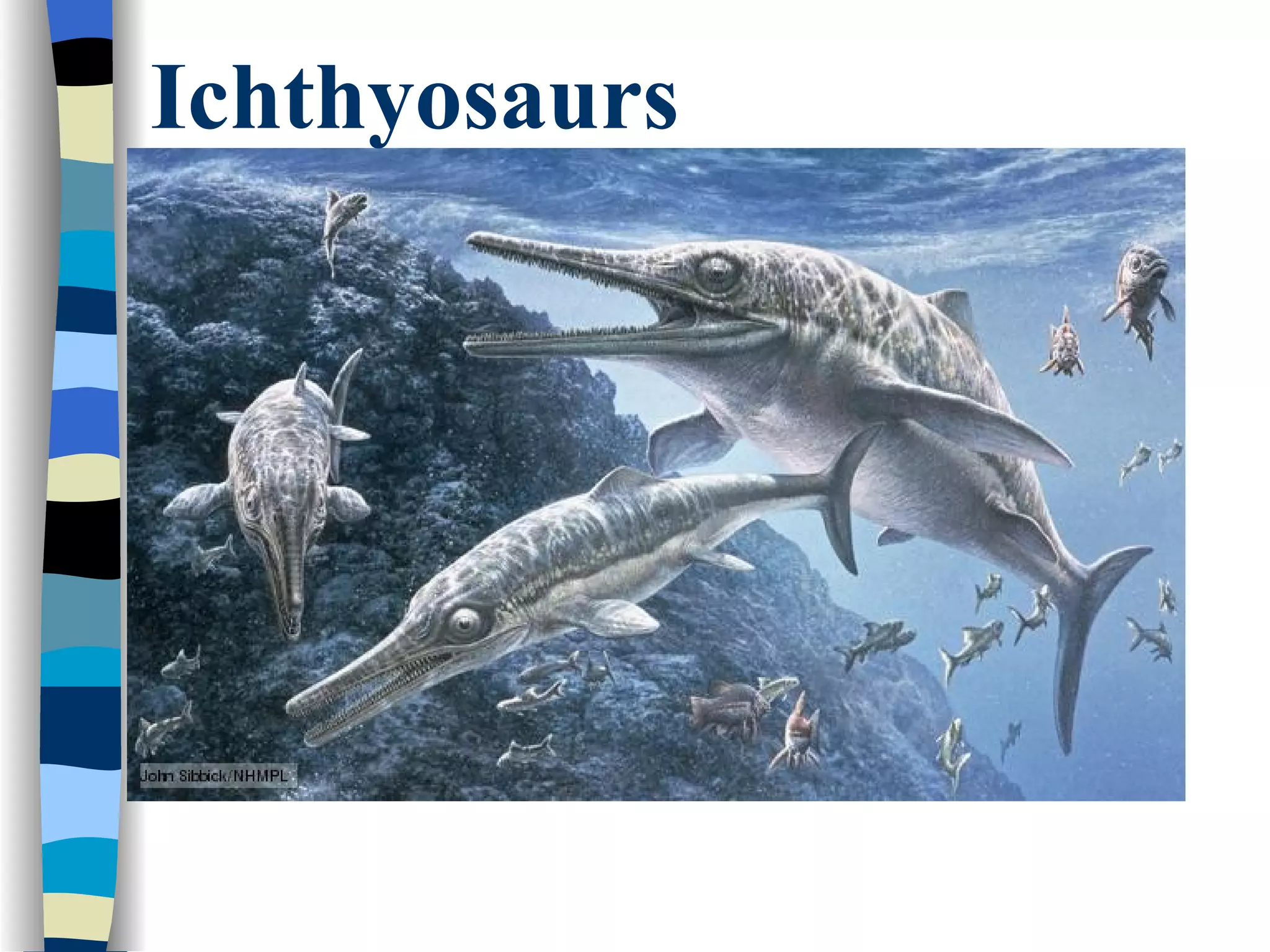
Ichthyosaurs
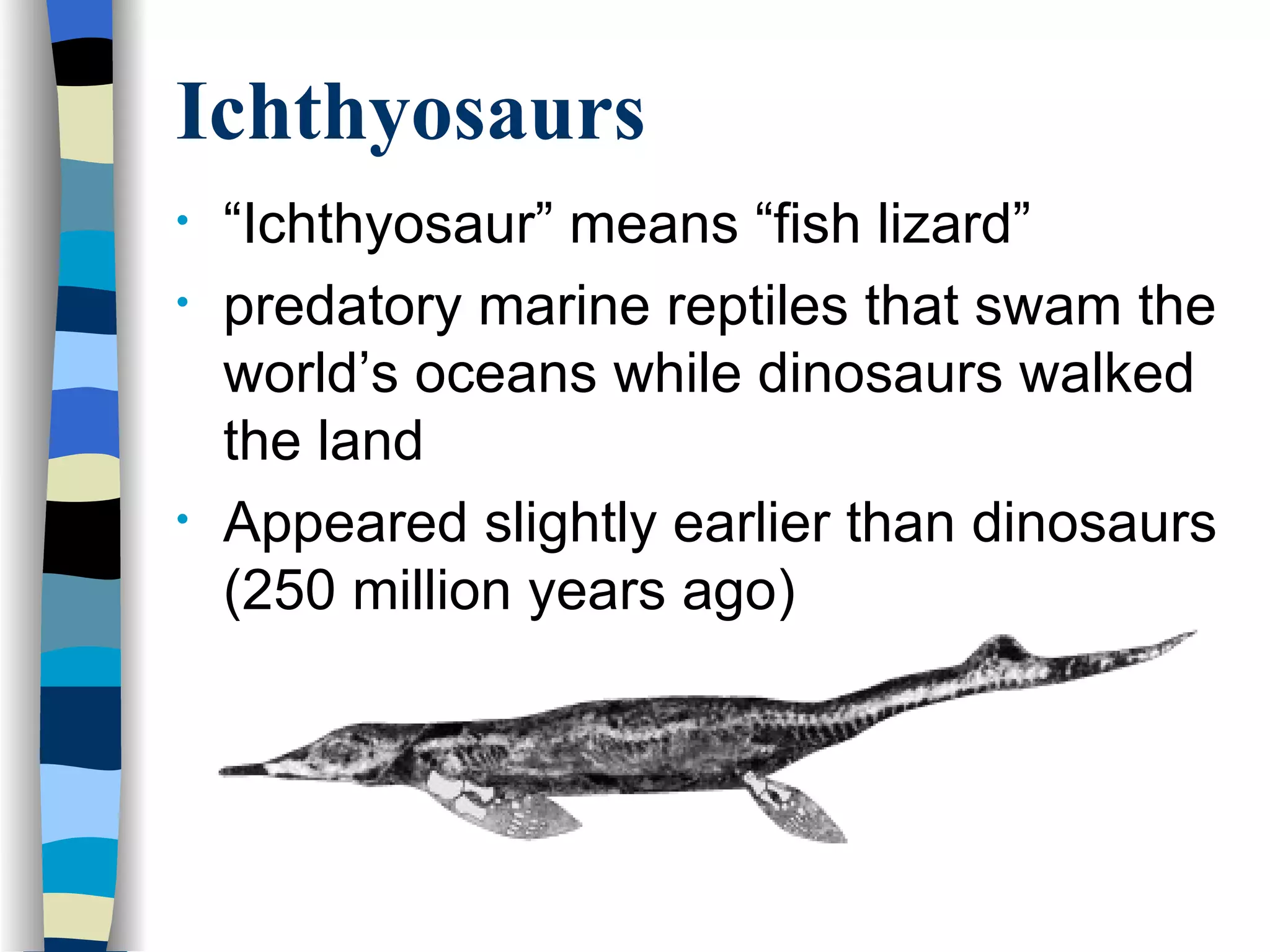
•   “Ichthyosaur” means “fish lizard”
•   predatory marine reptiles that swam the
    world’s oceans while dinosaurs walked
    the land
•   Appeared slightly earlier than dinosaurs
    (250 million years ago)
Ichthyosaurs
•   These animals rapidly diversified from
    being lizards with fins to developing a
    much more streamlined, fish-like form
    built for speed
Ichthyosaurs
•   Triassic period to middle Jurassic Period
•   Streamlined shape
•   four, strong, crescent-shaped fins
•   Homocercal caudal fins
•   They breathed air with lungs through
    nostrils.
A specimen of the Jurassic icthyosaur Ichthyosaurus intermedius

More advanced ichthyosaurs — like the one shown above, on
display at the Senckenberg Museum in Frankfurt, Germany — had
compact, very fishlike bodies with crescent-shaped tails.
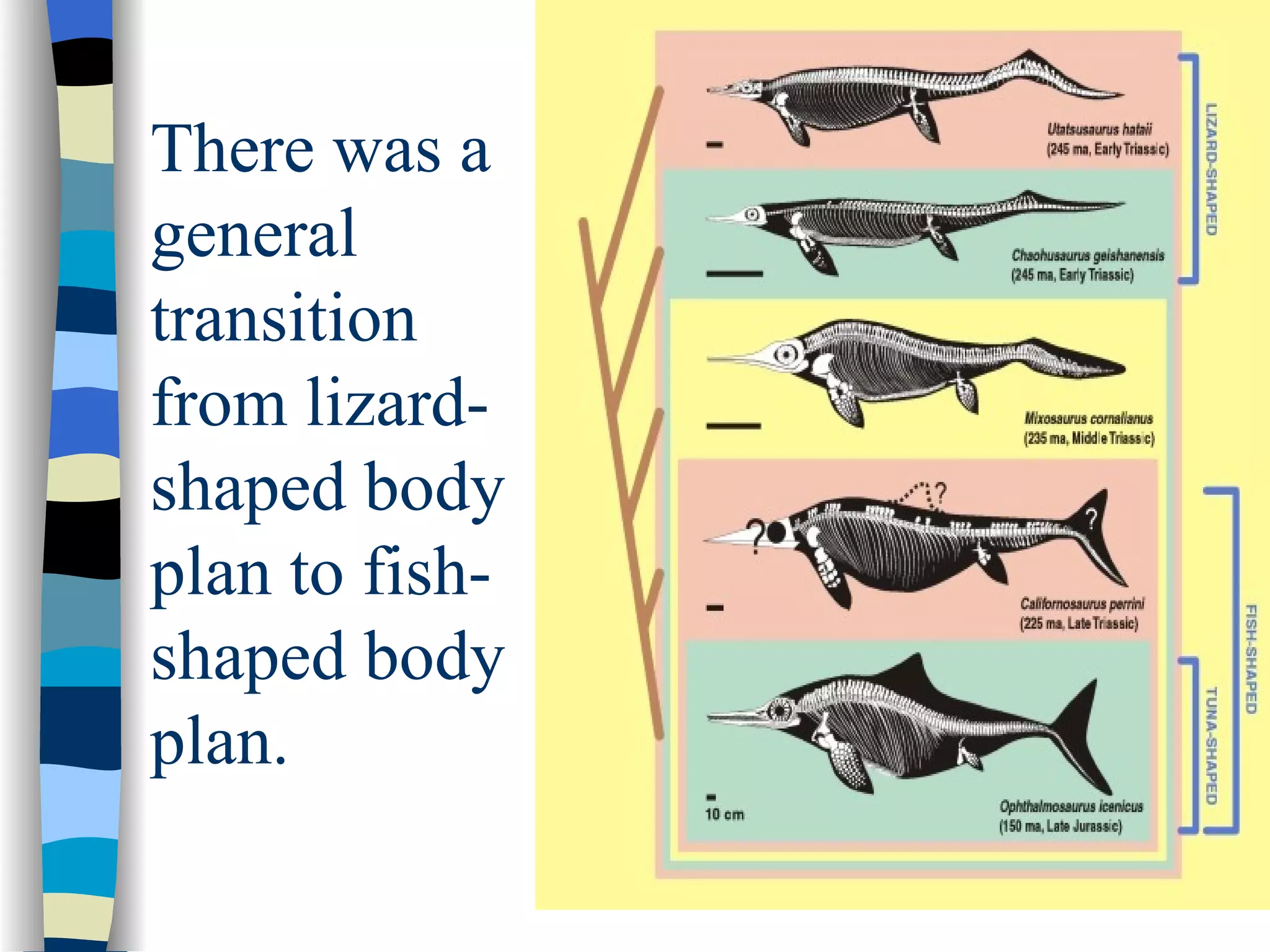
There was a
general
transition
from lizard-
shaped body
plan to fish-
shaped body
plan.
THREE STRANGE FEATURES

1.   Limb skeletons that look like corncobs
2.   Gigantic eye bones
3.   Vertebrae resembling ashtrays or
     hockey pucks
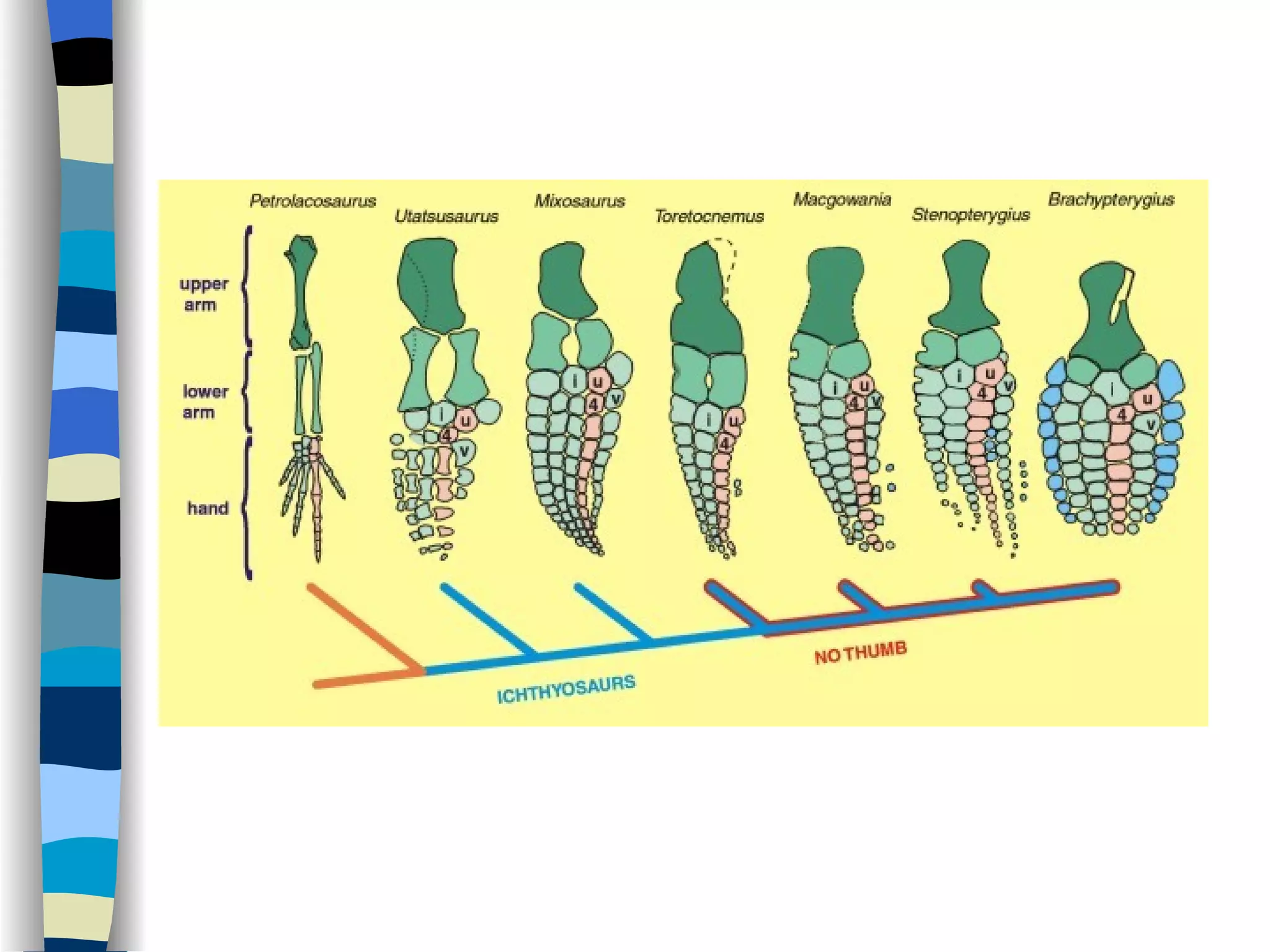
1. Limb skeletons that look like corncobs
•     The limb skeletons went through a
      drastic modification as Ichthyosaur
     a. The lower arm bones became shorter and
        shorter
     b. Finger bones also became shorter and
        shorter, and eventually became disk-shaped
     c. The number of finger bone increased early
        in the evolution
     d. Thumb disappeared at one point
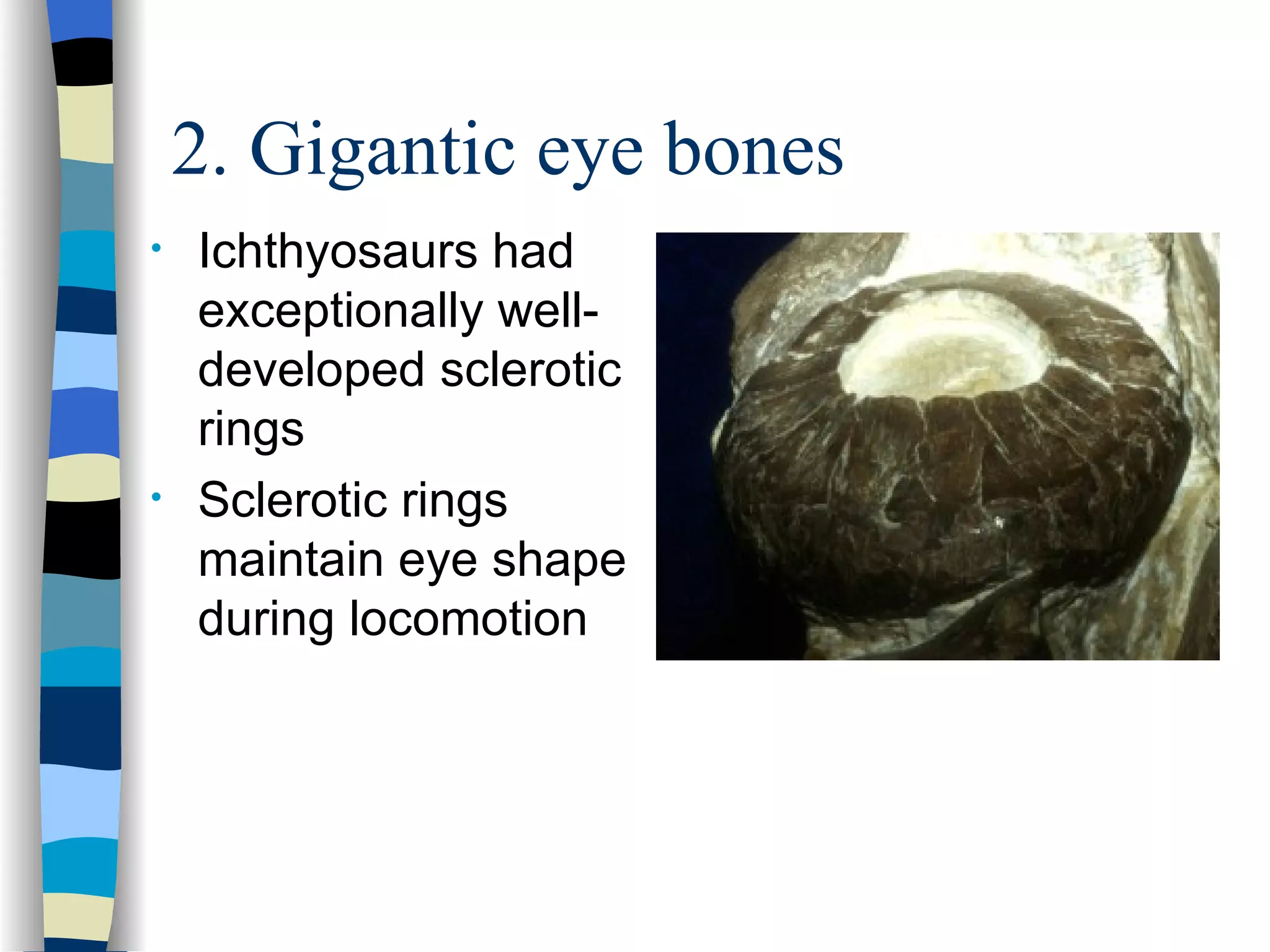
2. Gigantic eye bones
•   Ichthyosaurs had
    exceptionally well-
    developed sclerotic
    rings
•   Sclerotic rings
    maintain eye shape
    during locomotion
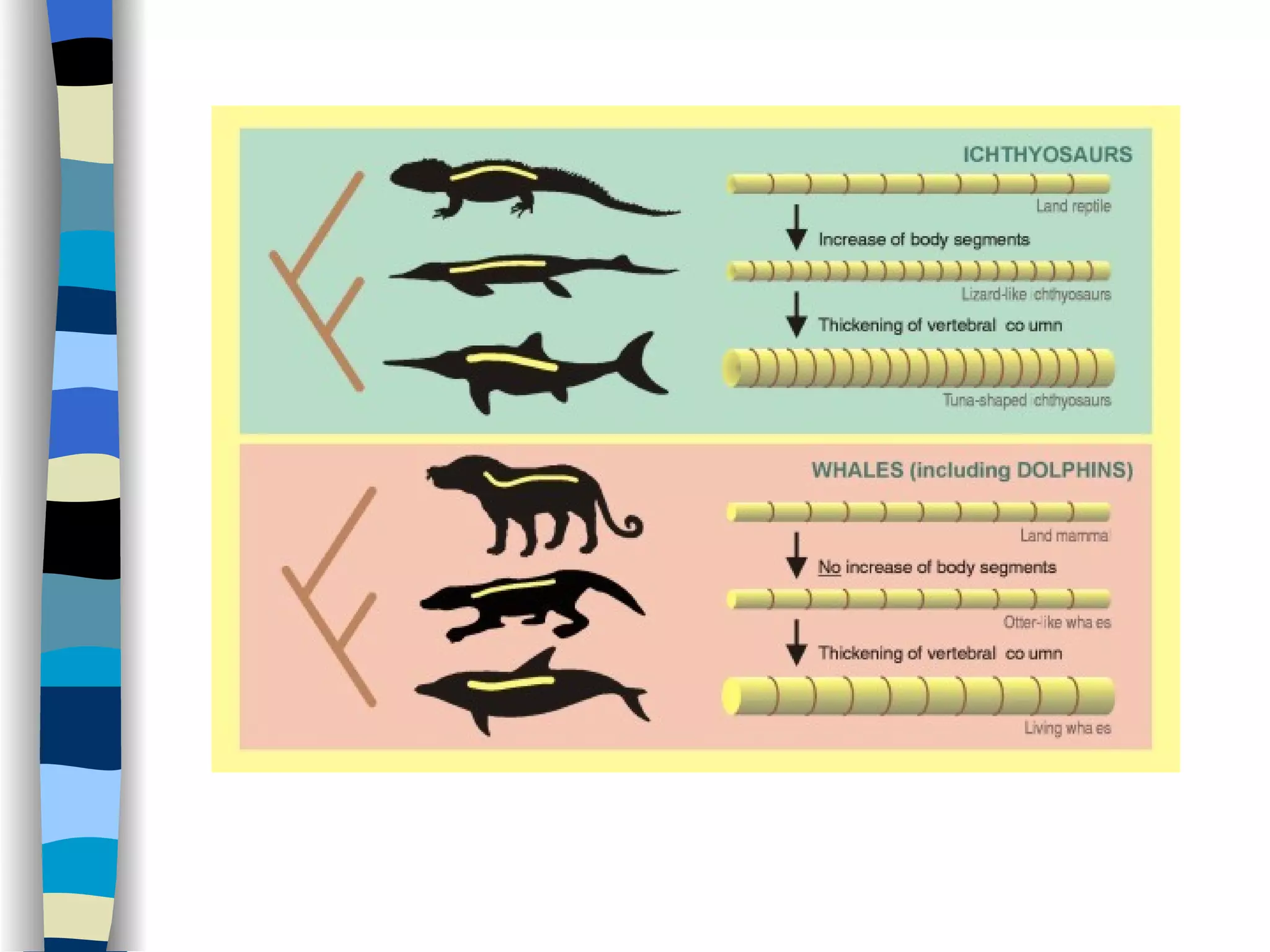
3. Vertebrae resembling ashtrays or
    hockey pucks
•   The only thing that is unusual about the
    backbone of lizard-shaped ichthyosaurs
    is that there are too many vertebrae
    compared to average reptiles
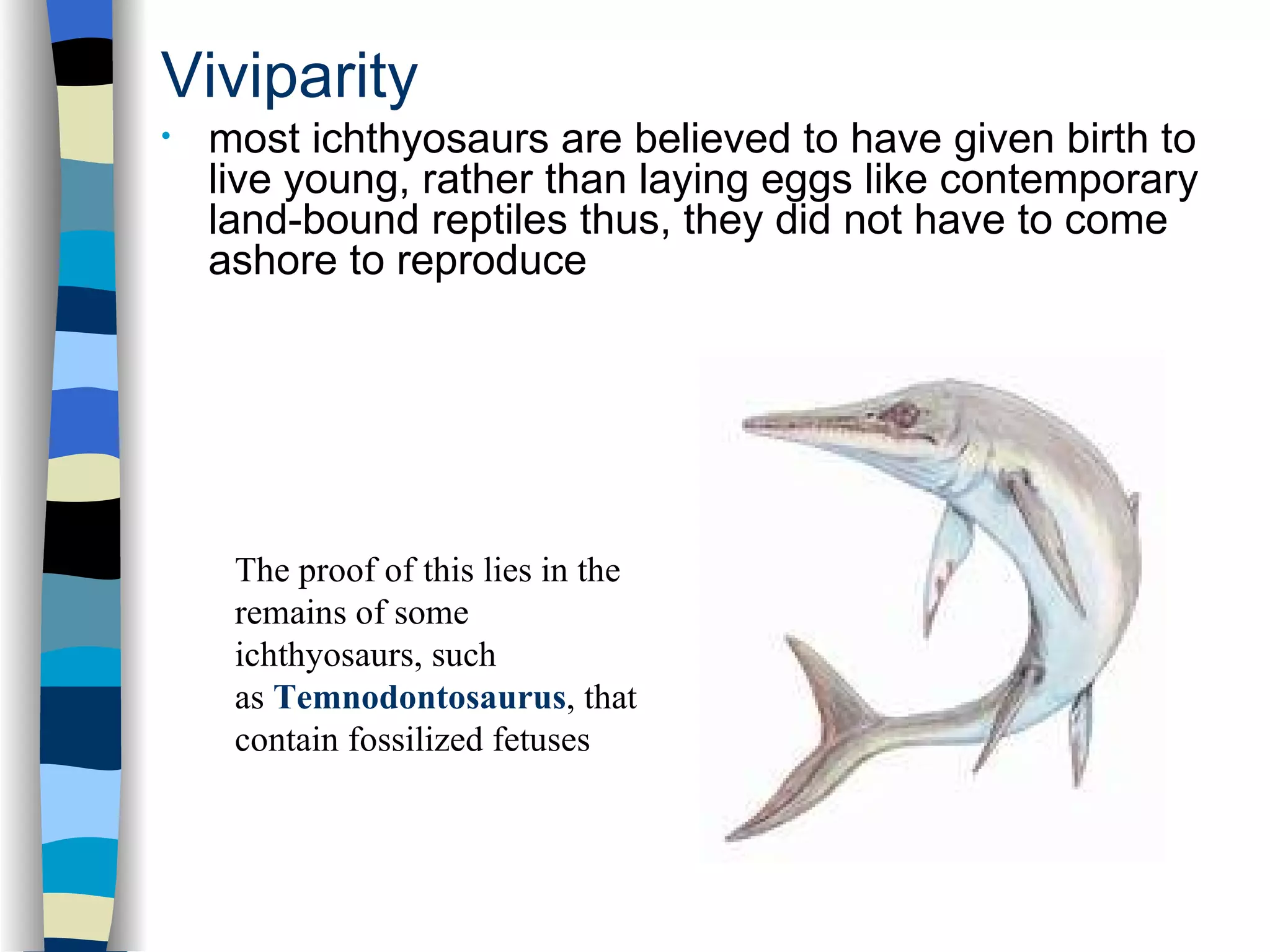
Viviparity
•   most ichthyosaurs are believed to have given birth to
    live young, rather than laying eggs like contemporary
    land-bound reptiles thus, they did not have to come
    ashore to reproduce


     The proof of this lies in the
     remains of some
     ichthyosaurs, such
     as Temnodontosaurus, that
     contain fossilized fetuses
Ichthyosaurs
•   Despite their fish-like appearance, their
    anatomy shows they were once land-lubbers
    • two pairs of limbs, with digit-like bones rather
      than rays or spines in their flippers
    • a shoulder girdle connected to the skull. The
      roof of the skull had a pair of openings called
      fenestra: a hallmark of reptiles (diapsids).
    • lack of gills
Plesiosaurs


(Extinct)
Plesiosaurs
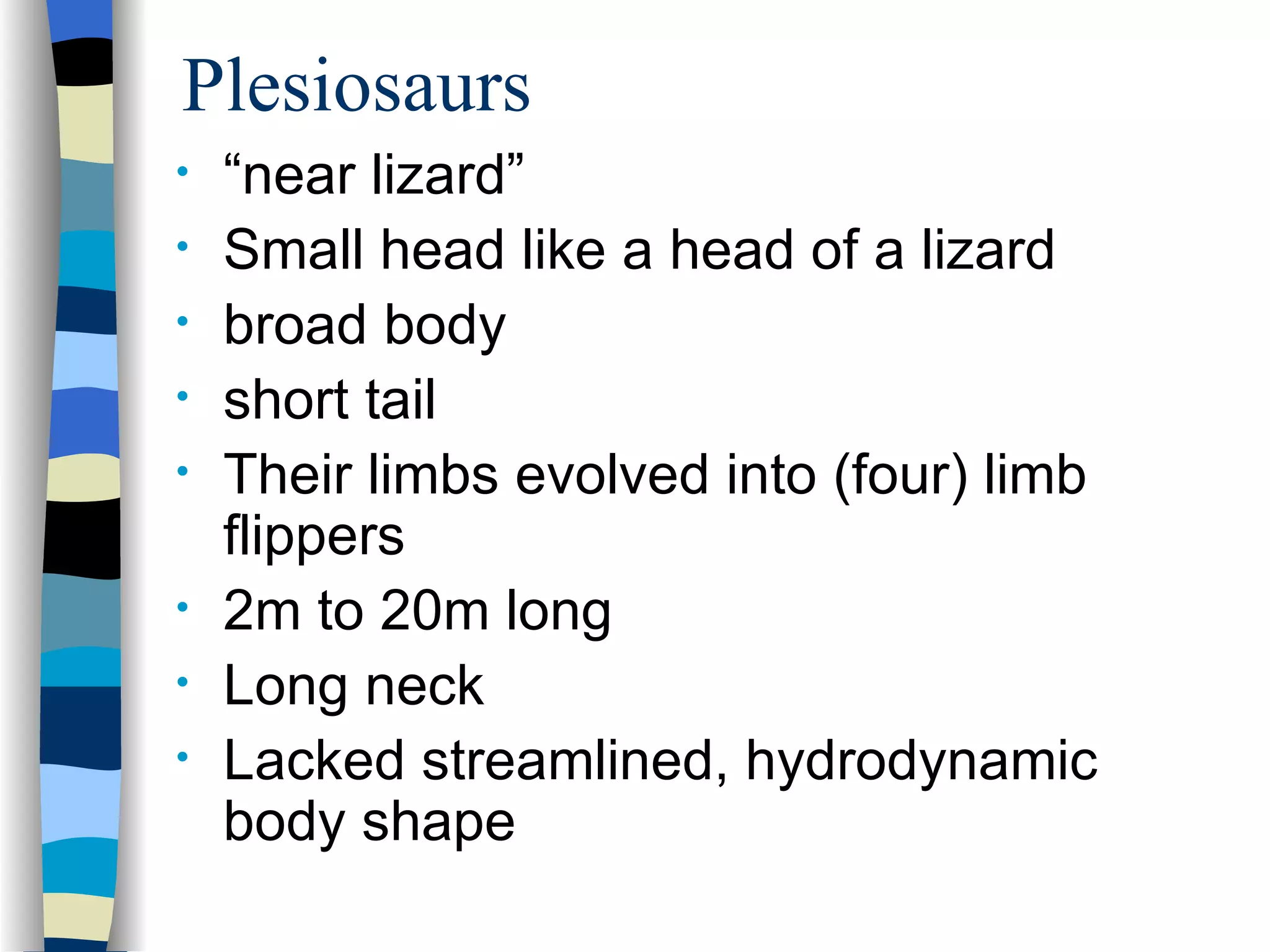
•   “near lizard”
•   Small head like a head of a lizard
•   broad body
•   short tail
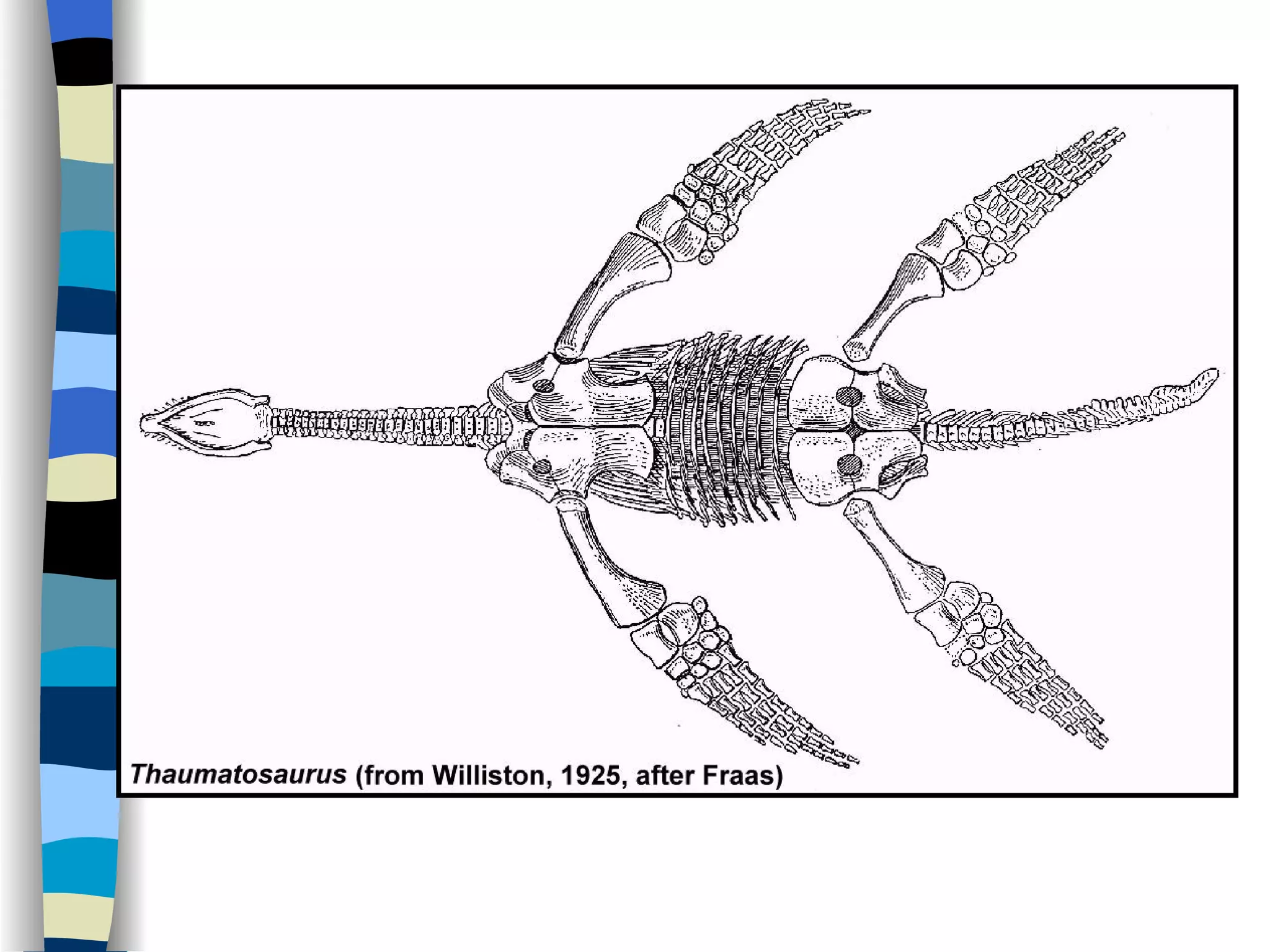
•   Their limbs evolved into (four) limb
    flippers
•   2m to 20m long
•   Long neck
•   Lacked streamlined, hydrodynamic
    body shape
Plesiosaurs
•    It is thought that they swam slowly
     below the surface of the water, and
     then used their long necks to position to
     snap up fish or cephalopods.
•    flippers gave them ultimate
     maneuverability which helped them
     rotate their body quickly to catch
     escaping prey.
Ichthyosaurs          Plesiosaurs
“fishlizard”                 "near lizard"
crescent-shaped fins           long necks

                              Pointed tails

Streamlined   body       Limbs evolved to
shape                               flippers
Fast swimmers          Lacked streamlined
                                body shape
                           Slow swimmers
SIMILARITIES

•   Marine reptiles
•   Extinct
•   Lack gills
•   viviparous

Ich and ple

  • 1.
  • 2.
  • 3.
    Ichthyosaurs • “Ichthyosaur” means “fish lizard” • predatory marine reptiles that swam the world’s oceans while dinosaurs walked the land • Appeared slightly earlier than dinosaurs (250 million years ago)
  • 4.
    Ichthyosaurs • These animals rapidly diversified from being lizards with fins to developing a much more streamlined, fish-like form built for speed
  • 5.
    Ichthyosaurs • Triassic period to middle Jurassic Period • Streamlined shape • four, strong, crescent-shaped fins • Homocercal caudal fins • They breathed air with lungs through nostrils.
  • 6.
    A specimen ofthe Jurassic icthyosaur Ichthyosaurus intermedius More advanced ichthyosaurs — like the one shown above, on display at the Senckenberg Museum in Frankfurt, Germany — had compact, very fishlike bodies with crescent-shaped tails.
  • 7.
    There was a general transition fromlizard- shaped body plan to fish- shaped body plan.
  • 8.
    THREE STRANGE FEATURES 1. Limb skeletons that look like corncobs 2. Gigantic eye bones 3. Vertebrae resembling ashtrays or hockey pucks
  • 9.
    1. Limb skeletonsthat look like corncobs • The limb skeletons went through a drastic modification as Ichthyosaur a. The lower arm bones became shorter and shorter b. Finger bones also became shorter and shorter, and eventually became disk-shaped c. The number of finger bone increased early in the evolution d. Thumb disappeared at one point
  • 11.
    2. Gigantic eyebones • Ichthyosaurs had exceptionally well- developed sclerotic rings • Sclerotic rings maintain eye shape during locomotion
  • 12.
    3. Vertebrae resemblingashtrays or hockey pucks • The only thing that is unusual about the backbone of lizard-shaped ichthyosaurs is that there are too many vertebrae compared to average reptiles
  • 14.
    Viviparity • most ichthyosaurs are believed to have given birth to live young, rather than laying eggs like contemporary land-bound reptiles thus, they did not have to come ashore to reproduce The proof of this lies in the remains of some ichthyosaurs, such as Temnodontosaurus, that contain fossilized fetuses
  • 16.
    Ichthyosaurs • Despite their fish-like appearance, their anatomy shows they were once land-lubbers • two pairs of limbs, with digit-like bones rather than rays or spines in their flippers • a shoulder girdle connected to the skull. The roof of the skull had a pair of openings called fenestra: a hallmark of reptiles (diapsids). • lack of gills
  • 18.
  • 21.
    Plesiosaurs • “near lizard” • Small head like a head of a lizard • broad body • short tail • Their limbs evolved into (four) limb flippers • 2m to 20m long • Long neck • Lacked streamlined, hydrodynamic body shape
  • 23.
    Plesiosaurs • It is thought that they swam slowly below the surface of the water, and then used their long necks to position to snap up fish or cephalopods. • flippers gave them ultimate maneuverability which helped them rotate their body quickly to catch escaping prey.
  • 24.
    Ichthyosaurs Plesiosaurs “fishlizard”  "near lizard" crescent-shaped fins long necks Pointed tails Streamlined body Limbs evolved to shape flippers Fast swimmers Lacked streamlined body shape Slow swimmers
  • 25.
    SIMILARITIES • Marine reptiles • Extinct • Lack gills • viviparous