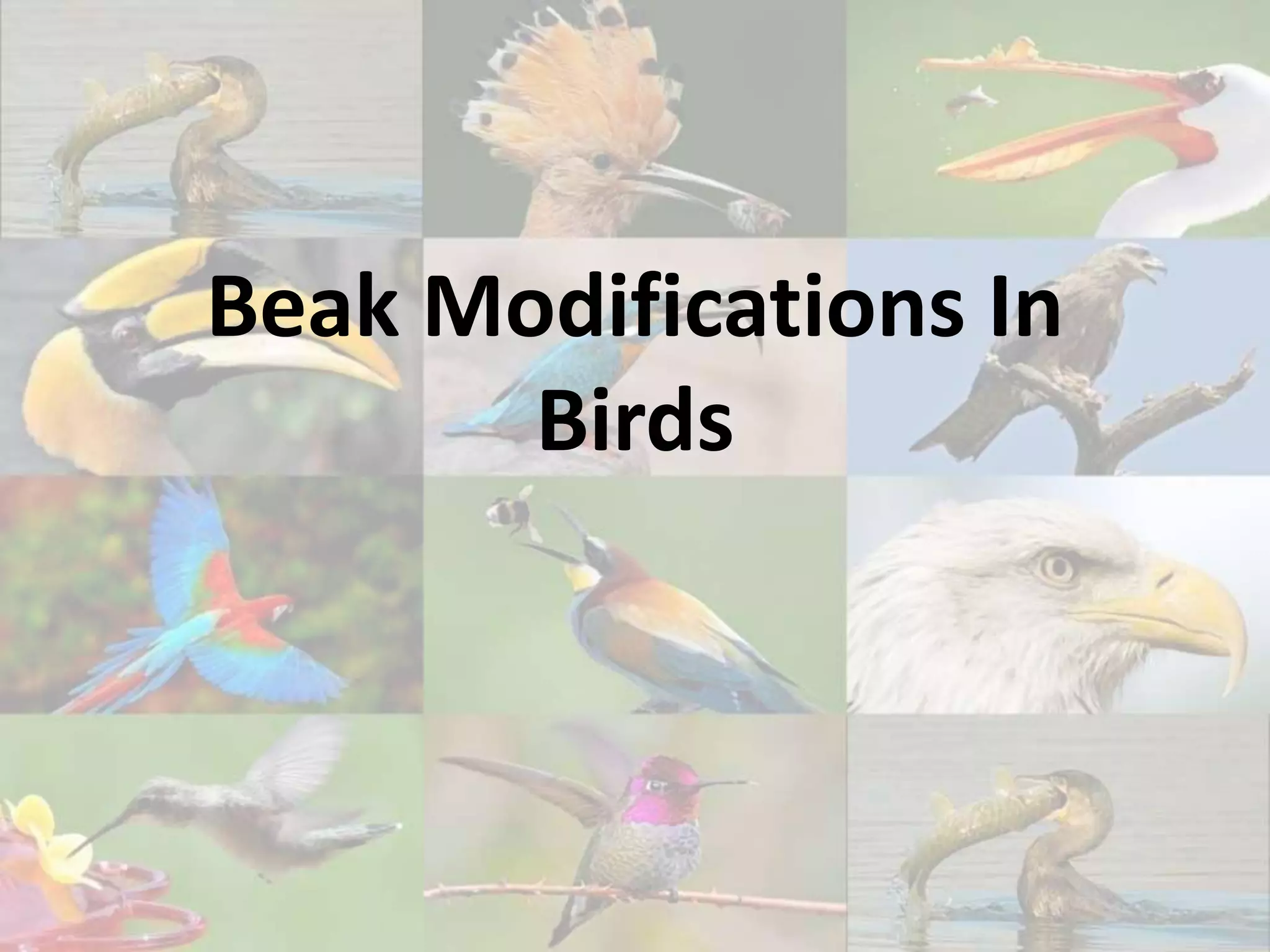
Beak Modifications In
Birds
Objectives
• Types of beak modifications in birds
• Examples of birds with beak modification
Introduction
• Birds- absence of teeth
• Modified jaw bones – beak
• Covered with sheath- Rhamphotheca
• Beak = Fore Limb + Teeth
• Variations - depending on food type and
functions
1. Seed eating beak
• Strong, stout, short, conical
• Broad at base & pointed at tip
• Crushes large hard shelled seeds & fruits
• Gram eating birds
Small conical beak
Finches
Cardinal
2. Cutting and biting type
• Strong, sharp with cutting edges
• Long and slender
Crow
3. Fruit eating beak
• Break hard fruit nuts
• Use for gnawing hard nuts & seeds, tearing fruits
• Parrot- sharp, powerful, hooked, extremely strong
• Hornbill – large,
enormous, heavy,
cumbersome
• Light in weight,
interior is cellular
• Acts as resonator to
produce loud cry
4. Insectivorous beak
• Catch insect when they are flying
• Small, wide , delicate
• Examples: swallows ,swifts , robin
• Fly catcher: short,
strong ,notched
mandible at tip
• bristles at base
swifts Robin
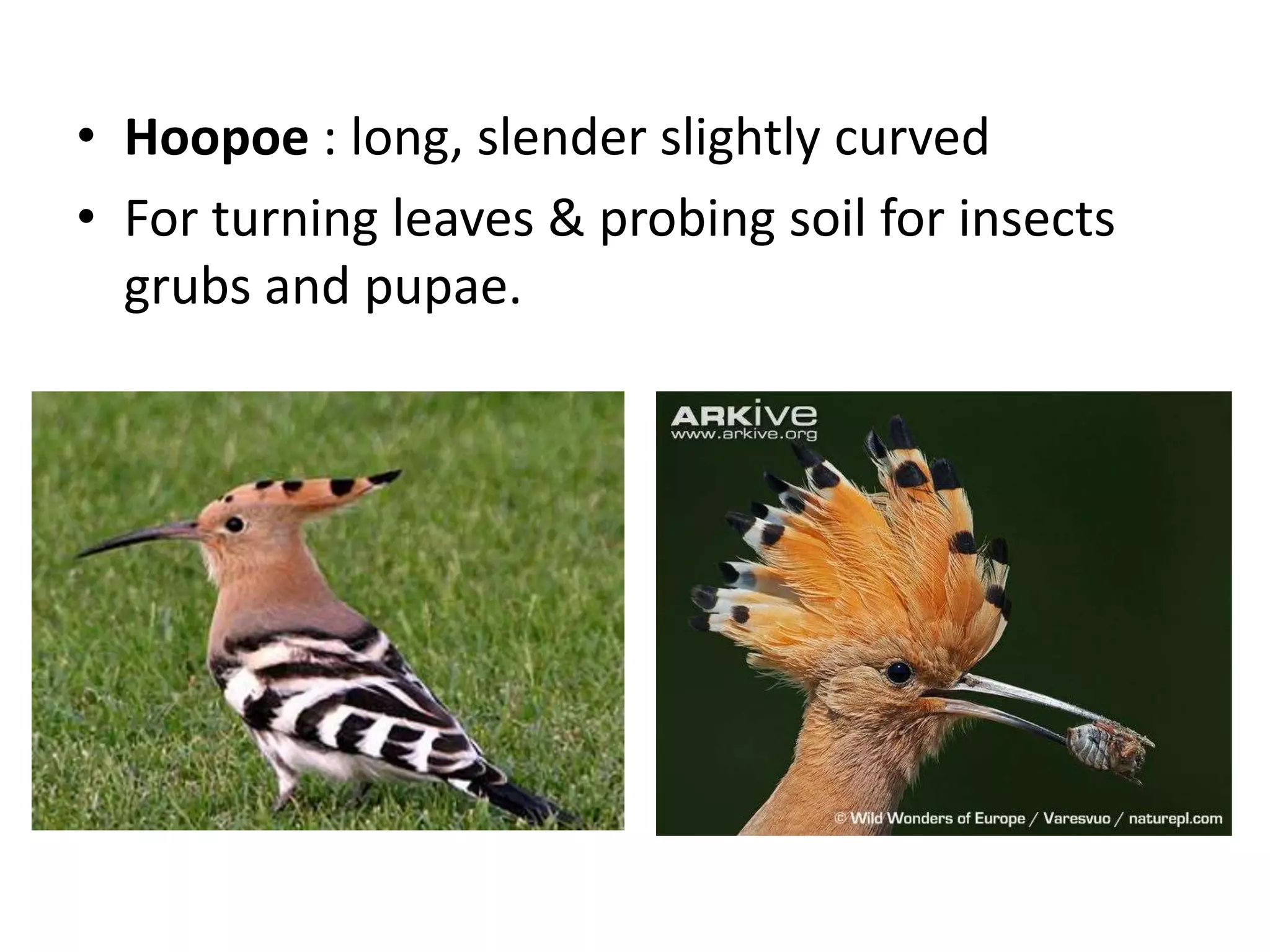
• Hoopoe : long, slender slightly curved
• For turning leaves & probing soil for insects
grubs and pupae.
Type Use Example Shape
Seed Eating Crushes hard
seed
Sparrow,
fiches,
cardinals
Strong, Conical,
base broad,
pointed tip
Cutting &
Biting
Cutting and
biting
crow Strong, long,
slender
Sharp edge
Fruit Eating Breaking
hard fruit
Parrot,
hornbill
Sharp, Hooked,
strong
Insectivorous Catching
flying insect
Fly catcher,
swallows ,
swift,
hoopoe
Small, wide,
delicate
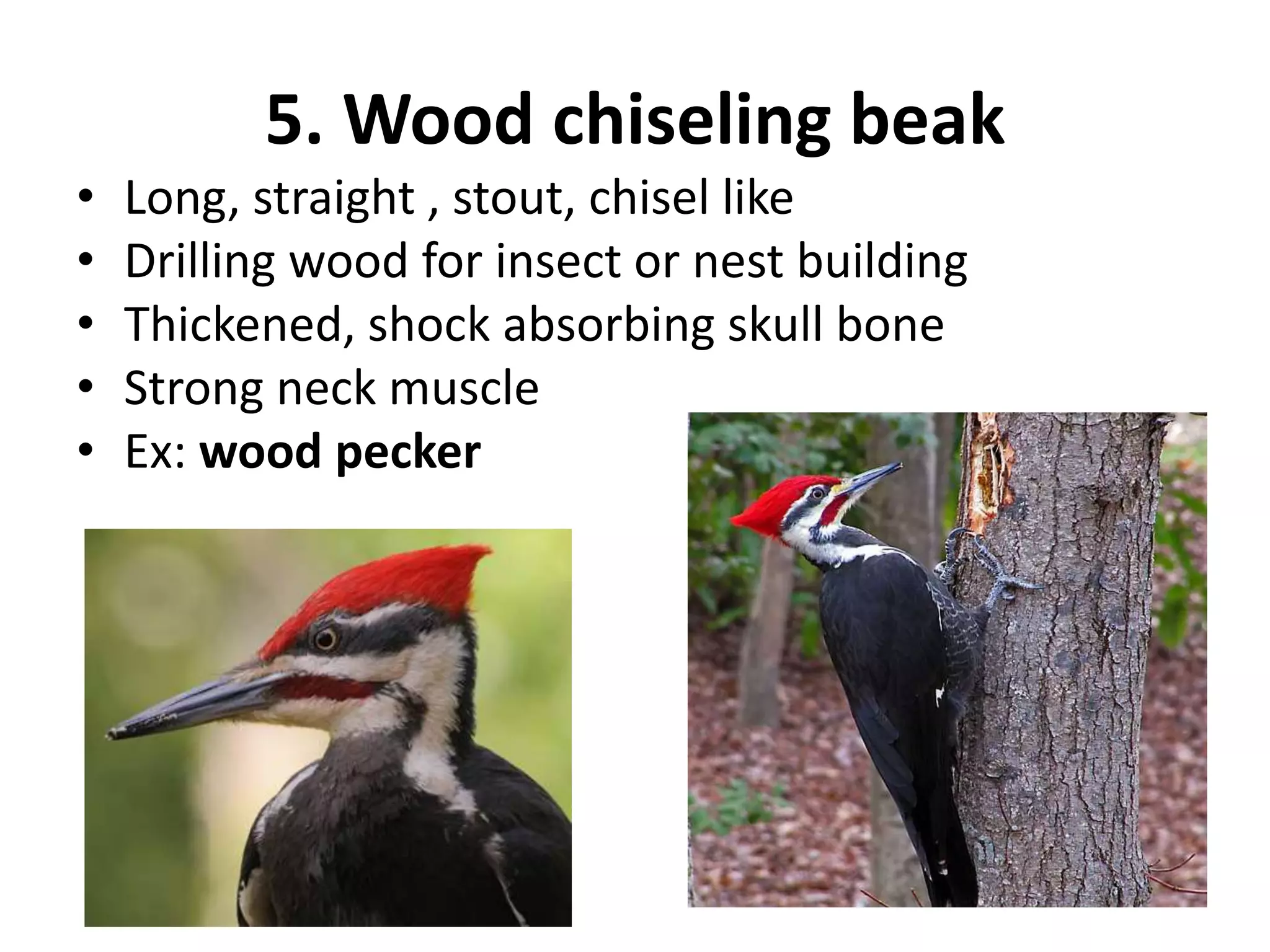
5. Wood chiseling beak
• Long, straight , stout, chisel like
• Drilling wood for insect or nest building
• Thickened, shock absorbing skull bone
• Strong neck muscle
• Ex: wood pecker
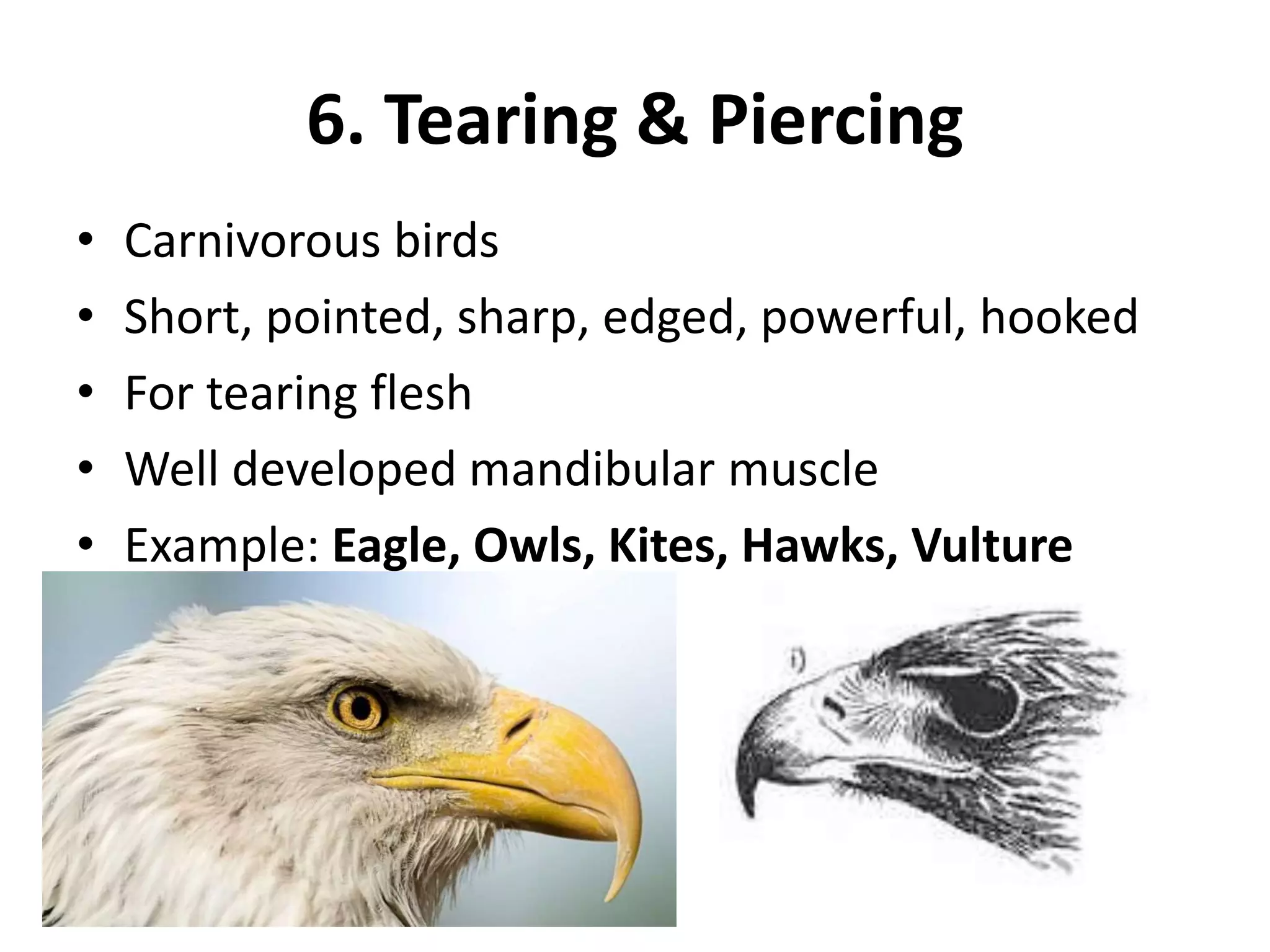
6. Tearing & Piercing
• Carnivorous birds
• Short, pointed, sharp, edged, powerful, hooked
• For tearing flesh
• Well developed mandibular muscle
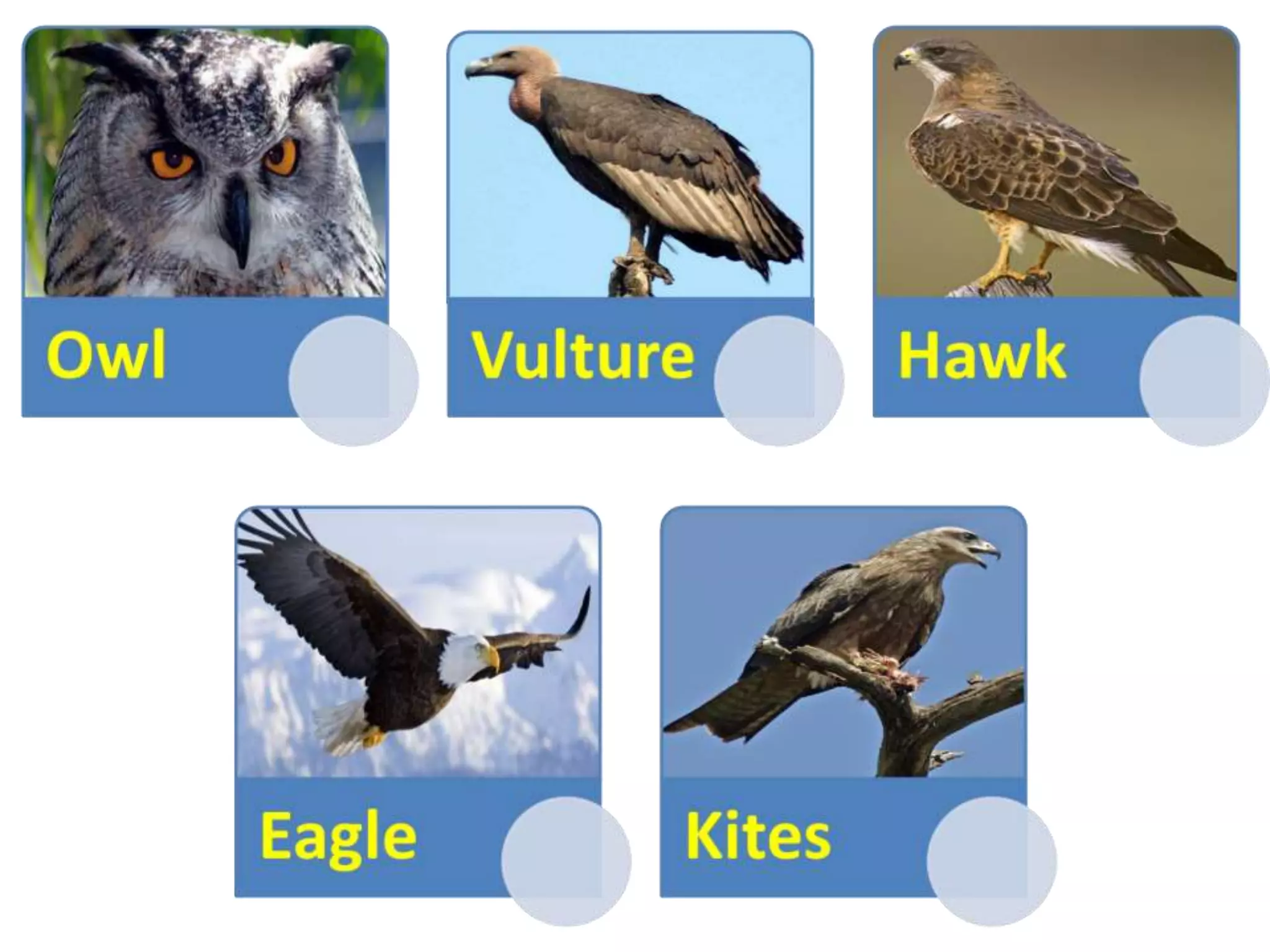
• Example: Eagle, Owls, Kites, Hawks, Vulture
Owl Vulture Hawk
Eagle Kites
7. Fish catching beak
• Long , powerful, sharply pointed
• Capture fish , frogs, toads, aquatic animals
• Cormorant: long , narrow
with curved edges sharp
backwardly directed teeth
• Indian Darter or snake bird:
saw like teeth like fine needle
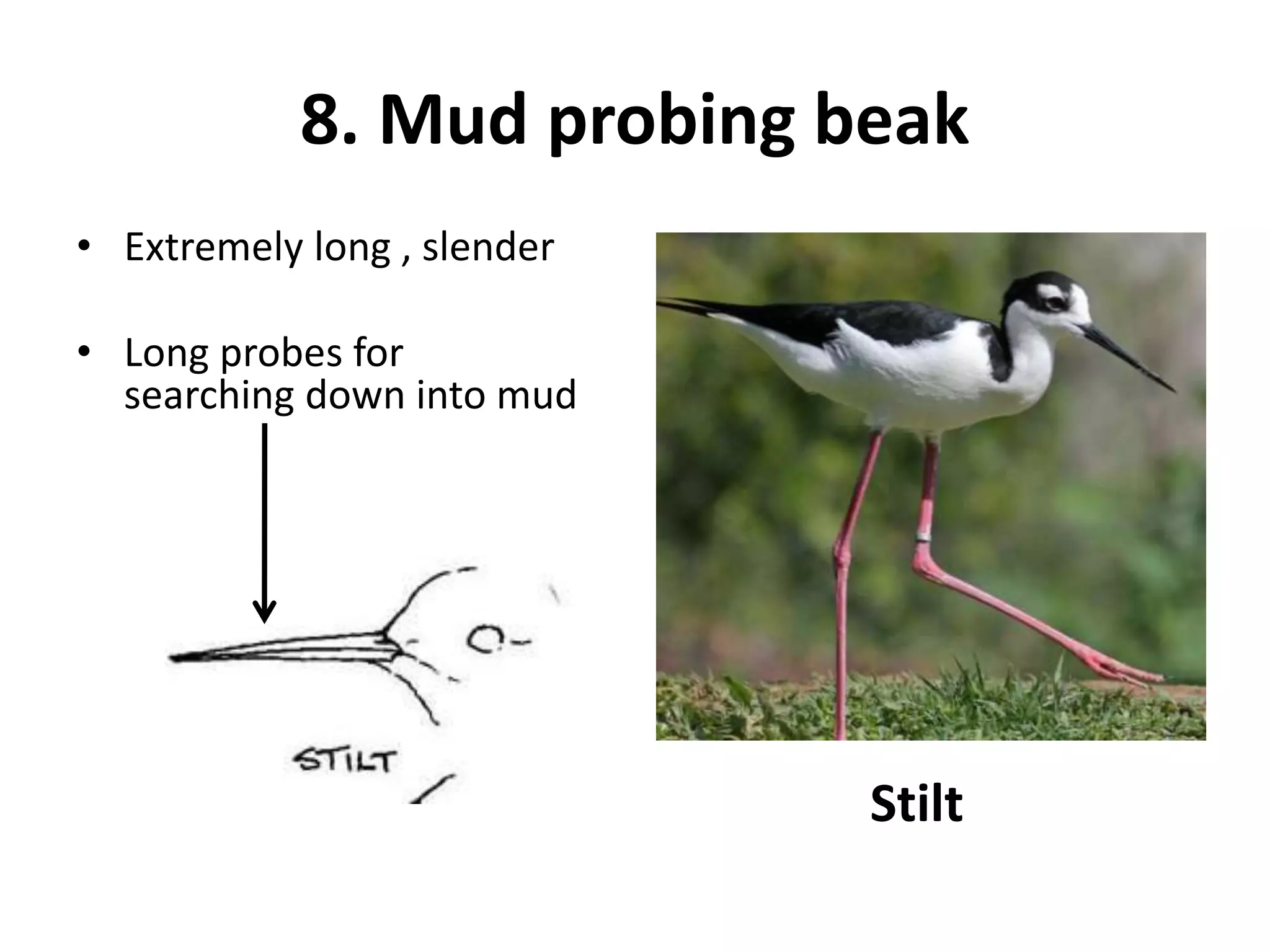
8. Mud probing beak
• Extremely long , slender
• Long probes for
searching down into mud
Stilt
Lapwing
Sand piper
Snipe
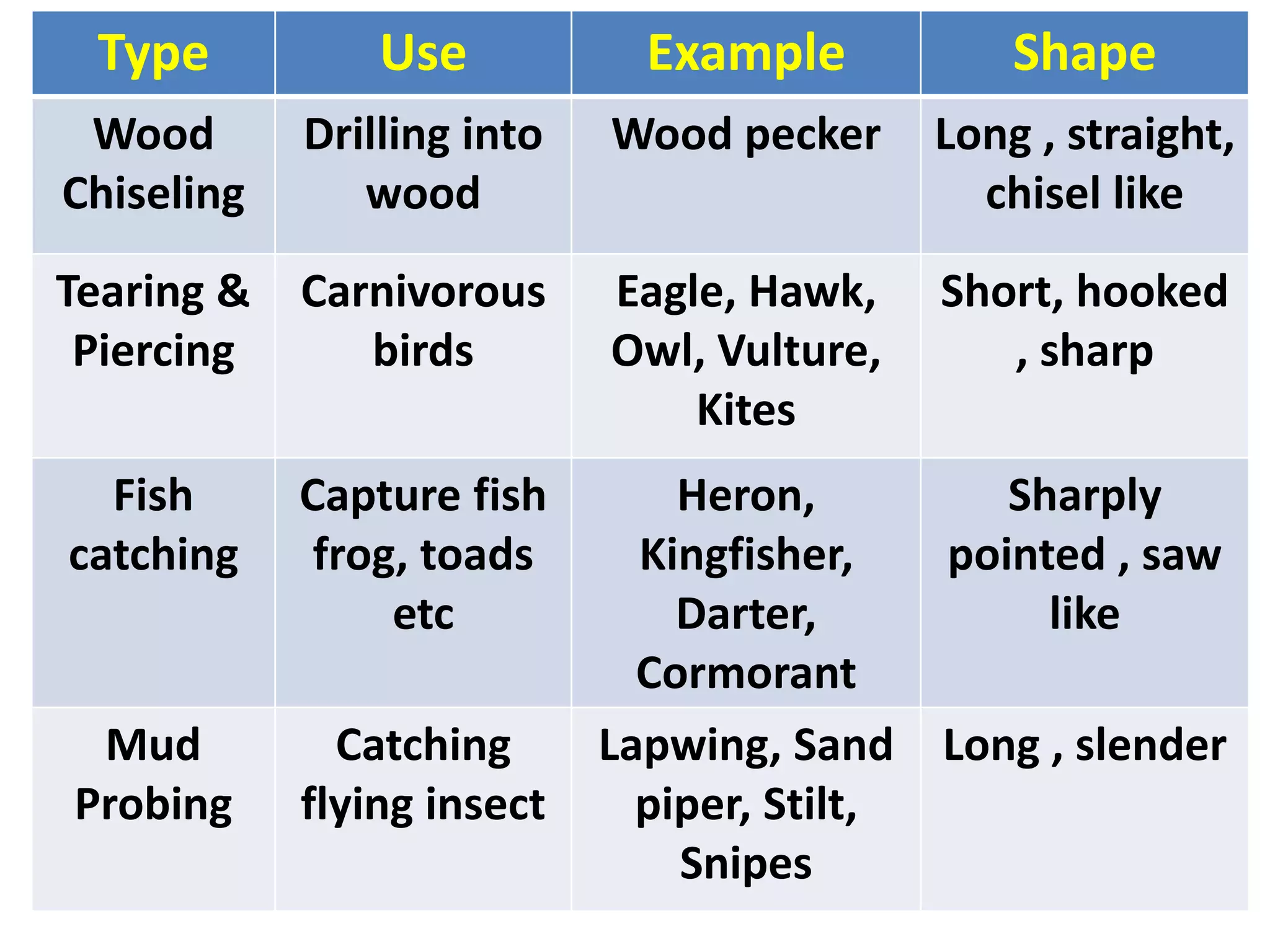
Type Use Example Shape
Wood
Chiseling
Drilling into
wood
Wood pecker Long , straight,
chisel like
Tearing &
Piercing
Carnivorous
birds
Eagle, Hawk,
Owl, Vulture,
Kites
Short, hooked
, sharp
Fish
catching
Capture fish
frog, toads
etc
Heron,
Kingfisher,
Darter,
Cormorant
Sharply
pointed , saw
like
Mud
Probing
Catching
flying insect
Lapwing, Sand
piper, Stilt,
Snipes
Long , slender
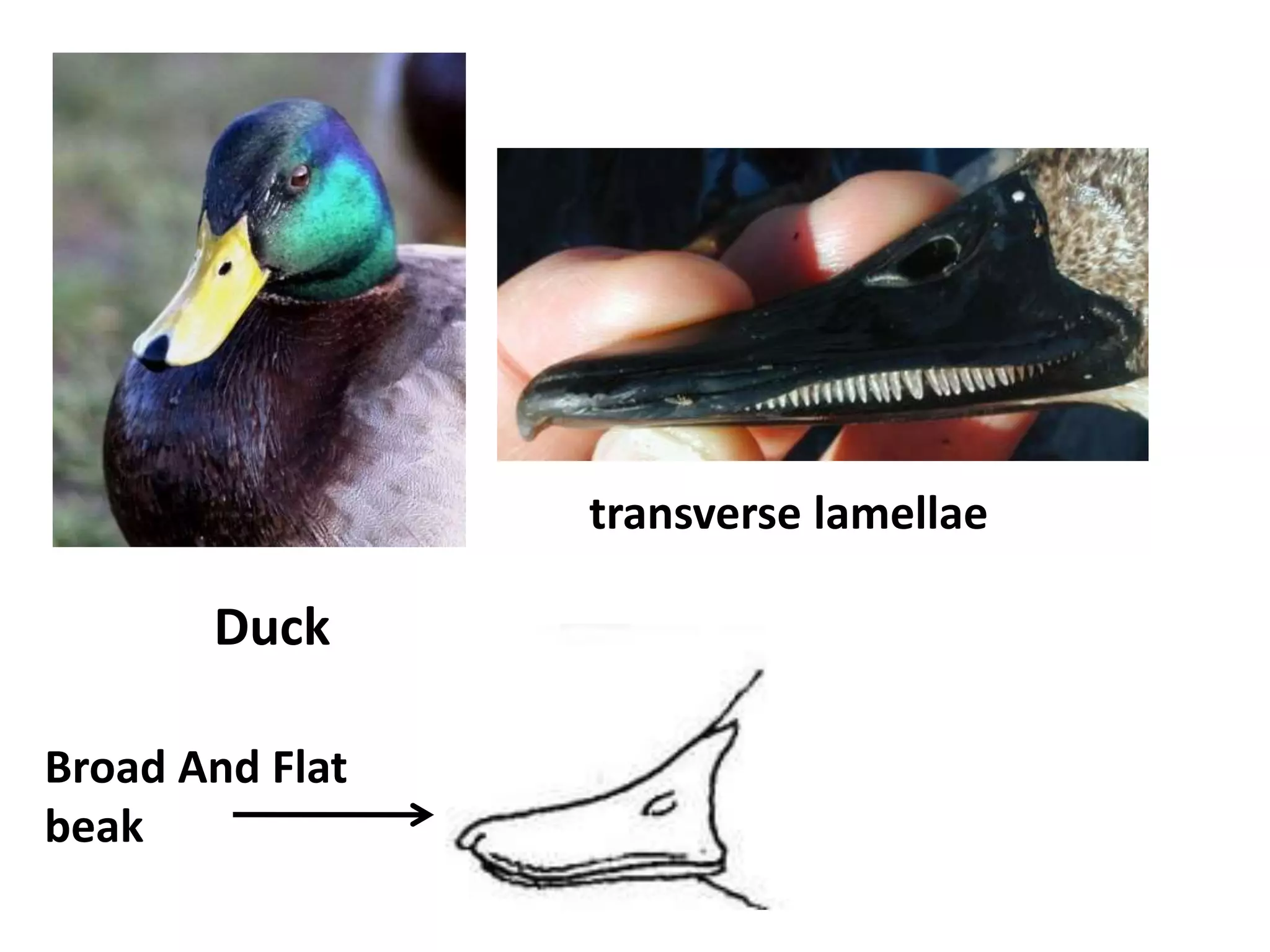
9. Water & mud straining
• Edges of jaws- modified into Horney serrations
or transverse lamellae
• Acts as sieves or strainer
• Example: flamingo – curved , downward &
with transverse lamellae
Broad And Flat
beak
Duck
transverse lamellae
10. Spatulate
• Flattened beak
• Terminate in broad spoon
• Dabbling in water & mud for
insects, fish, worm etc.
• Example: spoon bill
11. Pouched
• Attached to lower mandible
• Acts as fishing net
• Pouch like extensile skin
• Example: pelican
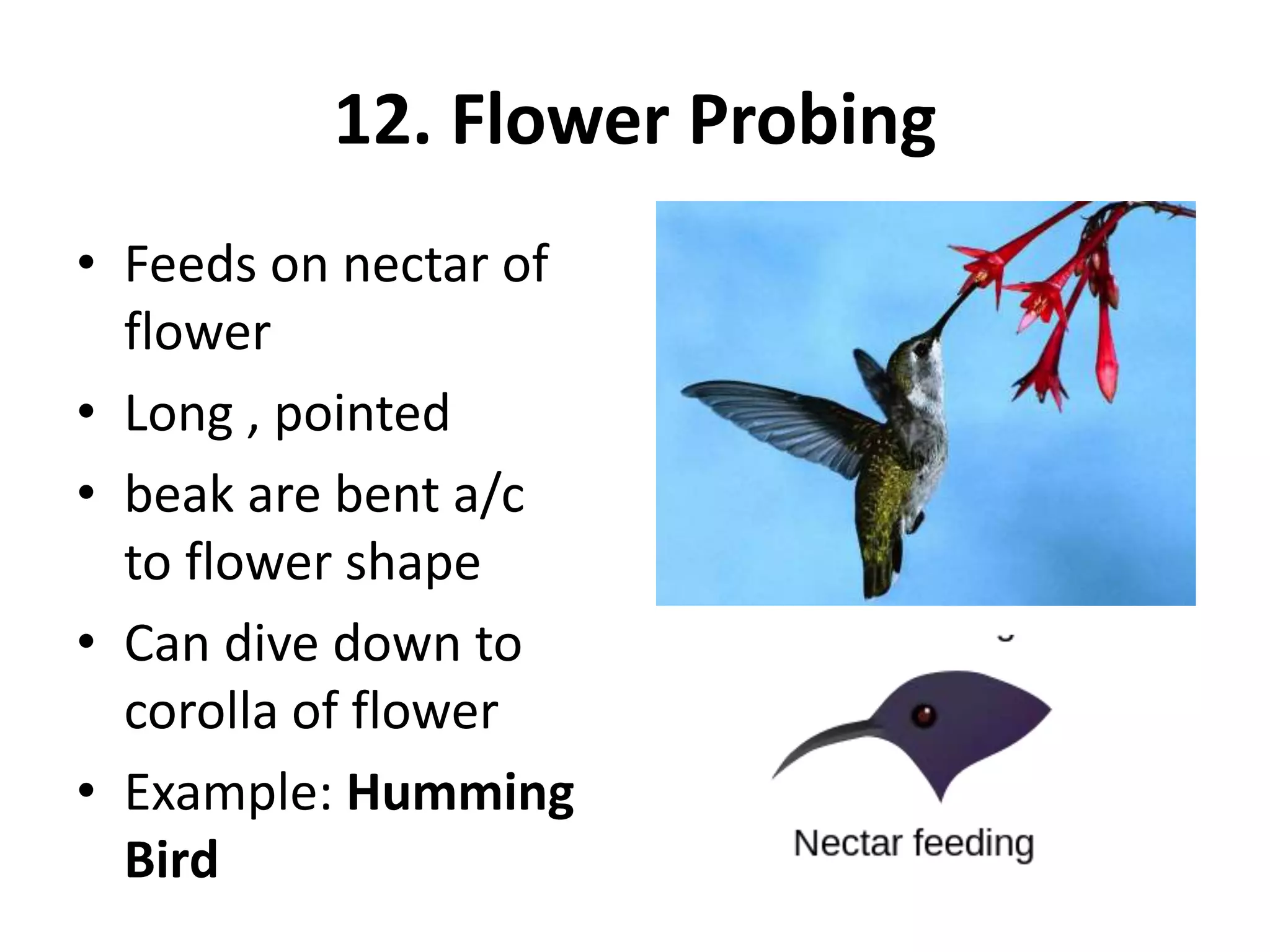
12. Flower Probing
• Feeds on nectar of
flower
• Long , pointed
• beak are bent a/c
to flower shape
• Can dive down to
corolla of flower
• Example: Humming
Bird
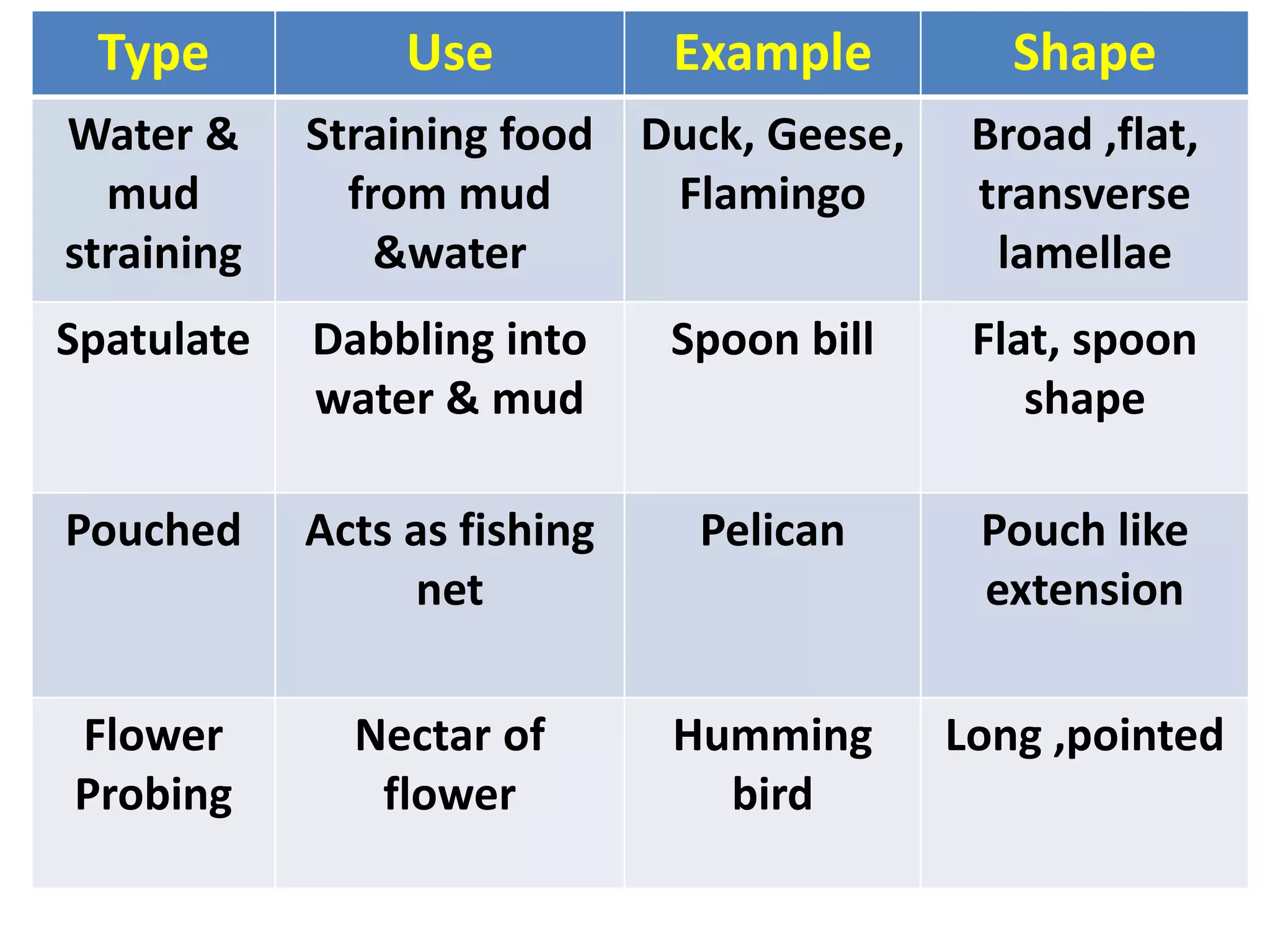
Type Use Example Shape
Water &
mud
straining
Straining food
from mud
&water
Duck, Geese,
Flamingo
Broad ,flat,
transverse
lamellae
Spatulate Dabbling into
water & mud
Spoon bill Flat, spoon
shape
Pouched Acts as fishing
net
Pelican Pouch like
extension
Flower
Probing
Nectar of
flower
Humming
bird
Long ,pointed
Beak modifications in birds

  • 1.
  • 2.
    Objectives • Types ofbeak modifications in birds • Examples of birds with beak modification
  • 3.
    Introduction • Birds- absenceof teeth • Modified jaw bones – beak • Covered with sheath- Rhamphotheca • Beak = Fore Limb + Teeth • Variations - depending on food type and functions
  • 4.
    1. Seed eatingbeak • Strong, stout, short, conical • Broad at base & pointed at tip • Crushes large hard shelled seeds & fruits • Gram eating birds Small conical beak
  • 5.
  • 6.
    2. Cutting andbiting type • Strong, sharp with cutting edges • Long and slender Crow
  • 7.
    3. Fruit eatingbeak • Break hard fruit nuts • Use for gnawing hard nuts & seeds, tearing fruits • Parrot- sharp, powerful, hooked, extremely strong
  • 8.
    • Hornbill –large, enormous, heavy, cumbersome • Light in weight, interior is cellular • Acts as resonator to produce loud cry
  • 9.
    4. Insectivorous beak •Catch insect when they are flying • Small, wide , delicate • Examples: swallows ,swifts , robin
  • 10.
    • Fly catcher:short, strong ,notched mandible at tip • bristles at base swifts Robin
  • 11.
    • Hoopoe :long, slender slightly curved • For turning leaves & probing soil for insects grubs and pupae.
  • 12.
    Type Use ExampleShape Seed Eating Crushes hard seed Sparrow, fiches, cardinals Strong, Conical, base broad, pointed tip Cutting & Biting Cutting and biting crow Strong, long, slender Sharp edge Fruit Eating Breaking hard fruit Parrot, hornbill Sharp, Hooked, strong Insectivorous Catching flying insect Fly catcher, swallows , swift, hoopoe Small, wide, delicate
  • 13.
    5. Wood chiselingbeak • Long, straight , stout, chisel like • Drilling wood for insect or nest building • Thickened, shock absorbing skull bone • Strong neck muscle • Ex: wood pecker
  • 14.
    6. Tearing &Piercing • Carnivorous birds • Short, pointed, sharp, edged, powerful, hooked • For tearing flesh • Well developed mandibular muscle • Example: Eagle, Owls, Kites, Hawks, Vulture
  • 15.
  • 17.
    7. Fish catchingbeak • Long , powerful, sharply pointed • Capture fish , frogs, toads, aquatic animals
  • 18.
    • Cormorant: long, narrow with curved edges sharp backwardly directed teeth • Indian Darter or snake bird: saw like teeth like fine needle
  • 19.
    8. Mud probingbeak • Extremely long , slender • Long probes for searching down into mud Stilt
  • 20.
  • 21.
    Type Use ExampleShape Wood Chiseling Drilling into wood Wood pecker Long , straight, chisel like Tearing & Piercing Carnivorous birds Eagle, Hawk, Owl, Vulture, Kites Short, hooked , sharp Fish catching Capture fish frog, toads etc Heron, Kingfisher, Darter, Cormorant Sharply pointed , saw like Mud Probing Catching flying insect Lapwing, Sand piper, Stilt, Snipes Long , slender
  • 22.
    9. Water &mud straining • Edges of jaws- modified into Horney serrations or transverse lamellae • Acts as sieves or strainer • Example: flamingo – curved , downward & with transverse lamellae
  • 23.
  • 24.
    10. Spatulate • Flattenedbeak • Terminate in broad spoon • Dabbling in water & mud for insects, fish, worm etc. • Example: spoon bill
  • 25.
    11. Pouched • Attachedto lower mandible • Acts as fishing net • Pouch like extensile skin • Example: pelican
  • 26.
    12. Flower Probing •Feeds on nectar of flower • Long , pointed • beak are bent a/c to flower shape • Can dive down to corolla of flower • Example: Humming Bird
  • 27.
    Type Use ExampleShape Water & mud straining Straining food from mud &water Duck, Geese, Flamingo Broad ,flat, transverse lamellae Spatulate Dabbling into water & mud Spoon bill Flat, spoon shape Pouched Acts as fishing net Pelican Pouch like extension Flower Probing Nectar of flower Humming bird Long ,pointed