Basic Principles of Animal Form
   and Function
 Environmental Influences on
 Physiology                       Organization of Body Plans

 Laws of Physics governing        Cells
  strength, diffusion, movement      Tissues
  , and heat exchange.                  Organs
 For example, fast swimmers               Organ Systems
  develop tapered, streamlined
                                   Four main kinds of tissues:
  bodies.
                                    epithelial, connective, mus
 The animal’s need to exchange     cle, and nervous
  materials with its               Two major systems for
  environment.                      control and coordination:
                                    The Endocrine System and
                                    the Nervous System.
Maintaining Internal
Environments
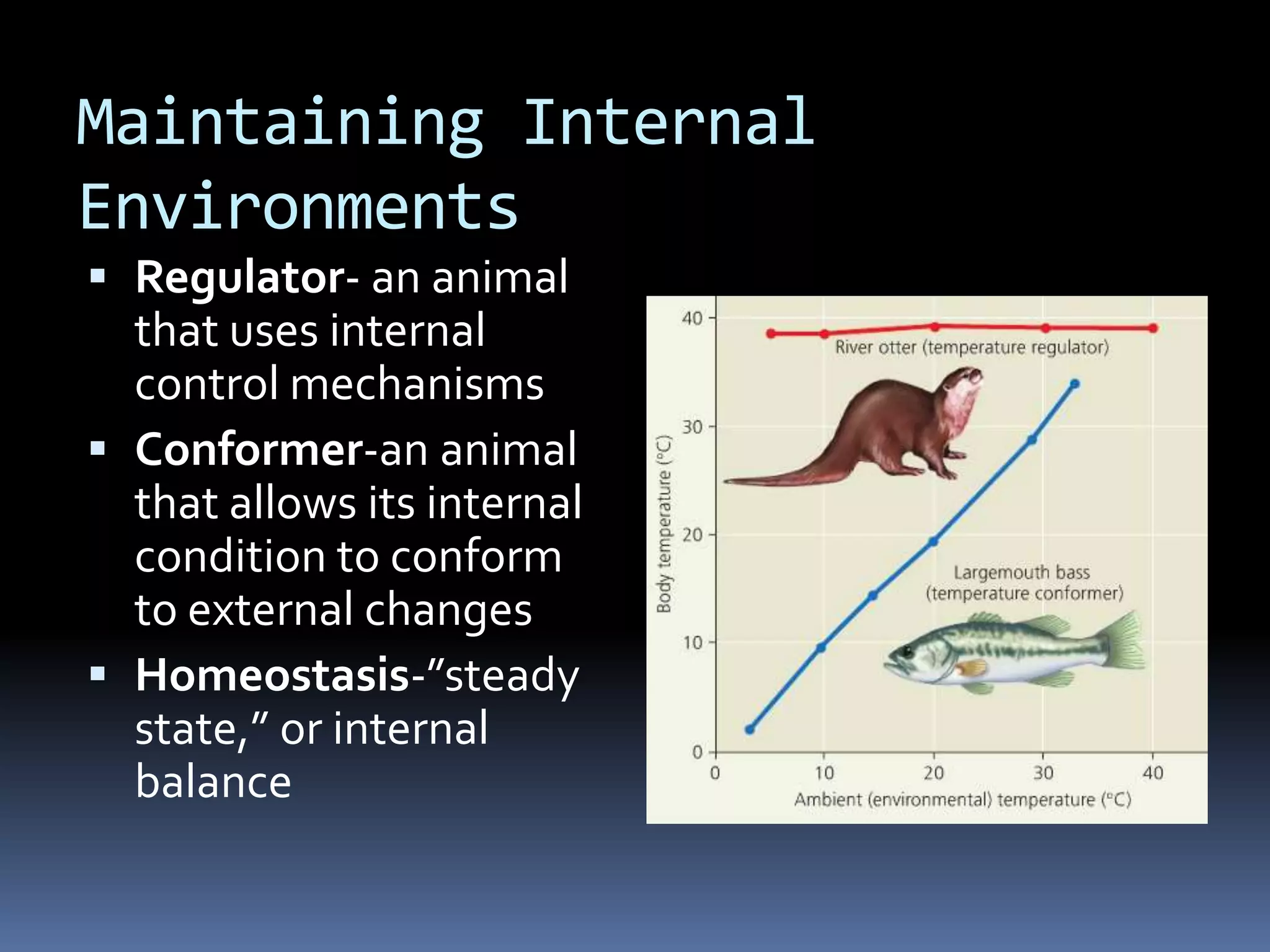
 Regulator- an animal
  that uses internal
  control mechanisms
 Conformer-an animal
  that allows its internal
  condition to conform
  to external changes
 Homeostasis-”steady
  state,” or internal
  balance
Thermoregulation
                              Organisms exchange heat
 Thermoregulation-the         by
  process by which animals     conduction, convection, radi
  maintain an internal         ation, and evaporation
  temperature within a        Hypothalamus-the region
  tolerable range              in the brain where sensors
 Endothermic-warmed by        for thermoregulation are
  heat generated by            concentrated
  metabolism                  Animals acclimate
 Ectothermic-gain most of     themselves to changes in
  their heat from external     temperatures. For
  sources                      example, endotherms may
                               vary insulation, while
                               ectotherms may adjust on a
Energy Requirements

 Related to animal            Metabolic rate is affected
  size, activity, and           by
  environment                   age, sex, size, activity, te
 Bioenergetics-the overall     mperature, and nutrition.
  flow of transformation of    Torpor-A physiological
  energy in an animal           state in which activity is
 The amount of energy an       low and metabolism
  animal uses in a unit of      decreases. Allows animals
  time is called its            to save energy while
  metabolic rate-the sum of     avoiding difficult and
  all the energy-requiring      dangerous conditions.
  biochemical reactions
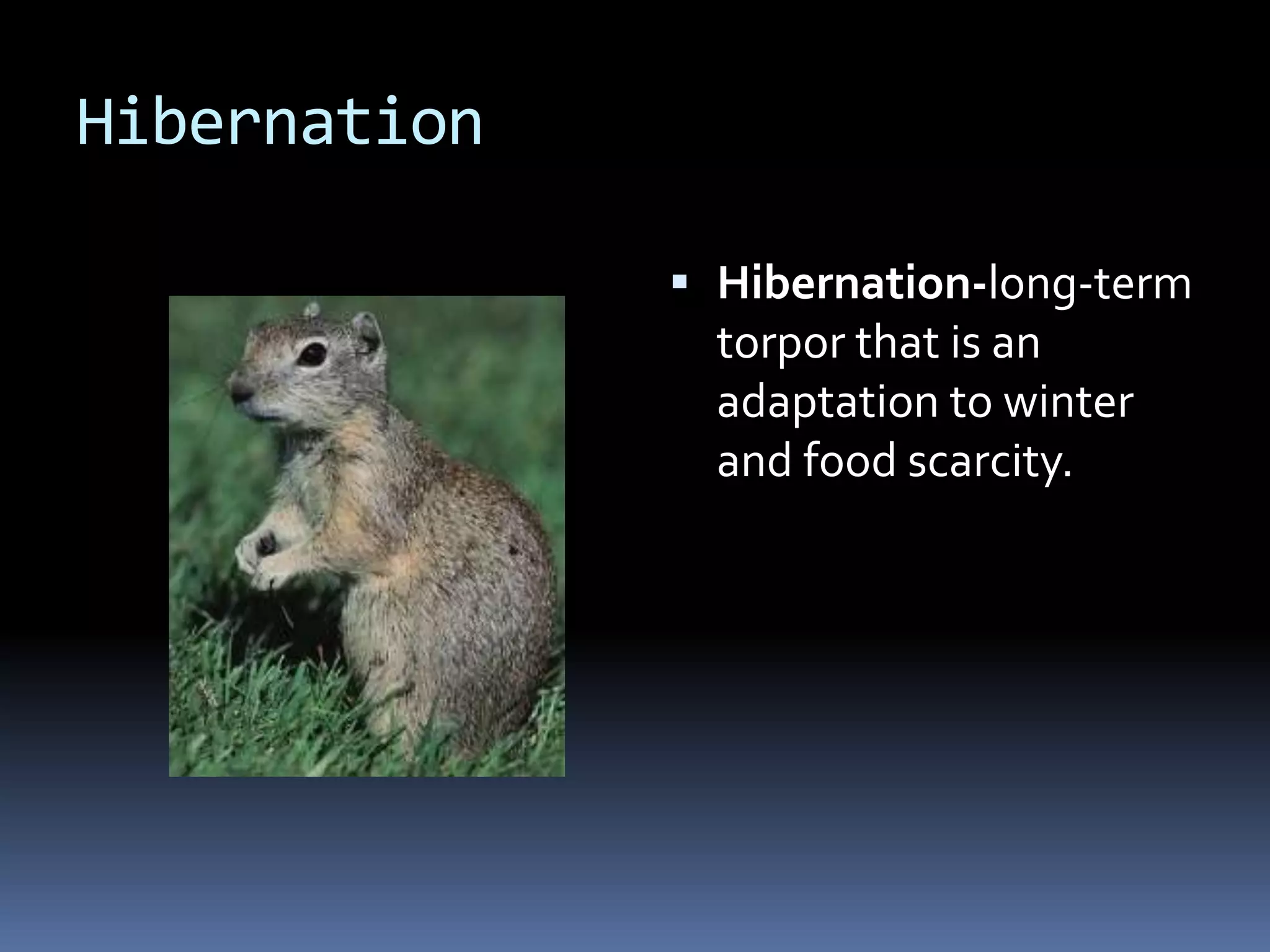
Hibernation

               Hibernation-long-term
                torpor that is an
                adaptation to winter
                and food scarcity.

Basic principles of animal form and function

  • 1.
    Basic Principles ofAnimal Form and Function Environmental Influences on Physiology Organization of Body Plans  Laws of Physics governing  Cells strength, diffusion, movement  Tissues , and heat exchange.  Organs  For example, fast swimmers  Organ Systems develop tapered, streamlined  Four main kinds of tissues: bodies. epithelial, connective, mus  The animal’s need to exchange cle, and nervous materials with its  Two major systems for environment. control and coordination: The Endocrine System and the Nervous System.
  • 2.
    Maintaining Internal Environments  Regulator-an animal that uses internal control mechanisms  Conformer-an animal that allows its internal condition to conform to external changes  Homeostasis-”steady state,” or internal balance
  • 3.
    Thermoregulation  Organisms exchange heat  Thermoregulation-the by process by which animals conduction, convection, radi maintain an internal ation, and evaporation temperature within a  Hypothalamus-the region tolerable range in the brain where sensors  Endothermic-warmed by for thermoregulation are heat generated by concentrated metabolism  Animals acclimate  Ectothermic-gain most of themselves to changes in their heat from external temperatures. For sources example, endotherms may vary insulation, while ectotherms may adjust on a
  • 4.
    Energy Requirements  Relatedto animal  Metabolic rate is affected size, activity, and by environment age, sex, size, activity, te  Bioenergetics-the overall mperature, and nutrition. flow of transformation of  Torpor-A physiological energy in an animal state in which activity is  The amount of energy an low and metabolism animal uses in a unit of decreases. Allows animals time is called its to save energy while metabolic rate-the sum of avoiding difficult and all the energy-requiring dangerous conditions. biochemical reactions
  • 5.
    Hibernation  Hibernation-long-term torpor that is an adaptation to winter and food scarcity.