A Guide to the Method
Section: Design
Keys to this Section
 The independent and dependent variables are
identified and operationalized.
 The experimental design is appropriate to the aim and
its use is appropriately justified.
 There is clear identification and documentation of how
ethical guidelines were followed.
Example Research
Question/Study
 Does listening to music impact memory?
Independent and Dependent
Variable
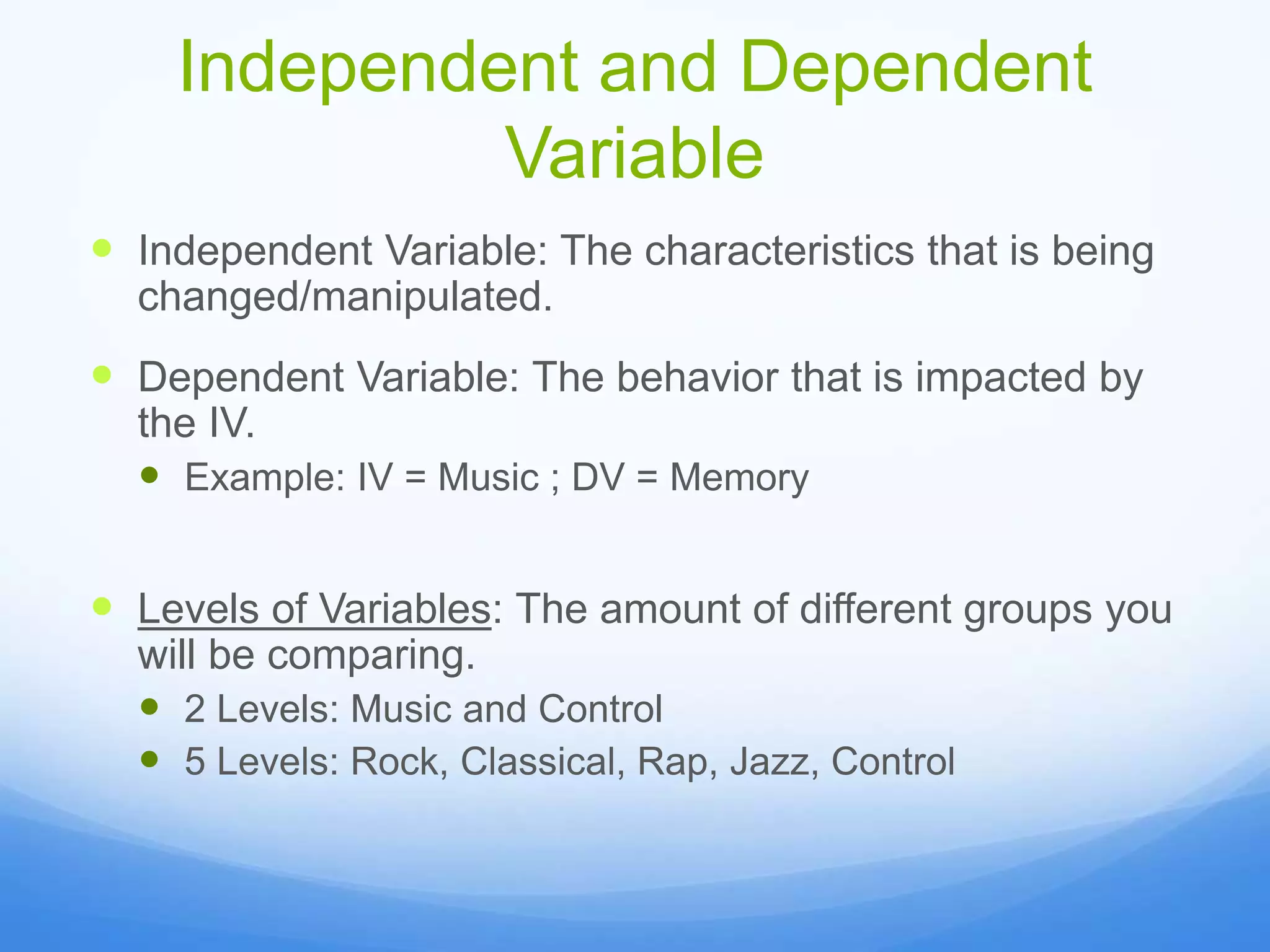
 Independent Variable: The characteristics that is being
changed/manipulated.
 Dependent Variable: The behavior that is impacted by
the IV.
 Example: IV = Music ; DV = Memory
 Levels of Variables: The amount of different groups you
will be comparing.
 2 Levels: Music and Control
 5 Levels: Rock, Classical, Rap, Jazz, Control
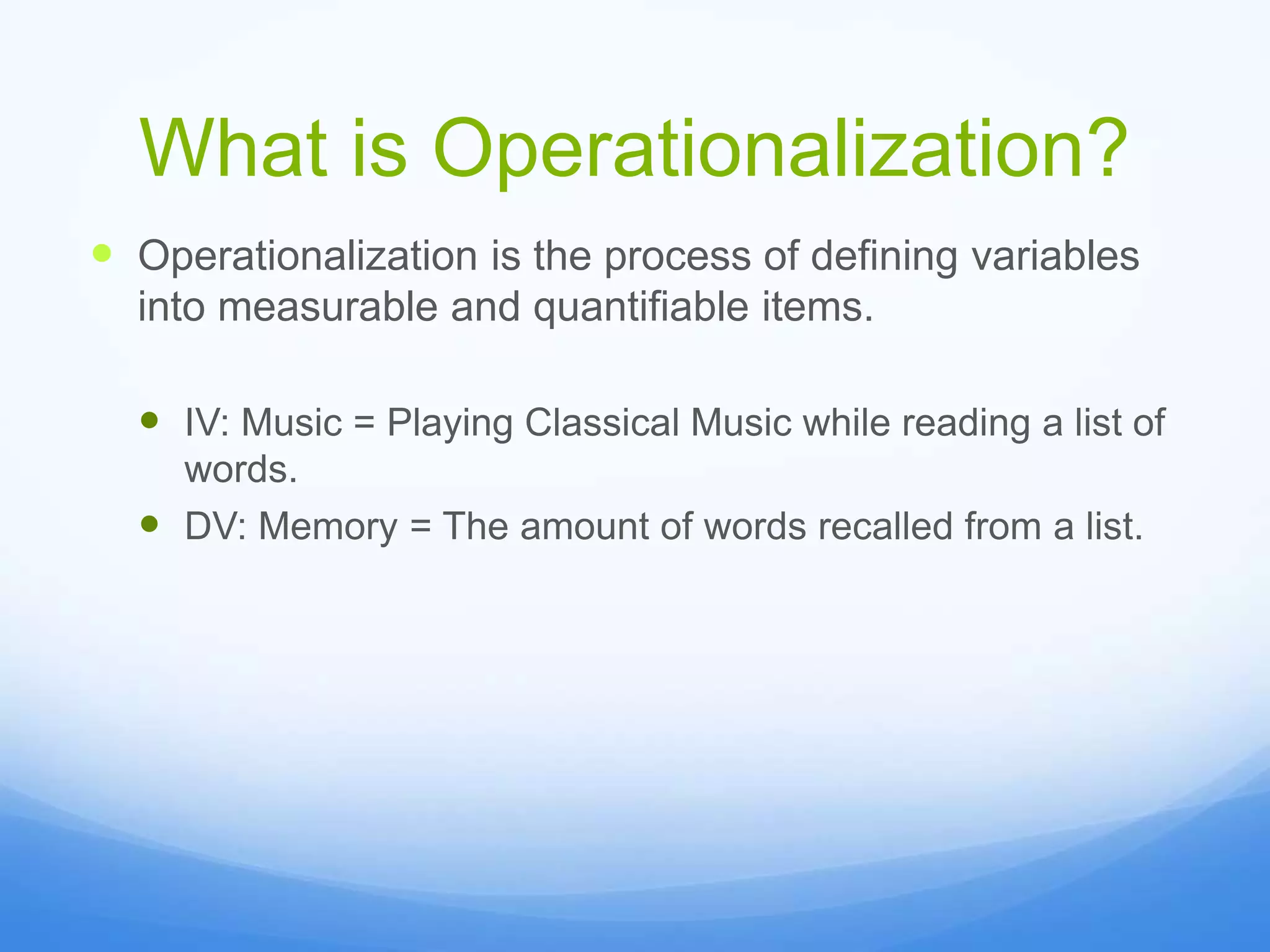
What is Operationalization?
 Operationalization is the process of defining variables
into measurable and quantifiable items.
 IV: Music = Playing Classical Music while reading a list of
words.
 DV: Memory = The amount of words recalled from a list.
Your Turn…
 Identify the IV and DV from your research.
 Write them in operationalized form.
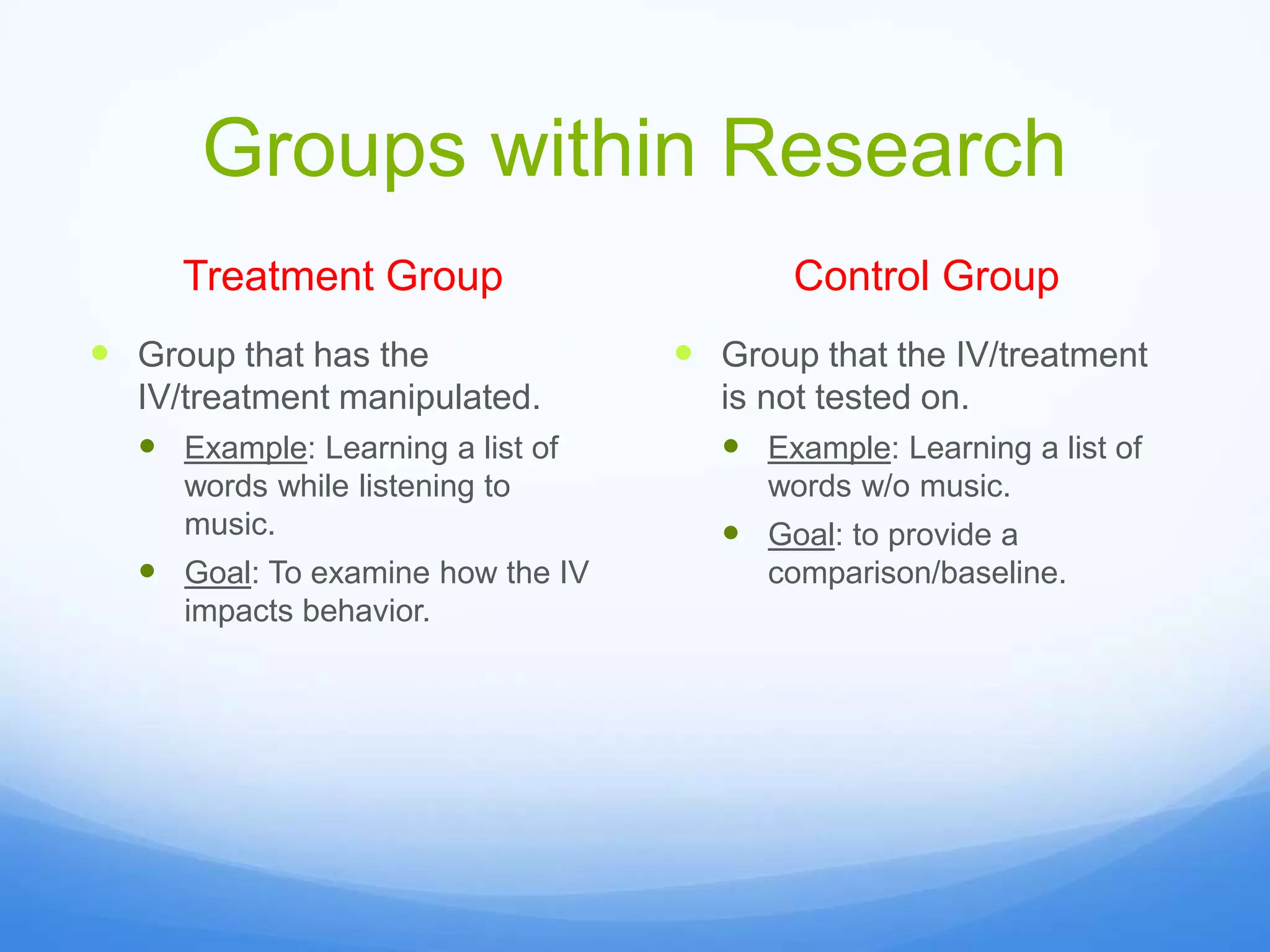
Groups within Research
Treatment Group
 Group that has the
IV/treatment manipulated.
 Example: Learning a list of
words while listening to
music.
 Goal: To examine how the IV
impacts behavior.
Control Group
 Group that the IV/treatment
is not tested on.
 Example: Learning a list of
words w/o music.
 Goal: to provide a
comparison/baseline.
Your Turn…
 Identify the treatment and control group within your
experiment.
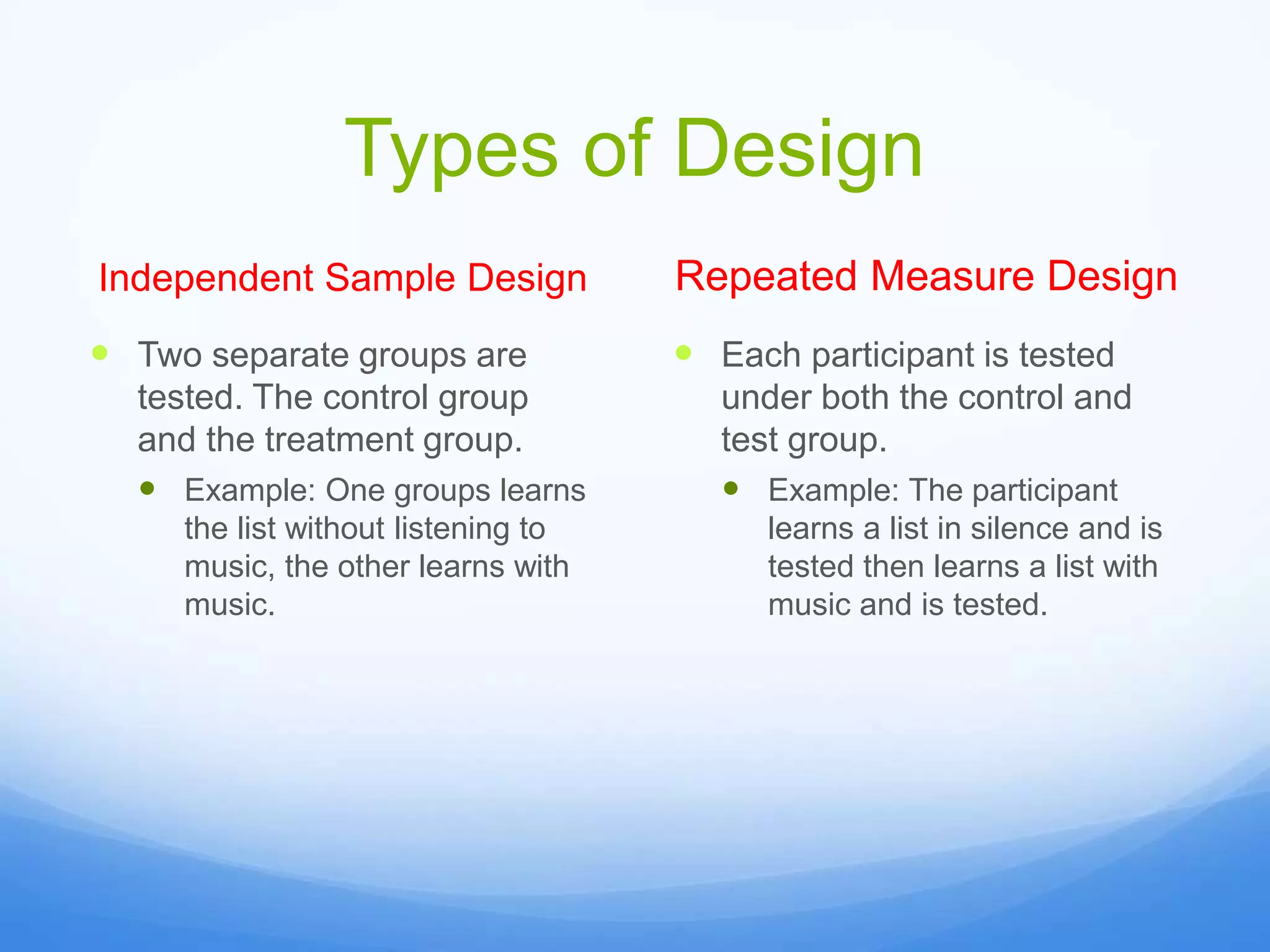
Types of Design
Independent Sample Design
 Two separate groups are
tested. The control group
and the treatment group.
 Example: One groups learns
the list without listening to
music, the other learns with
music.
Repeated Measure Design
 Each participant is tested
under both the control and
test group.
 Example: The participant
learns a list in silence and is
tested then learns a list with
music and is tested.
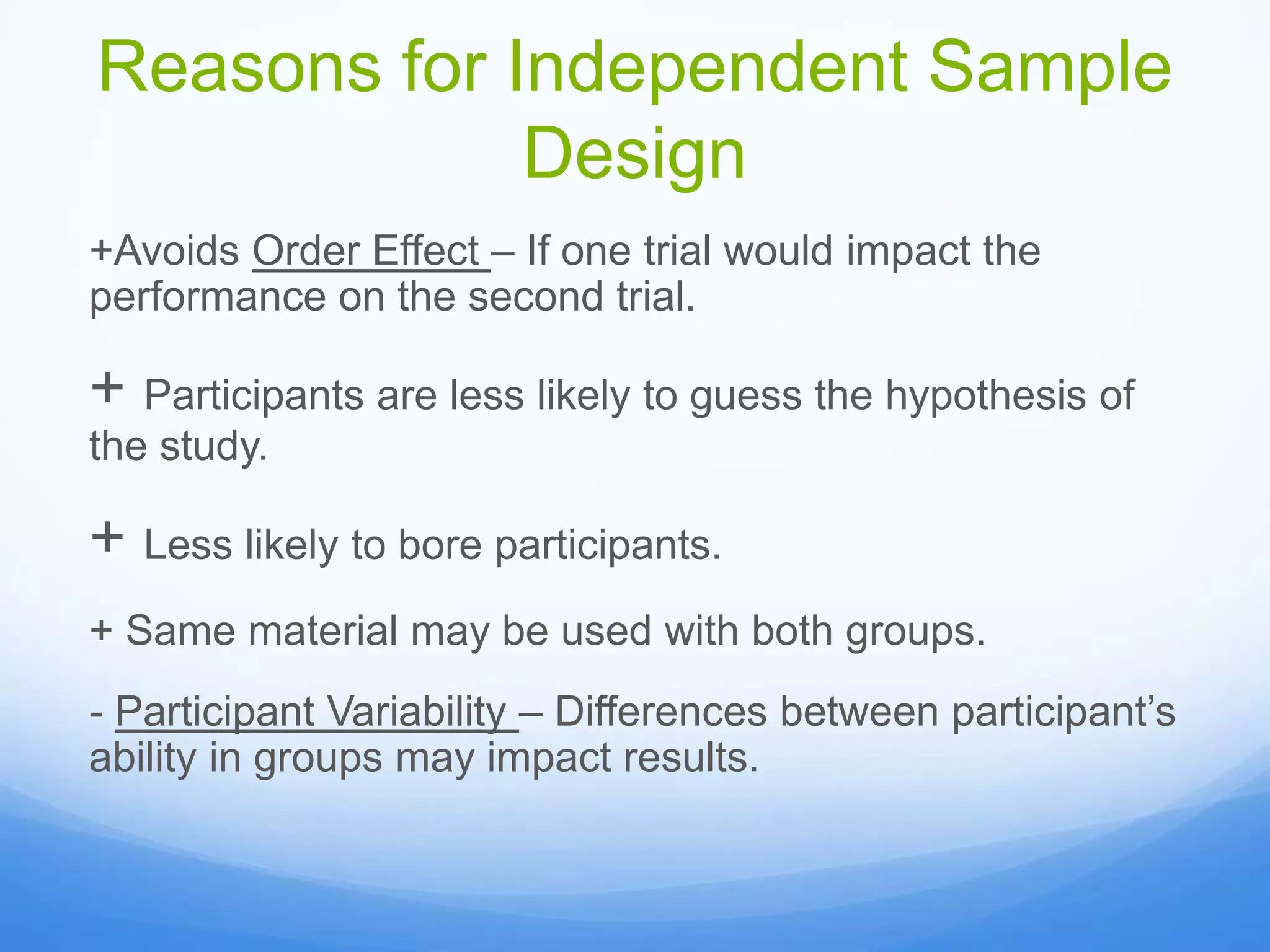
Reasons for Independent Sample
Design
+Avoids Order Effect – If one trial would impact the
performance on the second trial.
+ Participants are less likely to guess the hypothesis of
the study.
+ Less likely to bore participants.
+ Same material may be used with both groups.
- Participant Variability – Differences between participant’s
ability in groups may impact results.
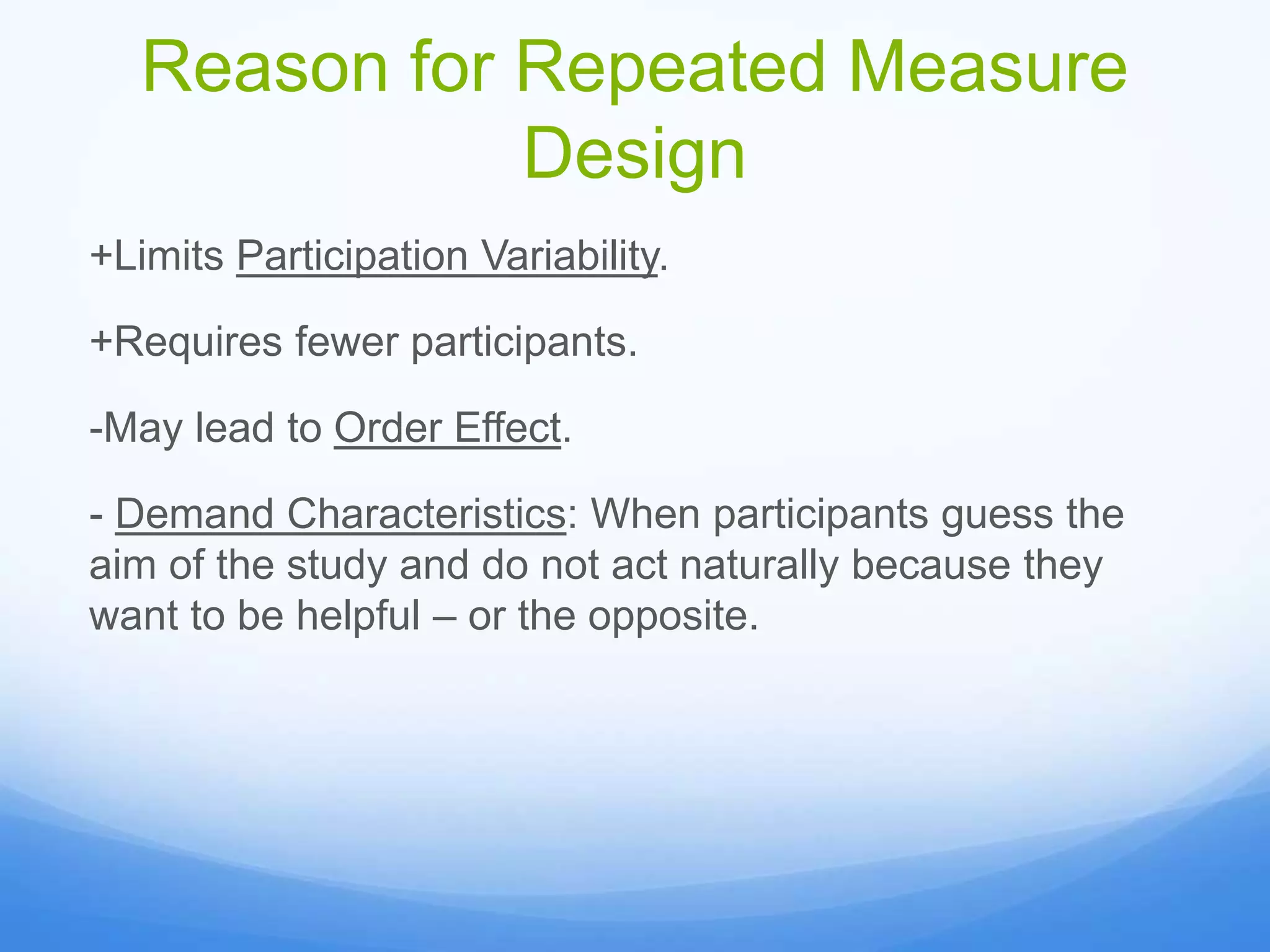
Reason for Repeated Measure
Design
+Limits Participation Variability.
+Requires fewer participants.
-May lead to Order Effect.
- Demand Characteristics: When participants guess the
aim of the study and do not act naturally because they
want to be helpful – or the opposite.
Your Turn…
 Identify which type of design you will use and explain
why. (Strengths and limitations)
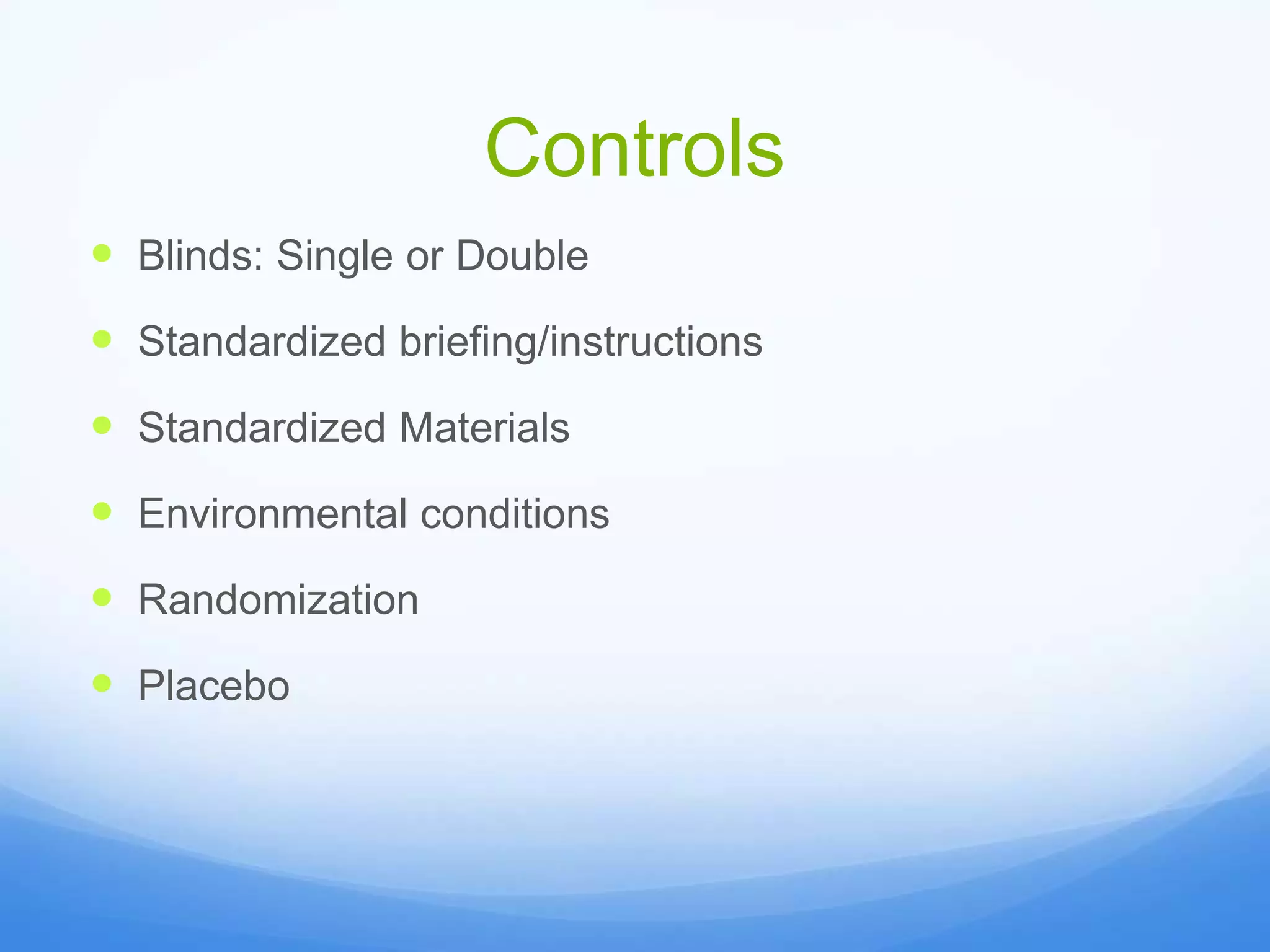
Controls
 Blinds: Single or Double
 Standardized briefing/instructions
 Standardized Materials
 Environmental conditions
 Randomization
 Placebo
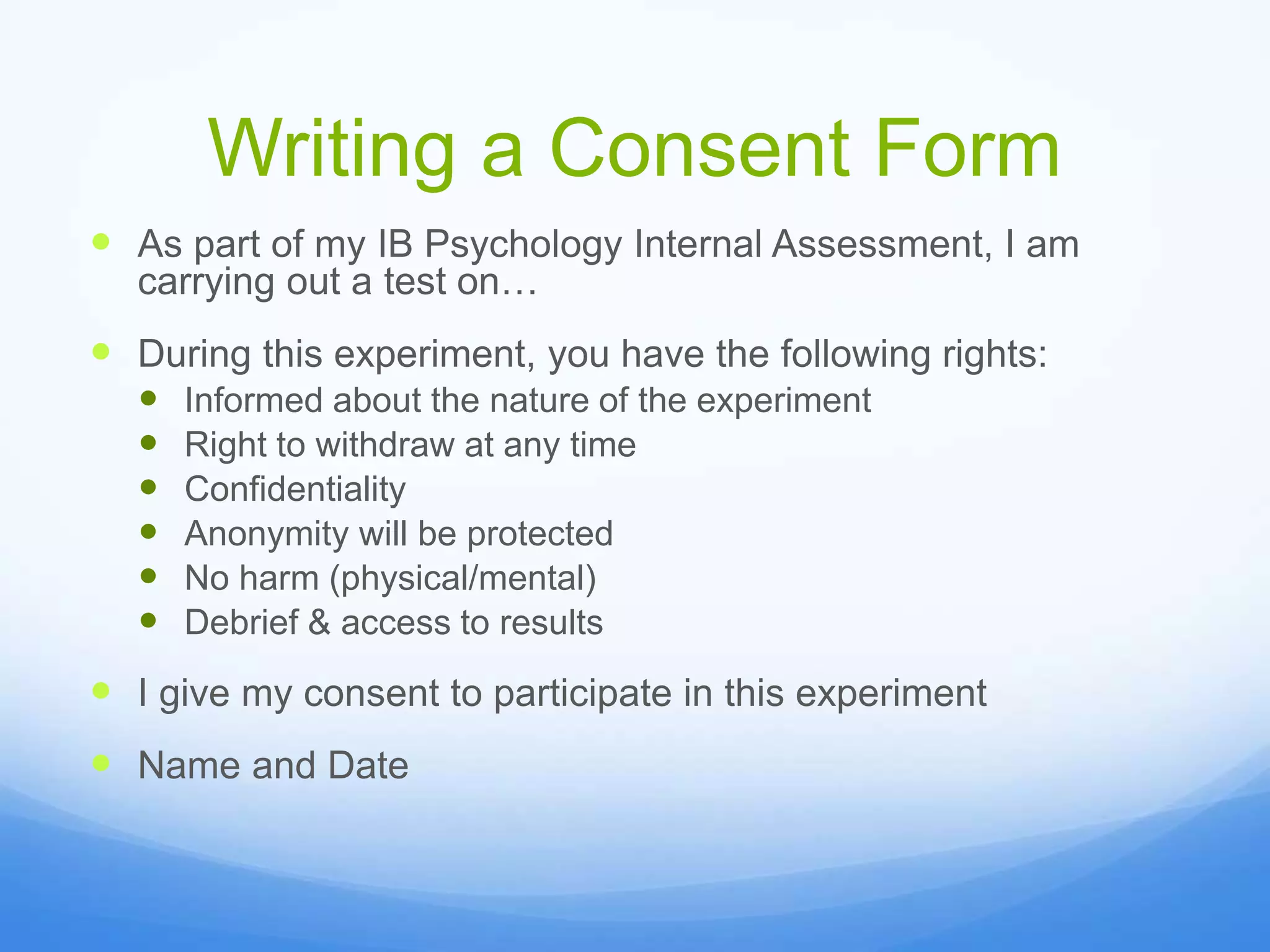
Writing a Consent Form
 As part of my IB Psychology Internal Assessment, I am
carrying out a test on…
 During this experiment, you have the following rights:
 Informed about the nature of the experiment
 Right to withdraw at any time
 Confidentiality
 Anonymity will be protected
 No harm (physical/mental)
 Debrief & access to results
 I give my consent to participate in this experiment
 Name and Date
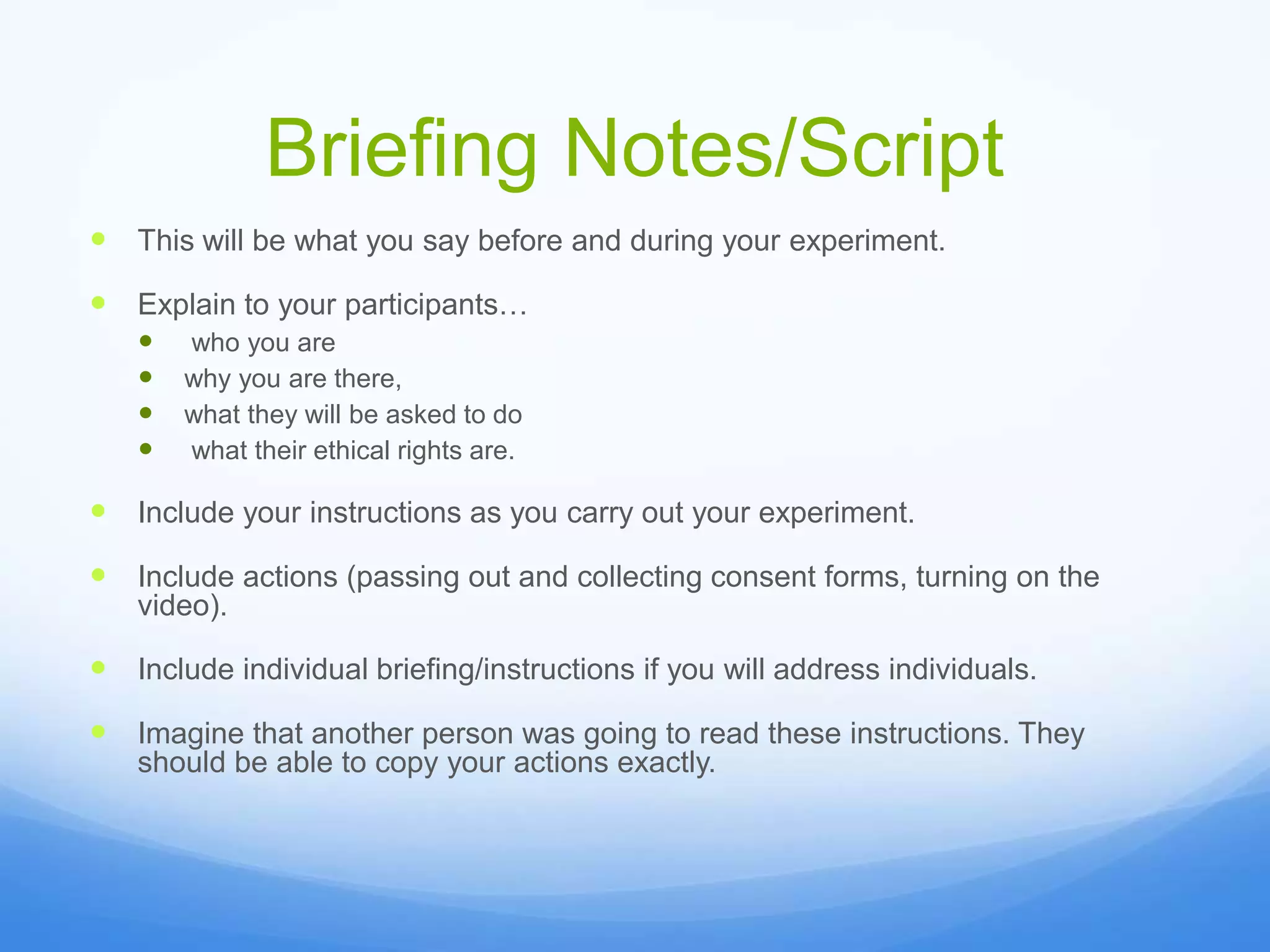
Briefing Notes/Script
 This will be what you say before and during your experiment.
 Explain to your participants…
 who you are
 why you are there,
 what they will be asked to do
 what their ethical rights are.
 Include your instructions as you carry out your experiment.
 Include actions (passing out and collecting consent forms, turning on the
video).
 Include individual briefing/instructions if you will address individuals.
 Imagine that another person was going to read these instructions. They
should be able to copy your actions exactly.
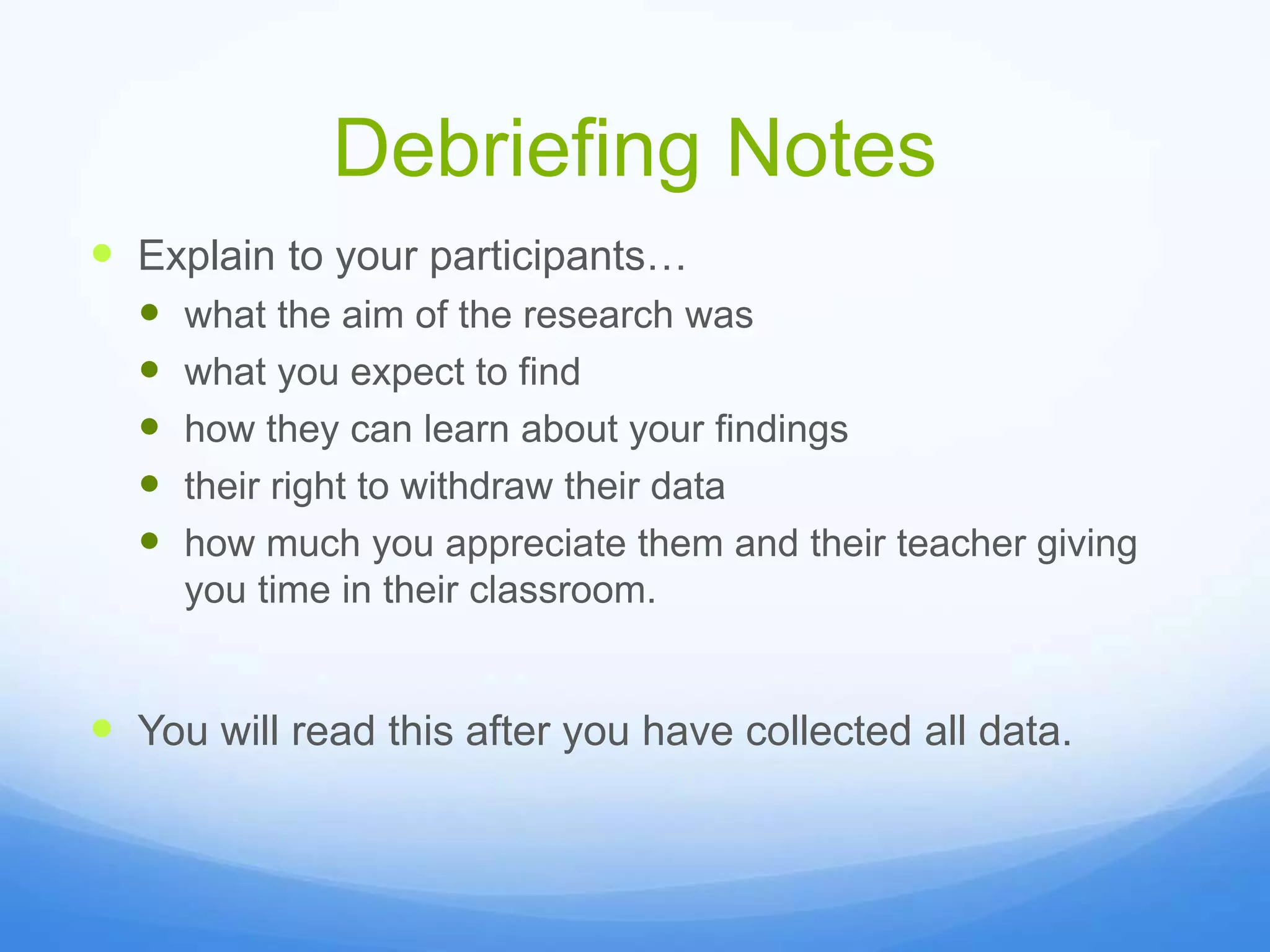
Debriefing Notes
 Explain to your participants…
 what the aim of the research was
 what you expect to find
 how they can learn about your findings
 their right to withdraw their data
 how much you appreciate them and their teacher giving
you time in their classroom.
 You will read this after you have collected all data.
A Guide to the
Method Section:
Participants
Keys to this sections
 Relevant characteristics of the participants are
identified.
 The sample is selected using an appropriate method
and the use of this method is explained.
Participant Characteristics
 Number of Participants
 Average Age
 Grade
 Number from each Gender
 Other Relevant characteristics to your study (Drivers
License?)
You will collect this information when you are performing your
experiment.
Sampling Techniques
 Random: randomly selecting individuals from a
population…Good chance that it will be representative.
 Opportunity: Participants are used because they are
available…May not be representative of whole
population
 Systematic: Selecting certain individuals with certain
traits.
A Guide to the Method
Section: Procedure
Keys to this Section
 The procedural information is relevant, clearly
described and is easily replicable.
 Necessary materials have been included and
referenced in the appendices.
 Ethical guidelines are followed.
Materials
 What will you need? Be specific.
 What will your participants need? Be specific.
 A bullet-point list is fine…
 Include copies or links to all materials in your
appendices.
Gathering/Creating Materials
 Create a plan for gathering your resources by next
class.
 Create the questionnaire or lists that will be needed for
your experiment. (Keep a copy to put in your
appendices)
Procedures
 Detailed step-by-step of how will perform your
experiment.
 Include reference to your use of scripts and inclusion of
notification of ethical considerations.

IA Method Section Guide

  • 1.
    A Guide tothe Method Section: Design
  • 2.
    Keys to thisSection  The independent and dependent variables are identified and operationalized.  The experimental design is appropriate to the aim and its use is appropriately justified.  There is clear identification and documentation of how ethical guidelines were followed.
  • 3.
    Example Research Question/Study  Doeslistening to music impact memory?
  • 4.
    Independent and Dependent Variable Independent Variable: The characteristics that is being changed/manipulated.  Dependent Variable: The behavior that is impacted by the IV.  Example: IV = Music ; DV = Memory  Levels of Variables: The amount of different groups you will be comparing.  2 Levels: Music and Control  5 Levels: Rock, Classical, Rap, Jazz, Control
  • 5.
    What is Operationalization? Operationalization is the process of defining variables into measurable and quantifiable items.  IV: Music = Playing Classical Music while reading a list of words.  DV: Memory = The amount of words recalled from a list.
  • 6.
    Your Turn…  Identifythe IV and DV from your research.  Write them in operationalized form.
  • 7.
    Groups within Research TreatmentGroup  Group that has the IV/treatment manipulated.  Example: Learning a list of words while listening to music.  Goal: To examine how the IV impacts behavior. Control Group  Group that the IV/treatment is not tested on.  Example: Learning a list of words w/o music.  Goal: to provide a comparison/baseline.
  • 8.
    Your Turn…  Identifythe treatment and control group within your experiment.
  • 9.
    Types of Design IndependentSample Design  Two separate groups are tested. The control group and the treatment group.  Example: One groups learns the list without listening to music, the other learns with music. Repeated Measure Design  Each participant is tested under both the control and test group.  Example: The participant learns a list in silence and is tested then learns a list with music and is tested.
  • 10.
    Reasons for IndependentSample Design +Avoids Order Effect – If one trial would impact the performance on the second trial. + Participants are less likely to guess the hypothesis of the study. + Less likely to bore participants. + Same material may be used with both groups. - Participant Variability – Differences between participant’s ability in groups may impact results.
  • 11.
    Reason for RepeatedMeasure Design +Limits Participation Variability. +Requires fewer participants. -May lead to Order Effect. - Demand Characteristics: When participants guess the aim of the study and do not act naturally because they want to be helpful – or the opposite.
  • 12.
    Your Turn…  Identifywhich type of design you will use and explain why. (Strengths and limitations)
  • 13.
    Controls  Blinds: Singleor Double  Standardized briefing/instructions  Standardized Materials  Environmental conditions  Randomization  Placebo
  • 14.
    Writing a ConsentForm  As part of my IB Psychology Internal Assessment, I am carrying out a test on…  During this experiment, you have the following rights:  Informed about the nature of the experiment  Right to withdraw at any time  Confidentiality  Anonymity will be protected  No harm (physical/mental)  Debrief & access to results  I give my consent to participate in this experiment  Name and Date
  • 15.
    Briefing Notes/Script  Thiswill be what you say before and during your experiment.  Explain to your participants…  who you are  why you are there,  what they will be asked to do  what their ethical rights are.  Include your instructions as you carry out your experiment.  Include actions (passing out and collecting consent forms, turning on the video).  Include individual briefing/instructions if you will address individuals.  Imagine that another person was going to read these instructions. They should be able to copy your actions exactly.
  • 16.
    Debriefing Notes  Explainto your participants…  what the aim of the research was  what you expect to find  how they can learn about your findings  their right to withdraw their data  how much you appreciate them and their teacher giving you time in their classroom.  You will read this after you have collected all data.
  • 17.
    A Guide tothe Method Section: Participants
  • 18.
    Keys to thissections  Relevant characteristics of the participants are identified.  The sample is selected using an appropriate method and the use of this method is explained.
  • 19.
    Participant Characteristics  Numberof Participants  Average Age  Grade  Number from each Gender  Other Relevant characteristics to your study (Drivers License?) You will collect this information when you are performing your experiment.
  • 20.
    Sampling Techniques  Random:randomly selecting individuals from a population…Good chance that it will be representative.  Opportunity: Participants are used because they are available…May not be representative of whole population  Systematic: Selecting certain individuals with certain traits.
  • 21.
    A Guide tothe Method Section: Procedure
  • 22.
    Keys to thisSection  The procedural information is relevant, clearly described and is easily replicable.  Necessary materials have been included and referenced in the appendices.  Ethical guidelines are followed.
  • 23.
    Materials  What willyou need? Be specific.  What will your participants need? Be specific.  A bullet-point list is fine…  Include copies or links to all materials in your appendices.
  • 24.
    Gathering/Creating Materials  Createa plan for gathering your resources by next class.  Create the questionnaire or lists that will be needed for your experiment. (Keep a copy to put in your appendices)
  • 25.
    Procedures  Detailed step-by-stepof how will perform your experiment.  Include reference to your use of scripts and inclusion of notification of ethical considerations.