HYSTERICAL DISORDERS
Presented By
Dr Vani Kulhalli, MD
Psychiatrist
SCOPE OF PRESENTATION
Overview of:
• Epidemiology
• Definition
• Clinical features and diagnosis
• Treatment
• Prognosis and outcome
EPIDEMIOLOGY
• Not common disorder- but epidemics are known
• Age and gender- certain symptoms seen in certain groups
• Risk factors- personality issues, history of trauma or
abuse, genetic factors unknown- but familial cases
• Co-morbities- depression/ anxiety/ personality/ stress
reactions
• Mechanism of occurrence- essentially psychological
reaction to unbearable situation
3 factors
Personality
Disease
Environment
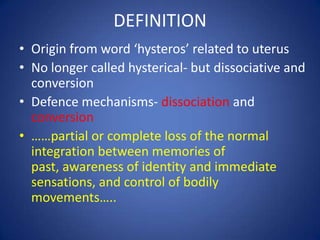
DEFINITION
• Origin from word ‘hysteros’ related to uterus
• No longer called hysterical- but dissociative and
conversion
• Defence mechanisms- dissociation and
conversion
• ……partial or complete loss of the normal
integration between memories of
past, awareness of identity and immediate
sensations, and control of bodily
movements…..
CLINICAL FEATURES
• Specific constellation of symptoms
• No evidence of physical disorder to explain
symptoms
• Evidence of psychological causation
TO BE NOTED:
Onset, duration, test reports, good
mood, recurrence or past history are not
diagnostic
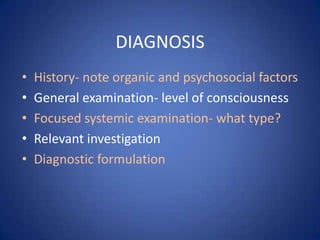
DIAGNOSIS
• History- note organic and psychosocial factors
• General examination- level of consciousness
• Focused systemic examination- what type?
• Relevant investigation
• Diagnostic formulation
PHARMACOLOGICAL MANAGEMENT
• No evidence for use of any pharmacological
agent
• Benzodiazepine in small doses- anti- anxiety or
placebo effect
• Treat the co-morbid psychiatric disorder
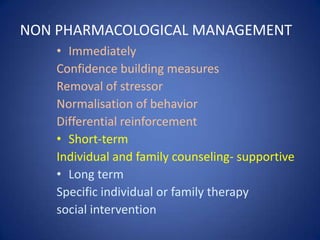
NON PHARMACOLOGICAL MANAGEMENT
• Immediately
Confidence building measures
Removal of stressor
Normalisation of behavior
Differential reinforcement
• Short-term
Individual and family counseling- supportive
• Long term
Specific individual or family therapy
social intervention
PROGNOSIS AND COMPLICATIONS
• Good prognostic factors
Short duration of history
Acute and circumscribed stress
Minimal personality dysfunction
Presence of co-morbidity
Adequate support system
• Complications
Chronicity
Disruption of family
Deliberate self harm
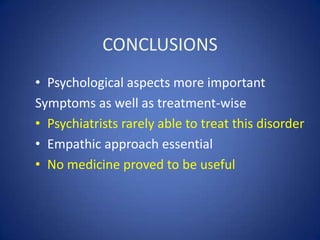
CONCLUSIONS
• Psychological aspects more important
Symptoms as well as treatment-wise
• Psychiatrists rarely able to treat this disorder
• Empathic approach essential
• No medicine proved to be useful
DR VANI KULHALLI, Psychiatrist
MD (NIMHANS, 2003)
Clinics:
Vile Parle East and West
Hospitals:
Four Care Hospital, VPEast
Jewel Hospital, VPWest
For Appointments
Contact:
9819269628
Between 5 PM to 8 PM

Hysterical disorders

  • 1.
    HYSTERICAL DISORDERS Presented By DrVani Kulhalli, MD Psychiatrist
  • 2.
    SCOPE OF PRESENTATION Overviewof: • Epidemiology • Definition • Clinical features and diagnosis • Treatment • Prognosis and outcome
  • 3.
    EPIDEMIOLOGY • Not commondisorder- but epidemics are known • Age and gender- certain symptoms seen in certain groups • Risk factors- personality issues, history of trauma or abuse, genetic factors unknown- but familial cases • Co-morbities- depression/ anxiety/ personality/ stress reactions • Mechanism of occurrence- essentially psychological reaction to unbearable situation 3 factors Personality Disease Environment
  • 4.
    DEFINITION • Origin fromword ‘hysteros’ related to uterus • No longer called hysterical- but dissociative and conversion • Defence mechanisms- dissociation and conversion • ……partial or complete loss of the normal integration between memories of past, awareness of identity and immediate sensations, and control of bodily movements…..
  • 5.
    CLINICAL FEATURES • Specificconstellation of symptoms • No evidence of physical disorder to explain symptoms • Evidence of psychological causation TO BE NOTED: Onset, duration, test reports, good mood, recurrence or past history are not diagnostic
  • 6.
    DIAGNOSIS • History- noteorganic and psychosocial factors • General examination- level of consciousness • Focused systemic examination- what type? • Relevant investigation • Diagnostic formulation
  • 7.
    PHARMACOLOGICAL MANAGEMENT • Noevidence for use of any pharmacological agent • Benzodiazepine in small doses- anti- anxiety or placebo effect • Treat the co-morbid psychiatric disorder
  • 8.
    NON PHARMACOLOGICAL MANAGEMENT •Immediately Confidence building measures Removal of stressor Normalisation of behavior Differential reinforcement • Short-term Individual and family counseling- supportive • Long term Specific individual or family therapy social intervention
  • 9.
    PROGNOSIS AND COMPLICATIONS •Good prognostic factors Short duration of history Acute and circumscribed stress Minimal personality dysfunction Presence of co-morbidity Adequate support system • Complications Chronicity Disruption of family Deliberate self harm
  • 10.
    CONCLUSIONS • Psychological aspectsmore important Symptoms as well as treatment-wise • Psychiatrists rarely able to treat this disorder • Empathic approach essential • No medicine proved to be useful
  • 11.
    DR VANI KULHALLI,Psychiatrist MD (NIMHANS, 2003) Clinics: Vile Parle East and West Hospitals: Four Care Hospital, VPEast Jewel Hospital, VPWest For Appointments Contact: 9819269628 Between 5 PM to 8 PM