M.Sc. Pediatric nursing
A disease Management Strategy for children
10 million children/ year- die in developing
countries due to acute respiratory infections,
diarrhea, measles, malaria, malnutrition
1990-WHO+UNICEF +other agencies- (IMCI)
India adopted as (IMNCI).
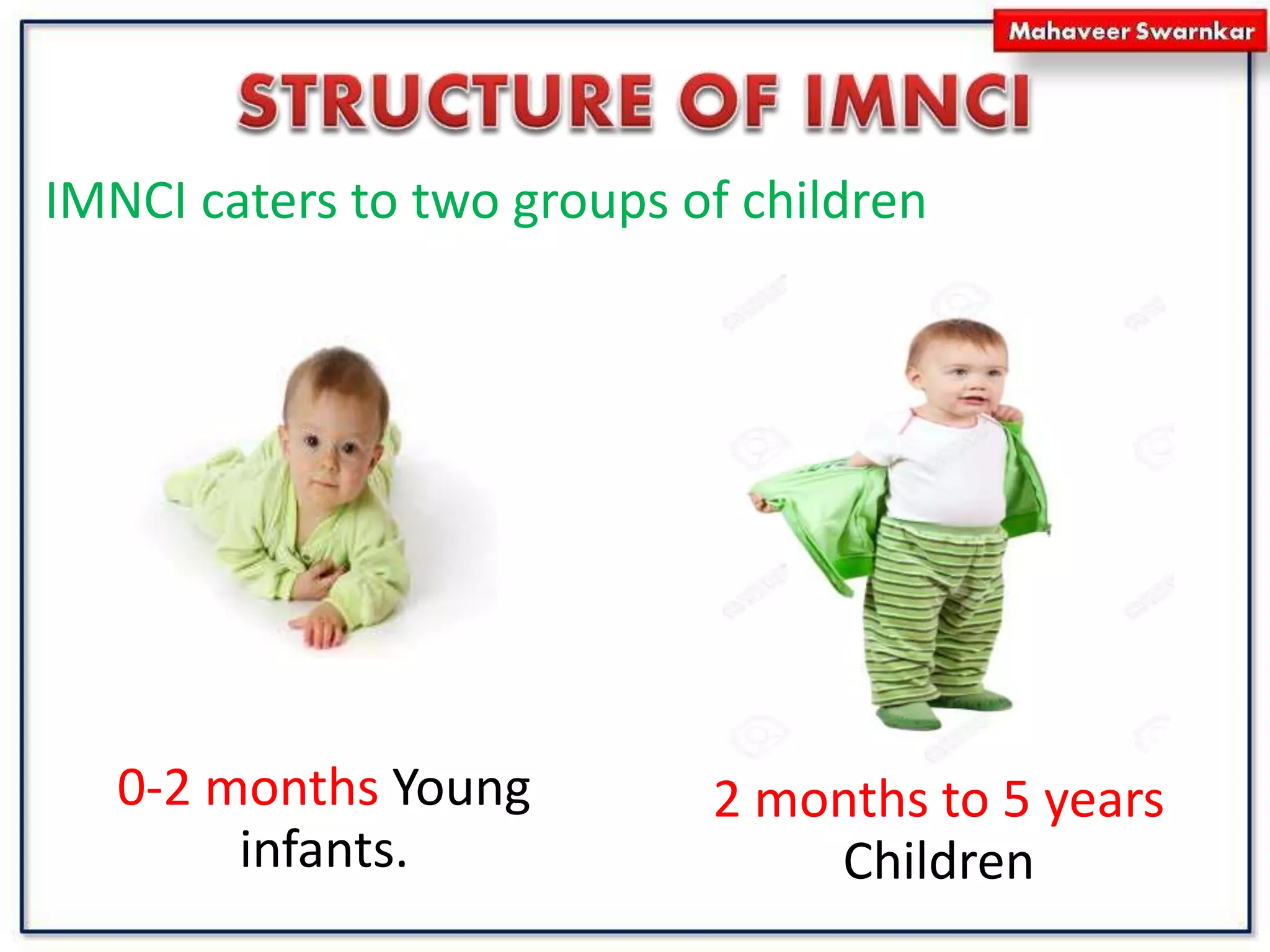
IMNCI caters to two groups of children
0-2 months Young
infants.
2 months to 5 years
Children
REDUCE
MORTALITY
REDUCE
FREQUENCY
AND SEVERITY
OF ILLNESS
AND
DISABILITY
IMPROVE
GROWTH AND
DEVELOPMENT
DURING THE
FIRST 5 YEARS
OF A CHILD'S
LIFE
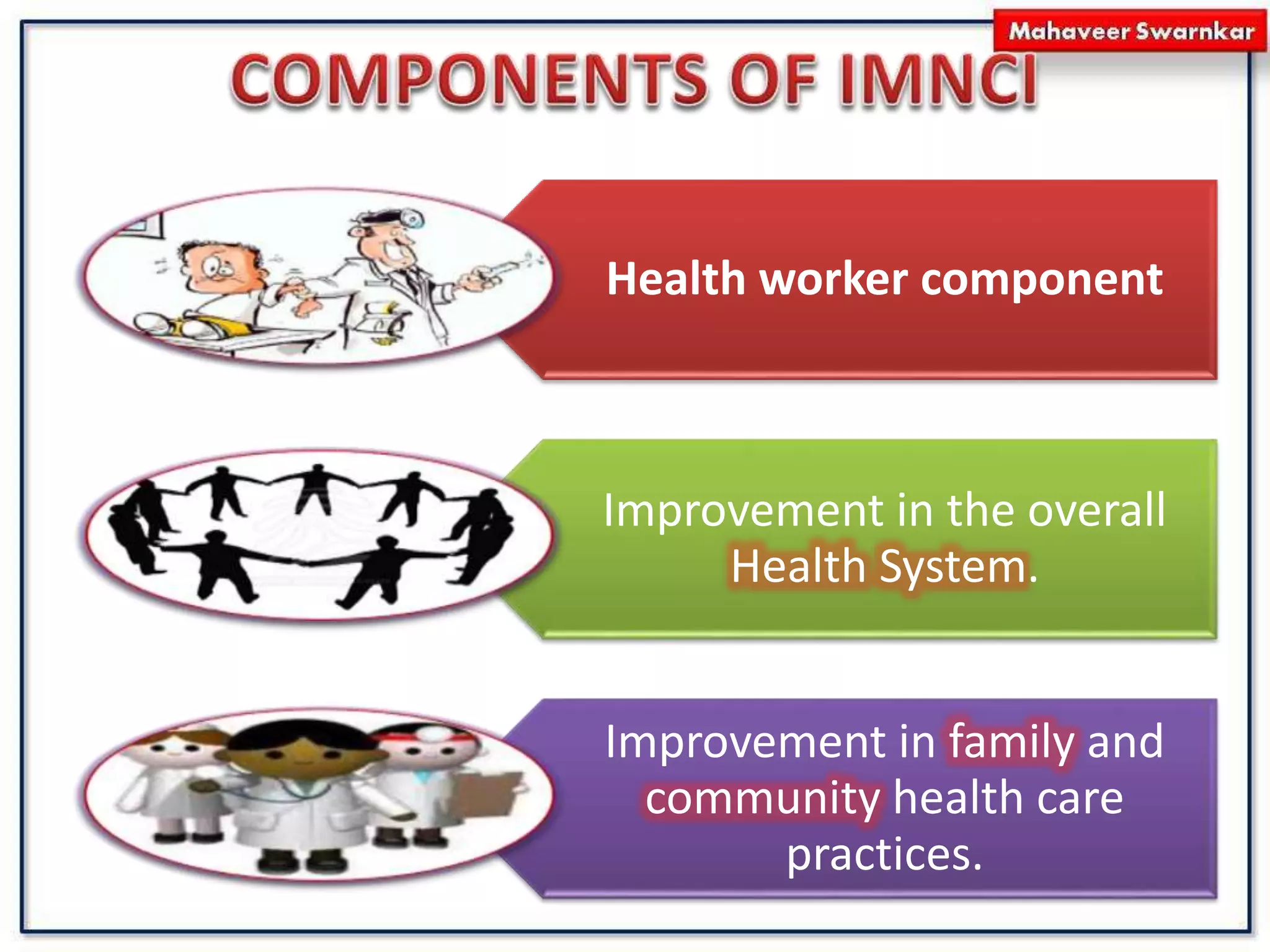
Health worker component
Improvement in the overall
Health System.
Improvement in family and
community health care
practices.
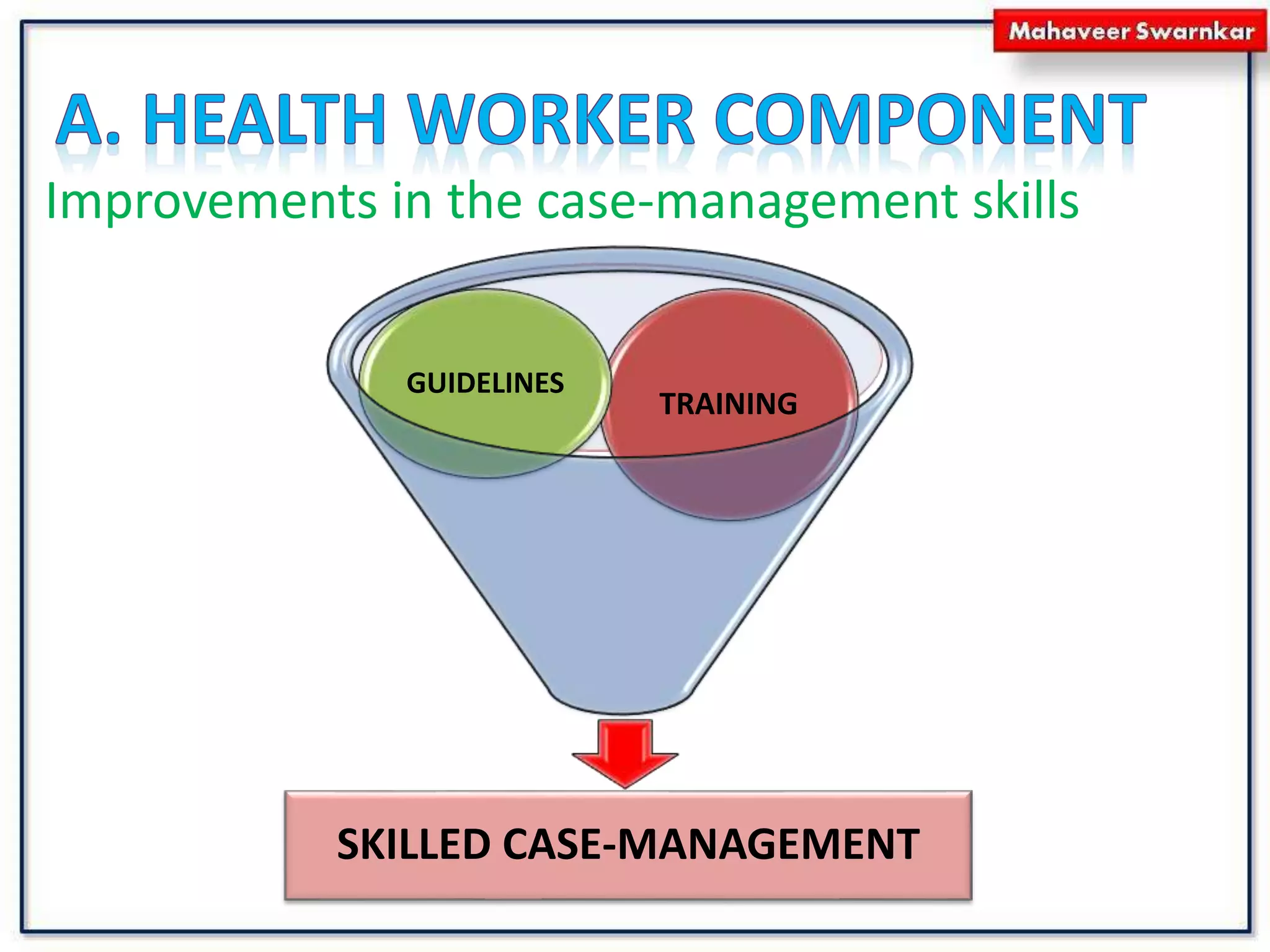
Improvements in the case-management skills
SKILLED CASE-MANAGEMENT
TRAINING
GUIDELINES
Improvements is needed for effective management
Essential
drugs
Health
workers
Identified
referral
Swiftly
transferred
Referral
centers
Supervision
and
monitoring
All sick children under 5 years of age must be
examined for conditions which indicate immediate
referral or hospitalization.
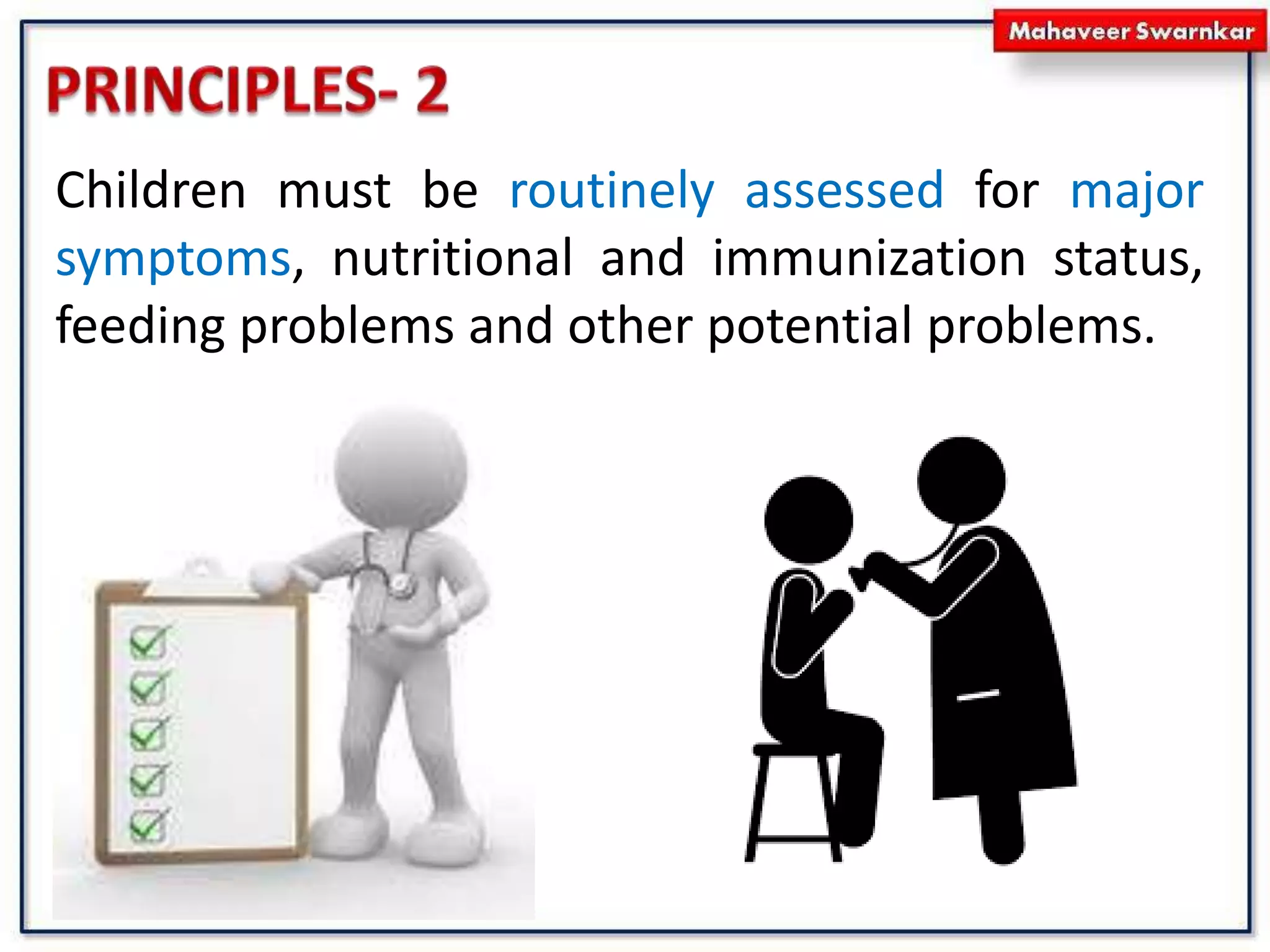
Children must be routinely assessed for major
symptoms, nutritional and immunization status,
feeding problems and other potential problems.
Only a limited number of carefully selected
clinical signs, are used based on evidence of their
sensitivity and specificity to detect disease.
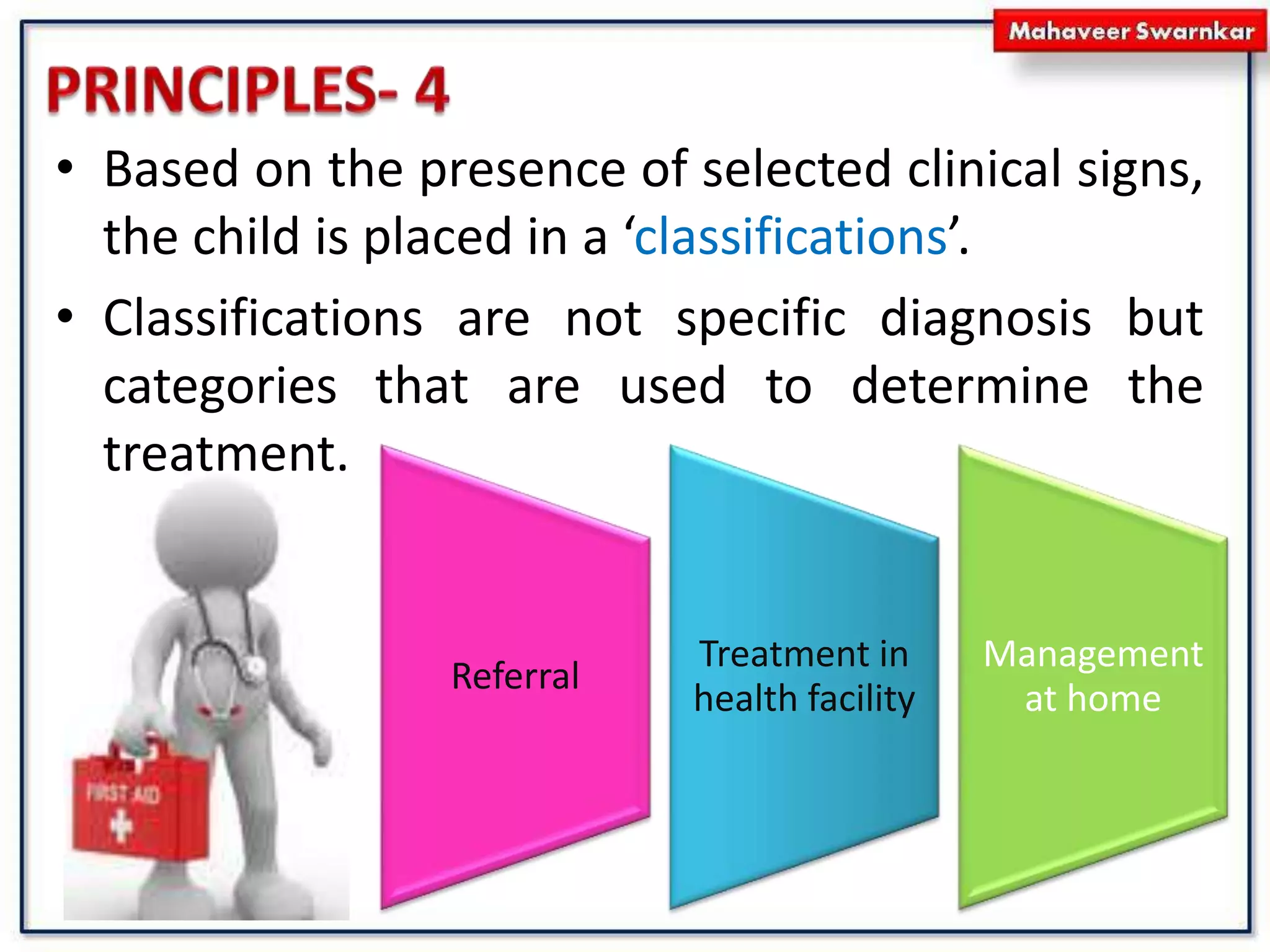
• Based on the presence of selected clinical signs,
the child is placed in a ‘classifications’.
• Classifications are not specific diagnosis but
categories that are used to determine the
treatment.
Referral
Treatment in
health facility
Management
at home
IMNCI guidelines address most common but not
all pediatric problems.
A limited number of essential drugs are used.
Care takers are actively involved in the treatment
of children.
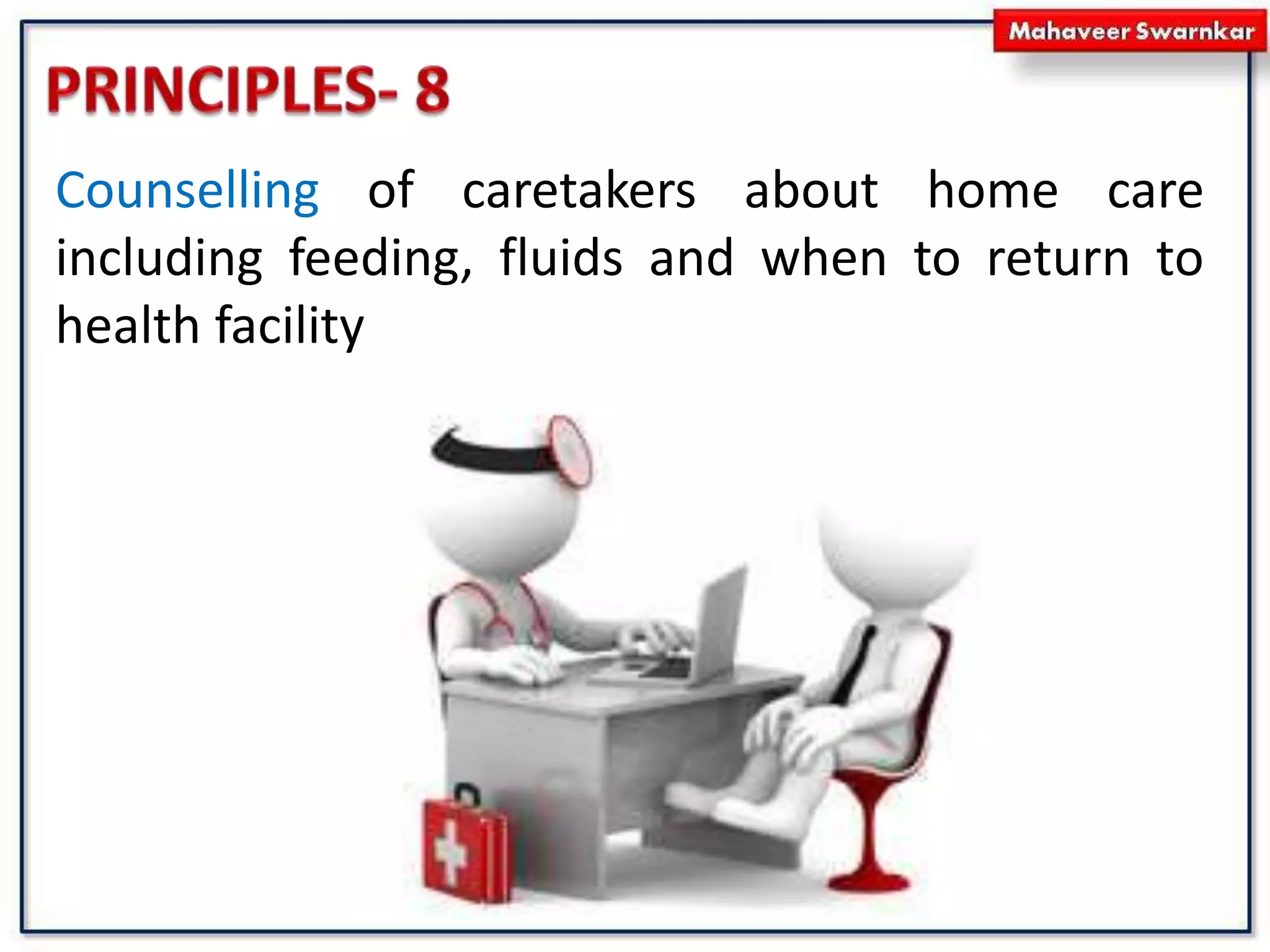
Counselling of caretakers about home care
including feeding, fluids and when to return to
health facility
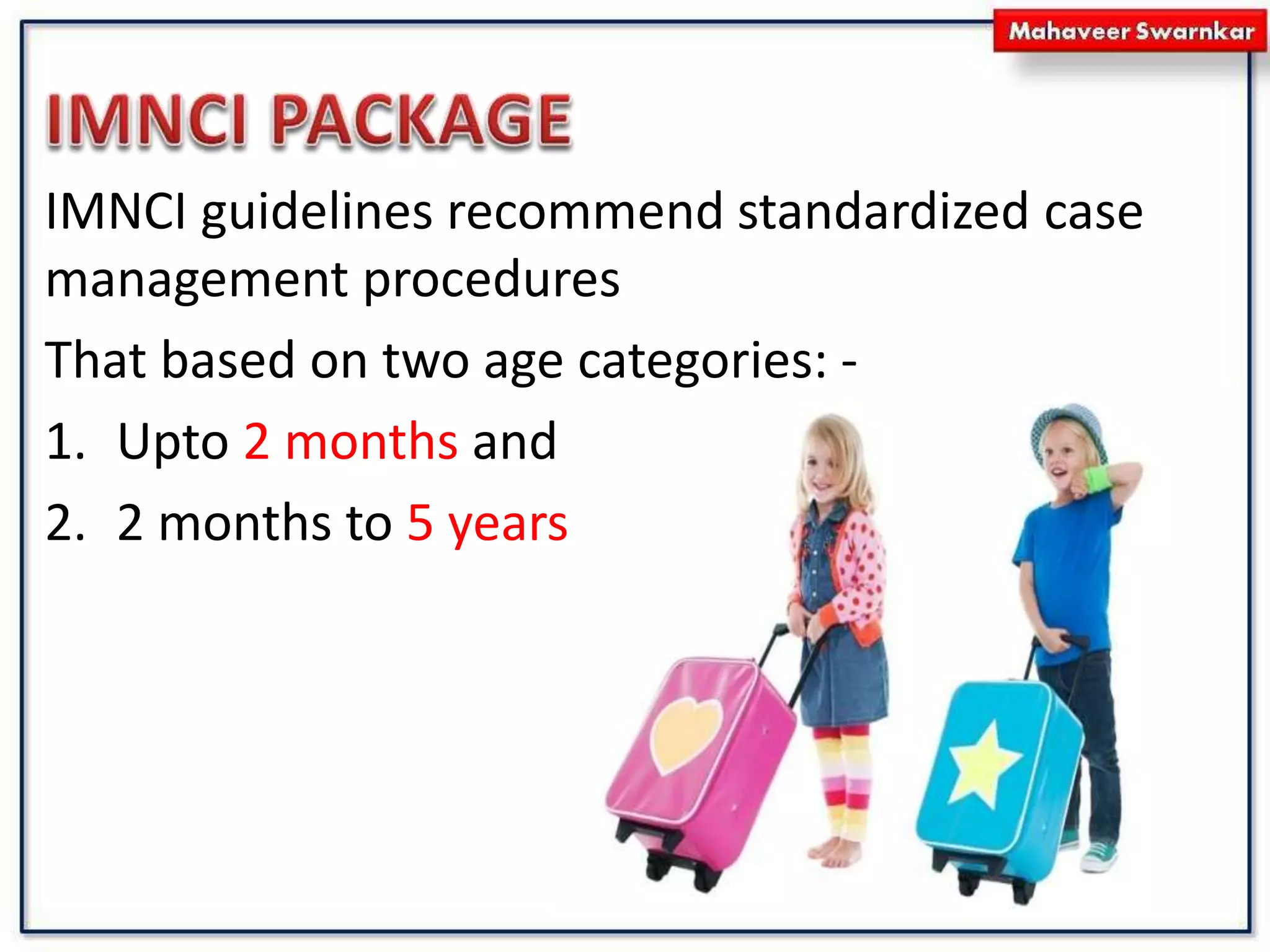
IMNCI guidelines recommend standardized case
management procedures
That based on two age categories: -
1. Upto 2 months and
2. 2 months to 5 years
Care of Newborns and Young Infants
(infants under 2 months)
1. Keeping the child warm.
2. Initiation of breastfeeding immediately after
birth and counseling for exclusive
breastfeeding and non-use of pre lacteal feeds.
3. Cord, skin and eye care.
4. Recognition of illness in newborn and
management and/or referral).
5. Immunization
6. Home visits in the postnatal period.
Care of Infants (2 months to 5 years)
1. Management of diarrhea, acute respiratory
infections, malaria, measles, acute ear infection,
malnutrition and anemia.
2. Recognition of illness and at risk conditions and
management/referral)
3. Prevention and management of Iron and Vitamin A
deficiency.
4. Counseling on feeding for all children below 2 years
5. Counseling on feeding for malnourished children
between 2 to 5 years.
6. Immunization
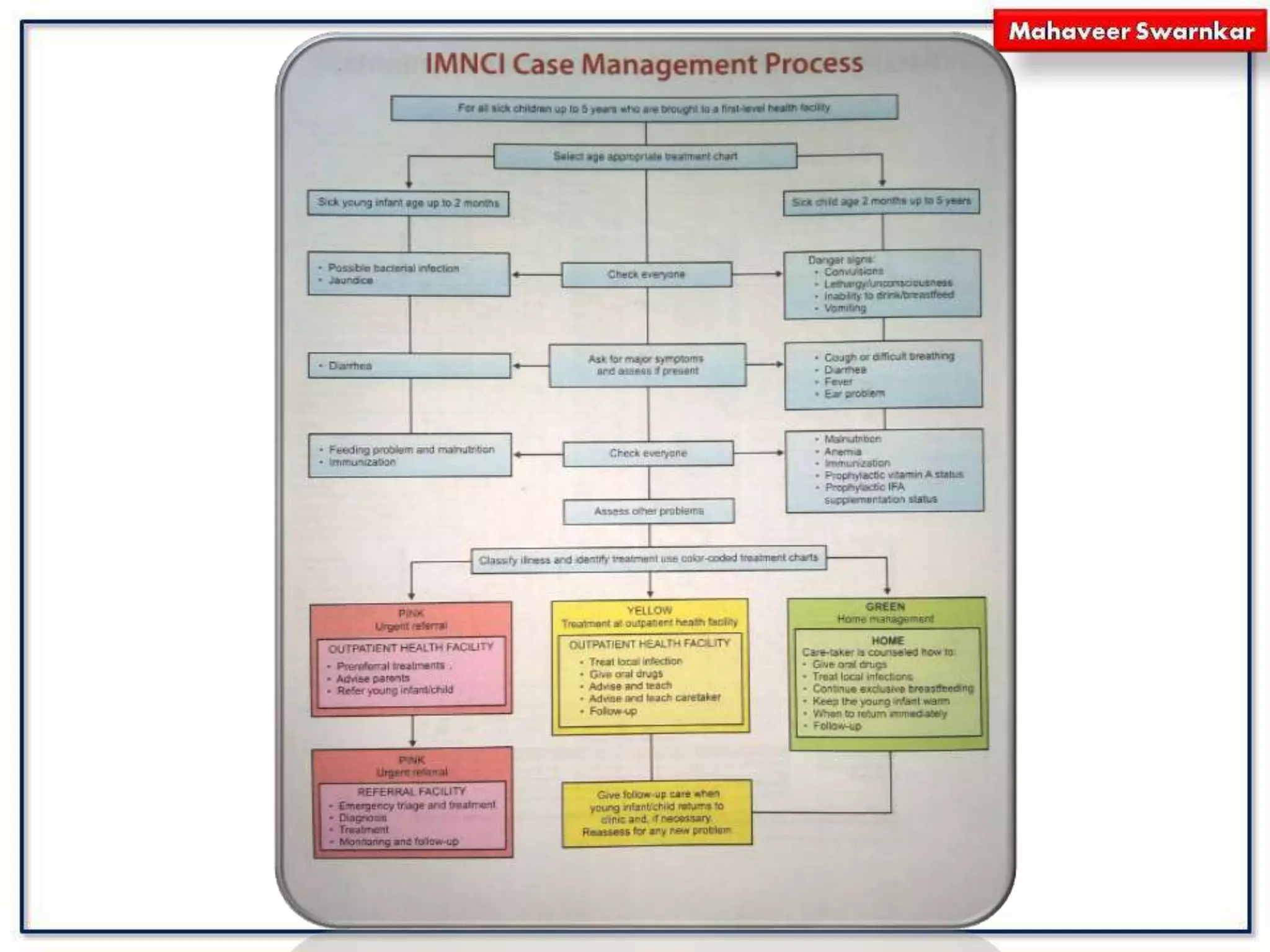
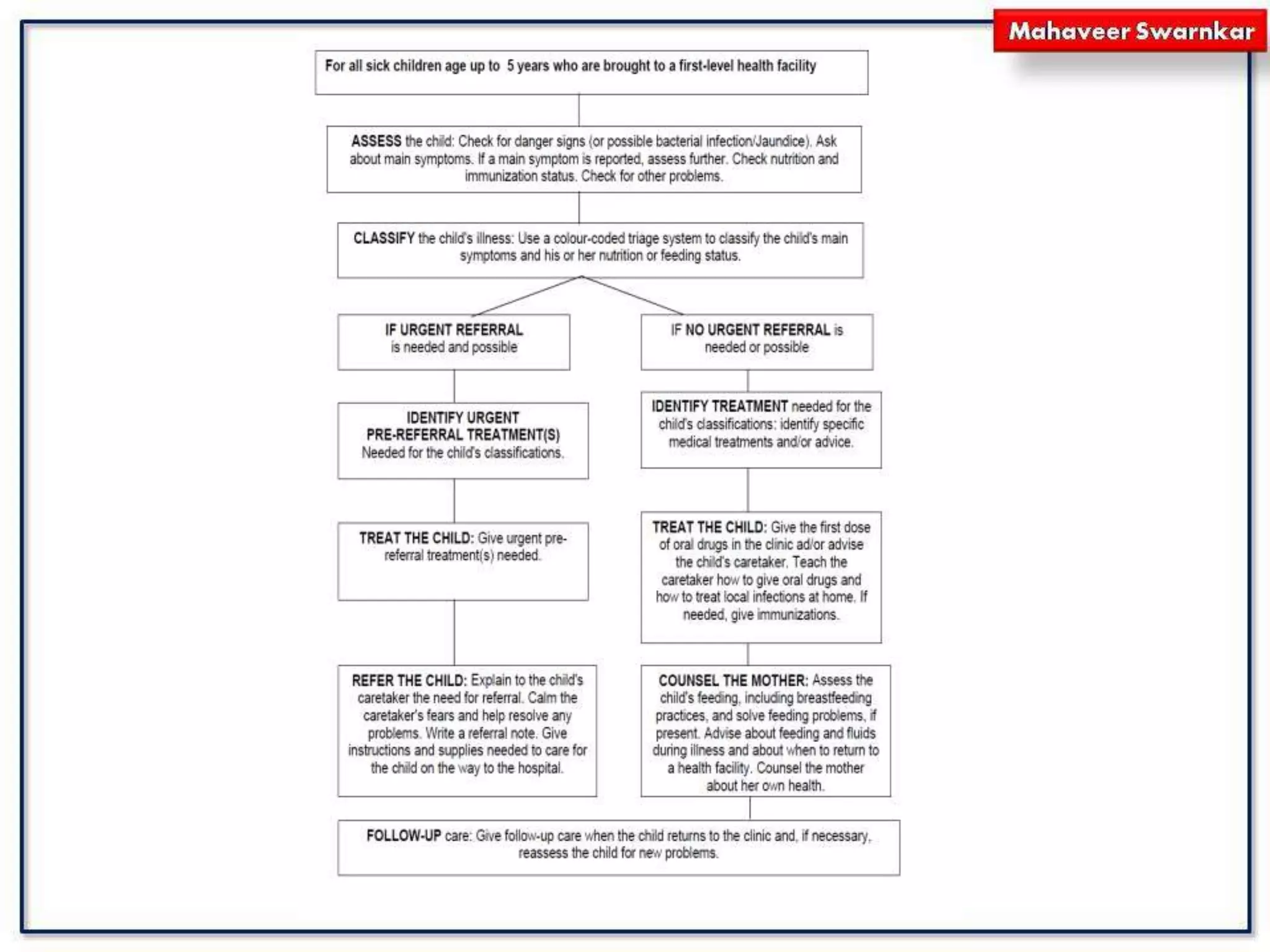
IMNCI CASE MANAGEMENT PROCESS
1. Steps of case management process are the
following:
2. Asses the young infant/ child.
3. Classify the illness.
4. Identify the treatment.
5. Treat the young infant/child.
6. Counsel the mother.
7. Provide follow up care.
< 2 Months of Age
2 months to 5 Yr
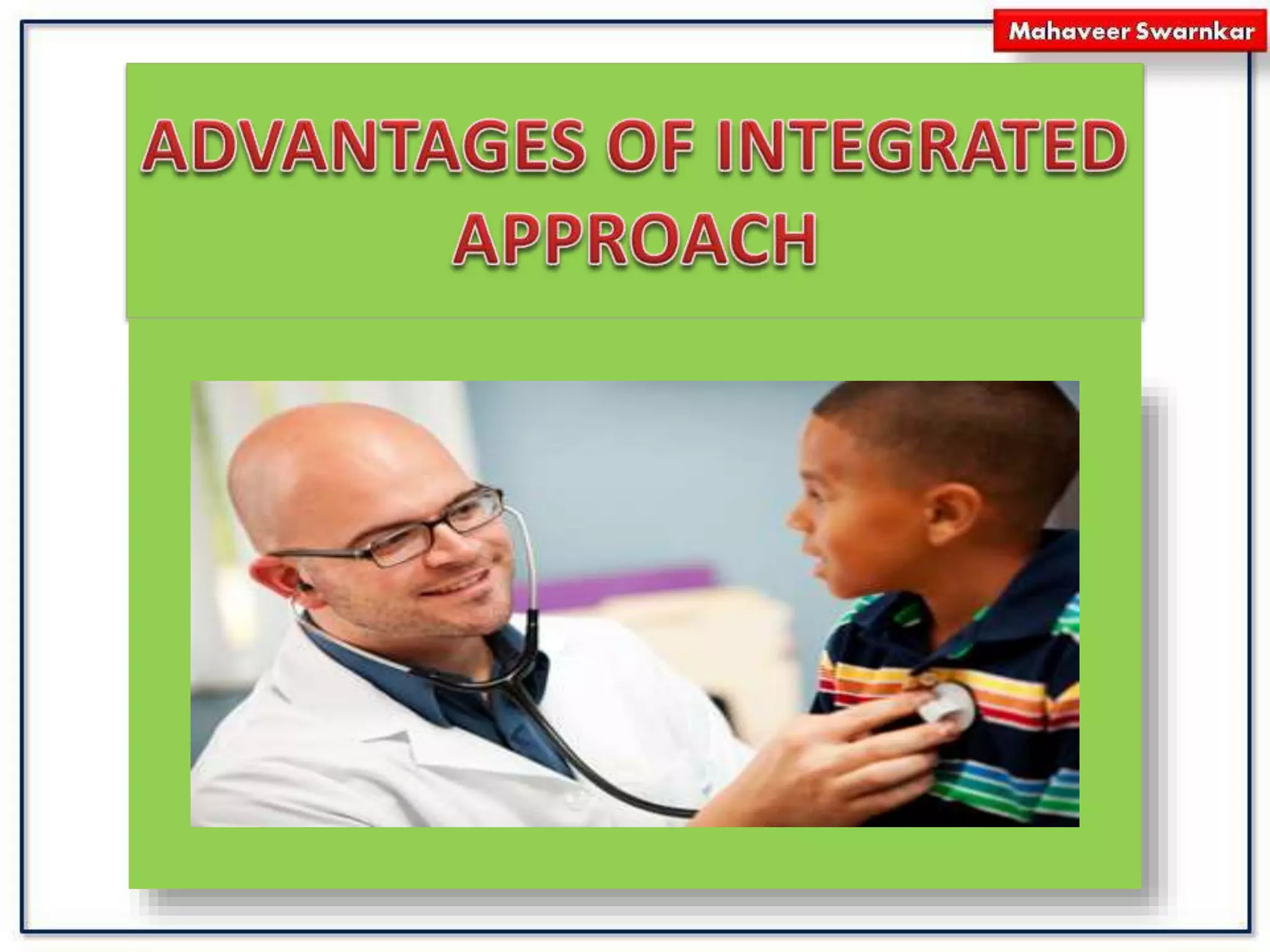
ADVANTAGES OF INTEGRATED
APPROACH
• Speeds up the urgent treatment and treatment
seeking practices.
• Prompt recognition of serious condition, hence
prompt referral.
• Involves parents in effective care of baby at
home.
• Partial Success of Individual disease control
programme.
Cont….
• Involves prevention of diseases by active
immunization, Improved nutrition and
Exclusive Breastfeeding practices.
• Highly cost effective.
• It avoids wastages of resources by using most
appropriate medicines and treatment.
• It reduces duplication of effort.
IMNCI

IMNCI

  • 1.
    M.Sc. Pediatric nursing Adisease Management Strategy for children
  • 2.
    10 million children/year- die in developing countries due to acute respiratory infections, diarrhea, measles, malaria, malnutrition 1990-WHO+UNICEF +other agencies- (IMCI) India adopted as (IMNCI).
  • 3.
    IMNCI caters totwo groups of children 0-2 months Young infants. 2 months to 5 years Children
  • 4.
    REDUCE MORTALITY REDUCE FREQUENCY AND SEVERITY OF ILLNESS AND DISABILITY IMPROVE GROWTHAND DEVELOPMENT DURING THE FIRST 5 YEARS OF A CHILD'S LIFE
  • 5.
    Health worker component Improvementin the overall Health System. Improvement in family and community health care practices.
  • 6.
    Improvements in thecase-management skills SKILLED CASE-MANAGEMENT TRAINING GUIDELINES
  • 7.
    Improvements is neededfor effective management Essential drugs Health workers Identified referral Swiftly transferred Referral centers Supervision and monitoring
  • 9.
    All sick childrenunder 5 years of age must be examined for conditions which indicate immediate referral or hospitalization.
  • 10.
    Children must beroutinely assessed for major symptoms, nutritional and immunization status, feeding problems and other potential problems.
  • 11.
    Only a limitednumber of carefully selected clinical signs, are used based on evidence of their sensitivity and specificity to detect disease.
  • 12.
    • Based onthe presence of selected clinical signs, the child is placed in a ‘classifications’. • Classifications are not specific diagnosis but categories that are used to determine the treatment. Referral Treatment in health facility Management at home
  • 13.
    IMNCI guidelines addressmost common but not all pediatric problems.
  • 14.
    A limited numberof essential drugs are used.
  • 15.
    Care takers areactively involved in the treatment of children.
  • 16.
    Counselling of caretakersabout home care including feeding, fluids and when to return to health facility
  • 18.
    IMNCI guidelines recommendstandardized case management procedures That based on two age categories: - 1. Upto 2 months and 2. 2 months to 5 years
  • 19.
    Care of Newbornsand Young Infants (infants under 2 months) 1. Keeping the child warm. 2. Initiation of breastfeeding immediately after birth and counseling for exclusive breastfeeding and non-use of pre lacteal feeds. 3. Cord, skin and eye care. 4. Recognition of illness in newborn and management and/or referral). 5. Immunization 6. Home visits in the postnatal period.
  • 20.
    Care of Infants(2 months to 5 years) 1. Management of diarrhea, acute respiratory infections, malaria, measles, acute ear infection, malnutrition and anemia. 2. Recognition of illness and at risk conditions and management/referral) 3. Prevention and management of Iron and Vitamin A deficiency. 4. Counseling on feeding for all children below 2 years 5. Counseling on feeding for malnourished children between 2 to 5 years. 6. Immunization
  • 21.
    IMNCI CASE MANAGEMENTPROCESS 1. Steps of case management process are the following: 2. Asses the young infant/ child. 3. Classify the illness. 4. Identify the treatment. 5. Treat the young infant/child. 6. Counsel the mother. 7. Provide follow up care.
  • 24.
    < 2 Monthsof Age
  • 25.
  • 27.
    ADVANTAGES OF INTEGRATED APPROACH •Speeds up the urgent treatment and treatment seeking practices. • Prompt recognition of serious condition, hence prompt referral. • Involves parents in effective care of baby at home. • Partial Success of Individual disease control programme.
  • 28.
    Cont…. • Involves preventionof diseases by active immunization, Improved nutrition and Exclusive Breastfeeding practices. • Highly cost effective. • It avoids wastages of resources by using most appropriate medicines and treatment. • It reduces duplication of effort.