Dr. Rahul Sharma
Associate Professor
H.O.D. of Mental Health Nursing
Ph. D Coordinator
Seedling School of Nursing,
Jaipur National University, Jaipur
SCHIZOPHRENIA
INTRODUCTION
 In 1911,Eugen Blueler a Swiss psychiatrist
Coined the term schizophrenia. It is combination
of 2 Greek words schizo means 'split' and phrenia
means 'mind'
 He explained that the split occur between
Cognitive and emotional aspect of the personality.
Definition
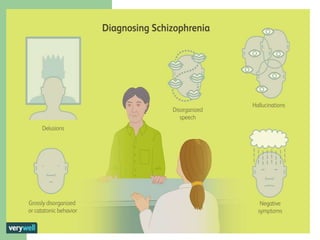
 A group of disorder manifested by
disturbance in thinking, mood and
behavior with active symptoms like
delusion and hallucination with
disorganized speech and catatonic
behavior.
Etiology
1. Influence of neurotransmitter
 Norepinephrine, Gaba epinephrine,
serotonin; influence the pathophysiology of
schizophrenia.
2. Genetic factors
 Monozygotic and dizygotic twins
 Parents to offspring through genes
 Relatives of client are commonly suffered.
Etiology
3. Neurodevelopmental factors
 Viral infection affecting intranatal mother
 Any condition that injures the developing foetus brain.
4. Neuropsychological factors
 Organic brain damage
 Brain infection
 Trauma
 Poison
 Metabolic disorder
Etiology
5. Family factors
 High level of expressed emotion in family
 Broken homes and family
 Family rejection
 Overprotection
 Family blaming.
 Deprived parents children relationship
6. Environmental factors
 Stressful environment
 Traumatic experiences
Etiology
7. Psychological factors
 Impaired ego functioning
 Low IQ level
 Exposed to crisis situation
8. Social factors
 Community disorganization
 Strain IPR
 Social isolation
 Urbanization
 Poor social interaction
SIGN AND SYMPTOMS
 HALLUCINATION
 DELUSION
 AGGRESSION
 BIZARRE BEHAVIOUR
 SUSPICIOUSNESS
 EXCITEMENT
 GRANDIOSITY
 NONSENSE WORDS
 SHIFTING QUICKLY FROM ONE THOUGHT TO ANOTHER
THOUGHT
 MOVING SLOWLY
SIGN AND SYMPTOMS
 UNABLE TO MAKE DECISIONS
 WRITING EXCESSIVELY WITHOUT MEANING
 FORGETTING OR LOSING THINGS
 REPEATING MOVEMENTS
 LACK OF EMOTIONS
 SOCIAL WITHDRAWAL
 LACK OF MOTIVATION
 LOSS OF PLEASURE
 POOR HYGIENE
SIGN AND SYMPTOMS
 BIZARRE AND ILLOGICAL THOUGHT
 NEOLOGISM
 CIRCUMSTANTIALITY
 ECHOPRAXIA
 PERSEVERATION
 VERBIGERATION
SIGN AND SYMPTOMS
 PROBLEM IN FUNCTIONING AT SCHOOL OR
WORK
 CATATONIA
 MOODINESS
 ASSOCIATIVE LOOSENESS
 AUTISTIC THINKING
 AMBIVALENCE.
TYPES OF
SCHIZOPHRENIA
SIMPLE SCHIZOPHRENIA
 Onset is early,and includes –ve symptoms ,
decreased motor activity and associative
looseness.
CATATONIC SCHIZOPHRENIA
 Catatonic sch. Is characterized by
disturbance in motor behviour.
PARANOID SCHIZOPHRENIA
 It is manifested by Lack of trust,
suspiciousness, Grandiosity.
 This is the most common type of
schizophrenia. Symptoms include
hallucinations and/or delusions, but your
speech and emotions may not be affected.
HEBEPHRENIC SCHIZOPHRENIA
 It include severe disintegration of personality
,person will act senseless, giggling, silly
smile, bizzare behaviour.
UNDIFFERENTIATED SCHIZOPHRENIA
 Features of more than one sub type are
present.
RESIDUAL SCHIZOPHRENIA
 It is chronic form which includes illogical
thinking, social withdrawal, negativistic
symptoms and not talkative.
ACUTE SCHIZOPHRENIA
 It include depression, delirium and massive
breakdown, fragmented and suffering
nightmares.
LATENT SCHIZOPHRENIA
 Schizophrenia symptoms present, lack any
full blown type.
CHILDHOOD SCHIZOPHERNIA
 Appears before adolescence and
preoccupied mind with fantasy, withdrawn
and atypical mind.
POST SCHIZOPHRENIC DEPRESSION
 Depressive symptoms in schizophrenia
along with suicidal tendency.
Schizoaffective type
 Combination of MDP and schizophrenic
symptoms.
DIAGNOSTIC EVALUATION
 History collection
 Mental Status Examination
MANAGEMENT
PSYCHOPHARMACOLOGY
ANTI ANXIETY DRUGS
 alprazolam(Xanax)
 clonazepam (Klonopin)
 diazepam (Valium)
 lorazepam(Ativan)
Anti psychotics
 Clozapine
 Haloperidol
 Resperidone
 Amisulpride
 Aripiprazole
 olanzapine
BETA- BLOCKERS
 Meta Propanol
 Isnolol
 Propanol
PSYCHOTHERAPY
 Behaviour therapy
 Yoga therapy
 Cognitive therapy
 Group medication
 Milieu therapy
 Individual psychotherapy
 ECT
 Meditation
SCHIZOPHRENIA.ppt

SCHIZOPHRENIA.ppt

  • 1.
    Dr. Rahul Sharma AssociateProfessor H.O.D. of Mental Health Nursing Ph. D Coordinator Seedling School of Nursing, Jaipur National University, Jaipur SCHIZOPHRENIA
  • 2.
    INTRODUCTION  In 1911,EugenBlueler a Swiss psychiatrist Coined the term schizophrenia. It is combination of 2 Greek words schizo means 'split' and phrenia means 'mind'  He explained that the split occur between Cognitive and emotional aspect of the personality.
  • 3.
    Definition  A groupof disorder manifested by disturbance in thinking, mood and behavior with active symptoms like delusion and hallucination with disorganized speech and catatonic behavior.
  • 4.
    Etiology 1. Influence ofneurotransmitter  Norepinephrine, Gaba epinephrine, serotonin; influence the pathophysiology of schizophrenia. 2. Genetic factors  Monozygotic and dizygotic twins  Parents to offspring through genes  Relatives of client are commonly suffered.
  • 5.
    Etiology 3. Neurodevelopmental factors Viral infection affecting intranatal mother  Any condition that injures the developing foetus brain. 4. Neuropsychological factors  Organic brain damage  Brain infection  Trauma  Poison  Metabolic disorder
  • 6.
    Etiology 5. Family factors High level of expressed emotion in family  Broken homes and family  Family rejection  Overprotection  Family blaming.  Deprived parents children relationship 6. Environmental factors  Stressful environment  Traumatic experiences
  • 7.
    Etiology 7. Psychological factors Impaired ego functioning  Low IQ level  Exposed to crisis situation 8. Social factors  Community disorganization  Strain IPR  Social isolation  Urbanization  Poor social interaction
  • 8.
    SIGN AND SYMPTOMS HALLUCINATION  DELUSION  AGGRESSION  BIZARRE BEHAVIOUR  SUSPICIOUSNESS  EXCITEMENT  GRANDIOSITY  NONSENSE WORDS  SHIFTING QUICKLY FROM ONE THOUGHT TO ANOTHER THOUGHT  MOVING SLOWLY
  • 9.
    SIGN AND SYMPTOMS UNABLE TO MAKE DECISIONS  WRITING EXCESSIVELY WITHOUT MEANING  FORGETTING OR LOSING THINGS  REPEATING MOVEMENTS  LACK OF EMOTIONS  SOCIAL WITHDRAWAL  LACK OF MOTIVATION  LOSS OF PLEASURE  POOR HYGIENE
  • 10.
    SIGN AND SYMPTOMS BIZARRE AND ILLOGICAL THOUGHT  NEOLOGISM  CIRCUMSTANTIALITY  ECHOPRAXIA  PERSEVERATION  VERBIGERATION
  • 11.
    SIGN AND SYMPTOMS PROBLEM IN FUNCTIONING AT SCHOOL OR WORK  CATATONIA  MOODINESS  ASSOCIATIVE LOOSENESS  AUTISTIC THINKING  AMBIVALENCE.
  • 12.
  • 14.
    SIMPLE SCHIZOPHRENIA  Onsetis early,and includes –ve symptoms , decreased motor activity and associative looseness.
  • 15.
    CATATONIC SCHIZOPHRENIA  Catatonicsch. Is characterized by disturbance in motor behviour.
  • 16.
    PARANOID SCHIZOPHRENIA  Itis manifested by Lack of trust, suspiciousness, Grandiosity.  This is the most common type of schizophrenia. Symptoms include hallucinations and/or delusions, but your speech and emotions may not be affected.
  • 17.
    HEBEPHRENIC SCHIZOPHRENIA  Itinclude severe disintegration of personality ,person will act senseless, giggling, silly smile, bizzare behaviour.
  • 18.
    UNDIFFERENTIATED SCHIZOPHRENIA  Featuresof more than one sub type are present.
  • 19.
    RESIDUAL SCHIZOPHRENIA  Itis chronic form which includes illogical thinking, social withdrawal, negativistic symptoms and not talkative.
  • 20.
    ACUTE SCHIZOPHRENIA  Itinclude depression, delirium and massive breakdown, fragmented and suffering nightmares.
  • 21.
    LATENT SCHIZOPHRENIA  Schizophreniasymptoms present, lack any full blown type.
  • 22.
    CHILDHOOD SCHIZOPHERNIA  Appearsbefore adolescence and preoccupied mind with fantasy, withdrawn and atypical mind.
  • 23.
    POST SCHIZOPHRENIC DEPRESSION Depressive symptoms in schizophrenia along with suicidal tendency.
  • 24.
    Schizoaffective type  Combinationof MDP and schizophrenic symptoms.
  • 25.
    DIAGNOSTIC EVALUATION  Historycollection  Mental Status Examination
  • 27.
    MANAGEMENT PSYCHOPHARMACOLOGY ANTI ANXIETY DRUGS alprazolam(Xanax)  clonazepam (Klonopin)  diazepam (Valium)  lorazepam(Ativan)
  • 28.
    Anti psychotics  Clozapine Haloperidol  Resperidone  Amisulpride  Aripiprazole  olanzapine
  • 29.
    BETA- BLOCKERS  MetaPropanol  Isnolol  Propanol
  • 30.
    PSYCHOTHERAPY  Behaviour therapy Yoga therapy  Cognitive therapy  Group medication  Milieu therapy  Individual psychotherapy  ECT  Meditation