Goiter
Dr. Haydar Muneer Salih
Physiology
• The normal thyroid gland weighs 20–25 g.
• The hormones tri-iodothyronine (T3) and L-
thyroxine (T4)
• T3 is the more important physiological
hormone and is also produced in the
periphery by conversion from T4.
• T3 is quick acting (within a few hours),
whereas T4 acts more slowly (4–14 days).
• T3 and T4 are bound to thyroglobulin within
the colloid.
• When hormones are required, the complex is
resorbed into the cell and thyroglobulin is
broken down.
• T3 and T4 are liberated and enter the blood,
where they are bound to serum proteins:
albumin, thyroxine-binding globulin (TBG) and
thyroxinebinding prealbumin (TBPA).
• The small amount of hormone that remains
free in the serum is biologically active
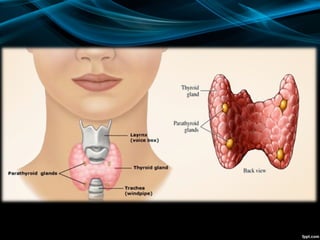
Parathyroid hormone
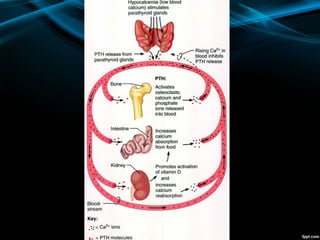
• The parathyroid hormone (PTH), which
controls the level of serum calcium and
extracellular fluid.
• PTH is released in response to a low
serum calcium or high serum magnesium
level.
• PTH activates osteoclasts to resorb bone
and increases calcium reabsorption from
urine and renal activation of vitamin D
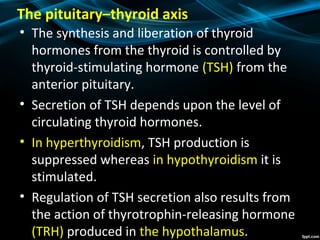
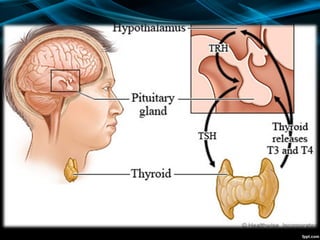
The pituitary–thyroid axis
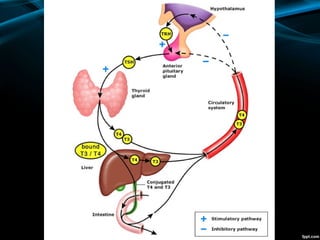
• The synthesis and liberation of thyroid
hormones from the thyroid is controlled by
thyroid-stimulating hormone (TSH) from the
anterior pituitary.
• Secretion of TSH depends upon the level of
circulating thyroid hormones.
• In hyperthyroidism, TSH production is
suppressed whereas in hypothyroidism it is
stimulated.
• Regulation of TSH secretion also results from
the action of thyrotrophin-releasing hormone
(TRH) produced in the hypothalamus.
• In the euthyroid state, T3, T4 and TSH
levels will all be within the normal range.
Incipient or developing thyroid failure is
characterized by low normal values of T3
and T4 and elevation of TSH. In toxic
states the TSH level is suppressed and
undetectable.
THYROID ENLARGEMENT
• The normal thyroid gland is impalpable.
The term goitre (from the Latin guttur =
the throat) is used to describe
generalized enlargement of the thyroid
gland
• Classification of thyroid swellings
1.Simple goitre (euthyroid)
2.Toxic
3.Neoplastic
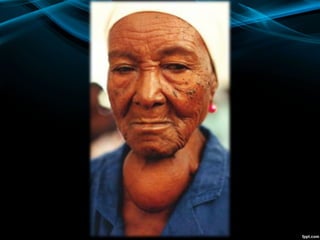
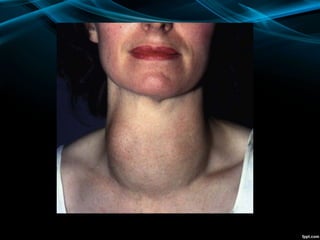
Simple Goiter
• Simple goitre may develop as a result of
stimulation of the thyroid gland by TSH,
either as a result of inappropriate
secretion from a Microadenoma in the
anterior pituitary (which is rare) or in
response to a chronically low level of
circulating thyroid hormones
• The daily requirement for iodine is about
0.1–0.15 mg
Diffuse hyperplastic goitre
• Persistent growth stimulation causes diffuse
hyperplasia
• all lobules are composed of active follicles and
iodine uptake is uniform. which may persist
for a long time but is reversible if stimulation
ceases.
• The goitre is soft, diffuse and may become
large enough to cause discomfort.
• A colloid goitre is a late stage of diffuse
hyperplasia when TSH stimulation has fallen
off and when many follicles are inactive and
full of colloid
All types of simple goitre are more
common in females than males
because of the presence of
oestrogen receptors in thyroid
tissue.
Diffuse toxic goitre
• Graves’ disease, a diffuse vascular goitre.
appearing at the same time as the
hyperthyroidism & associated with eye
signs The syndrome is that of primary
thyrotoxicosis 50% of patients have a
family history of autoimmune endocrine
diseases.
Diffuse toxic goitre
• The whole of the functioning thyroid
tissue is involved, and the hypertrophy
and hyperplasia are due to abnormal
thyroid-stimulating antibodies (TSH-
RAbs) that bind to TSH receptor sites and
produce a disproportionate and
prolonged effect.
Toxic Nodular Goitre
A simple nodular goitre is present for a
long time before the hyperthyroidism,
and is very infrequently associated
with eye signs. The syndrome is that of
secondary thyrotoxicosis.
Principles of treatment of thyrotoxicosis
1. Anti-thyroid drugs
• Those in common use are carbimazole
and propylthiouracil.
• Anti-thyroid drugs are used to restore
the patient to a euthyroid state and to
maintain this for a prolonged period in
the hope that a permanent remission
will occur
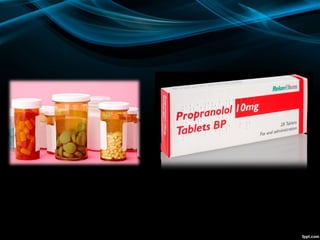
Anti-thyroid drugs
• β-Adrenergic blockers such as
propranolol and nadolol are used to
block the cardiovascular effects of the
elevated T4. Iodides, which may reduce
the vascularity of the thyroid, should be
used only as immediate preoperative
preparation in the 10 days before
surgery
• Advantages. No surgery and no use of
radioactive materials.
• Disadvantages. Treatment is prolonged
and the failure rate is least 50%. The
duration of treatment may be tailored to
the severity of the toxicity, with milder
cases being treated for only 6 months
and severe cases for 2 years before
stopping therapy
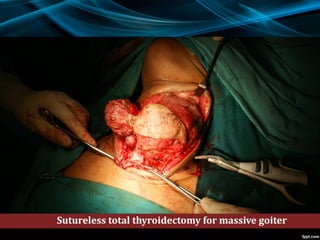
2.Surgery
• In diffuse toxic goitre and toxic nodular goitre
with overactive internodular tissue, surgery
cures by reducing the mass of overactive
tissue. Cure is probable if the thyroid tissue
can be reduced below a critical mass but there
is a risk of both permanent thyroid failure and
recurrence of toxicity following subtotal
resection.
• Advantages. The goitre is removed, the cure is
rapid and the cure rate is high if surgery has
been adequate.
• Disadvantages. Recurrence of thyrotoxicosis
occurs in approximately
• 5% of cases if less than total thyroidectomy is
carried out. There is a risk of permanent
hypoparathyroidism and nerve injury. Young
women tend to have a worse cosmetic result
from the scar.
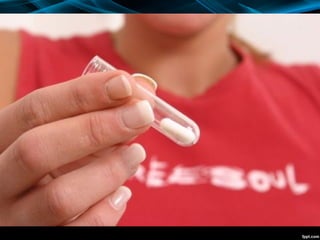
Radioiodine
Radioiodine destroys thyroid cells and, as in
thyroidectomy, reduces the mass of functioning thyroid
tissue to below a critical level.
• Advantages. No surgery and no prolonged drug
therapy.
• Disadvantages. Isotope facilities must be available.
The higher dose is likely to result in thyroid failure in 6
months, whereas the lower dose may result in late
thyroid insufficiency. This is due to sublethal damage to
those cells not actually destroyed by the initial
treatment and this eventually causes failure of cellular
reproduction.
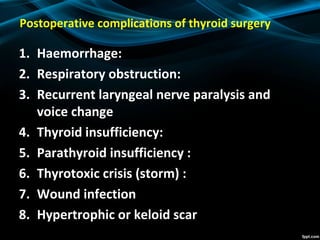
Postoperative complications of thyroid surgery
1. Haemorrhage:
2. Respiratory obstruction:
3. Recurrent laryngeal nerve paralysis and
voice change
4. Thyroid insufficiency:
5. Parathyroid insufficiency :
6. Thyrotoxic crisis (storm) :
7. Wound infection
8. Hypertrophic or keloid scar
Goiter

Goiter

  • 1.
  • 2.
    Physiology • The normalthyroid gland weighs 20–25 g. • The hormones tri-iodothyronine (T3) and L- thyroxine (T4) • T3 is the more important physiological hormone and is also produced in the periphery by conversion from T4. • T3 is quick acting (within a few hours), whereas T4 acts more slowly (4–14 days).
  • 4.
    • T3 andT4 are bound to thyroglobulin within the colloid. • When hormones are required, the complex is resorbed into the cell and thyroglobulin is broken down. • T3 and T4 are liberated and enter the blood, where they are bound to serum proteins: albumin, thyroxine-binding globulin (TBG) and thyroxinebinding prealbumin (TBPA). • The small amount of hormone that remains free in the serum is biologically active
  • 6.
    Parathyroid hormone • Theparathyroid hormone (PTH), which controls the level of serum calcium and extracellular fluid. • PTH is released in response to a low serum calcium or high serum magnesium level. • PTH activates osteoclasts to resorb bone and increases calcium reabsorption from urine and renal activation of vitamin D
  • 8.
    The pituitary–thyroid axis •The synthesis and liberation of thyroid hormones from the thyroid is controlled by thyroid-stimulating hormone (TSH) from the anterior pituitary. • Secretion of TSH depends upon the level of circulating thyroid hormones. • In hyperthyroidism, TSH production is suppressed whereas in hypothyroidism it is stimulated. • Regulation of TSH secretion also results from the action of thyrotrophin-releasing hormone (TRH) produced in the hypothalamus.
  • 10.
    • In theeuthyroid state, T3, T4 and TSH levels will all be within the normal range. Incipient or developing thyroid failure is characterized by low normal values of T3 and T4 and elevation of TSH. In toxic states the TSH level is suppressed and undetectable.
  • 11.
    THYROID ENLARGEMENT • Thenormal thyroid gland is impalpable. The term goitre (from the Latin guttur = the throat) is used to describe generalized enlargement of the thyroid gland • Classification of thyroid swellings 1.Simple goitre (euthyroid) 2.Toxic 3.Neoplastic
  • 12.
    Simple Goiter • Simplegoitre may develop as a result of stimulation of the thyroid gland by TSH, either as a result of inappropriate secretion from a Microadenoma in the anterior pituitary (which is rare) or in response to a chronically low level of circulating thyroid hormones • The daily requirement for iodine is about 0.1–0.15 mg
  • 14.
    Diffuse hyperplastic goitre •Persistent growth stimulation causes diffuse hyperplasia • all lobules are composed of active follicles and iodine uptake is uniform. which may persist for a long time but is reversible if stimulation ceases. • The goitre is soft, diffuse and may become large enough to cause discomfort. • A colloid goitre is a late stage of diffuse hyperplasia when TSH stimulation has fallen off and when many follicles are inactive and full of colloid
  • 16.
    All types ofsimple goitre are more common in females than males because of the presence of oestrogen receptors in thyroid tissue.
  • 17.
    Diffuse toxic goitre •Graves’ disease, a diffuse vascular goitre. appearing at the same time as the hyperthyroidism & associated with eye signs The syndrome is that of primary thyrotoxicosis 50% of patients have a family history of autoimmune endocrine diseases.
  • 19.
    Diffuse toxic goitre •The whole of the functioning thyroid tissue is involved, and the hypertrophy and hyperplasia are due to abnormal thyroid-stimulating antibodies (TSH- RAbs) that bind to TSH receptor sites and produce a disproportionate and prolonged effect.
  • 20.
    Toxic Nodular Goitre Asimple nodular goitre is present for a long time before the hyperthyroidism, and is very infrequently associated with eye signs. The syndrome is that of secondary thyrotoxicosis.
  • 21.
    Principles of treatmentof thyrotoxicosis 1. Anti-thyroid drugs • Those in common use are carbimazole and propylthiouracil. • Anti-thyroid drugs are used to restore the patient to a euthyroid state and to maintain this for a prolonged period in the hope that a permanent remission will occur
  • 23.
    Anti-thyroid drugs • β-Adrenergicblockers such as propranolol and nadolol are used to block the cardiovascular effects of the elevated T4. Iodides, which may reduce the vascularity of the thyroid, should be used only as immediate preoperative preparation in the 10 days before surgery
  • 24.
    • Advantages. Nosurgery and no use of radioactive materials. • Disadvantages. Treatment is prolonged and the failure rate is least 50%. The duration of treatment may be tailored to the severity of the toxicity, with milder cases being treated for only 6 months and severe cases for 2 years before stopping therapy
  • 25.
    2.Surgery • In diffusetoxic goitre and toxic nodular goitre with overactive internodular tissue, surgery cures by reducing the mass of overactive tissue. Cure is probable if the thyroid tissue can be reduced below a critical mass but there is a risk of both permanent thyroid failure and recurrence of toxicity following subtotal resection.
  • 27.
    • Advantages. Thegoitre is removed, the cure is rapid and the cure rate is high if surgery has been adequate. • Disadvantages. Recurrence of thyrotoxicosis occurs in approximately • 5% of cases if less than total thyroidectomy is carried out. There is a risk of permanent hypoparathyroidism and nerve injury. Young women tend to have a worse cosmetic result from the scar.
  • 28.
    Radioiodine Radioiodine destroys thyroidcells and, as in thyroidectomy, reduces the mass of functioning thyroid tissue to below a critical level. • Advantages. No surgery and no prolonged drug therapy. • Disadvantages. Isotope facilities must be available. The higher dose is likely to result in thyroid failure in 6 months, whereas the lower dose may result in late thyroid insufficiency. This is due to sublethal damage to those cells not actually destroyed by the initial treatment and this eventually causes failure of cellular reproduction.
  • 30.
    Postoperative complications ofthyroid surgery 1. Haemorrhage: 2. Respiratory obstruction: 3. Recurrent laryngeal nerve paralysis and voice change 4. Thyroid insufficiency: 5. Parathyroid insufficiency : 6. Thyrotoxic crisis (storm) : 7. Wound infection 8. Hypertrophic or keloid scar