The Glucocorticoid axis
Reem Alyahya
Introduction
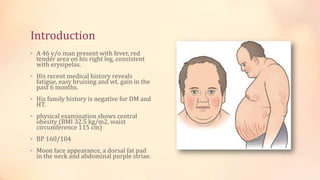
• A 46 y/o man present with fever, red
tender area on his right leg, consistent
with erysipelas.
• His recent medical history reveals
fatigue, easy bruising and wt. gain in the
past 6 months.
• His family history is negative for DM and
HT.
• physical examination shows central
obesity (BMI 32.5 kg/m2, waist
circumference 115 cm)
• BP 160/104
• Moon face appearance, a dorsal fat pad
in the neck and abdominal purple striae.
Learning objectives:
• Which additional radiological investigations do you recommend?
• Which treatment would you propose?
What is Cushing’s syndrome?
• Cushing syndrome is caused by prolonged exposure to elevated levels of
either endogenous glucocorticoids or exogenous glucocorticoids.
endogenous
• glucocorticoid
overproduction
or
hypercortisolism
• Due to primary
adrenocortical
neoplasm
exogenous
• Following the
therapeutic
adminstrition of
synthetic
steroids of
ACTH.
Cushing’s syndrome VS Cushing’s disease ?
• Cushing’s syndrome :
- clinical state of increased free
circulating glucocorticoid
- Spontaneous Cushing’s
syndrome rare
• Cushing’s Disease:
- ACTH dependent
hypercorticism , pituitary
dependant.
- it is the most common cause of
Cushing's.
Radiological investigations
 It should be performed after the biochemical laboratory evaluation has
been done.
 It’s used to determine the cause or complications.
Adrenal CT or
MRI
Pituitary MRI Chest X-ray
Radiolabelled
octreotide
(Scintigraphy)
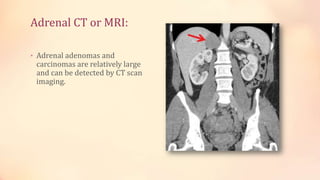
Adrenal CT or MRI:
• Adrenal adenomas and
carcinomas are relatively large
and can be detected by CT scan
imaging.
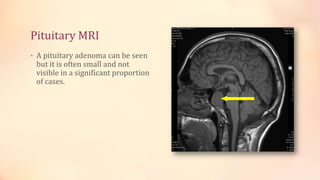
Pituitary MRI
• A pituitary adenoma can be seen
but it is often small and not
visible in a significant proportion
of cases.
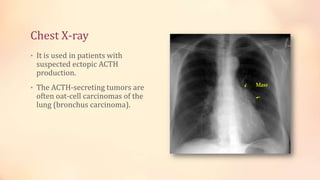
Chest X-ray
• It is used in patients with
suspected ectopic ACTH
production.
• The ACTH-secreting tumors are
often oat-cell carcinomas of the
lung (bronchus carcinoma).
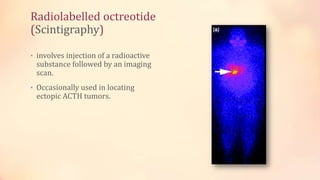
Radiolabelled octreotide
(Scintigraphy)
• involves injection of a radioactive
substance followed by an imaging
scan.
• Occasionally used in locating
ectopic ACTH tumors.
Treatment
• Successful treatment of Cushing’s syndrome should lead to reversal of the
presenting clinical features.
• However, untreated Cushing’s syndrome has a very bad prognosis, with
death from: hypertension, MI, infection and heart failure.
• Whatever the underlying cause, cortisol hypersecretion should be
controlled prior to surgery or radiotherapy.
pharmacotherapy
SurgeryRadiotherapy
Depending
on the
cause.
Pharmacotherapy (Cushing’s syndrome)
• The goal of pharmacotherapy is to reduce morbidity and prevent
complications.
Somatostatin
Analogs
• bind and activate human
somatostatin receptors
resulting in inhibition of
ACTH secretion, which
leads to decreased
cortisol secretion.
• pasireotide
0.6-0.9 twice daily
Adrenal steroid
inhibitors
• These agents either
inhibit the synthesis of
mineralocorticoids and
glucocorticoids, or
competitively bind
glucocorticoid receptors.
• Metyrapone
750 mg – 4 g daily , in 3-4
divided doses.
• Ketoconazole :200 mg
three times daily
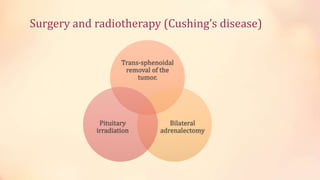
Surgery and radiotherapy (Cushing’s disease)
Trans-sphenoidal
removal of the
tumor.
Bilateral
adrenalectomy
Pituitary
irradiation
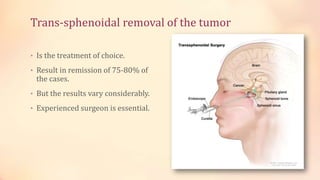
Trans-sphenoidal removal of the tumor
• Is the treatment of choice.
• Result in remission of 75-80% of
the cases.
• But the results vary considerably.
• Experienced surgeon is essential.
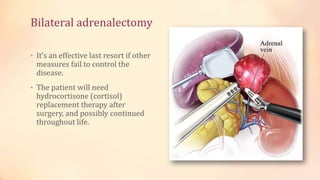
Bilateral adrenalectomy
• It’s an effective last resort if other
measures fail to control the
disease.
• The patient will need
hydrocortisone (cortisol)
replacement therapy after
surgery, and possibly continued
throughout life.
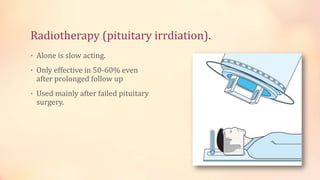
Radiotherapy (pituitary irrdiation).
• Alone is slow acting.
• Only effective in 50-60% even
after prolonged follow up
• Used mainly after failed pituitary
surgery.
Cushing’s syndrome due to other causes.
 Adrenal adenomas:
- should be resected after
achievement of clinical remission
with metyrapone.
 Adrenal carcinoma:
- are highly aggressive and has
poor prognosis.
- if there’s no widespread
metastases, tumor bulk should be
removed surgically.
- adrenolytic drug mitotane may
inhibit the growth of the tumor
and prolonged survival.
- radiotherapy can be used.
conclusion
• A 46 y/o man present with fatigue, easy bruising and wt. gain
• The patient had moon face appearance, a dorsal fat pad in the neck and
abdominal purple striae.
• The diagnostic tests reveals that the patient has Cushing's syndrome.
• The patient will initially manage the cortisol levels by taking metyrapone
4 gm/ 3 daily, Ketoconazole, 200 mg /3 daily
• Further treatment decided based on the specific etiology.
References
• Kumar & Clarks, Clinical Medicine ,
eighth edition (2012).
• Up to date : Cushing's syndrome.
• Up to date : Cushing's syndrome
treatment (Beyond the Basics)
• Emedicine : medscape: Cushing’s
syndrome.
Thank you for listening.
Any question?

Cushing's syndrome

  • 1.
  • 2.
    Introduction • A 46y/o man present with fever, red tender area on his right leg, consistent with erysipelas. • His recent medical history reveals fatigue, easy bruising and wt. gain in the past 6 months. • His family history is negative for DM and HT. • physical examination shows central obesity (BMI 32.5 kg/m2, waist circumference 115 cm) • BP 160/104 • Moon face appearance, a dorsal fat pad in the neck and abdominal purple striae.
  • 3.
    Learning objectives: • Whichadditional radiological investigations do you recommend? • Which treatment would you propose?
  • 4.
    What is Cushing’ssyndrome? • Cushing syndrome is caused by prolonged exposure to elevated levels of either endogenous glucocorticoids or exogenous glucocorticoids. endogenous • glucocorticoid overproduction or hypercortisolism • Due to primary adrenocortical neoplasm exogenous • Following the therapeutic adminstrition of synthetic steroids of ACTH.
  • 5.
    Cushing’s syndrome VSCushing’s disease ? • Cushing’s syndrome : - clinical state of increased free circulating glucocorticoid - Spontaneous Cushing’s syndrome rare • Cushing’s Disease: - ACTH dependent hypercorticism , pituitary dependant. - it is the most common cause of Cushing's.
  • 6.
  • 7.
    Radiological investigations  Itshould be performed after the biochemical laboratory evaluation has been done.  It’s used to determine the cause or complications. Adrenal CT or MRI Pituitary MRI Chest X-ray Radiolabelled octreotide (Scintigraphy)
  • 8.
    Adrenal CT orMRI: • Adrenal adenomas and carcinomas are relatively large and can be detected by CT scan imaging.
  • 9.
    Pituitary MRI • Apituitary adenoma can be seen but it is often small and not visible in a significant proportion of cases.
  • 10.
    Chest X-ray • Itis used in patients with suspected ectopic ACTH production. • The ACTH-secreting tumors are often oat-cell carcinomas of the lung (bronchus carcinoma).
  • 11.
    Radiolabelled octreotide (Scintigraphy) • involvesinjection of a radioactive substance followed by an imaging scan. • Occasionally used in locating ectopic ACTH tumors.
  • 12.
    Treatment • Successful treatmentof Cushing’s syndrome should lead to reversal of the presenting clinical features. • However, untreated Cushing’s syndrome has a very bad prognosis, with death from: hypertension, MI, infection and heart failure. • Whatever the underlying cause, cortisol hypersecretion should be controlled prior to surgery or radiotherapy.
  • 13.
  • 14.
    Pharmacotherapy (Cushing’s syndrome) •The goal of pharmacotherapy is to reduce morbidity and prevent complications. Somatostatin Analogs • bind and activate human somatostatin receptors resulting in inhibition of ACTH secretion, which leads to decreased cortisol secretion. • pasireotide 0.6-0.9 twice daily Adrenal steroid inhibitors • These agents either inhibit the synthesis of mineralocorticoids and glucocorticoids, or competitively bind glucocorticoid receptors. • Metyrapone 750 mg – 4 g daily , in 3-4 divided doses. • Ketoconazole :200 mg three times daily
  • 15.
    Surgery and radiotherapy(Cushing’s disease) Trans-sphenoidal removal of the tumor. Bilateral adrenalectomy Pituitary irradiation
  • 16.
    Trans-sphenoidal removal ofthe tumor • Is the treatment of choice. • Result in remission of 75-80% of the cases. • But the results vary considerably. • Experienced surgeon is essential.
  • 17.
    Bilateral adrenalectomy • It’san effective last resort if other measures fail to control the disease. • The patient will need hydrocortisone (cortisol) replacement therapy after surgery, and possibly continued throughout life.
  • 18.
    Radiotherapy (pituitary irrdiation). •Alone is slow acting. • Only effective in 50-60% even after prolonged follow up • Used mainly after failed pituitary surgery.
  • 19.
    Cushing’s syndrome dueto other causes.  Adrenal adenomas: - should be resected after achievement of clinical remission with metyrapone.  Adrenal carcinoma: - are highly aggressive and has poor prognosis. - if there’s no widespread metastases, tumor bulk should be removed surgically. - adrenolytic drug mitotane may inhibit the growth of the tumor and prolonged survival. - radiotherapy can be used.
  • 20.
    conclusion • A 46y/o man present with fatigue, easy bruising and wt. gain • The patient had moon face appearance, a dorsal fat pad in the neck and abdominal purple striae. • The diagnostic tests reveals that the patient has Cushing's syndrome. • The patient will initially manage the cortisol levels by taking metyrapone 4 gm/ 3 daily, Ketoconazole, 200 mg /3 daily • Further treatment decided based on the specific etiology.
  • 21.
    References • Kumar &Clarks, Clinical Medicine , eighth edition (2012). • Up to date : Cushing's syndrome. • Up to date : Cushing's syndrome treatment (Beyond the Basics) • Emedicine : medscape: Cushing’s syndrome.
  • 22.
    Thank you forlistening. Any question?

Editor's Notes

  • #6 This is an important point , we will use it in the treatment.
  • #7 What do you think is used for? Endogenous or exo
  • #8 Or abdominal CT
  • #15 بازيريوتايد , ميتايرابونalso it’s used in cushung’s disease.
  • #16 Pituitary dependant hyperadrenalism
  • #17 he pituitary is located at the base of the brain. It is possible to access this area through the gums above the upper front teeth or the noseUsing special instruments, the surgeon makes an incision in one of these areas (figure 2). The incision is extended through the sphenoid sinus, allowing the surgeon to see and remove the adenoma with an endoscope (a thin, lighted tube with a camera)