Hypersensitivity Josyann Abisaab, MD Department of Emergency Medicine New York Presbyterian Hospital- Weill Cornell Medical Center
Outline Types of Hypersensitivity Anaphylaxis Disposition Prevention
Definition of Hypersensitivity Undesirable reactions produced by the normal immune system.
Classification of Hypersensitivity Type I: Immediate/ A naphylactic Type II:  C ytotoxic Antibody Reaction Type III:  I mmune Complex Reaction Type IV:  D elayed-Type Hypersensitivity Type V:  S timulatory Hypersensitivity
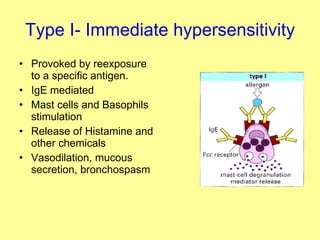
Type I- Immediate hypersensitivity Provoked by reexposure to a specific antigen. IgE mediated Mast cells and Basophils stimulation Release of Histamine and other chemicals Vasodilation, mucous secretion, bronchospasm
Type I- Immediate Acute response within 1 hour Late-phase response 4-6 hours after original reaction, can last 1-2 days Local vs. systemic
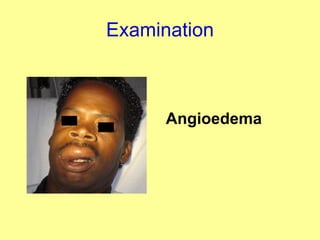
Type I- Immediate Urticaria (hives) Angioedema Allergic conjunctivitis Allergic Rhinitis Allergic Asthma Anaphylaxis
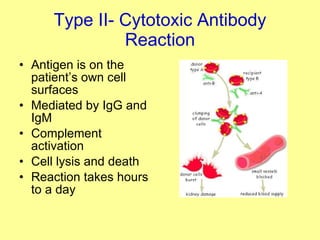
Type II- Cytotoxic Antibody Reaction Antigen is on the patient’s own cell surfaces Mediated by IgG and IgM Complement activation Cell lysis and death Reaction takes hours to a day
Type II- Cytotoxic Transfusion reactions Rh incompatibility Autoimmune hemolytic anemia Goodpasture’s syndrome Pemphigus ITP Rx: anti-inflammatory + immunosuppressive agents
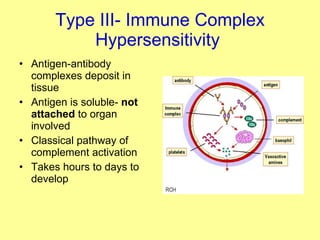
Type III- Immune Complex Hypersensitivity   Antigen-antibody complexes deposit in tissue Antigen is soluble-  not attached  to organ involved Classical pathway of complement activation Takes hours to days to develop
Type III- Immune Complex Serum sickness SLE Rheumatoid arthritis Erythema nodosum Arthus reaction (Farmer’s Lung) Immune complex glomerulonephritis Rx: anti-inflammatory agents
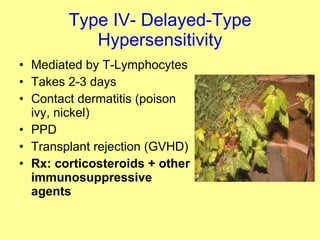
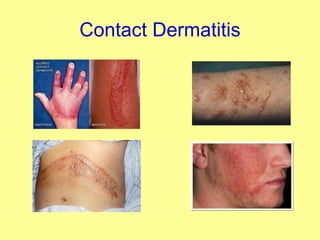
Type IV- Delayed-Type Hypersensitivity Mediated by T-Lymphocytes Takes 2-3 days Contact dermatitis (poison ivy, nickel) PPD Transplant rejection (GVHD) Rx: corticosteroids + other immunosuppressive agents
Contact Dermatitis
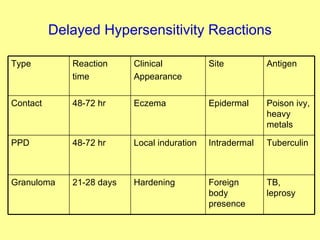
Delayed Hypersensitivity Reactions TB, leprosy Foreign body presence Hardening 21-28 days Granuloma Tuberculin Intradermal Local induration 48-72 hr PPD Poison ivy, heavy metals Epidermal Eczema 48-72 hr Contact Antigen  Site Clinical  Appearance Reaction time Type
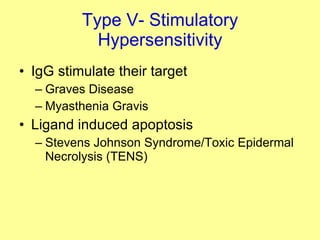
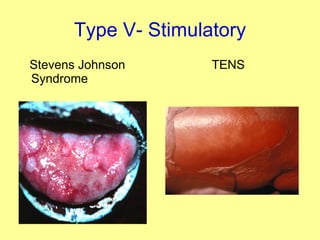
Type V- Stimulatory Hypersensitivity IgG stimulate their target Graves Disease Myasthenia Gravis Ligand induced apoptosis Stevens Johnson Syndrome/Toxic Epidermal Necrolysis (TENS)
Type V- Stimulatory Stevens Johnson Syndrome   TENS
Anaphylaxis Case Presentation: 39 y.o male BIBA in respiratory distress with agonal pulse.  Paramedics report patient was helping a friend paint when he was stung by a bee. He walked into the house, saying:”I don’t feel good” and collapsed. Intubated at scene, en route given endotracheal and IV Epi, IV Benadryl
Anaphylaxis Case Presentation: On arrival in ED, patient intubated, cyanotic from neck up, CPR in progress 2 nd  Large bore IV, wide open fluids Dopamine drip Epnephrine drip Central line Isuprel drip, Levophed drip Monitor: agonal wide-complex
Anaphylaxis   Case presentation: TVP failed to capture After 20 min prehospital and 30 min hospital resuscitation, no response. Patient died.  Cause: “Fatal Anaphylactic Reaction”
What is Anaphylaxis? “ A systemic reaction of multiple organ systems to an antigen-induced IgE-mediated immunologic mediator release in a previously sensitized individual”
What does the word mean? “ ana” means against or backwards “ phylaxis” means guard or protect Anaphylaxis= “without protection” Prophylaxis= “for protection”
What is Anaphylactoid? A nonimmunologic reaction Not mediated by IgE Direct histamine release Same manifestations & treatment as anaphylaxis Causes: RCM, opiates, ACEI, exercise, blood products, gammaglobulin, NSAIDs, ASA
Anaphylaxis: How does it manifest? Clinical severity varies from mild to fatal Majority of reactions are respiratory and dermatologic Innocent early findings may progress to lethal over a short time
What causes the deaths? Laryngeal edema and acute bronchospasm >70% Circulatory collapse >25% other <5% - ?brain ?MI
In USA 30,000 emergency room visits each year 400 to 800 deaths/year IV penicillin accounts for 100 to 500 deaths per year Hymenoptera stings account for 40 to 100 deaths per year Risk factors: protracted course, betablockers, adrenal insufficiency
Histamine Prime mediator of both local and systemic effects H1: smooth muscle contraction,   vascular permeablility H2: gastric acid secretion, release of more histamine,  vascular permeability H3: inhibition of central and peripheral neurotransmitter release, inhibition of further histamine
Clinical expression depends on: Degree of hypersensitivity Quantity, route, rate of antigen exposure Pattern of mediator release Target organ sensitivity and responsiveness
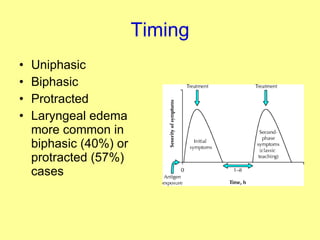
Timing Uniphasic Biphasic Protracted Laryngeal edema more common in biphasic (40%) or protracted (57%) cases
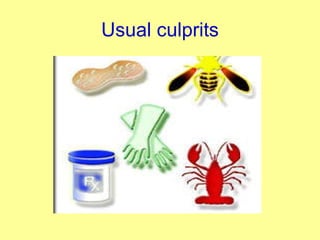
Usual culprits
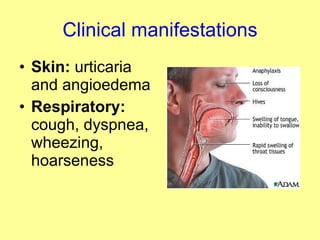
Clinical manifestations Skin:  urticaria and angioedema Respiratory:  cough, dyspnea, wheezing, hoarseness
Clinical manifestations Lightheadedness or syncope Nasal congestion and sneezing Ocular itching and tearing Cramping abdominal pain with N/V/D Headache Sense of impending doom ↓  level of consciousness
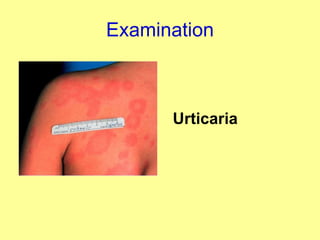
Examination Urticaria
Examination Angioedema
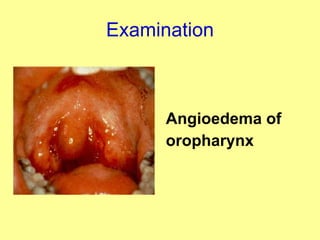
Examination Angioedema of oropharynx
Examination Conjunctivitis, rhinitis Tachypnea, tachycardia, hypotension Laryngeal stridor, hoarseness Wheezing, ronchi, diminished air flow
Optimal Management High index of suspicion Early diagnosis Pharmaceutical intervention Observation Disposition
Index of suspicion The motto of Emergency Medicine: TREAT FIRST ASK QUESTIONS LATER
Treating mild anaphylaxis Urticaria, rhinitis, conjunctivitis, mild bronchospasm Epinephrine 1:1000  0.3cc IM may repeat every 5-20min prn 0.01mg per kg in children Benadryl 50 mg po or IM Consider: H2-blocker, prednisone, inhaled beta-agonists
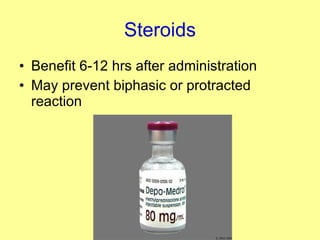
Steroids Benefit 6-12 hrs after administration May prevent biphasic or protracted reaction
Myth: Epi is dangerous Reality: Risks of anaphylaxis far outweigh risks of Epi administration Minimal cardiovascular effects in children (Simons et al, 1998) Caution in:  elderly, known cardiac disease and tachyarrythmias
Treating moderate anaphylaxis Angioedema or hypotension with BP>80mmHg Epinephrine 1:1000- 0.3 cc IM Benadryl 50mg IM or IV Pepcid IV Solumedrol 40-125mg IV Oxygen, IVF, cardiac monitor
Treating severe anaphylaxis Laryngeal edema, respiratory failure, shock Epinephrine 1:10,000- 1cc  IV  over 5 min, repeat every 3-5 min prn Benadryl 50-100mg IV over 3 min H2 blockers Solumedrol Nebulizers: racemic epi, albuterol
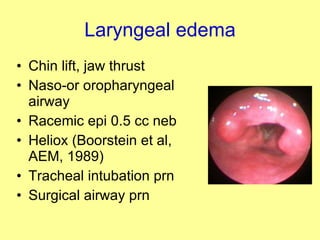
Laryngeal edema Chin lift, jaw thrust Naso-or oropharyngeal airway Racemic epi 0.5 cc neb Heliox (Boorstein et al, AEM, 1989) Tracheal intubation prn Surgical airway prn
Persistent bronchospasm Albuterol by continuous nebulization Aminophylline 5.6 mg/kg IV over 20-30 min Atrovent by nebulization Heliox Steroids Intubation
Persistent hypotension Trendelenberg 2 largebore IV’s infusing crystalloid Monitor urine output and CVP PASG Consider: Naloxone 0.4-0.8mg IV Vasopressors: dopamine, isoproterenol, levophed
What about Glucagon? When epi contraindicated, may be an option Positive inotropic and chronotropic cardiac effects Consider in patients: On beta blockers With known CAD Pregnant women No response to other drugs
Disposition Systemic features: observe for 6-8 hours Cannot predict biphasic reaction Admission mandatory for: Moderate to severe reaction, even if they respond rapidly to Rx Consider admission for: Elderly CAD Asthma On beta blocker
May be discharged home if Mild anaphylaxis No hypotension No signs of airway obstruction Rapid response to ED therapy Observed for 6 hours without recurrence Safe discharge to care of responsible adult
Outpatient management 4 day course of Benadryl Q6h  4 day course of Pepcid BID 4 day course of Prednisone 50mg/day (Ellis et al, CMAJ, 2003) Referral to an Allergist
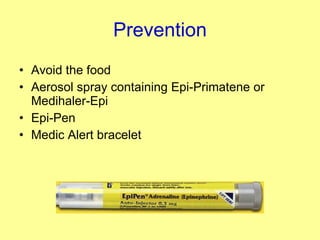
Prevention Avoid the food Aerosol spray containing Epi-Primatene or Medihaler-Epi Epi-Pen Medic Alert bracelet
Board Type Questions A 27 year old man presents after a syncopal event following a long run. He c/o lightheadedness and itching, along with swelling of his hands and feet. His BP is 68/36 mmHg and pulse is 160. Lung examination shows he has diffuse wheezing. His blood glucose is 95 mg/dl. The most important initial IV therapy would be: Epinephrine Diphenhydramine Methylprednisolone Normal Saline Pepcid
Board Type Questions Type I Hypersensitivity: occurs 24 hours after the initial stimulus is produced by IgE antibodies is cell mediated is best treated with steroids is diagnosed by measuring serum histamine levels
Board Type Questions A 45 year old man with no PMH was playing golf when he complained of a sting on his hand, followed by shortness of breath and loss of consciousness. EMS at scene report a BP 70/40, HR 140 and bilateral wheezing. The most likely diagnosis is: Vasovagal syncope Asthma Psychogenic syncope related to bad golfing day Anaphylactic shock Myocardial Infarction
Board Type Questions A 19-year-old woman with a past history of seasonal allergic rhinitis is referred to the ED from her family doctor’s office. She had received her routine injection of allergen immunotherapy (ragweed). Twenty minutes later, she began to notice itching in the palms of her hands, followed by shortness of breath and a sensation of throat swelling. In the ED, patient is noted to be flushed, sweating and in moderate distress. Her BP is 110/60 and her HR is 120. She is speaking in full sentences. The most appropriate initial emergency treatment would be: Epinephrine 1:10,000- 1cc IV Racemic Epi 0.5 cc neb Epinephrine 1:1000- 0.3 cc IM Albuterol neb Benadryl 50mg po
Board Type Questions A 40 year old woman presents to the ED 30 minutes after eating chicken with cashews at a chinese restaurant. Patient complains of hives, itchy eyes, throat tightness as well as mild shortness of breath. The astute ED intern makes the diagnosis of urticaria and mild anaphylaxis. She administers IM Epi and Benadryl with immediate resolution of symptoms. Patient now feels well and wants to go home. You agree with patient and write discharge order You give her steroids first then discharge her You recommend observation in the ED for at least 6 hours You recommend discharge home under the care of an adult after 2 hours You recommend admission to the hospital
Any questions?

Hypersensitivity - Emergency Room Treatment

  • 1.
    Hypersensitivity Josyann Abisaab,MD Department of Emergency Medicine New York Presbyterian Hospital- Weill Cornell Medical Center
  • 2.
    Outline Types ofHypersensitivity Anaphylaxis Disposition Prevention
  • 3.
    Definition of HypersensitivityUndesirable reactions produced by the normal immune system.
  • 4.
    Classification of HypersensitivityType I: Immediate/ A naphylactic Type II: C ytotoxic Antibody Reaction Type III: I mmune Complex Reaction Type IV: D elayed-Type Hypersensitivity Type V: S timulatory Hypersensitivity
  • 5.
    Type I- Immediatehypersensitivity Provoked by reexposure to a specific antigen. IgE mediated Mast cells and Basophils stimulation Release of Histamine and other chemicals Vasodilation, mucous secretion, bronchospasm
  • 6.
    Type I- ImmediateAcute response within 1 hour Late-phase response 4-6 hours after original reaction, can last 1-2 days Local vs. systemic
  • 7.
    Type I- ImmediateUrticaria (hives) Angioedema Allergic conjunctivitis Allergic Rhinitis Allergic Asthma Anaphylaxis
  • 8.
    Type II- CytotoxicAntibody Reaction Antigen is on the patient’s own cell surfaces Mediated by IgG and IgM Complement activation Cell lysis and death Reaction takes hours to a day
  • 9.
    Type II- CytotoxicTransfusion reactions Rh incompatibility Autoimmune hemolytic anemia Goodpasture’s syndrome Pemphigus ITP Rx: anti-inflammatory + immunosuppressive agents
  • 10.
    Type III- ImmuneComplex Hypersensitivity Antigen-antibody complexes deposit in tissue Antigen is soluble- not attached to organ involved Classical pathway of complement activation Takes hours to days to develop
  • 11.
    Type III- ImmuneComplex Serum sickness SLE Rheumatoid arthritis Erythema nodosum Arthus reaction (Farmer’s Lung) Immune complex glomerulonephritis Rx: anti-inflammatory agents
  • 12.
    Type IV- Delayed-TypeHypersensitivity Mediated by T-Lymphocytes Takes 2-3 days Contact dermatitis (poison ivy, nickel) PPD Transplant rejection (GVHD) Rx: corticosteroids + other immunosuppressive agents
  • 13.
  • 14.
    Delayed Hypersensitivity ReactionsTB, leprosy Foreign body presence Hardening 21-28 days Granuloma Tuberculin Intradermal Local induration 48-72 hr PPD Poison ivy, heavy metals Epidermal Eczema 48-72 hr Contact Antigen Site Clinical Appearance Reaction time Type
  • 15.
    Type V- StimulatoryHypersensitivity IgG stimulate their target Graves Disease Myasthenia Gravis Ligand induced apoptosis Stevens Johnson Syndrome/Toxic Epidermal Necrolysis (TENS)
  • 16.
    Type V- StimulatoryStevens Johnson Syndrome TENS
  • 17.
    Anaphylaxis Case Presentation:39 y.o male BIBA in respiratory distress with agonal pulse. Paramedics report patient was helping a friend paint when he was stung by a bee. He walked into the house, saying:”I don’t feel good” and collapsed. Intubated at scene, en route given endotracheal and IV Epi, IV Benadryl
  • 18.
    Anaphylaxis Case Presentation:On arrival in ED, patient intubated, cyanotic from neck up, CPR in progress 2 nd Large bore IV, wide open fluids Dopamine drip Epnephrine drip Central line Isuprel drip, Levophed drip Monitor: agonal wide-complex
  • 19.
    Anaphylaxis Case presentation: TVP failed to capture After 20 min prehospital and 30 min hospital resuscitation, no response. Patient died. Cause: “Fatal Anaphylactic Reaction”
  • 20.
    What is Anaphylaxis?“ A systemic reaction of multiple organ systems to an antigen-induced IgE-mediated immunologic mediator release in a previously sensitized individual”
  • 21.
    What does theword mean? “ ana” means against or backwards “ phylaxis” means guard or protect Anaphylaxis= “without protection” Prophylaxis= “for protection”
  • 22.
    What is Anaphylactoid?A nonimmunologic reaction Not mediated by IgE Direct histamine release Same manifestations & treatment as anaphylaxis Causes: RCM, opiates, ACEI, exercise, blood products, gammaglobulin, NSAIDs, ASA
  • 23.
    Anaphylaxis: How doesit manifest? Clinical severity varies from mild to fatal Majority of reactions are respiratory and dermatologic Innocent early findings may progress to lethal over a short time
  • 24.
    What causes thedeaths? Laryngeal edema and acute bronchospasm >70% Circulatory collapse >25% other <5% - ?brain ?MI
  • 25.
    In USA 30,000emergency room visits each year 400 to 800 deaths/year IV penicillin accounts for 100 to 500 deaths per year Hymenoptera stings account for 40 to 100 deaths per year Risk factors: protracted course, betablockers, adrenal insufficiency
  • 26.
    Histamine Prime mediatorof both local and systemic effects H1: smooth muscle contraction,  vascular permeablility H2: gastric acid secretion, release of more histamine,  vascular permeability H3: inhibition of central and peripheral neurotransmitter release, inhibition of further histamine
  • 27.
    Clinical expression dependson: Degree of hypersensitivity Quantity, route, rate of antigen exposure Pattern of mediator release Target organ sensitivity and responsiveness
  • 28.
    Timing Uniphasic BiphasicProtracted Laryngeal edema more common in biphasic (40%) or protracted (57%) cases
  • 29.
  • 30.
    Clinical manifestations Skin: urticaria and angioedema Respiratory: cough, dyspnea, wheezing, hoarseness
  • 31.
    Clinical manifestations Lightheadednessor syncope Nasal congestion and sneezing Ocular itching and tearing Cramping abdominal pain with N/V/D Headache Sense of impending doom ↓ level of consciousness
  • 32.
  • 33.
  • 34.
  • 35.
    Examination Conjunctivitis, rhinitisTachypnea, tachycardia, hypotension Laryngeal stridor, hoarseness Wheezing, ronchi, diminished air flow
  • 36.
    Optimal Management Highindex of suspicion Early diagnosis Pharmaceutical intervention Observation Disposition
  • 37.
    Index of suspicionThe motto of Emergency Medicine: TREAT FIRST ASK QUESTIONS LATER
  • 38.
    Treating mild anaphylaxisUrticaria, rhinitis, conjunctivitis, mild bronchospasm Epinephrine 1:1000 0.3cc IM may repeat every 5-20min prn 0.01mg per kg in children Benadryl 50 mg po or IM Consider: H2-blocker, prednisone, inhaled beta-agonists
  • 39.
    Steroids Benefit 6-12hrs after administration May prevent biphasic or protracted reaction
  • 40.
    Myth: Epi isdangerous Reality: Risks of anaphylaxis far outweigh risks of Epi administration Minimal cardiovascular effects in children (Simons et al, 1998) Caution in: elderly, known cardiac disease and tachyarrythmias
  • 41.
    Treating moderate anaphylaxisAngioedema or hypotension with BP>80mmHg Epinephrine 1:1000- 0.3 cc IM Benadryl 50mg IM or IV Pepcid IV Solumedrol 40-125mg IV Oxygen, IVF, cardiac monitor
  • 42.
    Treating severe anaphylaxisLaryngeal edema, respiratory failure, shock Epinephrine 1:10,000- 1cc IV over 5 min, repeat every 3-5 min prn Benadryl 50-100mg IV over 3 min H2 blockers Solumedrol Nebulizers: racemic epi, albuterol
  • 43.
    Laryngeal edema Chinlift, jaw thrust Naso-or oropharyngeal airway Racemic epi 0.5 cc neb Heliox (Boorstein et al, AEM, 1989) Tracheal intubation prn Surgical airway prn
  • 44.
    Persistent bronchospasm Albuterolby continuous nebulization Aminophylline 5.6 mg/kg IV over 20-30 min Atrovent by nebulization Heliox Steroids Intubation
  • 45.
    Persistent hypotension Trendelenberg2 largebore IV’s infusing crystalloid Monitor urine output and CVP PASG Consider: Naloxone 0.4-0.8mg IV Vasopressors: dopamine, isoproterenol, levophed
  • 46.
    What about Glucagon?When epi contraindicated, may be an option Positive inotropic and chronotropic cardiac effects Consider in patients: On beta blockers With known CAD Pregnant women No response to other drugs
  • 47.
    Disposition Systemic features:observe for 6-8 hours Cannot predict biphasic reaction Admission mandatory for: Moderate to severe reaction, even if they respond rapidly to Rx Consider admission for: Elderly CAD Asthma On beta blocker
  • 48.
    May be dischargedhome if Mild anaphylaxis No hypotension No signs of airway obstruction Rapid response to ED therapy Observed for 6 hours without recurrence Safe discharge to care of responsible adult
  • 49.
    Outpatient management 4day course of Benadryl Q6h 4 day course of Pepcid BID 4 day course of Prednisone 50mg/day (Ellis et al, CMAJ, 2003) Referral to an Allergist
  • 50.
    Prevention Avoid thefood Aerosol spray containing Epi-Primatene or Medihaler-Epi Epi-Pen Medic Alert bracelet
  • 51.
    Board Type QuestionsA 27 year old man presents after a syncopal event following a long run. He c/o lightheadedness and itching, along with swelling of his hands and feet. His BP is 68/36 mmHg and pulse is 160. Lung examination shows he has diffuse wheezing. His blood glucose is 95 mg/dl. The most important initial IV therapy would be: Epinephrine Diphenhydramine Methylprednisolone Normal Saline Pepcid
  • 52.
    Board Type QuestionsType I Hypersensitivity: occurs 24 hours after the initial stimulus is produced by IgE antibodies is cell mediated is best treated with steroids is diagnosed by measuring serum histamine levels
  • 53.
    Board Type QuestionsA 45 year old man with no PMH was playing golf when he complained of a sting on his hand, followed by shortness of breath and loss of consciousness. EMS at scene report a BP 70/40, HR 140 and bilateral wheezing. The most likely diagnosis is: Vasovagal syncope Asthma Psychogenic syncope related to bad golfing day Anaphylactic shock Myocardial Infarction
  • 54.
    Board Type QuestionsA 19-year-old woman with a past history of seasonal allergic rhinitis is referred to the ED from her family doctor’s office. She had received her routine injection of allergen immunotherapy (ragweed). Twenty minutes later, she began to notice itching in the palms of her hands, followed by shortness of breath and a sensation of throat swelling. In the ED, patient is noted to be flushed, sweating and in moderate distress. Her BP is 110/60 and her HR is 120. She is speaking in full sentences. The most appropriate initial emergency treatment would be: Epinephrine 1:10,000- 1cc IV Racemic Epi 0.5 cc neb Epinephrine 1:1000- 0.3 cc IM Albuterol neb Benadryl 50mg po
  • 55.
    Board Type QuestionsA 40 year old woman presents to the ED 30 minutes after eating chicken with cashews at a chinese restaurant. Patient complains of hives, itchy eyes, throat tightness as well as mild shortness of breath. The astute ED intern makes the diagnosis of urticaria and mild anaphylaxis. She administers IM Epi and Benadryl with immediate resolution of symptoms. Patient now feels well and wants to go home. You agree with patient and write discharge order You give her steroids first then discharge her You recommend observation in the ED for at least 6 hours You recommend discharge home under the care of an adult after 2 hours You recommend admission to the hospital
  • 56.

Editor's Notes

  • #4 Hypersensitivity refers to the undesirable sometimes fatal reactions produced by the normal immune system.
  • #5 Gell and Coombs proposed a classification system in 1963? Mnemonic: ACIDS
  • #6 Exposure may be by ingestion, inhalation, injection or direct contact. The reaction is mediated by IgE antibodies and produced by the immediate release from mast cells of histamine, cytokines, interleukins, leukotrienes and prostaglandins.
  • #7 - Immediate inflammatory response within seconds to minutes - Biphasic - Symptoms vary from mild irritation to sudden death from anaphylactic shock
  • #9 IgG + IgM antibodies bind to these antigens to form complexes that activate classical pathway of complement, generating mediators of acute inflammation at the site and membrane attack complexes cause cell lysis and death
  • #11 Soluble immune complexes form in the blood and deposit in various tissues ( typically the skin, kidney and joints) The antigen may be exogenous (chronic bacterial, viral or parasitic infections) or endogenous like in SLE The soluble immune complex trigger an immune response via classical pathway of complement activation
  • #13 - Is not antibody mediated but rather cell mediated, specifically T-lymphocytes recognise specific antigens, causing a delayed immune reaction
  • #14 Bacitracin Poison ivy Staples cream
  • #16 These reactions occur when IgG antibodies directed towards cell surface antigens have a stimulatory effect on target. Ligand is an extracellular substance that binds to receptors Apoptosis is programmed cell death-deliberate suicide -
  • #21 In short “ a severe allergic reaction”
  • #23 An inflammatory response but not IgE mediated Direct histamine release from mast cells Same manifestations as anaphylaxis and treatment is same RadioContrast Media Opiates: morphine and codeine Red man syndrome after Vancomycin
  • #25 Laryngeal edema and acute bronchospam with respiratory failure account for &gt;70%
  • #27 -Many preformed mediators are released in blood stream: Histamine, ECF-A, HMW-NCF, tryptase, kallikrein and newly formed mediators such as PAF, arachidonic acid metabolites, prostaglandins - There are 3 histamine receptors: H1, H2, H3. Histamine acts on H1 receptors to cause:
  • #28 Clinical expression of anaphylaxis depends on: There will be a difference if one ingests 250mg of Pen VK vs. getting an IM/IV injection of 1 million units of Benzathine Penicillin
  • #31 The first clinical manifestations involve the skin: warmth and tingling of the face, mouth, upper chest, palms and soles or site of exposure, itching, urticaria and angioedema Respiratory symptoms soon follow: cough, chest tightness, SOB, wheezing, throat tightness, odynophagia, hoarsness
  • #32 May also complain of: Caused by hypotension or dysrhythmia
  • #33 May reveal: Blanching, raised, palpable wheals Swellling of the superficial dermal layers
  • #34 Swelling of the deeper dermal layers and subcutaneous tissues, nonpruritic
  • #37 Optimal Management requires
  • #38 Must suspect and treat within moments of presentation
  • #40 - Although the exact benefit of corticosteroids has not been established, most experts advocate their administration. Their benefit is not realized for 6 to 12 hours after administration so their primary role may be in prevention of recurrent or protracted anaphylaxis.
  • #41 Epinephrine should be used with caution in the elderly
  • #42 It should be noted that Epi has been given for years SQ but recent studies have shown that the speed of absorption is unsatisfactory when given SQ. Peak levels may take 25 min to occur following SQ administration of Epi while peak levels may be obtained within 5-6 minutes when Epi injected IM
  • #44 Heliox has been found to be helpful in a variety of airway obstruction including asthma, COPD and upper airway obstruction, helium decreased force necessary to move the gas thru the airways &amp; decreases the mechanical work of the respiratory muscles
  • #45 Bronchospasm refractory to epinephrine may respond to: The use of anticholinergic therapy with atrovent decrease c GMP levels, therefore decreasing mediator release and reversing the action of mediators on target tissue cells.
  • #46 - If responsive to Naloxone start IV drip
  • #47 Positive inotropic and chronotropic cardiac effects mediated independently of alpha and beta receptors Pregnant women ( category B drug) Usefulness is anecdotal only-no controlled trials Dose is 1mg for adults and 0.5mg for children SQ, IM or IV- may require a glucagon infusion SE of glucagon: nausea, vomiting, hypokalemia, hyperglycemia
  • #48 Regardless of response to therapy, all patients with systemic features must be observed for 6-8 hours There is no accurate way to predict which patients will experience a biphasic reaction Admission mandatory for anyone with moderate to severe reaction, this includes anyone who showed signs of upper airway obstruction or hypotension.
  • #51 Avoid food/ for insect bites, venom immunotherapy helps Aerosol spray containing Epi indicated for patients who developed throat swelling All patients with peanut or nut allergy should carry one, less for milk and eggs since reactions usually milder