HYPERLIPIDEMIA
Hyperlipidemia is defined as elevated total cholesterol, LDL cholesterol, or
triglycerides; a low HDL cholesterol; or a combination of these abnormalities.
Abnormalities of plasma lipids can result in a predisposition to coronary,
cerebrovascular, and peripheral vascular arterial disease.
Hyperlipidemia is a major risk factor for atherosclerotic cardiovascular
disease!
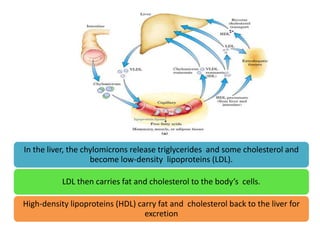
In the liver, the chylomicrons release triglycerides and some cholesterol and
become low-density lipoproteins (LDL).
LDL then carries fat and cholesterol to the body’s cells.
High-density lipoproteins (HDL) carry fat and cholesterol back to the liver for
excretion
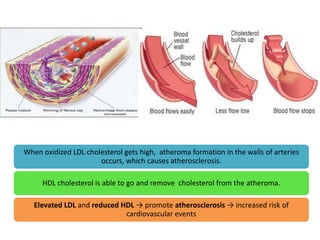
When oxidized LDL cholesterol gets high, atheroma formation in the walls of arteries
occurs, which causes atherosclerosis.
HDL cholesterol is able to go and remove cholesterol from the atheroma.
Elevated LDL and reduced HDL → promote atherosclerosis → increased risk of
cardiovascular events
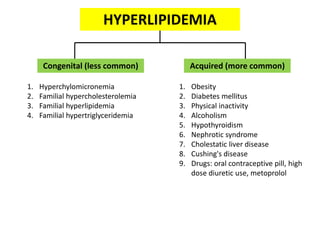
1. Obesity
2. Diabetes mellitus
3. Physical inactivity
4. Alcoholism
5. Hypothyroidism
6. Nephrotic syndrome
7. Cholestatic liver disease
8. Cushing's disease
9. Drugs: oral contraceptive pill, high
dose diuretic use, metoprolol
Congenital (less common)
1. Hyperchylomicronemia
2. Familial hypercholesterolemia
3. Familial hyperlipidemia
4. Familial hypertriglyceridemia
Acquired (more common)
HYPERLIPIDEMIA
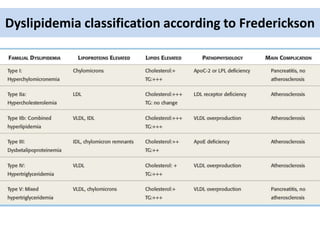
Dyslipidemia classification according to Frederickson
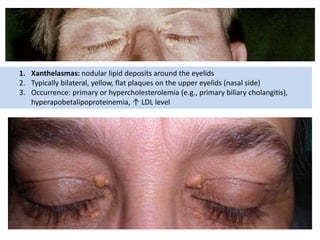
1. Xanthelasmas: nodular lipid deposits around the eyelids
2. Typically bilateral, yellow, flat plaques on the upper eyelids (nasal side)
3. Occurrence: primary or hypercholesterolemia (e.g., primary biliary cholangitis),
hyperapobetalipoproteinemia, ↑ LDL level
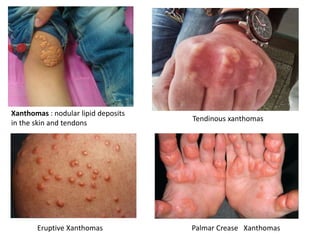
Eruptive Xanthomas Palmar Crease Xanthomas
Tendinous xanthomas
Xanthomas : nodular lipid deposits
in the skin and tendons
INVESTIGATION
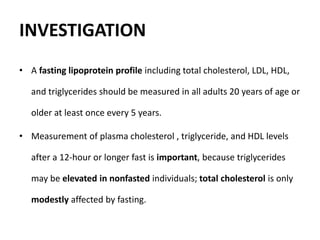
• A fasting lipoprotein profile including total cholesterol, LDL, HDL,
and triglycerides should be measured in all adults 20 years of age or
older at least once every 5 years.
• Measurement of plasma cholesterol , triglyceride, and HDL levels
after a 12-hour or longer fast is important, because triglycerides
may be elevated in nonfasted individuals; total cholesterol is only
modestly affected by fasting.
The National Cholesterol Education Program Adult
Treatment Panel III (NCEP ATP III)
Treatment ofHyperlipidemia
Lifestyle modification
1. Low-cholesterol diet
2. Exercise
1. Inducing a weight loss of 10% should be
discussed with patients who are
overweight.
2. In general, physical activity of moderate
intensity 30 minutes a day for most days
of the week should be encouraged
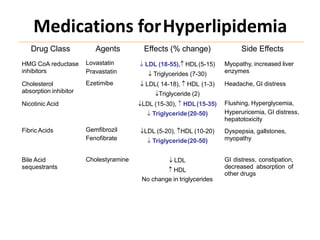
Medications forHyperlipidemia
Agents
Lovastatin
Pravastatin
Ezetimibe
Side Effects
Myopathy, increased liver
enzymes
Headache, GI distress
Drug Class
HMG CoA reductase
inhibitors
Cholesterol
absorption inhibitor
Nicotinic Acid
Effects (% change)
 LDL (18-55), HDL(5-15)
 Triglycerides (7-30)
 LDL( 14-18),  HDL (1-3)
Triglyceride (2)
LDL (15-30),  HDL(15-35)
 Triglyceride(20-50)
Fibric Acids Gemfibrozil
Fenofibrate
LDL (5-20), HDL (10-20)
 Triglyceride(20-50)
Flushing, Hyperglycemia,
Hyperuricemia, GI distress,
hepatotoxicity
Dyspepsia, gallstones,
myopathy
Bile Acid
sequestrants
Cholestyramine  LDL
 HDL
No change in triglycerides
GI distress, constipation,
decreased absorption of
other drugs
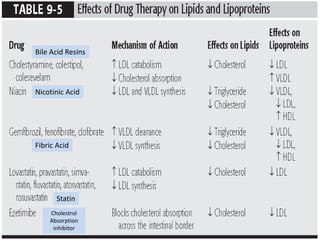
Bile Acid Resins
Nicotinic Acid
Fibric Acid
Statin
Cholestrol
Absorption
inhibitor
Refrences
• Rosenson RS, JP Kastelein JJP. Hypertriglyceridemia.
• Le T, Bhushan V. First Aid for the USMLE Step 1 2015.
McGraw-Hill Education; 2014: p. 256.
• Jenkins B, McInnis M, Lewis C. Step-Up to USMLE
Step 2 CK. Lippincott Williams & Wilkins; 2015: p. 5

Hyperlipidemia

  • 1.
    HYPERLIPIDEMIA Hyperlipidemia is definedas elevated total cholesterol, LDL cholesterol, or triglycerides; a low HDL cholesterol; or a combination of these abnormalities. Abnormalities of plasma lipids can result in a predisposition to coronary, cerebrovascular, and peripheral vascular arterial disease. Hyperlipidemia is a major risk factor for atherosclerotic cardiovascular disease!
  • 2.
    In the liver,the chylomicrons release triglycerides and some cholesterol and become low-density lipoproteins (LDL). LDL then carries fat and cholesterol to the body’s cells. High-density lipoproteins (HDL) carry fat and cholesterol back to the liver for excretion
  • 3.
    When oxidized LDLcholesterol gets high, atheroma formation in the walls of arteries occurs, which causes atherosclerosis. HDL cholesterol is able to go and remove cholesterol from the atheroma. Elevated LDL and reduced HDL → promote atherosclerosis → increased risk of cardiovascular events
  • 4.
    1. Obesity 2. Diabetesmellitus 3. Physical inactivity 4. Alcoholism 5. Hypothyroidism 6. Nephrotic syndrome 7. Cholestatic liver disease 8. Cushing's disease 9. Drugs: oral contraceptive pill, high dose diuretic use, metoprolol Congenital (less common) 1. Hyperchylomicronemia 2. Familial hypercholesterolemia 3. Familial hyperlipidemia 4. Familial hypertriglyceridemia Acquired (more common) HYPERLIPIDEMIA
  • 5.
  • 6.
    1. Xanthelasmas: nodularlipid deposits around the eyelids 2. Typically bilateral, yellow, flat plaques on the upper eyelids (nasal side) 3. Occurrence: primary or hypercholesterolemia (e.g., primary biliary cholangitis), hyperapobetalipoproteinemia, ↑ LDL level
  • 7.
    Eruptive Xanthomas PalmarCrease Xanthomas Tendinous xanthomas Xanthomas : nodular lipid deposits in the skin and tendons
  • 8.
    INVESTIGATION • A fastinglipoprotein profile including total cholesterol, LDL, HDL, and triglycerides should be measured in all adults 20 years of age or older at least once every 5 years. • Measurement of plasma cholesterol , triglyceride, and HDL levels after a 12-hour or longer fast is important, because triglycerides may be elevated in nonfasted individuals; total cholesterol is only modestly affected by fasting.
  • 9.
    The National CholesterolEducation Program Adult Treatment Panel III (NCEP ATP III)
  • 10.
    Treatment ofHyperlipidemia Lifestyle modification 1.Low-cholesterol diet 2. Exercise 1. Inducing a weight loss of 10% should be discussed with patients who are overweight. 2. In general, physical activity of moderate intensity 30 minutes a day for most days of the week should be encouraged
  • 11.
    Medications forHyperlipidemia Agents Lovastatin Pravastatin Ezetimibe Side Effects Myopathy,increased liver enzymes Headache, GI distress Drug Class HMG CoA reductase inhibitors Cholesterol absorption inhibitor Nicotinic Acid Effects (% change)  LDL (18-55), HDL(5-15)  Triglycerides (7-30)  LDL( 14-18),  HDL (1-3) Triglyceride (2) LDL (15-30),  HDL(15-35)  Triglyceride(20-50) Fibric Acids Gemfibrozil Fenofibrate LDL (5-20), HDL (10-20)  Triglyceride(20-50) Flushing, Hyperglycemia, Hyperuricemia, GI distress, hepatotoxicity Dyspepsia, gallstones, myopathy Bile Acid sequestrants Cholestyramine  LDL  HDL No change in triglycerides GI distress, constipation, decreased absorption of other drugs
  • 12.
    Bile Acid Resins NicotinicAcid Fibric Acid Statin Cholestrol Absorption inhibitor
  • 13.
    Refrences • Rosenson RS,JP Kastelein JJP. Hypertriglyceridemia. • Le T, Bhushan V. First Aid for the USMLE Step 1 2015. McGraw-Hill Education; 2014: p. 256. • Jenkins B, McInnis M, Lewis C. Step-Up to USMLE Step 2 CK. Lippincott Williams & Wilkins; 2015: p. 5

Editor's Notes

  • #3 Chylomicrons transport fats from the intestinal mucosa to the liver In the liver, the chylomicrons release triglycerides and some cholesterol and become low-density lipoproteins (LDL). LDL then carries fat and cholesterol to the body’s cells. High-density lipoproteins (HDL) carry fat and cholesterol back to the liver for excretion. When oxidized LDL cholesterol gets high, atheroma formation in the walls of arteries occurs, which causes atherosclerosis. HDL cholesterol is able to go and remove cholesterol from the atheroma. Atherogenic cholesterol → LDL, VLDL, IDL
  • #4 Chylomicrons transport fats from the intestinal mucosa to the liver In the liver, the chylomicrons release triglycerides and some cholesterol and become low-density lipoproteins (LDL). LDL then carries fat and cholesterol to the body’s cells. High-density lipoproteins (HDL) carry fat and cholesterol back to the liver for excretion. When oxidized LDL cholesterol gets high, atheroma formation in the walls of arteries occurs, which causes atherosclerosis. HDL cholesterol is able to go and remove cholesterol from the atheroma. Atherogenic cholesterol → LDL, VLDL, IDL
  • #8  Extremely high levels of triglycerides and/or LDL result in extravasation of plasma lipoproteins and their deposition in tissue