Submitted by:-
Mohit Kumar Meena
B.SC(nsg.) 3rd year
BMCHRC college of nsg
JAIPUR
Hyper kinetic disorder also known as
ADHD(attention deficit hyperactivity
syndrome).
A condition that makes it difficult for
children to pay attention or control their
behaviour.
This syndrome was first described by
heinrich hoff in 1854.
 DEFINITION
 Hyperkinetic disorder is a persistant
pattern of inattention and hyperactivity
more frequent in children at a similar level
of development.
1. Predominant Inattentive ADHD
2. Predominant Hyperactive ADHD
3. Combined ADHD
• TYPES OF ADHD
• PREDOMINANT
INATTENTIVE
1. Diffculty paying attention
2. Struggles to concentrate and complete tasks
3. Forgetful and easily distracted
4. Poor organisational skills
CONT.....
5. Lethargic
6. Sluggish
7. Shy
8. Anxious
9. Constantly day dreaming
10. Most often diagnosed in adolescent girls
11. Avoid tasks requiring mental efforts
• PREDOMINANT
HYPERACTIVE
1. Diffculty controlling behaviour , with
an incresed risk for serious agggresive
or oppositional behaviour and
antisocial conduct.
2. Fidget and excessively restless
3. Blurt out comments that are
inappropriate and often do not think
before they act.
CONT.....
4. Runs about/ climbs extensively when
inappropriate
5.
• COMBINED
ADHD1. Combines symptoms of the other two forms
of ADHD
2. Most common form of ADHD
3. Diagnosed in boys of elementry school age
• CAUSES :-
1. Changes in brain structure
2. Genetic & Heridity
a. There is greater concordancein
monozygotic then dizygotic twins.
b. Biological parents of children with the
disorder have a higher incidence of
ADHD then do adoptive parents.
 CONT….
3. Biochemical
•A deficit of dopamine and norepinephrine
has been attributed in the overactivity seen
in ADHD. This deficit of neurotransmitters
is believed to lower the threshold for stimuli
input.
4. Mother is exposed to chemical drug during
pregnancy(Smoking,Alcohol,Drugs)
5. Gender:- boys are 3x more common then
girls
6. Low birth weight
7. Lead poisioning
• NEGATIVE TRAITS OF
ADHD
1. Emotional problems
2. Anxiety
3. Restlessness
4. Health problems(compulsive poor eating)
5. Forgetfullness
6. Disorganised
7. Interrupting others during conversation
• POSITIVE TRAITS OF
ADHD
1. Creative
2. Fresh/fast thinking
3. Passionate
4. Hard worker
5. Flexibility
6. Goal oriented
7. Brilliant
• DIAGNOSIS
1. Complete medical evaluation,with
emphasis on a neurologic examination,
hearing and vision.
2. A psychiatric evaluation to assess
intelactual ability,academic achievement
and potential learning disorder problem.
• CONT.....
3. Detailed prenatel history and early
devlopmental history.
4. Direct observation
5. Teacher school report and parents report
• TREATMENT
1. Behaviour therapy(change/monitor client
behaviour)
2. Psychiatric consult
3. Antipsychotics
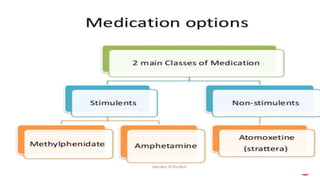
4. CNS stimulants-methyl
5. Medications
6. Family education
• NURSING
INTERVENTION :-
1. Develop a trusting relationship with
the child.convey acceptance of the
child, separate child from the
unacceptable behavior.
2. Ensure the child’s attention by calling
his name and establishing eye
contact,before giving instructions.
• CONT.....
3. Provide quite environment,self
contained classrooms,and small group
activities. Avoid over stimulating
places such as cinema halls,bus
stops,and other crowded places.
4. Help him learn how to take his
turn,wait in line and follow rules.
• CONT.....
5. Educatechild and family on the use of
psychostimulants and anticipated
behavioral response.
6. Coordinate overall treatment plan
with schools,and collateral
personnel,the child and the family.
Hyper kinetic disorder

Hyper kinetic disorder

  • 2.
    Submitted by:- Mohit KumarMeena B.SC(nsg.) 3rd year BMCHRC college of nsg JAIPUR
  • 3.
    Hyper kinetic disorderalso known as ADHD(attention deficit hyperactivity syndrome). A condition that makes it difficult for children to pay attention or control their behaviour. This syndrome was first described by heinrich hoff in 1854.
  • 4.
     DEFINITION  Hyperkineticdisorder is a persistant pattern of inattention and hyperactivity more frequent in children at a similar level of development.
  • 5.
    1. Predominant InattentiveADHD 2. Predominant Hyperactive ADHD 3. Combined ADHD • TYPES OF ADHD
  • 6.
    • PREDOMINANT INATTENTIVE 1. Diffcultypaying attention 2. Struggles to concentrate and complete tasks 3. Forgetful and easily distracted 4. Poor organisational skills
  • 7.
    CONT..... 5. Lethargic 6. Sluggish 7.Shy 8. Anxious 9. Constantly day dreaming 10. Most often diagnosed in adolescent girls 11. Avoid tasks requiring mental efforts
  • 8.
    • PREDOMINANT HYPERACTIVE 1. Diffcultycontrolling behaviour , with an incresed risk for serious agggresive or oppositional behaviour and antisocial conduct. 2. Fidget and excessively restless 3. Blurt out comments that are inappropriate and often do not think before they act.
  • 9.
    CONT..... 4. Runs about/climbs extensively when inappropriate 5.
  • 10.
    • COMBINED ADHD1. Combinessymptoms of the other two forms of ADHD 2. Most common form of ADHD 3. Diagnosed in boys of elementry school age
  • 11.
    • CAUSES :- 1.Changes in brain structure 2. Genetic & Heridity a. There is greater concordancein monozygotic then dizygotic twins. b. Biological parents of children with the disorder have a higher incidence of ADHD then do adoptive parents.
  • 12.
     CONT…. 3. Biochemical •Adeficit of dopamine and norepinephrine has been attributed in the overactivity seen in ADHD. This deficit of neurotransmitters is believed to lower the threshold for stimuli input.
  • 13.
    4. Mother isexposed to chemical drug during pregnancy(Smoking,Alcohol,Drugs) 5. Gender:- boys are 3x more common then girls 6. Low birth weight 7. Lead poisioning
  • 14.
    • NEGATIVE TRAITSOF ADHD 1. Emotional problems 2. Anxiety 3. Restlessness 4. Health problems(compulsive poor eating) 5. Forgetfullness 6. Disorganised 7. Interrupting others during conversation
  • 15.
    • POSITIVE TRAITSOF ADHD 1. Creative 2. Fresh/fast thinking 3. Passionate 4. Hard worker 5. Flexibility 6. Goal oriented 7. Brilliant
  • 19.
    • DIAGNOSIS 1. Completemedical evaluation,with emphasis on a neurologic examination, hearing and vision. 2. A psychiatric evaluation to assess intelactual ability,academic achievement and potential learning disorder problem.
  • 20.
    • CONT..... 3. Detailedprenatel history and early devlopmental history. 4. Direct observation 5. Teacher school report and parents report
  • 21.
    • TREATMENT 1. Behaviourtherapy(change/monitor client behaviour) 2. Psychiatric consult 3. Antipsychotics 4. CNS stimulants-methyl 5. Medications 6. Family education
  • 23.
    • NURSING INTERVENTION :- 1.Develop a trusting relationship with the child.convey acceptance of the child, separate child from the unacceptable behavior. 2. Ensure the child’s attention by calling his name and establishing eye contact,before giving instructions.
  • 24.
    • CONT..... 3. Providequite environment,self contained classrooms,and small group activities. Avoid over stimulating places such as cinema halls,bus stops,and other crowded places. 4. Help him learn how to take his turn,wait in line and follow rules.
  • 25.
    • CONT..... 5. Educatechildand family on the use of psychostimulants and anticipated behavioral response. 6. Coordinate overall treatment plan with schools,and collateral personnel,the child and the family.

Editor's Notes

  • #4 Hyper kinetic disorder ppt😎