By David Erickson
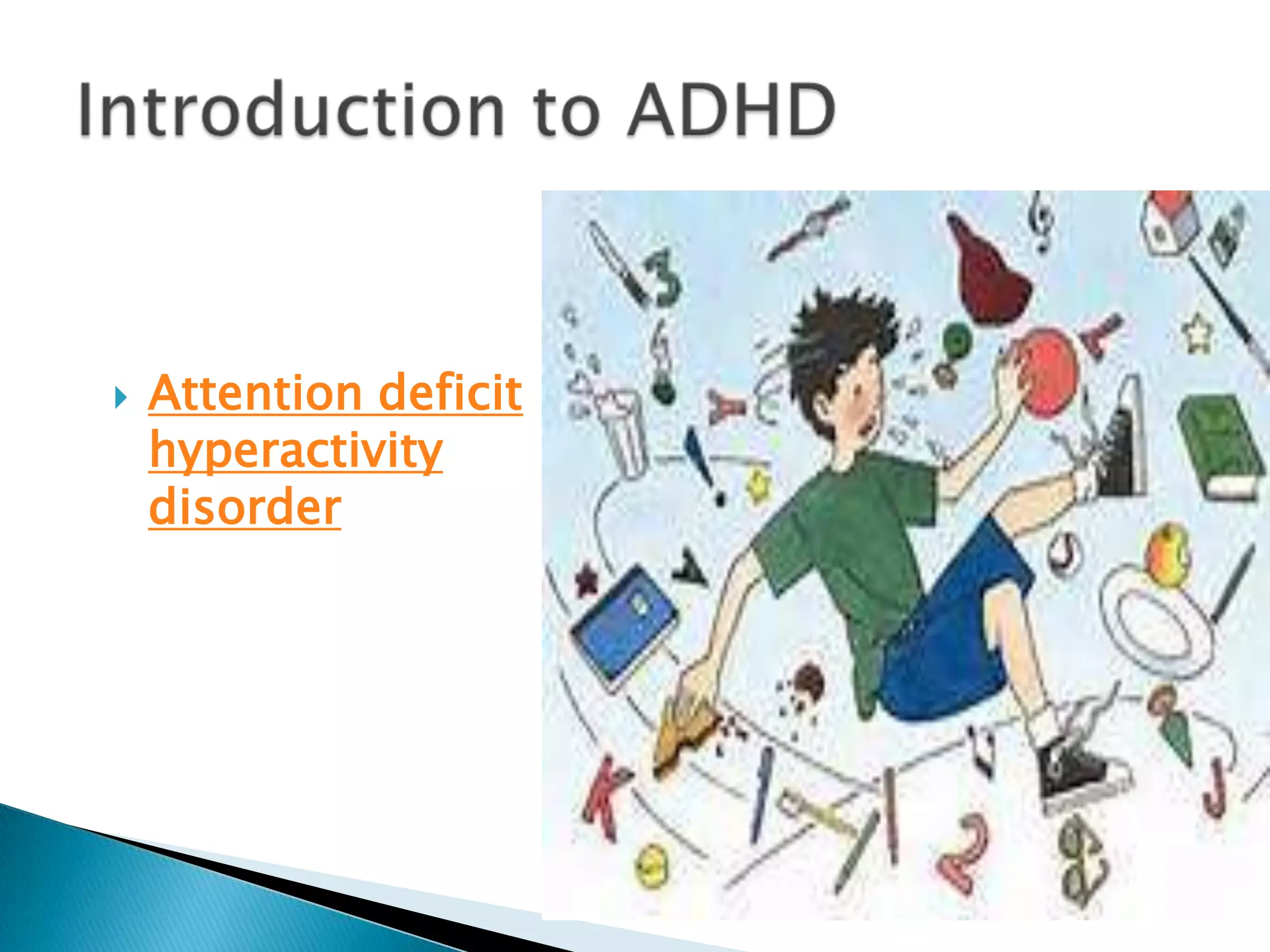
 Attention deficit
hyperactivity
disorder
 “Is a persistent pattern of inattention and or
hyperactivity-impulsivity that is more frequent and
severe than is typically observed in individuals at a
comparable level of development”
 First named by British doctor, Dr. George Still in 1902.
 "Defect of Moral Control" disorder.
 ADHD has evolved, both in name and classification
 Hyperkinetic reaction of childhood (1968)
 Attention deficit disorder (1980)
 Attention deficit hyperactivity disorder (1994)
 Thought to be caused by bad parenting and/or brain damage
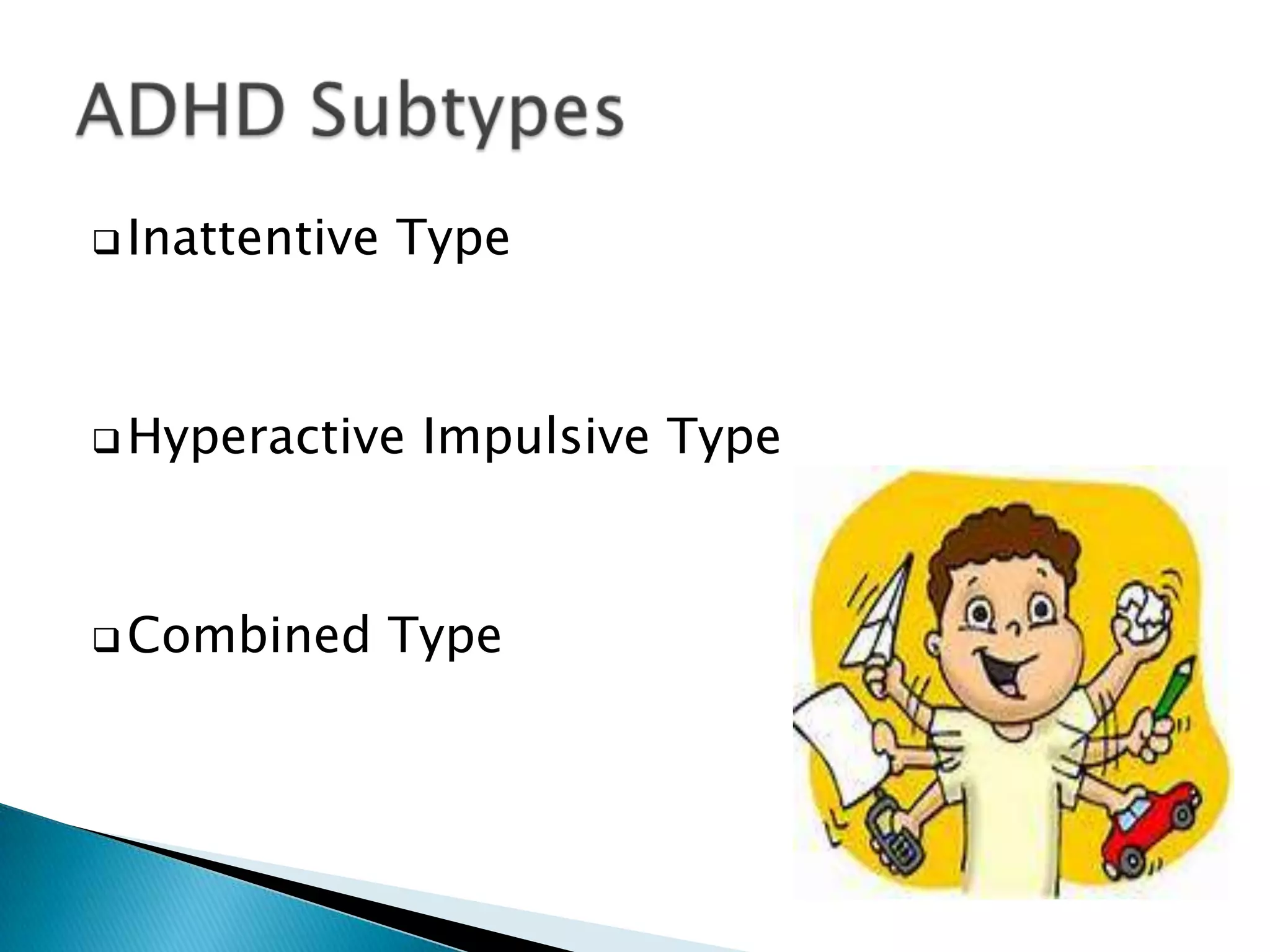
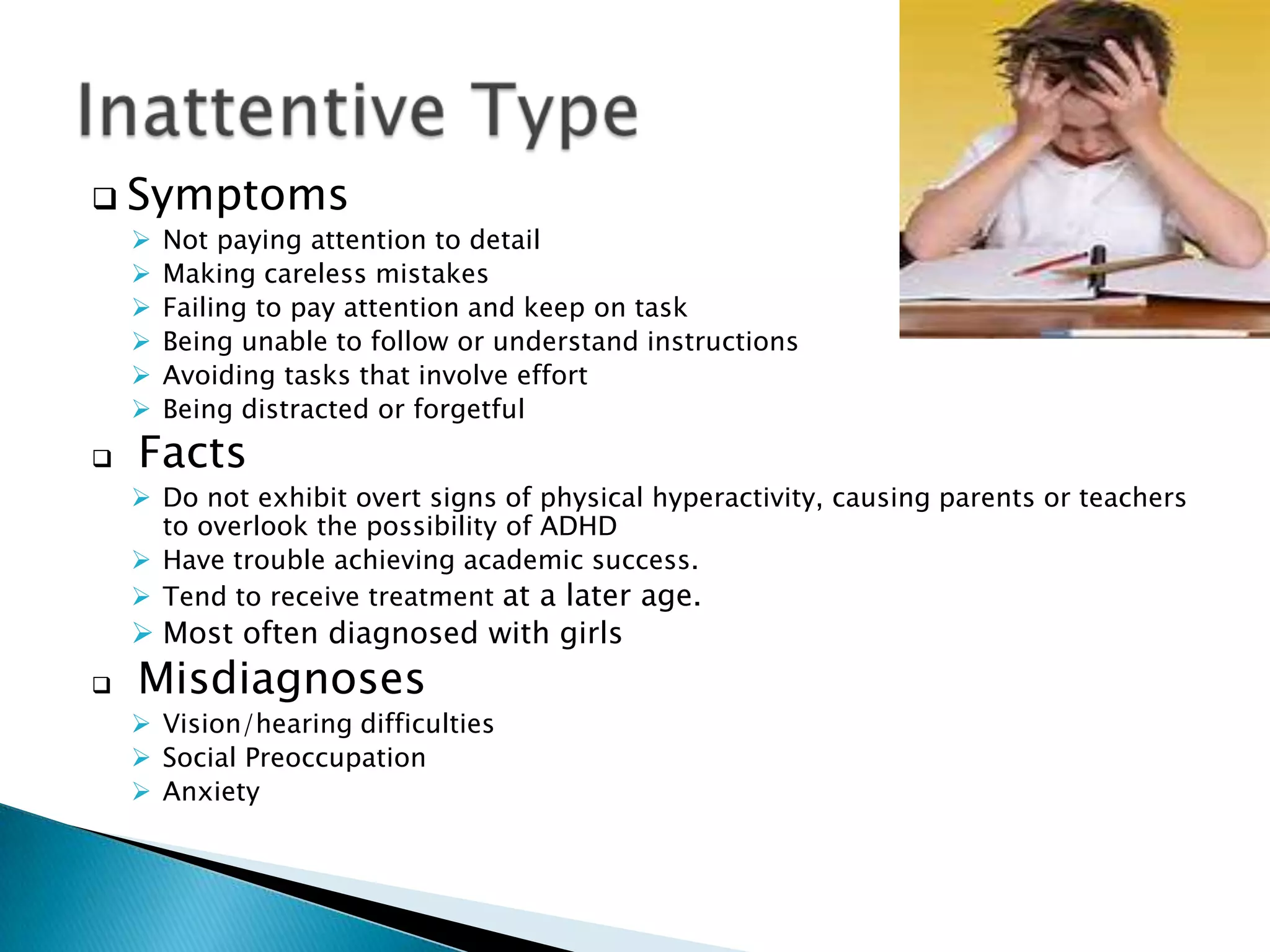
 Inattentive Type
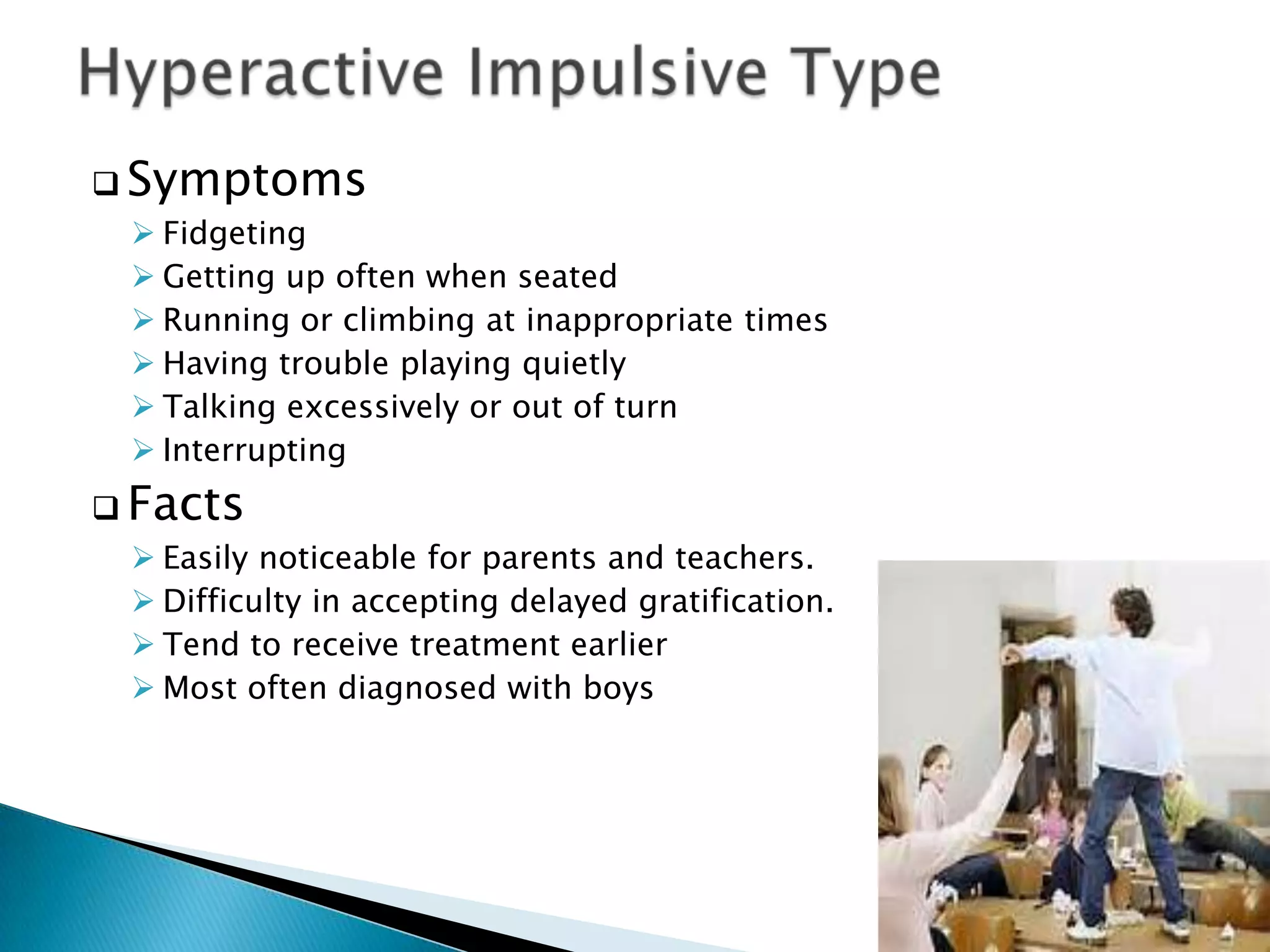
 Hyperactive Impulsive Type
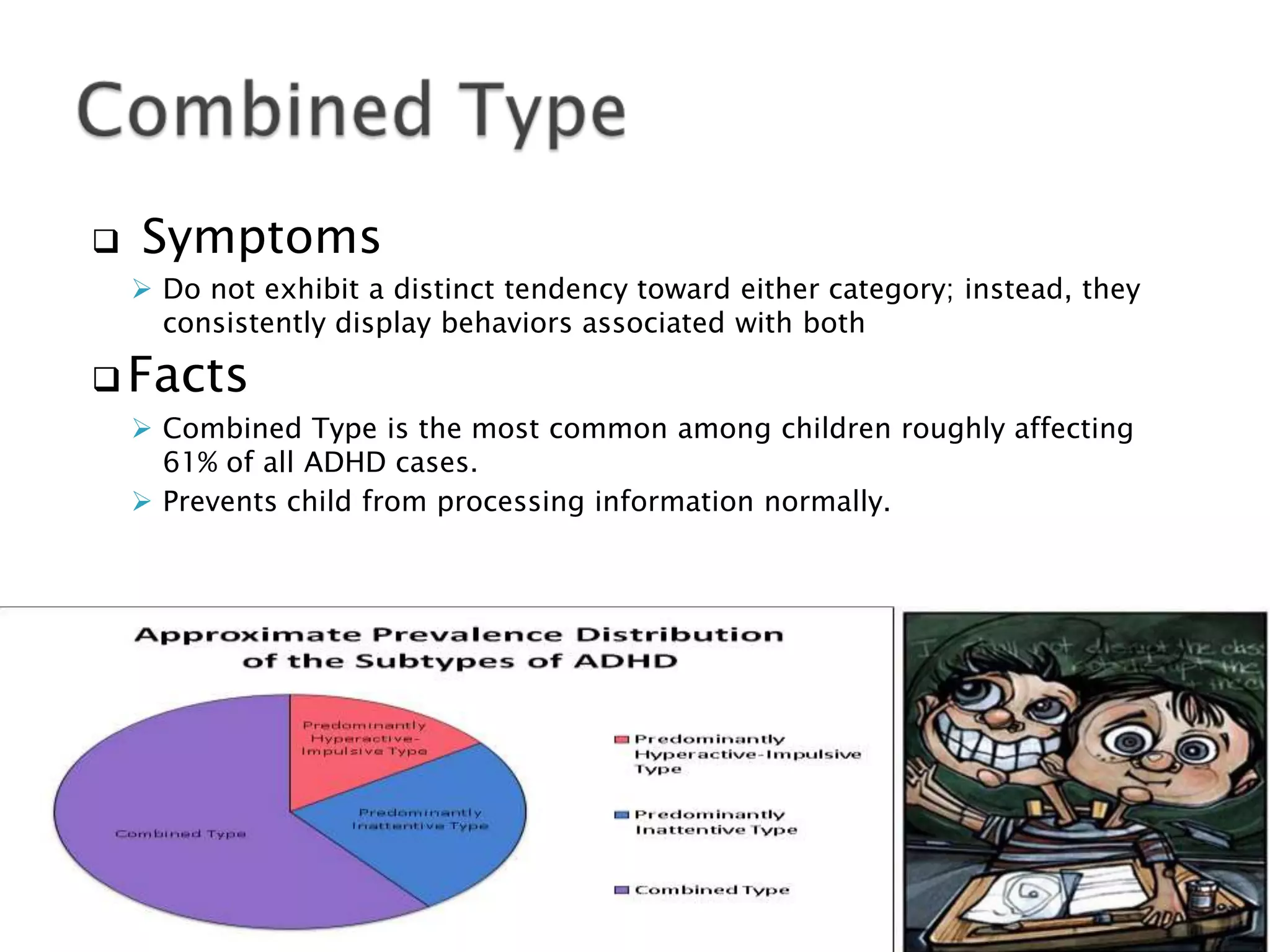
 Combined Type
 Symptoms
 Not paying attention to detail
 Making careless mistakes
 Failing to pay attention and keep on task
 Being unable to follow or understand instructions
 Avoiding tasks that involve effort
 Being distracted or forgetful
 Facts
 Do not exhibit overt signs of physical hyperactivity, causing parents or teachers
to overlook the possibility of ADHD
 Have trouble achieving academic success.
 Tend to receive treatment at a later age.
 Most often diagnosed with girls
 Misdiagnoses
 Vision/hearing difficulties
 Social Preoccupation
 Anxiety
 Symptoms
 Fidgeting
 Getting up often when seated
 Running or climbing at inappropriate times
 Having trouble playing quietly
 Talking excessively or out of turn
 Interrupting
 Facts
 Easily noticeable for parents and teachers.
 Difficulty in accepting delayed gratification.
 Tend to receive treatment earlier
 Most often diagnosed with boys
 Symptoms
 Do not exhibit a distinct tendency toward either category; instead, they
consistently display behaviors associated with both
 Facts
 Combined Type is the most common among children roughly affecting
61% of all ADHD cases.
 Prevents child from processing information normally.
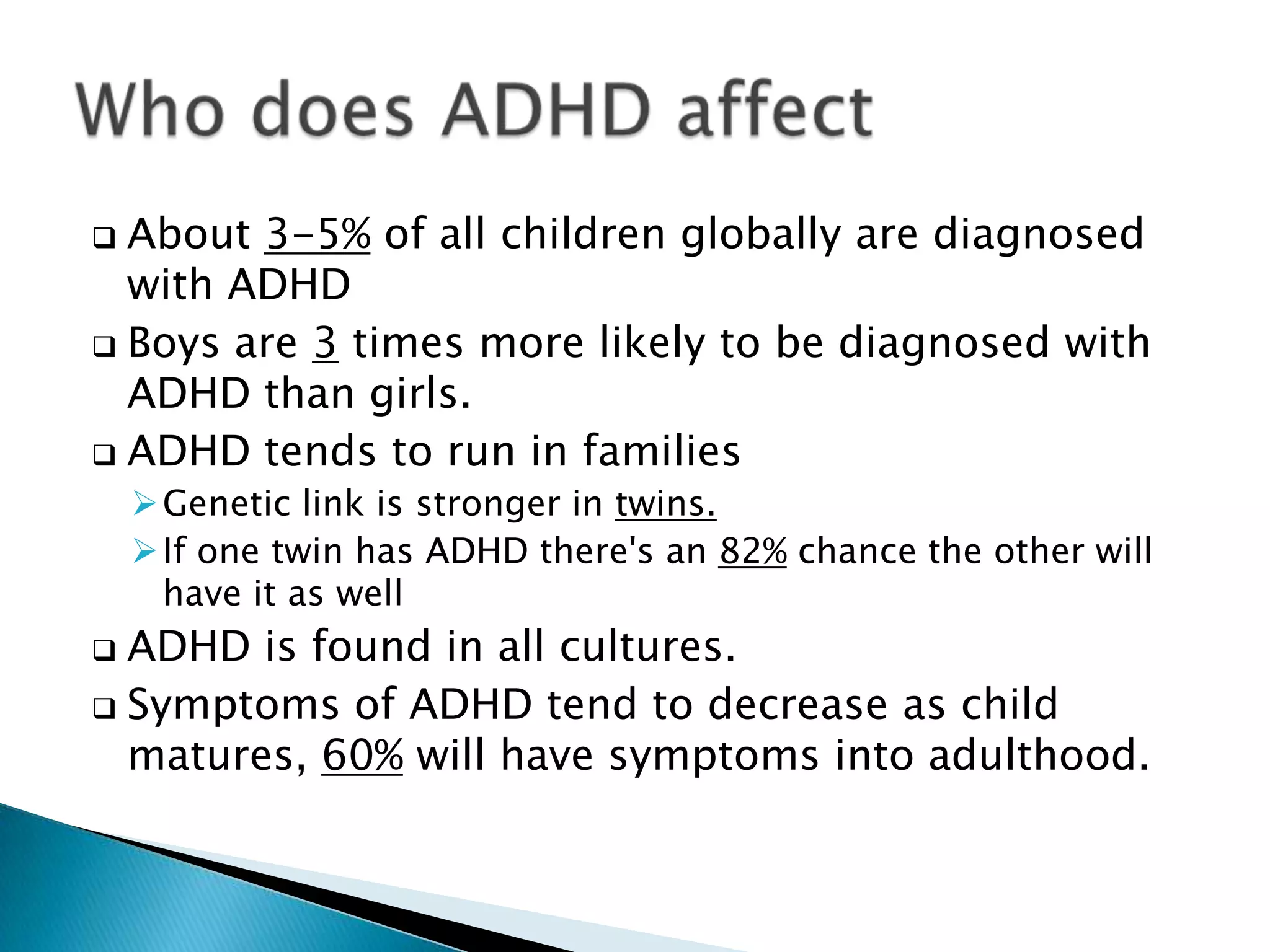
 About 3-5% of all children globally are diagnosed
with ADHD
 Boys are 3 times more likely to be diagnosed with
ADHD than girls.
 ADHD tends to run in families
Genetic link is stronger in twins.
If one twin has ADHD there's an 82% chance the other will
have it as well
 ADHD is found in all cultures.
 Symptoms of ADHD tend to decrease as child
matures, 60% will have symptoms into adulthood.
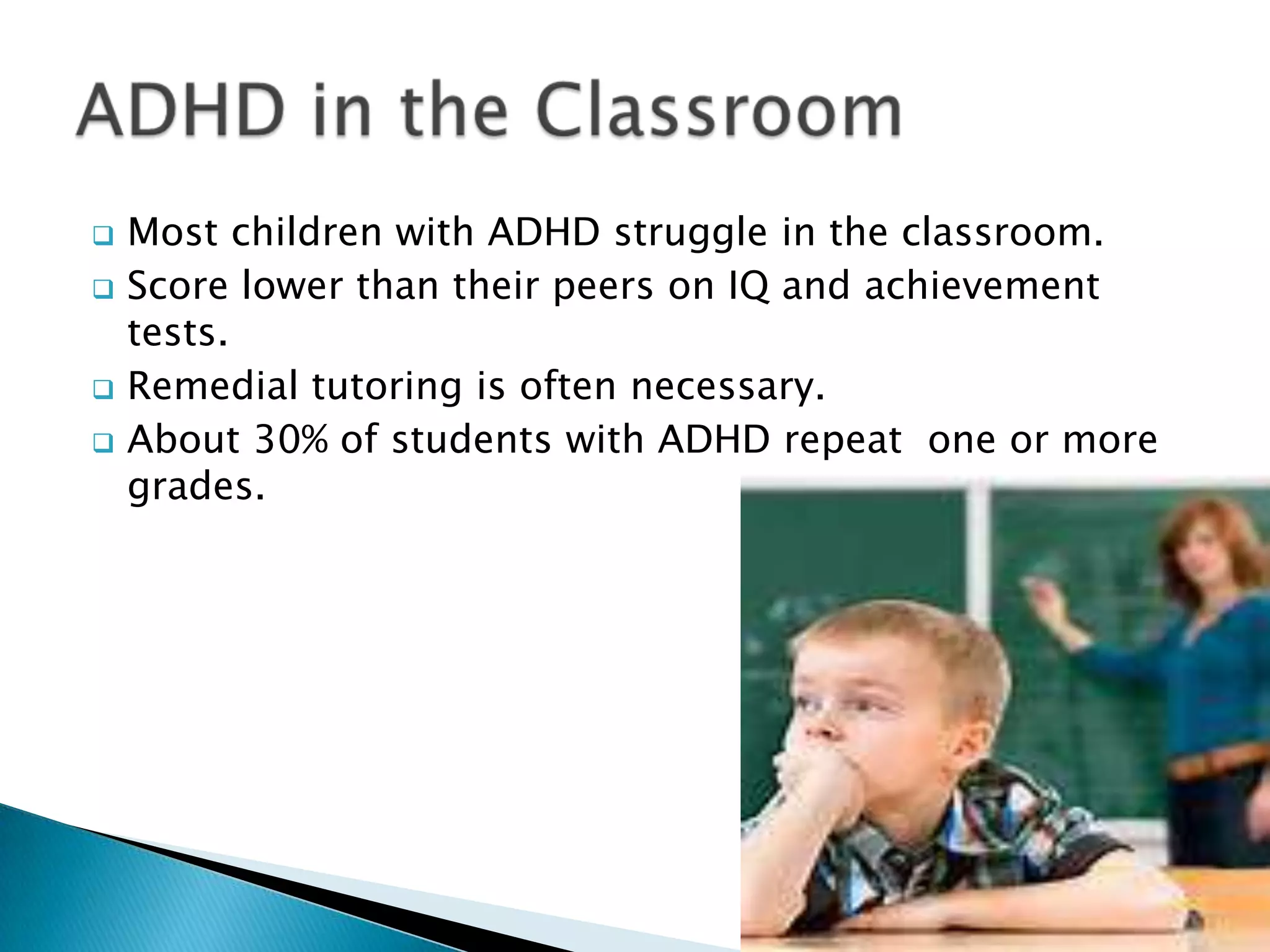
 Most children with ADHD struggle in the classroom.
 Score lower than their peers on IQ and achievement
tests.
 Remedial tutoring is often necessary.
 About 30% of students with ADHD repeat one or more
grades.
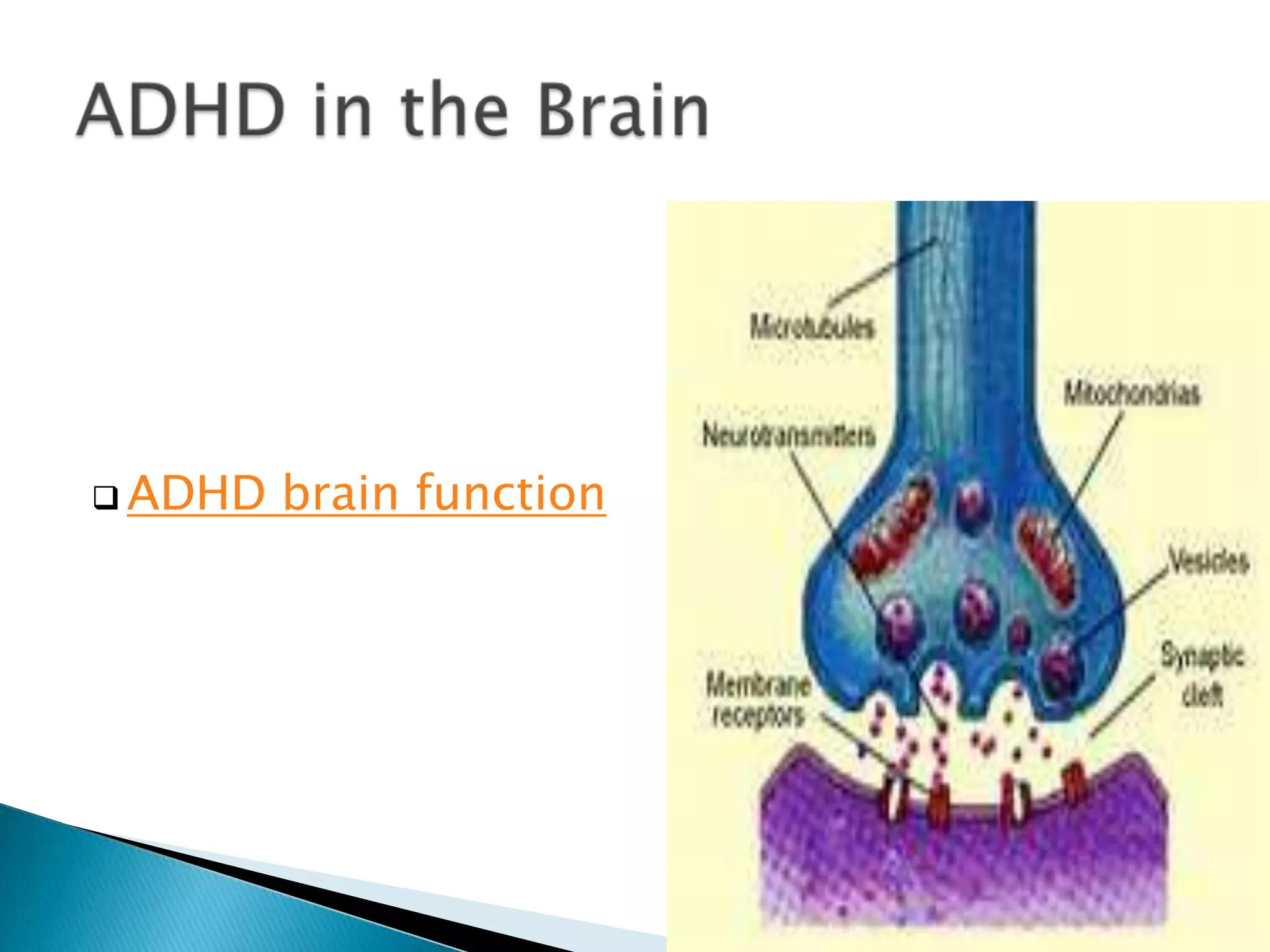
 ADHD brain function
Medication vs. Non-Medication
 Stimulants
 Increases the release of certain neurotransmitters
 Dopamine and Norepinephrine
 Slow the reuptake process back into the neuron
 Can suddenly and dramatically improve behaviors associated with
ADHD.
 Tend to be taken multiple times a day
 Can cause personality changes along with brain and heart
problems
 Adderall and Ritalin most popular
 First choice of medication used to treat ADHD
 Non-Stimulants
 Increase the amount of norepinephrine
 Decrease ADHD symptoms for longer durations
 Not as potent on the body as stimulants.
 Strattera and Intuniv most popular
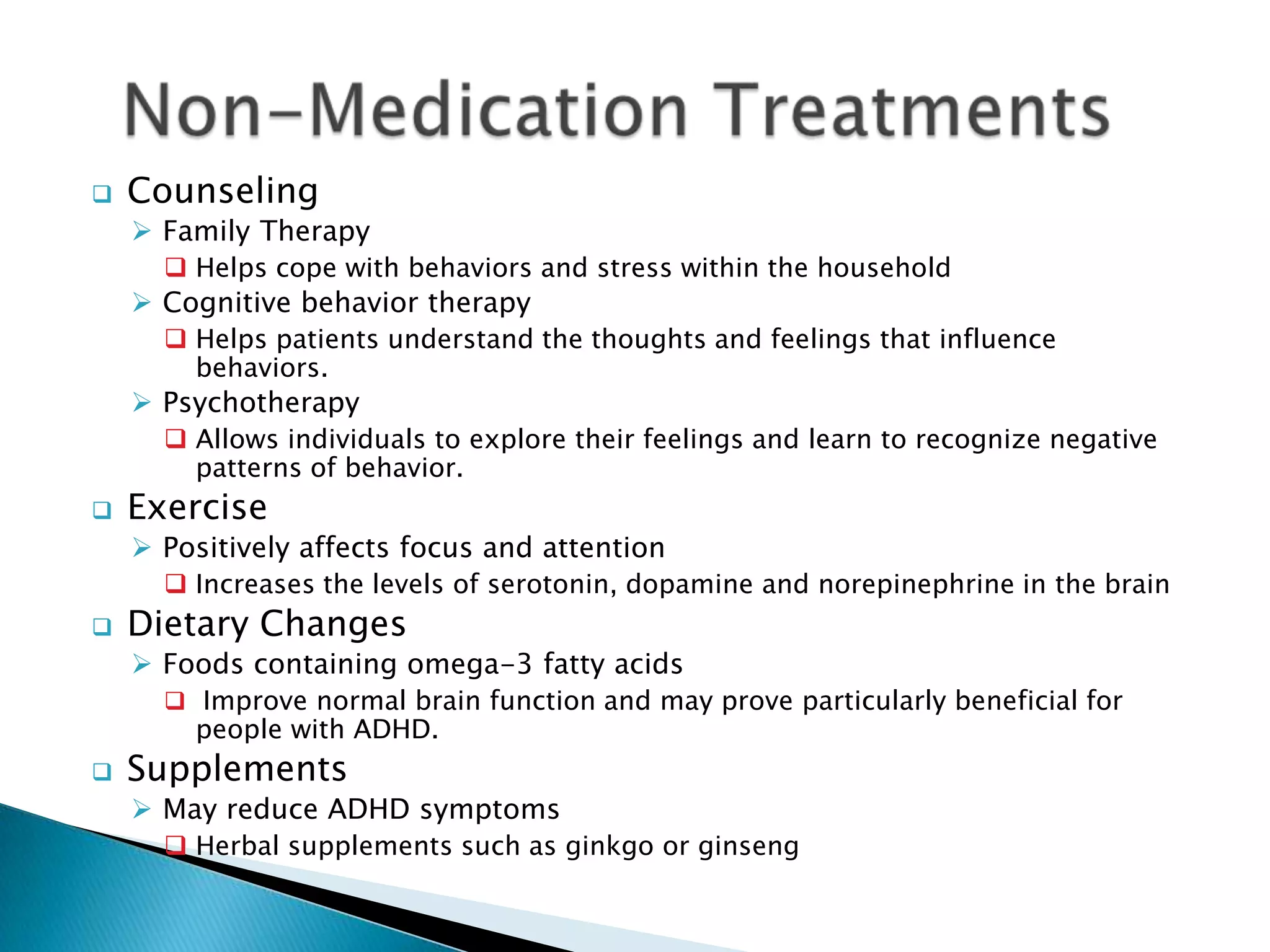
 Counseling
 Family Therapy
 Helps cope with behaviors and stress within the household
 Cognitive behavior therapy
 Helps patients understand the thoughts and feelings that influence
behaviors.
 Psychotherapy
 Allows individuals to explore their feelings and learn to recognize negative
patterns of behavior.
 Exercise
 Positively affects focus and attention
 Increases the levels of serotonin, dopamine and norepinephrine in the brain
 Dietary Changes
 Foods containing omega-3 fatty acids
 Improve normal brain function and may prove particularly beneficial for
people with ADHD.
 Supplements
 May reduce ADHD symptoms
 Herbal supplements such as ginkgo or ginseng
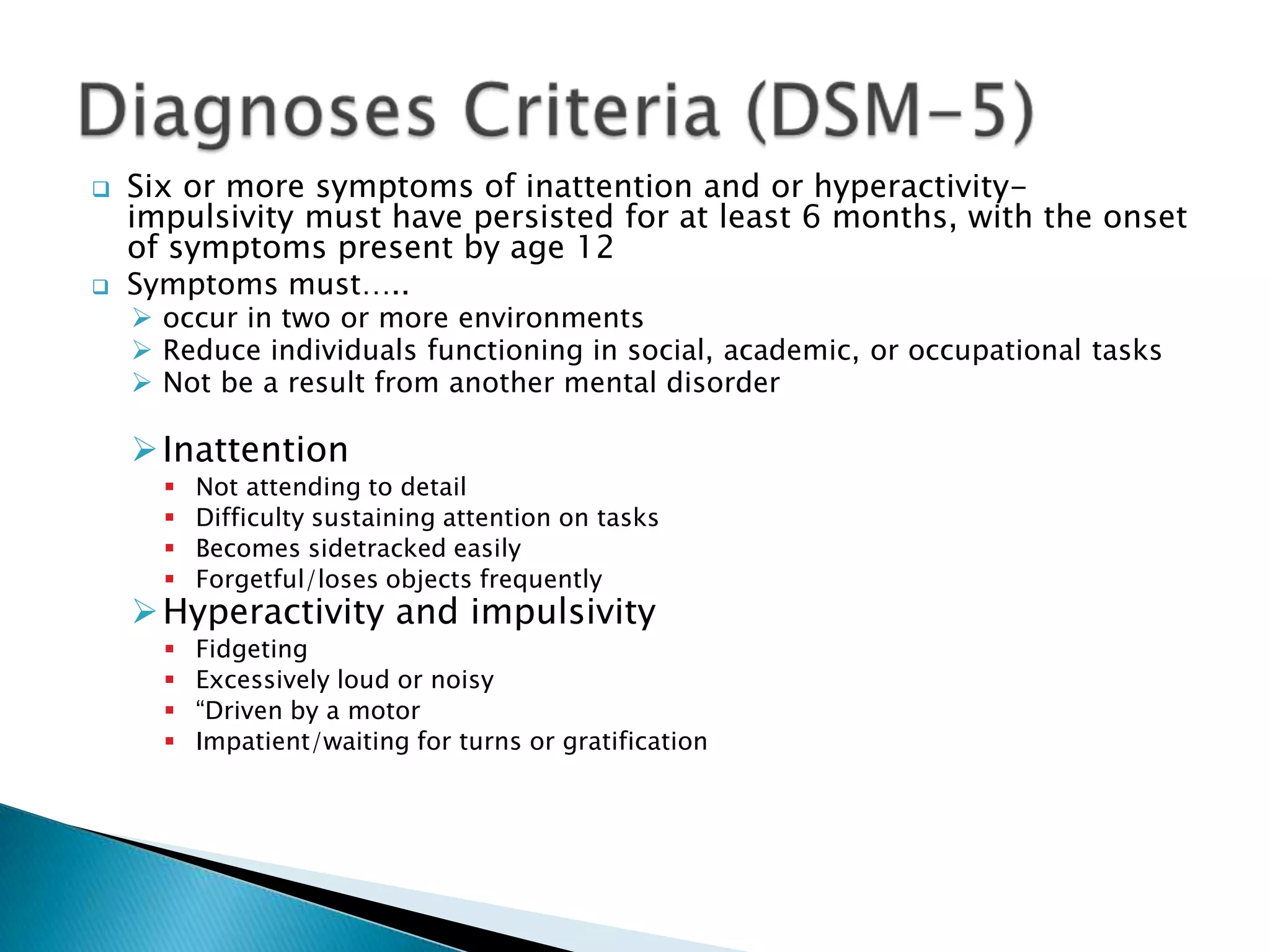
 Six or more symptoms of inattention and or hyperactivity-
impulsivity must have persisted for at least 6 months, with the onset
of symptoms present by age 12
 Symptoms must…..
 occur in two or more environments
 Reduce individuals functioning in social, academic, or occupational tasks
 Not be a result from another mental disorder
Inattention
 Not attending to detail
 Difficulty sustaining attention on tasks
 Becomes sidetracked easily
 Forgetful/loses objects frequently
Hyperactivity and impulsivity
 Fidgeting
 Excessively loud or noisy
 “Driven by a motor
 Impatient/waiting for turns or gratification
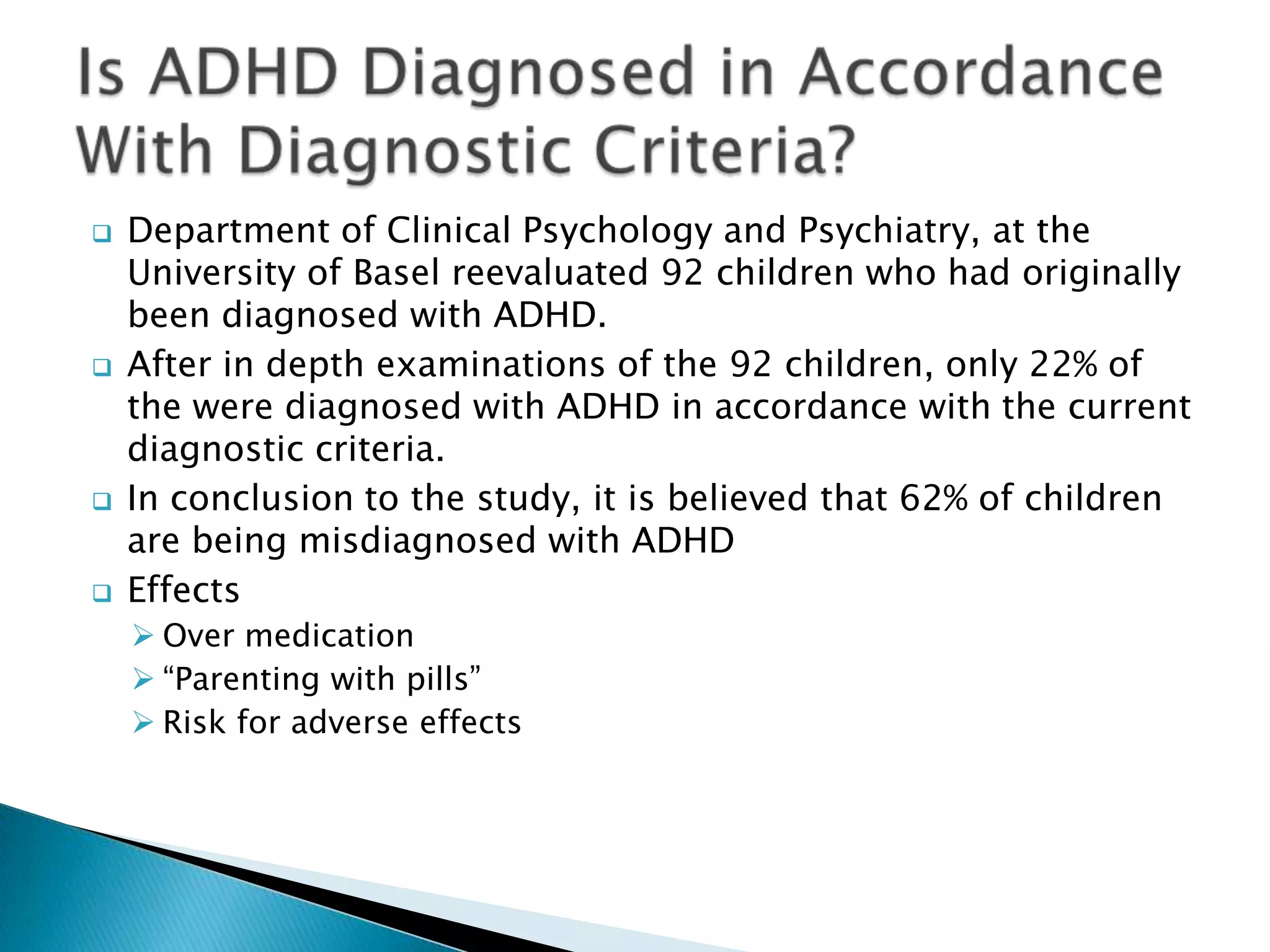
 Department of Clinical Psychology and Psychiatry, at the
University of Basel reevaluated 92 children who had originally
been diagnosed with ADHD.
 After in depth examinations of the 92 children, only 22% of
the were diagnosed with ADHD in accordance with the current
diagnostic criteria.
 In conclusion to the study, it is believed that 62% of children
are being misdiagnosed with ADHD
 Effects
 Over medication
 “Parenting with pills”
 Risk for adverse effects
 Bruchmüller, Katrin. "Is ADHD Diagnosed in Accord With Diagnostic Criteria?
Over diagnosis and Influence of Client Gender on Diagnosis." Katrin, Margraf,
Jürgen, Schneider, Silvia, Journal of Consulting & Clinical Psychology,
0022006X. Vol. 80.1 (Feb2012): 128-138. Web.
 Sibley, Margaret H., "When diagnosing ADHD in young adults emphasize
informant reports, DSM items, and impairment." US: American Psychological
Association. Vol 80.6 (Dec, 2012): 1052-1061. Web.
 Erik, Willcutt. "Validity of DSM-IV attention deficit/hyperactivity disorder
symptom dimensions and subtypes." US: American Psychological Association.
Vol 121.4 (Nov, 2012): 991-1010. Web.
 William, Heward. Exceptional Children. 10. 1. New Jersey: uppe saddle river,
2013. 390-397

Attention deficit hyperactivity disorder

  • 1.
  • 2.
  • 3.
     “Is apersistent pattern of inattention and or hyperactivity-impulsivity that is more frequent and severe than is typically observed in individuals at a comparable level of development”  First named by British doctor, Dr. George Still in 1902.  "Defect of Moral Control" disorder.  ADHD has evolved, both in name and classification  Hyperkinetic reaction of childhood (1968)  Attention deficit disorder (1980)  Attention deficit hyperactivity disorder (1994)  Thought to be caused by bad parenting and/or brain damage
  • 4.
     Inattentive Type Hyperactive Impulsive Type  Combined Type
  • 5.
     Symptoms  Notpaying attention to detail  Making careless mistakes  Failing to pay attention and keep on task  Being unable to follow or understand instructions  Avoiding tasks that involve effort  Being distracted or forgetful  Facts  Do not exhibit overt signs of physical hyperactivity, causing parents or teachers to overlook the possibility of ADHD  Have trouble achieving academic success.  Tend to receive treatment at a later age.  Most often diagnosed with girls  Misdiagnoses  Vision/hearing difficulties  Social Preoccupation  Anxiety
  • 6.
     Symptoms  Fidgeting Getting up often when seated  Running or climbing at inappropriate times  Having trouble playing quietly  Talking excessively or out of turn  Interrupting  Facts  Easily noticeable for parents and teachers.  Difficulty in accepting delayed gratification.  Tend to receive treatment earlier  Most often diagnosed with boys
  • 7.
     Symptoms  Donot exhibit a distinct tendency toward either category; instead, they consistently display behaviors associated with both  Facts  Combined Type is the most common among children roughly affecting 61% of all ADHD cases.  Prevents child from processing information normally.
  • 8.
     About 3-5%of all children globally are diagnosed with ADHD  Boys are 3 times more likely to be diagnosed with ADHD than girls.  ADHD tends to run in families Genetic link is stronger in twins. If one twin has ADHD there's an 82% chance the other will have it as well  ADHD is found in all cultures.  Symptoms of ADHD tend to decrease as child matures, 60% will have symptoms into adulthood.
  • 9.
     Most childrenwith ADHD struggle in the classroom.  Score lower than their peers on IQ and achievement tests.  Remedial tutoring is often necessary.  About 30% of students with ADHD repeat one or more grades.
  • 10.
  • 11.
  • 12.
     Stimulants  Increasesthe release of certain neurotransmitters  Dopamine and Norepinephrine  Slow the reuptake process back into the neuron  Can suddenly and dramatically improve behaviors associated with ADHD.  Tend to be taken multiple times a day  Can cause personality changes along with brain and heart problems  Adderall and Ritalin most popular  First choice of medication used to treat ADHD  Non-Stimulants  Increase the amount of norepinephrine  Decrease ADHD symptoms for longer durations  Not as potent on the body as stimulants.  Strattera and Intuniv most popular
  • 13.
     Counseling  FamilyTherapy  Helps cope with behaviors and stress within the household  Cognitive behavior therapy  Helps patients understand the thoughts and feelings that influence behaviors.  Psychotherapy  Allows individuals to explore their feelings and learn to recognize negative patterns of behavior.  Exercise  Positively affects focus and attention  Increases the levels of serotonin, dopamine and norepinephrine in the brain  Dietary Changes  Foods containing omega-3 fatty acids  Improve normal brain function and may prove particularly beneficial for people with ADHD.  Supplements  May reduce ADHD symptoms  Herbal supplements such as ginkgo or ginseng
  • 14.
     Six ormore symptoms of inattention and or hyperactivity- impulsivity must have persisted for at least 6 months, with the onset of symptoms present by age 12  Symptoms must…..  occur in two or more environments  Reduce individuals functioning in social, academic, or occupational tasks  Not be a result from another mental disorder Inattention  Not attending to detail  Difficulty sustaining attention on tasks  Becomes sidetracked easily  Forgetful/loses objects frequently Hyperactivity and impulsivity  Fidgeting  Excessively loud or noisy  “Driven by a motor  Impatient/waiting for turns or gratification
  • 15.
     Department ofClinical Psychology and Psychiatry, at the University of Basel reevaluated 92 children who had originally been diagnosed with ADHD.  After in depth examinations of the 92 children, only 22% of the were diagnosed with ADHD in accordance with the current diagnostic criteria.  In conclusion to the study, it is believed that 62% of children are being misdiagnosed with ADHD  Effects  Over medication  “Parenting with pills”  Risk for adverse effects
  • 16.
     Bruchmüller, Katrin."Is ADHD Diagnosed in Accord With Diagnostic Criteria? Over diagnosis and Influence of Client Gender on Diagnosis." Katrin, Margraf, Jürgen, Schneider, Silvia, Journal of Consulting & Clinical Psychology, 0022006X. Vol. 80.1 (Feb2012): 128-138. Web.  Sibley, Margaret H., "When diagnosing ADHD in young adults emphasize informant reports, DSM items, and impairment." US: American Psychological Association. Vol 80.6 (Dec, 2012): 1052-1061. Web.  Erik, Willcutt. "Validity of DSM-IV attention deficit/hyperactivity disorder symptom dimensions and subtypes." US: American Psychological Association. Vol 121.4 (Nov, 2012): 991-1010. Web.  William, Heward. Exceptional Children. 10. 1. New Jersey: uppe saddle river, 2013. 390-397