HYDROGEN FUEL CELL
1. HYDROGEN PRODUCES CLEAN AND ENVIRONMENT FRIENDLY ENERGY
Reason behind hydrogen and oxygen as fuel :-
2. Hydrogen is an energy carrier, not an energy source and can deliver or store a
tremendous amount of energy.
3 Fuel cells present the most attractive choice for energy conversion
from hydrogen directly towards electricity, due to their high efficiency,
low noise, and limited number of moving parts.
4 In a flame of pure hydrogen gas, burning in air, the hydrogen (H2) reacts
with oxygen (O2) to form water (H2O) and releases energy.
5 if hydrogencarriedout in atmosphericair instead of pure oxygen, hydrogencombustion
may yield small amounts of nitrogenoxides, along with the water vapor. That's why pure
oxygen is used as reactant to produce energy and water,without harming environment.
WHAT IS HYDROGEN FUEL CELL ?
- A fuel cell is an electrochemical device that combines hydrogenfuel with oxygen
to produce electricity,heat and water.
- The fuel cell is similar to a battery in that an electrochemicalreactionoccurs as long as fuel
is available.Hydrogenis storedin a pressurizedcontainer and oxygen is taken fromthe air.
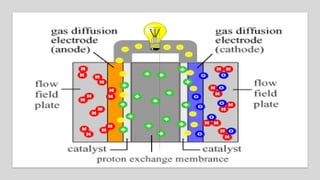
- A fuel cell is similar to electrochemical cells, which consists of a cathode, an anode, and
electrolyte. In these cells, the electrolyte enables the movement of the protons
WORKING OF HYDROGEN FUEL CELL :-
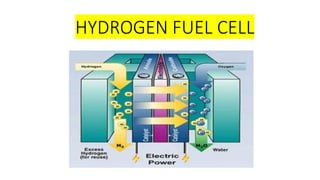
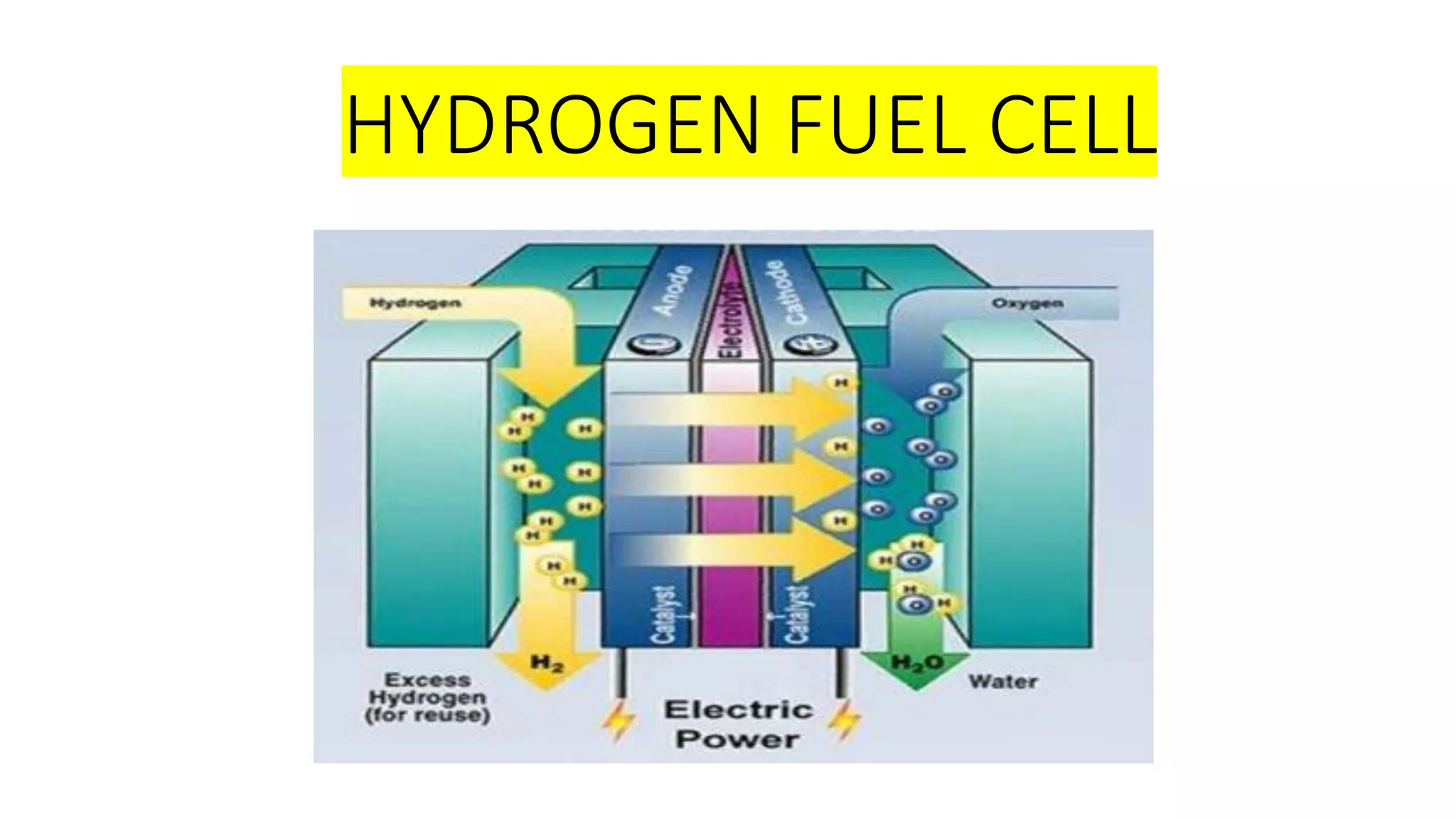
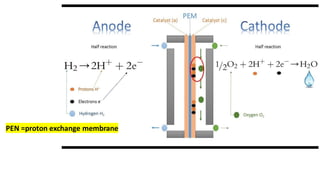
- The anode (negative electrode) receives the hydrogen and the cathode (positive electrode) collects the oxygen.
- The work of this fuel cell involves the transferof hydrogen and oxygen via carbon electrodes into a conc.
Solution of sodium hydroxide
- AT ANODE:-
- the hydrogen molecules are split into electrons and protons.(GETS IONIZED)
- The protons pass through the electrolyte membrane, while the electrons are forced through a circuit,
generating an electric current and excess heat.
-
IN ELECTROLYTE:-
- The electrolyte makes the motion of the protons possible in these cells.
- I.e. in hydrogen fuel cell, electrolyte is works as the medium who allows only
proton of hydrogen atom to pass through it.
at anode the molecules of hydrogen atom gets splitted into proton and
electron whereaselectrons passes through the circuit and proton through electrolyte.
- the passing electronthrough circuitproduces electricenergy and excessive heat after
passing the circuit it comes to another end I.e. at cathode .
AT CATHODE :-
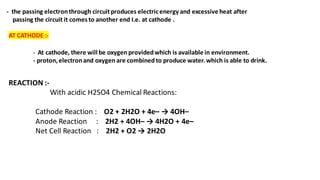
- At cathode, there will be oxygen providedwhich is available in environment.
- proton,electronand oxygen are combined to produce water.which is able to drink.
REACTION :-
With acidic H2SO4 Chemical Reactions:
Cathode Reaction : O2 + 2H2O + 4e– → 4OH–
Anode Reaction : 2H2 + 4OH– → 4H2O + 4e–
Net Cell Reaction : 2H2 + O2 → 2H2O
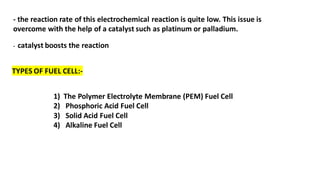
- the reaction rate of this electrochemical reaction is quite low. This issue is
overcome with the help of a catalyst such as platinum or palladium.
- catalyst boosts the reaction
TYPES OF FUEL CELL:-
1) The Polymer Electrolyte Membrane (PEM) Fuel Cell
2) Phosphoric Acid Fuel Cell
3) Solid Acid Fuel Cell
4) Alkaline Fuel Cell
PEN =proton exchange membrane
APPLICATIONS
• Fuel cell electric vehicles, or FCEVs, use clean fuels and are therefore more eco-
friendly than internal combustion engine-based vehicles.
• They have been used to power many space expeditions including the Appolo space
program.
• Generally, the by products produced from these cells are heat and water.
• The portability of some fuel cells is extremely useful in some military applications.
• These electrochemical cells can also be used to power several electronic devices.
• Fuel cells are also used as primary or backup sources of electricity in many remote
area
ADVANTAGES :-
1. It offersan effective method of energy storage.
2. This technology offersa high level of energy efficiency.
3. The emissionsfrom a hydrogen fuel cell are virtually zero.
4. Vehicles using a hydrogenfuel cell achieve a better fuel economy
rating.
5. We receive a greater level of consistencywith hydrogen fuel cells.
6. It is possible to create hydrogen fuel cells with a neutral emissions
cost.
7. A hydrogen fuel cell provides us with energy flexibility.
8. You can reduce the risk of chemical exposureby using hydrogen
fuel cells
DISADVANTAGES
1. Hydrogen fuel cells do not work in every situation as of yet.
2. You must regulate the temperature of a hydrogen fuel cell to maximizeits use.
3. There are still some risksto the environment to consider with hydrogen fuel
cells.
4. The cost to store hydrogen is expensive enough that it is prohibitive for most
people.
5. There are transportation lossesto considerwith hydrogen as well.
6. It costs more to transport hydrogen than it does most other fuels.
7. It is not currently a complete renewable energy resource.

Hydrogen fuel cell

  • 1.
  • 2.
    1. HYDROGEN PRODUCESCLEAN AND ENVIRONMENT FRIENDLY ENERGY Reason behind hydrogen and oxygen as fuel :- 2. Hydrogen is an energy carrier, not an energy source and can deliver or store a tremendous amount of energy. 3 Fuel cells present the most attractive choice for energy conversion from hydrogen directly towards electricity, due to their high efficiency, low noise, and limited number of moving parts. 4 In a flame of pure hydrogen gas, burning in air, the hydrogen (H2) reacts with oxygen (O2) to form water (H2O) and releases energy. 5 if hydrogencarriedout in atmosphericair instead of pure oxygen, hydrogencombustion may yield small amounts of nitrogenoxides, along with the water vapor. That's why pure oxygen is used as reactant to produce energy and water,without harming environment.
  • 3.
    WHAT IS HYDROGENFUEL CELL ? - A fuel cell is an electrochemical device that combines hydrogenfuel with oxygen to produce electricity,heat and water. - The fuel cell is similar to a battery in that an electrochemicalreactionoccurs as long as fuel is available.Hydrogenis storedin a pressurizedcontainer and oxygen is taken fromthe air. - A fuel cell is similar to electrochemical cells, which consists of a cathode, an anode, and electrolyte. In these cells, the electrolyte enables the movement of the protons
  • 5.
    WORKING OF HYDROGENFUEL CELL :- - The anode (negative electrode) receives the hydrogen and the cathode (positive electrode) collects the oxygen. - The work of this fuel cell involves the transferof hydrogen and oxygen via carbon electrodes into a conc. Solution of sodium hydroxide - AT ANODE:- - the hydrogen molecules are split into electrons and protons.(GETS IONIZED) - The protons pass through the electrolyte membrane, while the electrons are forced through a circuit, generating an electric current and excess heat. - IN ELECTROLYTE:- - The electrolyte makes the motion of the protons possible in these cells. - I.e. in hydrogen fuel cell, electrolyte is works as the medium who allows only proton of hydrogen atom to pass through it. at anode the molecules of hydrogen atom gets splitted into proton and electron whereaselectrons passes through the circuit and proton through electrolyte.
  • 6.
    - the passingelectronthrough circuitproduces electricenergy and excessive heat after passing the circuit it comes to another end I.e. at cathode . AT CATHODE :- - At cathode, there will be oxygen providedwhich is available in environment. - proton,electronand oxygen are combined to produce water.which is able to drink. REACTION :- With acidic H2SO4 Chemical Reactions: Cathode Reaction : O2 + 2H2O + 4e– → 4OH– Anode Reaction : 2H2 + 4OH– → 4H2O + 4e– Net Cell Reaction : 2H2 + O2 → 2H2O
  • 7.
    - the reactionrate of this electrochemical reaction is quite low. This issue is overcome with the help of a catalyst such as platinum or palladium. - catalyst boosts the reaction TYPES OF FUEL CELL:- 1) The Polymer Electrolyte Membrane (PEM) Fuel Cell 2) Phosphoric Acid Fuel Cell 3) Solid Acid Fuel Cell 4) Alkaline Fuel Cell
  • 8.
  • 9.
    APPLICATIONS • Fuel cellelectric vehicles, or FCEVs, use clean fuels and are therefore more eco- friendly than internal combustion engine-based vehicles. • They have been used to power many space expeditions including the Appolo space program. • Generally, the by products produced from these cells are heat and water. • The portability of some fuel cells is extremely useful in some military applications. • These electrochemical cells can also be used to power several electronic devices. • Fuel cells are also used as primary or backup sources of electricity in many remote area
  • 10.
    ADVANTAGES :- 1. Itoffersan effective method of energy storage. 2. This technology offersa high level of energy efficiency. 3. The emissionsfrom a hydrogen fuel cell are virtually zero. 4. Vehicles using a hydrogenfuel cell achieve a better fuel economy rating. 5. We receive a greater level of consistencywith hydrogen fuel cells. 6. It is possible to create hydrogen fuel cells with a neutral emissions cost. 7. A hydrogen fuel cell provides us with energy flexibility. 8. You can reduce the risk of chemical exposureby using hydrogen fuel cells
  • 11.
    DISADVANTAGES 1. Hydrogen fuelcells do not work in every situation as of yet. 2. You must regulate the temperature of a hydrogen fuel cell to maximizeits use. 3. There are still some risksto the environment to consider with hydrogen fuel cells. 4. The cost to store hydrogen is expensive enough that it is prohibitive for most people. 5. There are transportation lossesto considerwith hydrogen as well. 6. It costs more to transport hydrogen than it does most other fuels. 7. It is not currently a complete renewable energy resource.