Rohan Lakhani-150110106029
Karan Ladani-150110106028
G H PATEL COLLEGE OF ENGINEERING
& TECHNOLOGY
Subject: Physics
Topic: Fuel Cell
Guided By Prepared By
Prof.Smita Joshi
What is Fuel Cell?
 Fuel cell is a device that converts chemical
energy from a fuel into electricity through a
chemical reaction with oxygen or another
oxidizing agent
Parts of Fuel Cells
 There are four main part of Fuel Cells
1. Anode
2. Cathode
3. Electrolyte
4. Catalyst
Anode
 Anode is negative electrode of Fuel Cell.
 In most fuel cells, hydrogen is used as the
negative electrode in pure form or impure
hydrogen is taken as obtained from hydrocarbon
fuel, such as natural gas, liquefied petroleum gas.
Cathode
 Cathode is positive electrode of cell.
 It conducts the electrons back from the external
circuit to the catalyst, where they can
recombined with the hydrogen ions and oxygen to
form water.
Catalyst
 To speed up the chemical reaction, a catalyst is
included in the electrodes. The best catalyst are
finally divided platinum or other platinum like
metal deposited on or incorporated porous
electrode material.
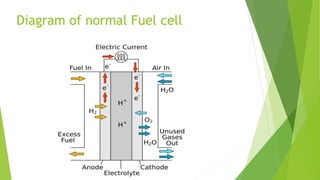
Diagram of normal Fuel cell
Working of Fuel cells
 Basically, two principal chemical reactions occur
at the interface of the three segments.
 The net result of the two reactions is that , when
fuel is consumed, water is formed and an electric
current is produced which can be use to power
electrical devices, normally referred to as the
load.
 At the anode, a catalyst oxidize the hydrogen fuel
into positively charged ion and negatively charged
electron.
 The electrolyte(KOH) allows the protons to travel
to the cathode but blocks the electrons. Thus, the
electrons travel through the wire creating the
electric current,
 The ions on reaching the cathode reunite with the
electrons, and the two reacts with a third
chemical, oxygen, to create water.
H2O2 Fuel Cell
 Hydrogen peroxide(HO) is commonly used as an oxidizer in
rocket. Propulsion and air independent power system.
 In H2O2 fuel cells, nickel and silver are used as catalyst for
hydrogen and oxygen respectively.
 When used to produce energy, hydrogen peroxide creates
only pure water and oxygen as a by product, so it is
considered as clean energy, like hydrogen.
 However, unlike hydrogen, H2O2 exists in liquid form at
room temperature, so it can be easily stored and
transported.
THANK
YOU
Reference:-
Engineering Physics
-by vijayakumari

Fuel cells Physics

  • 1.
    Rohan Lakhani-150110106029 Karan Ladani-150110106028 GH PATEL COLLEGE OF ENGINEERING & TECHNOLOGY Subject: Physics Topic: Fuel Cell Guided By Prepared By Prof.Smita Joshi
  • 2.
    What is FuelCell?  Fuel cell is a device that converts chemical energy from a fuel into electricity through a chemical reaction with oxygen or another oxidizing agent
  • 3.
    Parts of FuelCells  There are four main part of Fuel Cells 1. Anode 2. Cathode 3. Electrolyte 4. Catalyst
  • 4.
    Anode  Anode isnegative electrode of Fuel Cell.  In most fuel cells, hydrogen is used as the negative electrode in pure form or impure hydrogen is taken as obtained from hydrocarbon fuel, such as natural gas, liquefied petroleum gas.
  • 5.
    Cathode  Cathode ispositive electrode of cell.  It conducts the electrons back from the external circuit to the catalyst, where they can recombined with the hydrogen ions and oxygen to form water.
  • 6.
    Catalyst  To speedup the chemical reaction, a catalyst is included in the electrodes. The best catalyst are finally divided platinum or other platinum like metal deposited on or incorporated porous electrode material.
  • 7.
  • 8.
    Working of Fuelcells  Basically, two principal chemical reactions occur at the interface of the three segments.  The net result of the two reactions is that , when fuel is consumed, water is formed and an electric current is produced which can be use to power electrical devices, normally referred to as the load.
  • 9.
     At theanode, a catalyst oxidize the hydrogen fuel into positively charged ion and negatively charged electron.  The electrolyte(KOH) allows the protons to travel to the cathode but blocks the electrons. Thus, the electrons travel through the wire creating the electric current,  The ions on reaching the cathode reunite with the electrons, and the two reacts with a third chemical, oxygen, to create water.
  • 10.
    H2O2 Fuel Cell Hydrogen peroxide(HO) is commonly used as an oxidizer in rocket. Propulsion and air independent power system.  In H2O2 fuel cells, nickel and silver are used as catalyst for hydrogen and oxygen respectively.  When used to produce energy, hydrogen peroxide creates only pure water and oxygen as a by product, so it is considered as clean energy, like hydrogen.  However, unlike hydrogen, H2O2 exists in liquid form at room temperature, so it can be easily stored and transported.
  • 11.