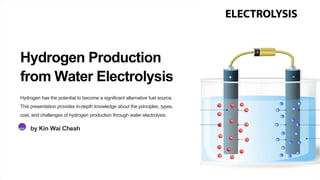
Hydrogen Production
from Water Electrolysis
Hydrogen has the potential to become a significant alternative fuel source.
This presentation provides in-depth knowledge about the principles, types,
cost, and challenges of hydrogen production through water electrolysis.
KW by Kin Wai Cheah
The Basics of Hydrogen Production
Water: the Fuel
The concept of hydrogen production from
water has been around for decades.
Through electrolysis, hydrogen and
oxygen can be separated from water
molecules.
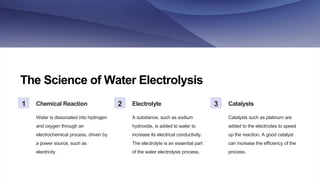
Renewable Energy Sources
The production of hydrogen from water
can be achieved from any energy source,
such as wind or solar. This makes it an
eco-friendly and sustainable option.
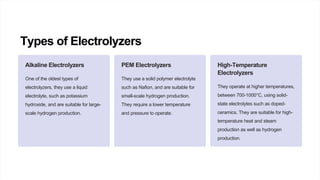
Fuel Cells
Hydrogen obtained through water
electrolysis is used as fuel in fuel cells,
which generate electricity. Fuel cells have
numerous applications, such as in
vehicles and homes.
The Science of Water Electrolysis
1 Chemical Reaction
Water is dissociated into hydrogen
and oxygen through an
electrochemical process, driven by
a power source, such as
electricity.
2 Electrolyte
A substance, such as sodium
hydroxide, is added to water to
increase its electrical conductivity.
The electrolyte is an essential part
of the water electrolysis process.
3 Catalysts
Catalysts such as platinum are
added to the electrodes to speed
up the reaction. A good catalyst
can increase the efficiency of the
process.
Types of Electrolyzers
Alkaline Electrolyzers
One of the oldest types of
electrolyzers, they use a liquid
electrolyte, such as potassium
hydroxide, and are suitable for large-
scale hydrogen production.
PEM Electrolyzers
They use a solid polymer electrolyte
such as Nafion, and are suitable for
small-scale hydrogen production.
They require a lower temperature
and pressure to operate.
High-Temperature
Electrolyzers
They operate at higher temperatures,
between 700-1000°C, using solid-
state electrolytes such as doped-
ceramics. They are suitable for high-
temperature heat and steam
production as well as hydrogen
production.
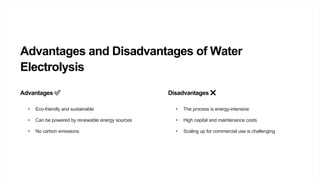
Advantages and Disadvantages of Water
Electrolysis
Advantages ✅
• Eco-friendly and sustainable
• Can be powered by renewable energy sources
• No carbon emissions
Disadvantages ❌
• The process is energy-intensive
• High capital and maintenance costs
• Scaling up for commercial use is challenging
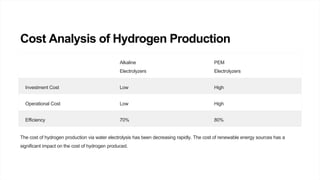
Cost Analysis of Hydrogen Production
Alkaline
Electrolyzers
PEM
Electrolyzers
Investment Cost Low High
Operational Cost Low High
Efficiency 70% 80%
The cost of hydrogen production via water electrolysis has been decreasing rapidly. The cost of renewable energy sources has a
significant impact on the cost of hydrogen produced.
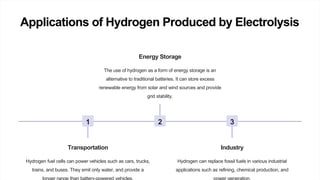
Applications of Hydrogen Produced by Electrolysis
1
Transportation
Hydrogen fuel cells can power vehicles such as cars, trucks,
trains, and buses. They emit only water, and provide a
2
Energy Storage
The use of hydrogen as a form of energy storage is an
alternative to traditional batteries. It can store excess
renewable energy from solar and wind sources and provide
grid stability.
3
Industry
Hydrogen can replace fossil fuels in various industrial
applications such as refining, chemical production, and
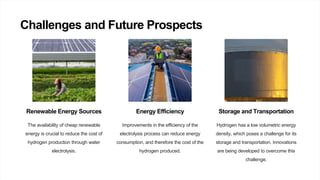
Challenges and Future Prospects
Renewable Energy Sources
The availability of cheap renewable
energy is crucial to reduce the cost of
hydrogen production through water
electrolysis.
Energy Efficiency
Improvements in the efficiency of the
electrolysis process can reduce energy
consumption, and therefore the cost of the
hydrogen produced.
Storage and Transportation
Hydrogen has a low volumetric energy
density, which poses a challenge for its
storage and transportation. Innovations
are being developed to overcome this
challenge.

Hydrogen-Production-from-Water-Electrolysis.pptx

  • 1.
    Hydrogen Production from WaterElectrolysis Hydrogen has the potential to become a significant alternative fuel source. This presentation provides in-depth knowledge about the principles, types, cost, and challenges of hydrogen production through water electrolysis. KW by Kin Wai Cheah
  • 2.
    The Basics ofHydrogen Production Water: the Fuel The concept of hydrogen production from water has been around for decades. Through electrolysis, hydrogen and oxygen can be separated from water molecules. Renewable Energy Sources The production of hydrogen from water can be achieved from any energy source, such as wind or solar. This makes it an eco-friendly and sustainable option. Fuel Cells Hydrogen obtained through water electrolysis is used as fuel in fuel cells, which generate electricity. Fuel cells have numerous applications, such as in vehicles and homes.
  • 3.
    The Science ofWater Electrolysis 1 Chemical Reaction Water is dissociated into hydrogen and oxygen through an electrochemical process, driven by a power source, such as electricity. 2 Electrolyte A substance, such as sodium hydroxide, is added to water to increase its electrical conductivity. The electrolyte is an essential part of the water electrolysis process. 3 Catalysts Catalysts such as platinum are added to the electrodes to speed up the reaction. A good catalyst can increase the efficiency of the process.
  • 4.
    Types of Electrolyzers AlkalineElectrolyzers One of the oldest types of electrolyzers, they use a liquid electrolyte, such as potassium hydroxide, and are suitable for large- scale hydrogen production. PEM Electrolyzers They use a solid polymer electrolyte such as Nafion, and are suitable for small-scale hydrogen production. They require a lower temperature and pressure to operate. High-Temperature Electrolyzers They operate at higher temperatures, between 700-1000°C, using solid- state electrolytes such as doped- ceramics. They are suitable for high- temperature heat and steam production as well as hydrogen production.
  • 5.
    Advantages and Disadvantagesof Water Electrolysis Advantages ✅ • Eco-friendly and sustainable • Can be powered by renewable energy sources • No carbon emissions Disadvantages ❌ • The process is energy-intensive • High capital and maintenance costs • Scaling up for commercial use is challenging
  • 6.
    Cost Analysis ofHydrogen Production Alkaline Electrolyzers PEM Electrolyzers Investment Cost Low High Operational Cost Low High Efficiency 70% 80% The cost of hydrogen production via water electrolysis has been decreasing rapidly. The cost of renewable energy sources has a significant impact on the cost of hydrogen produced.
  • 7.
    Applications of HydrogenProduced by Electrolysis 1 Transportation Hydrogen fuel cells can power vehicles such as cars, trucks, trains, and buses. They emit only water, and provide a 2 Energy Storage The use of hydrogen as a form of energy storage is an alternative to traditional batteries. It can store excess renewable energy from solar and wind sources and provide grid stability. 3 Industry Hydrogen can replace fossil fuels in various industrial applications such as refining, chemical production, and
  • 8.
    Challenges and FutureProspects Renewable Energy Sources The availability of cheap renewable energy is crucial to reduce the cost of hydrogen production through water electrolysis. Energy Efficiency Improvements in the efficiency of the electrolysis process can reduce energy consumption, and therefore the cost of the hydrogen produced. Storage and Transportation Hydrogen has a low volumetric energy density, which poses a challenge for its storage and transportation. Innovations are being developed to overcome this challenge.