MAHRUKH SAMAN
BSEE01133284
HYDRO POWER
Hydroelectric power (often called
hydropower) is considered a renewable
energy source. A renewable energy source
is one that is not depleted (used up) in the
production of energy. Through hydropower,
the energy in falling water is converted into
electricity without “using up” the water.
Kinetic energy is the energy of
motion. Any moving object has
kinetic energy.
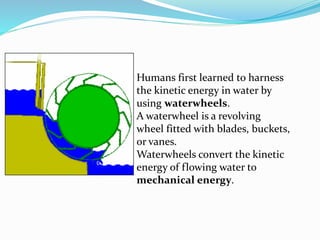
Humans first learned to harness
the kinetic energy in water by
using waterwheels.
A waterwheel is a revolving
wheel fitted with blades, buckets,
or vanes.
Waterwheels convert the kinetic
energy of flowing water to
mechanical energy.
Mechanical energy is a form of kinetic energy, such as
in a machine. Mechanical energy has the ability to do
work. Any object that is able to do work has mechanical
energy.
 Early waterwheels
used mechanical
energy to grind grains
and to drive
machinery such as
sawmills and
blacksmith equipment
 Waterwheel technology advanced over time.
Turbines are advanced, very efficient waterwheels.
They are often enclosed to further capture water’s
energy.
 Not long after the discovery of electricity, it was
realized that a turbine’s mechanical energy could be
used to activate a generator and produce electricity. The
first hydroelectric power plant was constructed in 1882
in Appleton, Wisconsin. It produced 12.5 kilowatts of
electricity which was used to light two paper mills and
one home.
 Hydroelectric power (hydropower) systems convert the
kinetic energy in flowing water into electric energy.
How a Hydroelectric Power
System Works
 Flowing water is directed at a turbine (remember
turbines are just advanced waterwheels). The flowing
water causes the turbine to rotate, converting the
water’s kinetic energy into mechanical energy.
How a Hydroelectric Power
System Works
 The mechanical energy produced by the turbine is
converted into electric energy using a turbine
generator. Inside the generator, the shaft of the turbine
spins a magnet inside coils of copper wire. It is a fact of
nature that moving a magnet near a conductor causes
an electric current.
How much electricity can be generated
by a hydroelectric power plant?
 The amount of electricity that can be generated by a
hydropower plant depends on two factors:
• flow rate - the quantity of water flowing in a given
time; and
• head - the height from which the water falls.
 The greater the flow and head, the more electricity
produced.
Flow Rate = the quantity of water flowing
 When more water flows through a turbine, more
electricity can be produced. The flow rate depends on
the size of the river and the amount of water flowing
in it. Power production is considered to be directly
proportional to river flow. That is, twice as much
water flowing will produce twice as much electricity.
Head = the height from which water falls
 The farther the water falls, the more power it has. The
higher the dam, the farther the water falls, producing
more hydroelectric power.
 Power production is also directly proportional to
head. That is, water falling twice as far will produce
twice as much electricity.
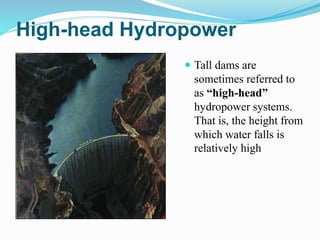
High-head Hydropower
 Tall dams are
sometimes referred to
as “high-head”
hydropower systems.
That is, the height from
which water falls is
relatively high
Low-head Hydropower
 Many smaller hydropower
systems are considered
“low-head” because the
height from which the
water falls is fairly low.
Low-head hydropower
systems are generally less
than 20 feet high
Advantages
 Renewable Energy
 Clean Energy Source
 Domestic Energy Source
 Generally Available As Needed
Possible Environmental Impacts
 Fish Population
 Quality and Flow of Water
 Ecosystems of Rivers and Streams
Other Disadvantages
 Drought
 Impact on Local Environment and Land Use
THANKYOU
hydro power

hydro power

  • 1.
  • 2.
  • 3.
    Hydroelectric power (oftencalled hydropower) is considered a renewable energy source. A renewable energy source is one that is not depleted (used up) in the production of energy. Through hydropower, the energy in falling water is converted into electricity without “using up” the water.
  • 4.
    Kinetic energy isthe energy of motion. Any moving object has kinetic energy.
  • 5.
    Humans first learnedto harness the kinetic energy in water by using waterwheels. A waterwheel is a revolving wheel fitted with blades, buckets, or vanes. Waterwheels convert the kinetic energy of flowing water to mechanical energy.
  • 6.
    Mechanical energy isa form of kinetic energy, such as in a machine. Mechanical energy has the ability to do work. Any object that is able to do work has mechanical energy.
  • 7.
     Early waterwheels usedmechanical energy to grind grains and to drive machinery such as sawmills and blacksmith equipment
  • 8.
     Waterwheel technologyadvanced over time. Turbines are advanced, very efficient waterwheels. They are often enclosed to further capture water’s energy.
  • 9.
     Not longafter the discovery of electricity, it was realized that a turbine’s mechanical energy could be used to activate a generator and produce electricity. The first hydroelectric power plant was constructed in 1882 in Appleton, Wisconsin. It produced 12.5 kilowatts of electricity which was used to light two paper mills and one home.
  • 10.
     Hydroelectric power(hydropower) systems convert the kinetic energy in flowing water into electric energy.
  • 11.
    How a HydroelectricPower System Works  Flowing water is directed at a turbine (remember turbines are just advanced waterwheels). The flowing water causes the turbine to rotate, converting the water’s kinetic energy into mechanical energy.
  • 12.
    How a HydroelectricPower System Works  The mechanical energy produced by the turbine is converted into electric energy using a turbine generator. Inside the generator, the shaft of the turbine spins a magnet inside coils of copper wire. It is a fact of nature that moving a magnet near a conductor causes an electric current.
  • 14.
    How much electricitycan be generated by a hydroelectric power plant?  The amount of electricity that can be generated by a hydropower plant depends on two factors: • flow rate - the quantity of water flowing in a given time; and • head - the height from which the water falls.  The greater the flow and head, the more electricity produced.
  • 15.
    Flow Rate =the quantity of water flowing  When more water flows through a turbine, more electricity can be produced. The flow rate depends on the size of the river and the amount of water flowing in it. Power production is considered to be directly proportional to river flow. That is, twice as much water flowing will produce twice as much electricity.
  • 16.
    Head = theheight from which water falls  The farther the water falls, the more power it has. The higher the dam, the farther the water falls, producing more hydroelectric power.  Power production is also directly proportional to head. That is, water falling twice as far will produce twice as much electricity.
  • 17.
    High-head Hydropower  Talldams are sometimes referred to as “high-head” hydropower systems. That is, the height from which water falls is relatively high
  • 18.
    Low-head Hydropower  Manysmaller hydropower systems are considered “low-head” because the height from which the water falls is fairly low. Low-head hydropower systems are generally less than 20 feet high
  • 19.
    Advantages  Renewable Energy Clean Energy Source  Domestic Energy Source  Generally Available As Needed
  • 20.
    Possible Environmental Impacts Fish Population  Quality and Flow of Water  Ecosystems of Rivers and Streams
  • 21.
    Other Disadvantages  Drought Impact on Local Environment and Land Use
  • 22.