Human growth factors
Dept of Urology
Govt Royapettah Hospital and Kilpauk Medical College
Chennai
Moderators:
Professors:
• Prof. Dr. G. Sivasankar, M.S., M.Ch.,
• Prof. Dr. A. Senthilvel, M.S., M.Ch.,
Asst Professors:
• Dr. J. Sivabalan, M.S., M.Ch.,
• Dr. R. Bhargavi, M.S., M.Ch.,
• Dr. S. Raju, M.S., M.Ch.,
• Dr. K. Muthurathinam, M.S., M.Ch.,
• Dr. D. Tamilselvan, M.S., M.Ch.,
• Dr. K. Senthilkumar, M.S., M.Ch.
Dept of Urology, GRH and KMC, Chennai. 2
Definition
• Growth factor is a naturally occurring substance
capable of stimulating cellular growth
proliferation and cellular differentiation
• Growth factors typically act as signaling
molecules between cells.
• Examples are cytokines and hormones that bind
to specific receptors on the surface of their target
cells.
• ? Cytokines
• G0 → G1 phase
3
Dept of Urology, GRH and KMC, Chennai.
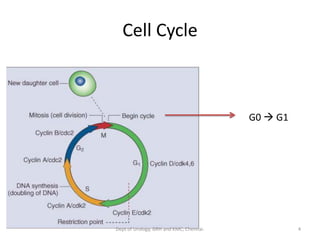
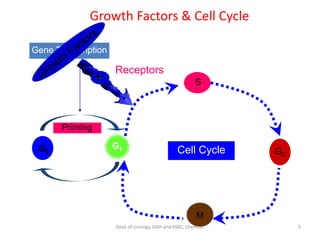
Cell Cycle
G0 → G1
4
Dept of Urology, GRH and KMC, Chennai.
Gene Transcription
G0
G1
Priming
S
G2
M
Cell Cycle
+
Growth Factors & Cell Cycle
Receptors
5
Dept of Urology, GRH and KMC, Chennai.
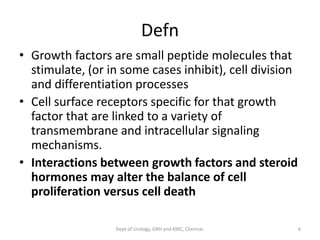
Defn
• Growth factors are small peptide molecules that
stimulate, (or in some cases inhibit), cell division
and differentiation processes
• Cell surface receptors specific for that growth
factor that are linked to a variety of
transmembrane and intracellular signaling
mechanisms.
• Interactions between growth factors and steroid
hormones may alter the balance of cell
proliferation versus cell death
6
Dept of Urology, GRH and KMC, Chennai.
Patterns of cell growth
• Reversible
• Irreversible
7
Dept of Urology, GRH and KMC, Chennai.
8
ONCOGENES
• Oncogenes are mutated forms of cellular
proto-oncogenes.
• Proto-oncogenes code for cellular proteins
which regulate normal cell growth and
differentiation.
Dept of Urology, GRH and KMC, Chennai.
9
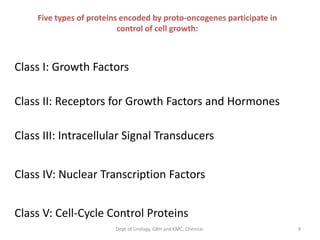
Class I: Growth Factors
Class II: Receptors for Growth Factors and Hormones
Class III: Intracellular Signal Transducers
Class IV: Nuclear Transcription Factors
Class V: Cell-Cycle Control Proteins
Five types of proteins encoded by proto-oncogenes participate in
control of cell growth:
Dept of Urology, GRH and KMC, Chennai.
10
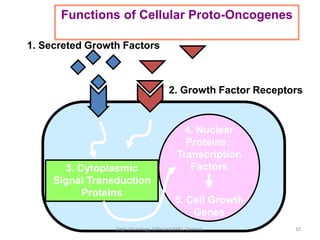
4. Nuclear
Proteins:
Transcription
Factors
5. Cell Growth
Genes
3. Cytoplasmic
Signal Transduction
Proteins
1. Secreted Growth Factors
2. Growth Factor Receptors
Functions of Cellular Proto-Oncogenes
Dept of Urology, GRH and KMC, Chennai.
11
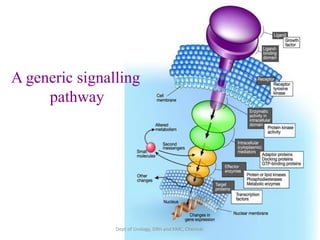
A generic signalling
pathway
Dept of Urology, GRH and KMC, Chennai.
12
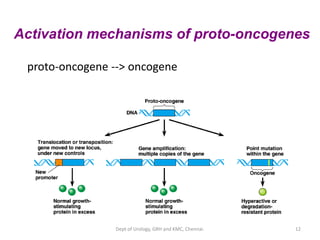
Activation mechanisms of proto-oncogenes
proto-oncogene --> oncogene
Dept of Urology, GRH and KMC, Chennai.
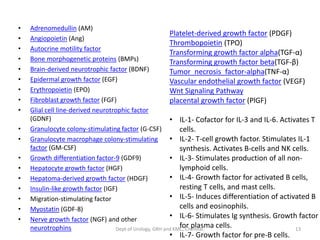
• Adrenomedullin (AM)
• Angiopoietin (Ang)
• Autocrine motility factor
• Bone morphogenetic proteins (BMPs)
• Brain-derived neurotrophic factor (BDNF)
• Epidermal growth factor (EGF)
• Erythropoietin (EPO)
• Fibroblast growth factor (FGF)
• Glial cell line-derived neurotrophic factor
(GDNF)
• Granulocyte colony-stimulating factor (G-CSF)
• Granulocyte macrophage colony-stimulating
factor (GM-CSF)
• Growth differentiation factor-9 (GDF9)
• Hepatocyte growth factor (HGF)
• Hepatoma-derived growth factor (HDGF)
• Insulin-like growth factor (IGF)
• Migration-stimulating factor
• Myostatin (GDF-8)
• Nerve growth factor (NGF) and other
neurotrophins
Platelet-derived growth factor (PDGF)
Thrombopoietin (TPO)
Transforming growth factor alpha(TGF-α)
Transforming growth factor beta(TGF-β)
Tumor_necrosis_factor-alpha(TNF-α)
Vascular endothelial growth factor (VEGF)
Wnt Signaling Pathway
placental growth factor (PlGF)
• IL-1- Cofactor for IL-3 and IL-6. Activates T
cells.
• IL-2- T-cell growth factor. Stimulates IL-1
synthesis. Activates B-cells and NK cells.
• IL-3- Stimulates production of all non-
lymphoid cells.
• IL-4- Growth factor for activated B cells,
resting T cells, and mast cells.
• IL-5- Induces differentiation of activated B
cells and eosinophils.
• IL-6- Stimulates Ig synthesis. Growth factor
for plasma cells.
• IL-7- Growth factor for pre-B cells.
13
Dept of Urology, GRH and KMC, Chennai.
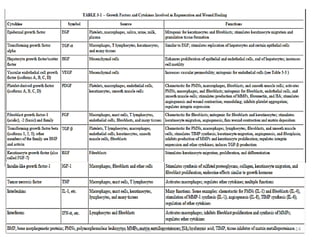
14
Dept of Urology, GRH and KMC, Chennai.
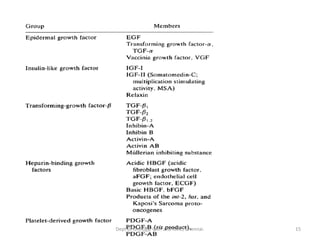
15
Dept of Urology, GRH and KMC, Chennai.
FGF Family
• In humans, 22 members of the FGF family have been identified
• structurally related signaling molecules
• Members FGF1 through FGF10 all bind fibroblast growth factor receptors
• FGF1 is also known as acidic, and FGF2 is also known as basic fibroblast
growth factor.
• Members FGF11, FGF12, FGF13, and FGF14, also known as FGF
homologous factors 1-4 (FHF1-FHF4), have been shown to have distinct
functional differences compared to the FGFs - "iFGF".
• Human FGF20 was identified based on its homology to Xenopus FGF-20
(XFGF-20).[6][7]
• FGF15 through FGF23 were described later and not all their functions have
been characterized.
• FGF15/19, FGF21 and FGF23 have systemic effects.[8][9]
16
Dept of Urology, GRH and KMC, Chennai.
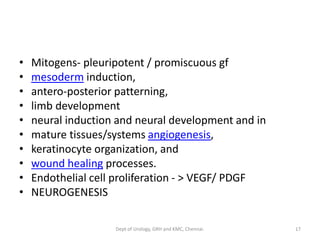
• Mitogens- pleuripotent / promiscuous gf
• mesoderm induction,
• antero-posterior patterning,
• limb development
• neural induction and neural development and in
• mature tissues/systems angiogenesis,
• keratinocyte organization, and
• wound healing processes.
• Endothelial cell proliferation - > VEGF/ PDGF
• NEUROGENESIS
17
Dept of Urology, GRH and KMC, Chennai.
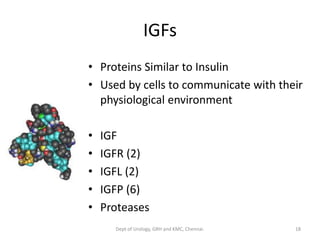
IGFs
• Proteins Similar to Insulin
• Used by cells to communicate with their
physiological environment
• IGF
• IGFR (2)
• IGFL (2)
• IGFP (6)
• Proteases
18
Dept of Urology, GRH and KMC, Chennai.
IGF – GH AXIS
• GH stimulates IGF
• secreted by Liver
• IGF 1 – maximal growth / neural
• IGF2 – early growth factor (fetal)
19
Dept of Urology, GRH and KMC, Chennai.
Fn
• It acts as a neurotrophic factor, inducing the
survival of neurons.
• It causes skeletal muscle hypertrophy, by inducing
protein synthesis, and by blocking muscle
atrophy.
• It is protective for cartilage cells, and is associated
with activation of osteocytes, and thus may be an
anabolic factor for bone.
• Since at high concentrations it is capable of
activating the insulin receptor, it can also
complement for the effects of insulin.
20
Dept of Urology, GRH and KMC, Chennai.
TGF - β
• 3 isoforms 1-3
• Inhibin
• Activins
• Antimullerian hormone
• BMP
21
Dept of Urology, GRH and KMC, Chennai.
• Antiproliferative factors in normal epithelial
cells
• SMADD / DAXX → APOPTOSIS
• Synthesis of p15 & p21 → cell cycle arrest at
G1
• Role in peyronie’s disease
22
Dept of Urology, GRH and KMC, Chennai.
EGF
Human EGF is a 6045-Da protein[2] with 53
amino acid residues and three
intramolecular disulfide bonds
The discovery of EGF won Stanley Cohen
and Rita Levi-Montalcini a Nobel Prize in
Physiology and Medicine in 1986
First purified from the mouse submandibular
gland, but since then found in many human
tissues including submandibular gland, parotid
gland.
Salivary EGF, which seems also regulated by
dietary inorganic iodine, also plays an
important mucosal healer
23
Dept of Urology, GRH and KMC, Chennai.
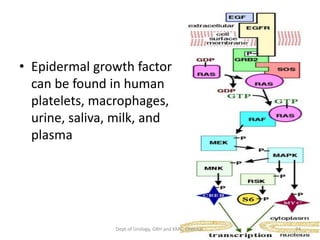
• Epidermal growth factor
can be found in human
platelets, macrophages,
urine, saliva, milk, and
plasma
24
Dept of Urology, GRH and KMC, Chennai.
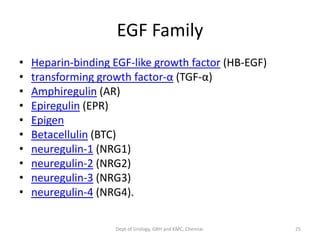
EGF Family
• Heparin-binding EGF-like growth factor (HB-EGF)
• transforming growth factor-α (TGF-α)
• Amphiregulin (AR)
• Epiregulin (EPR)
• Epigen
• Betacellulin (BTC)
• neuregulin-1 (NRG1)
• neuregulin-2 (NRG2)
• neuregulin-3 (NRG3)
• neuregulin-4 (NRG4).
25
Dept of Urology, GRH and KMC, Chennai.
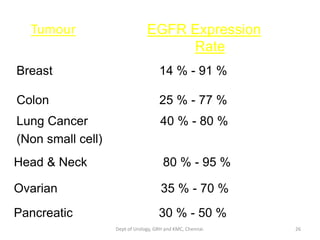
Breast 14 % - 91 %
Colon 25 % - 77 %
Lung Cancer 40 % - 80 %
(Non small cell)
Ovarian 35 % - 70 %
Pancreatic 30 % - 50 %
Head & Neck 80 % - 95 %
EGFR Expression
Rate
Tumour
26
Dept of Urology, GRH and KMC, Chennai.
TK
TK
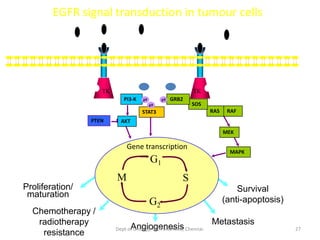
EGFR signal transduction in tumour cells
Survival
(anti-apoptosis)
PI3-K
STAT3
AKT
PTEN
MEK
Gene transcription
MAPK
Proliferation/
maturation
Chemotherapy /
radiotherapy
resistance
Angiogenesis
Metastasis
pY
pY
RAS RAF
SOS
GRB2
pY
G1
S
M
G2
27
Dept of Urology, GRH and KMC, Chennai.
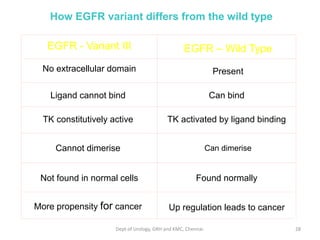
EGFR - Variant III EGFR – Wild Type
No extracellular domain Present
Ligand cannot bind Can bind
TK constitutively active TK activated by ligand binding
Cannot dimerise Can dimerise
Not found in normal cells Found normally
More propensity for cancer Up regulation leads to cancer
How EGFR variant differs from the wild type
28
Dept of Urology, GRH and KMC, Chennai.
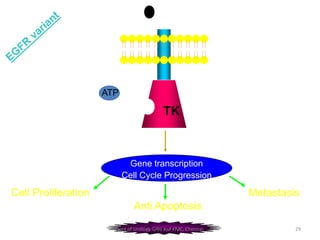
TK
Gene transcription
Cell Cycle Progression
Cell Proliferation Metastasis
Anti Apoptosis
Cancer
ATP
29
Dept of Urology, GRH and KMC, Chennai.
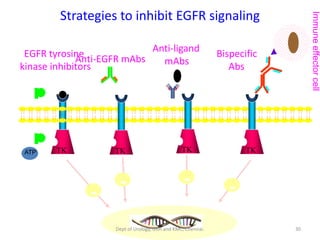
TK TK TK TK
Strategies to inhibit EGFR signaling
-
- - -
EGFR tyrosine
kinase inhibitors
Anti-EGFR mAbs
Anti-ligand
mAbs
Bispecific
Abs
Immune
effector
cell
ATP
30
Dept of Urology, GRH and KMC, Chennai.
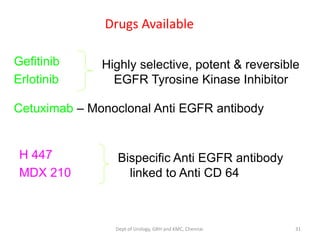
Drugs Available
Gefitinib
Erlotinib
Highly selective, potent & reversible
EGFR Tyrosine Kinase Inhibitor
Cetuximab – Monoclonal Anti EGFR antibody
H 447
MDX 210
Bispecific Anti EGFR antibody
linked to Anti CD 64
31
Dept of Urology, GRH and KMC, Chennai.
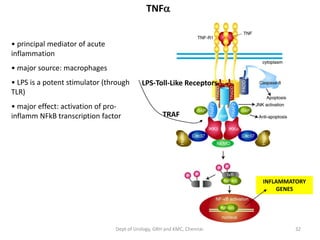
TNFa
• principal mediator of acute
inflammation
• major source: macrophages
• LPS is a potent stimulator (through
TLR)
• major effect: activation of pro-
inflamm NFkB transcription factor
INFLAMMATORY
GENES
LPS-Toll-Like Receptors
TRAF
32
Dept of Urology, GRH and KMC, Chennai.
•Major actions:
• increase endothelial expression of selectins and integrins
• increase chemokine production in endothelial cells, macrophages
• increases cycloxygenase and lipoxygenase
• Increased arichodinate metabolism
• Production of prostaglandins and leukotrienes (pyrogens,
chemotactic)
• induces prostacyclin expression in endothelium – increases local
blood flow
• increase IL-1 production in macrophages
• induces apoptosis in some cells (through p55 receptor – activates
caspase)
• at high concentrations in blood, can induce septic shock, organ
failure, thrombosis, high mortality 33
Dept of Urology, GRH and KMC, Chennai.
34
Dept of Urology, GRH and KMC, Chennai.
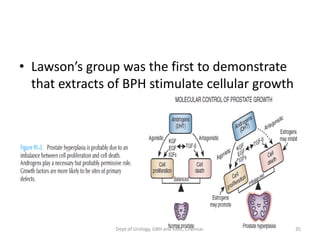
• Lawson’s group was the first to demonstrate
that extracts of BPH stimulate cellular growth
35
Dept of Urology, GRH and KMC, Chennai.
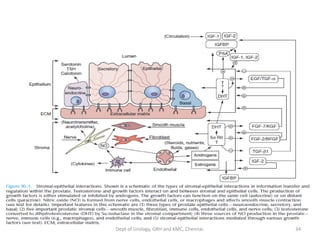
BPH
• TGF Beta – role reversal
• Usually an epithelial cell proliferation inhibitor
• This is lost in BPH
• Induces proliiferation of stromal cells
• So TGF β1 = STROMAL COMPONENT
36
Dept of Urology, GRH and KMC, Chennai.
• FGF 2 → AUTOCRINE → epiithelial
proliferation
• FGF-7 (or a homolog) is the leading candidate
for the factor mediating the stromal cell–
based hormonal regulation of the prostatic
epithelium.
• FGF 17,10
• VEGF
• IGF 1
37
Dept of Urology, GRH and KMC, Chennai.
38
Dept of Urology, GRH and KMC, Chennai.

Human growth factorS

  • 1.
    Human growth factors Deptof Urology Govt Royapettah Hospital and Kilpauk Medical College Chennai
  • 2.
    Moderators: Professors: • Prof. Dr.G. Sivasankar, M.S., M.Ch., • Prof. Dr. A. Senthilvel, M.S., M.Ch., Asst Professors: • Dr. J. Sivabalan, M.S., M.Ch., • Dr. R. Bhargavi, M.S., M.Ch., • Dr. S. Raju, M.S., M.Ch., • Dr. K. Muthurathinam, M.S., M.Ch., • Dr. D. Tamilselvan, M.S., M.Ch., • Dr. K. Senthilkumar, M.S., M.Ch. Dept of Urology, GRH and KMC, Chennai. 2
  • 3.
    Definition • Growth factoris a naturally occurring substance capable of stimulating cellular growth proliferation and cellular differentiation • Growth factors typically act as signaling molecules between cells. • Examples are cytokines and hormones that bind to specific receptors on the surface of their target cells. • ? Cytokines • G0 → G1 phase 3 Dept of Urology, GRH and KMC, Chennai.
  • 4.
    Cell Cycle G0 →G1 4 Dept of Urology, GRH and KMC, Chennai.
  • 5.
    Gene Transcription G0 G1 Priming S G2 M Cell Cycle + GrowthFactors & Cell Cycle Receptors 5 Dept of Urology, GRH and KMC, Chennai.
  • 6.
    Defn • Growth factorsare small peptide molecules that stimulate, (or in some cases inhibit), cell division and differentiation processes • Cell surface receptors specific for that growth factor that are linked to a variety of transmembrane and intracellular signaling mechanisms. • Interactions between growth factors and steroid hormones may alter the balance of cell proliferation versus cell death 6 Dept of Urology, GRH and KMC, Chennai.
  • 7.
    Patterns of cellgrowth • Reversible • Irreversible 7 Dept of Urology, GRH and KMC, Chennai.
  • 8.
    8 ONCOGENES • Oncogenes aremutated forms of cellular proto-oncogenes. • Proto-oncogenes code for cellular proteins which regulate normal cell growth and differentiation. Dept of Urology, GRH and KMC, Chennai.
  • 9.
    9 Class I: GrowthFactors Class II: Receptors for Growth Factors and Hormones Class III: Intracellular Signal Transducers Class IV: Nuclear Transcription Factors Class V: Cell-Cycle Control Proteins Five types of proteins encoded by proto-oncogenes participate in control of cell growth: Dept of Urology, GRH and KMC, Chennai.
  • 10.
    10 4. Nuclear Proteins: Transcription Factors 5. CellGrowth Genes 3. Cytoplasmic Signal Transduction Proteins 1. Secreted Growth Factors 2. Growth Factor Receptors Functions of Cellular Proto-Oncogenes Dept of Urology, GRH and KMC, Chennai.
  • 11.
    11 A generic signalling pathway Deptof Urology, GRH and KMC, Chennai.
  • 12.
    12 Activation mechanisms ofproto-oncogenes proto-oncogene --> oncogene Dept of Urology, GRH and KMC, Chennai.
  • 13.
    • Adrenomedullin (AM) •Angiopoietin (Ang) • Autocrine motility factor • Bone morphogenetic proteins (BMPs) • Brain-derived neurotrophic factor (BDNF) • Epidermal growth factor (EGF) • Erythropoietin (EPO) • Fibroblast growth factor (FGF) • Glial cell line-derived neurotrophic factor (GDNF) • Granulocyte colony-stimulating factor (G-CSF) • Granulocyte macrophage colony-stimulating factor (GM-CSF) • Growth differentiation factor-9 (GDF9) • Hepatocyte growth factor (HGF) • Hepatoma-derived growth factor (HDGF) • Insulin-like growth factor (IGF) • Migration-stimulating factor • Myostatin (GDF-8) • Nerve growth factor (NGF) and other neurotrophins Platelet-derived growth factor (PDGF) Thrombopoietin (TPO) Transforming growth factor alpha(TGF-α) Transforming growth factor beta(TGF-β) Tumor_necrosis_factor-alpha(TNF-α) Vascular endothelial growth factor (VEGF) Wnt Signaling Pathway placental growth factor (PlGF) • IL-1- Cofactor for IL-3 and IL-6. Activates T cells. • IL-2- T-cell growth factor. Stimulates IL-1 synthesis. Activates B-cells and NK cells. • IL-3- Stimulates production of all non- lymphoid cells. • IL-4- Growth factor for activated B cells, resting T cells, and mast cells. • IL-5- Induces differentiation of activated B cells and eosinophils. • IL-6- Stimulates Ig synthesis. Growth factor for plasma cells. • IL-7- Growth factor for pre-B cells. 13 Dept of Urology, GRH and KMC, Chennai.
  • 14.
    14 Dept of Urology,GRH and KMC, Chennai.
  • 15.
    15 Dept of Urology,GRH and KMC, Chennai.
  • 16.
    FGF Family • Inhumans, 22 members of the FGF family have been identified • structurally related signaling molecules • Members FGF1 through FGF10 all bind fibroblast growth factor receptors • FGF1 is also known as acidic, and FGF2 is also known as basic fibroblast growth factor. • Members FGF11, FGF12, FGF13, and FGF14, also known as FGF homologous factors 1-4 (FHF1-FHF4), have been shown to have distinct functional differences compared to the FGFs - "iFGF". • Human FGF20 was identified based on its homology to Xenopus FGF-20 (XFGF-20).[6][7] • FGF15 through FGF23 were described later and not all their functions have been characterized. • FGF15/19, FGF21 and FGF23 have systemic effects.[8][9] 16 Dept of Urology, GRH and KMC, Chennai.
  • 17.
    • Mitogens- pleuripotent/ promiscuous gf • mesoderm induction, • antero-posterior patterning, • limb development • neural induction and neural development and in • mature tissues/systems angiogenesis, • keratinocyte organization, and • wound healing processes. • Endothelial cell proliferation - > VEGF/ PDGF • NEUROGENESIS 17 Dept of Urology, GRH and KMC, Chennai.
  • 18.
    IGFs • Proteins Similarto Insulin • Used by cells to communicate with their physiological environment • IGF • IGFR (2) • IGFL (2) • IGFP (6) • Proteases 18 Dept of Urology, GRH and KMC, Chennai.
  • 19.
    IGF – GHAXIS • GH stimulates IGF • secreted by Liver • IGF 1 – maximal growth / neural • IGF2 – early growth factor (fetal) 19 Dept of Urology, GRH and KMC, Chennai.
  • 20.
    Fn • It actsas a neurotrophic factor, inducing the survival of neurons. • It causes skeletal muscle hypertrophy, by inducing protein synthesis, and by blocking muscle atrophy. • It is protective for cartilage cells, and is associated with activation of osteocytes, and thus may be an anabolic factor for bone. • Since at high concentrations it is capable of activating the insulin receptor, it can also complement for the effects of insulin. 20 Dept of Urology, GRH and KMC, Chennai.
  • 21.
    TGF - β •3 isoforms 1-3 • Inhibin • Activins • Antimullerian hormone • BMP 21 Dept of Urology, GRH and KMC, Chennai.
  • 22.
    • Antiproliferative factorsin normal epithelial cells • SMADD / DAXX → APOPTOSIS • Synthesis of p15 & p21 → cell cycle arrest at G1 • Role in peyronie’s disease 22 Dept of Urology, GRH and KMC, Chennai.
  • 23.
    EGF Human EGF isa 6045-Da protein[2] with 53 amino acid residues and three intramolecular disulfide bonds The discovery of EGF won Stanley Cohen and Rita Levi-Montalcini a Nobel Prize in Physiology and Medicine in 1986 First purified from the mouse submandibular gland, but since then found in many human tissues including submandibular gland, parotid gland. Salivary EGF, which seems also regulated by dietary inorganic iodine, also plays an important mucosal healer 23 Dept of Urology, GRH and KMC, Chennai.
  • 24.
    • Epidermal growthfactor can be found in human platelets, macrophages, urine, saliva, milk, and plasma 24 Dept of Urology, GRH and KMC, Chennai.
  • 25.
    EGF Family • Heparin-bindingEGF-like growth factor (HB-EGF) • transforming growth factor-α (TGF-α) • Amphiregulin (AR) • Epiregulin (EPR) • Epigen • Betacellulin (BTC) • neuregulin-1 (NRG1) • neuregulin-2 (NRG2) • neuregulin-3 (NRG3) • neuregulin-4 (NRG4). 25 Dept of Urology, GRH and KMC, Chennai.
  • 26.
    Breast 14 %- 91 % Colon 25 % - 77 % Lung Cancer 40 % - 80 % (Non small cell) Ovarian 35 % - 70 % Pancreatic 30 % - 50 % Head & Neck 80 % - 95 % EGFR Expression Rate Tumour 26 Dept of Urology, GRH and KMC, Chennai.
  • 27.
    TK TK EGFR signal transductionin tumour cells Survival (anti-apoptosis) PI3-K STAT3 AKT PTEN MEK Gene transcription MAPK Proliferation/ maturation Chemotherapy / radiotherapy resistance Angiogenesis Metastasis pY pY RAS RAF SOS GRB2 pY G1 S M G2 27 Dept of Urology, GRH and KMC, Chennai.
  • 28.
    EGFR - VariantIII EGFR – Wild Type No extracellular domain Present Ligand cannot bind Can bind TK constitutively active TK activated by ligand binding Cannot dimerise Can dimerise Not found in normal cells Found normally More propensity for cancer Up regulation leads to cancer How EGFR variant differs from the wild type 28 Dept of Urology, GRH and KMC, Chennai.
  • 29.
    TK Gene transcription Cell CycleProgression Cell Proliferation Metastasis Anti Apoptosis Cancer ATP 29 Dept of Urology, GRH and KMC, Chennai.
  • 30.
    TK TK TKTK Strategies to inhibit EGFR signaling - - - - EGFR tyrosine kinase inhibitors Anti-EGFR mAbs Anti-ligand mAbs Bispecific Abs Immune effector cell ATP 30 Dept of Urology, GRH and KMC, Chennai.
  • 31.
    Drugs Available Gefitinib Erlotinib Highly selective,potent & reversible EGFR Tyrosine Kinase Inhibitor Cetuximab – Monoclonal Anti EGFR antibody H 447 MDX 210 Bispecific Anti EGFR antibody linked to Anti CD 64 31 Dept of Urology, GRH and KMC, Chennai.
  • 32.
    TNFa • principal mediatorof acute inflammation • major source: macrophages • LPS is a potent stimulator (through TLR) • major effect: activation of pro- inflamm NFkB transcription factor INFLAMMATORY GENES LPS-Toll-Like Receptors TRAF 32 Dept of Urology, GRH and KMC, Chennai.
  • 33.
    •Major actions: • increaseendothelial expression of selectins and integrins • increase chemokine production in endothelial cells, macrophages • increases cycloxygenase and lipoxygenase • Increased arichodinate metabolism • Production of prostaglandins and leukotrienes (pyrogens, chemotactic) • induces prostacyclin expression in endothelium – increases local blood flow • increase IL-1 production in macrophages • induces apoptosis in some cells (through p55 receptor – activates caspase) • at high concentrations in blood, can induce septic shock, organ failure, thrombosis, high mortality 33 Dept of Urology, GRH and KMC, Chennai.
  • 34.
    34 Dept of Urology,GRH and KMC, Chennai.
  • 35.
    • Lawson’s groupwas the first to demonstrate that extracts of BPH stimulate cellular growth 35 Dept of Urology, GRH and KMC, Chennai.
  • 36.
    BPH • TGF Beta– role reversal • Usually an epithelial cell proliferation inhibitor • This is lost in BPH • Induces proliiferation of stromal cells • So TGF β1 = STROMAL COMPONENT 36 Dept of Urology, GRH and KMC, Chennai.
  • 37.
    • FGF 2→ AUTOCRINE → epiithelial proliferation • FGF-7 (or a homolog) is the leading candidate for the factor mediating the stromal cell– based hormonal regulation of the prostatic epithelium. • FGF 17,10 • VEGF • IGF 1 37 Dept of Urology, GRH and KMC, Chennai.
  • 38.
    38 Dept of Urology,GRH and KMC, Chennai.