Downloaded 11 times

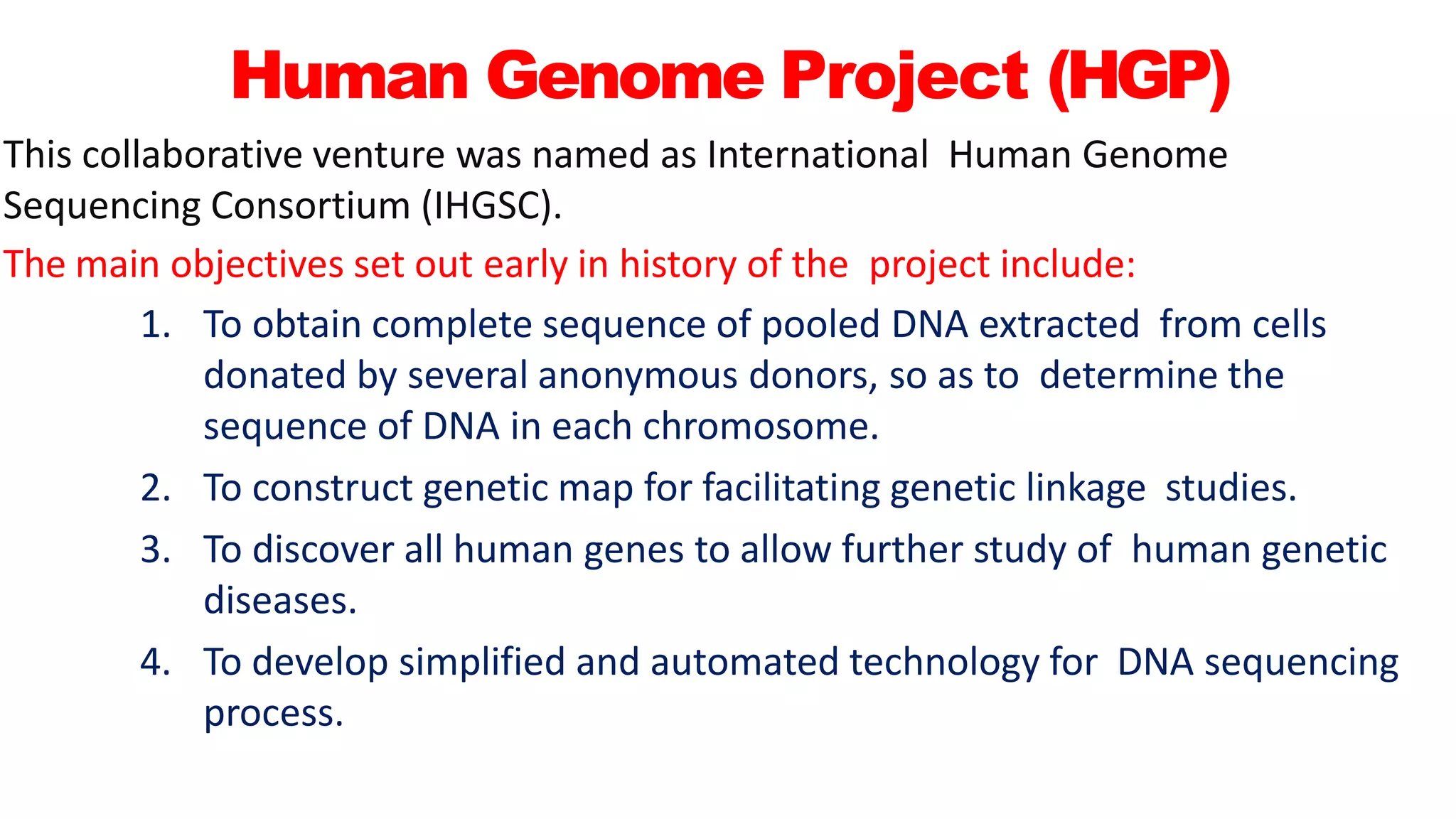



The Human Genome Project was a large, international collaborative project launched in 1990 with the main goal of determining the complete DNA sequence of human genes. It involved research groups from six countries and sought to map all human genes to further the study of genetic diseases. By 2003, the project had completed mapping over 99% of the human genome, finding that while genomes are over 99.9% identical, small differences of 0.1% can impact traits and disease susceptibility. The project provided tremendous medical implications, including enabling identification of disease genes and advancing fields like gene therapy and pharmacogenomics.


![Human genome project [autosaved]](https://cdn.slidesharecdn.com/ss_thumbnails/humangenomeprojectautosaved-210929062307-thumbnail.jpg?width=640&height=640&fit=bounds)


