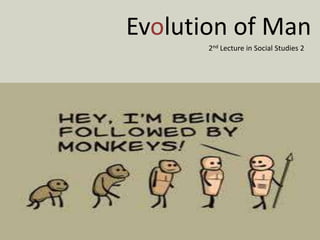
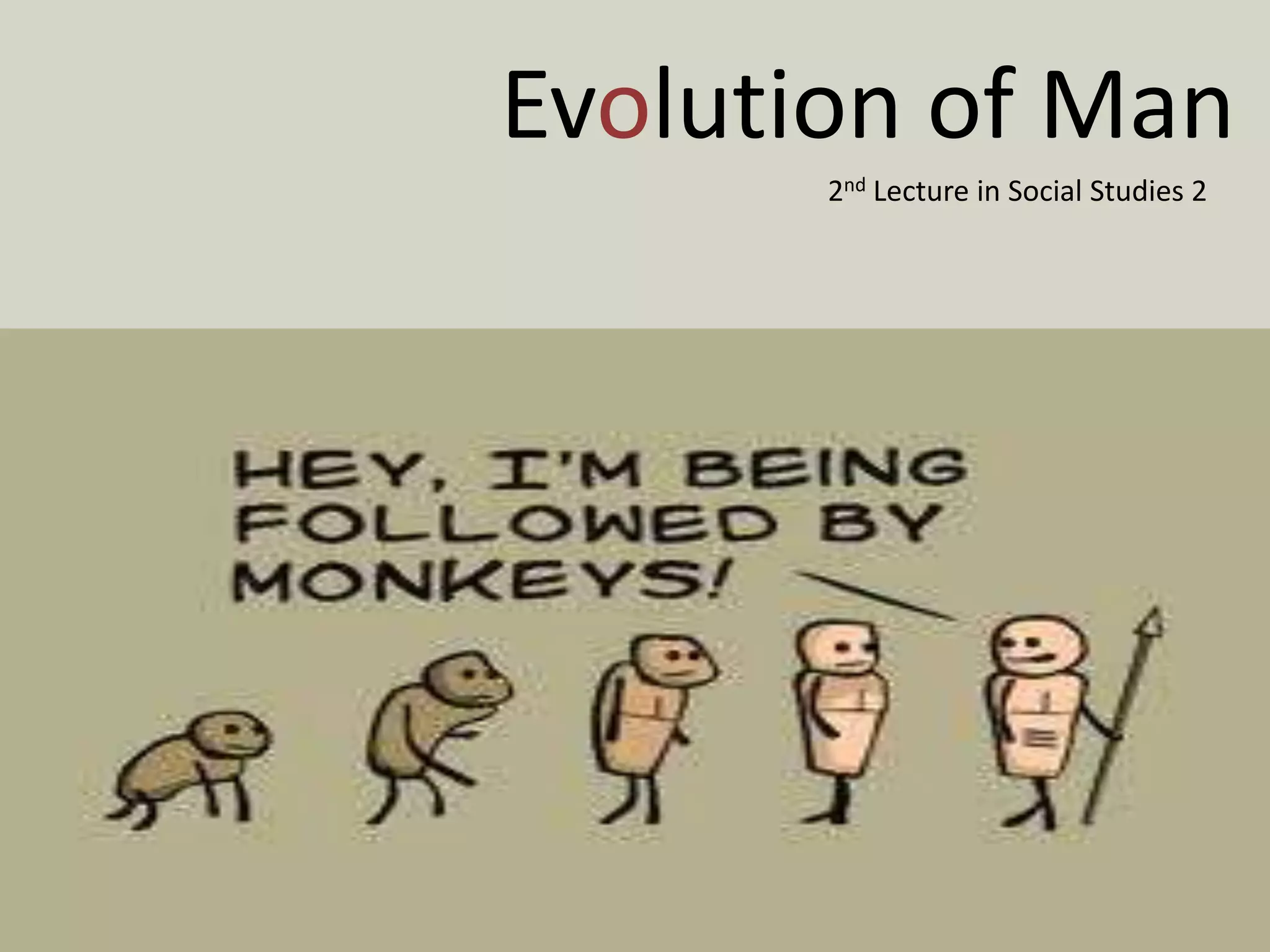
Evolution of Man
       2nd Lecture in Social Studies 2
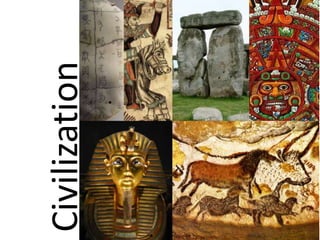
Civilization
Man
Bearer of Civilization
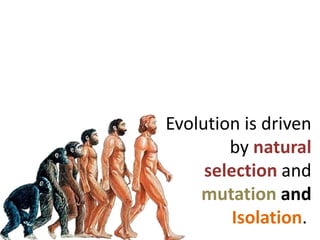
Evolution is driven
        by natural
     selection and
    mutation and
         Isolation.
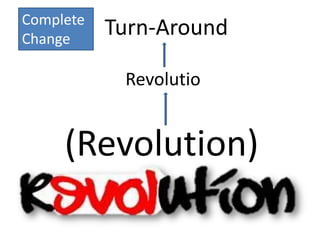
Complete
Change
           Turn-Around

            Revolutio


     (Revolution)
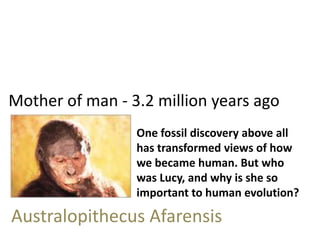
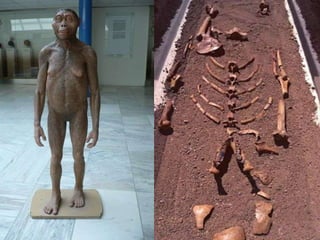
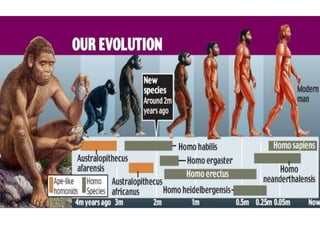
Mother of man - 3.2 million years ago
                 One fossil discovery above all
                 has transformed views of how
                 we became human. But who
                 was Lucy, and why is she so
                 important to human evolution?

Australopithecus Afarensis
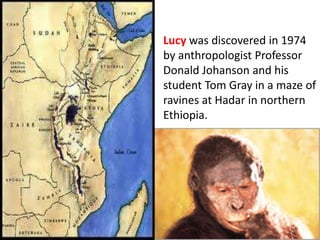
Lucy was discovered in 1974
by anthropologist Professor
Donald Johanson and his
student Tom Gray in a maze of
ravines at Hadar in northern
Ethiopia.
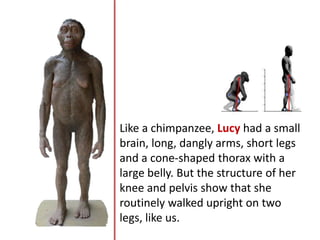
Like a chimpanzee, Lucy had a small
brain, long, dangly arms, short legs
and a cone-shaped thorax with a
large belly. But the structure of her
knee and pelvis show that she
routinely walked upright on two
legs, like us.
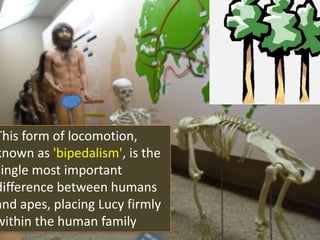
This form of locomotion,
known as 'bipedalism', is the
single most important
difference between humans
and apes, placing Lucy firmly
within the human family.
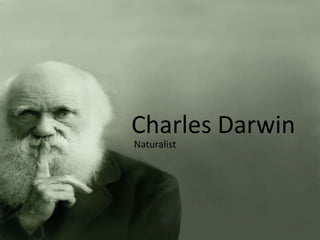
Charles Darwin
Naturalist
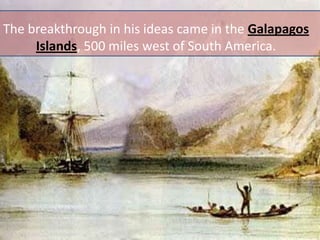
The breakthrough in his ideas came in the Galapagos
     Islands, 500 miles west of South America.
Controversy
Darwin's theory was that
homo sapiens was simply
another form of animal. It
made it seem possible that
even people might just
have evolved - quite
possibly from apes
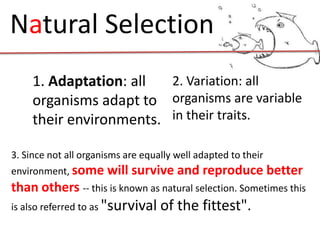
Natural Selection
     1. Adaptation: all  2. Variation: all
     organisms adapt to organisms are variable
     their environments. in their traits.

3. Since not all organisms are equally well adapted to their
environment, some will survive and reproduce better
than others -- this is known as natural selection. Sometimes this
is also referred to as "survival   of the fittest".
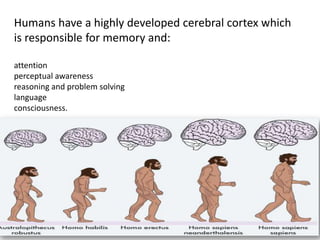
Humans have a highly developed cerebral cortex which
is responsible for memory and:

attention
perceptual awareness
reasoning and problem solving
language
consciousness.
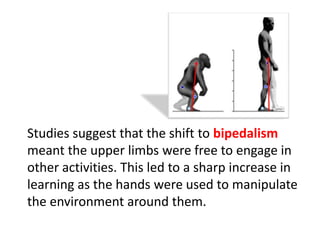
Studies suggest that the shift to bipedalism
meant the upper limbs were free to engage in
other activities. This led to a sharp increase in
learning as the hands were used to manipulate
the environment around them.
What’s the point bro?
Enduring Understanding
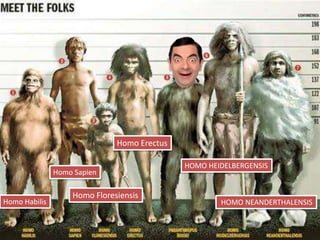
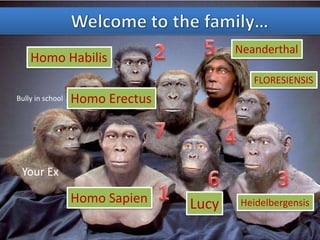
Homo Erectus

                                             HOMO HEIDELBERGENSIS
               Homo Sapien

                   Homo Floresiensis
Homo Habilis                                         HOMO NEANDERTHALENSIS
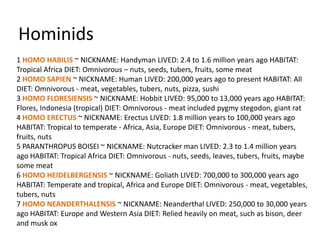
Hominids
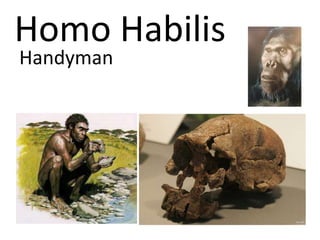
1 HOMO HABILIS ~ NICKNAME: Handyman LIVED: 2.4 to 1.6 million years ago HABITAT:
Tropical Africa DIET: Omnivorous – nuts, seeds, tubers, fruits, some meat
2 HOMO SAPIEN ~ NICKNAME: Human LIVED: 200,000 years ago to present HABITAT: All
DIET: Omnivorous - meat, vegetables, tubers, nuts, pizza, sushi
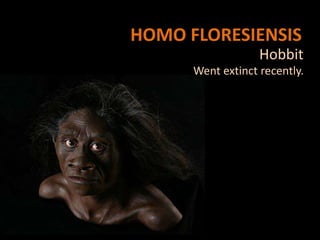
3 HOMO FLORESIENSIS ~ NICKNAME: Hobbit LIVED: 95,000 to 13,000 years ago HABITAT:
Flores, Indonesia (tropical) DIET: Omnivorous - meat included pygmy stegodon, giant rat
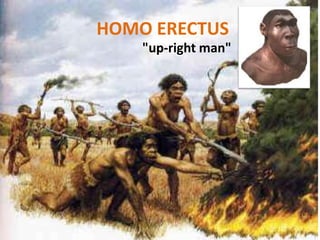
4 HOMO ERECTUS ~ NICKNAME: Erectus LIVED: 1.8 million years to 100,000 years ago
HABITAT: Tropical to temperate - Africa, Asia, Europe DIET: Omnivorous - meat, tubers,
fruits, nuts
5 PARANTHROPUS BOISEI ~ NICKNAME: Nutcracker man LIVED: 2.3 to 1.4 million years
ago HABITAT: Tropical Africa DIET: Omnivorous - nuts, seeds, leaves, tubers, fruits, maybe
some meat
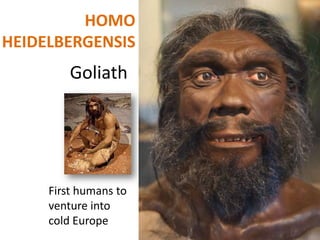
6 HOMO HEIDELBERGENSIS ~ NICKNAME: Goliath LIVED: 700,000 to 300,000 years ago
HABITAT: Temperate and tropical, Africa and Europe DIET: Omnivorous - meat, vegetables,
tubers, nuts
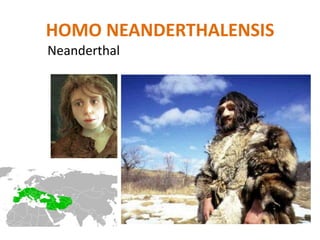
7 HOMO NEANDERTHALENSIS ~ NICKNAME: Neanderthal LIVED: 250,000 to 30,000 years
ago HABITAT: Europe and Western Asia DIET: Relied heavily on meat, such as bison, deer
and musk ox
Homo Habilis
Handyman
Evolve in Africa and now worldwide

HOMO SAPIEN
HOMO FLORESIENSIS
                   Hobbit
      Went extinct recently.
HOMO ERECTUS
    "up-right man"
HOMO
HEIDELBERGENSIS
         Goliath


     First humans to
     venture into
     cold Europe
HOMO NEANDERTHALENSIS
Neanderthal
Neanderthal
    Homo Habilis
                                           FLORESIENSIS
Bully in school   Homo Erectus


 Your Ex

                  Homo Sapien    Lucy   Heidelbergensis

Human Evolution

  • 1.
    Evolution of Man 2nd Lecture in Social Studies 2
  • 2.
  • 3.
  • 4.
    Evolution is driven by natural selection and mutation and Isolation.
  • 5.
    Complete Change Turn-Around Revolutio (Revolution)
  • 6.
    Mother of man- 3.2 million years ago One fossil discovery above all has transformed views of how we became human. But who was Lucy, and why is she so important to human evolution? Australopithecus Afarensis
  • 7.
    Lucy was discoveredin 1974 by anthropologist Professor Donald Johanson and his student Tom Gray in a maze of ravines at Hadar in northern Ethiopia.
  • 9.
    Like a chimpanzee,Lucy had a small brain, long, dangly arms, short legs and a cone-shaped thorax with a large belly. But the structure of her knee and pelvis show that she routinely walked upright on two legs, like us.
  • 10.
    This form oflocomotion, known as 'bipedalism', is the single most important difference between humans and apes, placing Lucy firmly within the human family.
  • 11.
  • 12.
    The breakthrough inhis ideas came in the Galapagos Islands, 500 miles west of South America.
  • 13.
    Controversy Darwin's theory wasthat homo sapiens was simply another form of animal. It made it seem possible that even people might just have evolved - quite possibly from apes
  • 15.
    Natural Selection 1. Adaptation: all 2. Variation: all organisms adapt to organisms are variable their environments. in their traits. 3. Since not all organisms are equally well adapted to their environment, some will survive and reproduce better than others -- this is known as natural selection. Sometimes this is also referred to as "survival of the fittest".
  • 17.
    Humans have ahighly developed cerebral cortex which is responsible for memory and: attention perceptual awareness reasoning and problem solving language consciousness.
  • 18.
    Studies suggest thatthe shift to bipedalism meant the upper limbs were free to engage in other activities. This led to a sharp increase in learning as the hands were used to manipulate the environment around them.
  • 19.
    What’s the pointbro? Enduring Understanding
  • 20.
    Homo Erectus HOMO HEIDELBERGENSIS Homo Sapien Homo Floresiensis Homo Habilis HOMO NEANDERTHALENSIS
  • 22.
    Hominids 1 HOMO HABILIS~ NICKNAME: Handyman LIVED: 2.4 to 1.6 million years ago HABITAT: Tropical Africa DIET: Omnivorous – nuts, seeds, tubers, fruits, some meat 2 HOMO SAPIEN ~ NICKNAME: Human LIVED: 200,000 years ago to present HABITAT: All DIET: Omnivorous - meat, vegetables, tubers, nuts, pizza, sushi 3 HOMO FLORESIENSIS ~ NICKNAME: Hobbit LIVED: 95,000 to 13,000 years ago HABITAT: Flores, Indonesia (tropical) DIET: Omnivorous - meat included pygmy stegodon, giant rat 4 HOMO ERECTUS ~ NICKNAME: Erectus LIVED: 1.8 million years to 100,000 years ago HABITAT: Tropical to temperate - Africa, Asia, Europe DIET: Omnivorous - meat, tubers, fruits, nuts 5 PARANTHROPUS BOISEI ~ NICKNAME: Nutcracker man LIVED: 2.3 to 1.4 million years ago HABITAT: Tropical Africa DIET: Omnivorous - nuts, seeds, leaves, tubers, fruits, maybe some meat 6 HOMO HEIDELBERGENSIS ~ NICKNAME: Goliath LIVED: 700,000 to 300,000 years ago HABITAT: Temperate and tropical, Africa and Europe DIET: Omnivorous - meat, vegetables, tubers, nuts 7 HOMO NEANDERTHALENSIS ~ NICKNAME: Neanderthal LIVED: 250,000 to 30,000 years ago HABITAT: Europe and Western Asia DIET: Relied heavily on meat, such as bison, deer and musk ox
  • 23.
  • 24.
    Evolve in Africaand now worldwide HOMO SAPIEN
  • 25.
    HOMO FLORESIENSIS Hobbit Went extinct recently.
  • 26.
    HOMO ERECTUS "up-right man"
  • 27.
    HOMO HEIDELBERGENSIS Goliath First humans to venture into cold Europe
  • 28.
  • 29.
    Neanderthal Homo Habilis FLORESIENSIS Bully in school Homo Erectus Your Ex Homo Sapien Lucy Heidelbergensis