

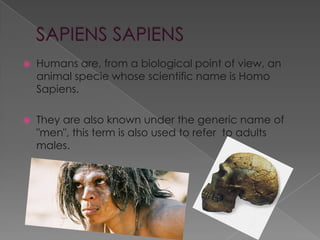
Humans are, from a biological point of view, an
animal specie whose scientific name is Homo
Sapiens.



They are also known under the generic name of
"men", this term is also used to refer to adults
males.





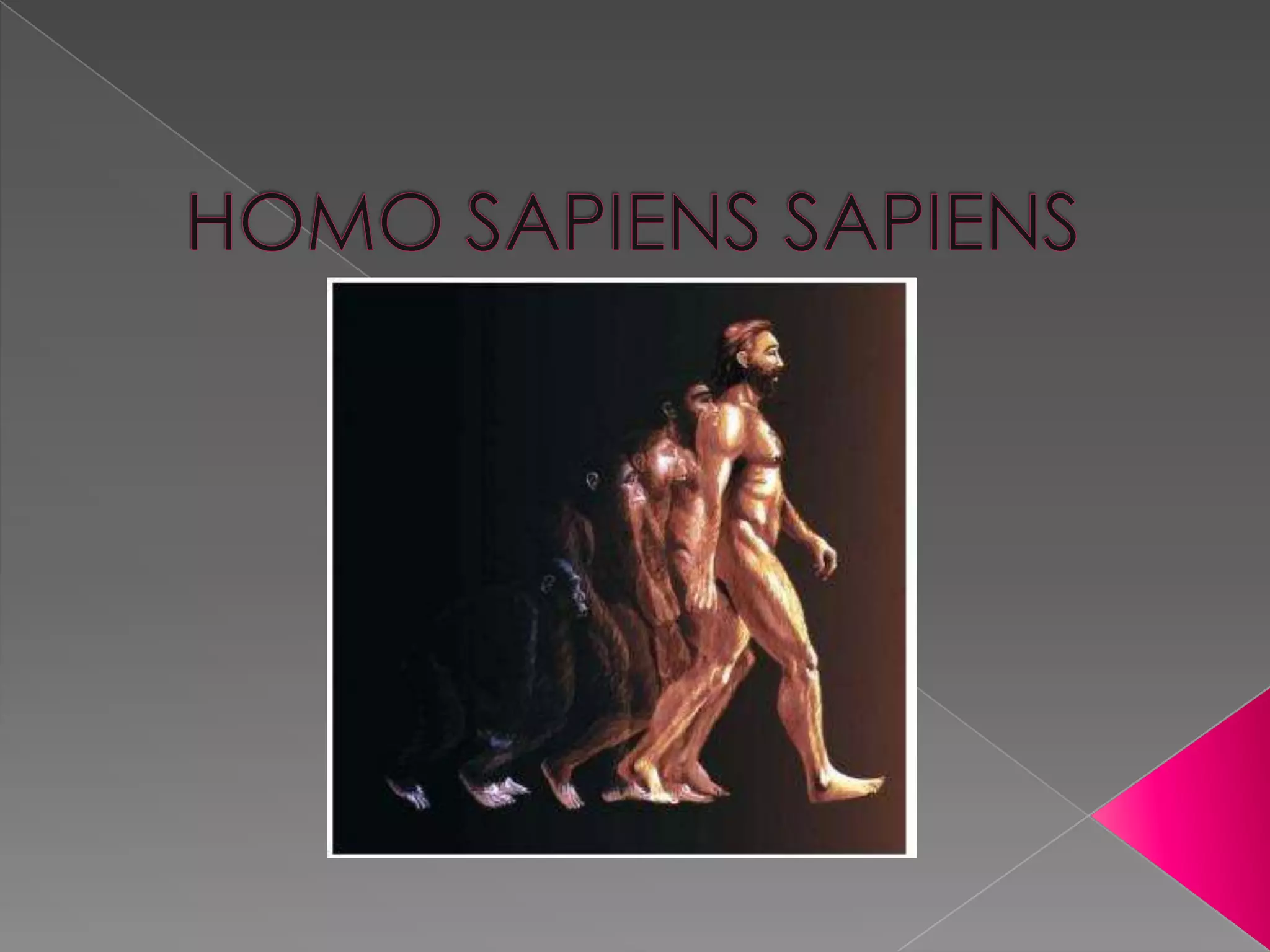
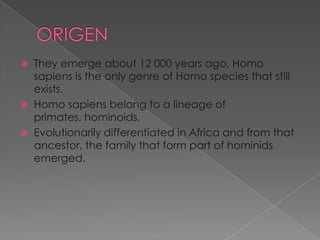
They emerge about 12 000 years ago, Homo
sapiens is the only genre of Homo species that still
exists.
Homo sapiens belong to a lineage of
primates, hominoids.
Evolutionarily differentiated in Africa and from that
ancestor, the family that form part of hominids
emerged.


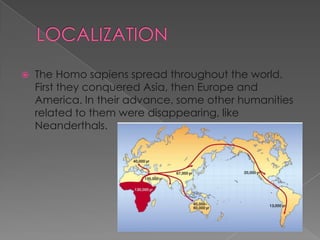
The Homo sapiens spread throughout the world.
First they conquered Asia, then Europe and
America. In their advance, some other humanities
related to them were disappearing, like
Neanderthals.


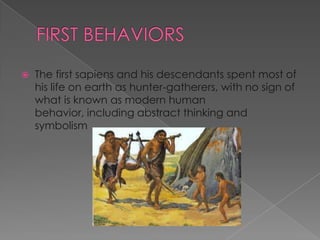
The first sapiens and his descendants spent most of
his life on earth as hunter-gatherers, with no sign of
what is known as modern human
behavior, including abstract thinking and
symbolism


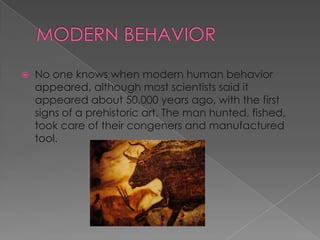
No one knows when modern human behavior
appeared, although most scientists said it
appeared about 50,000 years ago, with the first
signs of a prehistoric art. The man hunted, fished,
took care of their congeners and manufactured
tool.





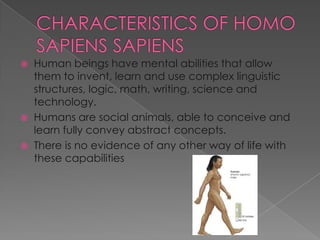
Human beings have mental abilities that allow
them to invent, learn and use complex linguistic
structures, logic, math, writing, science and
technology.
Humans are social animals, able to conceive and
learn fully convey abstract concepts.
There is no evidence of any other way of life with
these capabilities


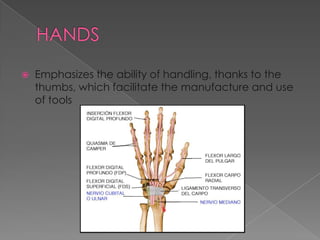
Emphasizes the ability of handling, thanks to the
thumbs, which facilitate the manufacture and use
of tools
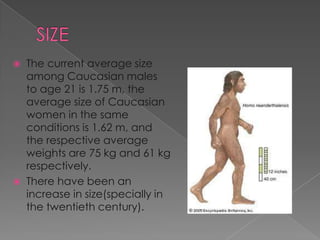
The current average size
among Caucasian males
to age 21 is 1.75 m, the
average size of Caucasian
women in the same
conditions is 1.62 m, and
the respective average
weights are 75 kg and 61 kg
respectively.
 There have been an
increase in size(specially in
the twentieth century).

Homo sapiens sapiens

Homo sapiens sapiens

  • 2.
     Humans are, froma biological point of view, an animal specie whose scientific name is Homo Sapiens.  They are also known under the generic name of "men", this term is also used to refer to adults males.
  • 3.
       They emerge about12 000 years ago, Homo sapiens is the only genre of Homo species that still exists. Homo sapiens belong to a lineage of primates, hominoids. Evolutionarily differentiated in Africa and from that ancestor, the family that form part of hominids emerged.
  • 4.
     The Homo sapiensspread throughout the world. First they conquered Asia, then Europe and America. In their advance, some other humanities related to them were disappearing, like Neanderthals.
  • 5.
     The first sapiensand his descendants spent most of his life on earth as hunter-gatherers, with no sign of what is known as modern human behavior, including abstract thinking and symbolism
  • 6.
     No one knowswhen modern human behavior appeared, although most scientists said it appeared about 50,000 years ago, with the first signs of a prehistoric art. The man hunted, fished, took care of their congeners and manufactured tool.
  • 7.
       Human beings havemental abilities that allow them to invent, learn and use complex linguistic structures, logic, math, writing, science and technology. Humans are social animals, able to conceive and learn fully convey abstract concepts. There is no evidence of any other way of life with these capabilities
  • 8.
     Emphasizes the abilityof handling, thanks to the thumbs, which facilitate the manufacture and use of tools
  • 9.
    The current averagesize among Caucasian males to age 21 is 1.75 m, the average size of Caucasian women in the same conditions is 1.62 m, and the respective average weights are 75 kg and 61 kg respectively.  There have been an increase in size(specially in the twentieth century). 