PRESENTED BY
SRIRAJ.M
14MAT008
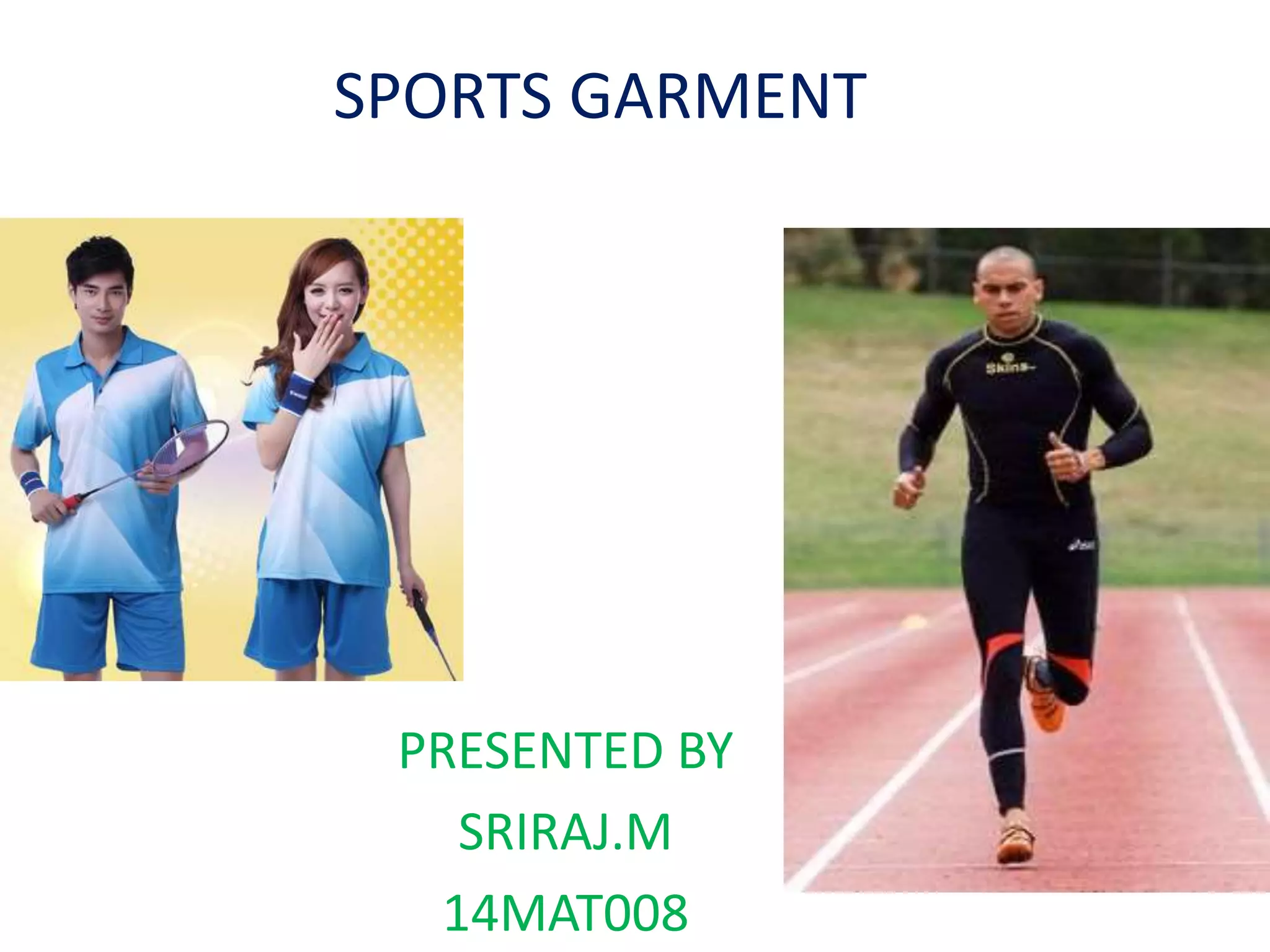
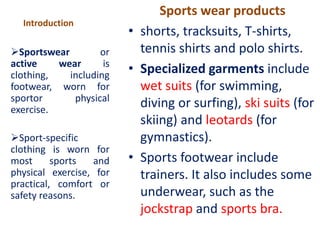
SPORTS GARMENT
Introduction
Sports wear products
• shorts, tracksuits, T-shirts,
tennis shirts and polo shirts.
• Specialized garments include
wet suits (for swimming,
diving or surfing), ski suits (for
skiing) and leotards (for
gymnastics).
• Sports footwear include
trainers. It also includes some
underwear, such as the
jockstrap and sports bra.
Sportswear or
active wear is
clothing, including
footwear, worn for
sportor physical
exercise.
Sport-specific
clothing is worn for
most sports and
physical exercise, for
practical, comfort or
safety reasons.
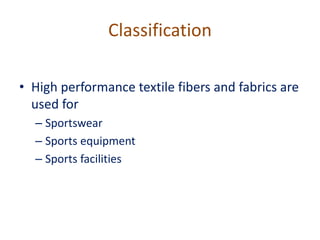
Classification
• High performance textile fibers and fabrics are
used for
– Sportswear
– Sports equipment
– Sports facilities
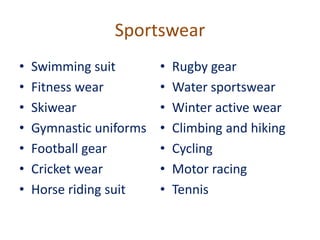
Sportswear
• Swimming suit
• Fitness wear
• Skiwear
• Gymnastic uniforms
• Football gear
• Cricket wear
• Horse riding suit
• Rugby gear
• Water sportswear
• Winter active wear
• Climbing and hiking
• Cycling
• Motor racing
• Tennis
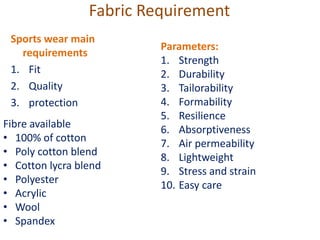
Fabric Requirement
Fibre available
• 100% of cotton
• Poly cotton blend
• Cotton lycra blend
• Polyester
• Acrylic
• Wool
• Spandex
Parameters:
1. Strength
2. Durability
3. Tailorability
4. Formability
5. Resilience
6. Absorptiveness
7. Air permeability
8. Lightweight
9. Stress and strain
10. Easy care
Sports wear main
requirements
1. Fit
2. Quality
3. protection
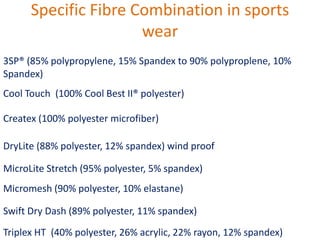
Specific Fibre Combination in sports
wear
3SP® (85% polypropylene, 15% Spandex to 90% polyproplene, 10%
Spandex)
Cool Touch (100% Cool Best II® polyester)
Createx (100% polyester microfiber)
DryLite (88% polyester, 12% spandex) wind proof
MicroLite Stretch (95% polyester, 5% spandex)
Micromesh (90% polyester, 10% elastane)
Swift Dry Dash (89% polyester, 11% spandex)
Triplex HT (40% polyester, 26% acrylic, 22% rayon, 12% spandex)
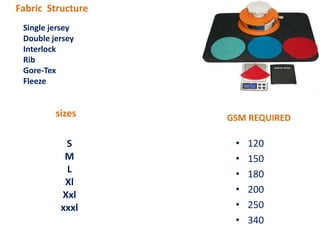
GSM REQUIRED
Single jersey
Double jersey
Interlock
Rib
Gore-Tex
Fleeze
• 120
• 150
• 180
• 200
• 250
• 340
Fabric Structure
sizes
S
M
L
Xl
Xxl
xxxl
Thermal properties
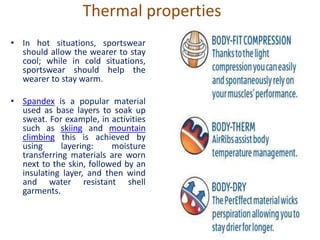
• In hot situations, sportswear
should allow the wearer to stay
cool; while in cold situations,
sportswear should help the
wearer to stay warm.
• Spandex is a popular material
used as base layers to soak up
sweat. For example, in activities
such as skiing and mountain
climbing this is achieved by
using layering: moisture
transferring materials are worn
next to the skin, followed by an
insulating layer, and then wind
and water resistant shell
garments.
Moisture-wicking fabrics
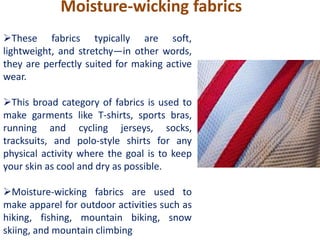
These fabrics typically are soft,
lightweight, and stretchy—in other words,
they are perfectly suited for making active
wear.
This broad category of fabrics is used to
make garments like T-shirts, sports bras,
running and cycling jerseys, socks,
tracksuits, and polo-style shirts for any
physical activity where the goal is to keep
your skin as cool and dry as possible.
Moisture-wicking fabrics are used to
make apparel for outdoor activities such as
hiking, fishing, mountain biking, snow
skiing, and mountain climbing
Production sequence
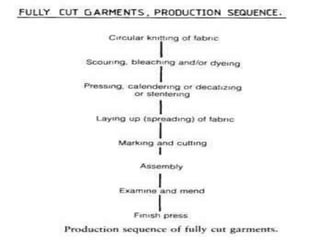
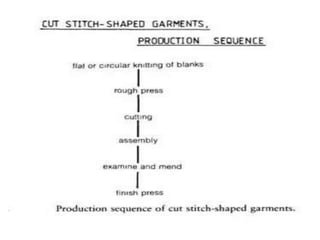
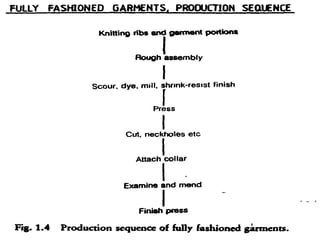
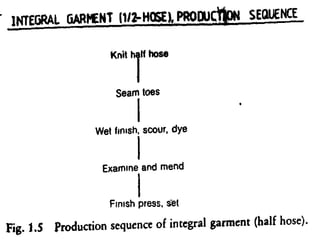
1. Fully cut
2. Cut stitch shaped
3. Fully fashioned
4. Integral garment
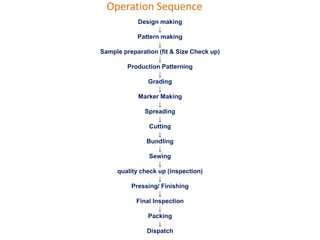
Design making
↓
Pattern making
↓
Sample preparation (fit & Size Check up)
↓
Production Patterning
↓
Grading
↓
Marker Making
↓
Spreading
↓
Cutting
↓
Bundling
↓
Sewing
↓
quality check up (inspection)
↓
Pressing/ Finishing
↓
Final Inspection
↓
Packing
↓
Dispatch
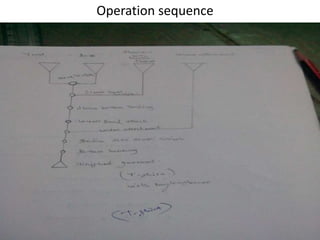
Operation Sequence
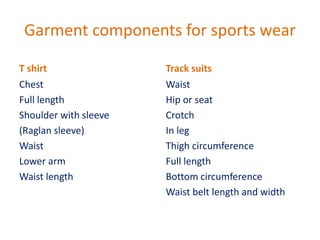
Garment components for sports wear
T shirt
Chest
Full length
Shoulder with sleeve
(Raglan sleeve)
Waist
Lower arm
Waist length
Track suits
Waist
Hip or seat
Crotch
In leg
Thigh circumference
Full length
Bottom circumference
Waist belt length and width
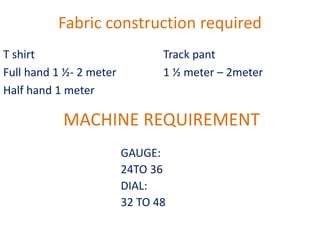
Fabric construction required
T shirt
Full hand 1 ½- 2 meter
Half hand 1 meter
Track pant
1 ½ meter – 2meter
MACHINE REQUIREMENT
GAUGE:
24TO 36
DIAL:
32 TO 48
Operation sequence
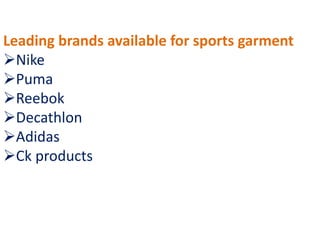
Leading brands available for sports garment
Nike
Puma
Reebok
Decathlon
Adidas
Ck products
STITCHES AND SEAMS AVAILABLE FOR
SPORTS GARMENTS
STITCHES
1. SNLS STITCH
2. OVER LOCK
3. FLAT LOCK
4. CHAIN STITCH
5. ZIGZAG STITCH
SEAMS
1. PLAIN SEAM
2. DOUBLE SEAM
3. SUPER IMPOSED SEAM
4. BOUND SEAM
5. TURN OVER SEAM
Now a days sports garment preferred for such a
things
1. Compression garment
2. Performance enhancing garment
Result and Discussion
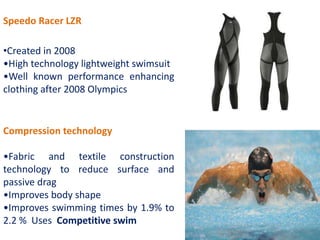
Speedo Racer LZR
•Created in 2008
•High technology lightweight swimsuit
•Well known performance enhancing
clothing after 2008 Olympics
Compression technology
•Fabric and textile construction
technology to reduce surface and
passive drag
•Improves body shape
•Improves swimming times by 1.9% to
2.2 % Uses Competitive swim
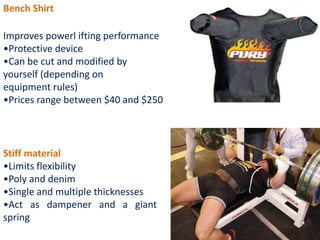
Bench Shirt
Improves powerl ifting performance
•Protective device
•Can be cut and modified by
yourself (depending on
equipment rules)
•Prices range between $40 and $250
Stiff material
•Limits flexibility
•Poly and denim
•Single and multiple thicknesses
•Act as dampener and a giant
spring
The use of bench shirts are debated
•Improve power lifting performance by approximately 10% to 30%
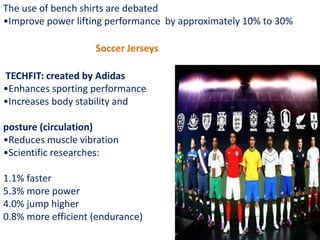
Soccer Jerseys
TECHFIT: created by Adidas
•Enhances sporting performance
•Increases body stability and
posture (circulation)
•Reduces muscle vibration
•Scientific researches:
1.1% faster
5.3% more power
4.0% jump higher
0.8% more efficient (endurance)
Conclusion
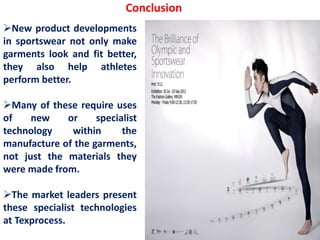
New product developments
in sportswear not only make
garments look and fit better,
they also help athletes
perform better.
Many of these require uses
of new or specialist
technology within the
manufacture of the garments,
not just the materials they
were made from.
The market leaders present
these specialist technologies
at Texprocess.
Sports garment

Sports garment

  • 1.
  • 2.
    Introduction Sports wear products •shorts, tracksuits, T-shirts, tennis shirts and polo shirts. • Specialized garments include wet suits (for swimming, diving or surfing), ski suits (for skiing) and leotards (for gymnastics). • Sports footwear include trainers. It also includes some underwear, such as the jockstrap and sports bra. Sportswear or active wear is clothing, including footwear, worn for sportor physical exercise. Sport-specific clothing is worn for most sports and physical exercise, for practical, comfort or safety reasons.
  • 3.
    Classification • High performancetextile fibers and fabrics are used for – Sportswear – Sports equipment – Sports facilities
  • 4.
    Sportswear • Swimming suit •Fitness wear • Skiwear • Gymnastic uniforms • Football gear • Cricket wear • Horse riding suit • Rugby gear • Water sportswear • Winter active wear • Climbing and hiking • Cycling • Motor racing • Tennis
  • 5.
    Fabric Requirement Fibre available •100% of cotton • Poly cotton blend • Cotton lycra blend • Polyester • Acrylic • Wool • Spandex Parameters: 1. Strength 2. Durability 3. Tailorability 4. Formability 5. Resilience 6. Absorptiveness 7. Air permeability 8. Lightweight 9. Stress and strain 10. Easy care Sports wear main requirements 1. Fit 2. Quality 3. protection
  • 6.
    Specific Fibre Combinationin sports wear 3SP® (85% polypropylene, 15% Spandex to 90% polyproplene, 10% Spandex) Cool Touch (100% Cool Best II® polyester) Createx (100% polyester microfiber) DryLite (88% polyester, 12% spandex) wind proof MicroLite Stretch (95% polyester, 5% spandex) Micromesh (90% polyester, 10% elastane) Swift Dry Dash (89% polyester, 11% spandex) Triplex HT (40% polyester, 26% acrylic, 22% rayon, 12% spandex)
  • 7.
    GSM REQUIRED Single jersey Doublejersey Interlock Rib Gore-Tex Fleeze • 120 • 150 • 180 • 200 • 250 • 340 Fabric Structure sizes S M L Xl Xxl xxxl
  • 8.
    Thermal properties • Inhot situations, sportswear should allow the wearer to stay cool; while in cold situations, sportswear should help the wearer to stay warm. • Spandex is a popular material used as base layers to soak up sweat. For example, in activities such as skiing and mountain climbing this is achieved by using layering: moisture transferring materials are worn next to the skin, followed by an insulating layer, and then wind and water resistant shell garments.
  • 9.
    Moisture-wicking fabrics These fabricstypically are soft, lightweight, and stretchy—in other words, they are perfectly suited for making active wear. This broad category of fabrics is used to make garments like T-shirts, sports bras, running and cycling jerseys, socks, tracksuits, and polo-style shirts for any physical activity where the goal is to keep your skin as cool and dry as possible. Moisture-wicking fabrics are used to make apparel for outdoor activities such as hiking, fishing, mountain biking, snow skiing, and mountain climbing
  • 10.
    Production sequence 1. Fullycut 2. Cut stitch shaped 3. Fully fashioned 4. Integral garment
  • 15.
    Design making ↓ Pattern making ↓ Samplepreparation (fit & Size Check up) ↓ Production Patterning ↓ Grading ↓ Marker Making ↓ Spreading ↓ Cutting ↓ Bundling ↓ Sewing ↓ quality check up (inspection) ↓ Pressing/ Finishing ↓ Final Inspection ↓ Packing ↓ Dispatch Operation Sequence
  • 16.
    Garment components forsports wear T shirt Chest Full length Shoulder with sleeve (Raglan sleeve) Waist Lower arm Waist length Track suits Waist Hip or seat Crotch In leg Thigh circumference Full length Bottom circumference Waist belt length and width
  • 17.
    Fabric construction required Tshirt Full hand 1 ½- 2 meter Half hand 1 meter Track pant 1 ½ meter – 2meter MACHINE REQUIREMENT GAUGE: 24TO 36 DIAL: 32 TO 48
  • 18.
  • 20.
    Leading brands availablefor sports garment Nike Puma Reebok Decathlon Adidas Ck products
  • 21.
    STITCHES AND SEAMSAVAILABLE FOR SPORTS GARMENTS STITCHES 1. SNLS STITCH 2. OVER LOCK 3. FLAT LOCK 4. CHAIN STITCH 5. ZIGZAG STITCH SEAMS 1. PLAIN SEAM 2. DOUBLE SEAM 3. SUPER IMPOSED SEAM 4. BOUND SEAM 5. TURN OVER SEAM
  • 22.
    Now a dayssports garment preferred for such a things 1. Compression garment 2. Performance enhancing garment Result and Discussion
  • 23.
    Speedo Racer LZR •Createdin 2008 •High technology lightweight swimsuit •Well known performance enhancing clothing after 2008 Olympics Compression technology •Fabric and textile construction technology to reduce surface and passive drag •Improves body shape •Improves swimming times by 1.9% to 2.2 % Uses Competitive swim
  • 24.
    Bench Shirt Improves powerlifting performance •Protective device •Can be cut and modified by yourself (depending on equipment rules) •Prices range between $40 and $250 Stiff material •Limits flexibility •Poly and denim •Single and multiple thicknesses •Act as dampener and a giant spring
  • 25.
    The use ofbench shirts are debated •Improve power lifting performance by approximately 10% to 30% Soccer Jerseys TECHFIT: created by Adidas •Enhances sporting performance •Increases body stability and posture (circulation) •Reduces muscle vibration •Scientific researches: 1.1% faster 5.3% more power 4.0% jump higher 0.8% more efficient (endurance)
  • 26.
    Conclusion New product developments insportswear not only make garments look and fit better, they also help athletes perform better. Many of these require uses of new or specialist technology within the manufacture of the garments, not just the materials they were made from. The market leaders present these specialist technologies at Texprocess.