PRESENTED BY
GROUP B
M.BILAL
TARIQ
MOHSIN
ASHRAF
FAHAD
SULTAN SUFIAN
IQBAL
M.NAVEE
D
THE HUMAN EAR
PRESENTATION TOPIC:
THE HUMAN EAR
The organ humans use to
detect sound.
PARTS OF HUMANEAR
Outer Ear (pinna and ear
canal)
Middle Ear(Ear Drum,
Ossicles, Oval Window)
Inner Ear(semi-circular
canal,cochlea,auditory
nerve)
OUTER EAR
Pinna-The visible part of the outer ear. It collects sound and directs it into the outer ear canal.
Ear Canal- The tube through which sound travels to the eardrum
Outer Layer Of Eardrum- (tympanic membrane) vibrates when sound
waves reach it
MIDDLE EAR
EARDRUM
Also called the tympanic membrane or
myringa.
It is a thin (8-10 mm in diameter), cone-shaped
membrane.
EARDRUM: separates the external ear from
the middle ear.
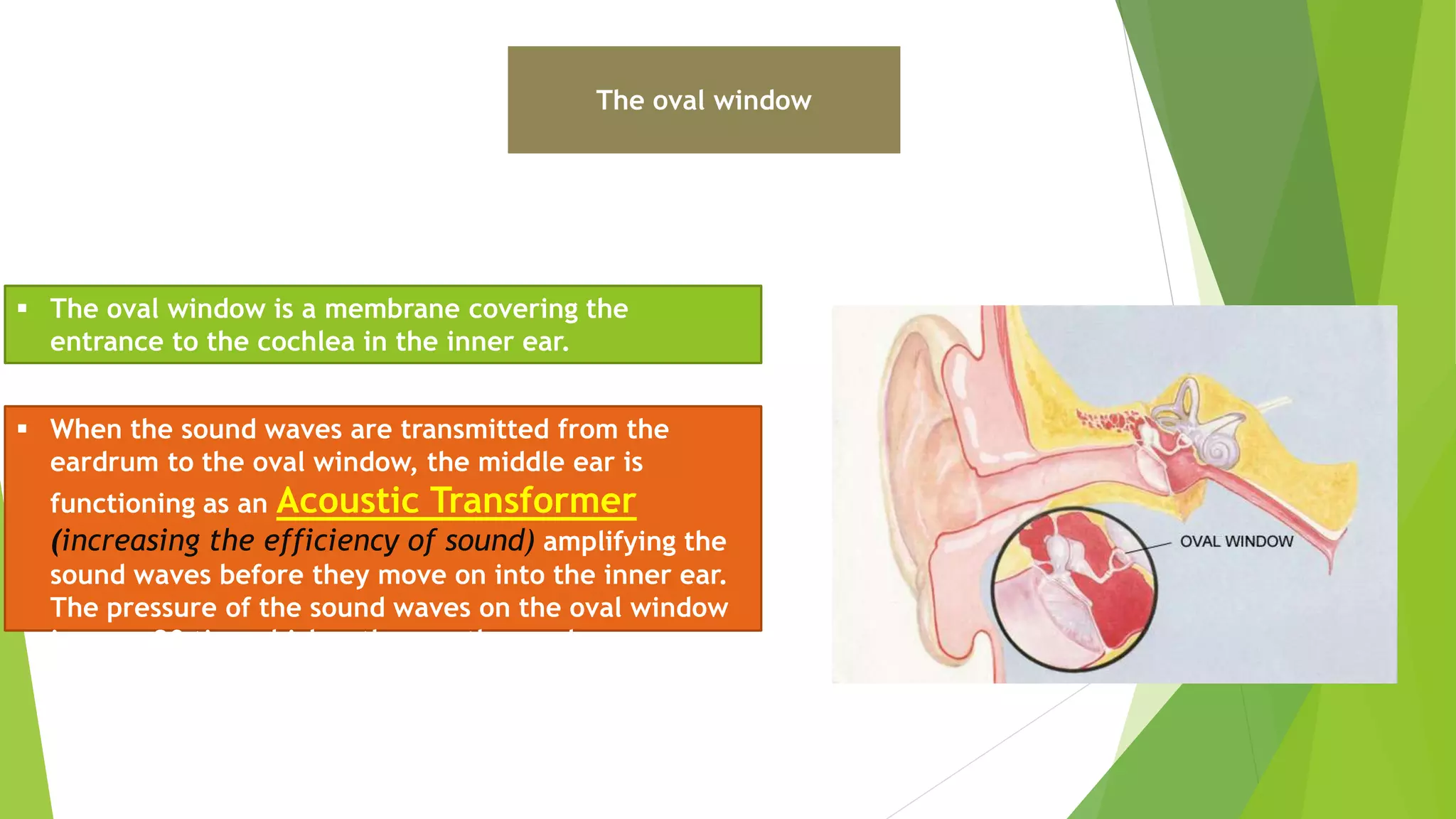
The oval window
 The oval window is a membrane covering the
entrance to the cochlea in the inner ear.
 When the sound waves are transmitted from the
eardrum to the oval window, the middle ear is
functioning as an Acoustic Transformer
(increasing the efficiency of sound) amplifying the
sound waves before they move on into the inner ear.
The pressure of the sound waves on the oval window
is some 20 times higher than on the eardrum.
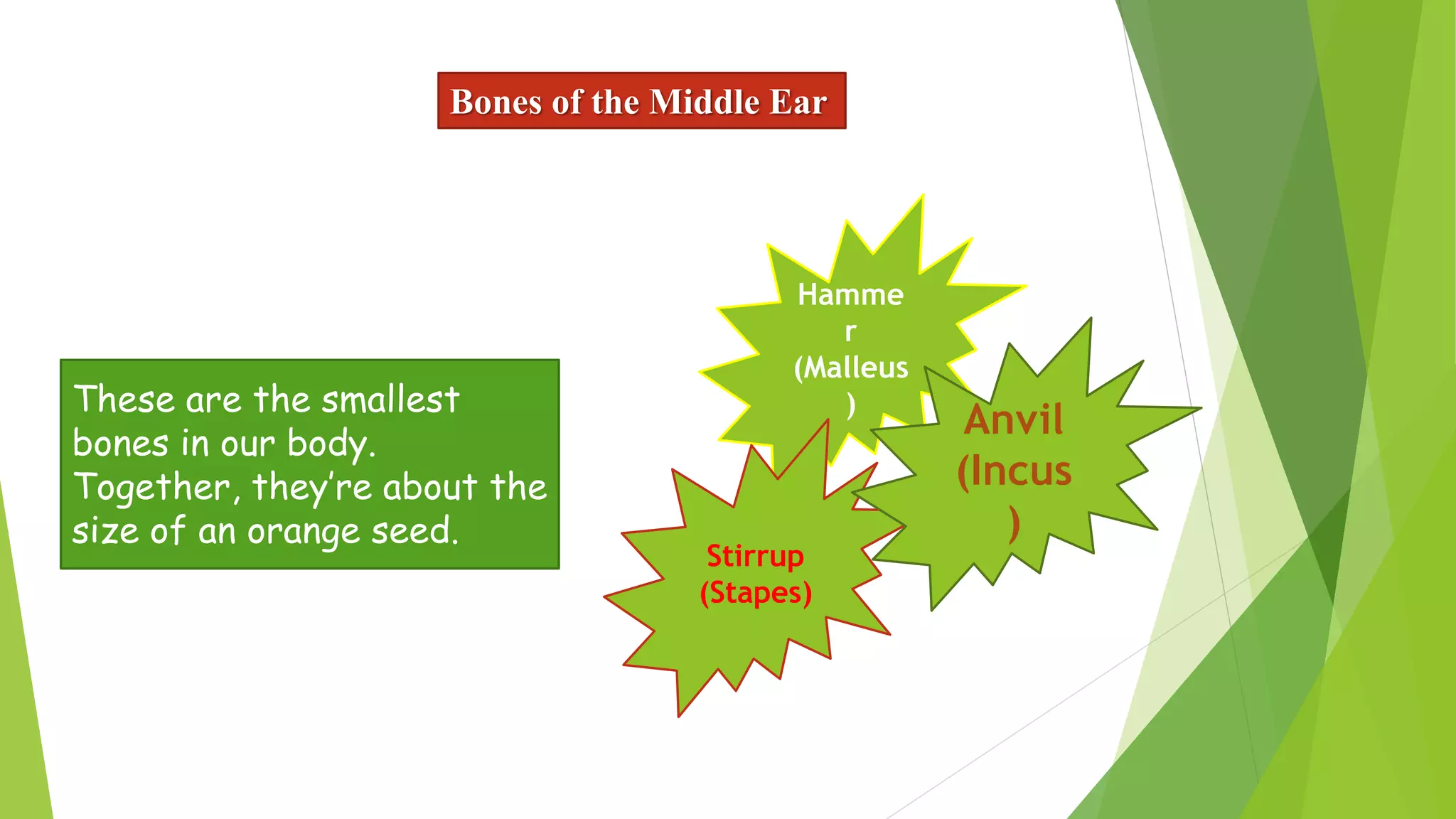
Bones of the Middle Ear
Hamme
r
(Malleus
)
Stirrup
(Stapes)
Anvil
(Incus
)
These are the smallest
bones in our body.
Together, they’re about the
size of an orange seed.
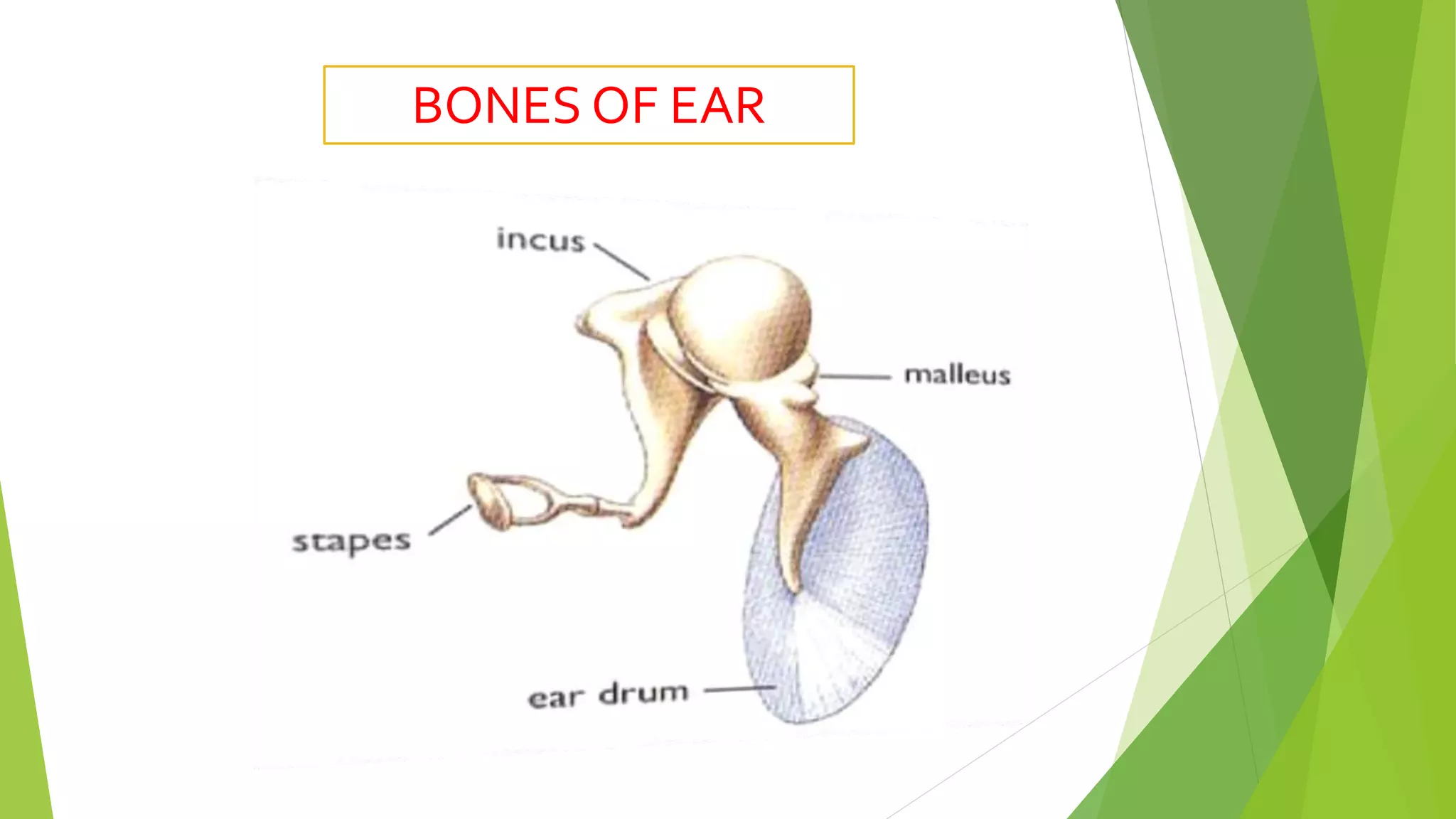
Hammer
(Malleus)-
BONES OF EAR
HowSound Travels in the Middle Ear
When sound waves reach the middle ear, they cause the
eardrum to vibrate.
This vibration then causes the three bones to vibrate.
These vibrations are transformed into
longitudinal/pressure waves in the middle ear.
THE INNER EAR
Two main
parts:
Cochlea
Auditory
Nerve
The Inner Ear Is The Innermost Part Of
The Ear.
The inner ear structure called the cochlea is a
snail-shell like structure divided into three
fluid-filled parts.
 Two are canals for the transmission of
pressure and in the third is the sensitive organ
of Corti, which detects pressure impulses and
responds with electrical impulses which
travel along the auditory nerve to the brain.
The Cochlea
Contains approximately 300,000 hair cells.
The Auditory Nerve
The cochlear (auditory ) nerve carries auditory sensory information
from the cochlea of the inner ear directly to the brain.
Fail to follow frequencies above 3 kHz.
CONT…
 The tiny hair cells of the cochlea are set in motion
by vibrations.
 The vibrations stimulate tiny nerve cells.
 The nerve cells then send signals along the auditory nerve
to the brain
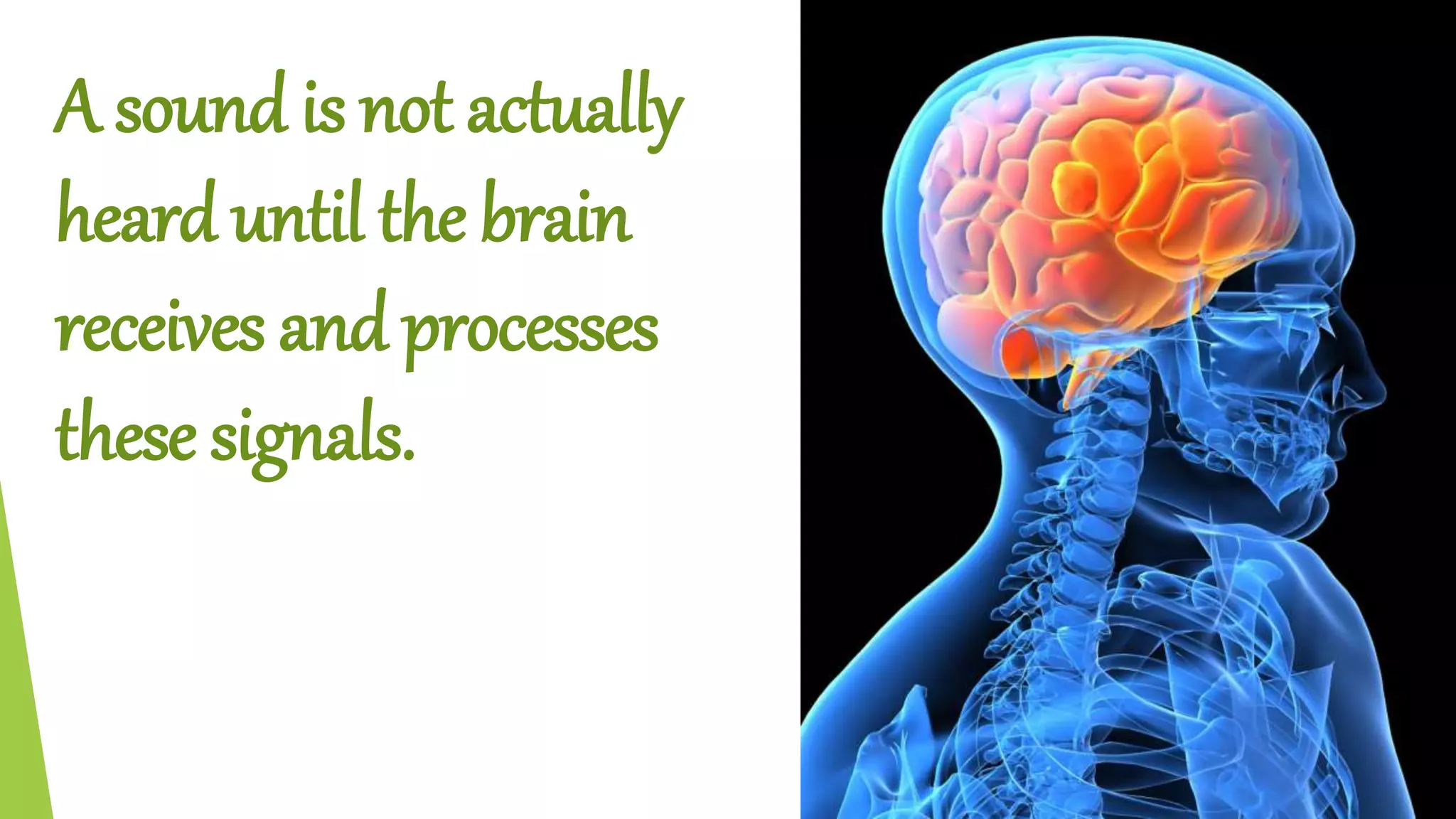
A sound is not actually
heard until the brain
receives and processes
these signals.
THANKS FOR
WATCHING!!!
ANY QUESTION?

Human Ear

  • 1.
  • 2.
  • 3.
    THE HUMAN EAR Theorgan humans use to detect sound.
  • 4.
    PARTS OF HUMANEAR OuterEar (pinna and ear canal) Middle Ear(Ear Drum, Ossicles, Oval Window) Inner Ear(semi-circular canal,cochlea,auditory nerve)
  • 5.
    OUTER EAR Pinna-The visiblepart of the outer ear. It collects sound and directs it into the outer ear canal. Ear Canal- The tube through which sound travels to the eardrum Outer Layer Of Eardrum- (tympanic membrane) vibrates when sound waves reach it
  • 6.
    MIDDLE EAR EARDRUM Also calledthe tympanic membrane or myringa. It is a thin (8-10 mm in diameter), cone-shaped membrane. EARDRUM: separates the external ear from the middle ear.
  • 7.
    The oval window The oval window is a membrane covering the entrance to the cochlea in the inner ear.  When the sound waves are transmitted from the eardrum to the oval window, the middle ear is functioning as an Acoustic Transformer (increasing the efficiency of sound) amplifying the sound waves before they move on into the inner ear. The pressure of the sound waves on the oval window is some 20 times higher than on the eardrum.
  • 8.
    Bones of theMiddle Ear Hamme r (Malleus ) Stirrup (Stapes) Anvil (Incus ) These are the smallest bones in our body. Together, they’re about the size of an orange seed.
  • 9.
  • 10.
  • 11.
    HowSound Travels inthe Middle Ear When sound waves reach the middle ear, they cause the eardrum to vibrate. This vibration then causes the three bones to vibrate. These vibrations are transformed into longitudinal/pressure waves in the middle ear.
  • 12.
    THE INNER EAR Twomain parts: Cochlea Auditory Nerve The Inner Ear Is The Innermost Part Of The Ear.
  • 13.
    The inner earstructure called the cochlea is a snail-shell like structure divided into three fluid-filled parts.  Two are canals for the transmission of pressure and in the third is the sensitive organ of Corti, which detects pressure impulses and responds with electrical impulses which travel along the auditory nerve to the brain. The Cochlea Contains approximately 300,000 hair cells.
  • 14.
    The Auditory Nerve Thecochlear (auditory ) nerve carries auditory sensory information from the cochlea of the inner ear directly to the brain. Fail to follow frequencies above 3 kHz.
  • 15.
    CONT…  The tinyhair cells of the cochlea are set in motion by vibrations.  The vibrations stimulate tiny nerve cells.  The nerve cells then send signals along the auditory nerve to the brain
  • 16.
    A sound isnot actually heard until the brain receives and processes these signals.
  • 17.
  • 18.