Human digestion process
Introduction Cephalic phase  - This phase occurs before food enters the stomach and involves preparation of the body for eating and digestion  Gastric phase  - This phase takes 3 to 4 hours. It is stimulated by distention of the stomach and alkaline  pH . Intestinal phase  - This phase has 2 parts, the excitatory and the inhibitory. Partially-digested food fills the  duodenum . This triggers intestinal gastrin to be released .
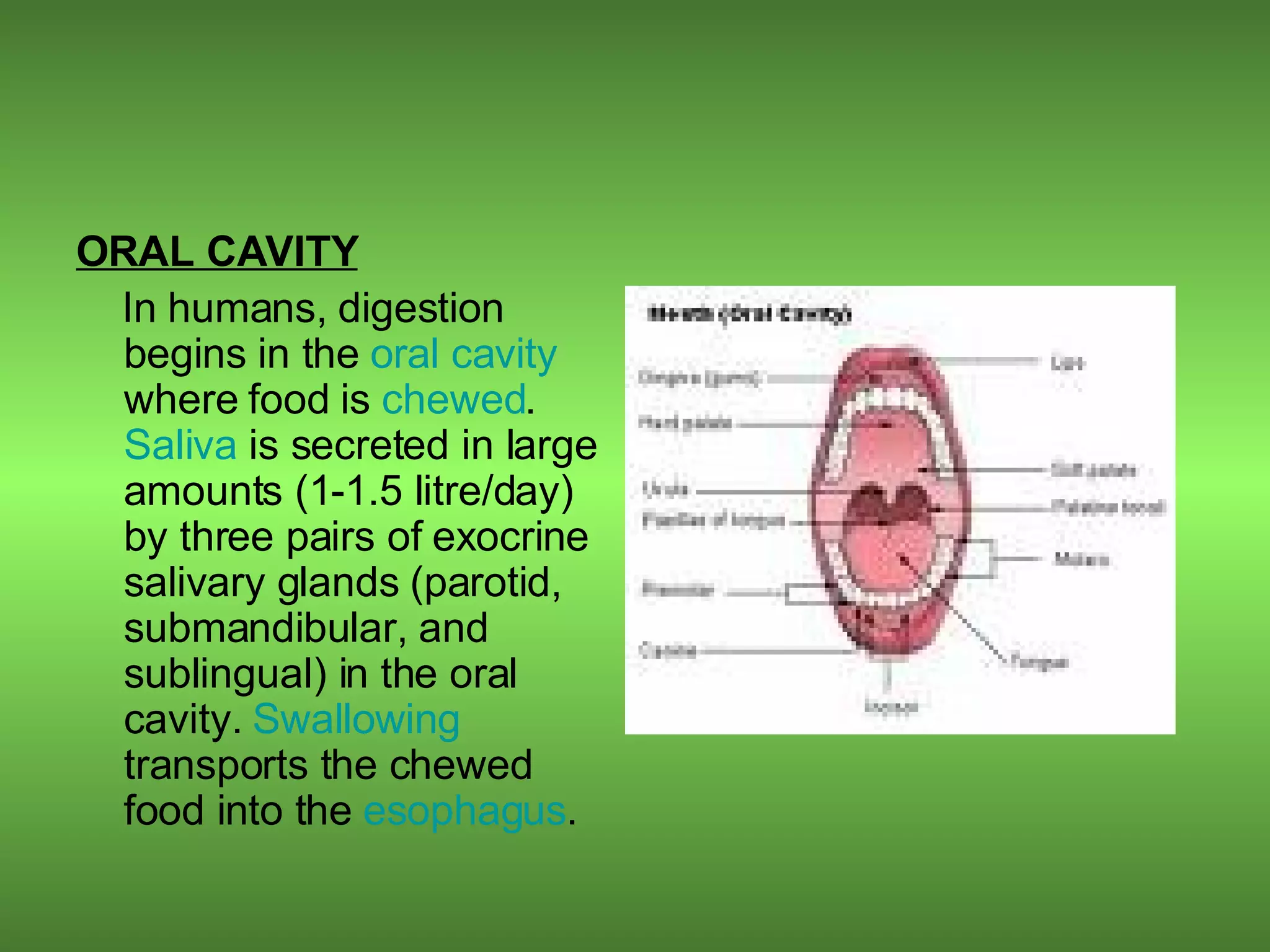
ORAL CAVITY   In humans, digestion begins in the  oral cavity  where food is  chewed .  Saliva  is secreted in large amounts (1-1.5 litre/day) by three pairs of exocrine salivary glands (parotid, submandibular, and sublingual) in the oral cavity.  Swallowing  transports the chewed food into the  esophagus .
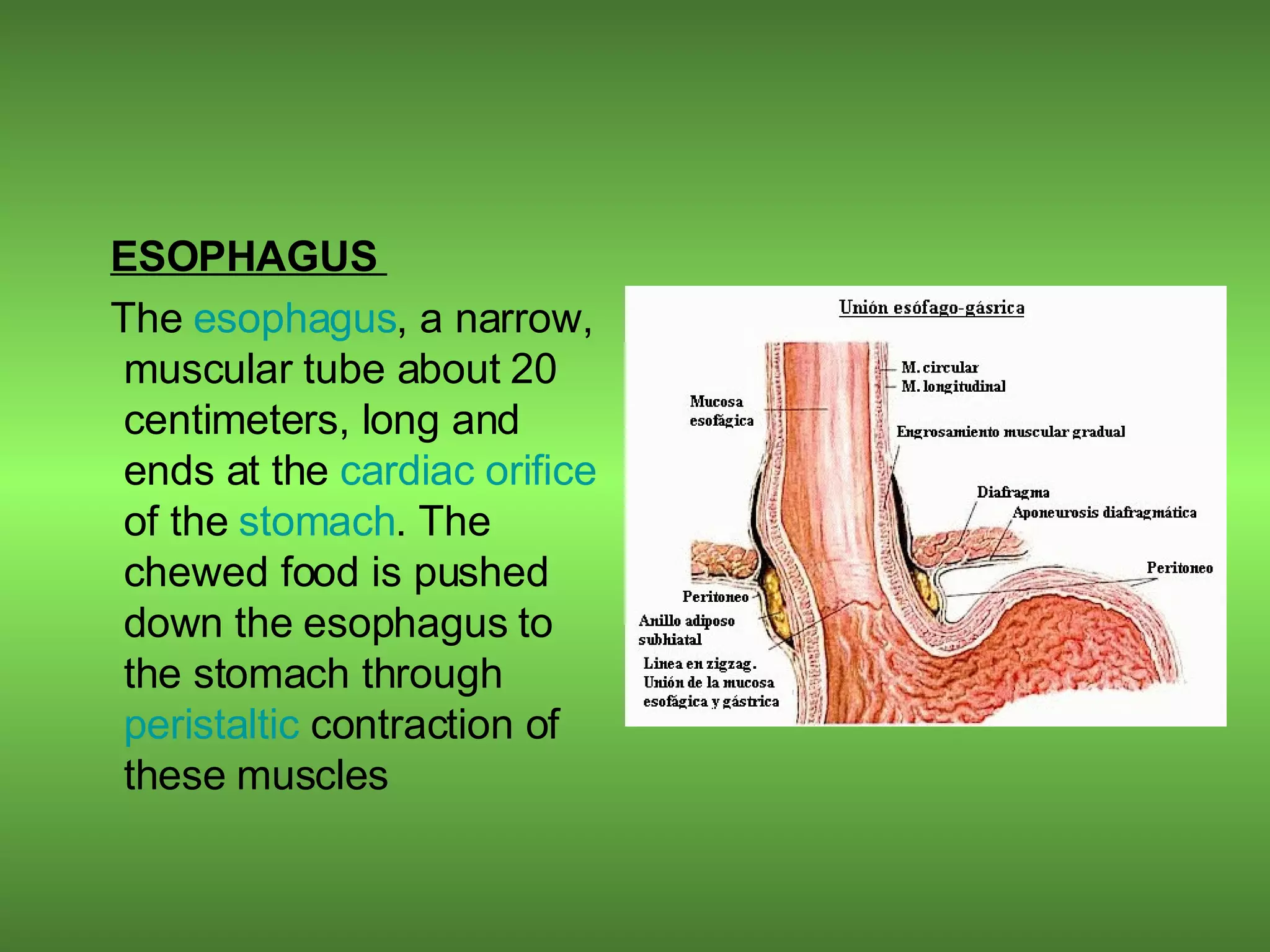
ESOPHAGUS  The  esophagus , a narrow, muscular tube about 20 centimeters, long and ends at the  cardiac orifice  of the  stomach . The chewed food is pushed down the esophagus to the stomach through  peristaltic  contraction of these muscles
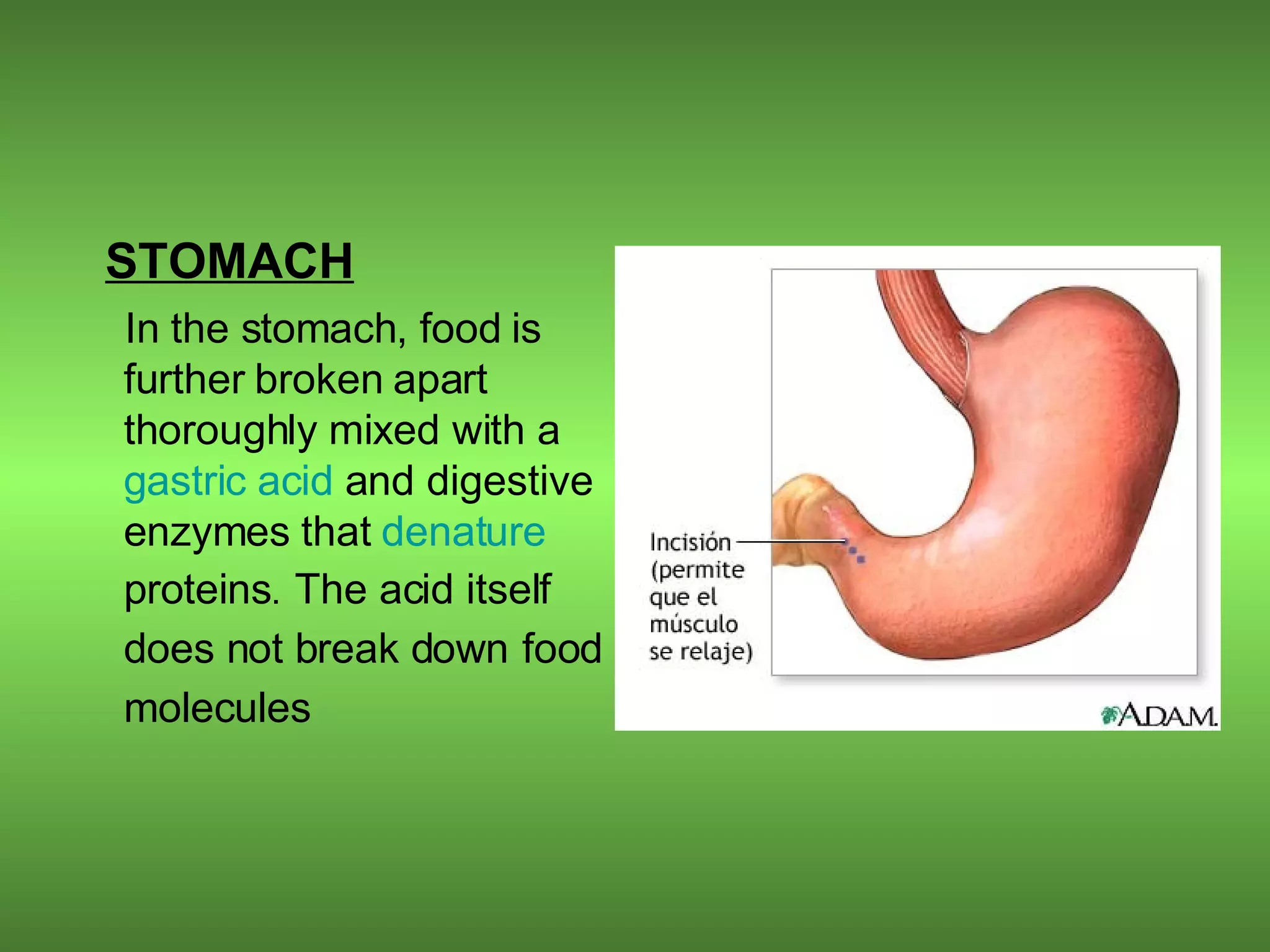
STOMACH In the stomach, food is further broken apart thoroughly mixed with a  gastric acid  and digestive enzymes that  denature   proteins .   The acid itself does not break down   food molecules
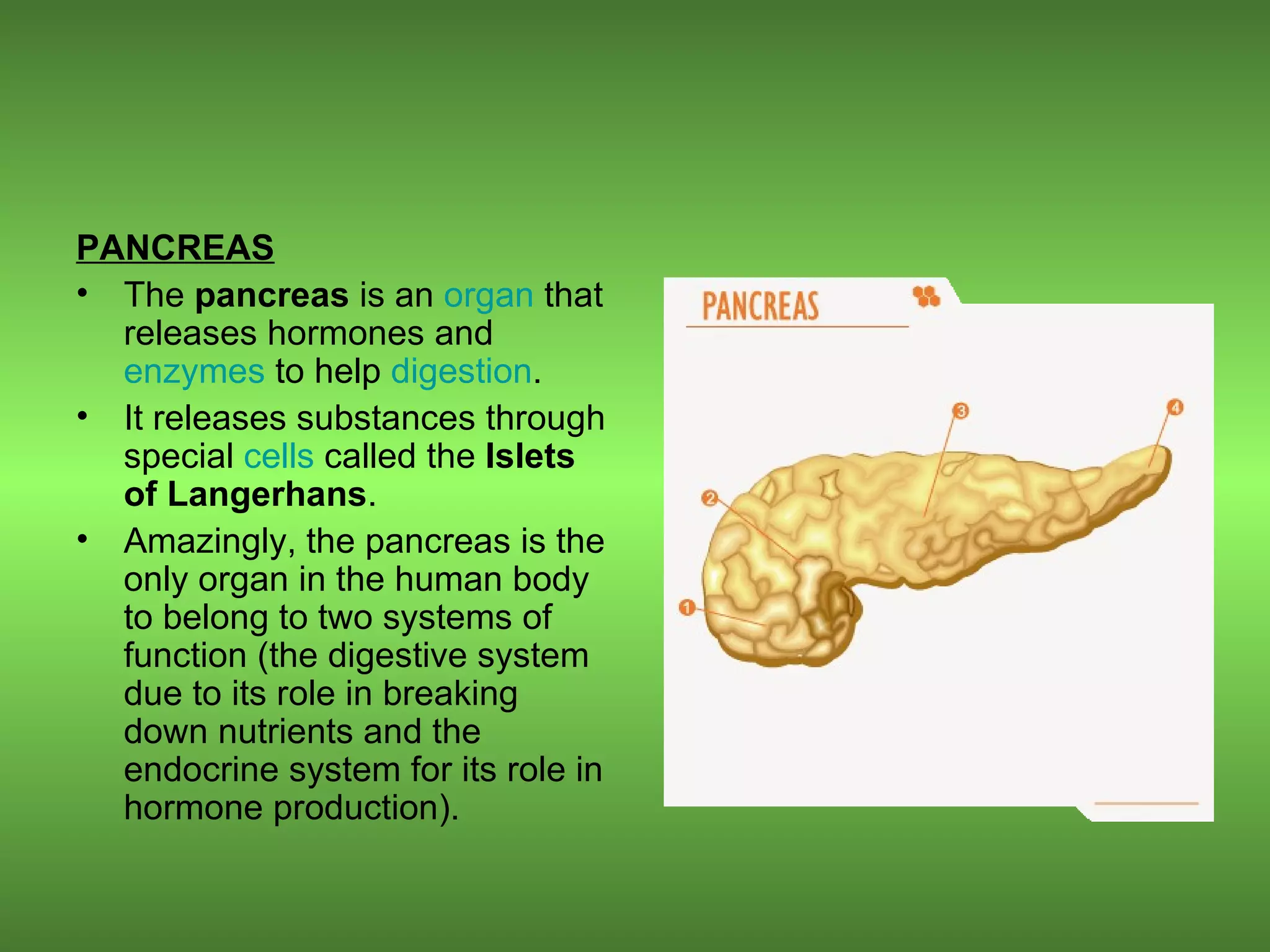
PANCREAS The  pancreas  is an  organ  that releases hormones and  enzymes  to help  digestion . It releases substances through special  cells  called the  Islets of Langerhans . Amazingly, the pancreas is the only organ in the human body to belong to two systems of function (the digestive system due to its role in breaking down nutrients and the endocrine system for its role in hormone production).
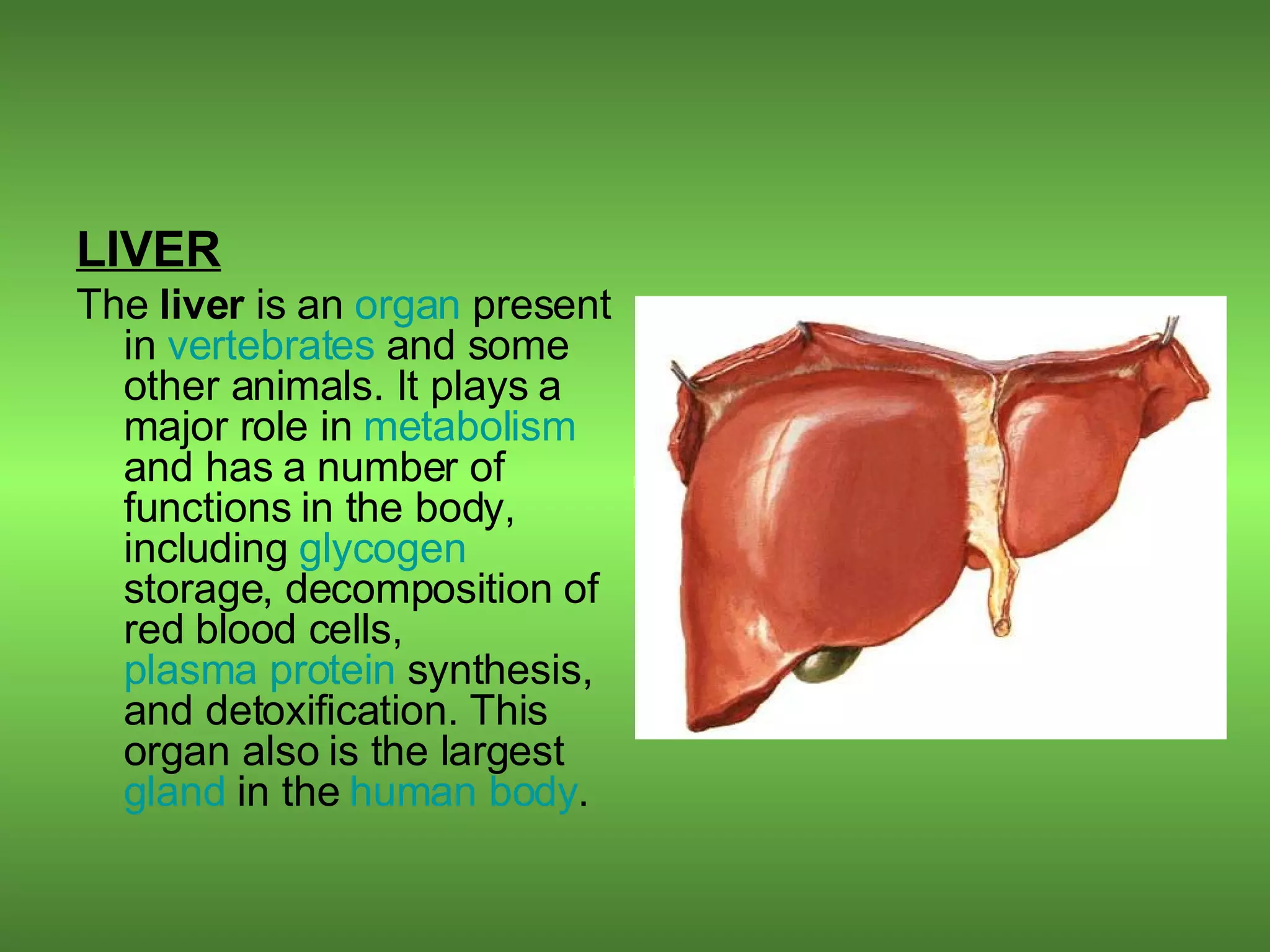
LIVER The  liver  is an  organ  present in  vertebrates  and some other animals. It plays a major role in  metabolism  and has a number of functions in the body, including  glycogen  storage, decomposition of red blood cells,  plasma protein  synthesis, and detoxification. This organ also is the largest  gland  in the  human body .
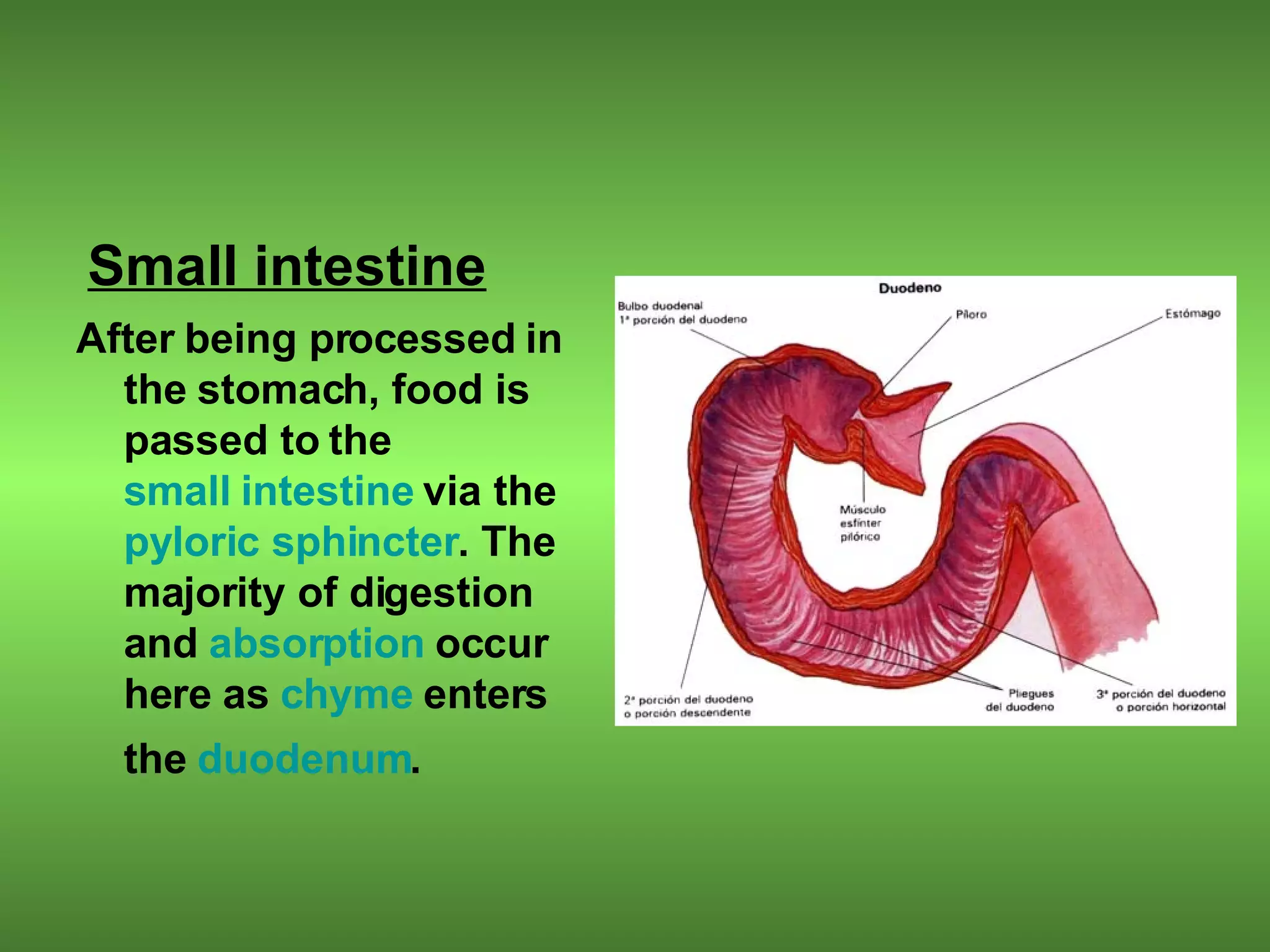
Small intestine After being processed in the stomach, food is passed to the  small intestine  via the  pyloric sphincter . The majority of digestion and  absorption  occur here as  chyme  enters the  duodenum .
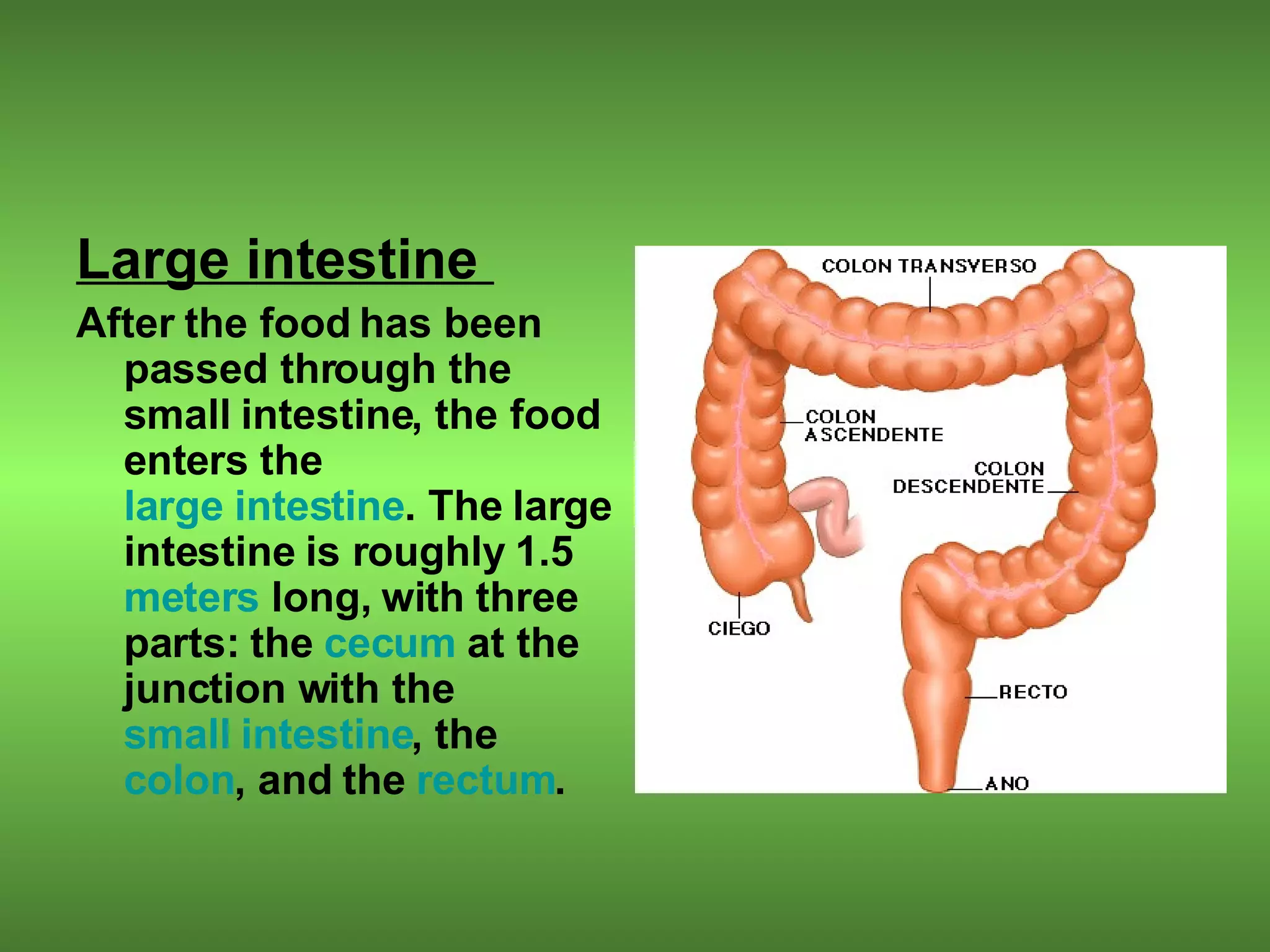
Large intestine  After the food has been passed through the small intestine, the food enters the  large intestine . The large intestine is roughly 1.5  meters  long, with three parts: the  cecum  at the junction with the  small intestine , the  colon , and the  rectum .
By… Araceli Carmona Ayora Cristina Alcaide Cabello Mª Aurora Carmona Muñoz Ana Belén Fernández Marín   3º A

Human Digestion Process C.Alcaide

  • 1.
  • 2.
    Introduction Cephalic phase - This phase occurs before food enters the stomach and involves preparation of the body for eating and digestion Gastric phase - This phase takes 3 to 4 hours. It is stimulated by distention of the stomach and alkaline pH . Intestinal phase - This phase has 2 parts, the excitatory and the inhibitory. Partially-digested food fills the duodenum . This triggers intestinal gastrin to be released .
  • 3.
    ORAL CAVITY In humans, digestion begins in the oral cavity where food is chewed . Saliva is secreted in large amounts (1-1.5 litre/day) by three pairs of exocrine salivary glands (parotid, submandibular, and sublingual) in the oral cavity. Swallowing transports the chewed food into the esophagus .
  • 4.
    ESOPHAGUS The esophagus , a narrow, muscular tube about 20 centimeters, long and ends at the cardiac orifice of the stomach . The chewed food is pushed down the esophagus to the stomach through peristaltic contraction of these muscles
  • 5.
    STOMACH In thestomach, food is further broken apart thoroughly mixed with a gastric acid and digestive enzymes that denature proteins . The acid itself does not break down food molecules
  • 6.
    PANCREAS The pancreas is an organ that releases hormones and enzymes to help digestion . It releases substances through special cells called the Islets of Langerhans . Amazingly, the pancreas is the only organ in the human body to belong to two systems of function (the digestive system due to its role in breaking down nutrients and the endocrine system for its role in hormone production).
  • 7.
    LIVER The liver is an organ present in vertebrates and some other animals. It plays a major role in metabolism and has a number of functions in the body, including glycogen storage, decomposition of red blood cells, plasma protein synthesis, and detoxification. This organ also is the largest gland in the human body .
  • 8.
    Small intestine Afterbeing processed in the stomach, food is passed to the small intestine via the pyloric sphincter . The majority of digestion and absorption occur here as chyme enters the duodenum .
  • 9.
    Large intestine After the food has been passed through the small intestine, the food enters the large intestine . The large intestine is roughly 1.5 meters long, with three parts: the cecum at the junction with the small intestine , the colon , and the rectum .
  • 10.
    By… Araceli CarmonaAyora Cristina Alcaide Cabello Mª Aurora Carmona Muñoz Ana Belén Fernández Marín 3º A