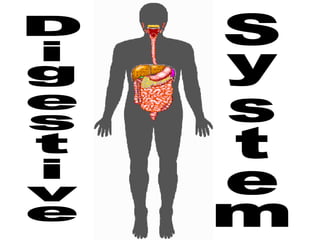
Digestive System
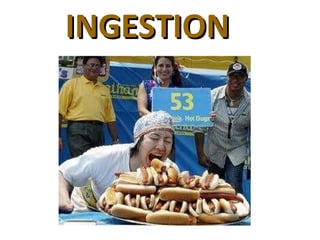
INGESTION
FUNCTION/ PURPOSE   OF  SYSTEM
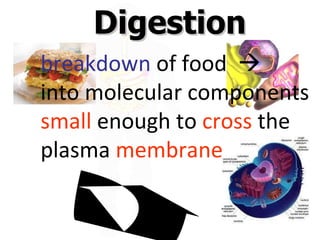
Digestion breakdown  of food     into molecular components  small  enough to  cross  the plasma  membrane
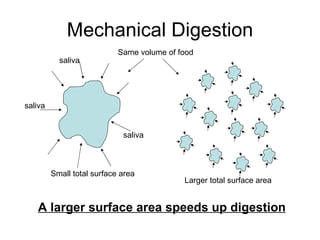
Mechanical Digestion Same volume of food Small total surface area Larger total surface area A larger surface area speeds up digestion saliva saliva saliva
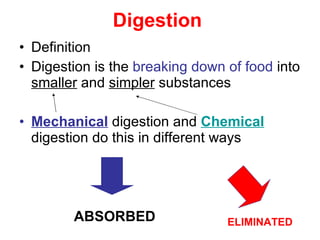
Digestion Definition Digestion is the  breaking down of food  into  smaller  and  simpler  substances Mechanical  digestion and  Chemical   digestion do this in different ways ABSORBED ELIMINATED
STRUCTURE   OF  SYSTEM
 
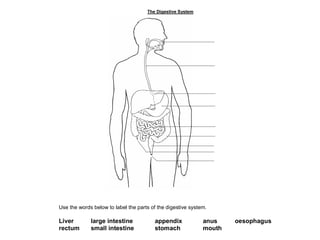
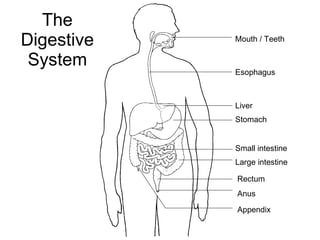
The Digestive System Mouth / Teeth Esophagus Liver Stomach Small intestine Large intestine Rectum Anus Appendix
BEHAVIOR   AND   INTERCONNECTION
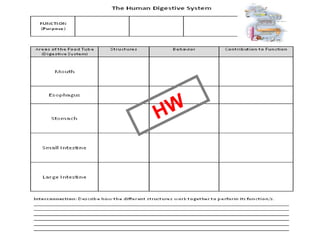
HW
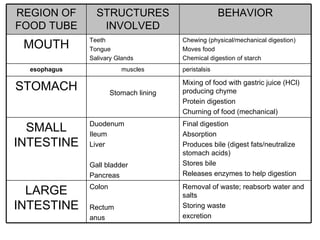
REGION OF FOOD TUBE STRUCTURES INVOLVED BEHAVIOR MOUTH Teeth Tongue Salivary Glands Chewing (physical/mechanical digestion) Moves food Chemical digestion of starch esophagus muscles peristalsis STOMACH Stomach lining Mixing of food with gastric juice (HCl) producing chyme Protein digestion Churning of food (mechanical) SMALL INTESTINE Duodenum Ileum Liver Gall bladder Pancreas Final digestion Absorption Produces bile (digest fats/neutralize stomach acids) Stores bile Releases enzymes to help digestion LARGE INTESTINE Colon Rectum anus Removal of waste; reabsorb water and salts Storing waste excretion
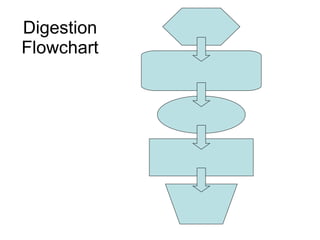
Digestion Flowchart
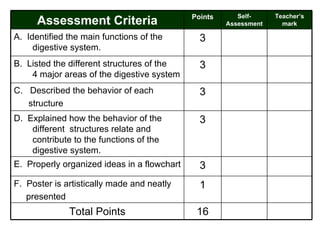
Assessment Criteria Points Self-Assessment Teacher’s mark A.  Identified the main functions of the digestive system. 3 B.  Listed the different structures of the  4 major areas of the digestive system 3 C.  Described the behavior of each structure  3 D.  Explained how the behavior of the different  structures relate and contribute to the functions of the digestive system.  3 E.  Properly organized ideas in a flowchart  3 F.  Poster is artistically made and neatly  presented 1 Total Points 16

Digestive system

  • 1.
  • 2.
  • 3.
  • 4.
    Digestion breakdown of food  into molecular components small enough to cross the plasma membrane
  • 5.
    Mechanical Digestion Samevolume of food Small total surface area Larger total surface area A larger surface area speeds up digestion saliva saliva saliva
  • 6.
    Digestion Definition Digestionis the breaking down of food into smaller and simpler substances Mechanical digestion and Chemical digestion do this in different ways ABSORBED ELIMINATED
  • 7.
    STRUCTURE OF SYSTEM
  • 8.
  • 9.
    The Digestive SystemMouth / Teeth Esophagus Liver Stomach Small intestine Large intestine Rectum Anus Appendix
  • 10.
    BEHAVIOR AND INTERCONNECTION
  • 11.
  • 12.
    REGION OF FOODTUBE STRUCTURES INVOLVED BEHAVIOR MOUTH Teeth Tongue Salivary Glands Chewing (physical/mechanical digestion) Moves food Chemical digestion of starch esophagus muscles peristalsis STOMACH Stomach lining Mixing of food with gastric juice (HCl) producing chyme Protein digestion Churning of food (mechanical) SMALL INTESTINE Duodenum Ileum Liver Gall bladder Pancreas Final digestion Absorption Produces bile (digest fats/neutralize stomach acids) Stores bile Releases enzymes to help digestion LARGE INTESTINE Colon Rectum anus Removal of waste; reabsorb water and salts Storing waste excretion
  • 13.
  • 14.
    Assessment Criteria PointsSelf-Assessment Teacher’s mark A. Identified the main functions of the digestive system. 3 B. Listed the different structures of the 4 major areas of the digestive system 3 C. Described the behavior of each structure 3 D. Explained how the behavior of the different structures relate and contribute to the functions of the digestive system. 3 E. Properly organized ideas in a flowchart 3 F. Poster is artistically made and neatly presented 1 Total Points 16