HUMAN
DIGESTIVE
SYSTEM
The food that we eat is mostly solid form.
Before it can be used by the body, it must
first be turned into a soluble form. It means
that the food must be broken down into a
liquid form of every tiny particles. It is only
this form that the nutrients can be
absorbed by the blood stream and carried to
the various parts of the body.
This is the job of the digestive system.
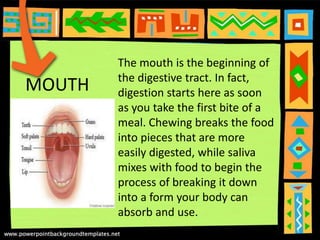
MOUTH
The mouth is the beginning of
the digestive tract. In fact,
digestion starts here as soon
as you take the first bite of a
meal. Chewing breaks the food
into pieces that are more
easily digested, while saliva
mixes with food to begin the
process of breaking it down
into a form your body can
absorb and use.
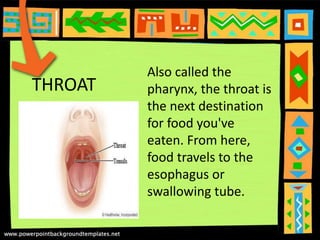
THROAT
Also called the
pharynx, the throat is
the next destination
for food you've
eaten. From here,
food travels to the
esophagus or
swallowing tube.
ESOPHAGUS
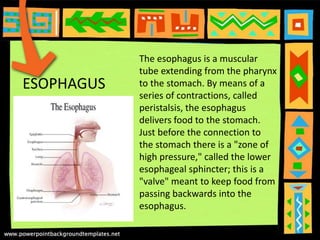
The esophagus is a muscular
tube extending from the pharynx
to the stomach. By means of a
series of contractions, called
peristalsis, the esophagus
delivers food to the stomach.
Just before the connection to
the stomach there is a "zone of
high pressure," called the lower
esophageal sphincter; this is a
"valve" meant to keep food from
passing backwards into the
esophagus.
STOMACH
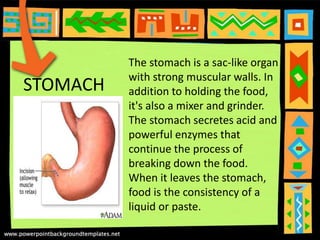
The stomach is a sac-like organ
with strong muscular walls. In
addition to holding the food,
it's also a mixer and grinder.
The stomach secretes acid and
powerful enzymes that
continue the process of
breaking down the food.
When it leaves the stomach,
food is the consistency of a
liquid or paste.
Small
Intestine
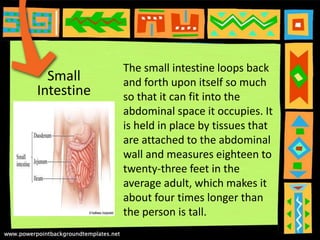
The small intestine loops back
and forth upon itself so much
so that it can fit into the
abdominal space it occupies. It
is held in place by tissues that
are attached to the abdominal
wall and measures eighteen to
twenty-three feet in the
average adult, which makes it
about four times longer than
the person is tall.
Large
Intestine
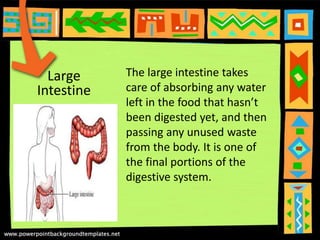
The large intestine takes
care of absorbing any water
left in the food that hasn’t
been digested yet, and then
passing any unused waste
from the body. It is one of
the final portions of the
digestive system.
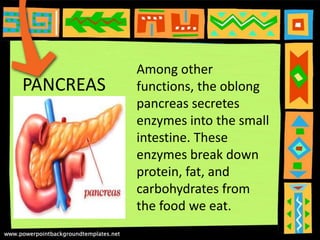
PANCREAS
Among other
functions, the oblong
pancreas secretes
enzymes into the small
intestine. These
enzymes break down
protein, fat, and
carbohydrates from
the food we eat.
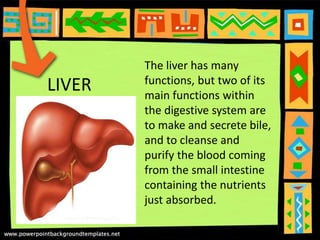
LIVER
The liver has many
functions, but two of its
main functions within
the digestive system are
to make and secrete bile,
and to cleanse and
purify the blood coming
from the small intestine
containing the nutrients
just absorbed.
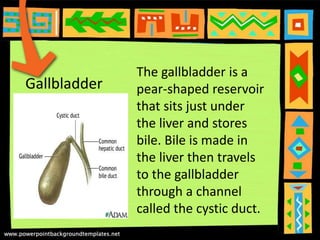
Gallbladder
The gallbladder is a
pear-shaped reservoir
that sits just under
the liver and stores
bile. Bile is made in
the liver then travels
to the gallbladder
through a channel
called the cystic duct.
Prepared By:
HANNAH MEI B. LABASAN
BEEd 3-2 DAY

Human digestive system

  • 1.
  • 2.
    The food thatwe eat is mostly solid form. Before it can be used by the body, it must first be turned into a soluble form. It means that the food must be broken down into a liquid form of every tiny particles. It is only this form that the nutrients can be absorbed by the blood stream and carried to the various parts of the body. This is the job of the digestive system.
  • 3.
    MOUTH The mouth isthe beginning of the digestive tract. In fact, digestion starts here as soon as you take the first bite of a meal. Chewing breaks the food into pieces that are more easily digested, while saliva mixes with food to begin the process of breaking it down into a form your body can absorb and use.
  • 4.
    THROAT Also called the pharynx,the throat is the next destination for food you've eaten. From here, food travels to the esophagus or swallowing tube.
  • 5.
    ESOPHAGUS The esophagus isa muscular tube extending from the pharynx to the stomach. By means of a series of contractions, called peristalsis, the esophagus delivers food to the stomach. Just before the connection to the stomach there is a "zone of high pressure," called the lower esophageal sphincter; this is a "valve" meant to keep food from passing backwards into the esophagus.
  • 6.
    STOMACH The stomach isa sac-like organ with strong muscular walls. In addition to holding the food, it's also a mixer and grinder. The stomach secretes acid and powerful enzymes that continue the process of breaking down the food. When it leaves the stomach, food is the consistency of a liquid or paste.
  • 7.
    Small Intestine The small intestineloops back and forth upon itself so much so that it can fit into the abdominal space it occupies. It is held in place by tissues that are attached to the abdominal wall and measures eighteen to twenty-three feet in the average adult, which makes it about four times longer than the person is tall.
  • 8.
    Large Intestine The large intestinetakes care of absorbing any water left in the food that hasn’t been digested yet, and then passing any unused waste from the body. It is one of the final portions of the digestive system.
  • 9.
    PANCREAS Among other functions, theoblong pancreas secretes enzymes into the small intestine. These enzymes break down protein, fat, and carbohydrates from the food we eat.
  • 10.
    LIVER The liver hasmany functions, but two of its main functions within the digestive system are to make and secrete bile, and to cleanse and purify the blood coming from the small intestine containing the nutrients just absorbed.
  • 11.
    Gallbladder The gallbladder isa pear-shaped reservoir that sits just under the liver and stores bile. Bile is made in the liver then travels to the gallbladder through a channel called the cystic duct.
  • 12.
    Prepared By: HANNAH MEIB. LABASAN BEEd 3-2 DAY