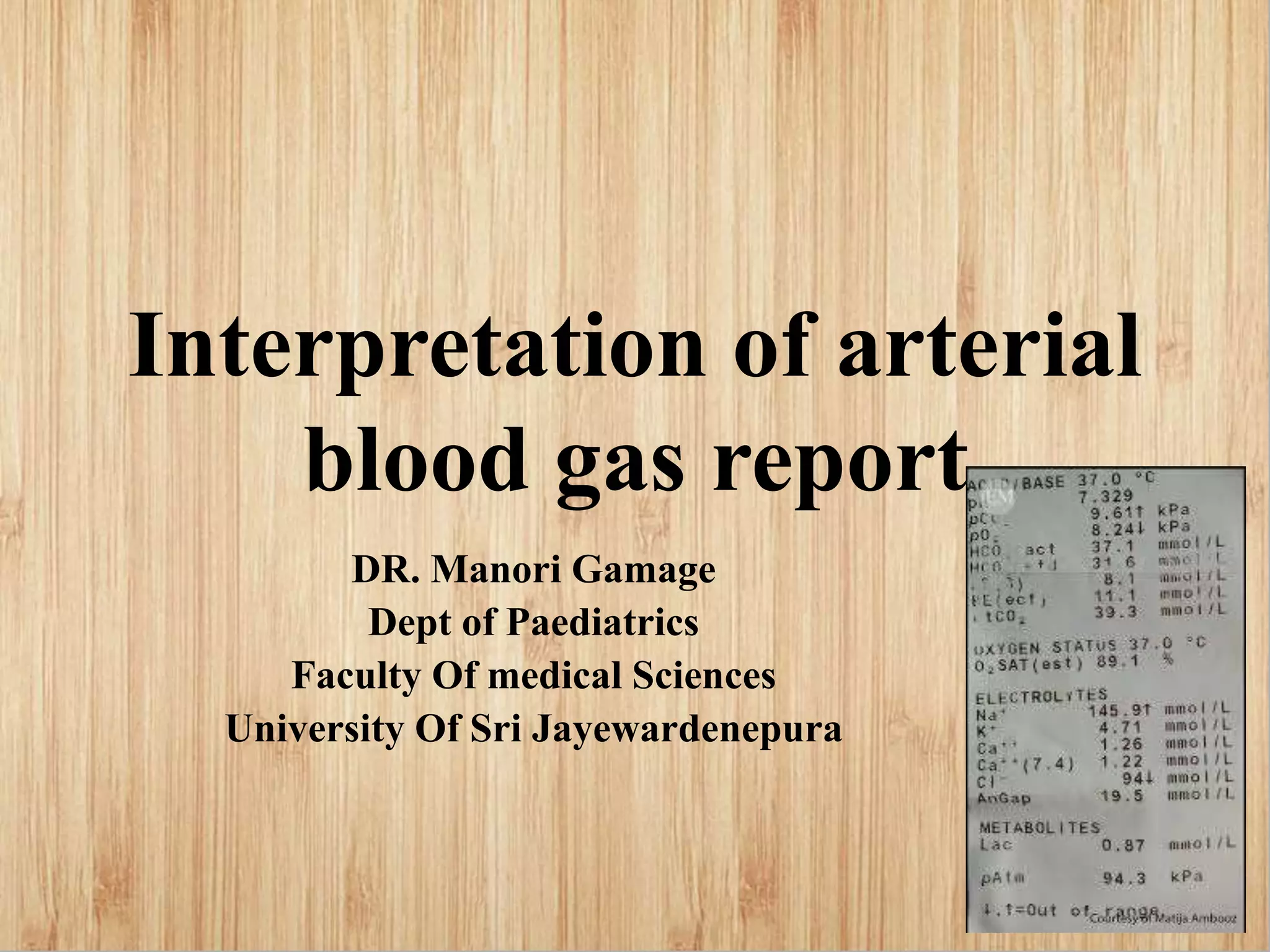
Interpretation of arterial
blood gas report
DR. Manori Gamage
Dept of Paediatrics
Faculty Of medical Sciences
University Of Sri Jayewardenepura
Important to remember
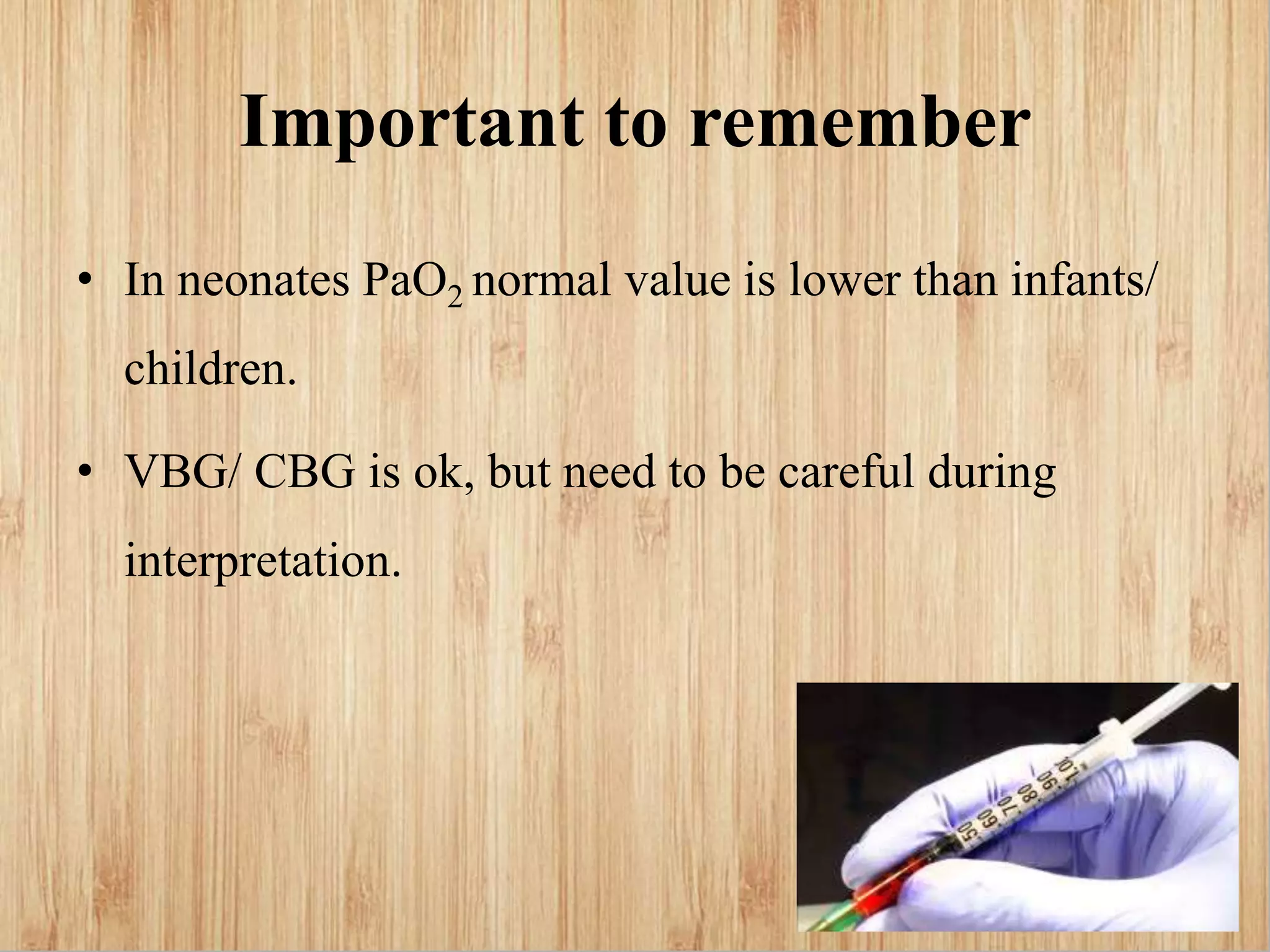
• In neonates PaO2 normal value is lower than infants/
children.
• VBG/ CBG is ok, but need to be careful during
interpretation.
What are the information you can obtain from an ABG
▪ Correct oxygenation
▪ Acid base status
▪ True picture of alveolar ventilation
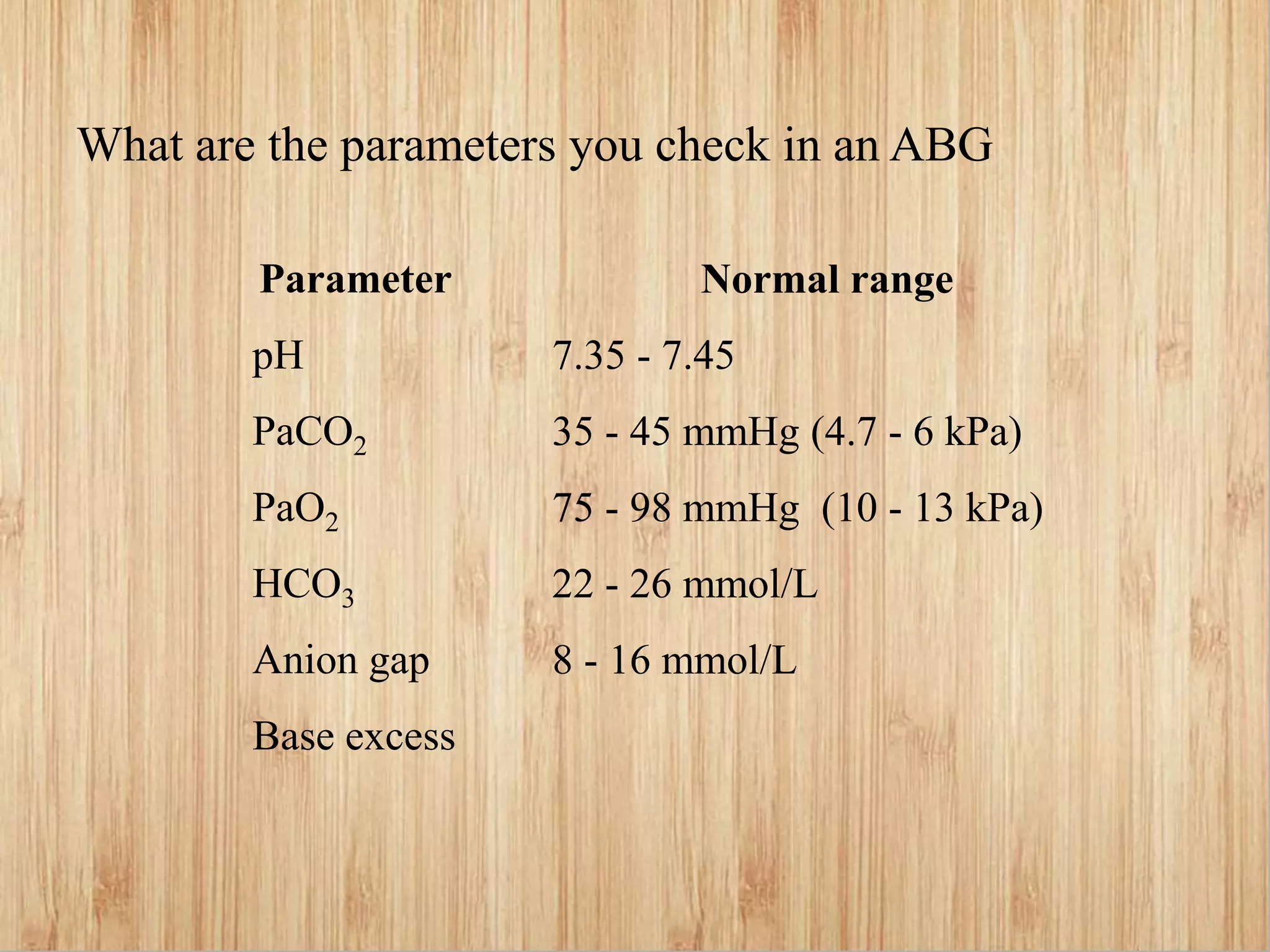
What are the parameters you check in an ABG
Parameter
pH
PaCO2
PaO2
HCO3
Anion gap
Base excess
Normal range
7.35 - 7.45
35 - 45 mmHg (4.7 - 6 kPa)
75 - 98 mmHg (10 - 13 kPa)
22 - 26 mmol/L
8 - 16 mmol/L
How to interpret oxygenation
Oxygen in blood,
(a) could be bound to haemoglobin or
(b) dissolved in plasma
Pulse oxymeter - detects oxygen bound to Hb.
PaO2 - detects oxygen dissolved in plasma.
PaO2 gives oxygen tension in the blood and is the best
indicator of rate of oxygen transfer at lung level.
How to interpret Oxygen and CO2
(a) PaO2 - Low in hypoxic respiratory failure
(b) PaCO2 - indicates hypoventilation
indicates hyperventilation.
at alveolar level.
ABG Interpretation
Normal pH - 7.35. - 7.45
pH - < 7.35 - Acidosis
pH - > 7.45 - Alkalosis
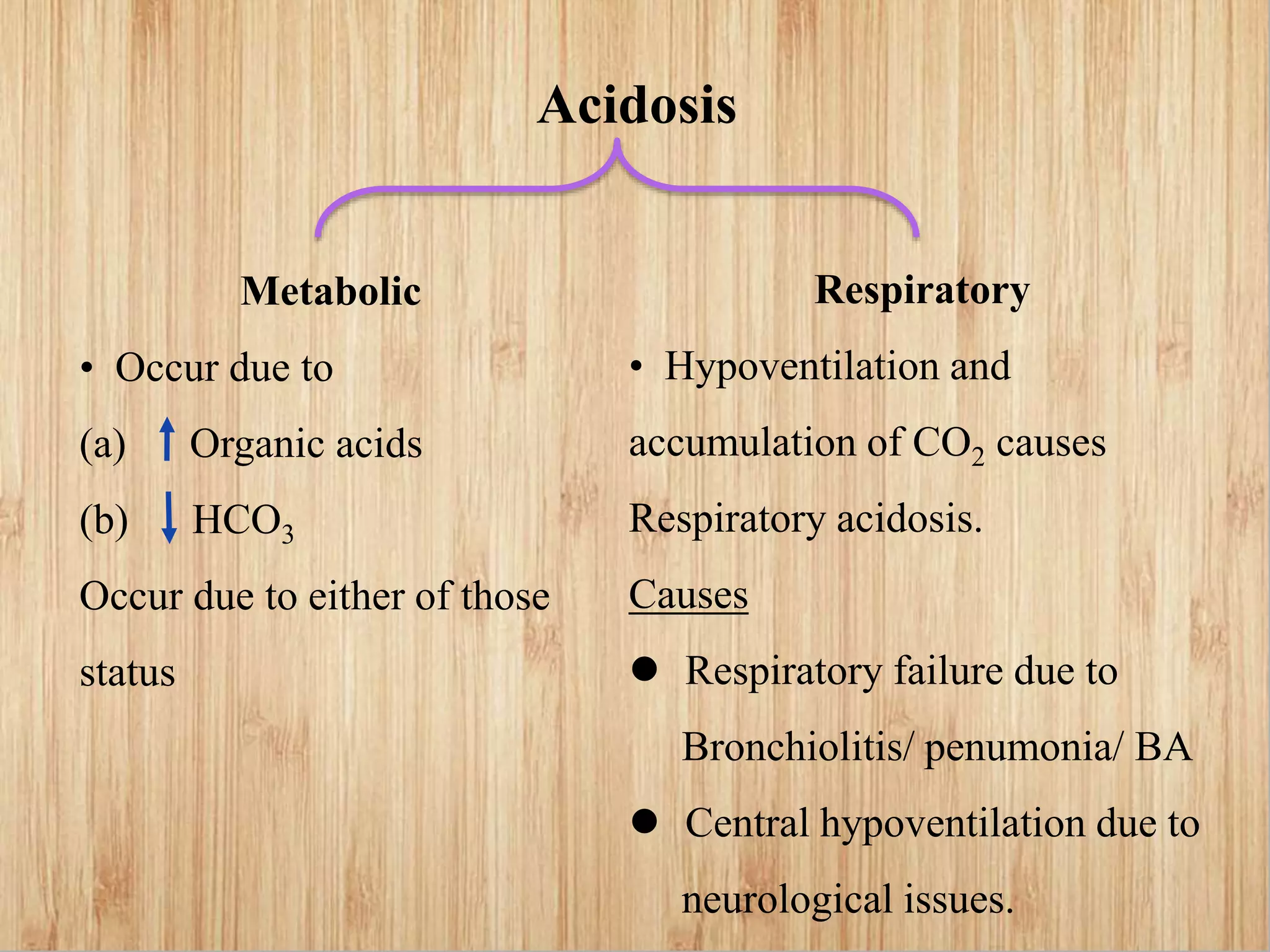
Acidosis
Metabolic
• Occur due to
(a) Organic acids
(b) HCO3
Occur due to either of those
status
Respiratory
• Hypoventilation and
accumulation of CO2 causes
Respiratory acidosis.
Causes
 Respiratory failure due to
Bronchiolitis/ penumonia/ BA
 Central hypoventilation due to
neurological issues.
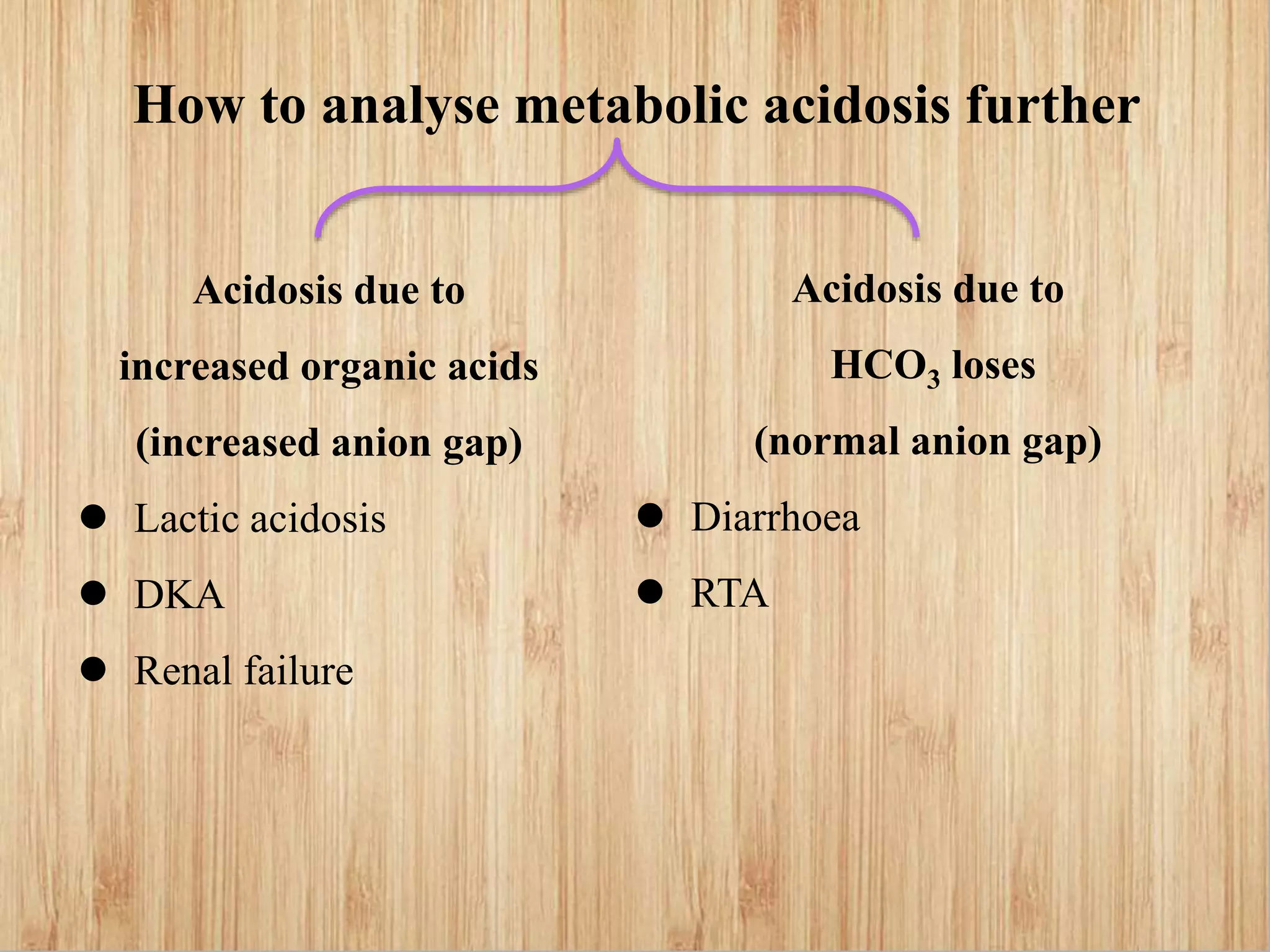
How to analyse metabolic acidosis further
Acidosis due to
increased organic acids
(increased anion gap)
 Lactic acidosis
 DKA
 Renal failure
Acidosis due to
HCO3 loses
(normal anion gap)
 Diarrhoea
 RTA
Base excess
It is a measurement of amount of acid base needed to
retain pH to 7.4.
So in Acidosis,
BE = Negative (-ve)
In Alkalosis,
BE = Positive (+ve)
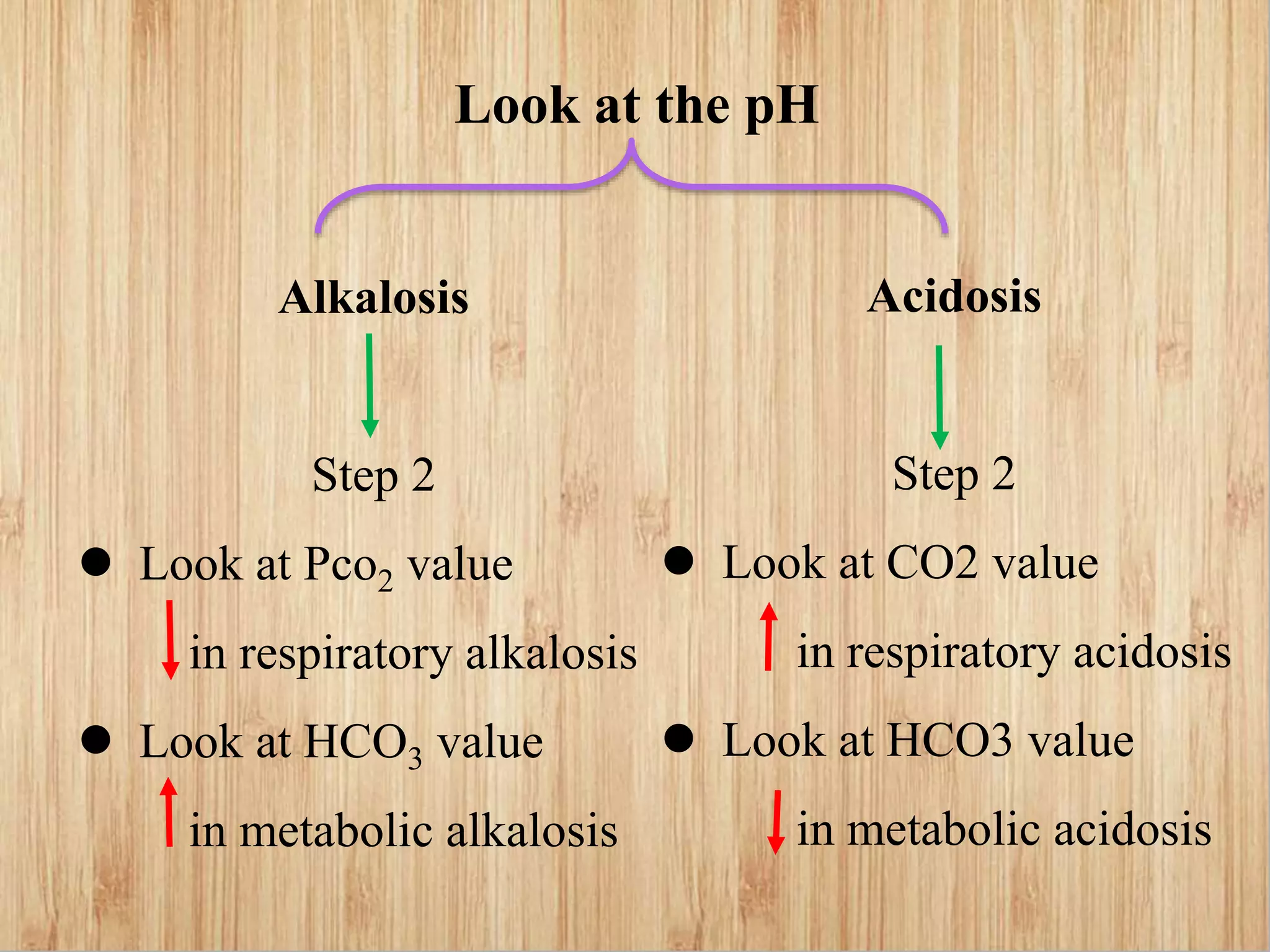
Look at the pH
Alkalosis
Step 2
 Look at Pco2 value
in respiratory alkalosis
 Look at HCO3 value
in metabolic alkalosis
Acidosis
Step 2
 Look at CO2 value
in respiratory acidosis
 Look at HCO3 value
in metabolic acidosis
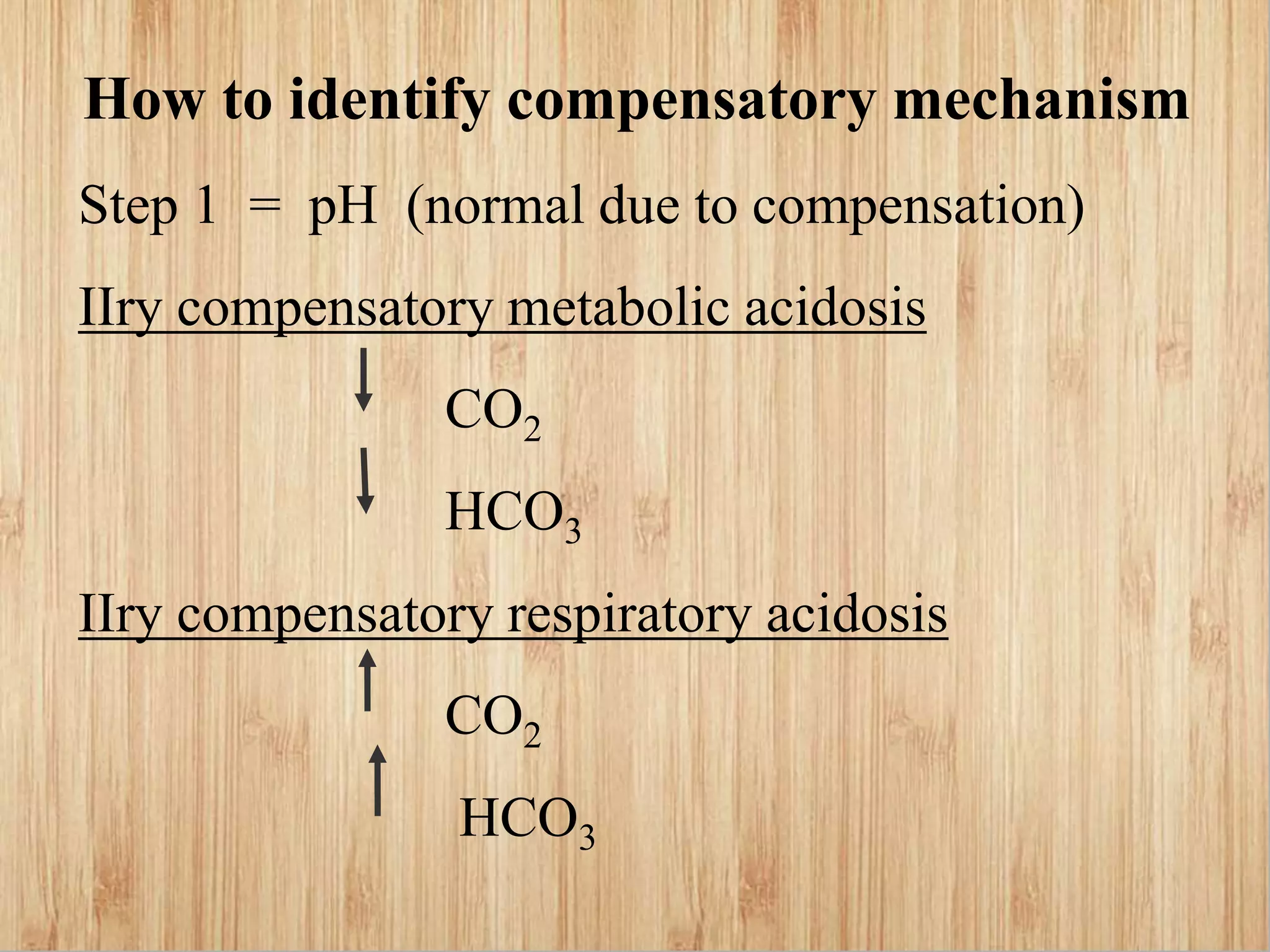
How to identify compensatory mechanism
Step 1 = pH (normal due to compensation)
IIry compensatory metabolic acidosis
CO2
HCO3
IIry compensatory respiratory acidosis
CO2
HCO3
If uncompensatory acid - base disorder detected,
Need to correct it.
Metabolic acidosis
NaHCO3 to correct acidosis.
Respiratory acidosis
Support ventilation
Respiratory alkalosis
Adjust ventilator settings in a
ventilator.
Metabolic alkalosis
Need to identify other associated
metabolic and electrolyte
anomalies and correct it.
How to interprit a Arterial Blood gas report - basic steps

How to interprit a Arterial Blood gas report - basic steps

  • 1.
    Interpretation of arterial bloodgas report DR. Manori Gamage Dept of Paediatrics Faculty Of medical Sciences University Of Sri Jayewardenepura
  • 2.
    Important to remember •In neonates PaO2 normal value is lower than infants/ children. • VBG/ CBG is ok, but need to be careful during interpretation.
  • 3.
    What are theinformation you can obtain from an ABG ▪ Correct oxygenation ▪ Acid base status ▪ True picture of alveolar ventilation
  • 4.
    What are theparameters you check in an ABG Parameter pH PaCO2 PaO2 HCO3 Anion gap Base excess Normal range 7.35 - 7.45 35 - 45 mmHg (4.7 - 6 kPa) 75 - 98 mmHg (10 - 13 kPa) 22 - 26 mmol/L 8 - 16 mmol/L
  • 5.
    How to interpretoxygenation Oxygen in blood, (a) could be bound to haemoglobin or (b) dissolved in plasma Pulse oxymeter - detects oxygen bound to Hb. PaO2 - detects oxygen dissolved in plasma. PaO2 gives oxygen tension in the blood and is the best indicator of rate of oxygen transfer at lung level.
  • 6.
    How to interpretOxygen and CO2 (a) PaO2 - Low in hypoxic respiratory failure (b) PaCO2 - indicates hypoventilation indicates hyperventilation. at alveolar level.
  • 7.
    ABG Interpretation Normal pH- 7.35. - 7.45 pH - < 7.35 - Acidosis pH - > 7.45 - Alkalosis
  • 8.
    Acidosis Metabolic • Occur dueto (a) Organic acids (b) HCO3 Occur due to either of those status Respiratory • Hypoventilation and accumulation of CO2 causes Respiratory acidosis. Causes  Respiratory failure due to Bronchiolitis/ penumonia/ BA  Central hypoventilation due to neurological issues.
  • 9.
    How to analysemetabolic acidosis further Acidosis due to increased organic acids (increased anion gap)  Lactic acidosis  DKA  Renal failure Acidosis due to HCO3 loses (normal anion gap)  Diarrhoea  RTA
  • 10.
    Base excess It isa measurement of amount of acid base needed to retain pH to 7.4. So in Acidosis, BE = Negative (-ve) In Alkalosis, BE = Positive (+ve)
  • 11.
    Look at thepH Alkalosis Step 2  Look at Pco2 value in respiratory alkalosis  Look at HCO3 value in metabolic alkalosis Acidosis Step 2  Look at CO2 value in respiratory acidosis  Look at HCO3 value in metabolic acidosis
  • 12.
    How to identifycompensatory mechanism Step 1 = pH (normal due to compensation) IIry compensatory metabolic acidosis CO2 HCO3 IIry compensatory respiratory acidosis CO2 HCO3
  • 13.
    If uncompensatory acid- base disorder detected, Need to correct it. Metabolic acidosis NaHCO3 to correct acidosis. Respiratory acidosis Support ventilation Respiratory alkalosis Adjust ventilator settings in a ventilator. Metabolic alkalosis Need to identify other associated metabolic and electrolyte anomalies and correct it.