Dr. Ashutosh kumar
(ABG )
ARTERIALBLOOD GAS
What is ABG ?
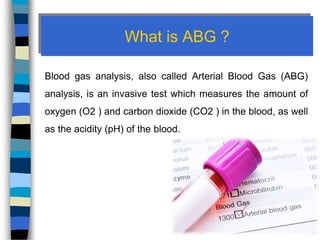
Blood gas analysis, also called Arterial Blood Gas (ABG)
analysis, is an invasive test which measures the amount of
oxygen (O2 ) and carbon dioxide (CO2 ) in the blood, as well
as the acidity (pH) of the blood.
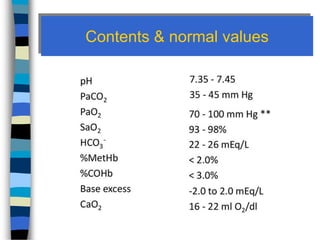
Contents & normal values
Purpose of doing ABG !!!
• Evaluates how effectively the lungs are delivering O2 to
the blood and how efficiently they are eliminating CO2
from it.
• Indicates how well the lungs and kidneys are interacting to
maintain normal blood pH (acid-base balance).
• Assess respiratory disease and other conditions that may
affect the lungs, and to manage patients receiving oxygen
therapy (respiratory therapy).
Cont..
• Determine the pH of the blood and the partial pressures
of carbon dioxide (PaCO2 ) and oxygen (PaO2 ) within it.
• Assess the effectiveness of gaseous exchange and
ventilation, be it spontaneous or mechanical.
• Assess metabolic status of the patient, giving an
indication of how they are coping with their illness
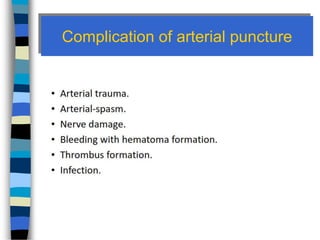
Complication of arterial puncture
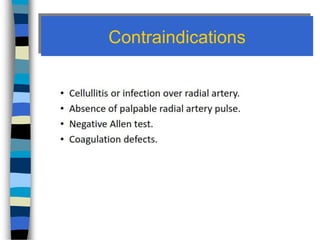
Contraindications
Allen’s test
ABG Interpretation
ABG Basic interpretation can be done by 6 easy steps.
Basic terminology
Step1 - Analyze pH
Normal blood pH is 7.4 (range 7.35 to 7.45).
• pH < 7.35 acidic.
• pH > 7.45 alkaline.
• If it falls into the normal range, label what side of
7.4 it falls on. Lower than 7.4 is normal/acidic,
higher than 7.4 is normal / alkalotic.
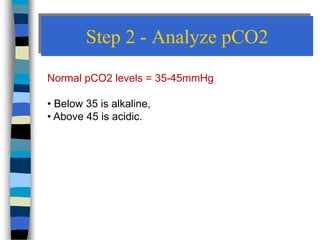
Step 2 - Analyze pCO2
Normal pCO2 levels = 35-45mmHg
• Below 35 is alkaline,
• Above 45 is acidic.
Step 3 – Analyze HCO3
Normal HCO3 level is 22-26 mEq/L.
• If the HCO3 is below 22, the patient is acidotic.
• If the HCO3 is above 26, the patient is alkalotic
Step 4 – Match Co2 or HCO3 with pH
If the pH is acidotic, and the CO2 is acidotic, then the
acid-base disturbance is being caused by the
respiratory system.
Therefore, we call it a respiratory acidosis.
• However, if the pH is alkalotic and the HCO3 is
alkalotic, the acid-base disturbance is being caused by
the metabolic (or renal) system.
Therefore, it will be a metabolic alkalosis.
Step-5 Does Co2 & HCO3 going in
opposite direction of pH???
If so, there is compensation by that system.
• For example, the pH is acidotic, the CO2 is acidotic,
and the HCO3 is alkalotic: The CO2 matches the pH
making the primary acid-base disorder i.e. respiratory
acidosis.
The HCO3 is opposite of the pH and would be
evidence of compensation from the metabolic system.
Compensation
Cont…
Step-6 -Analyze PO2 & O2 saturation
If they are below normal there is evidence of
hypoxemia.
Interpretation of Values
Arterial Vs Venous sample
Anion Gap
The anion gap is the difference between primary
measured cations (sodium Na+ and potassium K+) and
the primary measured anions (chloride Cl- and
bicarbonate HCO3-) in serum.
Normal Anion Gap is 12 +/- 2
Anion Gap Metabolic acidosis
Non anion gap metabolic acidosis
Respiratory Failure
Type I Respiratory Failure:
( Diffusion defect; CO2 diffusion is better; Eg: Pneumonia, Pulmonary
edema)
•  pO2 , but normal pCO2
• Type II Respiratory Failure:
( Respiratory gases not reaching alveoli for proper gaseous exchange;
Eg: HMD , Respiratory paralysis in Polio )
•  pO2 and  pCO2
DIABETIC KETOACIDOSIS
What is DKA??
Diabetic ketoacidosis (DKA) is an acute, life-
threatening complication of diabetes mellitus.
DKA occurs predominantly in patients with type 1
(insulin-dependent) diabetes mellitus.
Pathophysiology
Pathophysiology
Causes of DKA
Types
Types pH Hco3 Anion Gap
Mild 7.25-7.3 15-18 mEq/L >10 mEq/L
Moderate 7.0-7.24 10-15 mEq/L >12mEq/L
Alert / Drowsy
Severe < 7.0 <10 mEq/L >12 mEq/L
Stuporous
Comatose
Symptoms
Physical examination findings
Classic triad of DKA
Diagnosis
• blood glucose level >250 milligrams/dL (13.9 mmol/L)
• anion gap >10 to 12 mEq/L (>10 mmol/L)
• a bicarbonate level <15 mEq/L (<15 mmol/L)
• pH <7.3 with moderate ketonuria or ketonemia
Differential diagnosis
Treatment
Fluids & electrolytes
Initial fluid resuscitation
Cont..
Insulin therapy
Once DKA resolved
Complications of DKA
Abg

Abg

  • 1.
    Dr. Ashutosh kumar (ABG) ARTERIALBLOOD GAS
  • 2.
    What is ABG? Blood gas analysis, also called Arterial Blood Gas (ABG) analysis, is an invasive test which measures the amount of oxygen (O2 ) and carbon dioxide (CO2 ) in the blood, as well as the acidity (pH) of the blood.
  • 3.
  • 4.
    Purpose of doingABG !!! • Evaluates how effectively the lungs are delivering O2 to the blood and how efficiently they are eliminating CO2 from it. • Indicates how well the lungs and kidneys are interacting to maintain normal blood pH (acid-base balance). • Assess respiratory disease and other conditions that may affect the lungs, and to manage patients receiving oxygen therapy (respiratory therapy).
  • 5.
    Cont.. • Determine thepH of the blood and the partial pressures of carbon dioxide (PaCO2 ) and oxygen (PaO2 ) within it. • Assess the effectiveness of gaseous exchange and ventilation, be it spontaneous or mechanical. • Assess metabolic status of the patient, giving an indication of how they are coping with their illness
  • 6.
  • 7.
  • 8.
  • 9.
    ABG Interpretation ABG Basicinterpretation can be done by 6 easy steps.
  • 10.
  • 11.
    Step1 - AnalyzepH Normal blood pH is 7.4 (range 7.35 to 7.45). • pH < 7.35 acidic. • pH > 7.45 alkaline. • If it falls into the normal range, label what side of 7.4 it falls on. Lower than 7.4 is normal/acidic, higher than 7.4 is normal / alkalotic.
  • 12.
    Step 2 -Analyze pCO2 Normal pCO2 levels = 35-45mmHg • Below 35 is alkaline, • Above 45 is acidic.
  • 13.
    Step 3 –Analyze HCO3 Normal HCO3 level is 22-26 mEq/L. • If the HCO3 is below 22, the patient is acidotic. • If the HCO3 is above 26, the patient is alkalotic
  • 14.
    Step 4 –Match Co2 or HCO3 with pH If the pH is acidotic, and the CO2 is acidotic, then the acid-base disturbance is being caused by the respiratory system. Therefore, we call it a respiratory acidosis. • However, if the pH is alkalotic and the HCO3 is alkalotic, the acid-base disturbance is being caused by the metabolic (or renal) system. Therefore, it will be a metabolic alkalosis.
  • 15.
    Step-5 Does Co2& HCO3 going in opposite direction of pH??? If so, there is compensation by that system. • For example, the pH is acidotic, the CO2 is acidotic, and the HCO3 is alkalotic: The CO2 matches the pH making the primary acid-base disorder i.e. respiratory acidosis. The HCO3 is opposite of the pH and would be evidence of compensation from the metabolic system.
  • 16.
  • 17.
  • 18.
    Step-6 -Analyze PO2& O2 saturation If they are below normal there is evidence of hypoxemia.
  • 19.
  • 20.
  • 21.
    Anion Gap The aniongap is the difference between primary measured cations (sodium Na+ and potassium K+) and the primary measured anions (chloride Cl- and bicarbonate HCO3-) in serum. Normal Anion Gap is 12 +/- 2
  • 22.
  • 23.
    Non anion gapmetabolic acidosis
  • 24.
    Respiratory Failure Type IRespiratory Failure: ( Diffusion defect; CO2 diffusion is better; Eg: Pneumonia, Pulmonary edema) •  pO2 , but normal pCO2 • Type II Respiratory Failure: ( Respiratory gases not reaching alveoli for proper gaseous exchange; Eg: HMD , Respiratory paralysis in Polio ) •  pO2 and  pCO2
  • 25.
  • 26.
    What is DKA?? Diabeticketoacidosis (DKA) is an acute, life- threatening complication of diabetes mellitus. DKA occurs predominantly in patients with type 1 (insulin-dependent) diabetes mellitus.
  • 27.
  • 28.
  • 29.
  • 30.
    Types Types pH Hco3Anion Gap Mild 7.25-7.3 15-18 mEq/L >10 mEq/L Moderate 7.0-7.24 10-15 mEq/L >12mEq/L Alert / Drowsy Severe < 7.0 <10 mEq/L >12 mEq/L Stuporous Comatose
  • 32.
  • 33.
  • 34.
  • 35.
    Diagnosis • blood glucoselevel >250 milligrams/dL (13.9 mmol/L) • anion gap >10 to 12 mEq/L (>10 mmol/L) • a bicarbonate level <15 mEq/L (<15 mmol/L) • pH <7.3 with moderate ketonuria or ketonemia
  • 36.
  • 37.
  • 38.
  • 39.
  • 40.
  • 41.
  • 42.
  • 43.