HOW TO ASSESS
SPEAKING
ASSESSMENT AND EVALUATION MODULE
ELIZABETH TAYO
FAIR SPEAKING TESTS
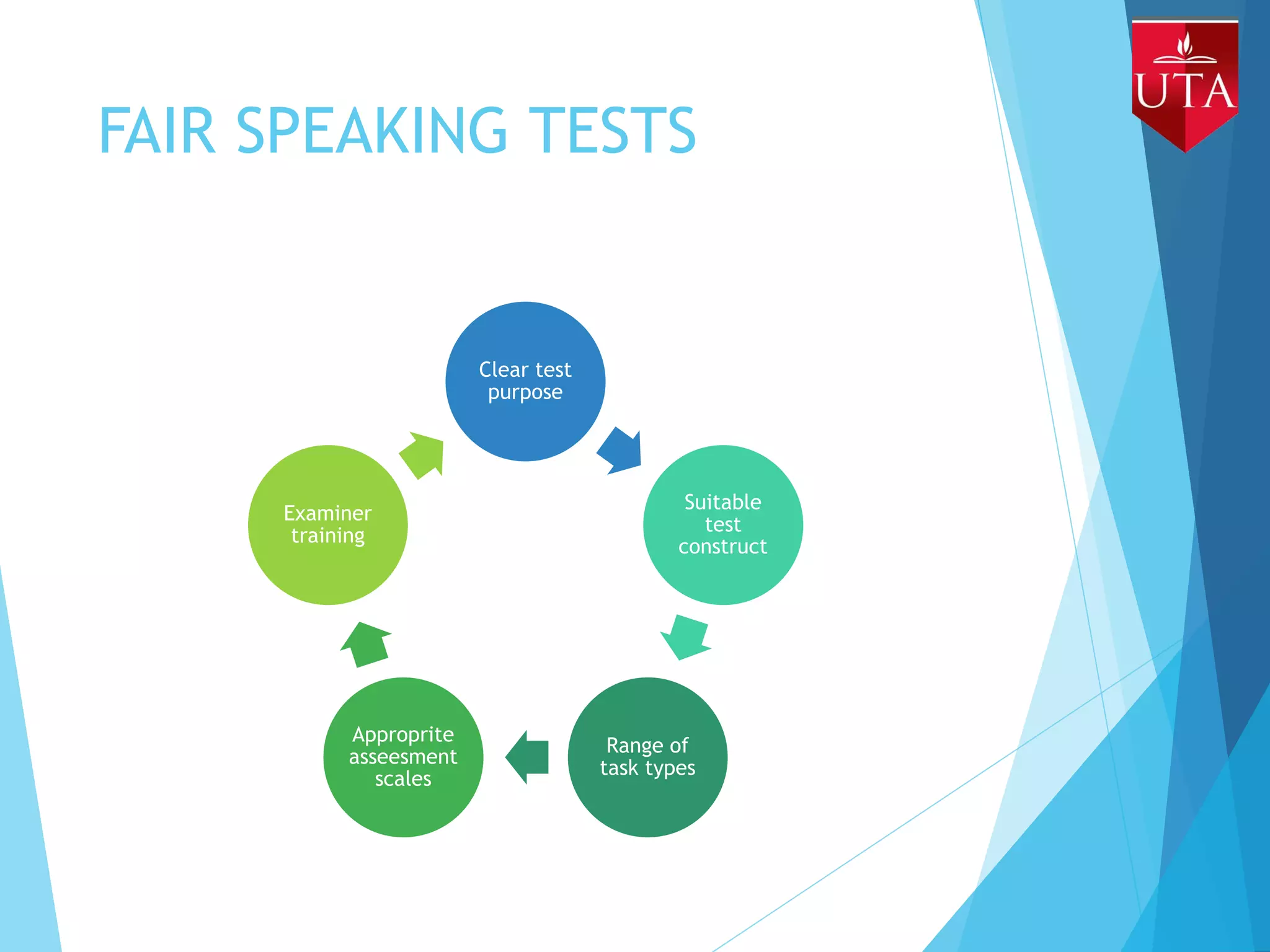
Clear test
purpose
Suitable
test
construct
Range of
task types
Approprite
asseesment
scales
Examiner
training
VARIETY OF TASKS
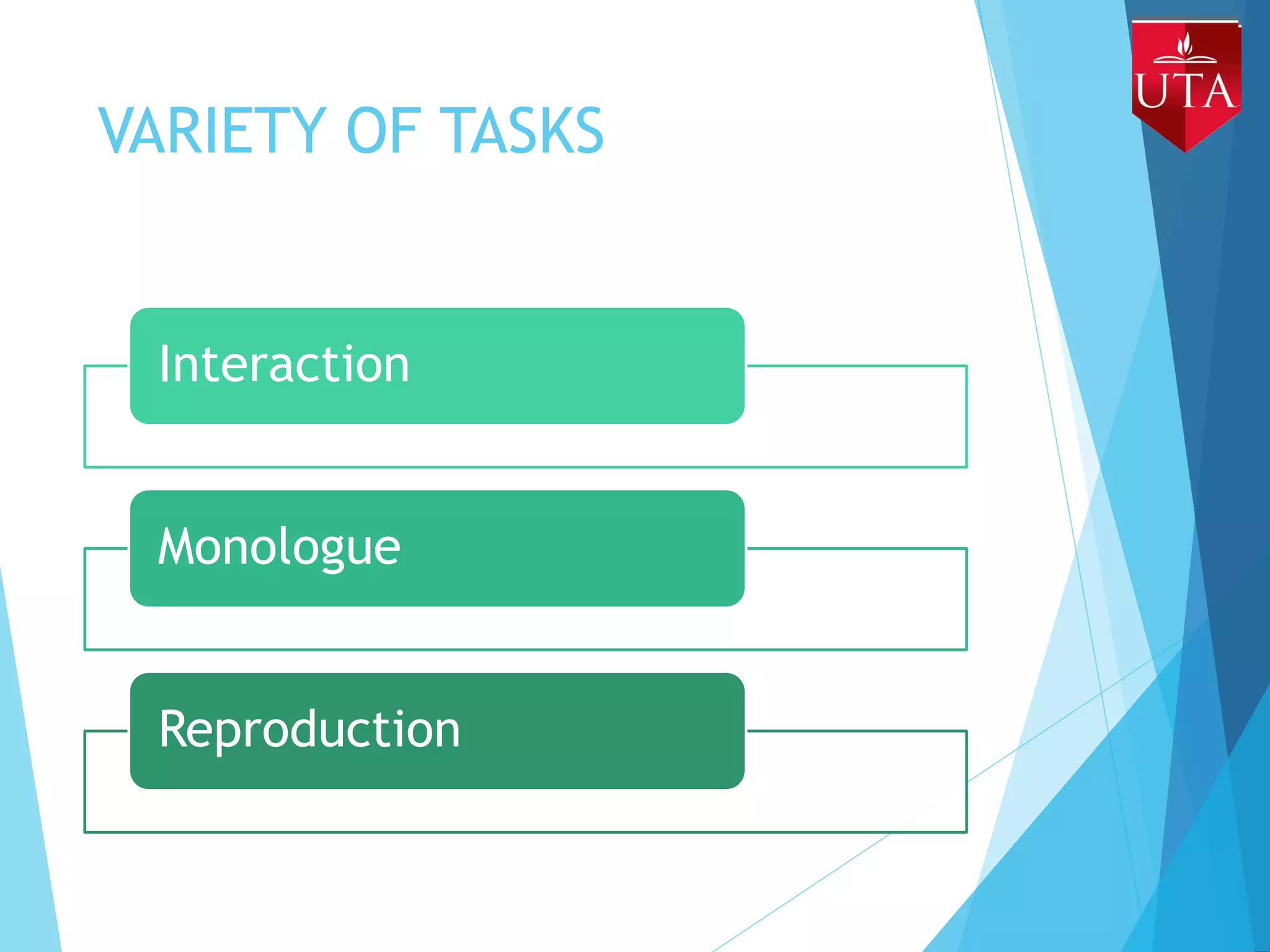
Interaction
Monologue
Reproduction
COGNITIVE KNOWLEDGE AND
PROCESSING
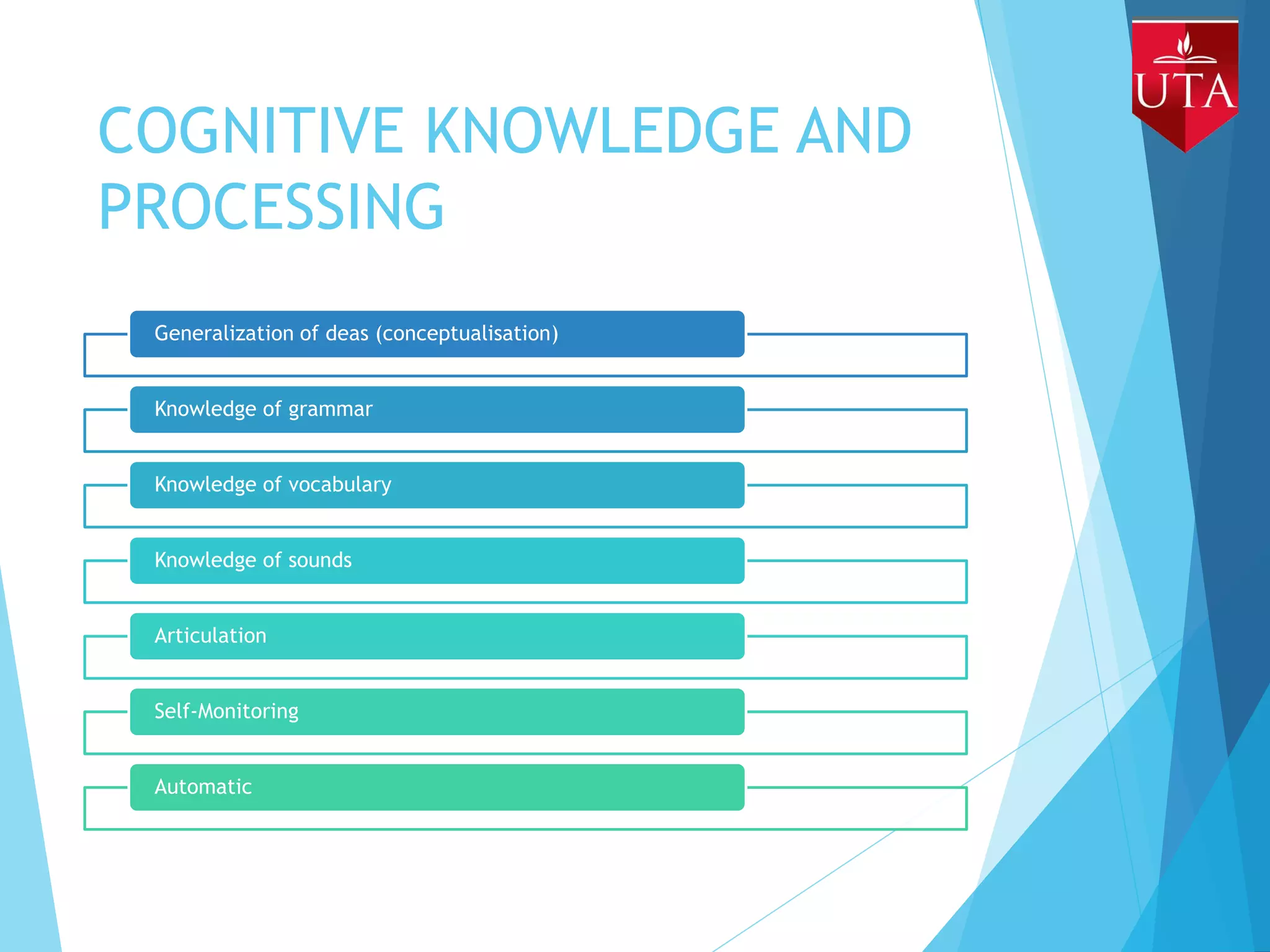
Generalization of deas (conceptualisation)
Knowledge of grammar
Knowledge of vocabulary
Knowledge of sounds
Articulation
Self-Monitoring
Automatic
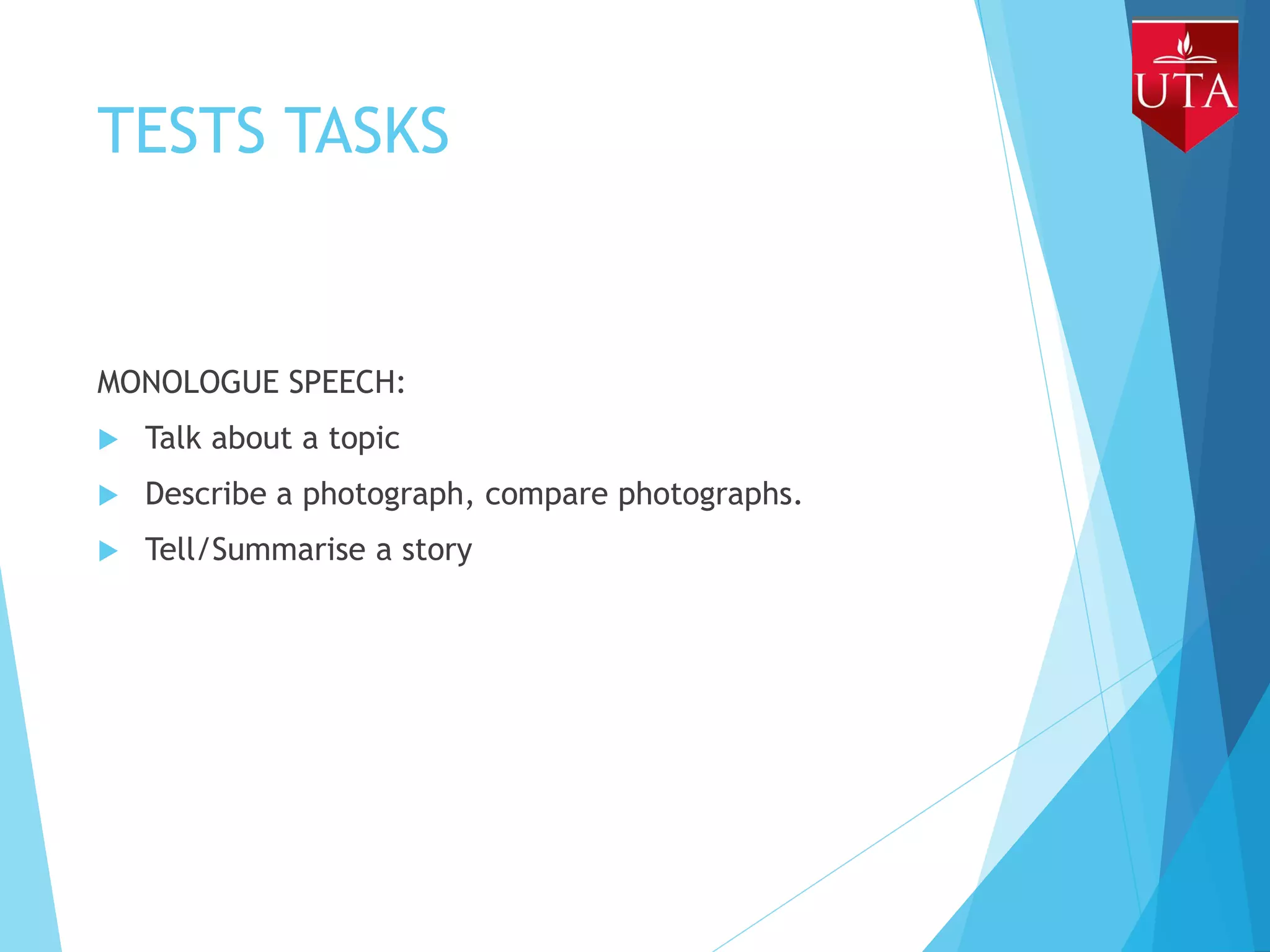
TESTS TASKS
MONOLOGUE SPEECH:
 Talk about a topic
 Describe a photograph, compare photographs.
 Tell/Summarise a story
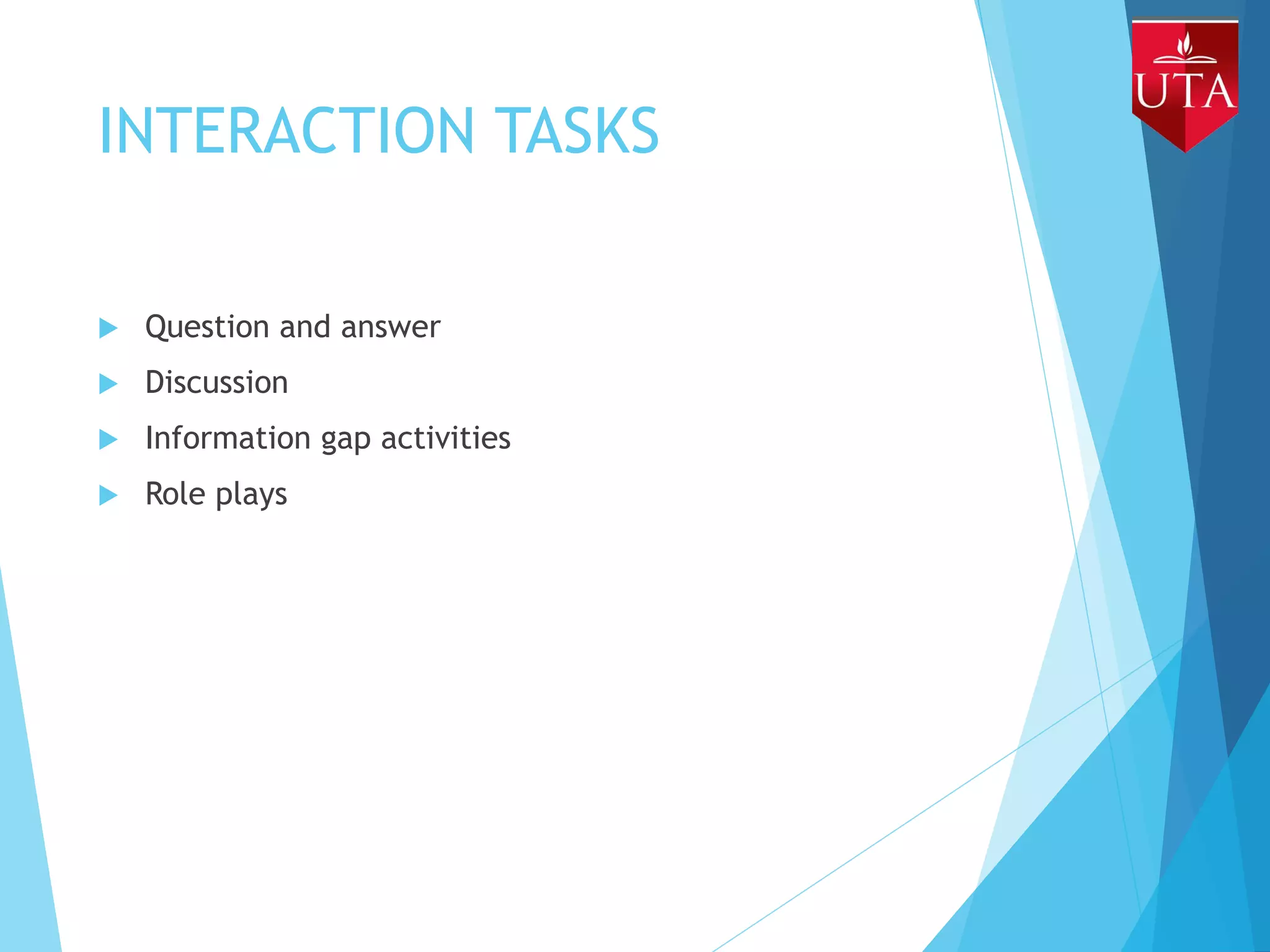
INTERACTION TASKS
 Question and answer
 Discussion
 Information gap activities
 Role plays
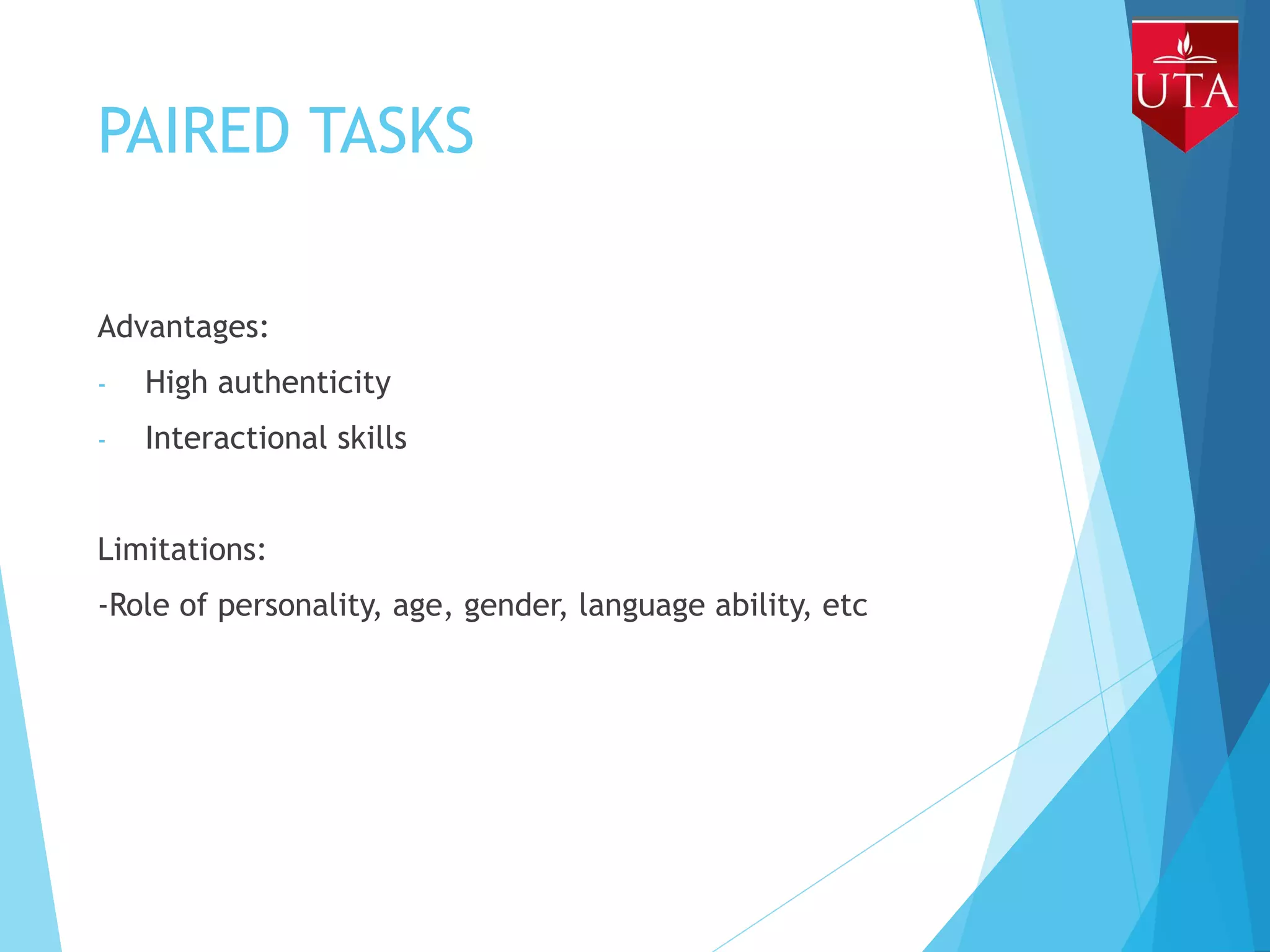
PAIRED TASKS
Advantages:
- High authenticity
- Interactional skills
Limitations:
-Role of personality, age, gender, language ability, etc
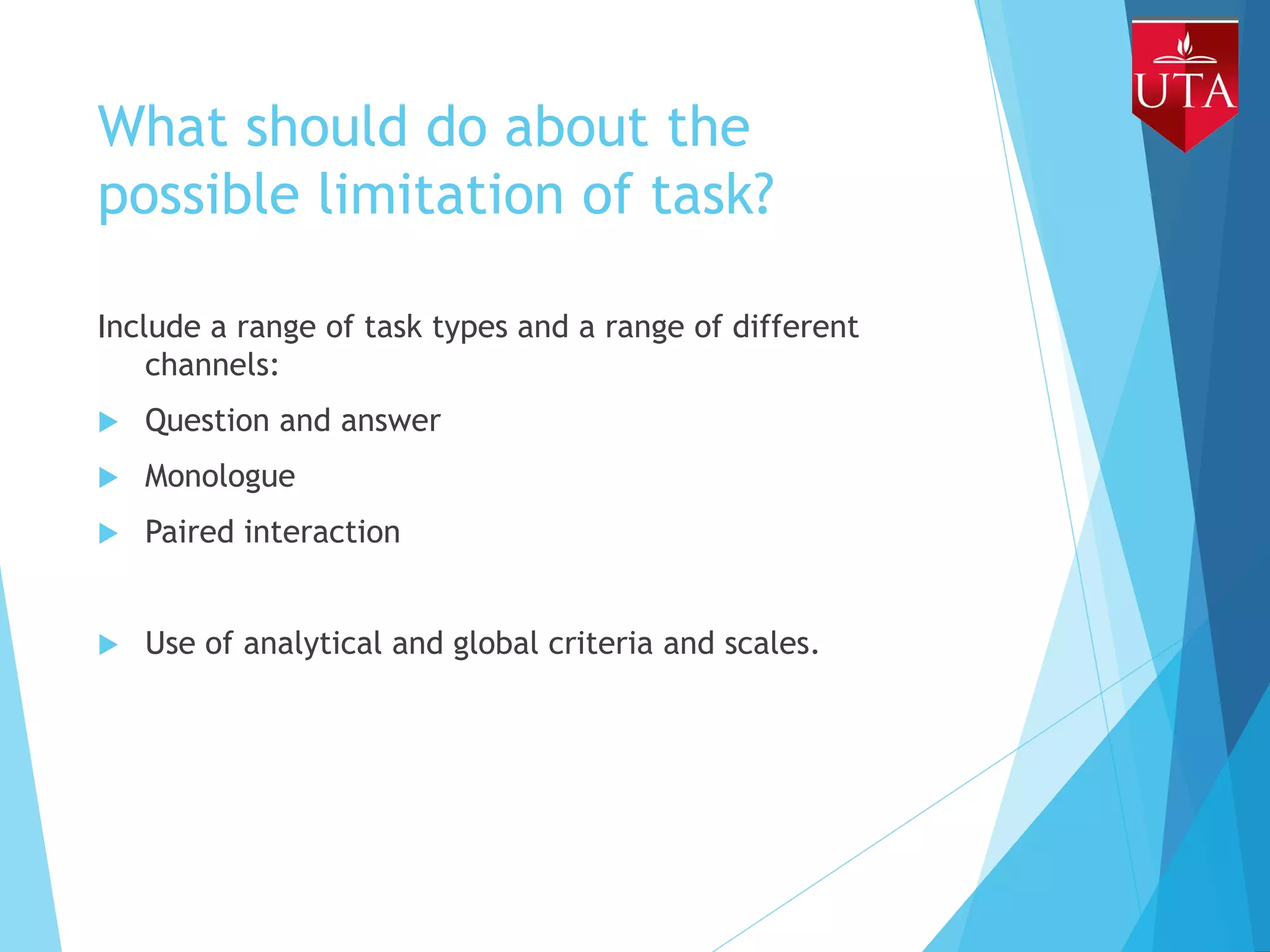
What should do about the
possible limitation of task?
Include a range of task types and a range of different
channels:
 Question and answer
 Monologue
 Paired interaction
 Use of analytical and global criteria and scales.
TASK DIFFICULTY
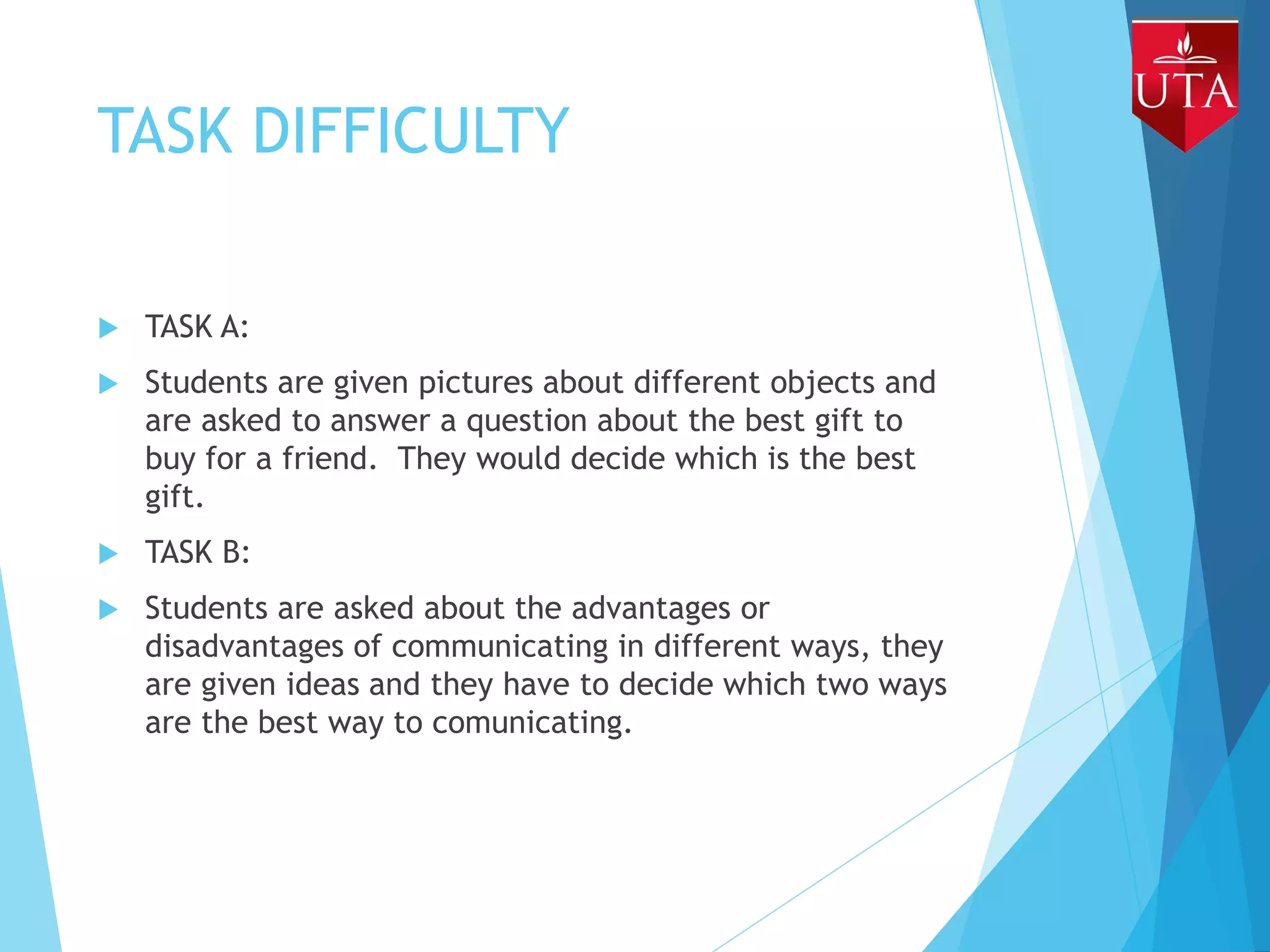
 TASK A:
 Students are given pictures about different objects and
are asked to answer a question about the best gift to
buy for a friend. They would decide which is the best
gift.
 TASK B:
 Students are asked about the advantages or
disadvantages of communicating in different ways, they
are given ideas and they have to decide which two ways
are the best way to comunicating.
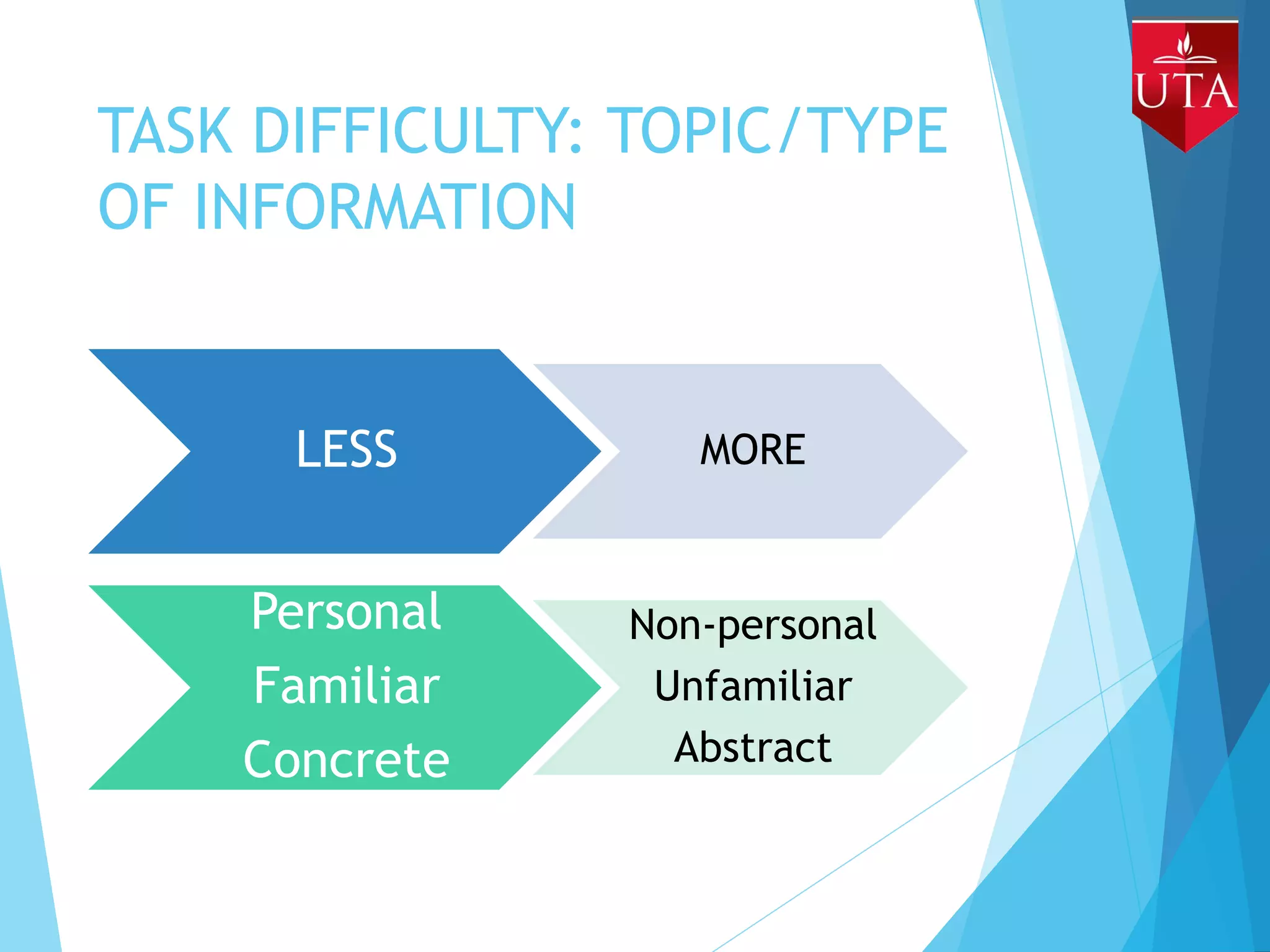
TASK DIFFICULTY: TOPIC/TYPE
OF INFORMATION
LESS MORE
Personal
Familiar
Concrete
Non-personal
Unfamiliar
Abstract
TASK DIFFICULTY: Speech
functions.
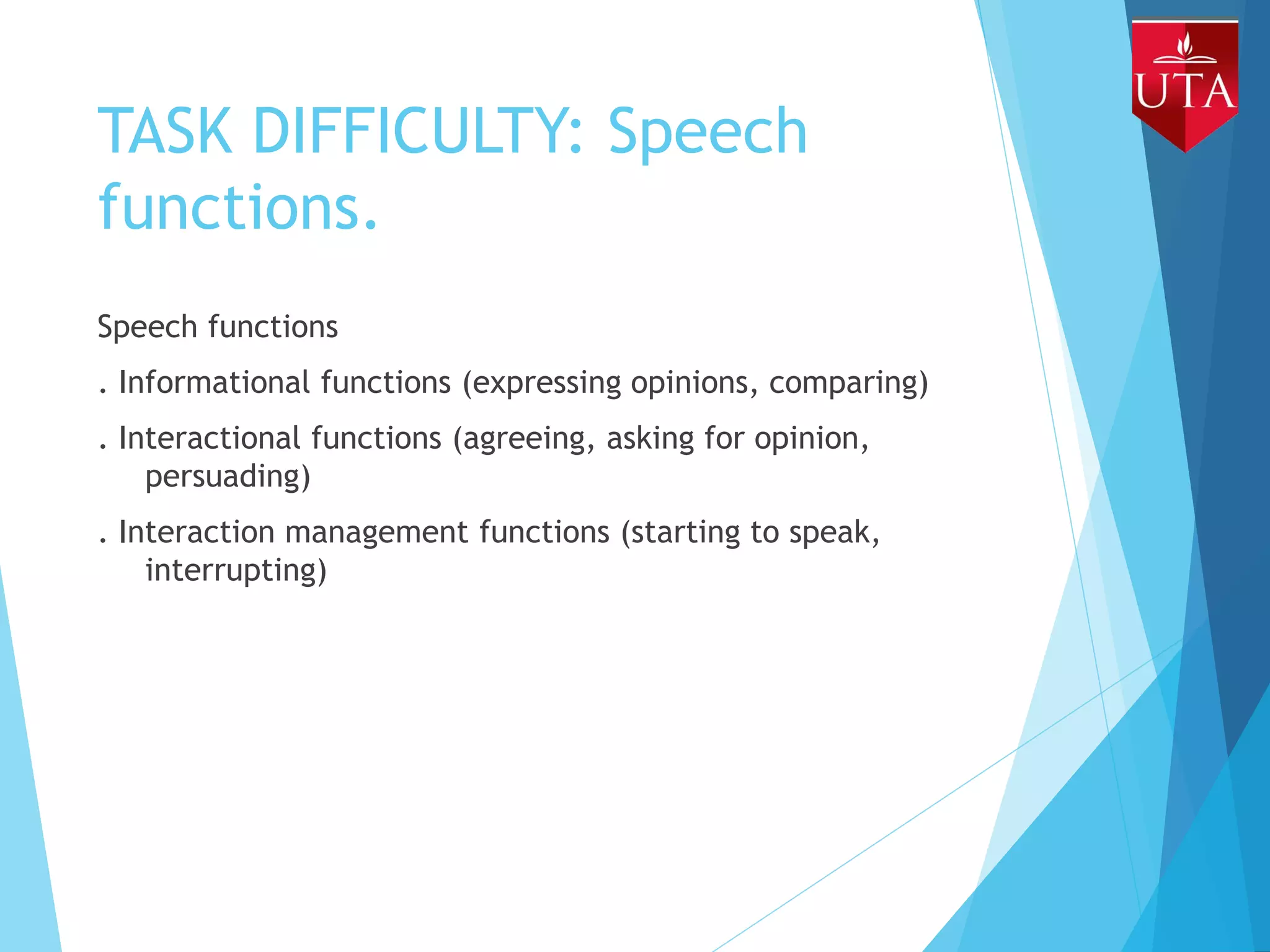
Speech functions
. Informational functions (expressing opinions, comparing)
. Interactional functions (agreeing, asking for opinion,
persuading)
. Interaction management functions (starting to speak,
interrupting)
OTHER FACTORS WHICH
AFFECT TASK FAIRNESS
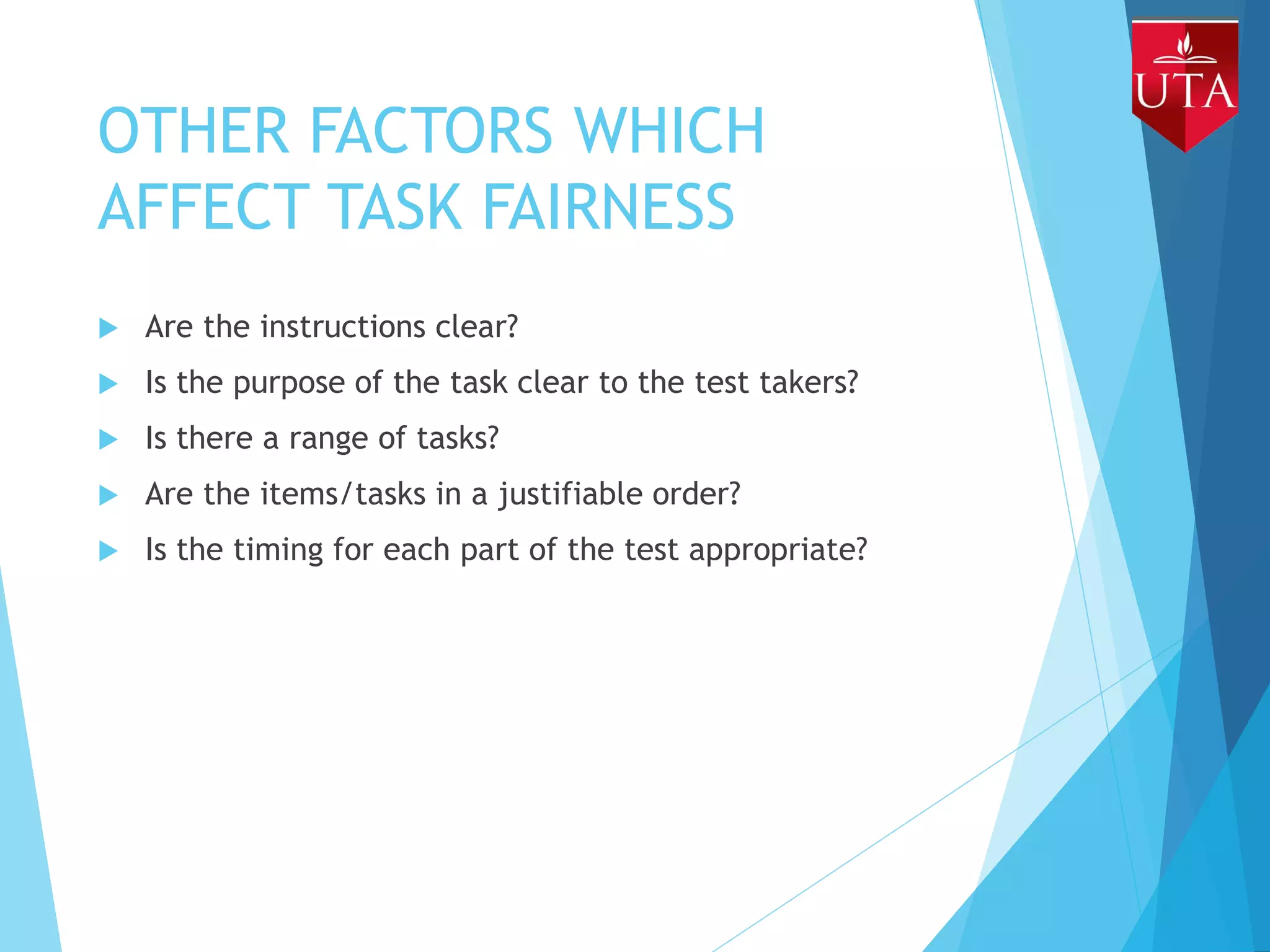
 Are the instructions clear?
 Is the purpose of the task clear to the test takers?
 Is there a range of tasks?
 Are the items/tasks in a justifiable order?
 Is the timing for each part of the test appropriate?
TYPES OF SCALES
 HOLISTIC
 . General impression
 . One overall mark
 ANALYTICAL
 . Broken down into separate features
 . Several marks – one for each assessment criterion
HOLISTIC SCALES
STRENGTHS:
. Practicality: faster
LIMITATION:
. No useful diagnostc informatin (single score)
. Difficulty to use when sills are uneveny developed.
ANALYTICAL SCALES
 STRENGTHS:
 . Diagnostic information
 . Useful in rater training
 . Useful for L2 learners who have an uneven profile
LIMITATIONS:
. Time consuming
How to assess speaking

How to assess speaking

  • 1.
    HOW TO ASSESS SPEAKING ASSESSMENTAND EVALUATION MODULE ELIZABETH TAYO
  • 2.
    FAIR SPEAKING TESTS Cleartest purpose Suitable test construct Range of task types Approprite asseesment scales Examiner training
  • 3.
  • 4.
    COGNITIVE KNOWLEDGE AND PROCESSING Generalizationof deas (conceptualisation) Knowledge of grammar Knowledge of vocabulary Knowledge of sounds Articulation Self-Monitoring Automatic
  • 5.
    TESTS TASKS MONOLOGUE SPEECH: Talk about a topic  Describe a photograph, compare photographs.  Tell/Summarise a story
  • 6.
    INTERACTION TASKS  Questionand answer  Discussion  Information gap activities  Role plays
  • 7.
    PAIRED TASKS Advantages: - Highauthenticity - Interactional skills Limitations: -Role of personality, age, gender, language ability, etc
  • 8.
    What should doabout the possible limitation of task? Include a range of task types and a range of different channels:  Question and answer  Monologue  Paired interaction  Use of analytical and global criteria and scales.
  • 9.
    TASK DIFFICULTY  TASKA:  Students are given pictures about different objects and are asked to answer a question about the best gift to buy for a friend. They would decide which is the best gift.  TASK B:  Students are asked about the advantages or disadvantages of communicating in different ways, they are given ideas and they have to decide which two ways are the best way to comunicating.
  • 10.
    TASK DIFFICULTY: TOPIC/TYPE OFINFORMATION LESS MORE Personal Familiar Concrete Non-personal Unfamiliar Abstract
  • 11.
    TASK DIFFICULTY: Speech functions. Speechfunctions . Informational functions (expressing opinions, comparing) . Interactional functions (agreeing, asking for opinion, persuading) . Interaction management functions (starting to speak, interrupting)
  • 12.
    OTHER FACTORS WHICH AFFECTTASK FAIRNESS  Are the instructions clear?  Is the purpose of the task clear to the test takers?  Is there a range of tasks?  Are the items/tasks in a justifiable order?  Is the timing for each part of the test appropriate?
  • 13.
    TYPES OF SCALES HOLISTIC  . General impression  . One overall mark  ANALYTICAL  . Broken down into separate features  . Several marks – one for each assessment criterion
  • 14.
    HOLISTIC SCALES STRENGTHS: . Practicality:faster LIMITATION: . No useful diagnostc informatin (single score) . Difficulty to use when sills are uneveny developed.
  • 15.
    ANALYTICAL SCALES  STRENGTHS: . Diagnostic information  . Useful in rater training  . Useful for L2 learners who have an uneven profile LIMITATIONS: . Time consuming