DEVELOPING AND ASSESSING
SPEAKING IN A COMPETENCE
BASED CURRICULUM
H.O.D.
NOURA AL-BEDAIWI
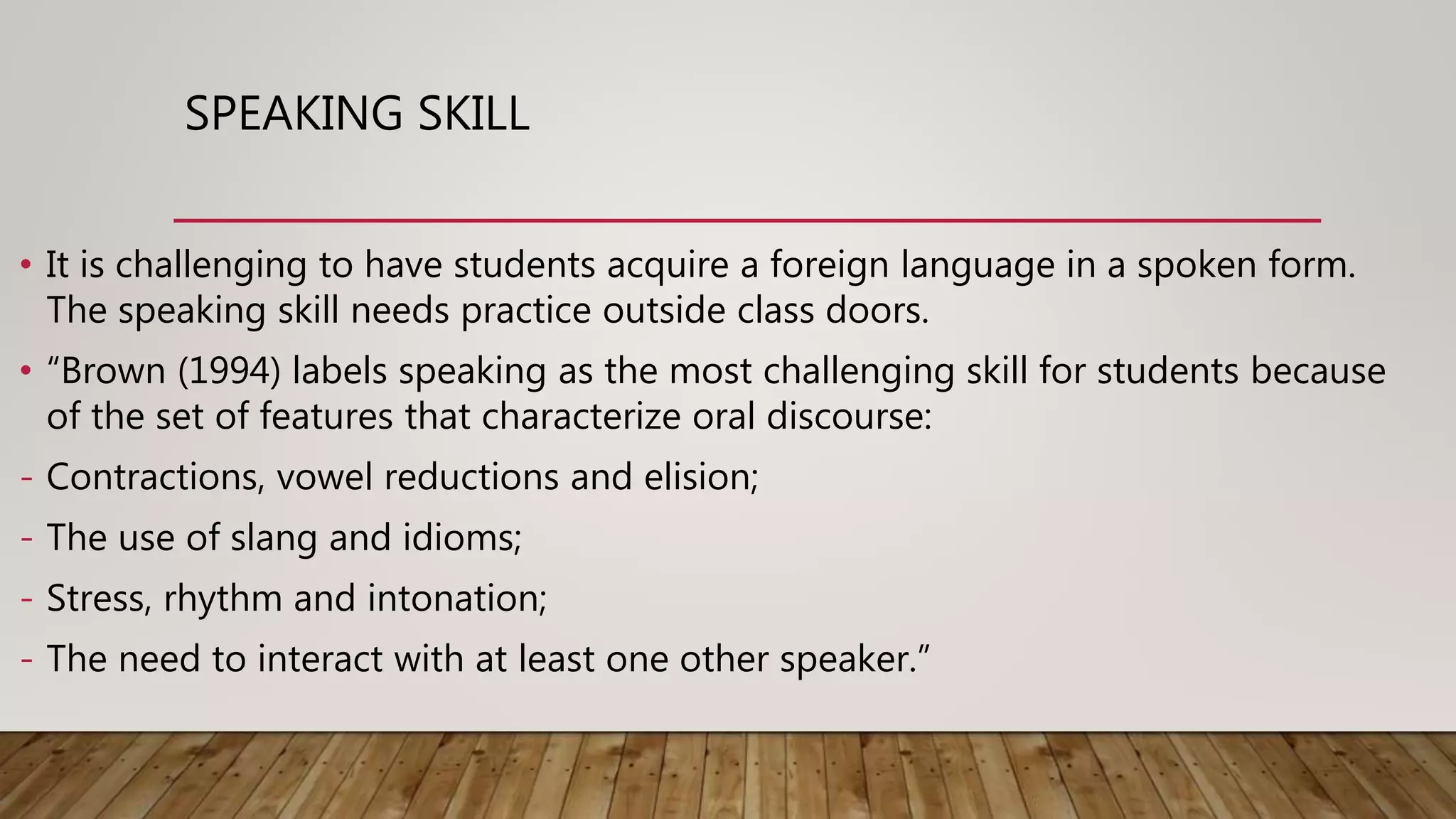
SPEAKING SKILL
• It is challenging to have students acquire a foreign language in a spoken form.
The speaking skill needs practice outside class doors.
• “Brown (1994) labels speaking as the most challenging skill for students because
of the set of features that characterize oral discourse:
- Contractions, vowel reductions and elision;
- The use of slang and idioms;
- Stress, rhythm and intonation;
- The need to interact with at least one other speaker.”
SPEAKING SKILL
Speaking is an “activity requiring the integration of many subsystems…all these
factors combine to make speaking a second or foreign language a formidable
task for language learners…yet for many people, speaking is seen as the central
skill” (Bailey and Savage 1994: 6-7).
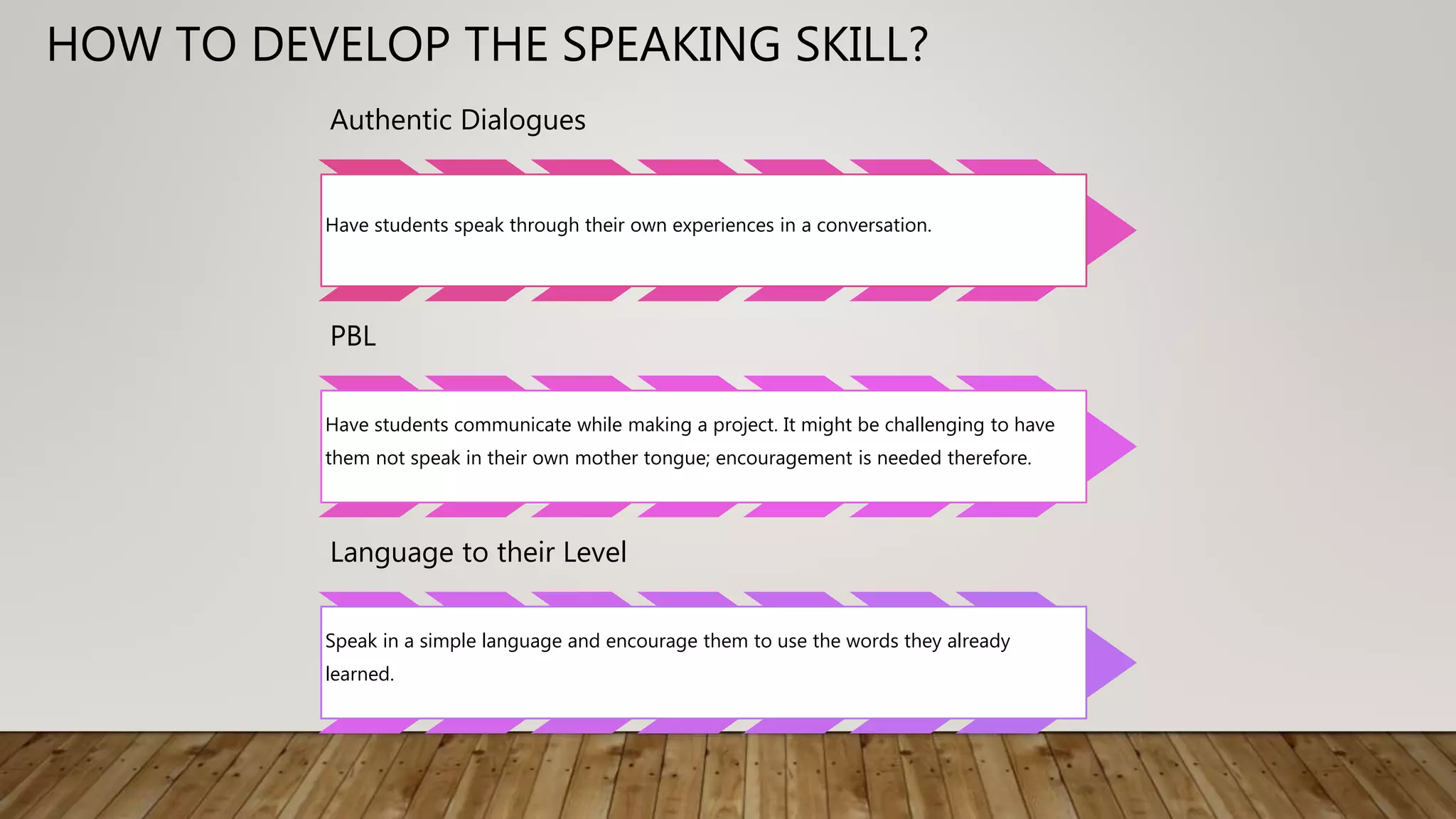
Authentic Dialogues
Have students speak through their own experiences in a conversation.
PBL
Have students communicate while making a project. It might be challenging to have
them not speak in their own mother tongue; encouragement is needed therefore.
Language to their Level
Speak in a simple language and encourage them to use the words they already
learned.
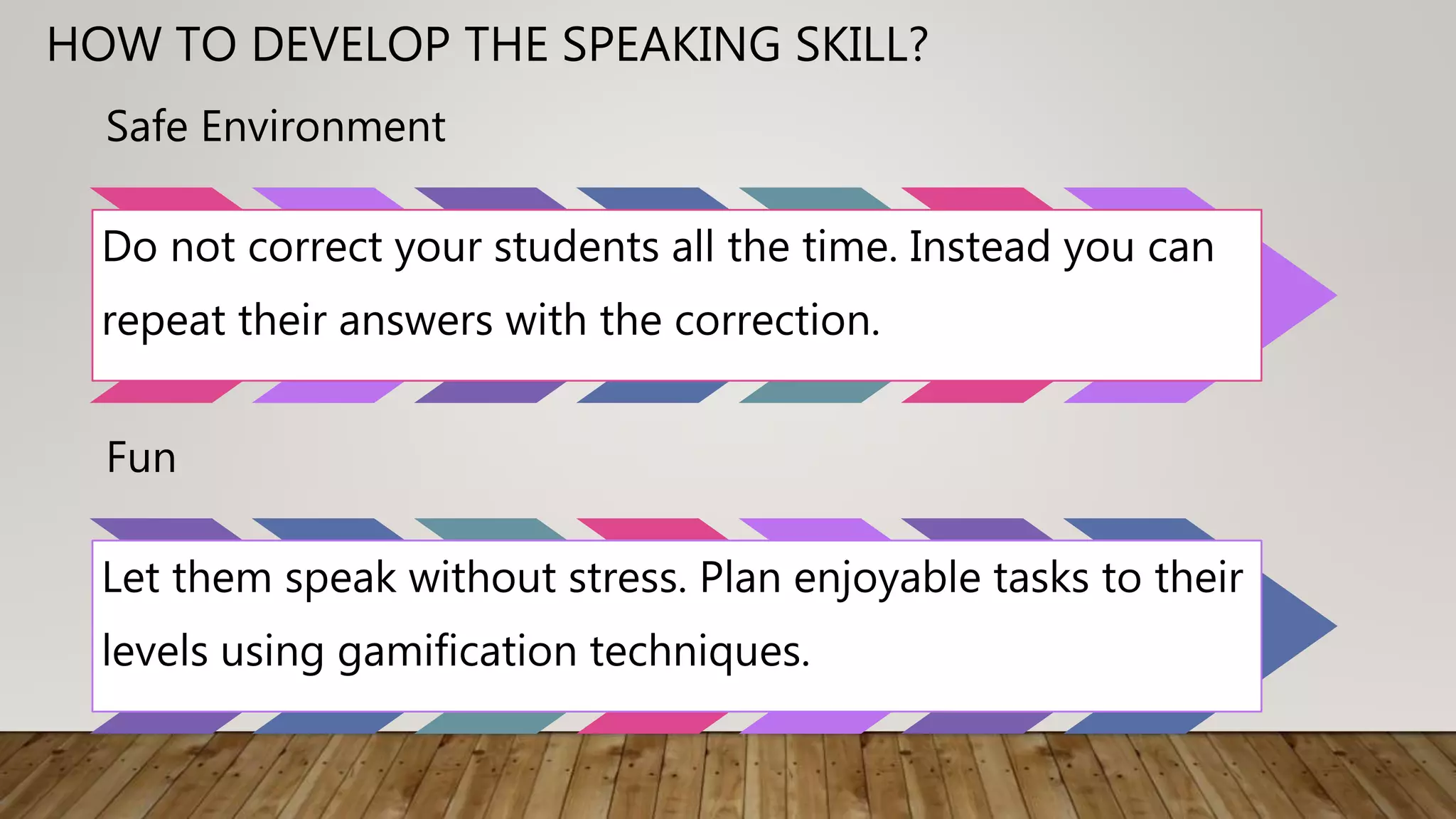
HOW TO DEVELOP THE SPEAKING SKILL?
Safe Environment
Do not correct your students all the time. Instead you can
repeat their answers with the correction.
Fun
Let them speak without stress. Plan enjoyable tasks to their
levels using gamification techniques.
HOW TO DEVELOP THE SPEAKING SKILL?
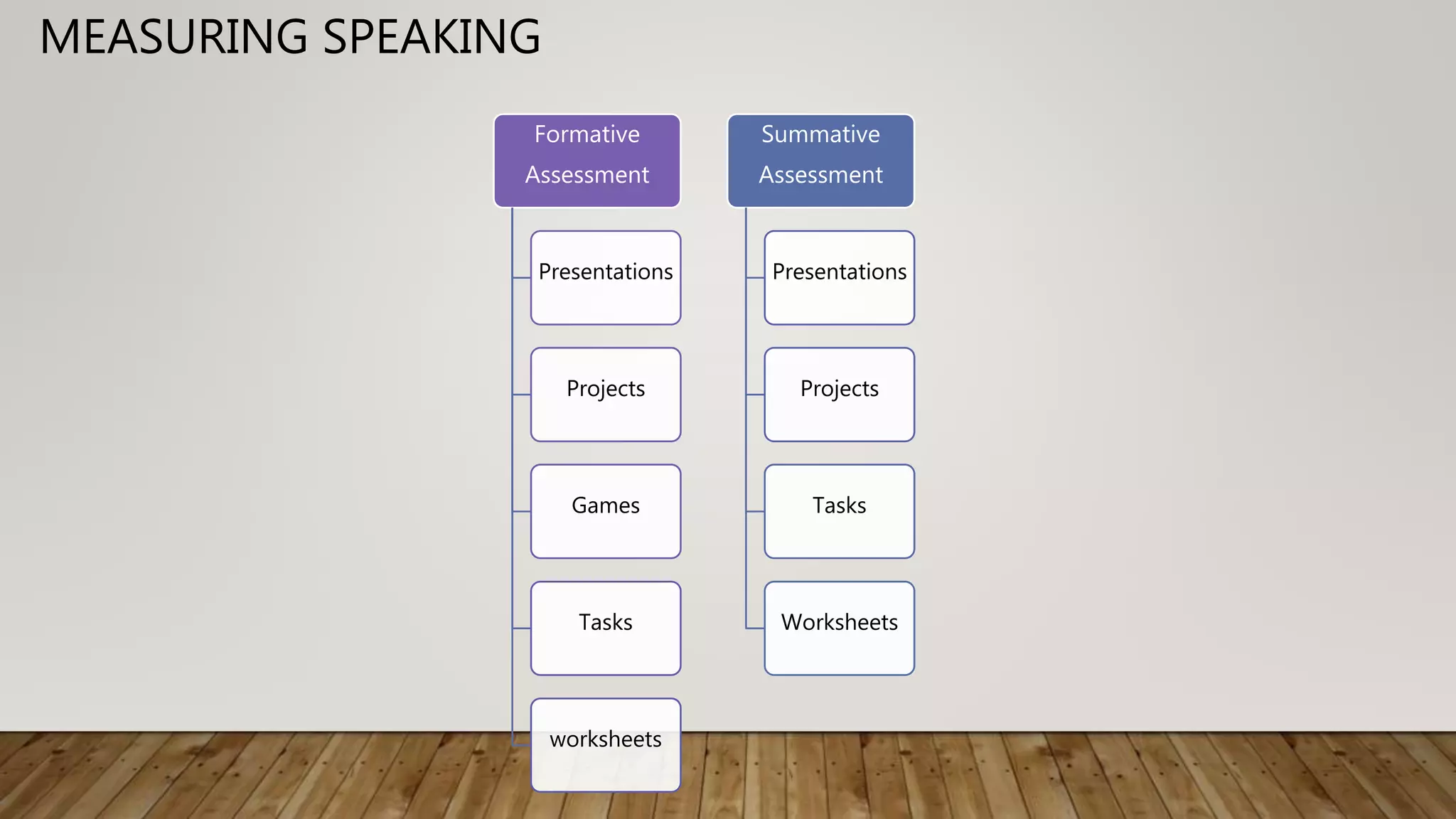
Formative
Assessment
Presentations
Projects
Games
Tasks
worksheets
Summative
Assessment
Presentations
Projects
Tasks
Worksheets
MEASURING SPEAKING
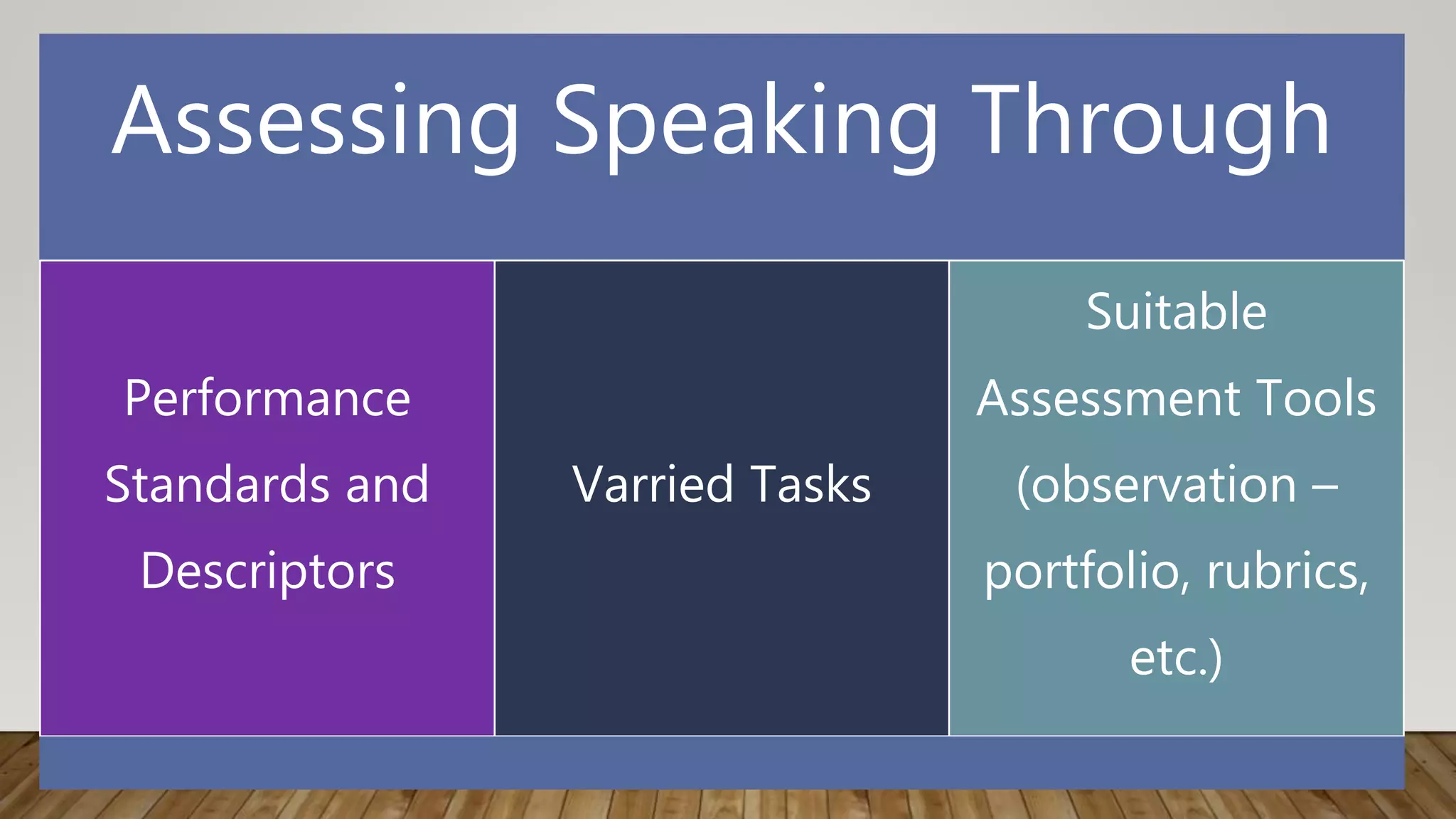
Assessing Speaking Through
Curriculum
Standards and
Descriptors
Varried Tasks
Suitable
Assessment Tools
(observation –
portfolio, rubrics,
etc.)
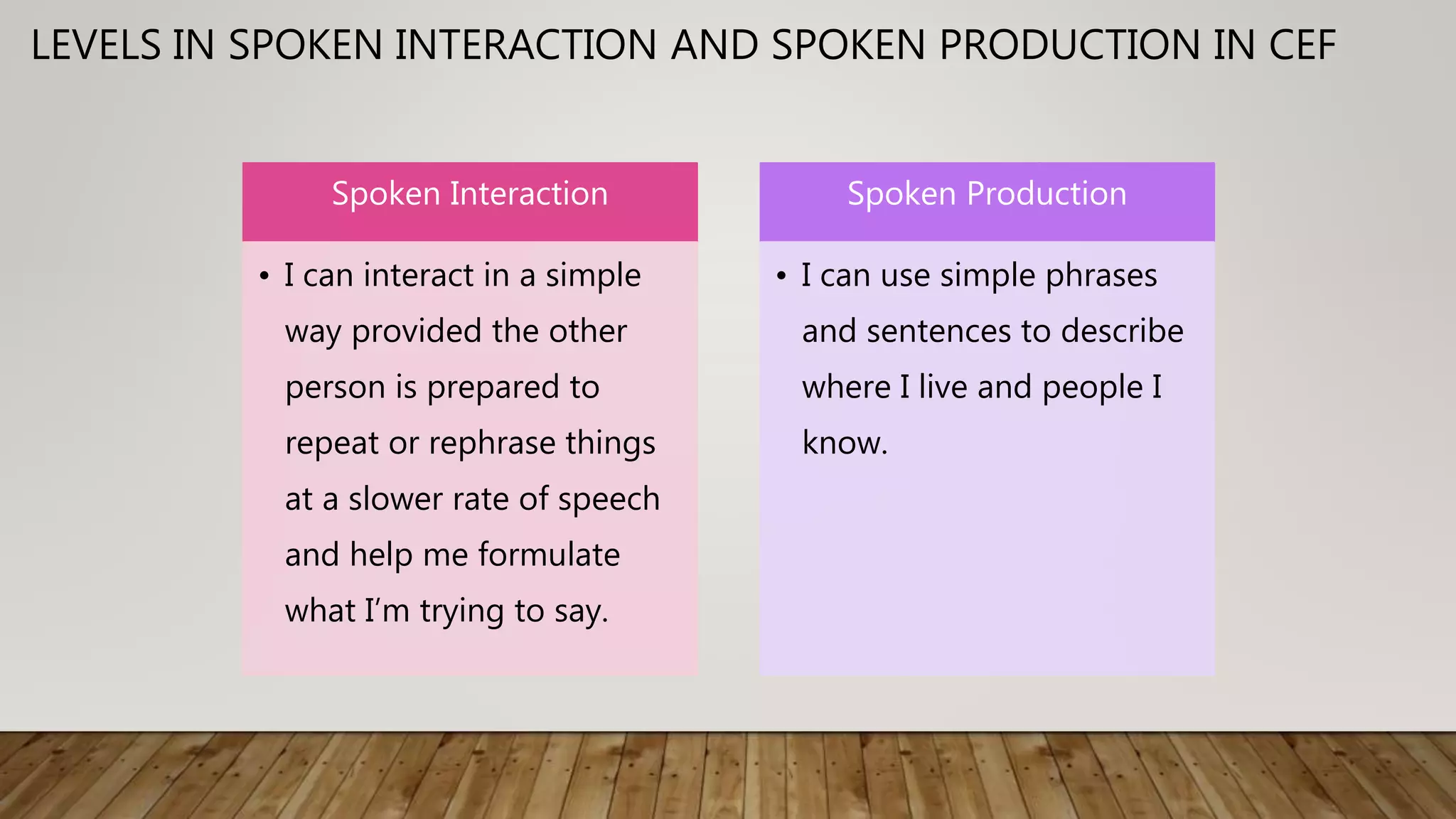
Spoken Interaction
• I can interact in a simple
way provided the other
person is prepared to
repeat or rephrase things
at a slower rate of speech
and help me formulate
what I’m trying to say.
Spoken Production
• I can use simple phrases
and sentences to describe
where I live and people I
know.
LEVELS IN SPOKEN INTERACTION AND SPOKEN PRODUCTION IN CEF
REFERENCE
The Importance of Teaching Listening and Speaking
Skills; TRABAJO FIN DE MÁSTER. CURSO: 2011 –
2012.

Developing and assessing speaking in a competence based

  • 1.
    DEVELOPING AND ASSESSING SPEAKINGIN A COMPETENCE BASED CURRICULUM H.O.D. NOURA AL-BEDAIWI
  • 2.
    SPEAKING SKILL • Itis challenging to have students acquire a foreign language in a spoken form. The speaking skill needs practice outside class doors. • “Brown (1994) labels speaking as the most challenging skill for students because of the set of features that characterize oral discourse: - Contractions, vowel reductions and elision; - The use of slang and idioms; - Stress, rhythm and intonation; - The need to interact with at least one other speaker.”
  • 3.
    SPEAKING SKILL Speaking isan “activity requiring the integration of many subsystems…all these factors combine to make speaking a second or foreign language a formidable task for language learners…yet for many people, speaking is seen as the central skill” (Bailey and Savage 1994: 6-7).
  • 4.
    Authentic Dialogues Have studentsspeak through their own experiences in a conversation. PBL Have students communicate while making a project. It might be challenging to have them not speak in their own mother tongue; encouragement is needed therefore. Language to their Level Speak in a simple language and encourage them to use the words they already learned. HOW TO DEVELOP THE SPEAKING SKILL?
  • 5.
    Safe Environment Do notcorrect your students all the time. Instead you can repeat their answers with the correction. Fun Let them speak without stress. Plan enjoyable tasks to their levels using gamification techniques. HOW TO DEVELOP THE SPEAKING SKILL?
  • 6.
  • 7.
    Assessing Speaking Through Curriculum Standardsand Descriptors Varried Tasks Suitable Assessment Tools (observation – portfolio, rubrics, etc.)
  • 8.
    Spoken Interaction • Ican interact in a simple way provided the other person is prepared to repeat or rephrase things at a slower rate of speech and help me formulate what I’m trying to say. Spoken Production • I can use simple phrases and sentences to describe where I live and people I know. LEVELS IN SPOKEN INTERACTION AND SPOKEN PRODUCTION IN CEF
  • 9.
    REFERENCE The Importance ofTeaching Listening and Speaking Skills; TRABAJO FIN DE MÁSTER. CURSO: 2011 – 2012.