EFL Learning
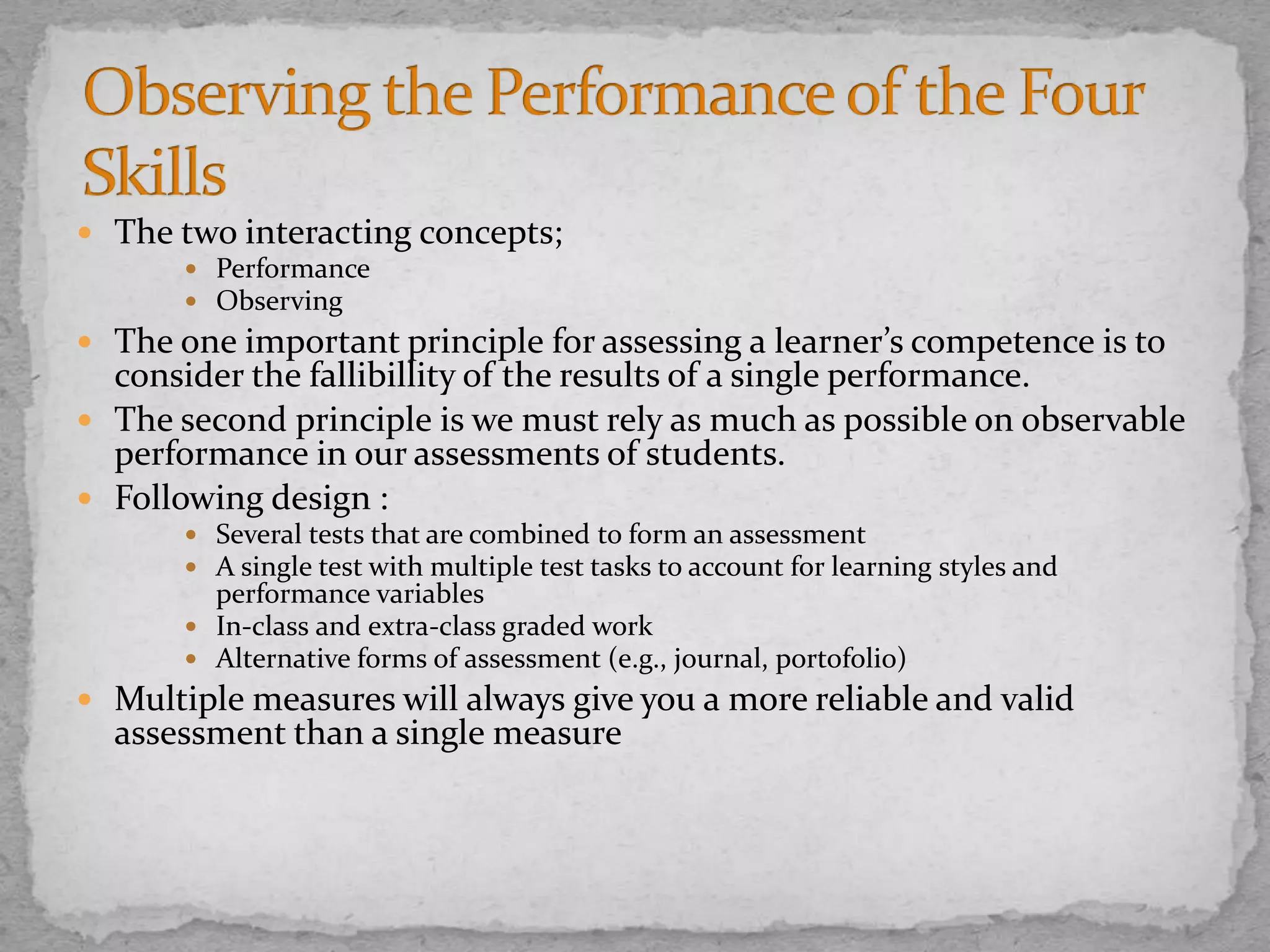
 The two interacting concepts;
 Performance
 Observing
 The one important principle for assessing a learner’s competence is to
consider the fallibillity of the results of a single performance.
 The second principle is we must rely as much as possible on observable
performance in our assessments of students.
 Following design :
 Several tests that are combined to form an assessment
 A single test with multiple test tasks to account for learning styles and
performance variables
 In-class and extra-class graded work
 Alternative forms of assessment (e.g., journal, portofolio)
 Multiple measures will always give you a more reliable and valid
assessment than a single measure
 Listening is often implied as a component of speaking
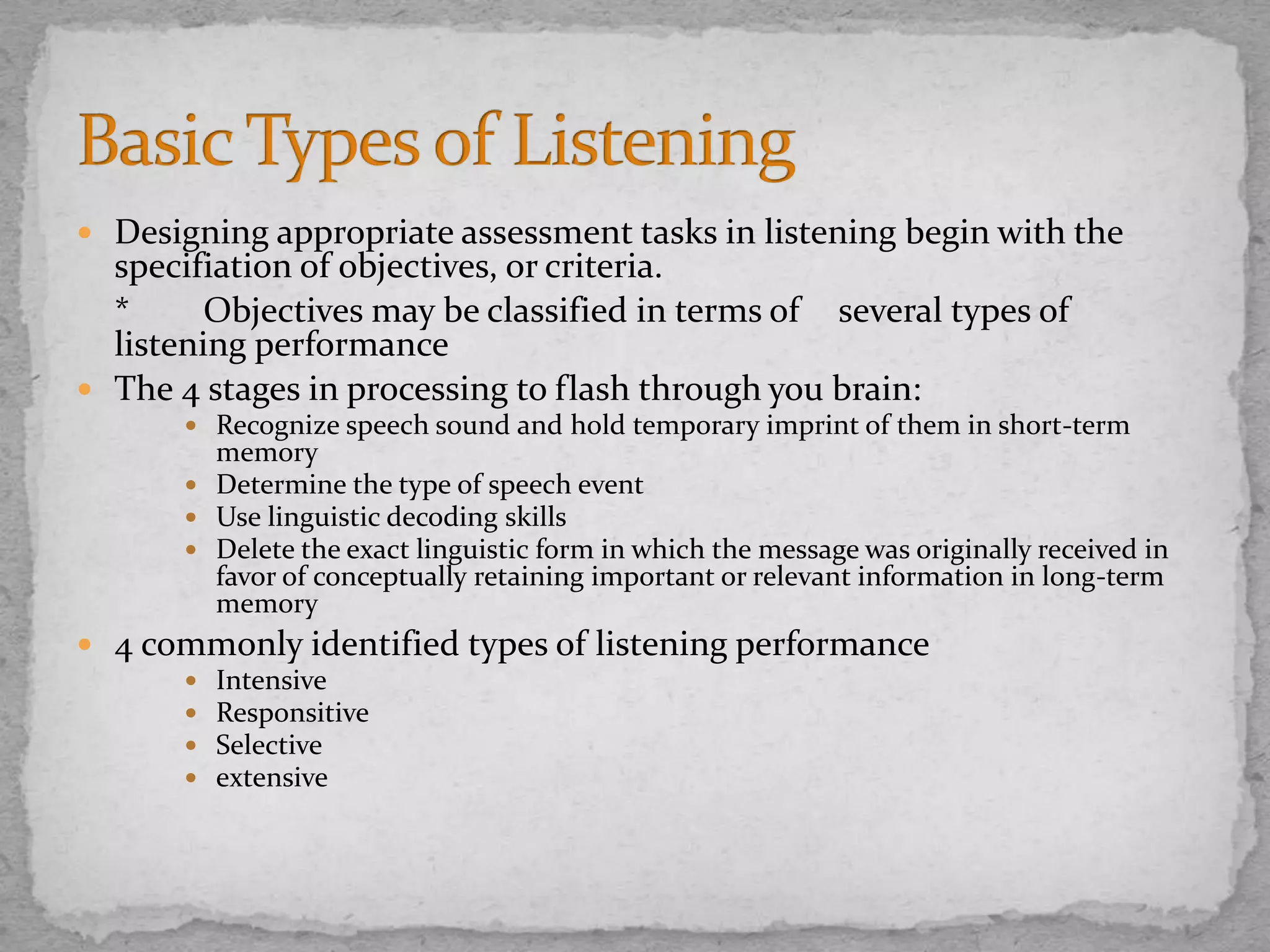
 Designing appropriate assessment tasks in listening begin with the
specifiation of objectives, or criteria.
* Objectives may be classified in terms of several types of
listening performance
 The 4 stages in processing to flash through you brain:
 Recognize speech sound and hold temporary imprint of them in short-term
memory
 Determine the type of speech event
 Use linguistic decoding skills
 Delete the exact linguistic form in which the message was originally received in
favor of conceptually retaining important or relevant information in long-term
memory
 4 commonly identified types of listening performance
 Intensive
 Responsitive
 Selective
 extensive
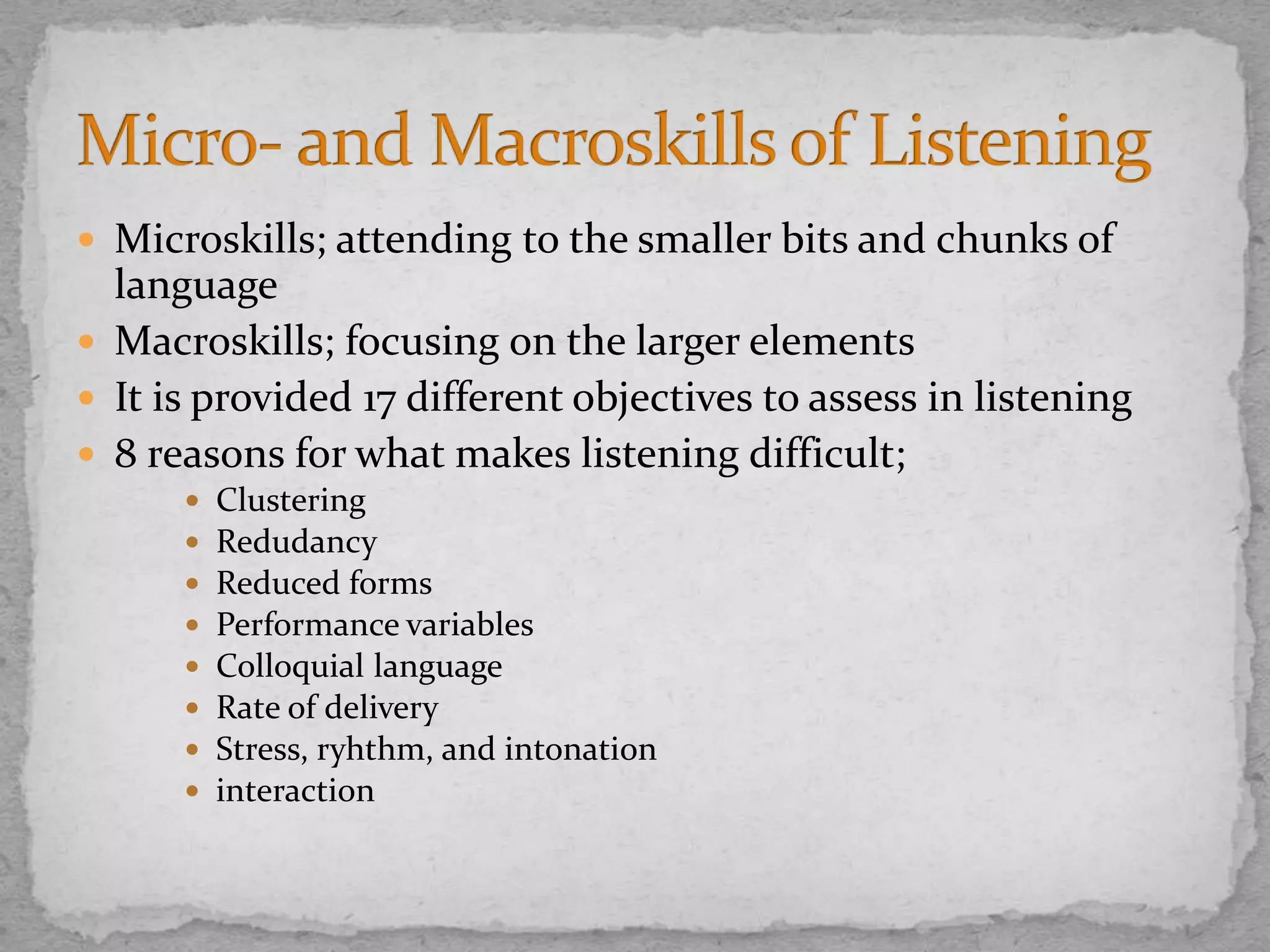
 Microskills; attending to the smaller bits and chunks of
language
 Macroskills; focusing on the larger elements
 It is provided 17 different objectives to assess in listening
 8 reasons for what makes listening difficult;
 Clustering
 Redudancy
 Reduced forms
 Performance variables
 Colloquial language
 Rate of delivery
 Stress, ryhthm, and intonation
 interaction
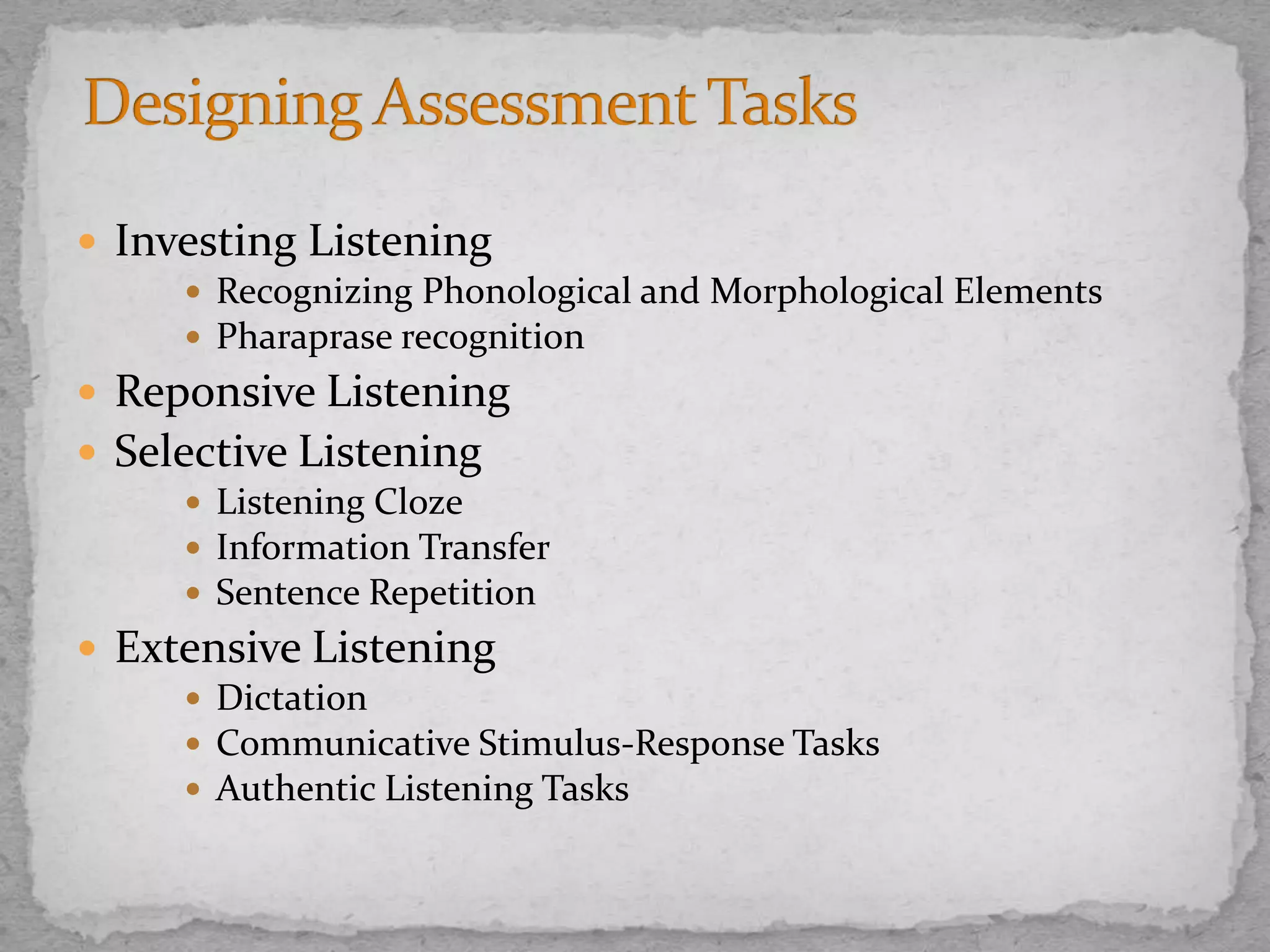
 Investing Listening
 Recognizing Phonological and Morphological Elements
 Pharaprase recognition
 Reponsive Listening
 Selective Listening
 Listening Cloze
 Information Transfer
 Sentence Repetition
 Extensive Listening
 Dictation
 Communicative Stimulus-Response Tasks
 Authentic Listening Tasks
 Source : eflearners.blogspot.com

Language Assessment - Assessing Listening by EFL Learning

  • 1.
  • 2.
     The twointeracting concepts;  Performance  Observing  The one important principle for assessing a learner’s competence is to consider the fallibillity of the results of a single performance.  The second principle is we must rely as much as possible on observable performance in our assessments of students.  Following design :  Several tests that are combined to form an assessment  A single test with multiple test tasks to account for learning styles and performance variables  In-class and extra-class graded work  Alternative forms of assessment (e.g., journal, portofolio)  Multiple measures will always give you a more reliable and valid assessment than a single measure
  • 3.
     Listening isoften implied as a component of speaking
  • 4.
     Designing appropriateassessment tasks in listening begin with the specifiation of objectives, or criteria. * Objectives may be classified in terms of several types of listening performance  The 4 stages in processing to flash through you brain:  Recognize speech sound and hold temporary imprint of them in short-term memory  Determine the type of speech event  Use linguistic decoding skills  Delete the exact linguistic form in which the message was originally received in favor of conceptually retaining important or relevant information in long-term memory  4 commonly identified types of listening performance  Intensive  Responsitive  Selective  extensive
  • 5.
     Microskills; attendingto the smaller bits and chunks of language  Macroskills; focusing on the larger elements  It is provided 17 different objectives to assess in listening  8 reasons for what makes listening difficult;  Clustering  Redudancy  Reduced forms  Performance variables  Colloquial language  Rate of delivery  Stress, ryhthm, and intonation  interaction
  • 6.
     Investing Listening Recognizing Phonological and Morphological Elements  Pharaprase recognition  Reponsive Listening  Selective Listening  Listening Cloze  Information Transfer  Sentence Repetition  Extensive Listening  Dictation  Communicative Stimulus-Response Tasks  Authentic Listening Tasks
  • 7.
     Source :eflearners.blogspot.com