









How Search Engine Works
The Main Parts of a Search Engine
• Spider (or “web crawler”)
• Indexer
• Search software (an algorithm)
Lets us Start with
SPIDERS
• A web crawler (also known asaweb spider or
web robot) isaprogram or automated script
which browses(crawls) theWorld WideWeb
in amethodical, automated manner.This
processiscalled Web crawling or spidering.
• In short, All websitesarecodesand these
codesareread by spiders.
• So basically aSpider or Spidersaresoftware
programsthat crawl throughout theinternet
and select relativedatato beINDEXED.
• When weSearch in asearch engineisactually
searching theindex of that search engineand
not thewholeinternet.
• Spidersstart by fetching few web pagesthen
they follow thelinkson thosepagesand fetch
thepagesthey point to, and follow all thelinks
on thosepagesand fetch thepagesthey link to
and so on.
• Until they'veindexed apretty big chunk of the
web, many billionsof pagesstored across
thousandsof machines.
Let US SEE what is
INDEXING ?
Is It Easy to Search here?
Or Here?
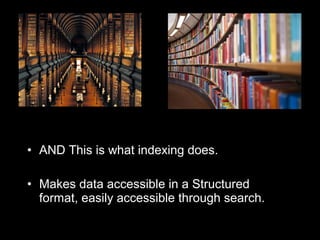
• Thisistheequivalent form of theinformation that our spiders
acquireafter they finish with crawling.
• Random organization and NO STRUCTURE.
• Theinformation availablethroughout theworld wideweb is
in all kindsof shapessizesand FORMATS.
• AND This is what indexing does.
• Makes data accessible in a Structured
format, easily accessible through search.
Indexer
• Search engine indexing is the process of a
search engine collecting, parses and stores
data for use by the search engine.
• The actual search engine index is the place
where all the data the search engine has
collected is stored.
• It is the search engine index that provides
the results for search queries, and pages
that are stored within the search engine
index that appear on the search engine
results page.
What is a
Search Algorithms ?
• Basically, a search engine algorithm is a set of
rules, or a unique formula, that the search engine
uses to determine the significance or rankings of
a web page, and each search engine has its own
set of rules.
• The algorithms, as they are different for each
search engine, are also closely guarded secrets.
• Search algorithm sorts on the basis of many
things like location of keyword, synonyms,
adjacent words, etc
• But there are certain things that all search engine
algorithms have in common.
• Relevancy
• Individual Factors
• Off-Page Factors
Relevancy
• This is the First thing every search engine
checks.
• The algorithm will determine whether this web
page has any relevancy at all for the particular
keyword.
• Location of keywords in that page is also
important for the relevancy of that website.
• Web pages that have the keywords in the title,
as well as within the headline or the first few
lines of the text will rank better for that keyword
than websites that do not have these features
Individual Factors
• A second part of search engine algorithms are
the individual factors that make that particular
search engine different from every other search
engine out there.
• Each search engine has unique algorithms, and
the individual factors of these algorithms are why
a search query turns up different results on
Google than MSN or Yahoo!.
• One of the most common individual factors is the
number of pages a search engine indexes.
• They may just have more pages indexed, or
index them more frequently, but this can give
different results for each search engine.
• Some search engines also penalize for
spamming, while others do not.
Off-Page Factors
• Another part of algorithms that is still individual
to each search engine are off-page factors.
• Off-page factors are such things as click-through
measurement and linking.
• The frequency of click-through rates and linking
can be an indicator of how relevant a web page
is to actual users and visitors, and this can
cause an algorithm to rank the web page higher.
• Off-page factors are harder for web masters to
craft, but can have an enormous effect on page
rank depending on thesearch engine
algorithm.
• Search engine algorithms are the mystery
behind search engines, sometimes even
amusingly called the search engine’s
“Secret Sauce”.
• Beyond the basic functions of a search
engine, the relevancy of a web page, the
off-page factors, and the unique factors of
each search engine help make the
algorithms of each engine an important
part of the search engine optimization
design.

How search engine works ( Mr. Mirza)

  • 1.
  • 2.
    The Main Partsof a Search Engine • Spider (or “web crawler”) • Indexer • Search software (an algorithm)
  • 3.
    Lets us Startwith SPIDERS
  • 4.
    • A webcrawler (also known asaweb spider or web robot) isaprogram or automated script which browses(crawls) theWorld WideWeb in amethodical, automated manner.This processiscalled Web crawling or spidering. • In short, All websitesarecodesand these codesareread by spiders. • So basically aSpider or Spidersaresoftware programsthat crawl throughout theinternet and select relativedatato beINDEXED.
  • 5.
    • When weSearchin asearch engineisactually searching theindex of that search engineand not thewholeinternet. • Spidersstart by fetching few web pagesthen they follow thelinkson thosepagesand fetch thepagesthey point to, and follow all thelinks on thosepagesand fetch thepagesthey link to and so on. • Until they'veindexed apretty big chunk of the web, many billionsof pagesstored across thousandsof machines.
  • 7.
    Let US SEEwhat is INDEXING ?
  • 8.
    Is It Easyto Search here?
  • 9.
  • 10.
    • Thisistheequivalent formof theinformation that our spiders acquireafter they finish with crawling. • Random organization and NO STRUCTURE. • Theinformation availablethroughout theworld wideweb is in all kindsof shapessizesand FORMATS.
  • 11.
    • AND Thisis what indexing does. • Makes data accessible in a Structured format, easily accessible through search.
  • 12.
    Indexer • Search engineindexing is the process of a search engine collecting, parses and stores data for use by the search engine. • The actual search engine index is the place where all the data the search engine has collected is stored. • It is the search engine index that provides the results for search queries, and pages that are stored within the search engine index that appear on the search engine results page.
  • 13.
    What is a SearchAlgorithms ?
  • 14.
    • Basically, asearch engine algorithm is a set of rules, or a unique formula, that the search engine uses to determine the significance or rankings of a web page, and each search engine has its own set of rules. • The algorithms, as they are different for each search engine, are also closely guarded secrets. • Search algorithm sorts on the basis of many things like location of keyword, synonyms, adjacent words, etc • But there are certain things that all search engine algorithms have in common.
  • 16.
    • Relevancy • IndividualFactors • Off-Page Factors
  • 17.
    Relevancy • This isthe First thing every search engine checks. • The algorithm will determine whether this web page has any relevancy at all for the particular keyword. • Location of keywords in that page is also important for the relevancy of that website. • Web pages that have the keywords in the title, as well as within the headline or the first few lines of the text will rank better for that keyword than websites that do not have these features
  • 18.
    Individual Factors • Asecond part of search engine algorithms are the individual factors that make that particular search engine different from every other search engine out there. • Each search engine has unique algorithms, and the individual factors of these algorithms are why a search query turns up different results on Google than MSN or Yahoo!. • One of the most common individual factors is the number of pages a search engine indexes. • They may just have more pages indexed, or index them more frequently, but this can give different results for each search engine. • Some search engines also penalize for spamming, while others do not.
  • 19.
    Off-Page Factors • Anotherpart of algorithms that is still individual to each search engine are off-page factors. • Off-page factors are such things as click-through measurement and linking. • The frequency of click-through rates and linking can be an indicator of how relevant a web page is to actual users and visitors, and this can cause an algorithm to rank the web page higher. • Off-page factors are harder for web masters to craft, but can have an enormous effect on page rank depending on thesearch engine algorithm.
  • 21.
    • Search enginealgorithms are the mystery behind search engines, sometimes even amusingly called the search engine’s “Secret Sauce”. • Beyond the basic functions of a search engine, the relevancy of a web page, the off-page factors, and the unique factors of each search engine help make the algorithms of each engine an important part of the search engine optimization design.