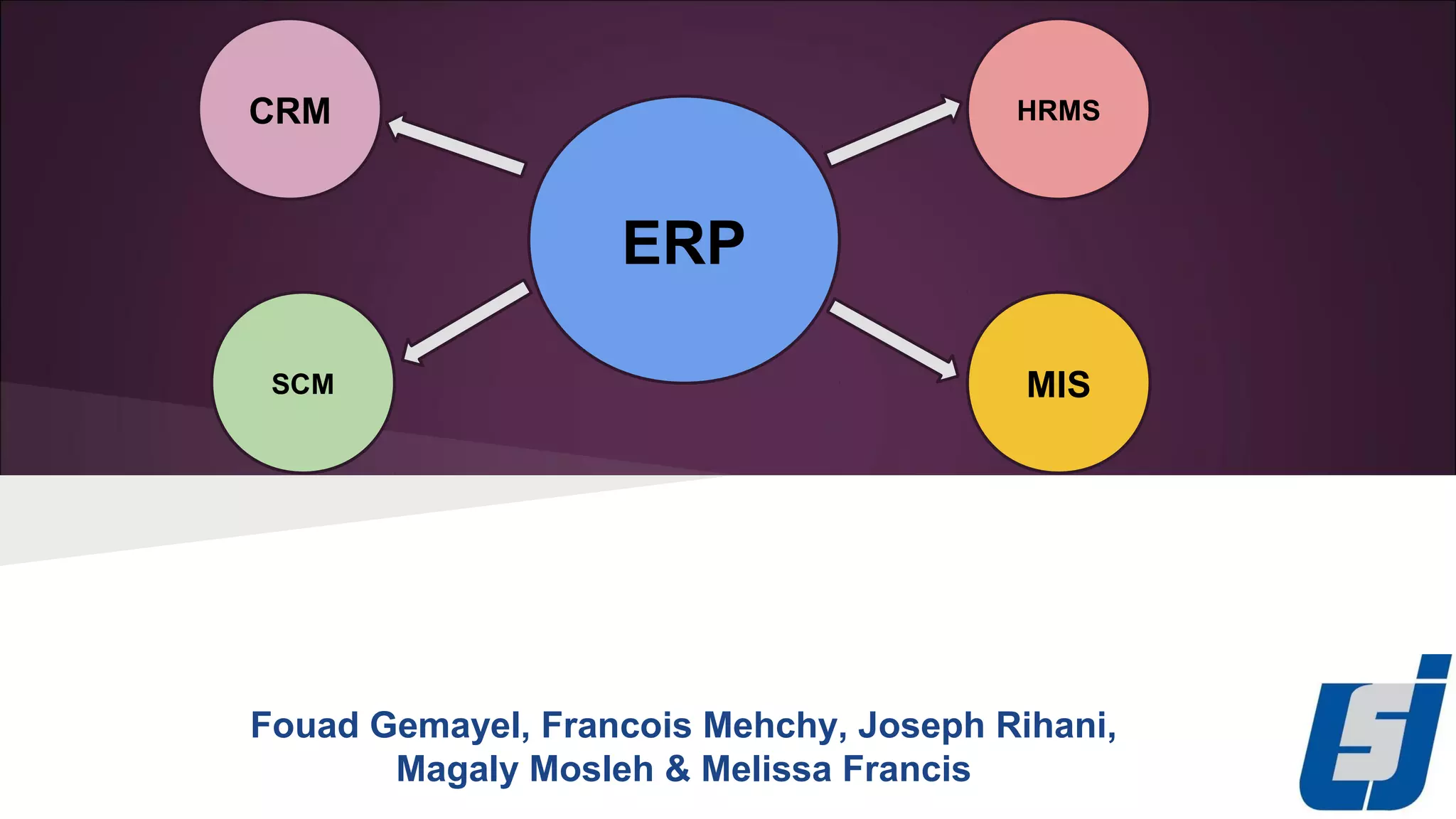
ERP
CRM
SCM MIS
HRMS
Fouad Gemayel, Francois Mehchy, Joseph Rihani,
Magaly Mosleh & Melissa Francis
Outline
1- CRM
2- HRMS
3- SCM
4- MIS
5- ERP
CRM
Customer Relationship Management
What is CRM?
“The approach of identifying, establishing, maintaining,
and enhancing lasting relationships with customers.”
“The formation of bonds between a company and its
customers.”
•CRM requires major integration of systems which few companies have
• CRM requires turning round existing systems to store, record and retrieve
on a customer-centric basis
• CRM requires people to stop thinking about departmental boundaries and
to start thinking about how as a team the company can help the customer
Cross Selling
•Selling a product or service to a customer as a result of another purchase
•Selling the right product to the right customer
•Selling more products to a customer increases revenue from that customer and
costs less than acquiring a new one
•It is critical to understand the ways by which customers evaluate how and whether
to respond to promotions
•Not every customer is a good candidate
Up selling and customer retention
Up-Selling
•Motivating customers to trade up to more profitable products
Customer Retention
•Analyzing customer attrition
•Understanding why customers have left
•Understanding who
Behavior Prediction
Using modeling and data mining techniques, including:
•Propensity to buy analysis:
What product is a particular customer likely to buy next
•Next sequential purchase:
What product is a customer likely to buy next
•Product affinity analysis:
Which products will be purchased with other products
•Price elasticity modeling and dynamic pricing:
Determining the optimal price for a given product
New era of business marketing is dependent upon
managing relationships.
Collaborative advantage is:
•Demonstrating special skills with “key” customers or
•Developing innovative strategies with alliance partners
CRM is revolutionary
•Grocery stores have been in the business of stocking shelves
•Banks have been in the business of managing the spread between
money borrowed and money lent
•Insurance companies have been in the business of managing loss
ratios
•Telecoms have been in the business of completing telephone calls
•Key point: More companies are beginning to view customers as their
primary asset
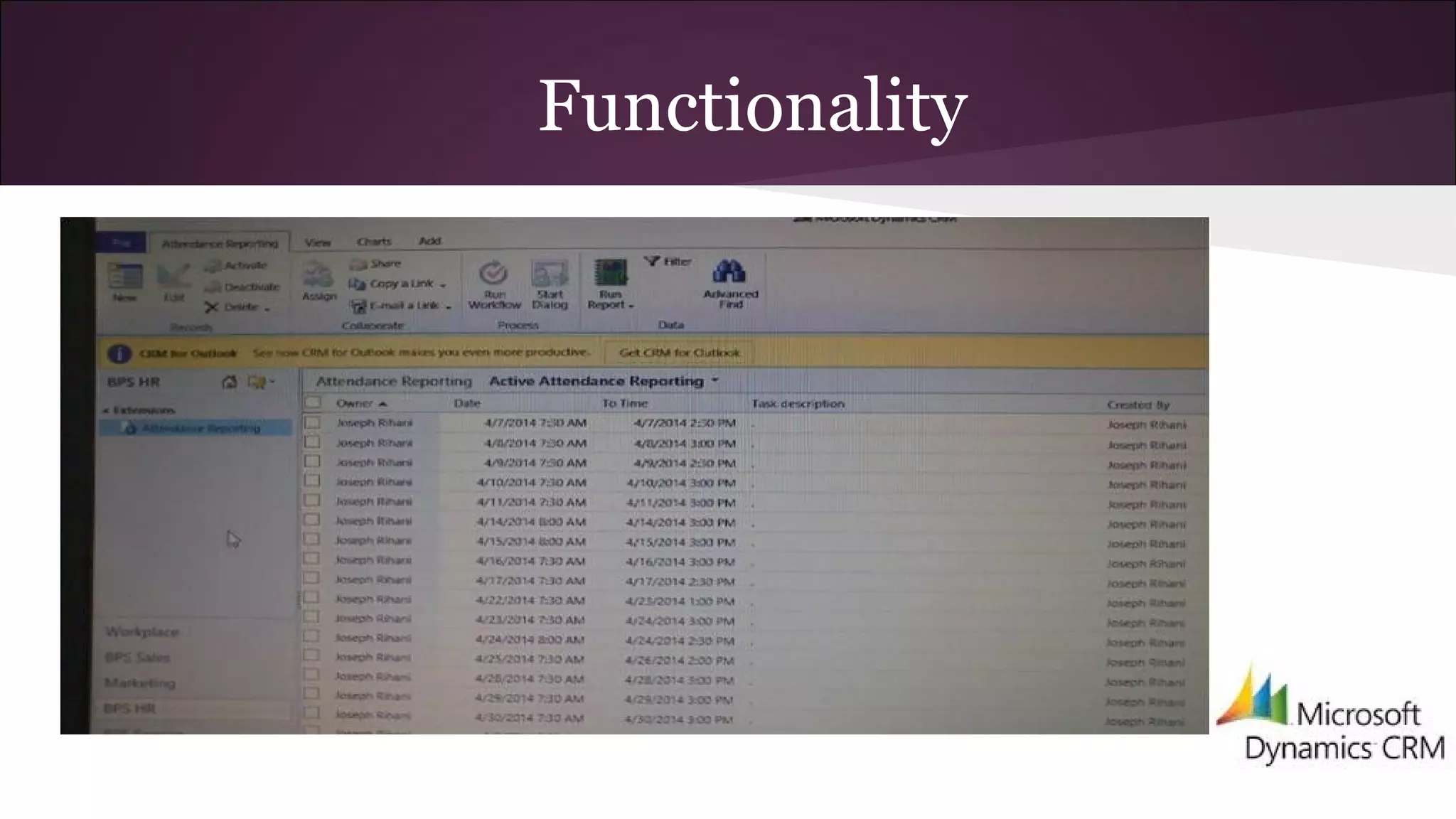
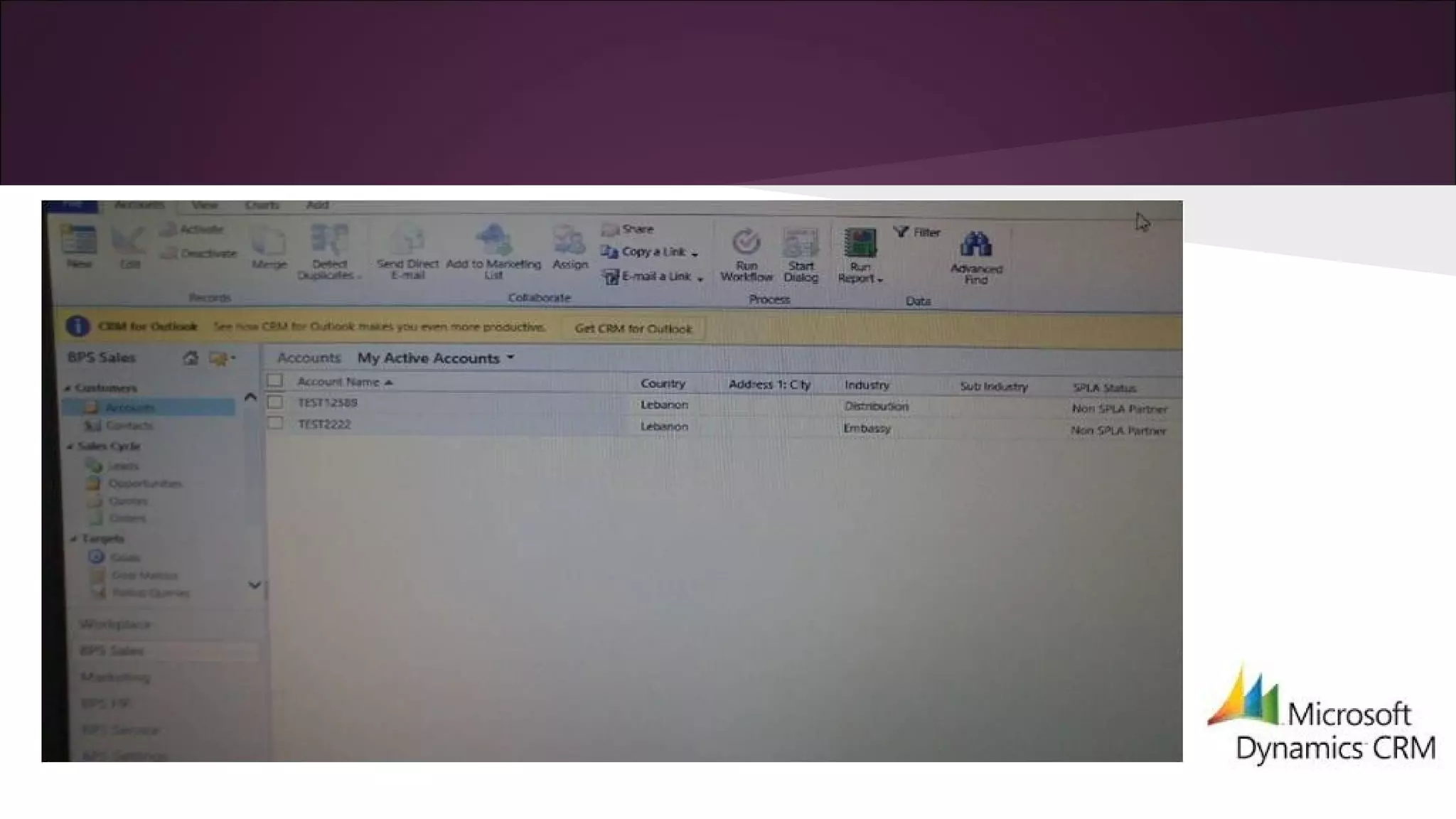
Functionality
HRMS
Human Resources Management System
What is HRMS
•HRMS stands for Human Resources Management
System.
•HRMS is a mix between the “traditional” HR job and the
use of softwares to do that job.
•Eliminates the majority of the paperwork previously
required.
What is HRMS
•HRMS currently handles:
1.Payroll
2.Time and attendance
3.Performance appraisal
4.Benefits administration
5.HR management information system
6.Recruiting/Learning management
7.Performance record
8.Employee self-service
9.Scheduling
10.Absence management
11.Analytics
What is HRMS
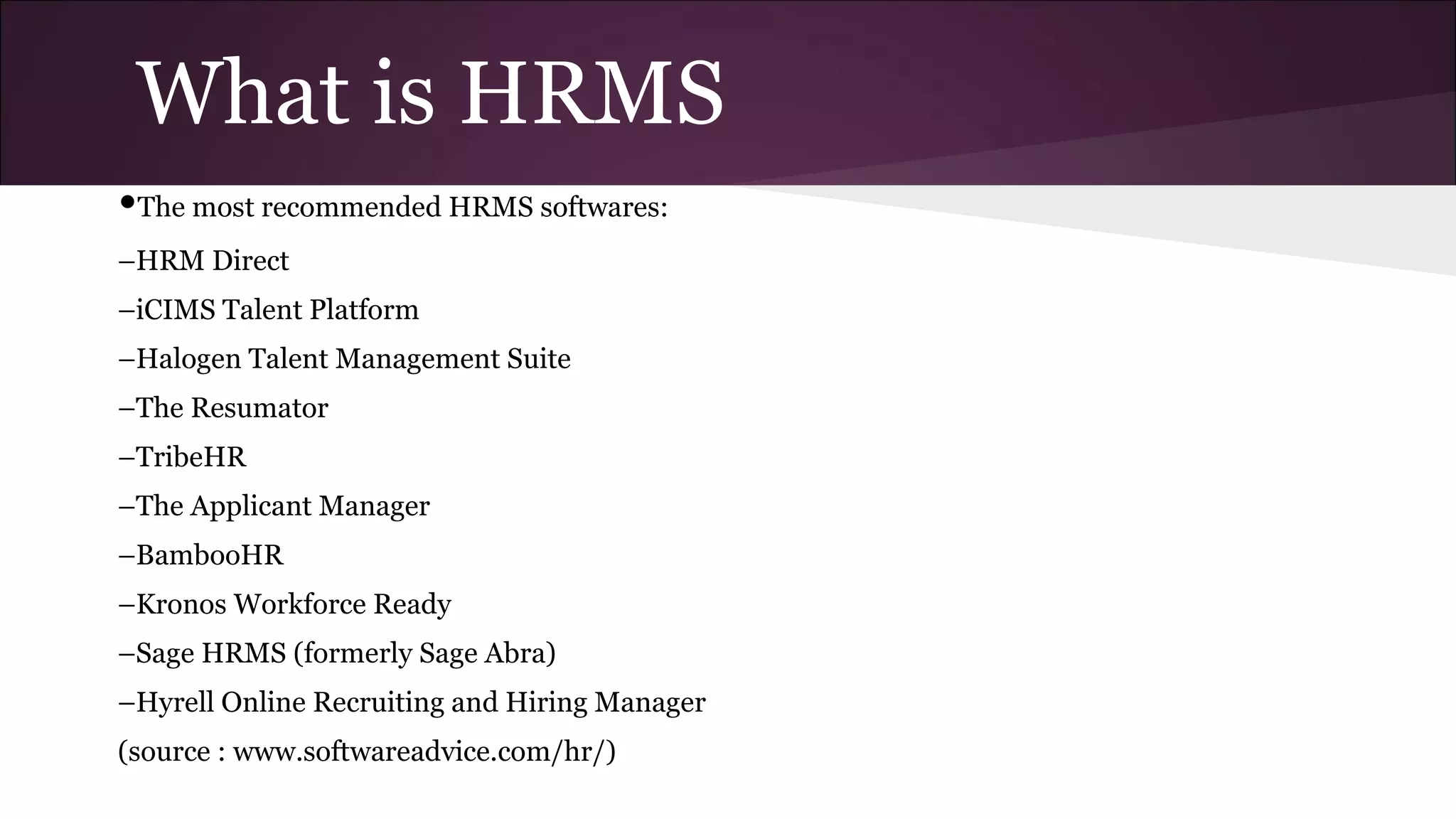
•The most recommended HRMS softwares:
–HRM Direct
–iCIMS Talent Platform
–Halogen Talent Management Suite
–The Resumator
–TribeHR
–The Applicant Manager
–BambooHR
–Kronos Workforce Ready
–Sage HRMS (formerly Sage Abra)
–Hyrell Online Recruiting and Hiring Manager
(source : www.softwareadvice.com/hr/)
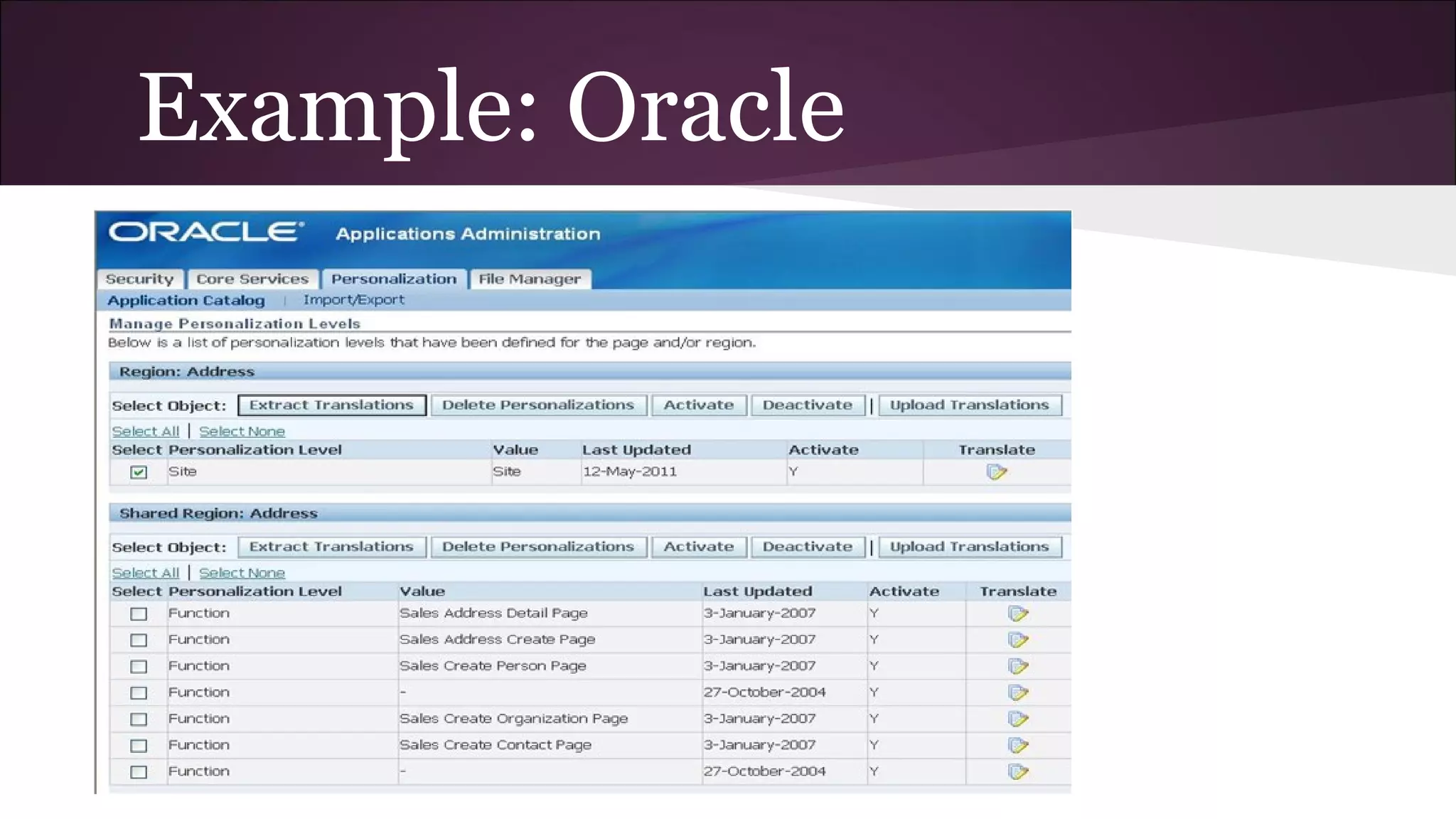
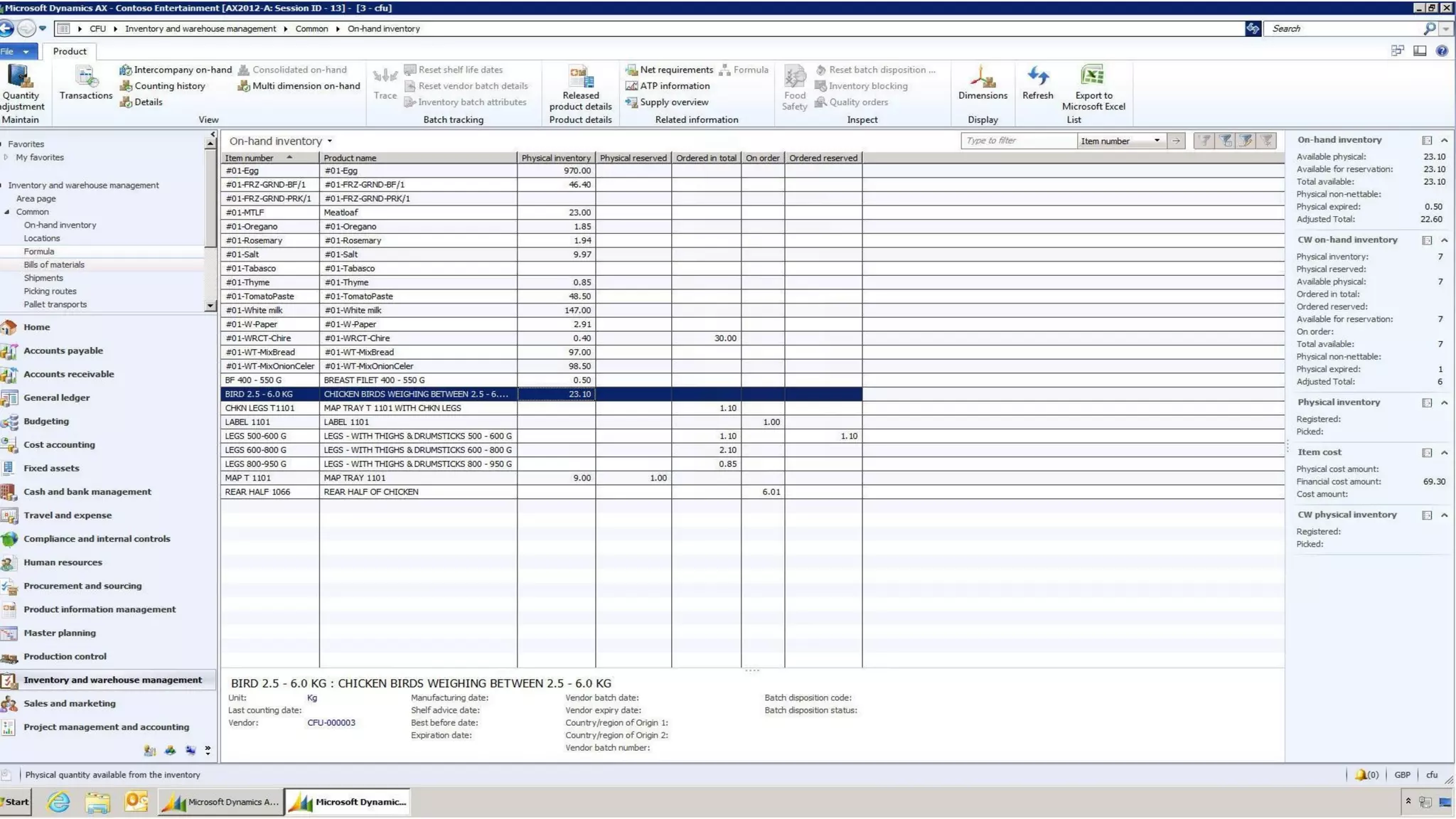
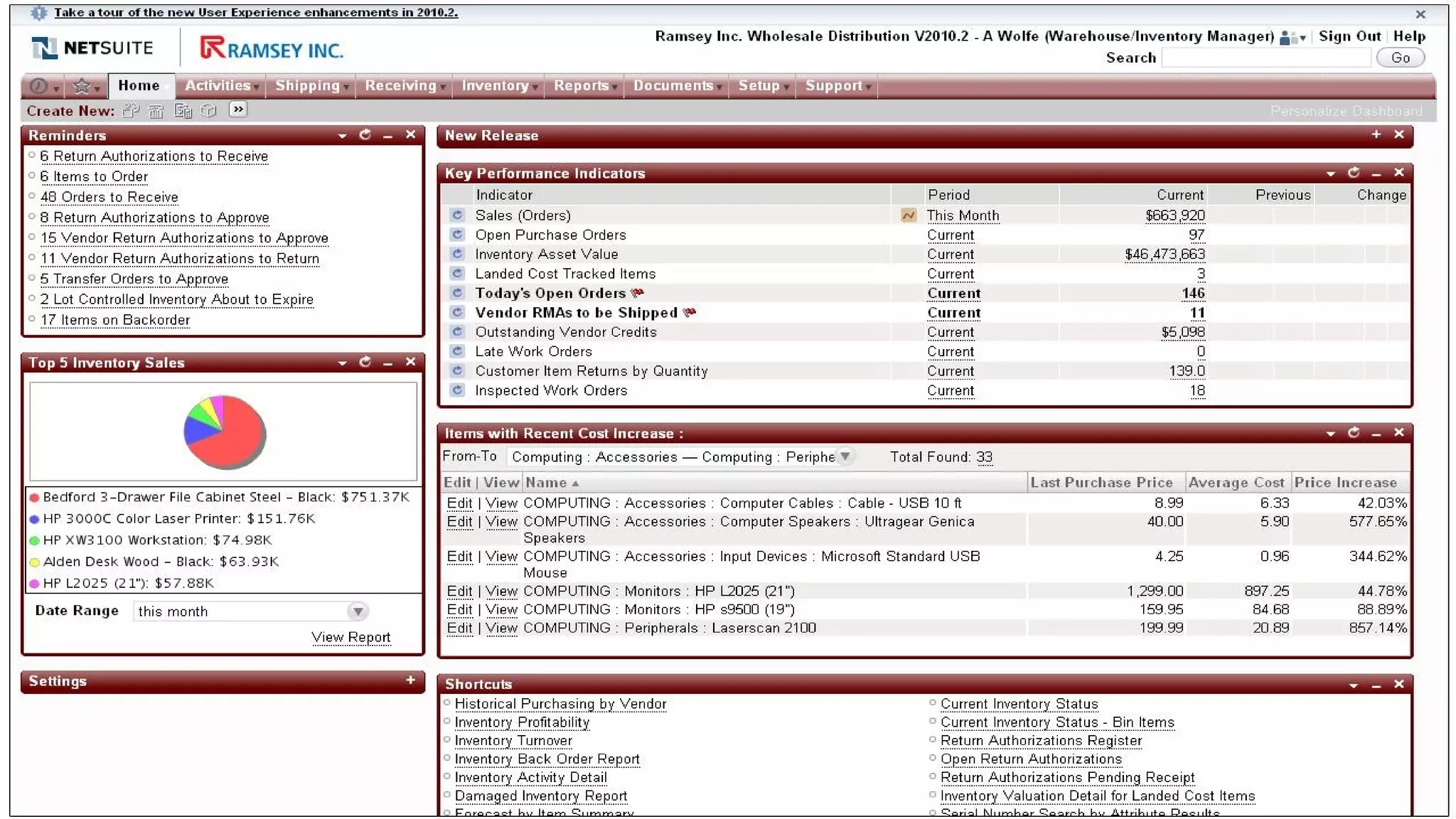
Example: Oracle
SCM
Supply Chain Management
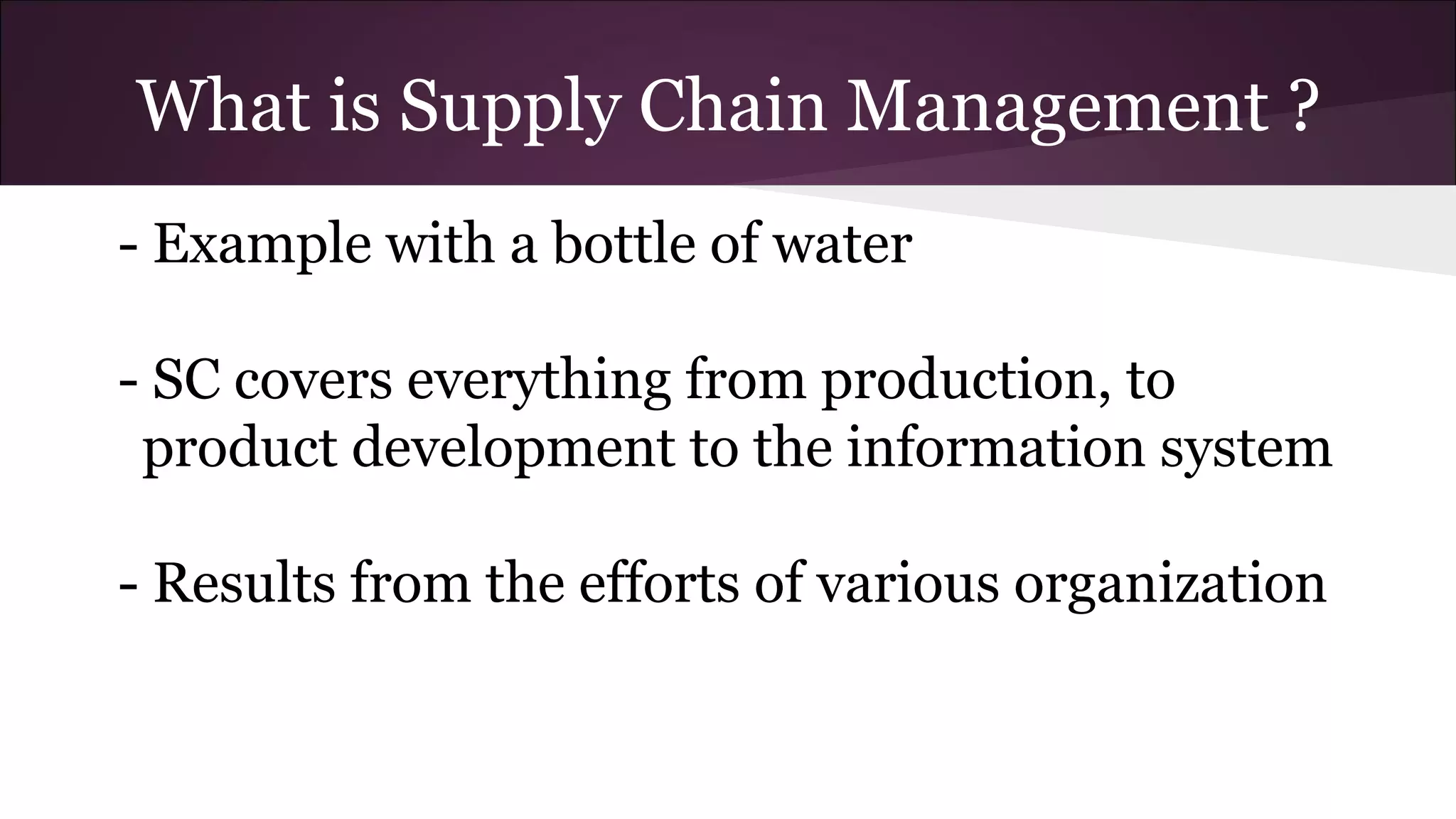
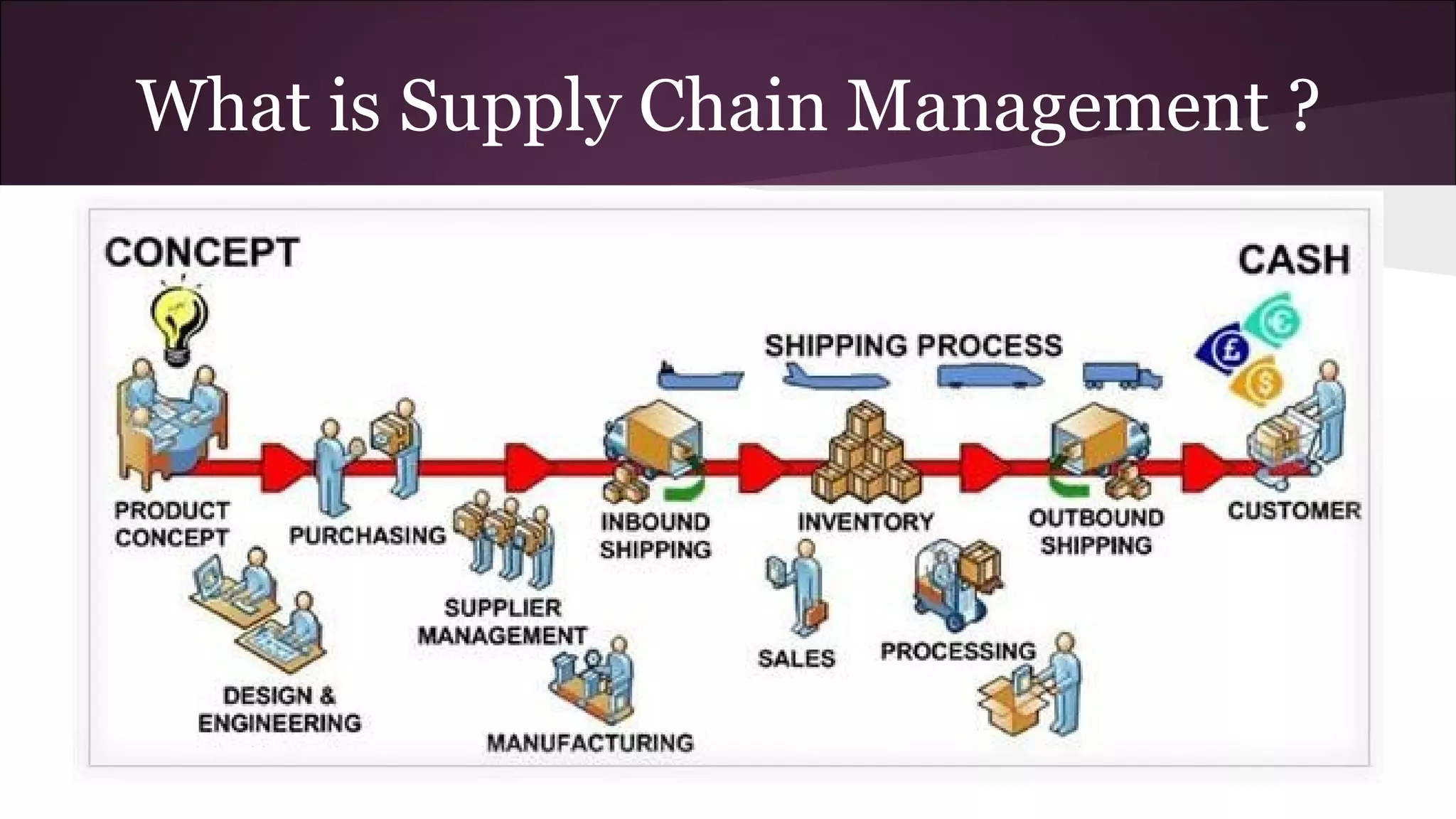
What is Supply Chain Management ?
- Example with a bottle of water
- SC covers everything from production, to
product development to the information system
- Results from the efforts of various organization
What is Supply Chain Management ?
Managing Supply
- SC are the bones and the muscles of an
organisation
-Need to buy high quality materials and
services
-Should go well beyond cost
- Need to have excellent relationship,
negotiation and analytical skills
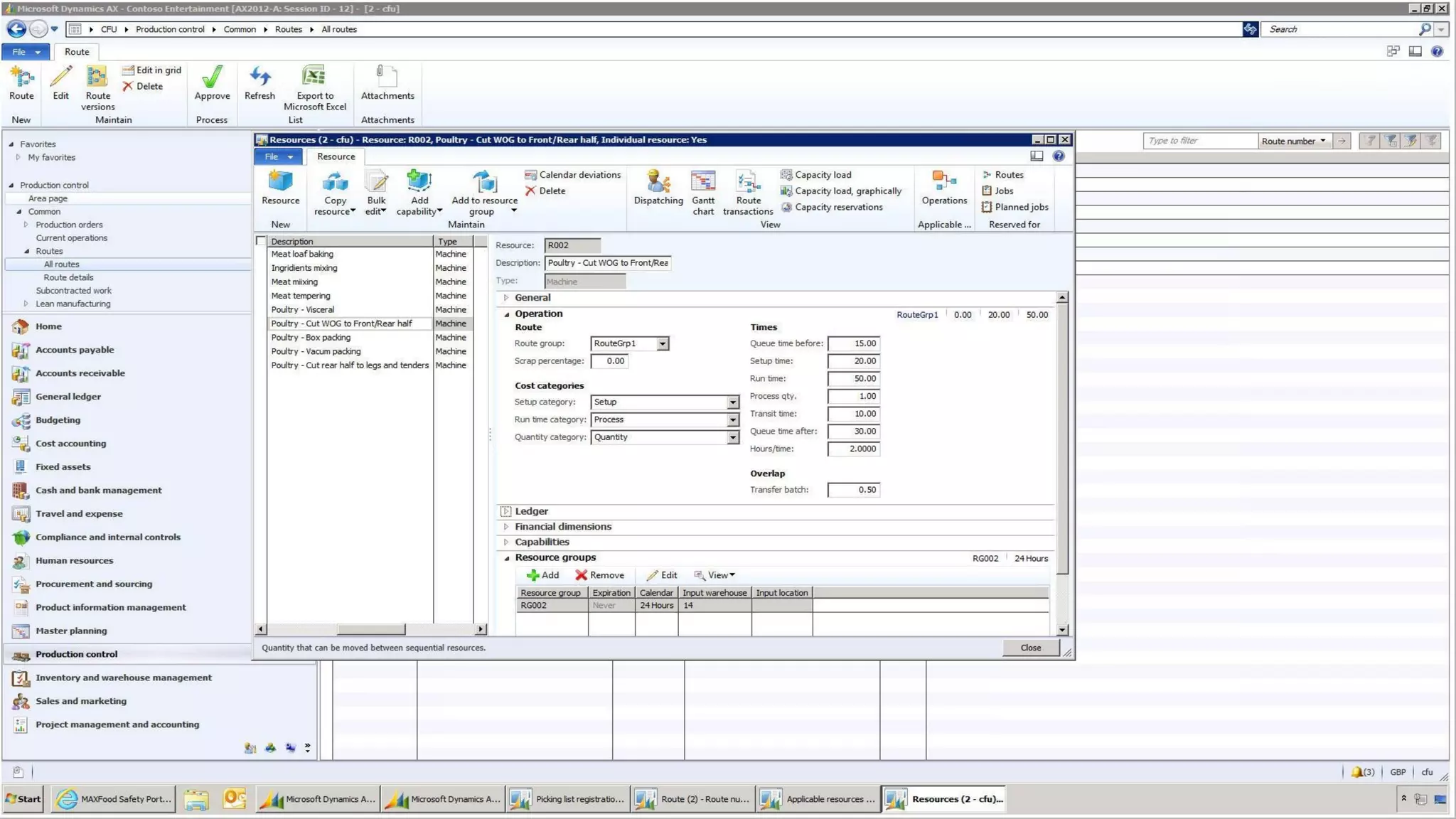
Supply Chain Management Software
-Planning Applications
-Execution Applications
-SCM applications open data models
improve the time-to-market of products, and
reduce costs
MIS
Marketing Information Service
What is MIS?
A computerized system that provides an
organized flow of information to enable and
support the marketing activities of an
organization.
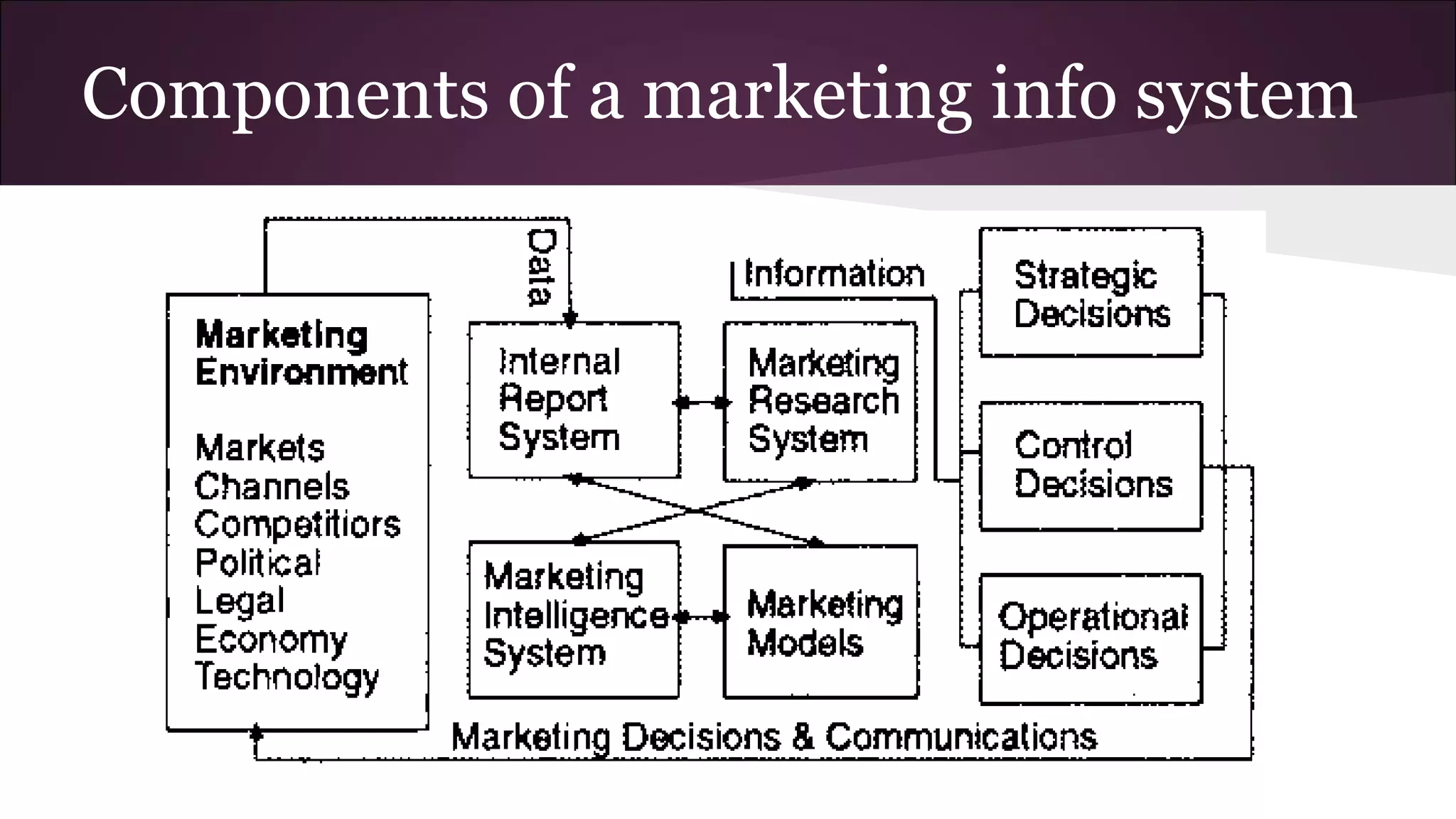
Components of a marketing info system
4 main constituent parts:
●The internal reporting system
●The marketing research system
●The marketing intelligence system
●Marketing models
Examples of marketing models:
· Time series sales modes
· Brand switching models
· Linear programming
· Elasticity models (price, incomes, demand, supply, etc.)
· Regression and correlation models
· Analysis of Variance (ANOVA) models
· Sensitivity analysis
· Discounted cash flow
· Spreadsheet 'what if models
8 steps to creating an effective MIS
1. Start with the accounting system
2. Market information form
3. Lead card
4. Hot list
5. Promotion effectiveness report
6. Market research
7. Secondary research
8. Primary research
ERP
Enterprise Resource Planning
Definition
● It is a process of managing all resources and
their use in the entire enterprise in a
coordinated manner.
● It combines all databases across
departments into a single database that can
be accessed by all employees.
Benefits of ERP
● Improved integration, flexibility, speed and efficiency
● Fewer errors
● More complete access to information
● Lower total costs in the complete supply chain
● Shorten throughput times
● Sustained involvement and commitment of the top management
● Improve product quality
● Provide more reliable delivery dates and higher service to the
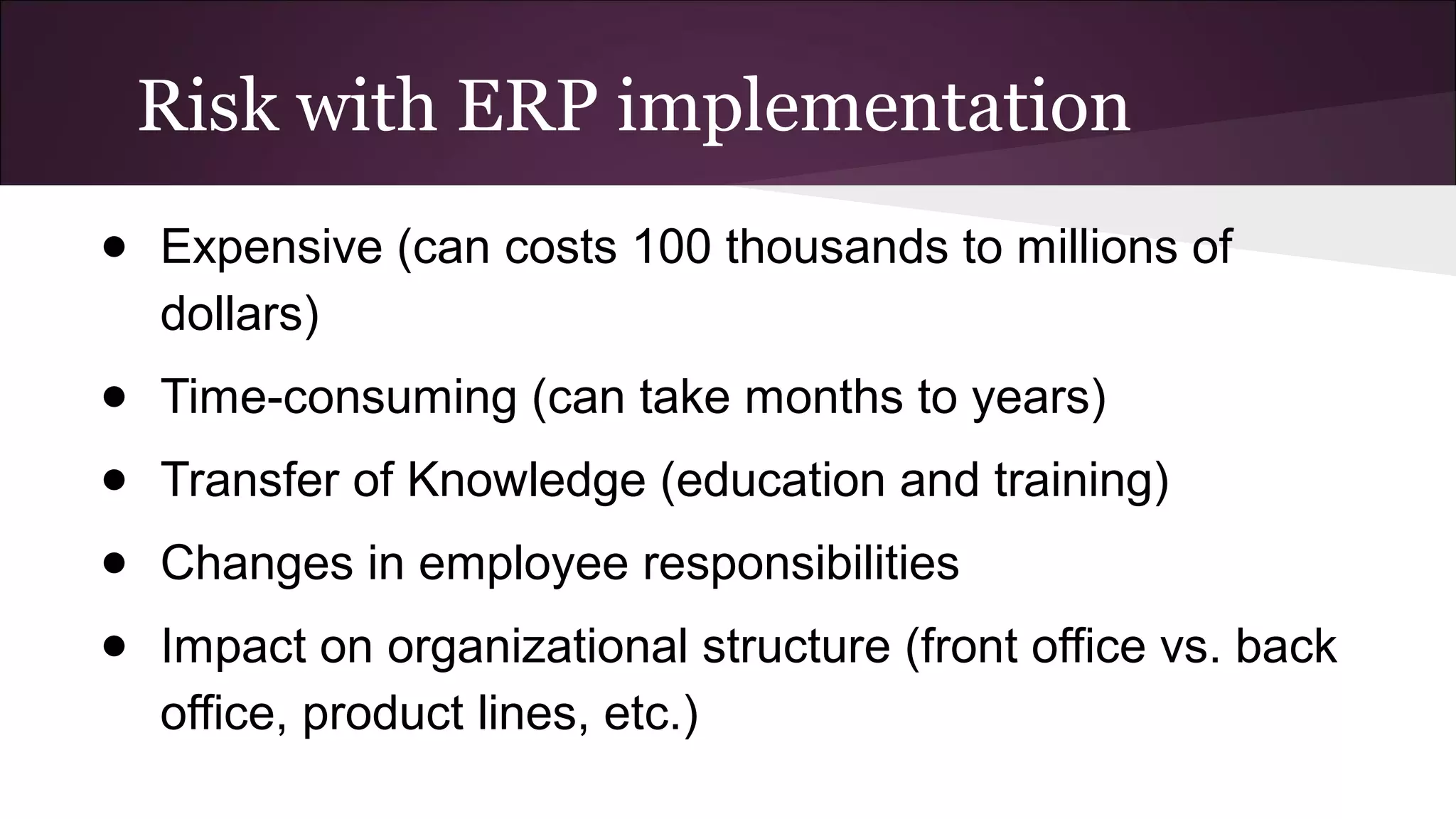
Risk with ERP implementation
● Expensive (can costs 100 thousands to millions of
dollars)
● Time-consuming (can take months to years)
● Transfer of Knowledge (education and training)
● Changes in employee responsibilities
● Impact on organizational structure (front office vs. back
office, product lines, etc.)
Main ERP vendors
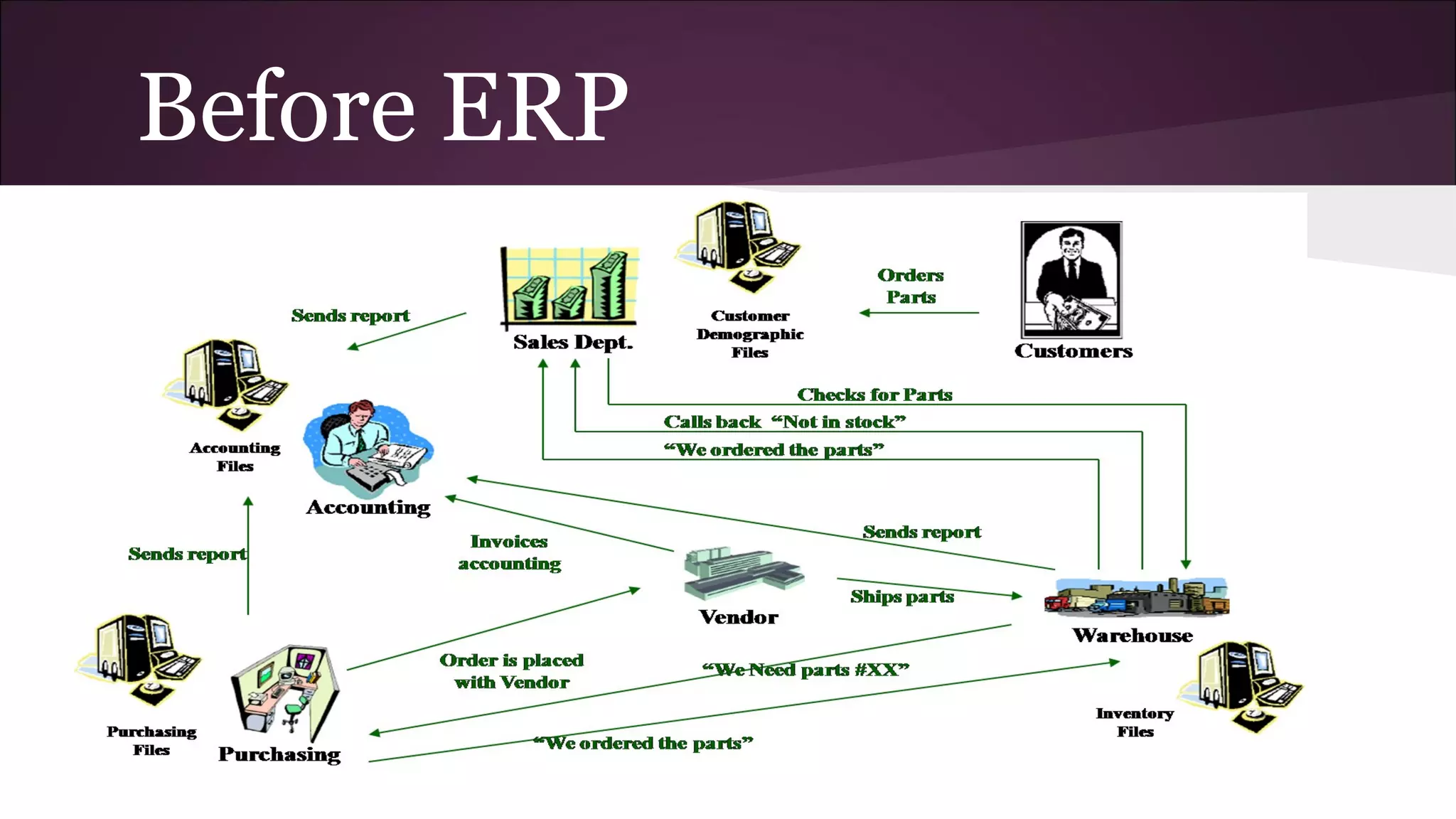
Before ERP
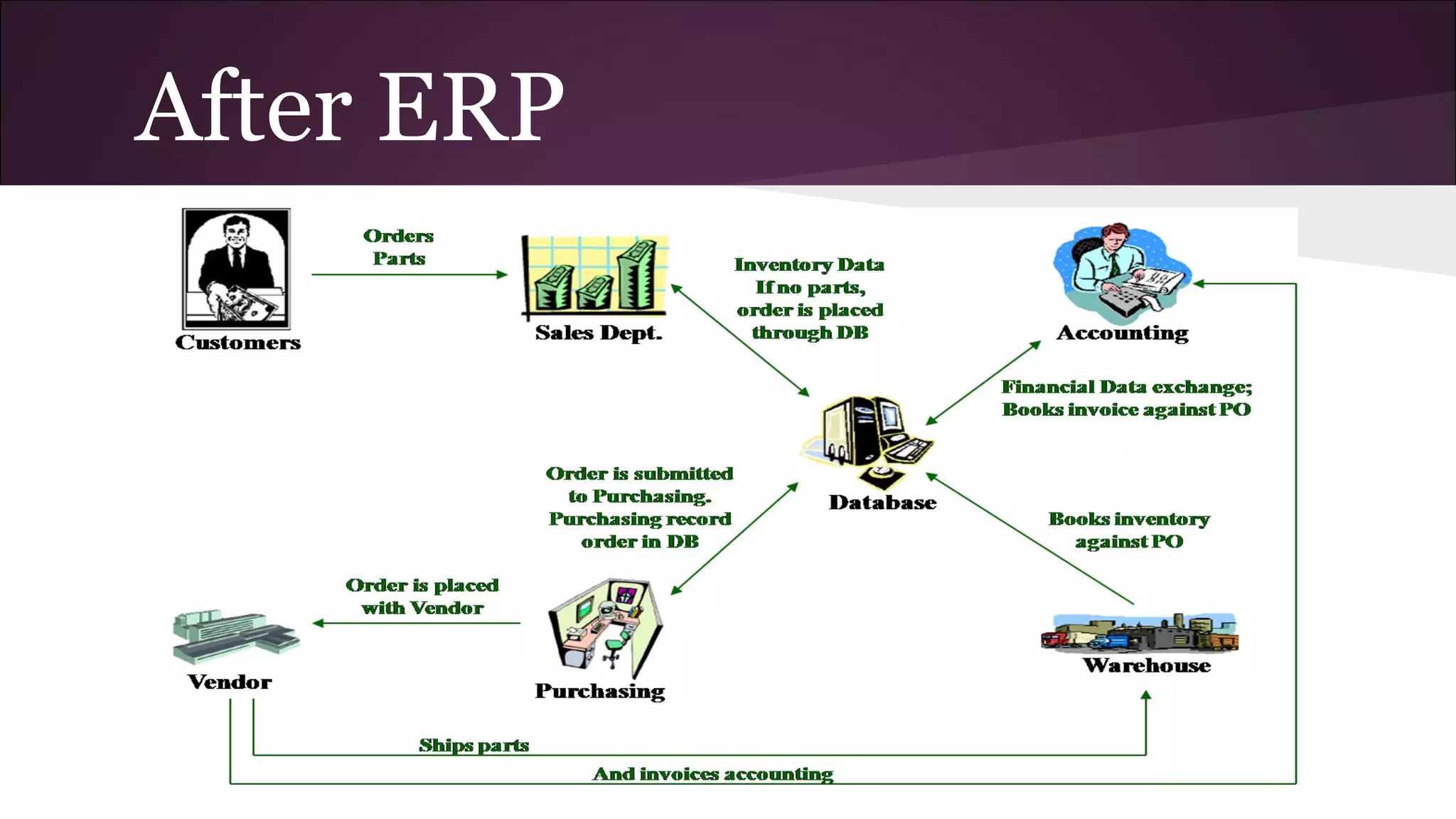
After ERP

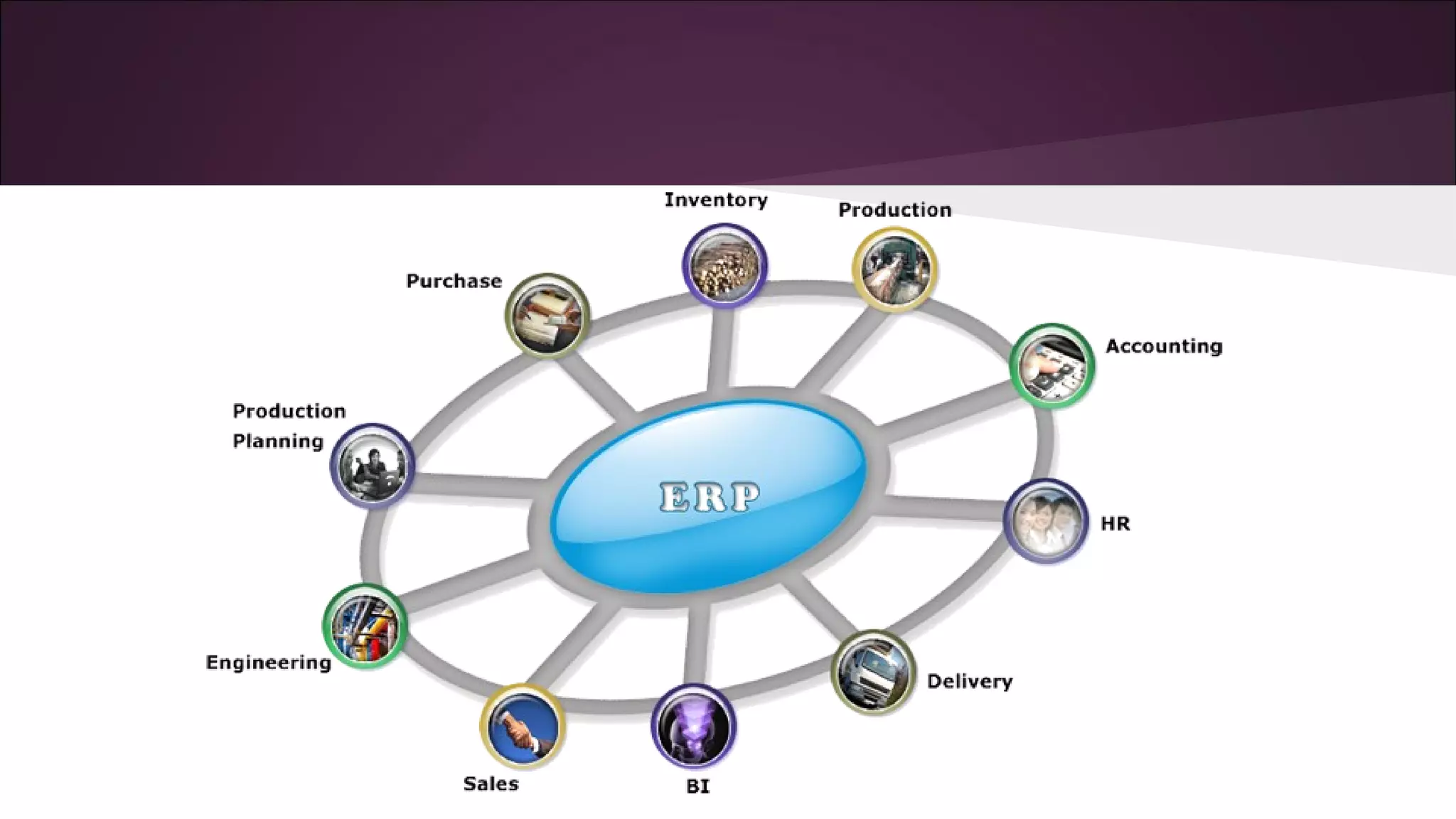
How ERP works

  • 1.
    ERP CRM SCM MIS HRMS Fouad Gemayel,Francois Mehchy, Joseph Rihani, Magaly Mosleh & Melissa Francis
  • 2.
    Outline 1- CRM 2- HRMS 3-SCM 4- MIS 5- ERP
  • 3.
  • 4.
    What is CRM? “Theapproach of identifying, establishing, maintaining, and enhancing lasting relationships with customers.” “The formation of bonds between a company and its customers.”
  • 5.
    •CRM requires majorintegration of systems which few companies have • CRM requires turning round existing systems to store, record and retrieve on a customer-centric basis • CRM requires people to stop thinking about departmental boundaries and to start thinking about how as a team the company can help the customer
  • 6.
    Cross Selling •Selling aproduct or service to a customer as a result of another purchase •Selling the right product to the right customer •Selling more products to a customer increases revenue from that customer and costs less than acquiring a new one •It is critical to understand the ways by which customers evaluate how and whether to respond to promotions •Not every customer is a good candidate
  • 7.
    Up selling andcustomer retention Up-Selling •Motivating customers to trade up to more profitable products Customer Retention •Analyzing customer attrition •Understanding why customers have left •Understanding who
  • 8.
    Behavior Prediction Using modelingand data mining techniques, including: •Propensity to buy analysis: What product is a particular customer likely to buy next •Next sequential purchase: What product is a customer likely to buy next •Product affinity analysis: Which products will be purchased with other products •Price elasticity modeling and dynamic pricing: Determining the optimal price for a given product
  • 9.
    New era ofbusiness marketing is dependent upon managing relationships. Collaborative advantage is: •Demonstrating special skills with “key” customers or •Developing innovative strategies with alliance partners
  • 10.
    CRM is revolutionary •Grocerystores have been in the business of stocking shelves •Banks have been in the business of managing the spread between money borrowed and money lent •Insurance companies have been in the business of managing loss ratios •Telecoms have been in the business of completing telephone calls •Key point: More companies are beginning to view customers as their primary asset
  • 11.
  • 14.
  • 15.
    What is HRMS •HRMSstands for Human Resources Management System. •HRMS is a mix between the “traditional” HR job and the use of softwares to do that job. •Eliminates the majority of the paperwork previously required.
  • 16.
    What is HRMS •HRMScurrently handles: 1.Payroll 2.Time and attendance 3.Performance appraisal 4.Benefits administration 5.HR management information system 6.Recruiting/Learning management 7.Performance record 8.Employee self-service 9.Scheduling 10.Absence management 11.Analytics
  • 17.
    What is HRMS •Themost recommended HRMS softwares: –HRM Direct –iCIMS Talent Platform –Halogen Talent Management Suite –The Resumator –TribeHR –The Applicant Manager –BambooHR –Kronos Workforce Ready –Sage HRMS (formerly Sage Abra) –Hyrell Online Recruiting and Hiring Manager (source : www.softwareadvice.com/hr/)
  • 18.
  • 19.
  • 20.
    What is SupplyChain Management ? - Example with a bottle of water - SC covers everything from production, to product development to the information system - Results from the efforts of various organization
  • 21.
    What is SupplyChain Management ?
  • 22.
    Managing Supply - SCare the bones and the muscles of an organisation -Need to buy high quality materials and services -Should go well beyond cost - Need to have excellent relationship, negotiation and analytical skills
  • 23.
    Supply Chain ManagementSoftware -Planning Applications -Execution Applications -SCM applications open data models improve the time-to-market of products, and reduce costs
  • 27.
  • 28.
    What is MIS? Acomputerized system that provides an organized flow of information to enable and support the marketing activities of an organization.
  • 29.
    Components of amarketing info system
  • 30.
    4 main constituentparts: ●The internal reporting system ●The marketing research system ●The marketing intelligence system ●Marketing models
  • 31.
    Examples of marketingmodels: · Time series sales modes · Brand switching models · Linear programming · Elasticity models (price, incomes, demand, supply, etc.) · Regression and correlation models · Analysis of Variance (ANOVA) models · Sensitivity analysis · Discounted cash flow · Spreadsheet 'what if models
  • 32.
    8 steps tocreating an effective MIS 1. Start with the accounting system 2. Market information form 3. Lead card 4. Hot list 5. Promotion effectiveness report 6. Market research 7. Secondary research 8. Primary research
  • 33.
  • 34.
    Definition ● It isa process of managing all resources and their use in the entire enterprise in a coordinated manner. ● It combines all databases across departments into a single database that can be accessed by all employees.
  • 36.
    Benefits of ERP ●Improved integration, flexibility, speed and efficiency ● Fewer errors ● More complete access to information ● Lower total costs in the complete supply chain ● Shorten throughput times ● Sustained involvement and commitment of the top management ● Improve product quality ● Provide more reliable delivery dates and higher service to the
  • 37.
    Risk with ERPimplementation ● Expensive (can costs 100 thousands to millions of dollars) ● Time-consuming (can take months to years) ● Transfer of Knowledge (education and training) ● Changes in employee responsibilities ● Impact on organizational structure (front office vs. back office, product lines, etc.)
  • 38.
  • 39.
  • 40.