Overview...
 Introduction
 What is HDS?
 How does it work?
 System
 Recording and Reading the Data
 Storage Medium
 Uses of the System
 Cons and Pros
 Conclusion
Introduction
 Generally a Hologram is a 3D image
reproduced from a pattern of
interference.
 The Holography technique was invented
in 1948 by the Hungarian Dennis Gabor.
 Evolving in the last few years.
 Promise to be the data storing system of
the future.
Introduction
 Holographic Data Storage is an
advanced data storage concept that
stores information in the form of
holographic images.
 Holographic Data Storage is a
volumetric approach of storing data.
 An HDSS can store 1-4 TB of data on a
sugar-cube sized crystal.
Hologram
 The word Hologram is derived from a
Greek word ‘HOLOS’ meaning whole
and ‘gram’ meaning message.
 It tells information about size , shape,
brightness and contrast of object being
recorded.
 It is a 3D image formed by the
interference of light beam from a laser or
other coherent light source.
Hologram
 Typically, a hologram is a photographic
recording of a light field, rather than of an
image formed by a lens.
 It is used to display a fully three-
dimensional image of the holograph
subject, which is seen without the aid
of special glasses or other intermediate
optics.
 Holography is the science and practice of
making holograms.
What is Holographic Data Storage?
 Holographic data storage is a potential
technology in the area of high-
capacity data storage currently dominated
by magnetic data storage and
conventional optical data storage
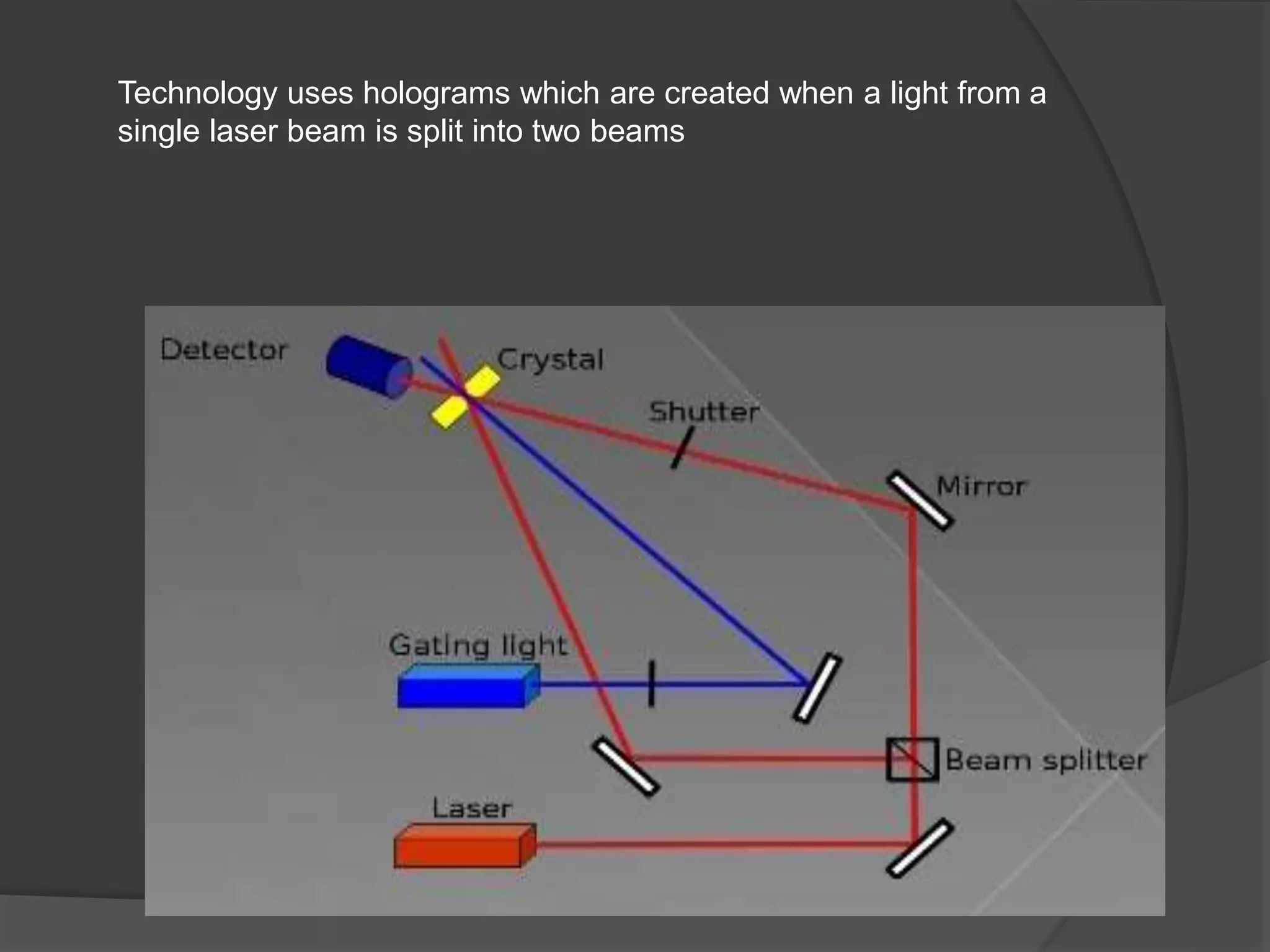
 Storage System in which two beams from
the same laser source are used to record
the data into a ‘recording medium’.
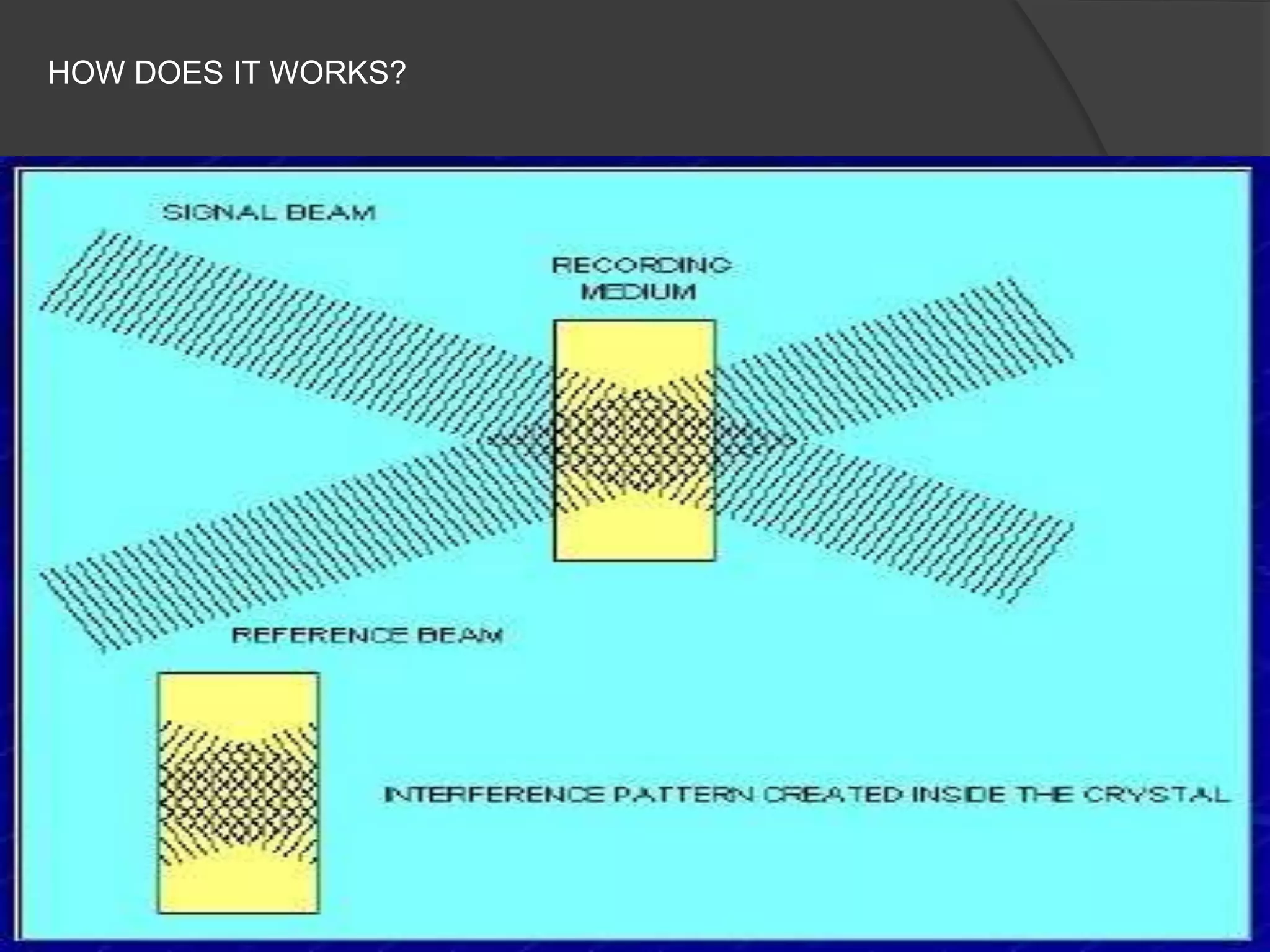
Technology uses holograms which are created when a light from a
single laser beam is split into two beams
HOW DOES IT WORKS?
Uses a reference beam and data
beam to create an interference pattern
 While Writing:
 The intersection
of the two
beams causes a
change , which
is then stored
 While Reading
 Action of the
reference beam
and interference
pattern is used to
recreate the data
beam
The System
 Basic components of System:
Laser
Recording Medium
Mirrors
Spatial light modulator
Beam splitter
Shutters
Iris
Lenses
Half-wave plate
Recording The Data
 Holographic data storage contains
information using an optical interference
pattern within a thick, photosensitive optical
material
 Light from a single laser beam is divided
into two, or more, separate optical patterns
of dark and light pixels.
 By adjusting the reference beam angle,
wavelength, or media position, a multitude
of holograms (theoretically, several
thousand) can be stored on a single
volume.
Reading The Data
 The stored data is read through the
reproduction of the same reference beam
used to create the hologram.
 The reference beam's light is focused on the
photosensitive material, illuminating the
appropriate interference pattern, the
light diffracts on the interference pattern, and
projects the pattern onto a detector.
 The detector is capable of reading the data in
parallel, over one million bits at once, resulting
in the fast data transfer rate.
 Files on the holographic drive can be
accessed in less than 0.2 seconds.
Uses of the System
 Can be used to store any kind of
information from documents to videos.
 Other fields that uses this system are:
Government sectors
Libraries
Business
and more
Storage Medium
 There are mainly two storage mediums used:
Lithium-Niobate Crystal
Photopolymer
Media Parameters:
1.Diffraction efficiency
2.Holographic fidelity
3.Sensitivity
4.Dynamic Range
5.volatility
Holographic versatile disc
 HVD is an optical disc technology still in
the research stage which would hold up
to 3.9TB of information.
 It employs a technique known as
Collinear Holography where by two
lasers one red and one blue green are
collimated in a single beam.
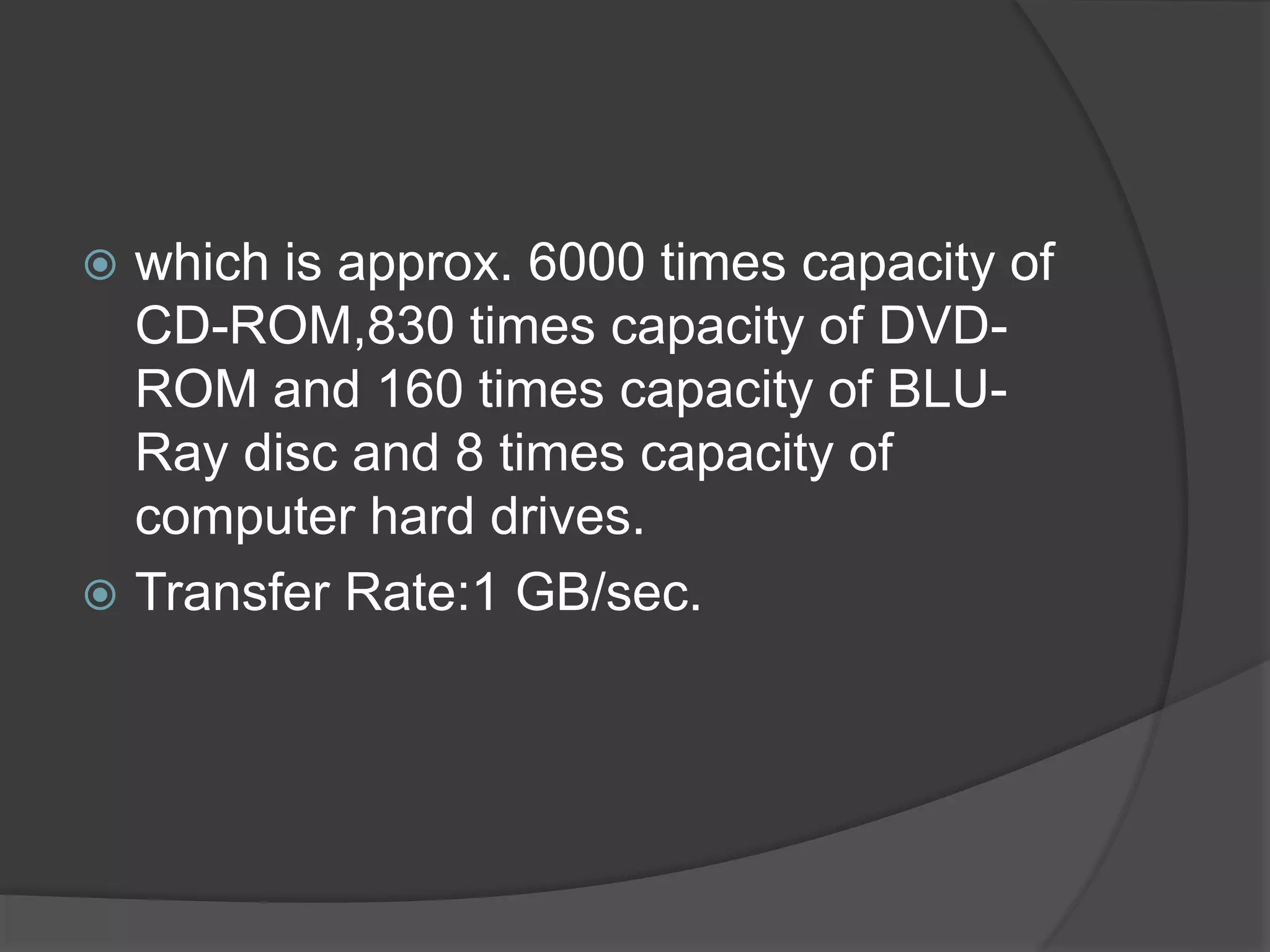
 which is approx. 6000 times capacity of
CD-ROM,830 times capacity of DVD-
ROM and 160 times capacity of BLU-
Ray disc and 8 times capacity of
computer hard drives.
 Transfer Rate:1 GB/sec.
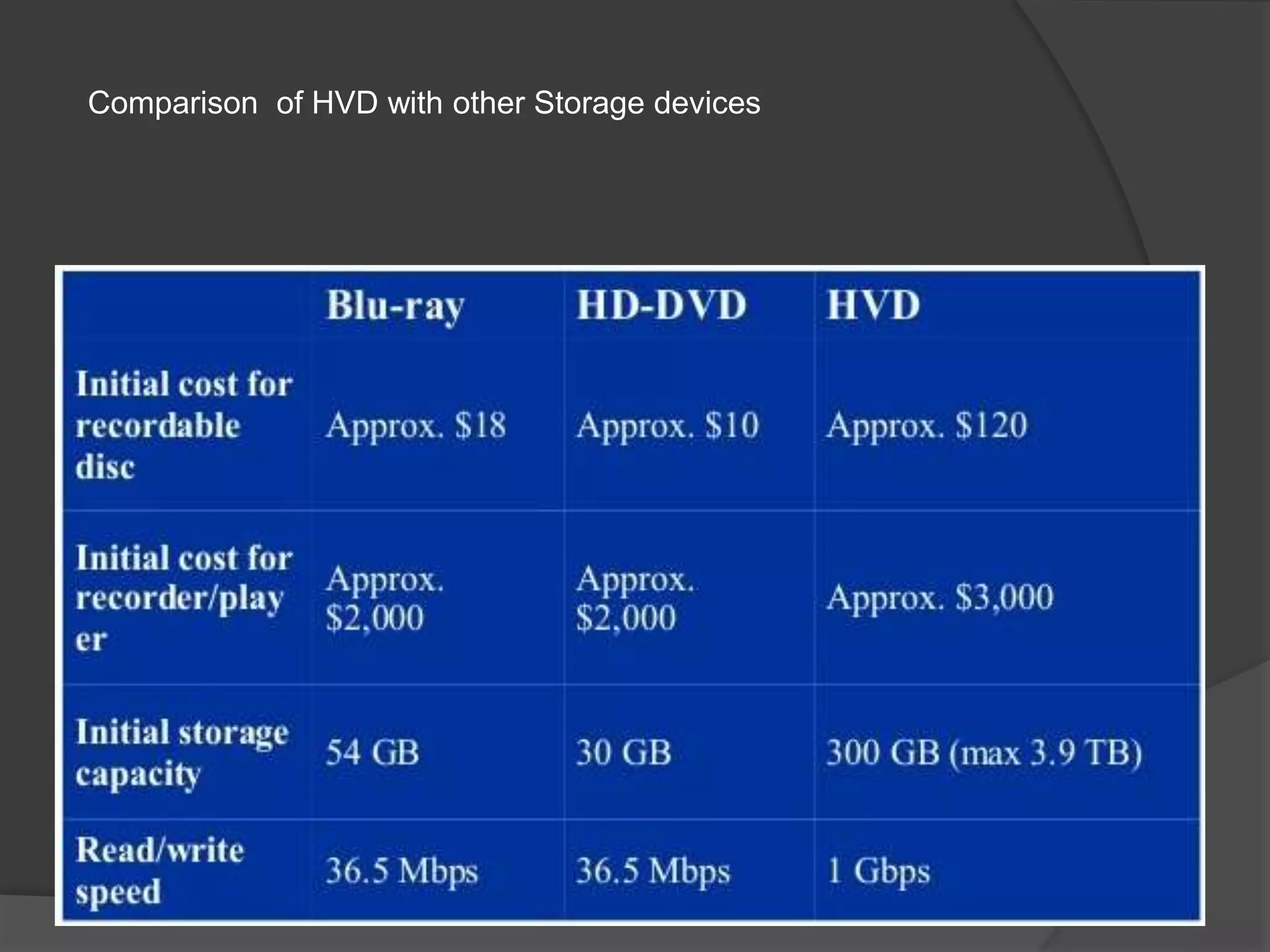
Comparison of HVD with other Storage devices
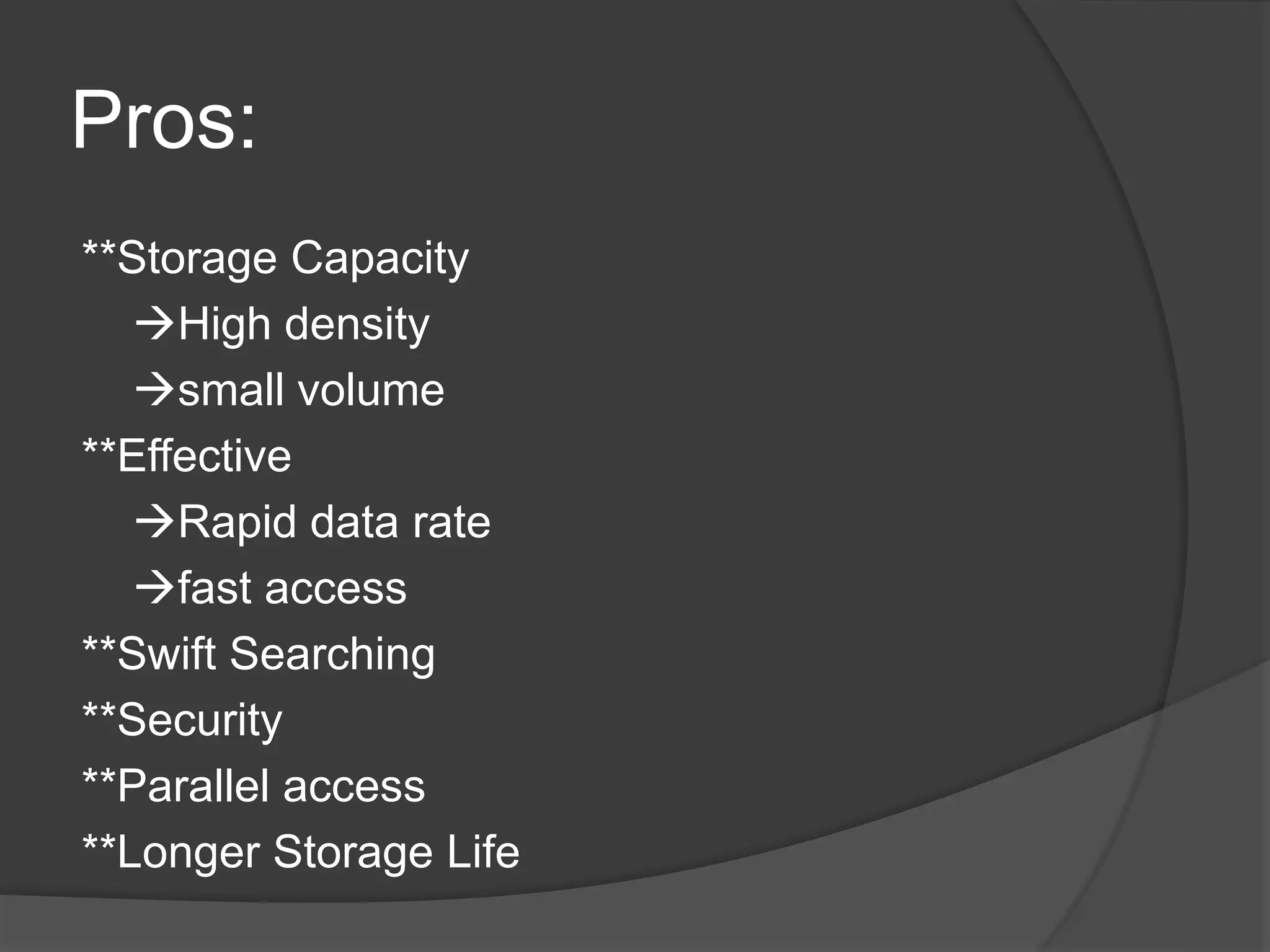
Pros:
**Storage Capacity
High density
small volume
**Effective
Rapid data rate
fast access
**Swift Searching
**Security
**Parallel access
**Longer Storage Life
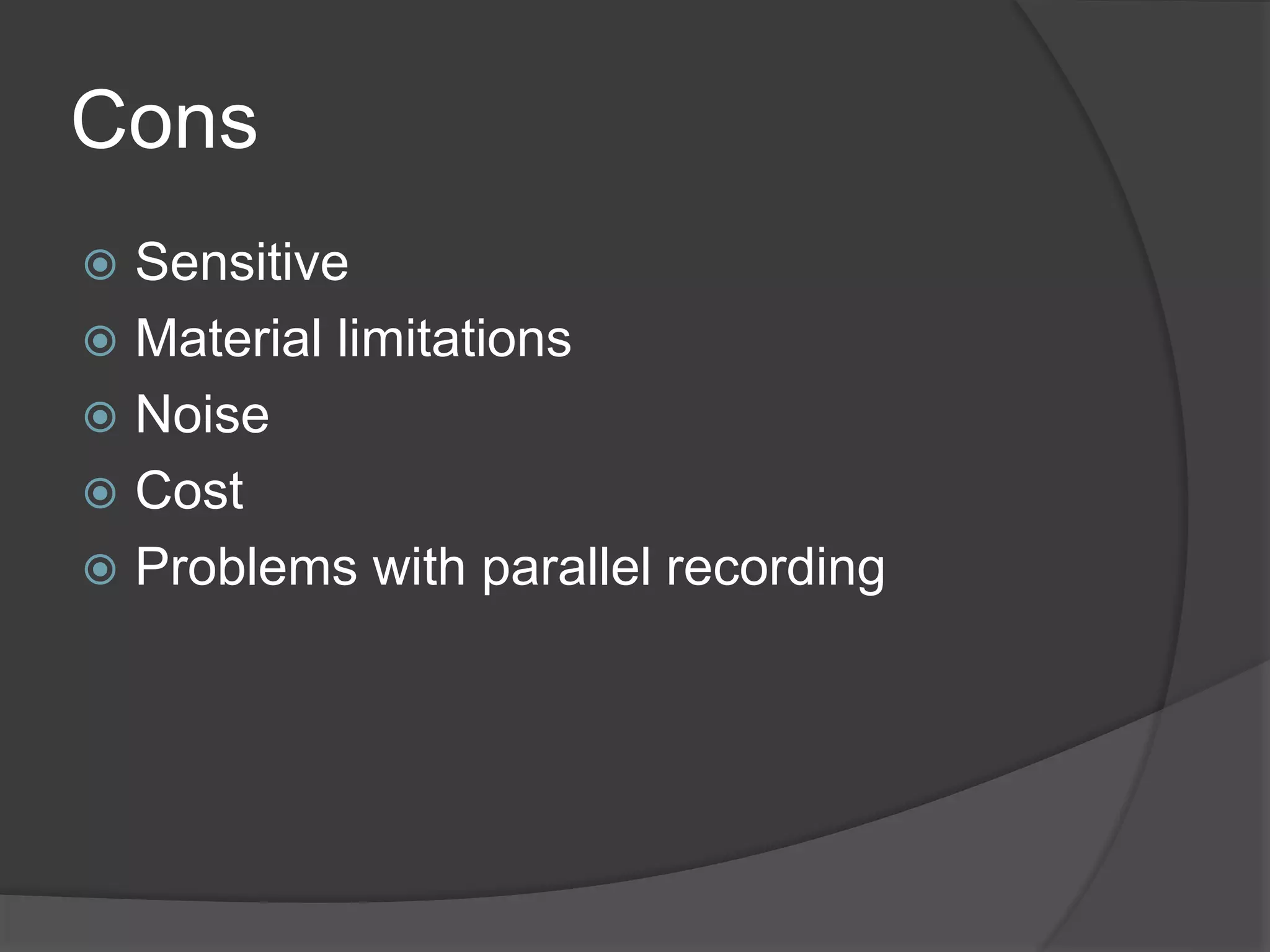
Cons
 Sensitive
 Material limitations
 Noise
 Cost
 Problems with parallel recording
Conclusion
 Holographic Data Storage is convenient
and effective way of data storage.
 The HVD playing device would have
data rates 25 times faster than today’s
fastest DVD players.
-GANESH
NETHI

Holographic data storage by Ganesh Nethi

  • 2.
    Overview...  Introduction  Whatis HDS?  How does it work?  System  Recording and Reading the Data  Storage Medium  Uses of the System  Cons and Pros  Conclusion
  • 3.
    Introduction  Generally aHologram is a 3D image reproduced from a pattern of interference.  The Holography technique was invented in 1948 by the Hungarian Dennis Gabor.  Evolving in the last few years.  Promise to be the data storing system of the future.
  • 4.
    Introduction  Holographic DataStorage is an advanced data storage concept that stores information in the form of holographic images.  Holographic Data Storage is a volumetric approach of storing data.  An HDSS can store 1-4 TB of data on a sugar-cube sized crystal.
  • 5.
    Hologram  The wordHologram is derived from a Greek word ‘HOLOS’ meaning whole and ‘gram’ meaning message.  It tells information about size , shape, brightness and contrast of object being recorded.  It is a 3D image formed by the interference of light beam from a laser or other coherent light source.
  • 6.
    Hologram  Typically, ahologram is a photographic recording of a light field, rather than of an image formed by a lens.  It is used to display a fully three- dimensional image of the holograph subject, which is seen without the aid of special glasses or other intermediate optics.  Holography is the science and practice of making holograms.
  • 7.
    What is HolographicData Storage?  Holographic data storage is a potential technology in the area of high- capacity data storage currently dominated by magnetic data storage and conventional optical data storage  Storage System in which two beams from the same laser source are used to record the data into a ‘recording medium’.
  • 8.
    Technology uses hologramswhich are created when a light from a single laser beam is split into two beams
  • 9.
  • 10.
    Uses a referencebeam and data beam to create an interference pattern  While Writing:  The intersection of the two beams causes a change , which is then stored  While Reading  Action of the reference beam and interference pattern is used to recreate the data beam
  • 11.
    The System  Basiccomponents of System: Laser Recording Medium Mirrors Spatial light modulator Beam splitter Shutters Iris Lenses Half-wave plate
  • 12.
    Recording The Data Holographic data storage contains information using an optical interference pattern within a thick, photosensitive optical material  Light from a single laser beam is divided into two, or more, separate optical patterns of dark and light pixels.  By adjusting the reference beam angle, wavelength, or media position, a multitude of holograms (theoretically, several thousand) can be stored on a single volume.
  • 13.
    Reading The Data The stored data is read through the reproduction of the same reference beam used to create the hologram.  The reference beam's light is focused on the photosensitive material, illuminating the appropriate interference pattern, the light diffracts on the interference pattern, and projects the pattern onto a detector.  The detector is capable of reading the data in parallel, over one million bits at once, resulting in the fast data transfer rate.  Files on the holographic drive can be accessed in less than 0.2 seconds.
  • 14.
    Uses of theSystem  Can be used to store any kind of information from documents to videos.  Other fields that uses this system are: Government sectors Libraries Business and more
  • 15.
    Storage Medium  Thereare mainly two storage mediums used: Lithium-Niobate Crystal Photopolymer Media Parameters: 1.Diffraction efficiency 2.Holographic fidelity 3.Sensitivity 4.Dynamic Range 5.volatility
  • 16.
    Holographic versatile disc HVD is an optical disc technology still in the research stage which would hold up to 3.9TB of information.  It employs a technique known as Collinear Holography where by two lasers one red and one blue green are collimated in a single beam.
  • 17.
     which isapprox. 6000 times capacity of CD-ROM,830 times capacity of DVD- ROM and 160 times capacity of BLU- Ray disc and 8 times capacity of computer hard drives.  Transfer Rate:1 GB/sec.
  • 18.
    Comparison of HVDwith other Storage devices
  • 19.
    Pros: **Storage Capacity High density smallvolume **Effective Rapid data rate fast access **Swift Searching **Security **Parallel access **Longer Storage Life
  • 20.
    Cons  Sensitive  Materiallimitations  Noise  Cost  Problems with parallel recording
  • 21.
    Conclusion  Holographic DataStorage is convenient and effective way of data storage.  The HVD playing device would have data rates 25 times faster than today’s fastest DVD players.
  • 22.