Downloaded 220 times
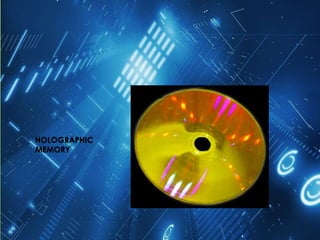
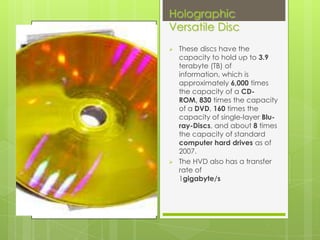
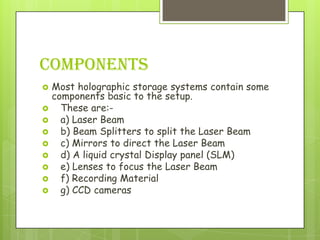
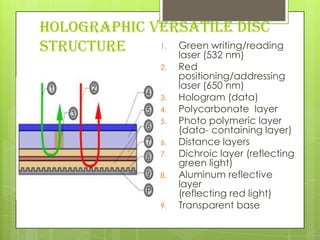
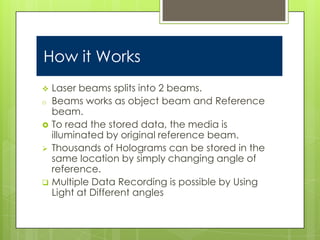
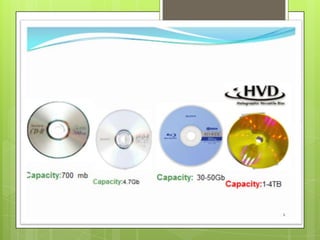
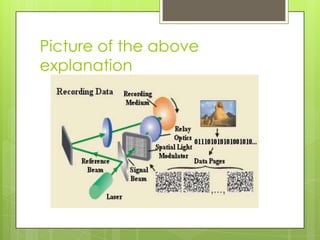



Holographic memory uses interference patterns of laser light to store massive amounts of data in three-dimensional crystals or photopolymers. Holographic Versatile Discs (HVDs) can store up to 3.9 terabytes in a sugar cube-sized crystal using two lasers - a green laser for writing and reading, and a red laser for positioning. Data is written by splitting a laser into reference and object beams that intersect in the recording material, and read by illuminating the material with the original reference beam. Holographic memory offers high data density and transfer rates but faces challenges in engineering complex optical components and developing highly sensitive recording materials.


