Downloaded 521 times
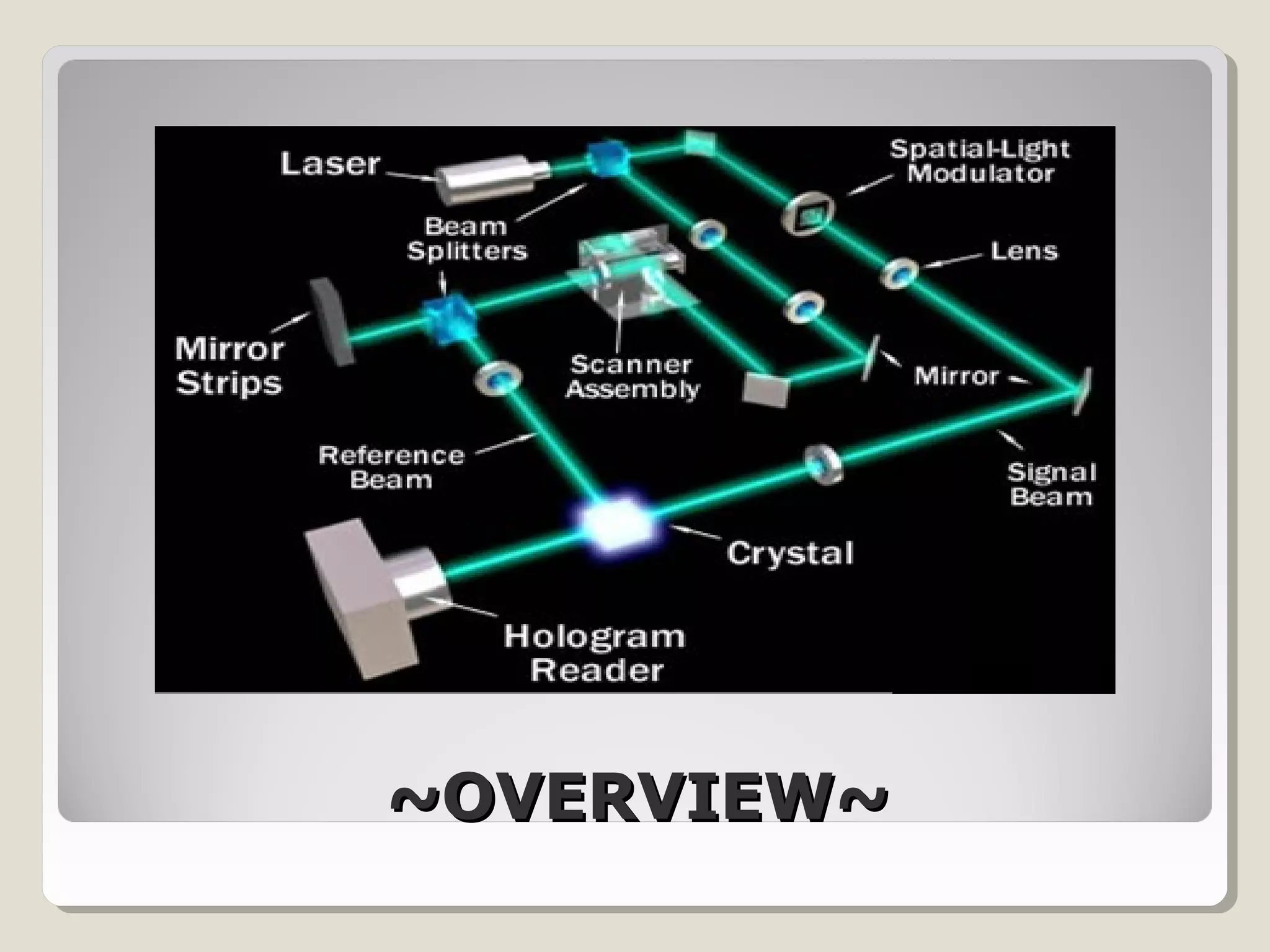
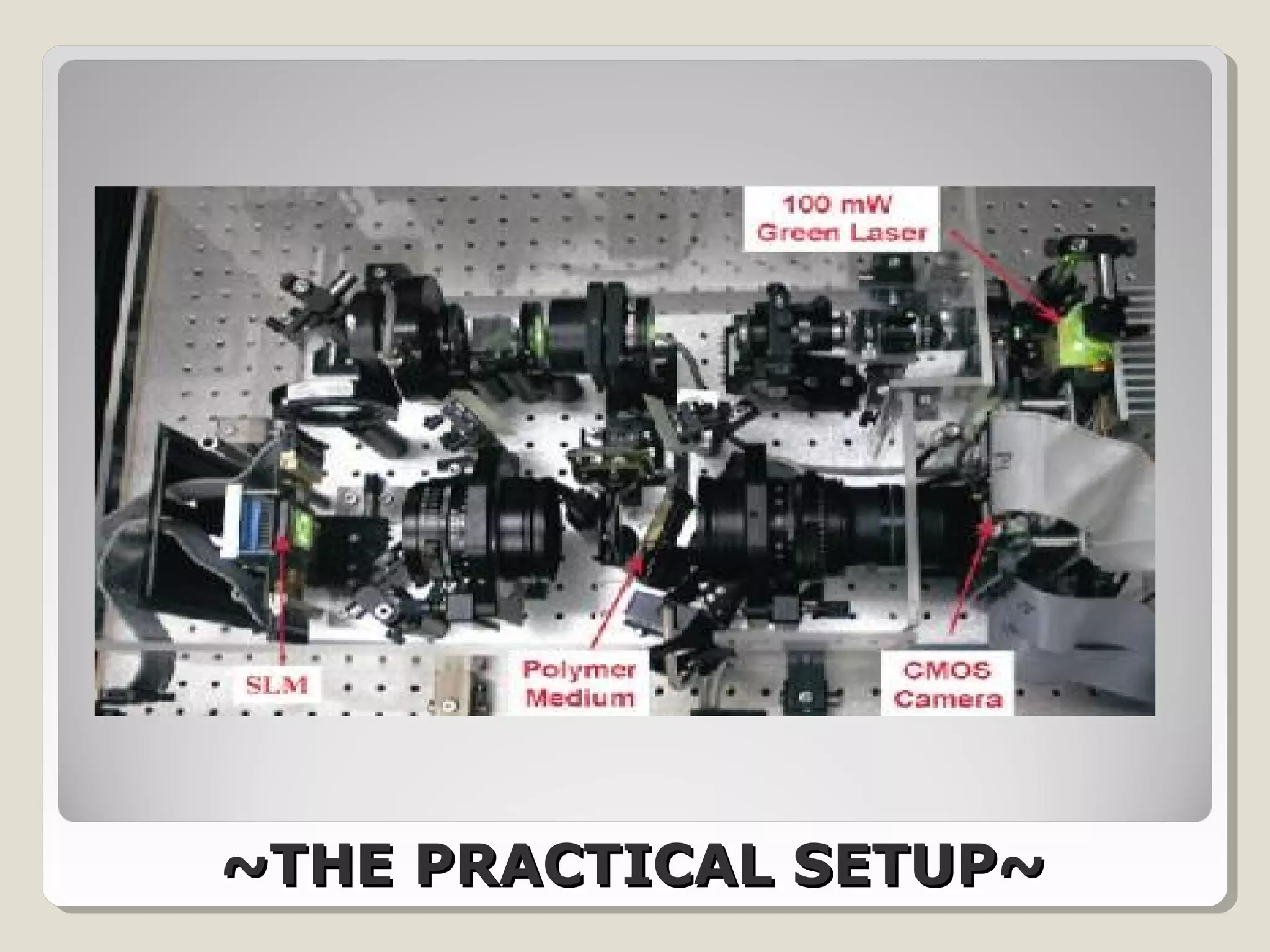
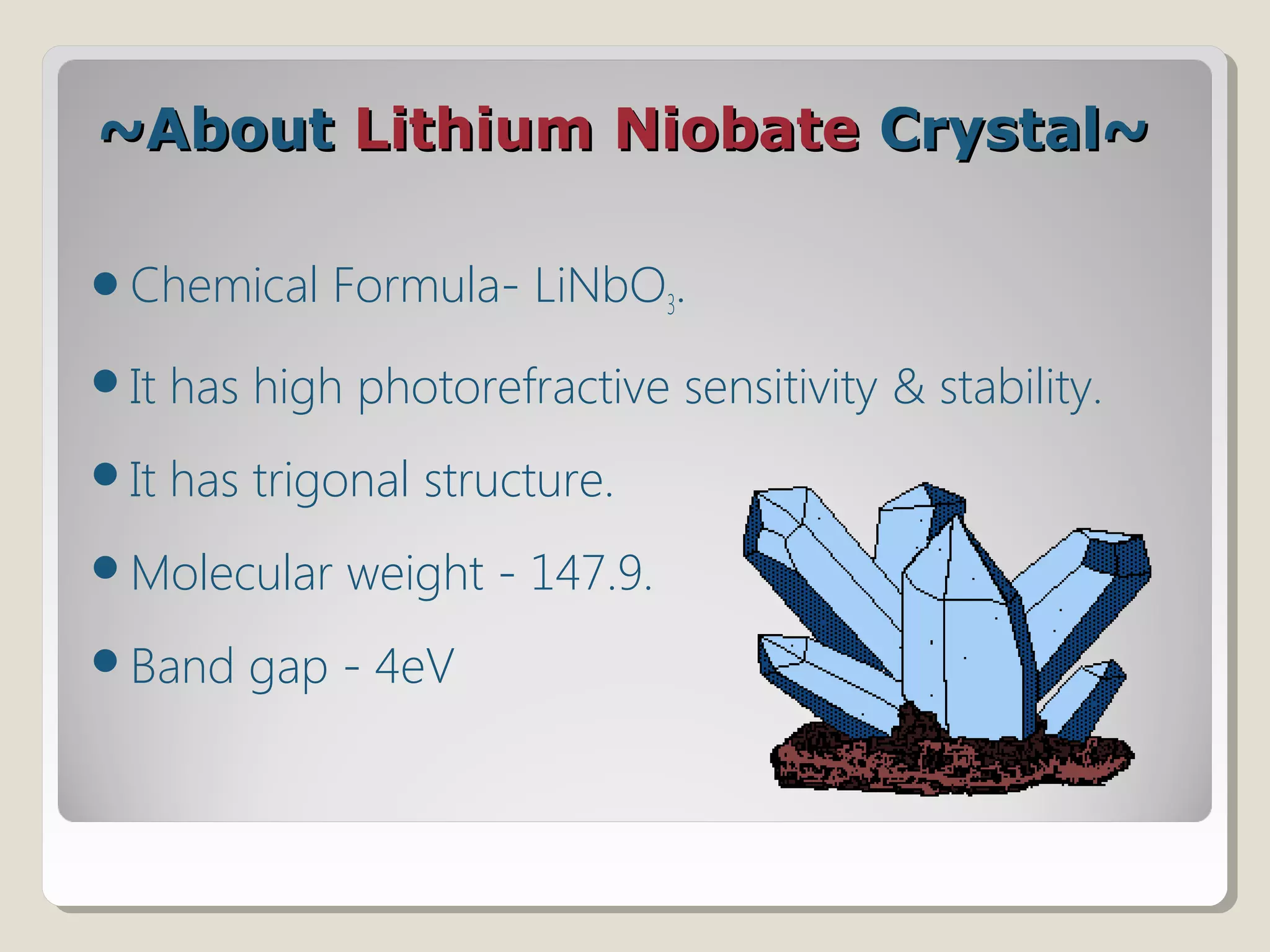
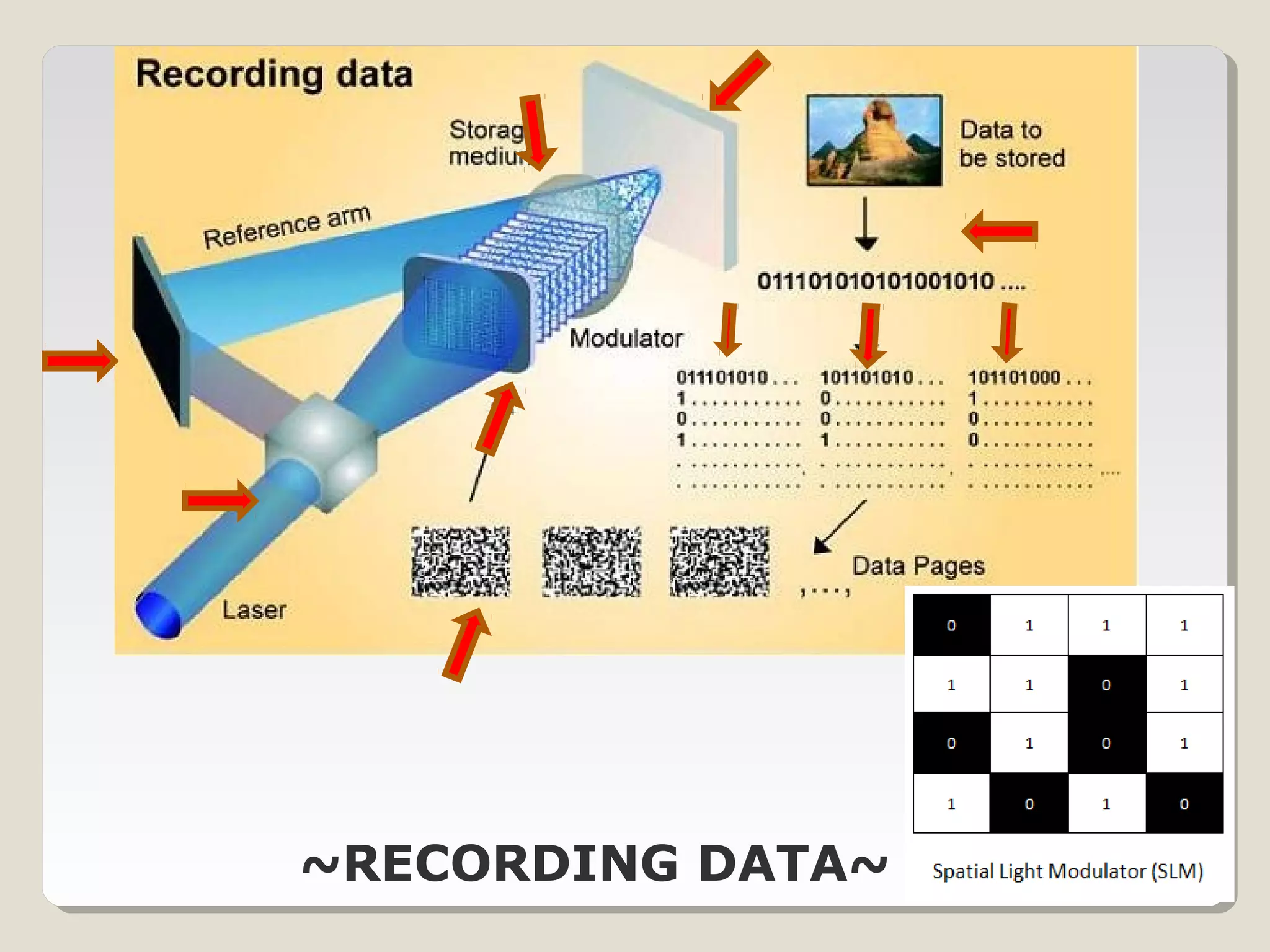
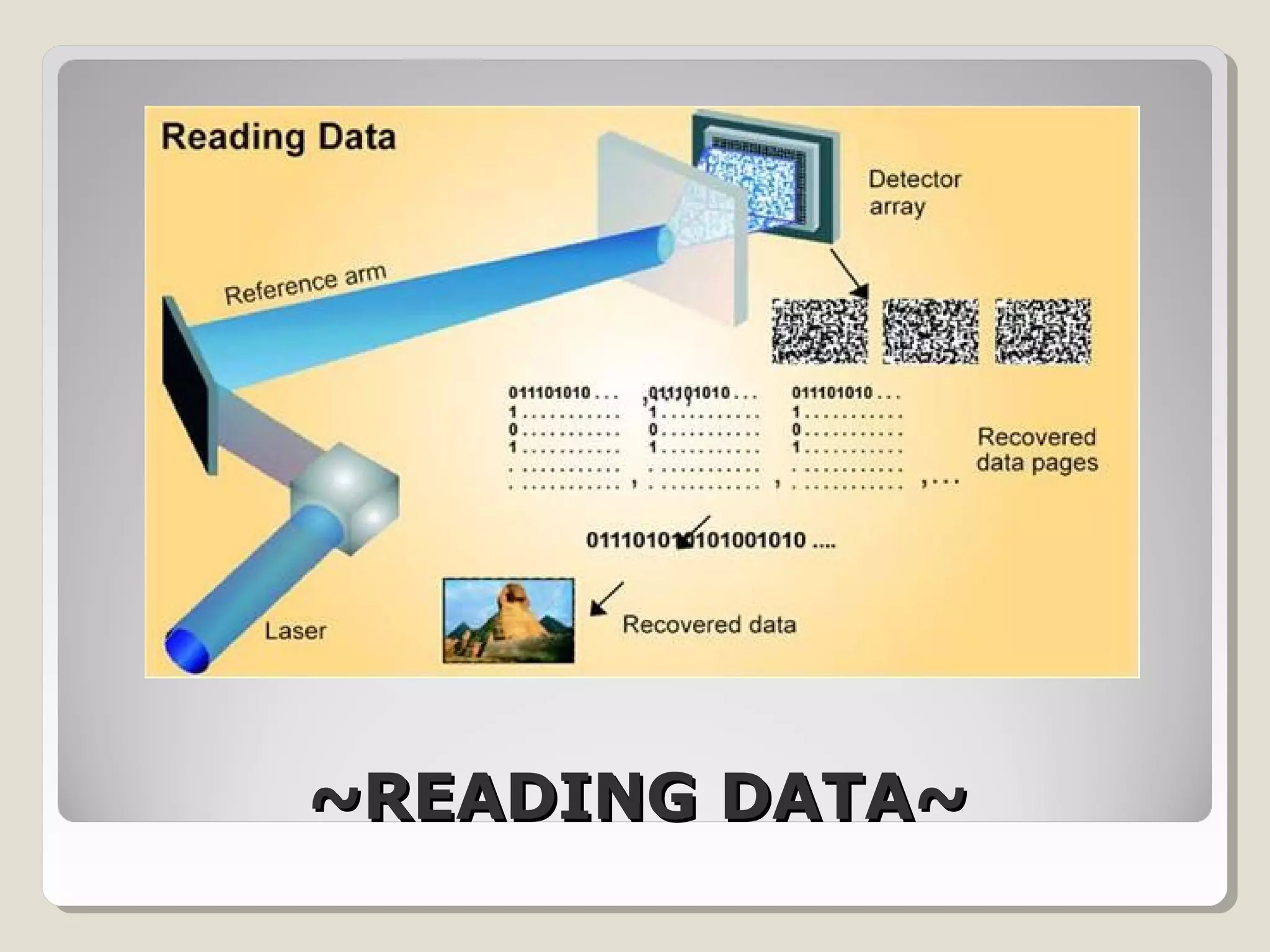
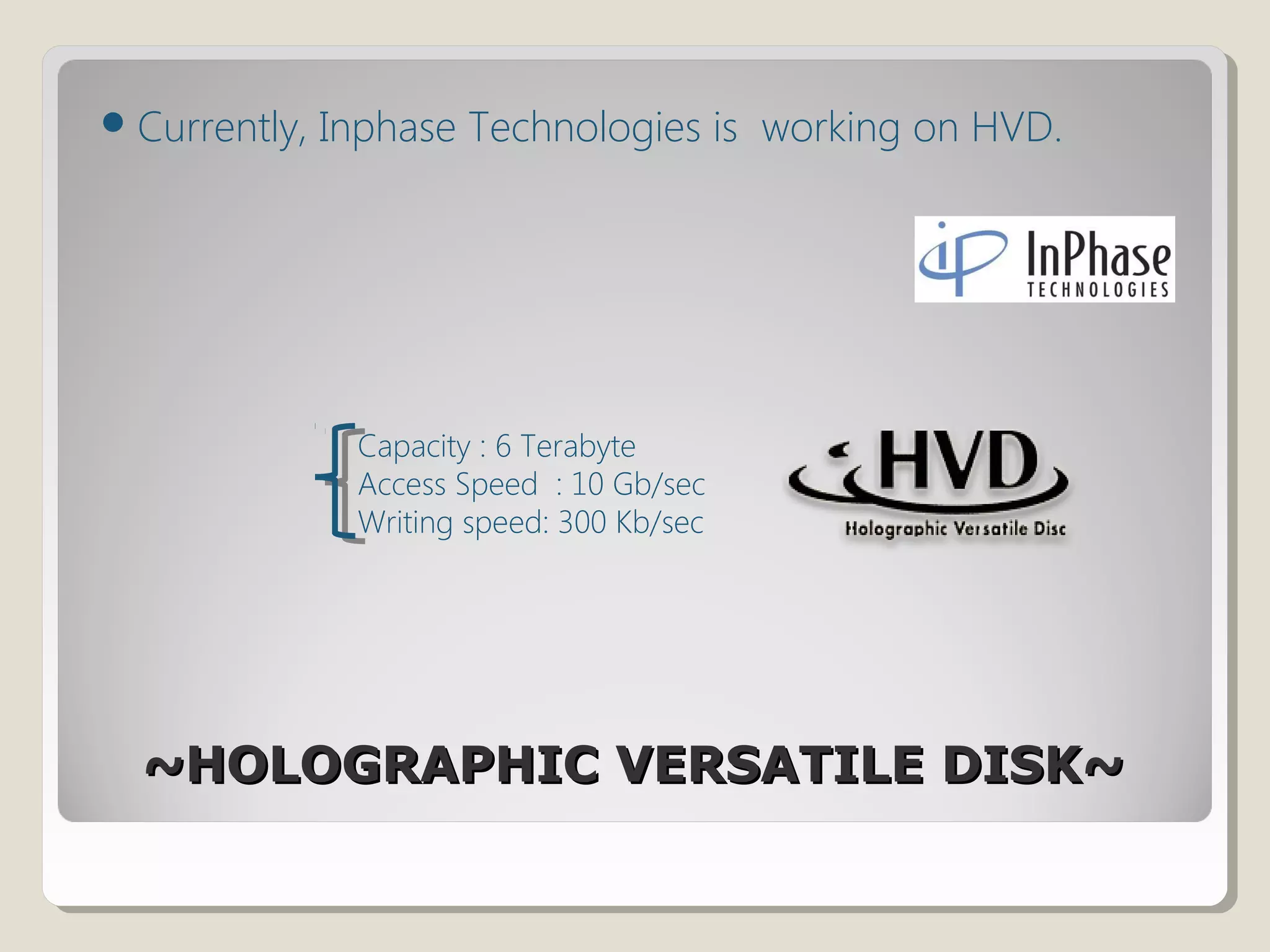
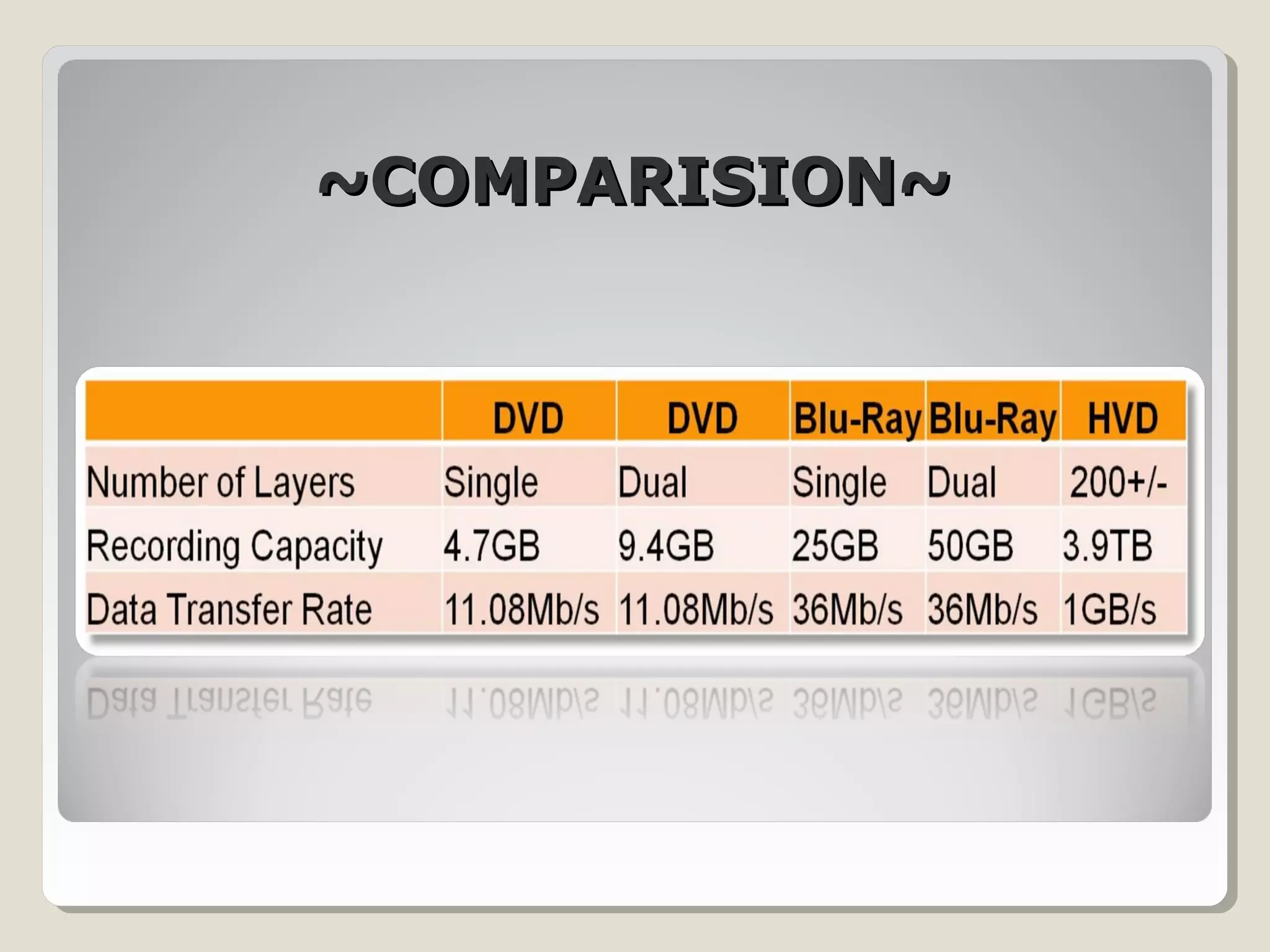
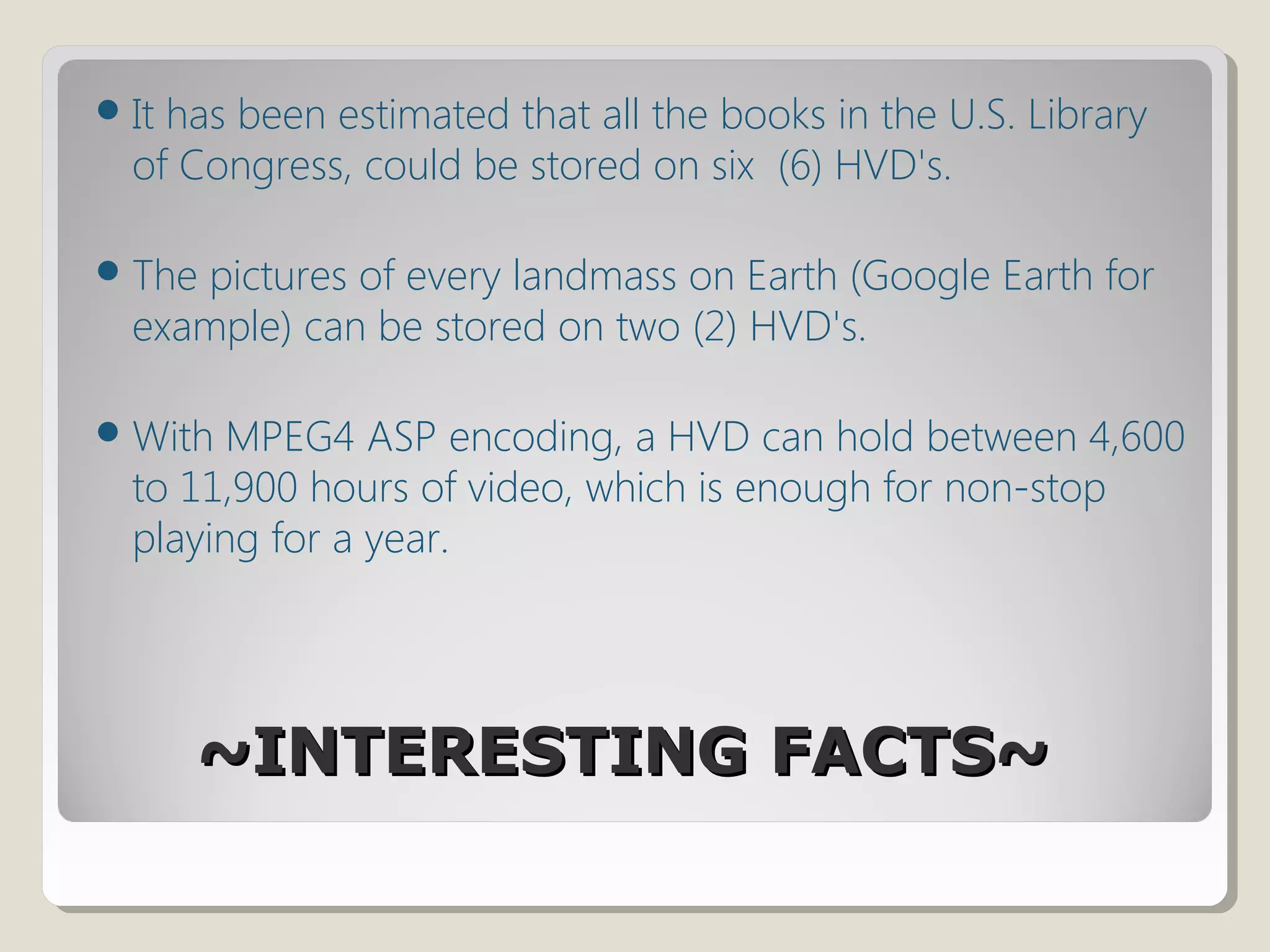
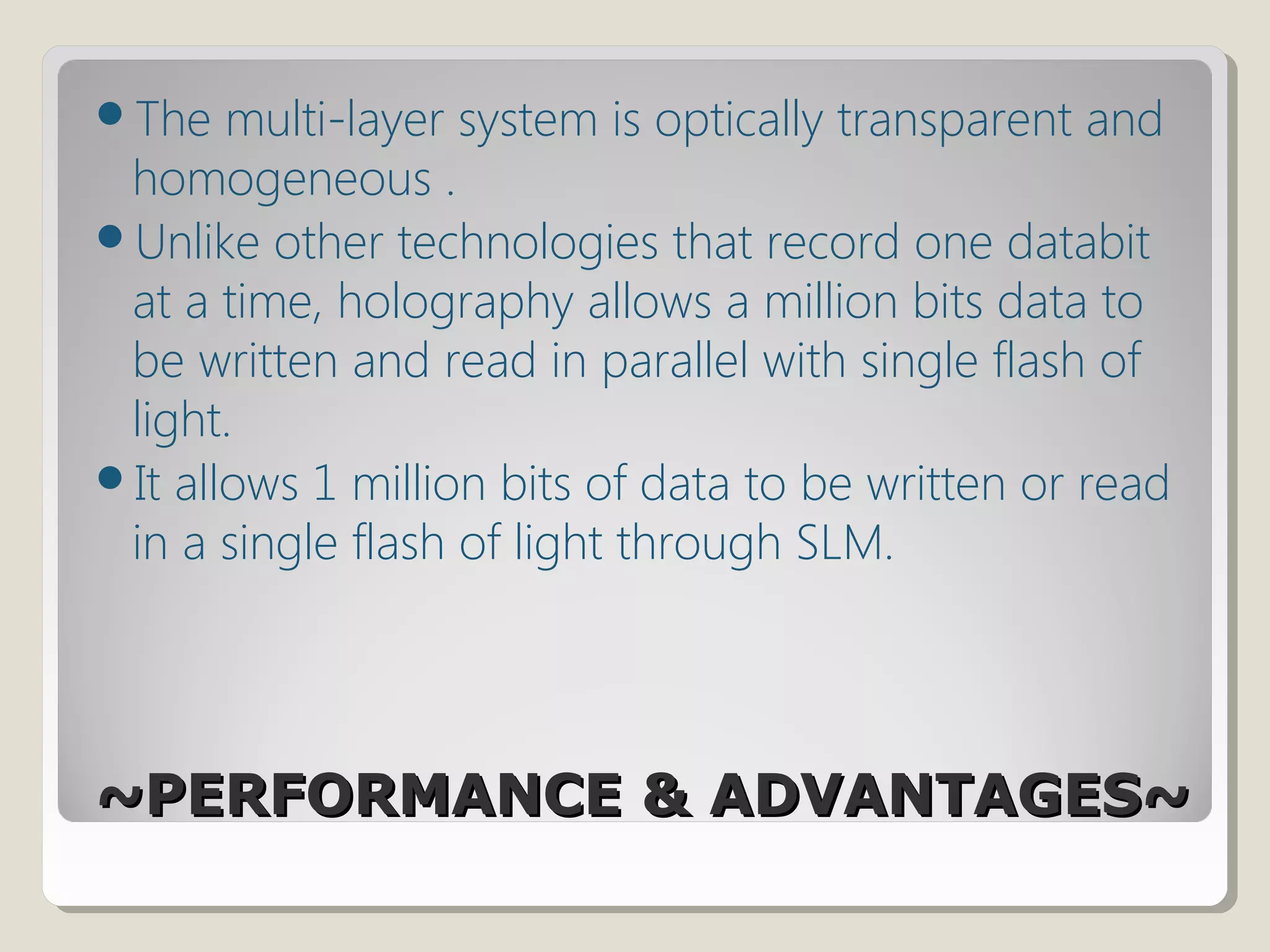


Holographic data storage uses lasers and optical materials to store massive amounts of data in three dimensions. Pieter van Heerden first proposed the idea in the 1960s, and a decade later scientists demonstrated storing 500 holograms in a lithium niobate crystal. Holographic data storage offers significant advantages over traditional storage methods by storing data in all three dimensions within a crystal, allowing millions of bits to be written or read in parallel with a single flash of light. Current research aims to develop holographic versatile disks with terabyte storage capacities and fast data transfer rates.


