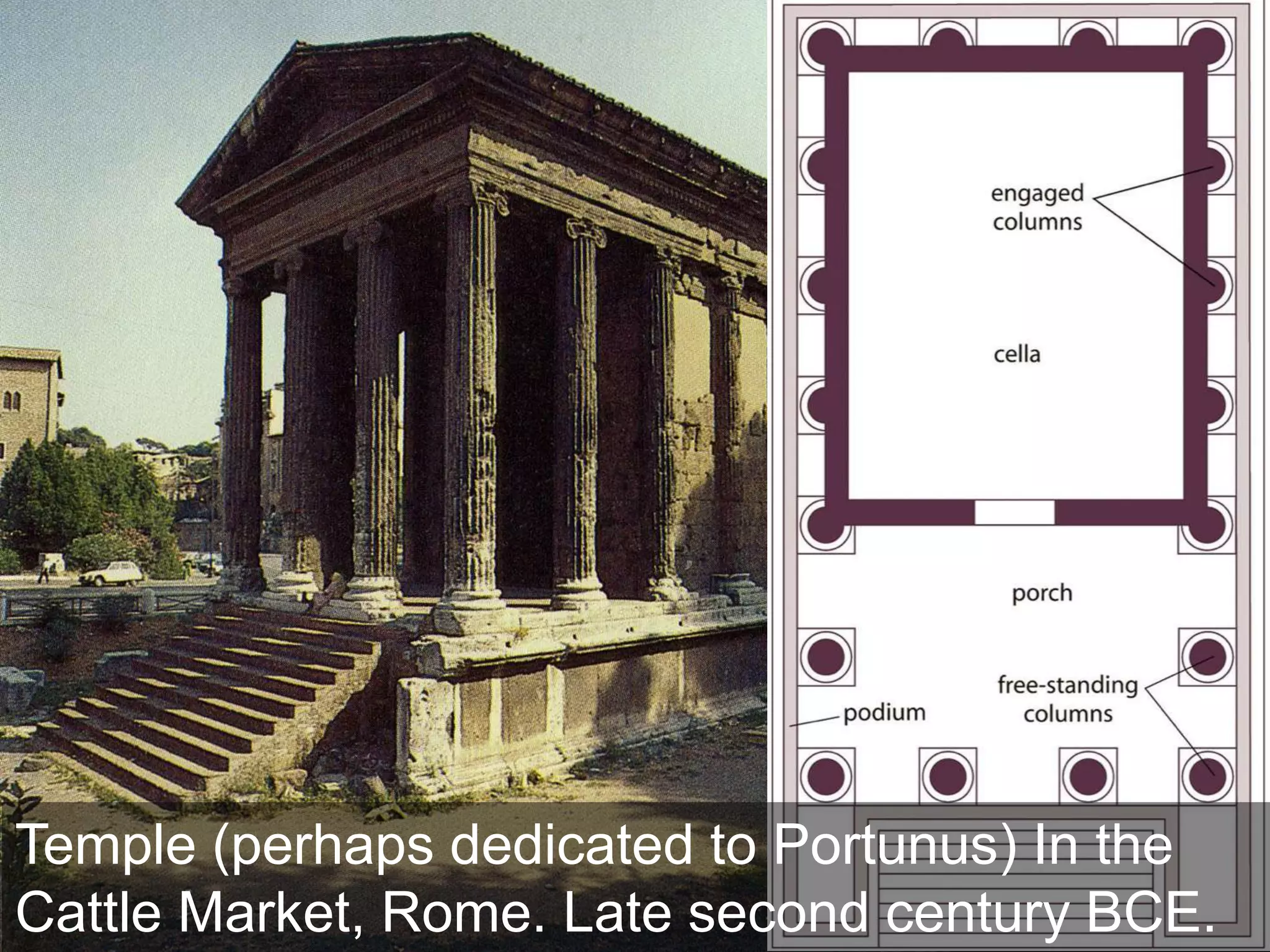
Roman Imperial Art:ArchitectureReading:Stokstad, 168-177Range:200 BCE-400 CERoman Republican, Roman ImperialTerms/Concepts:axial, aqueduct, arch, arcade, vault, keystone, barrel vault, groin vault, voussoirs, spandrels, engaged column, doric, ionic, corinthian, acanthus, basilica, calderium, frigidarium, tepidarium, bread and circuses, palestra.Key Monuments:Temple, perhaps dedicated to Portunus. Roman Republic, Late second century BCE.
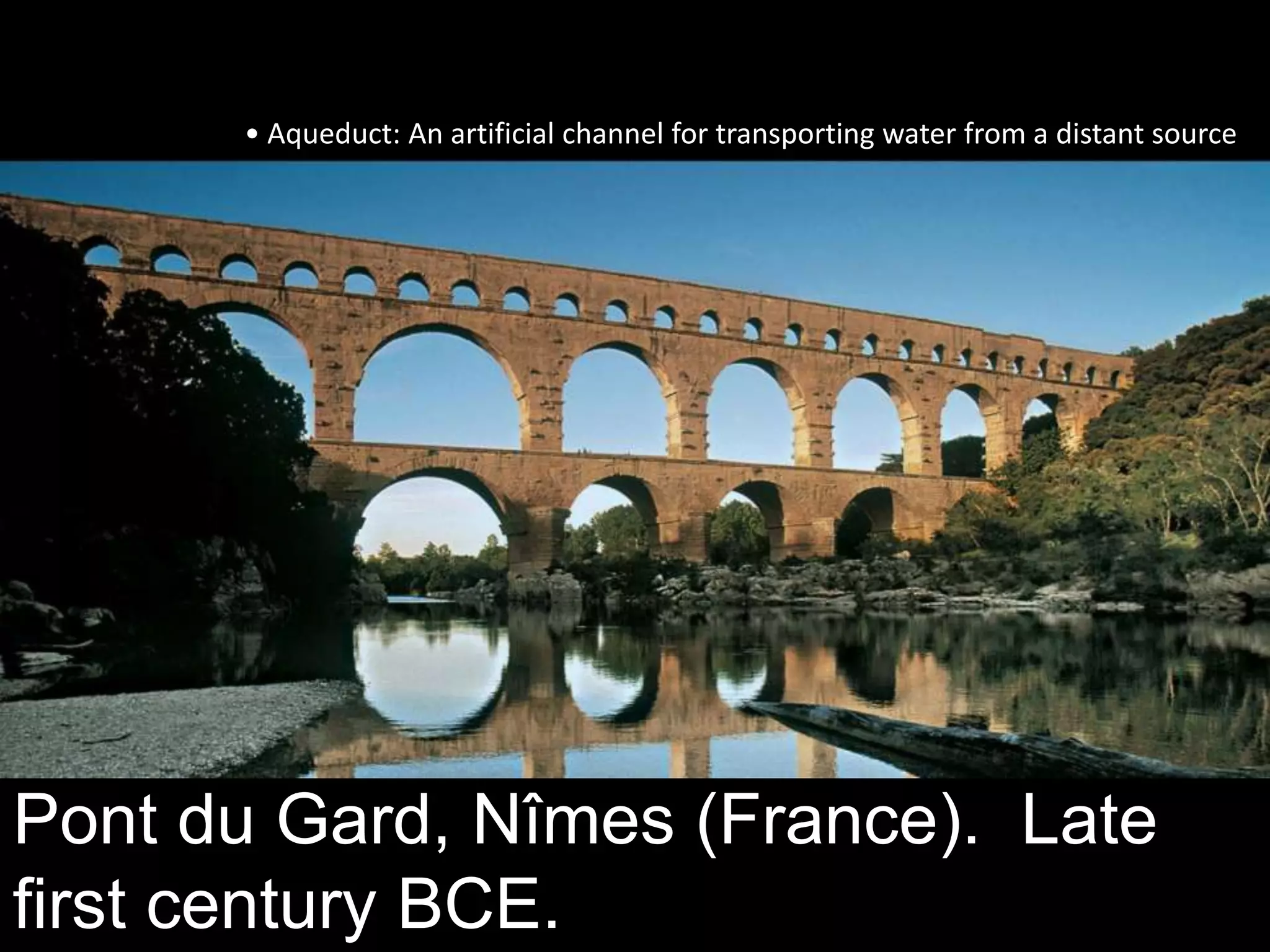
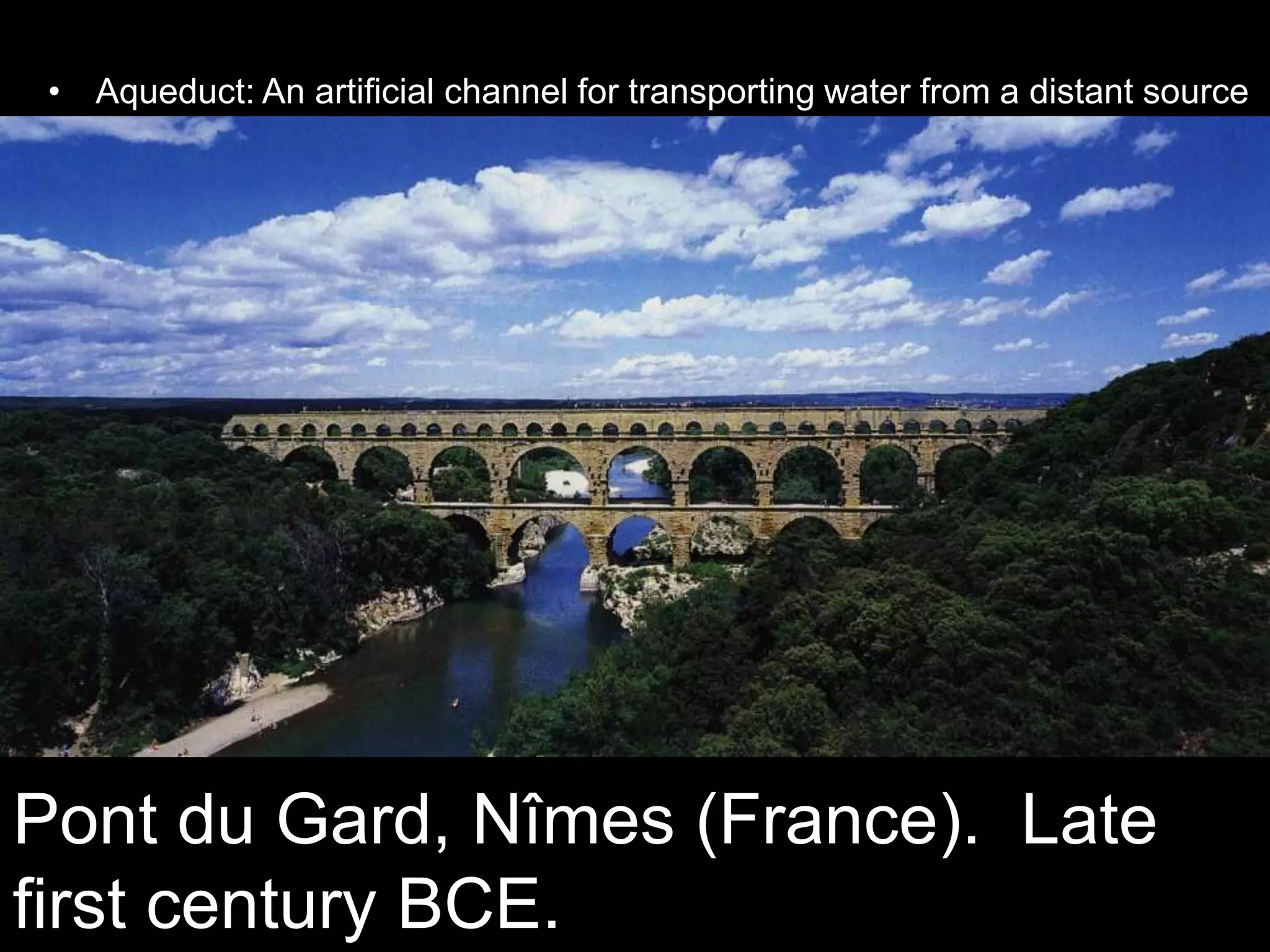
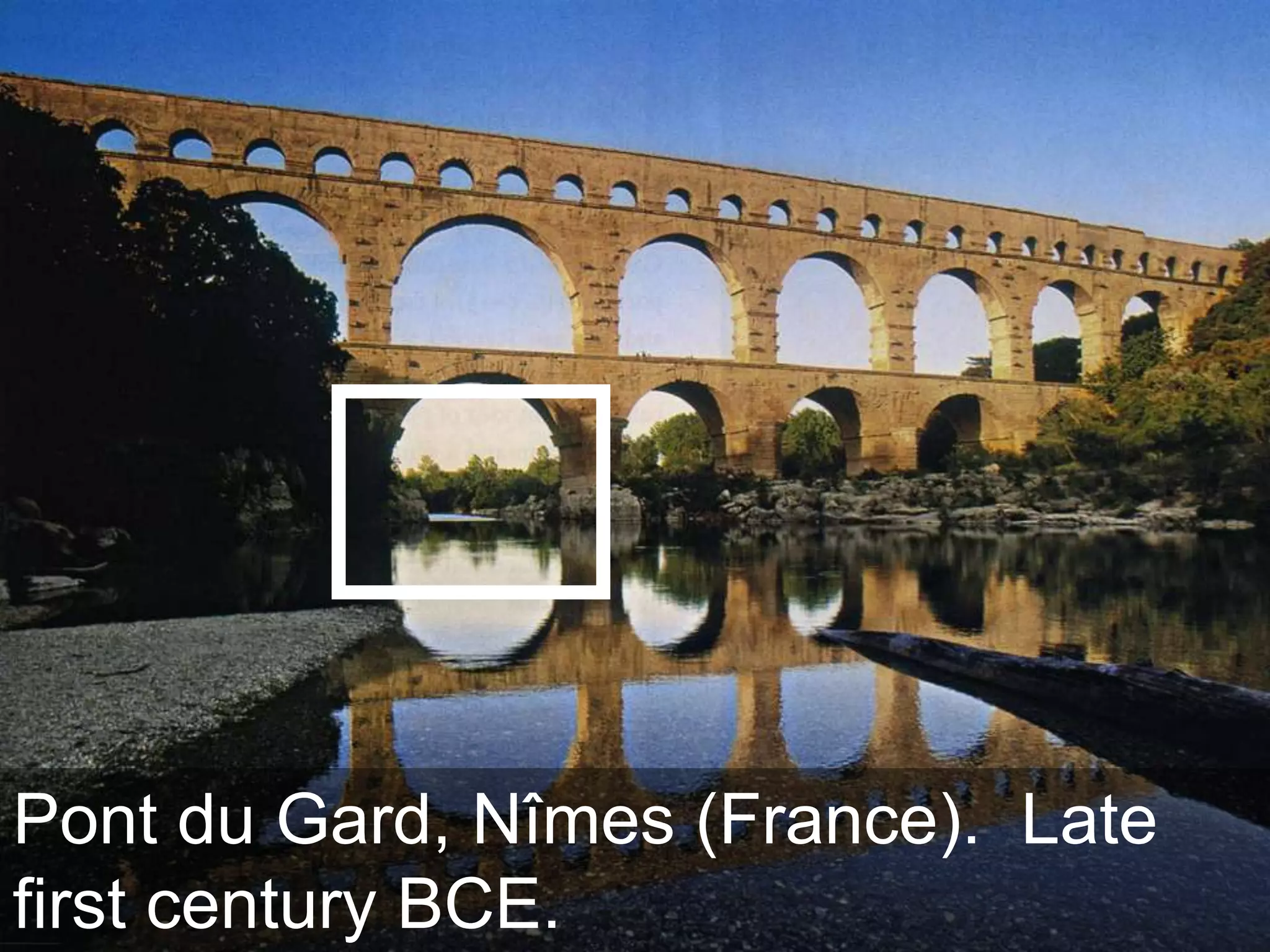
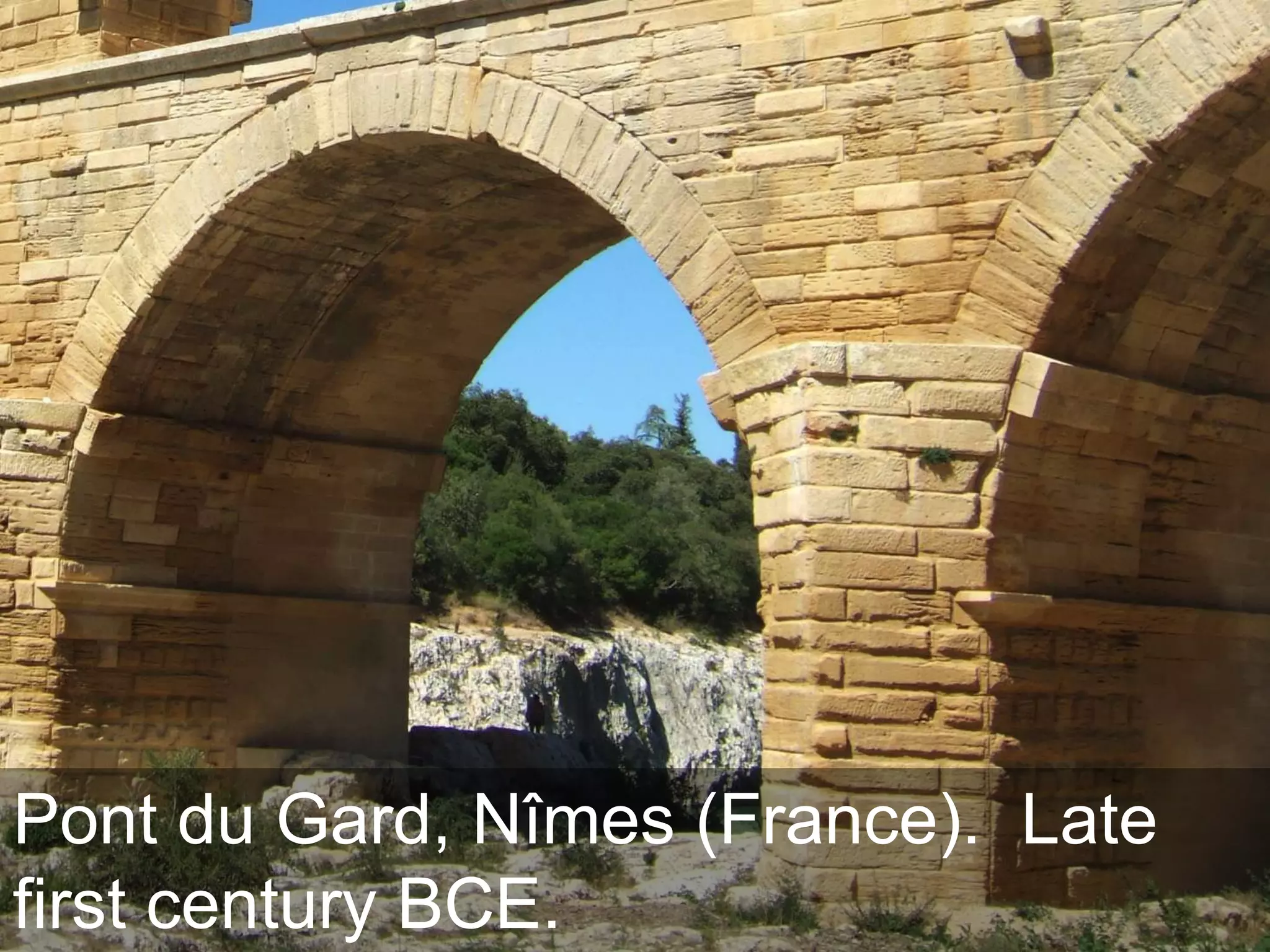
Pont du Gard, Nîmes (France).  Imperial Roman, Late first century BCE.
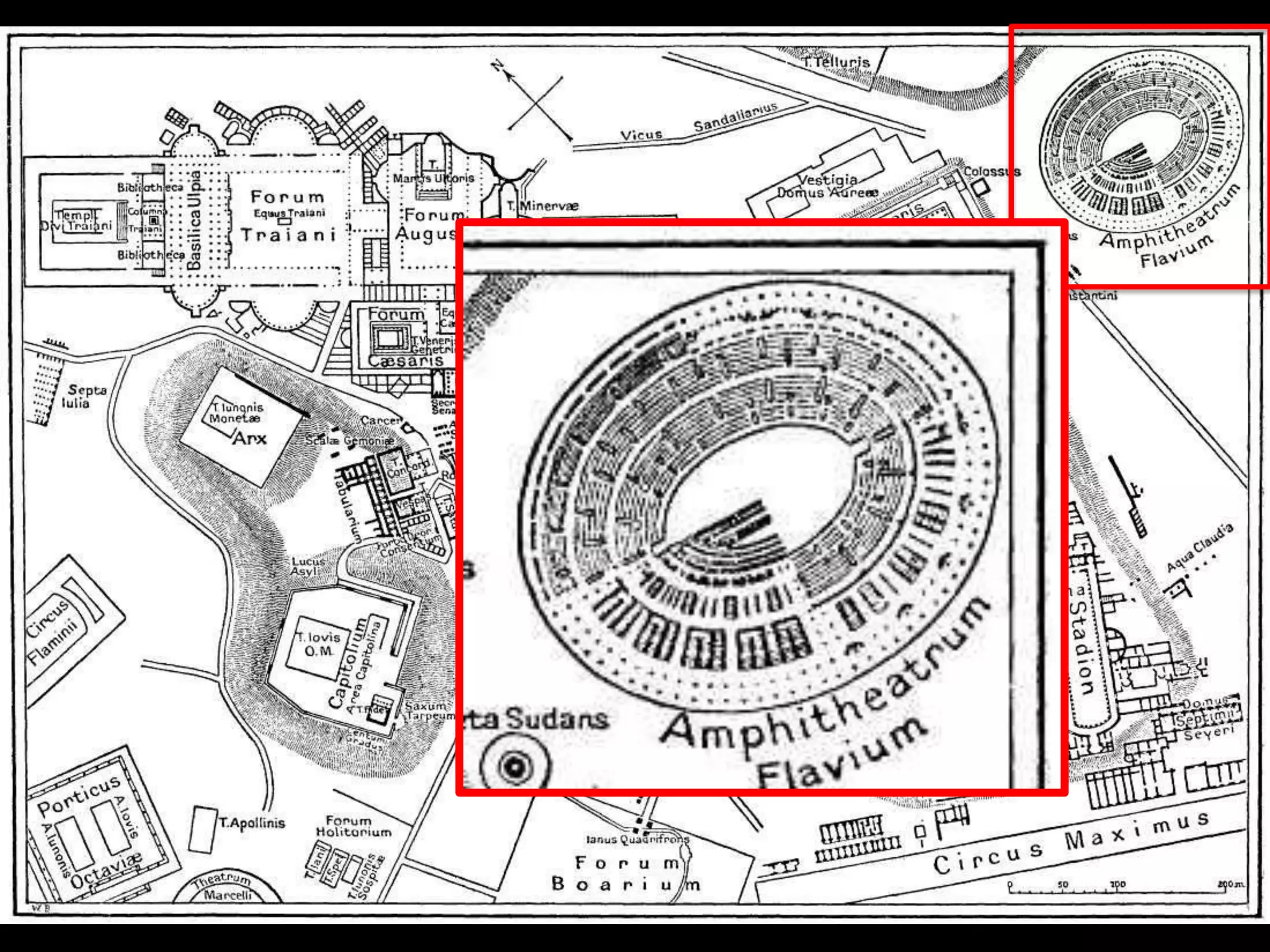
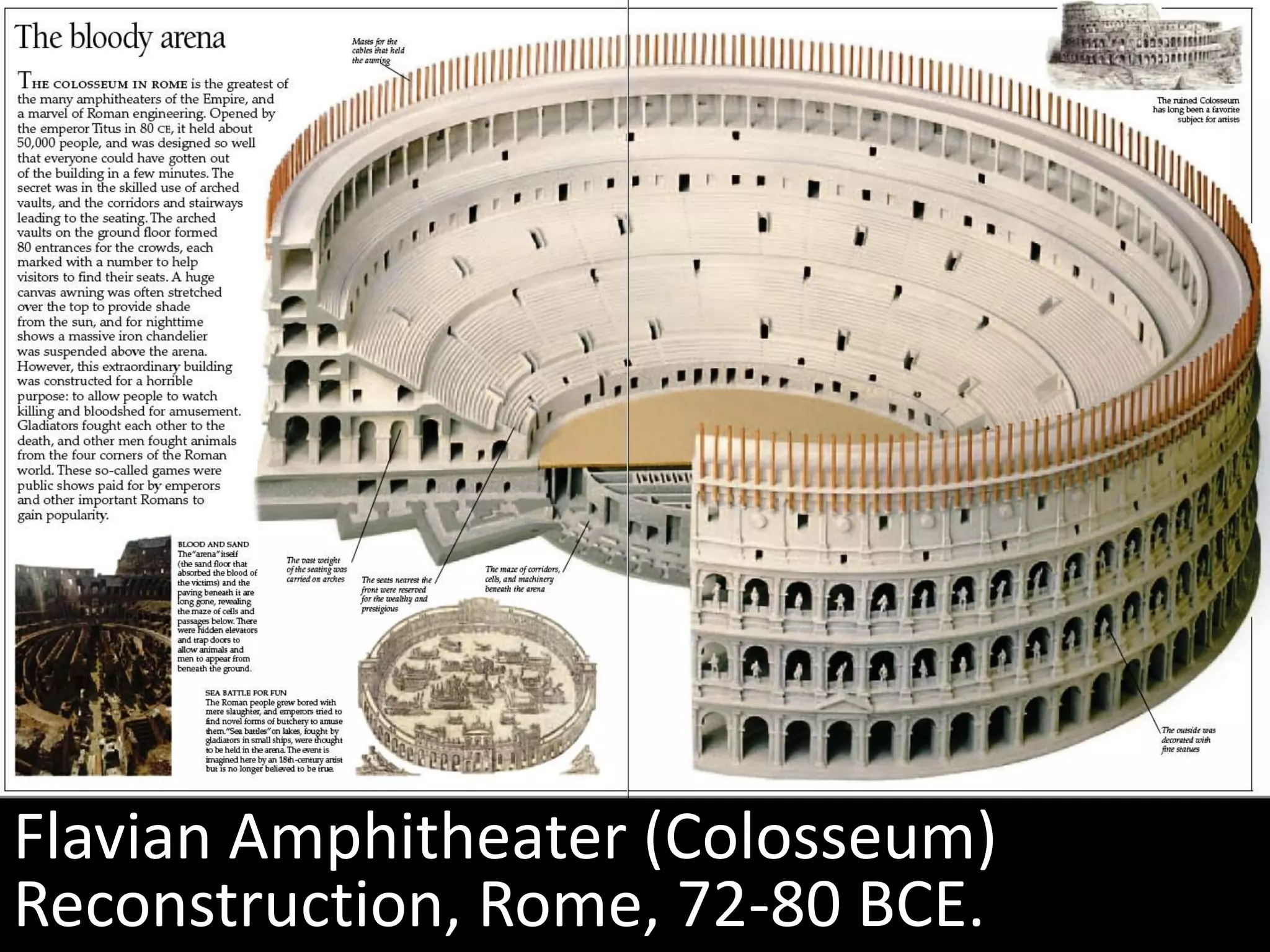
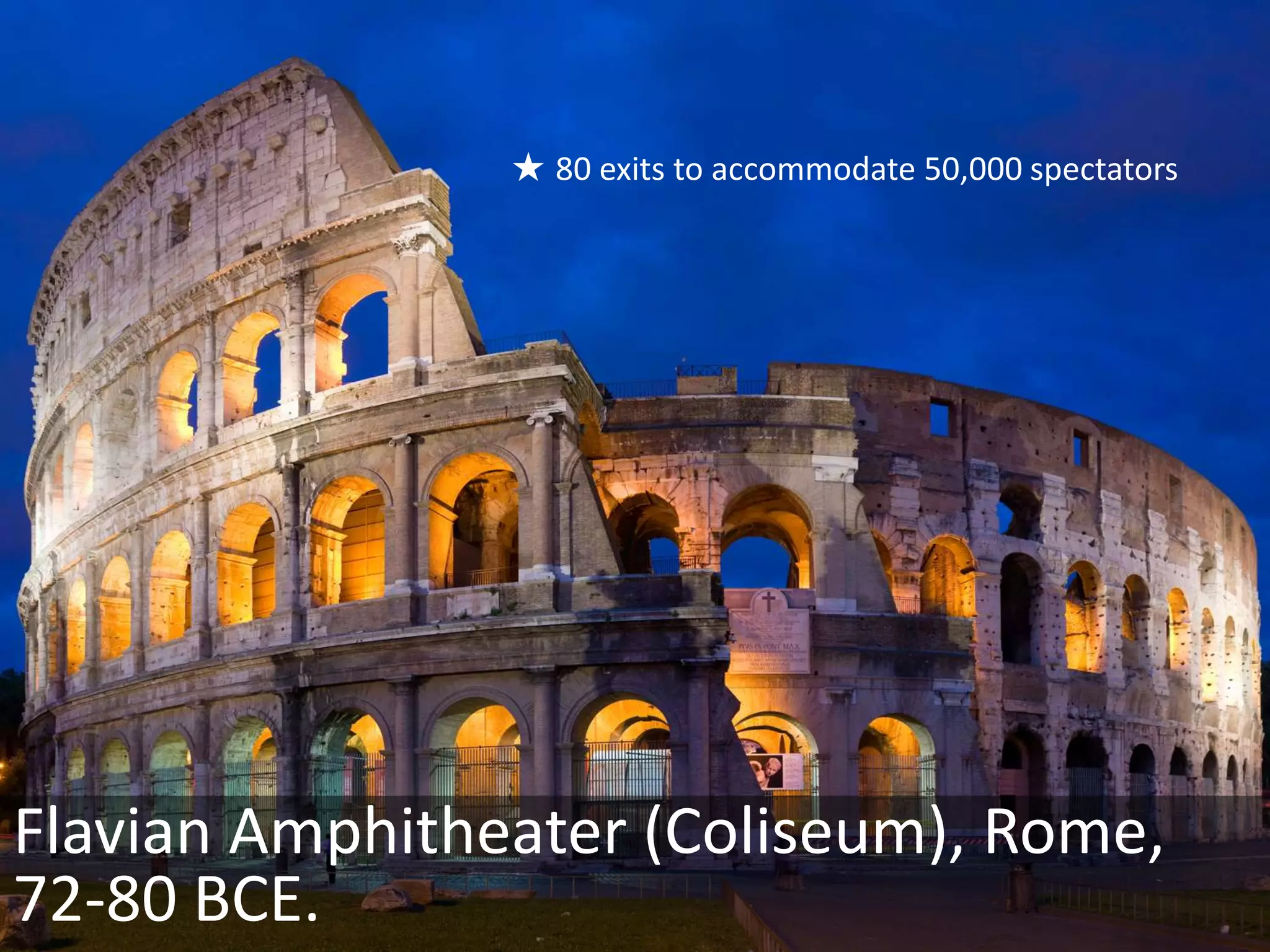
Flavian Amphitheater (the Coliseum). Imperial Roman, 70-80 CE.
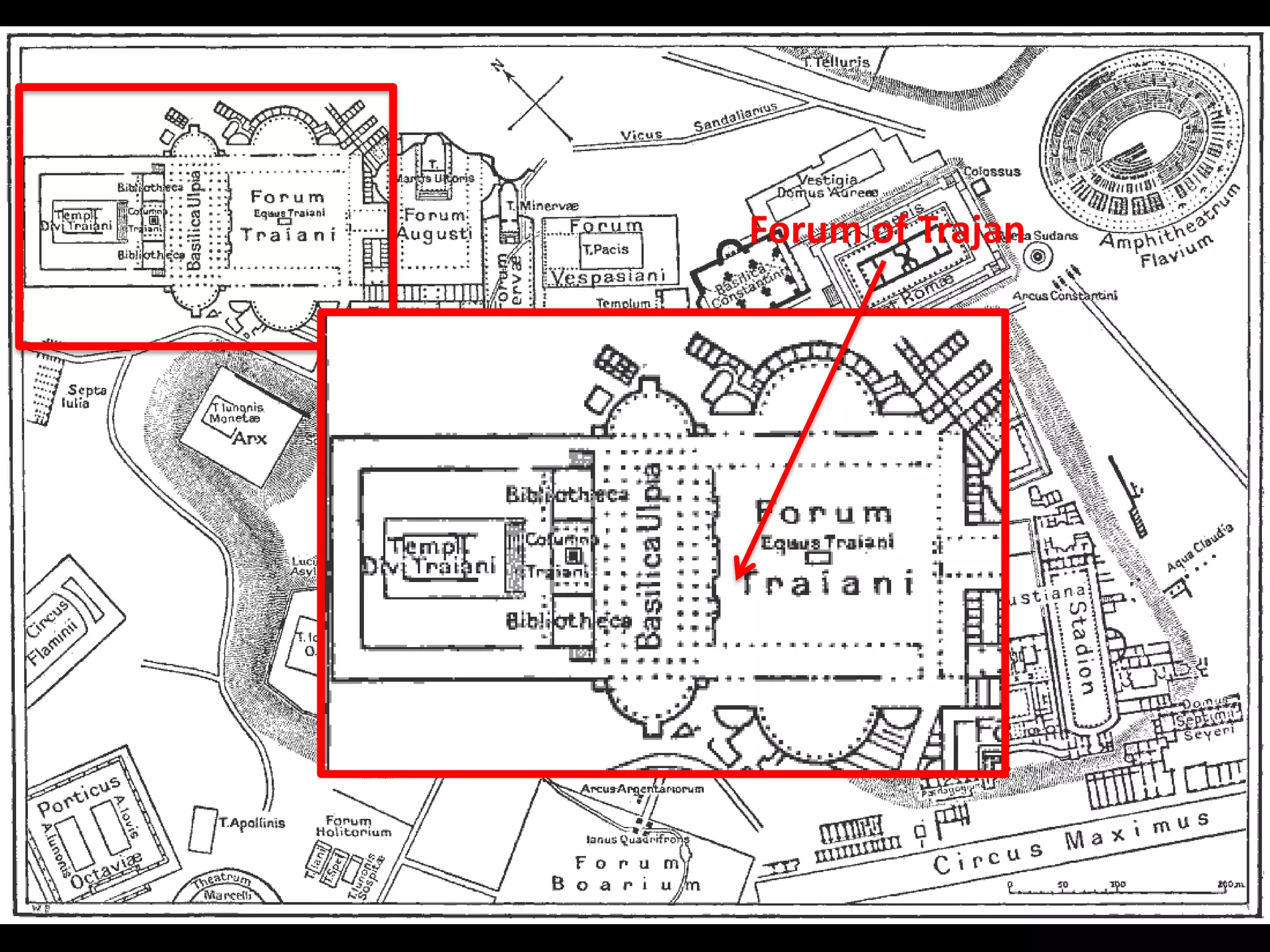
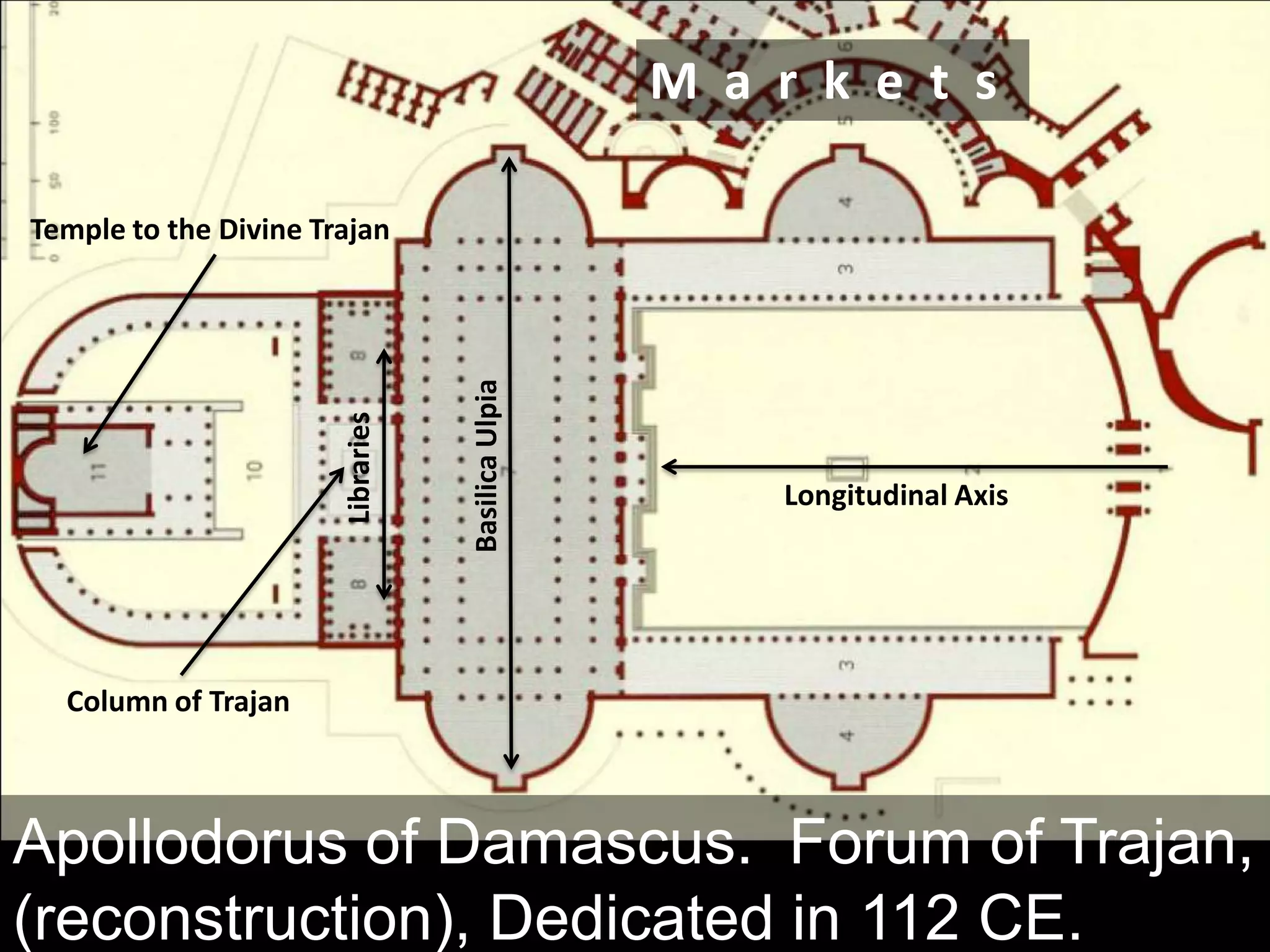
Apollodorus of Damascus.  Forum of Trajan, Imperial Roman, c. 112 CE.
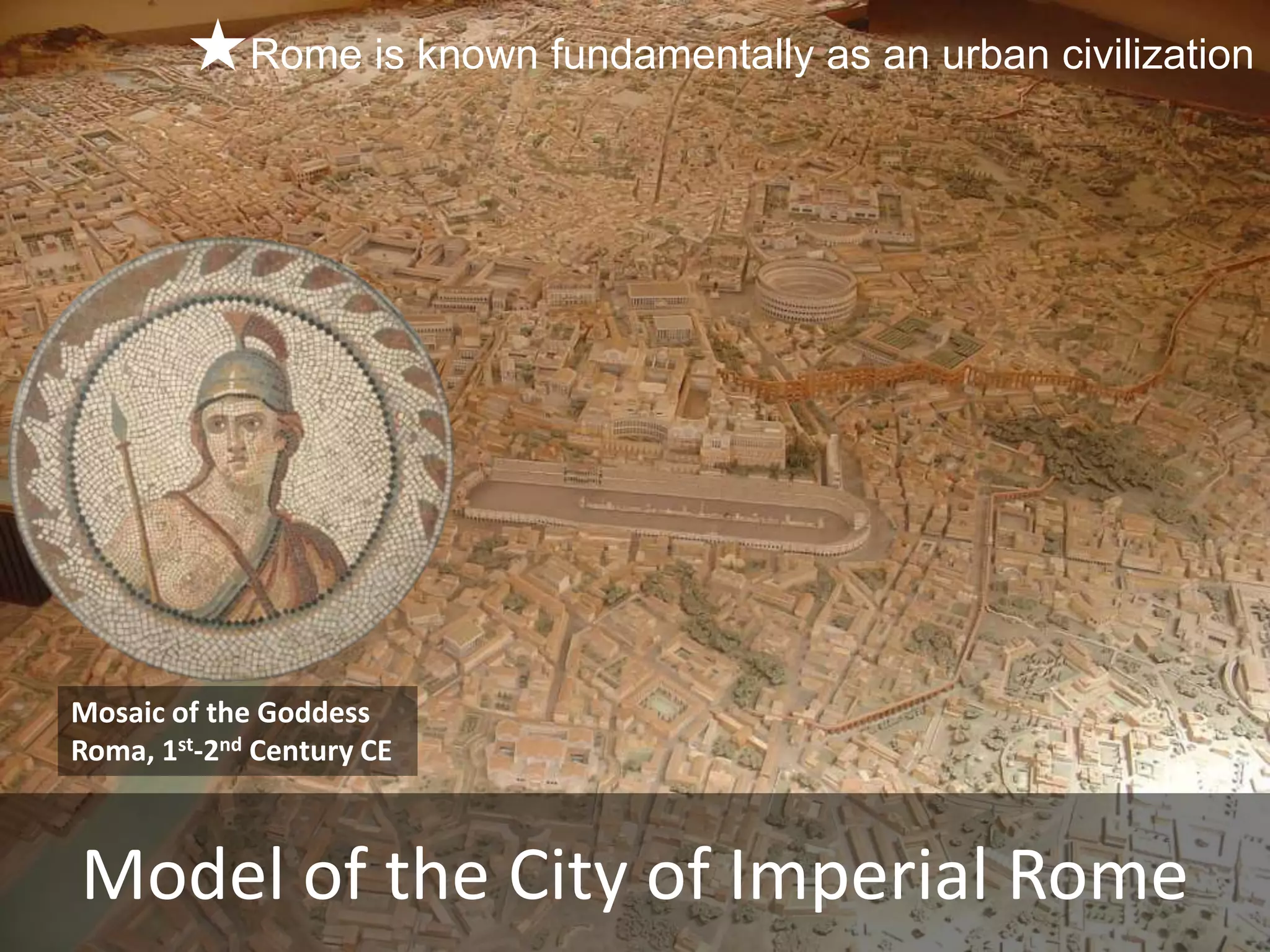
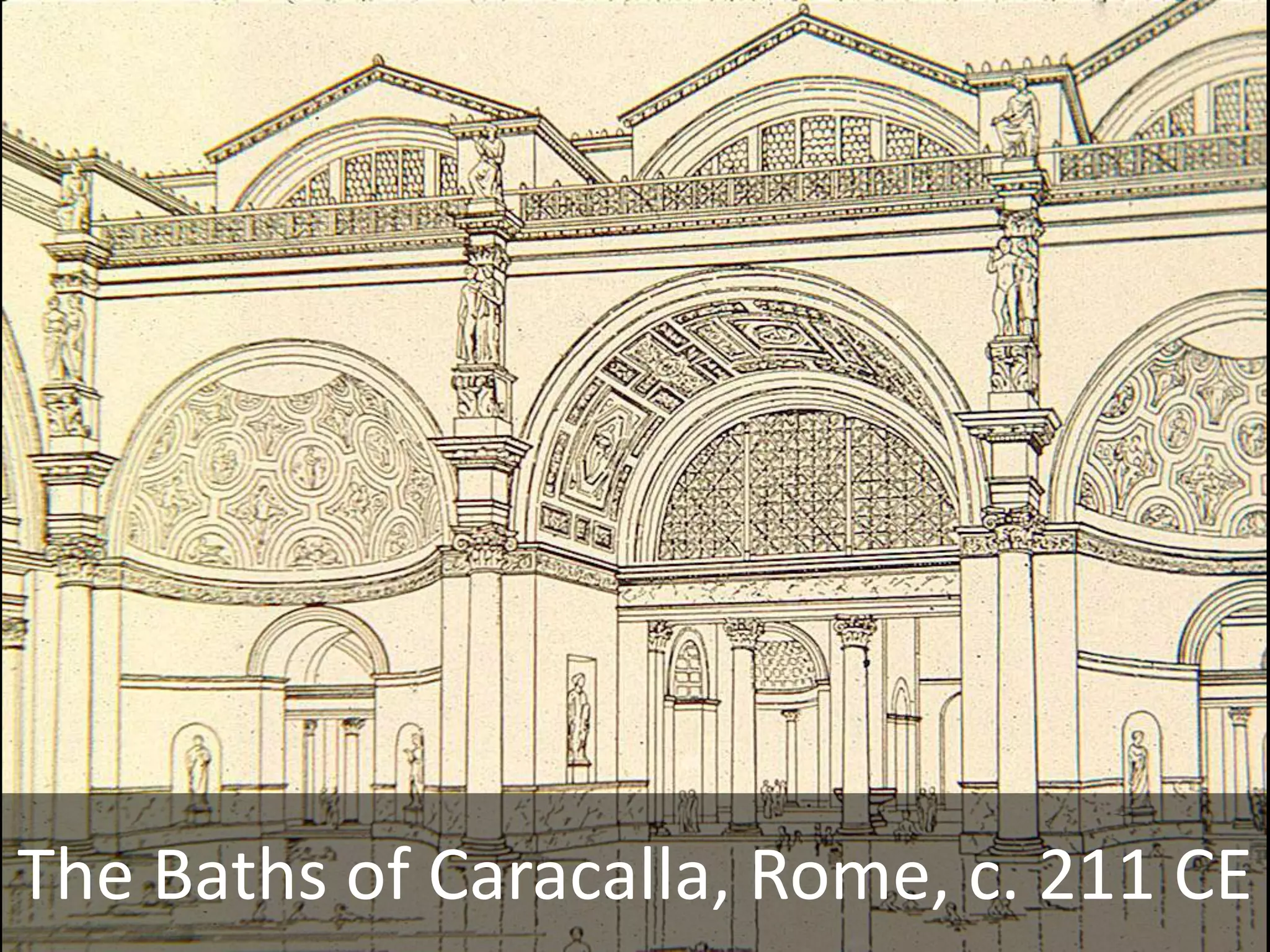
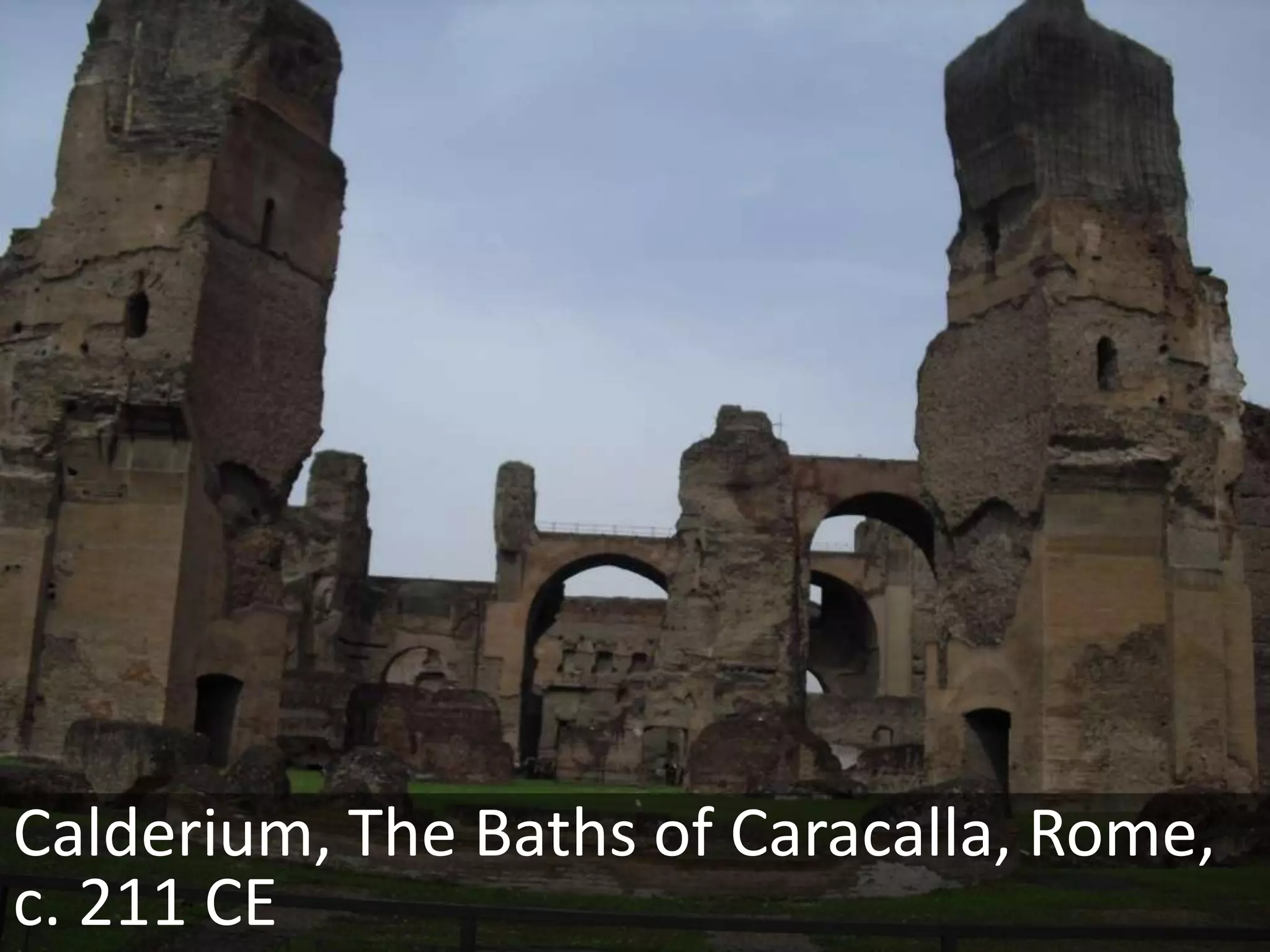
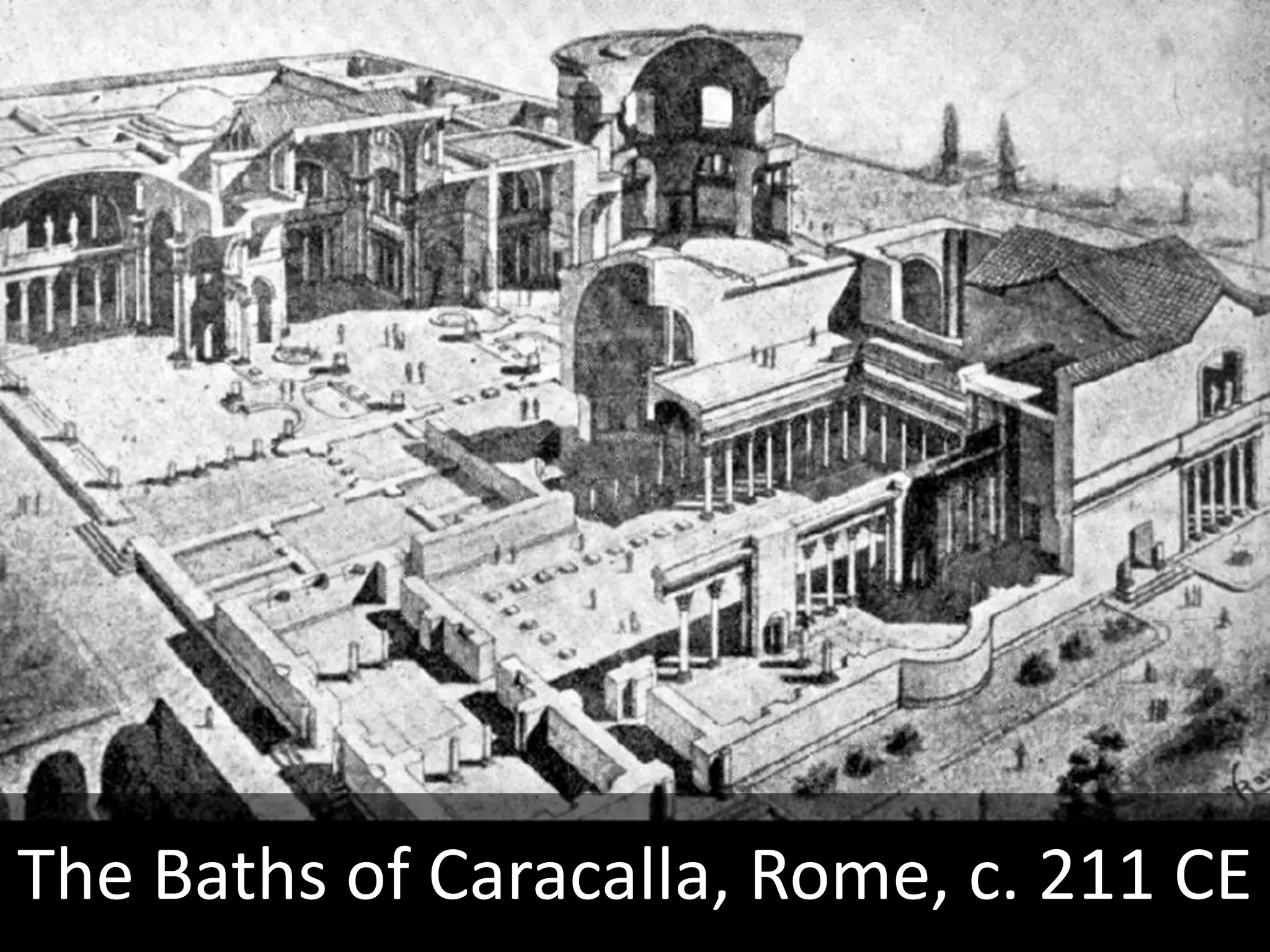
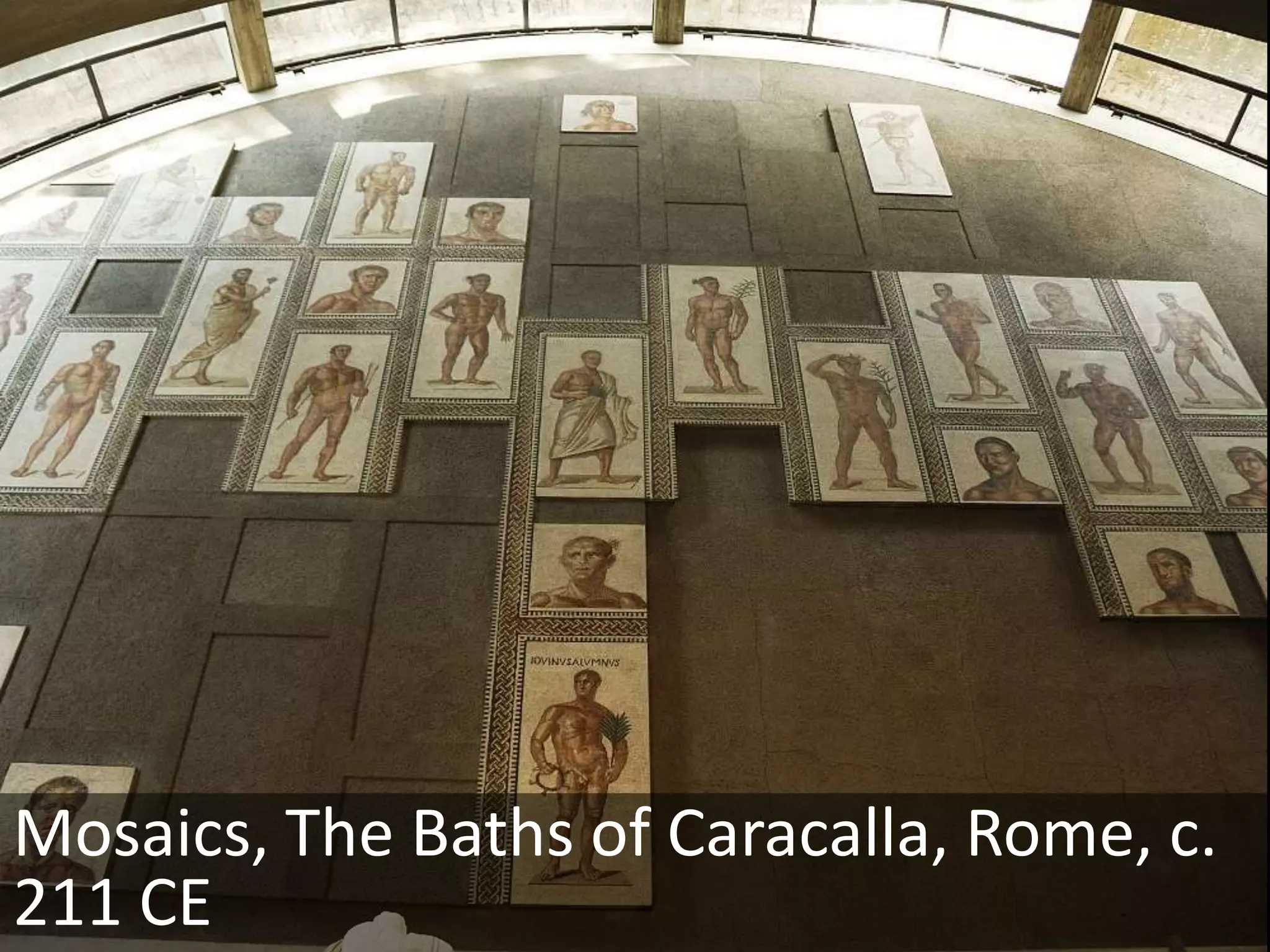
 Baths of Caracalla, Rome, Imperial Roman, c.211 CE.★Rome is known fundamentally as an urban civilizationMosaic of the Goddess Roma, 1st-2nd Century CE Model of the City of Imperial Rome
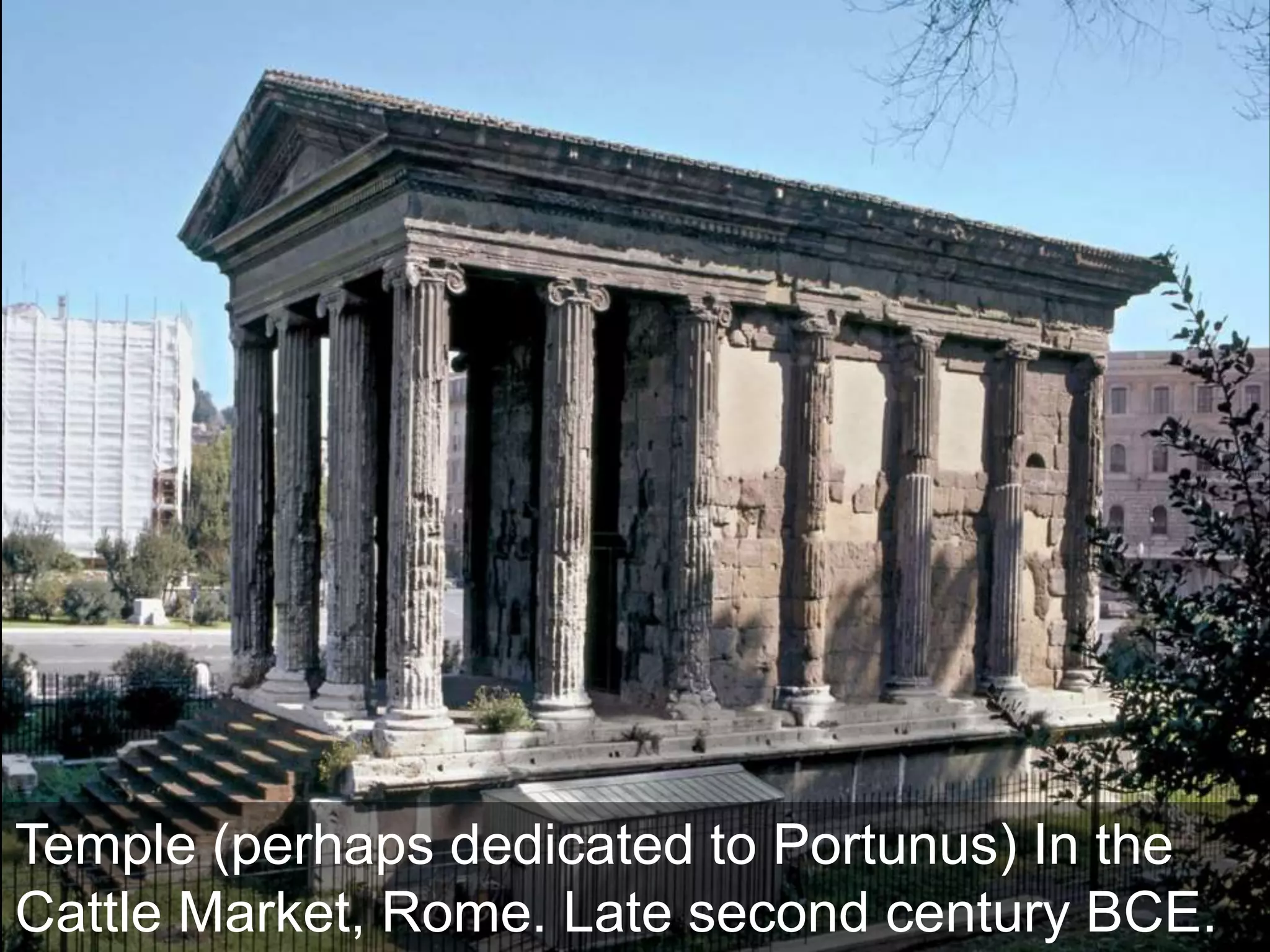
Temple (perhaps dedicated to Portunus)In the Cattle Market, Rome. Late second century BCE.
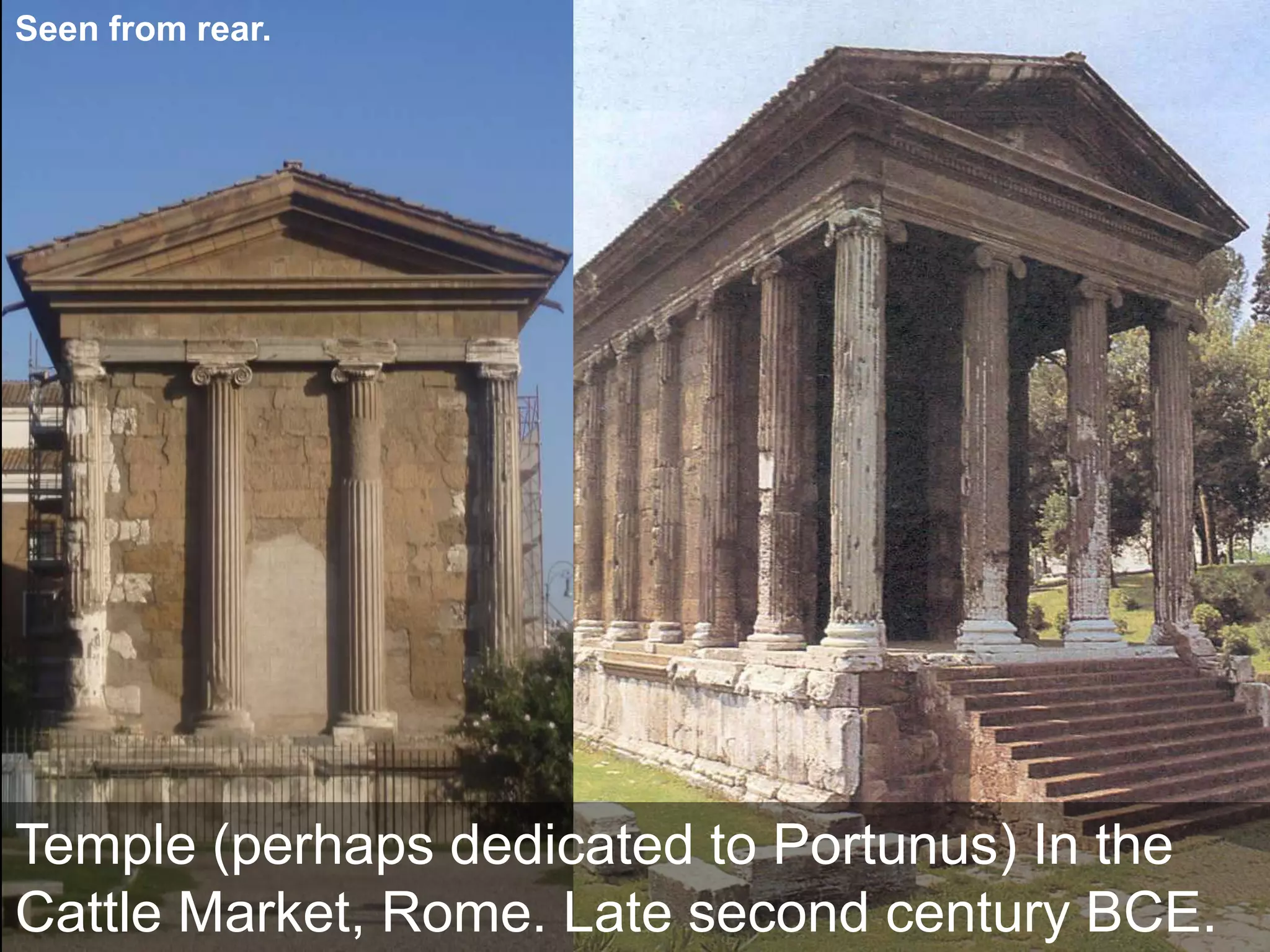
Seen from rear.Temple (perhaps dedicated to Portunus)In the Cattle Market, Rome. Late second century BCE.
Temple (perhaps dedicated to Portunus)In the Cattle Market, Rome. Late second century BCE.
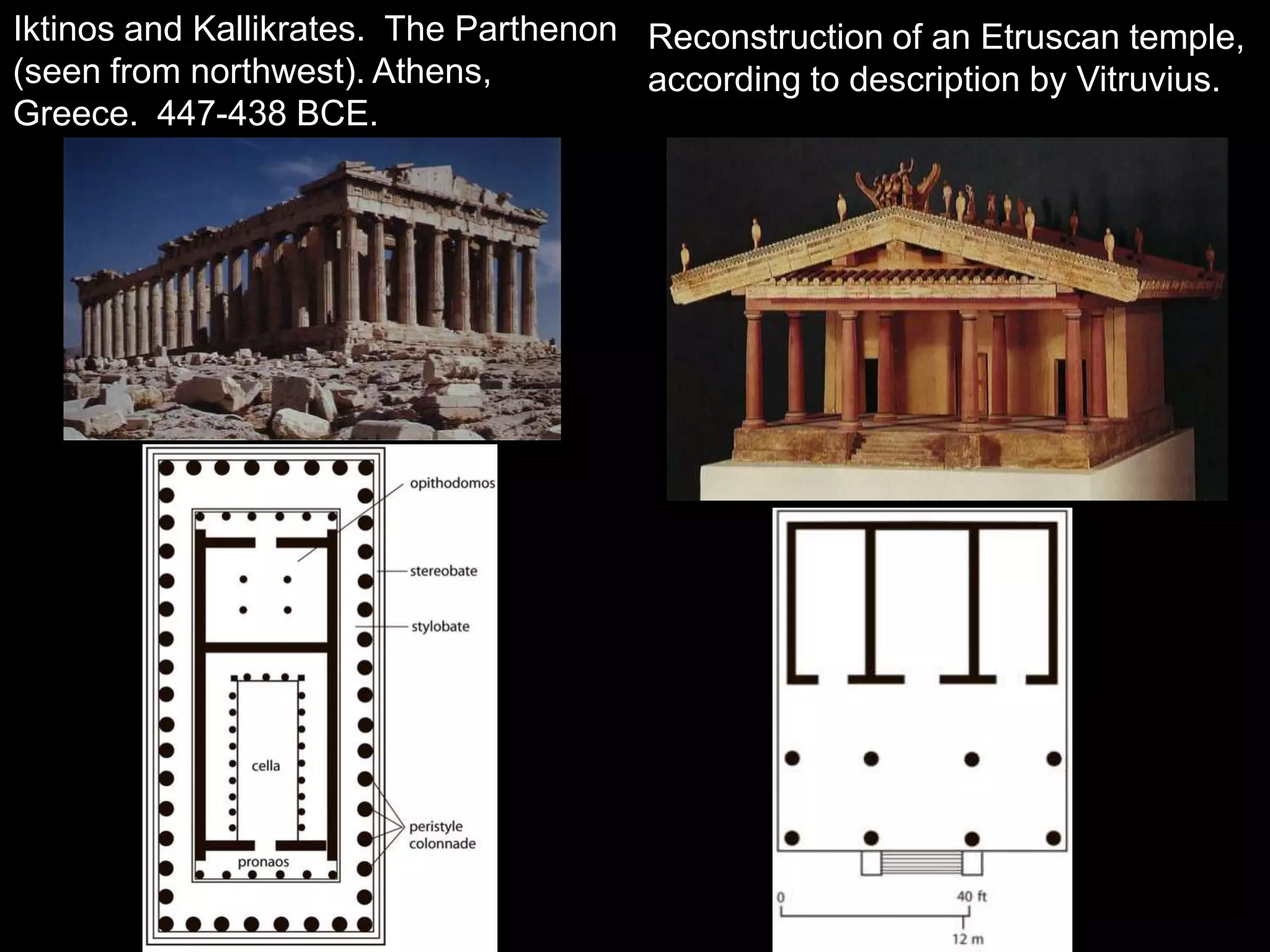
Iktinos and Kallikrates.  The Parthenon (seen from northwest). Athens, Greece.  447-438 BCE.  Reconstruction of an Etruscan temple, according to description by Vitruvius.
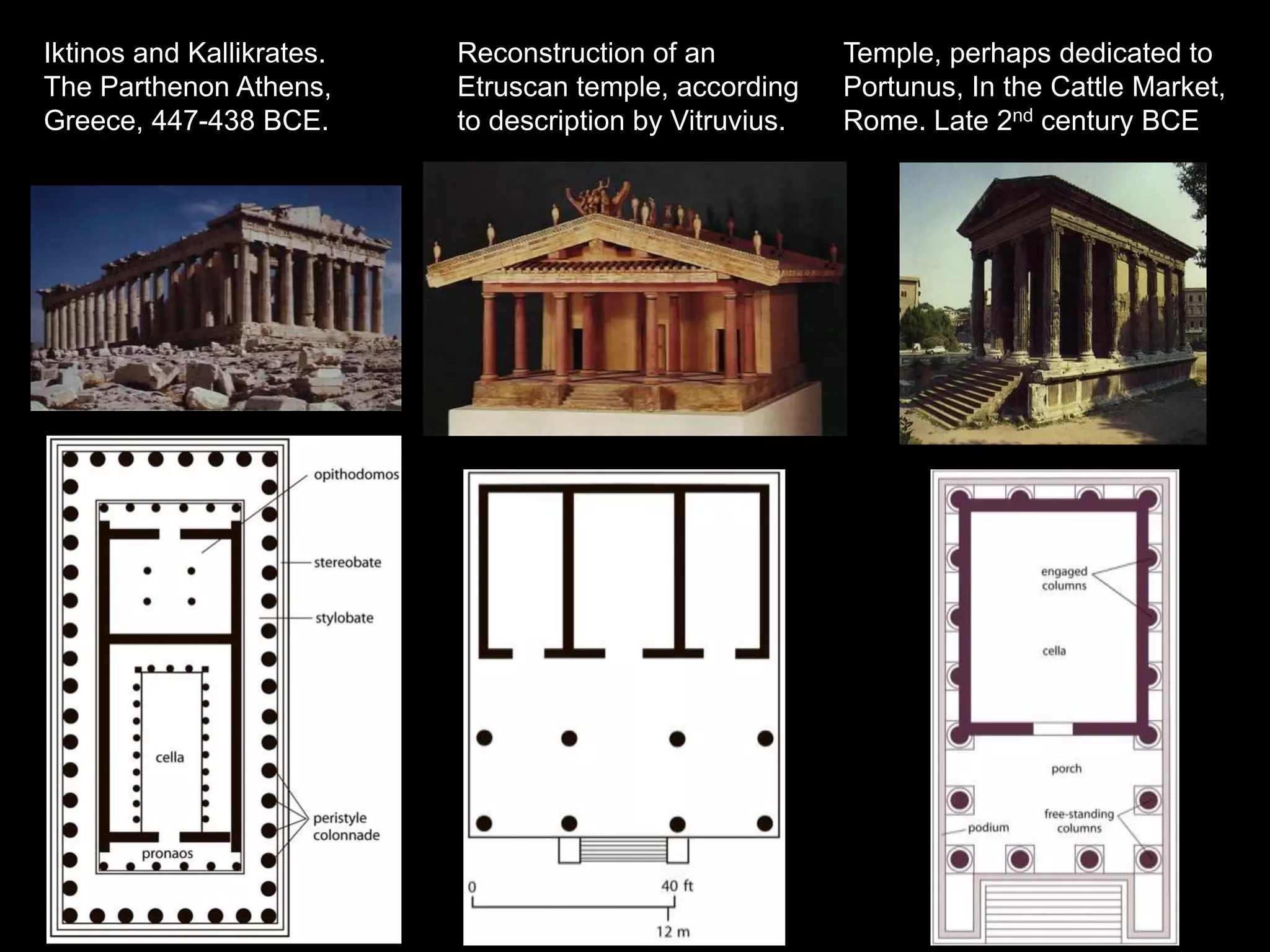
Reconstruction of an Etruscan temple, according to description by Vitruvius.  Iktinos and Kallikrates.  The Parthenon Athens, Greece, 447-438 BCE.  Temple, perhaps dedicated to Portunus,In the Cattle Market, Rome. Late 2nd century BCE
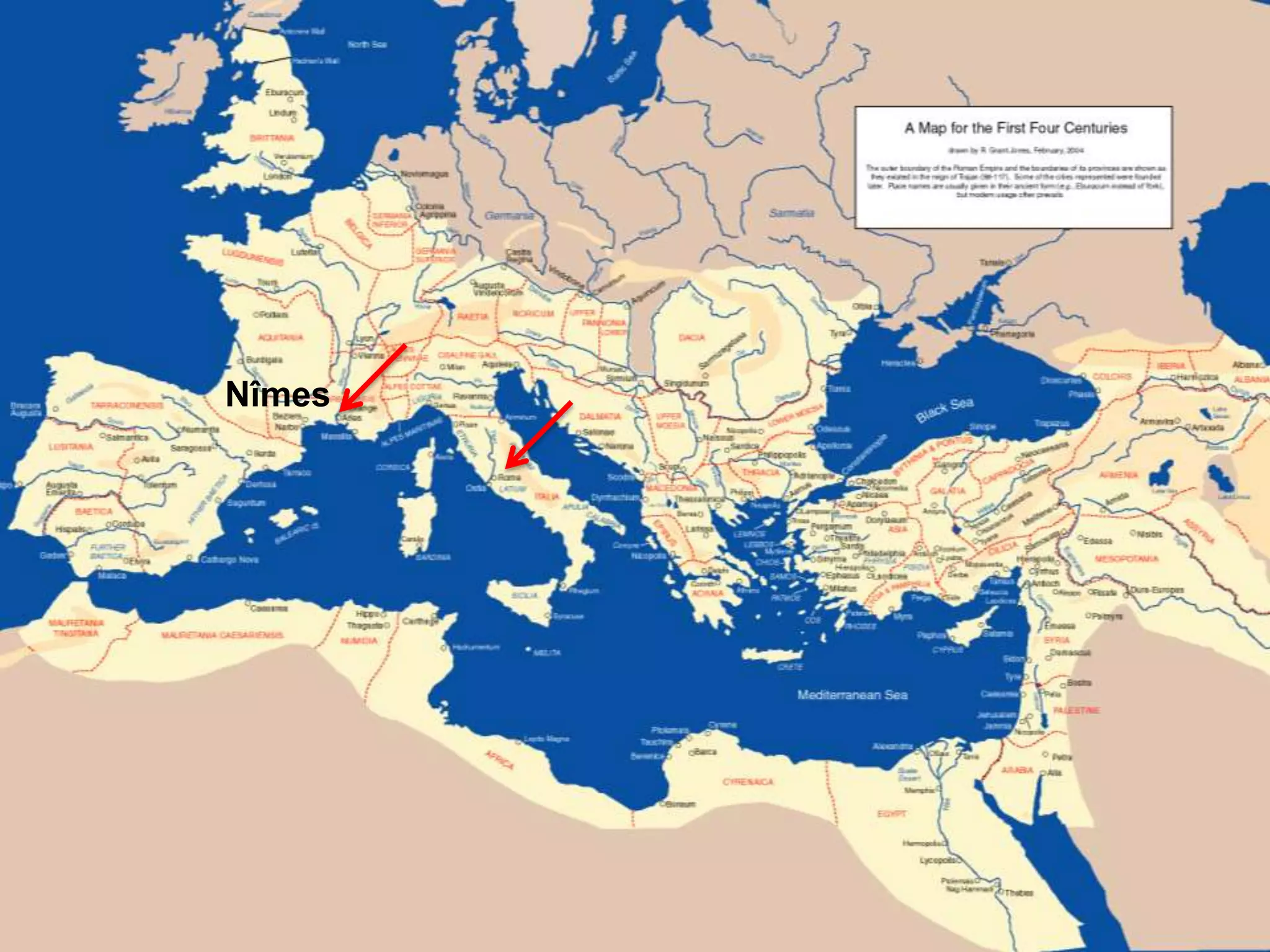
Nîmes
 Aqueduct: An artificial channel for transporting water from a distant sourcePont du Gard, Nîmes (France).  Late first century BCE.
Aqueduct: An artificial channel for transporting water from a distant sourcePont du Gard, Nîmes (France).  Late first century BCE.
Pont du Gard, Nîmes (France).  Late first century BCE.
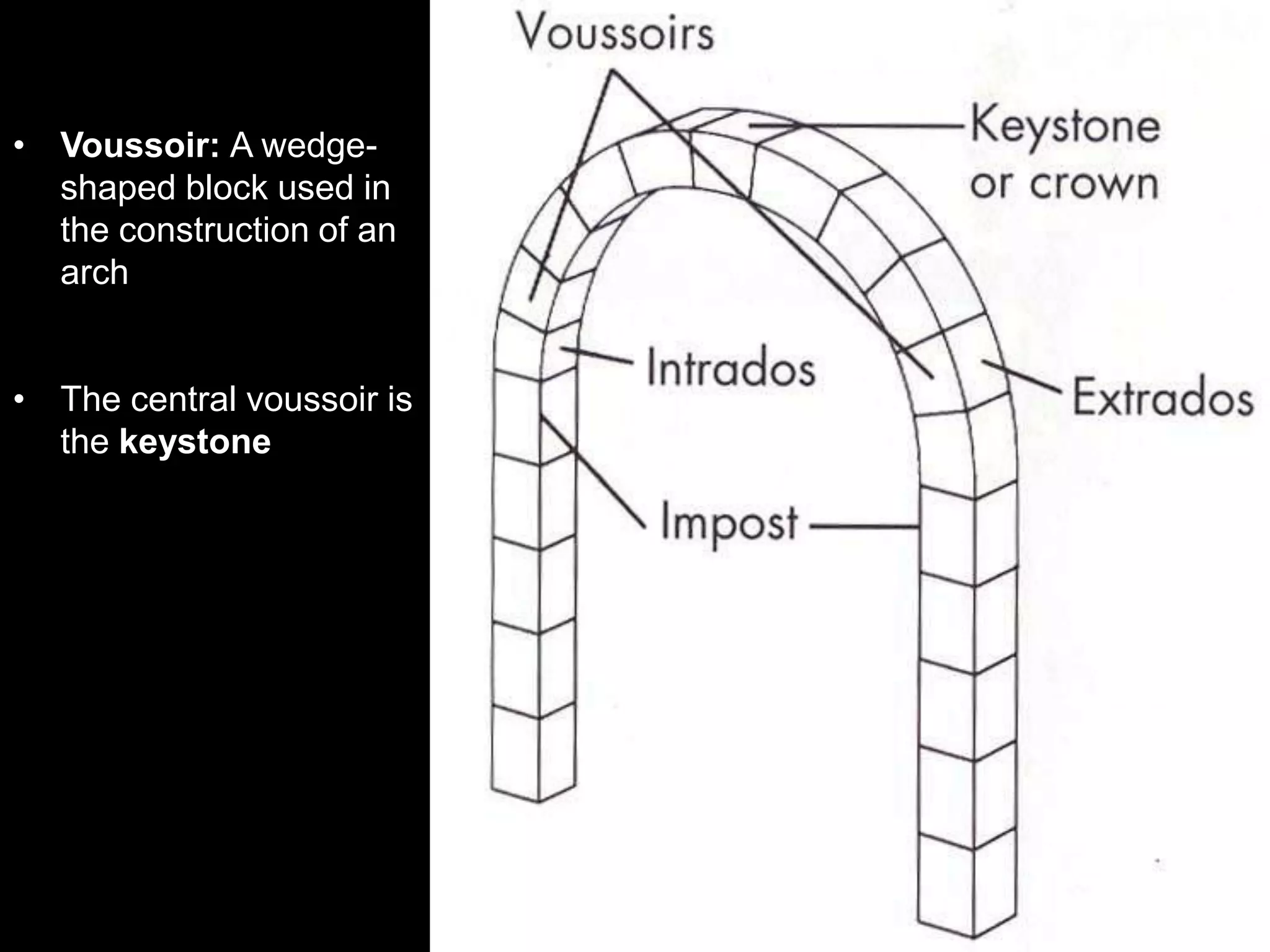
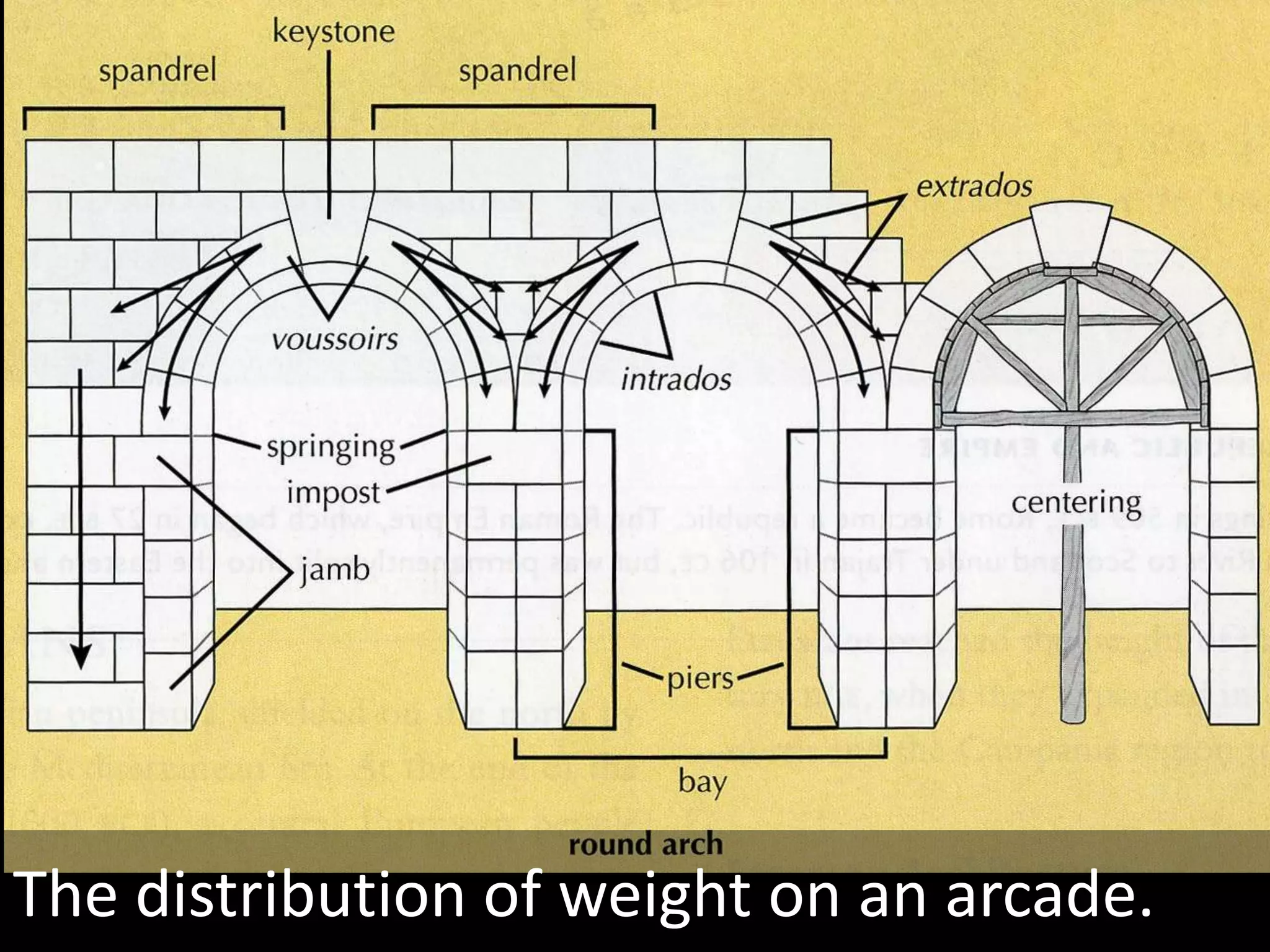
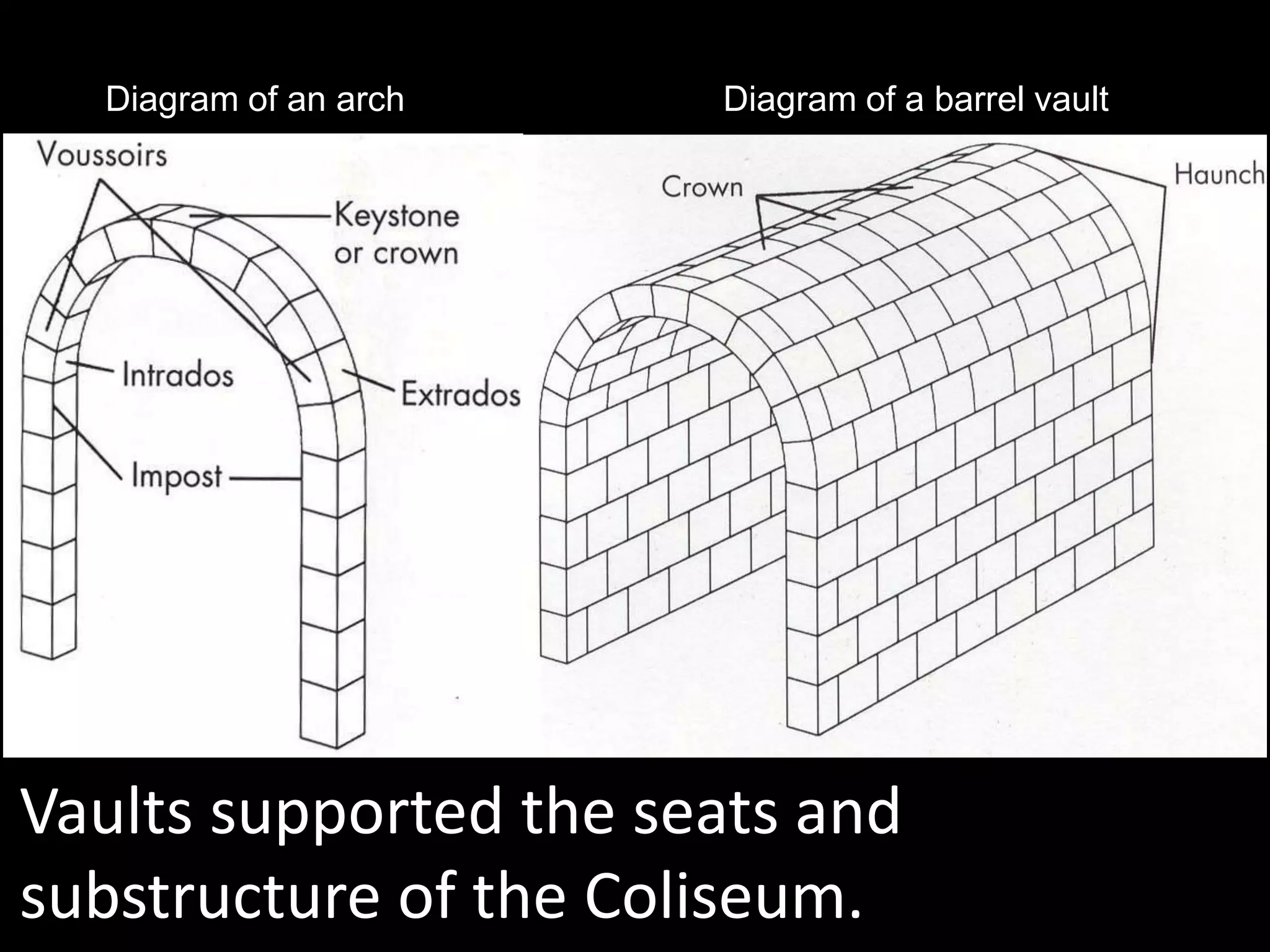
Voussoir: A wedge-shaped block used in the construction of an arch
The central voussoir is the keystoneThe distribution of weight on an arcade.
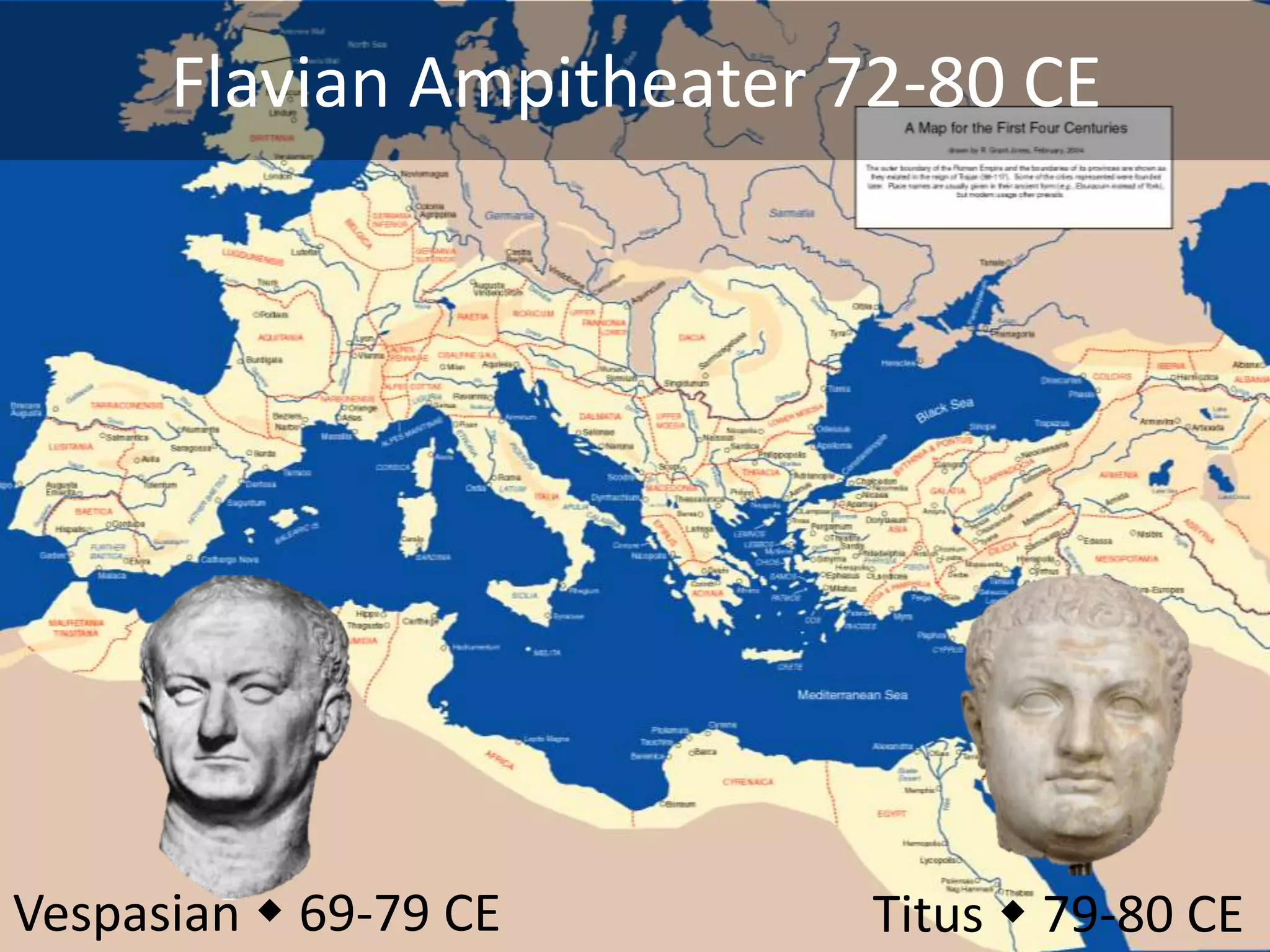
FlavianAmpitheater 72-80 CEVespasian 69-79 CETitus  79-80 CE
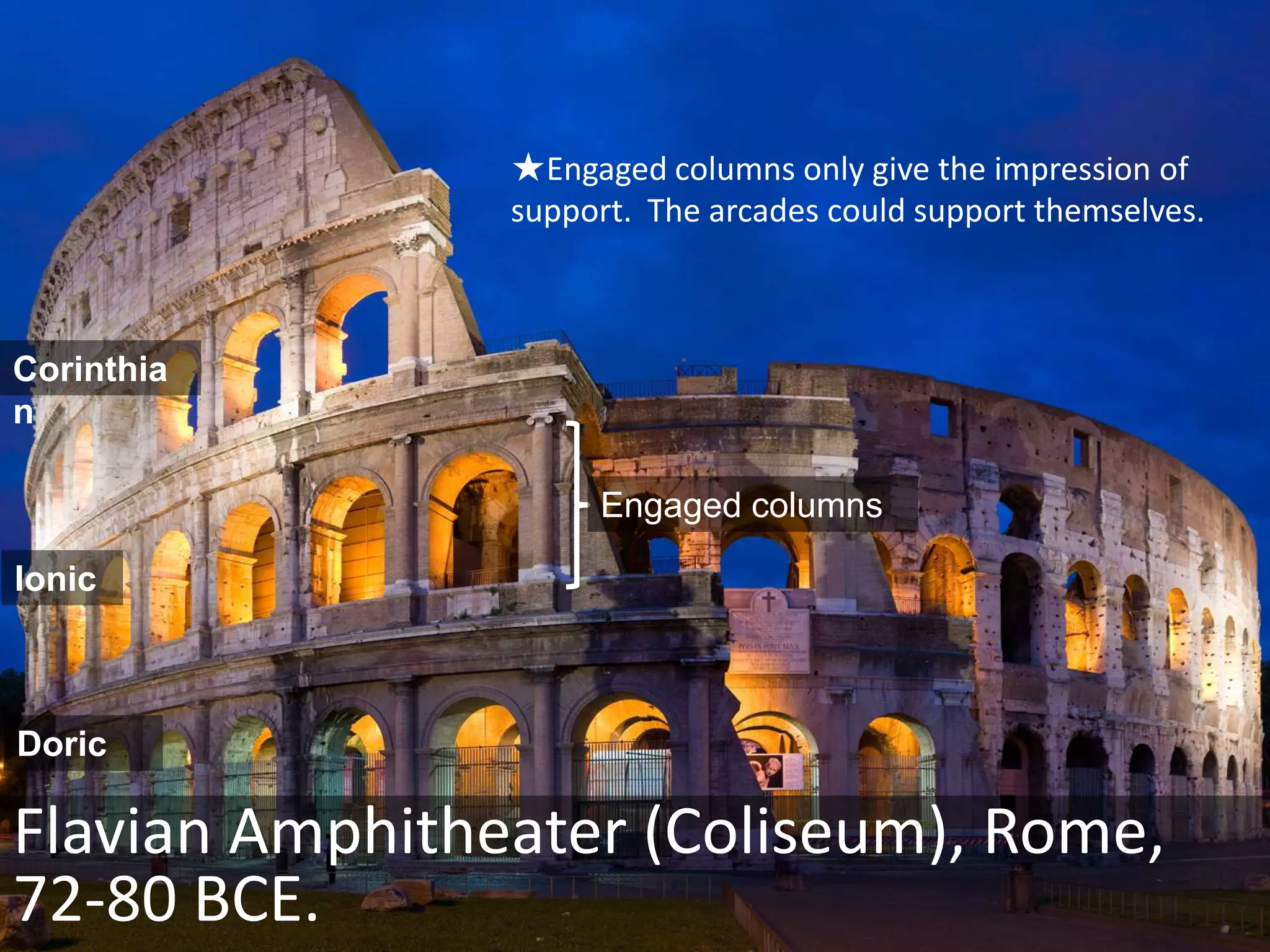
★Engaged columns only give the impression of support.  The arcades could support themselves.CorinthianEngaged columnsIonicDoricFlavian Amphitheater (Coliseum), Rome, 72-80 BCE.
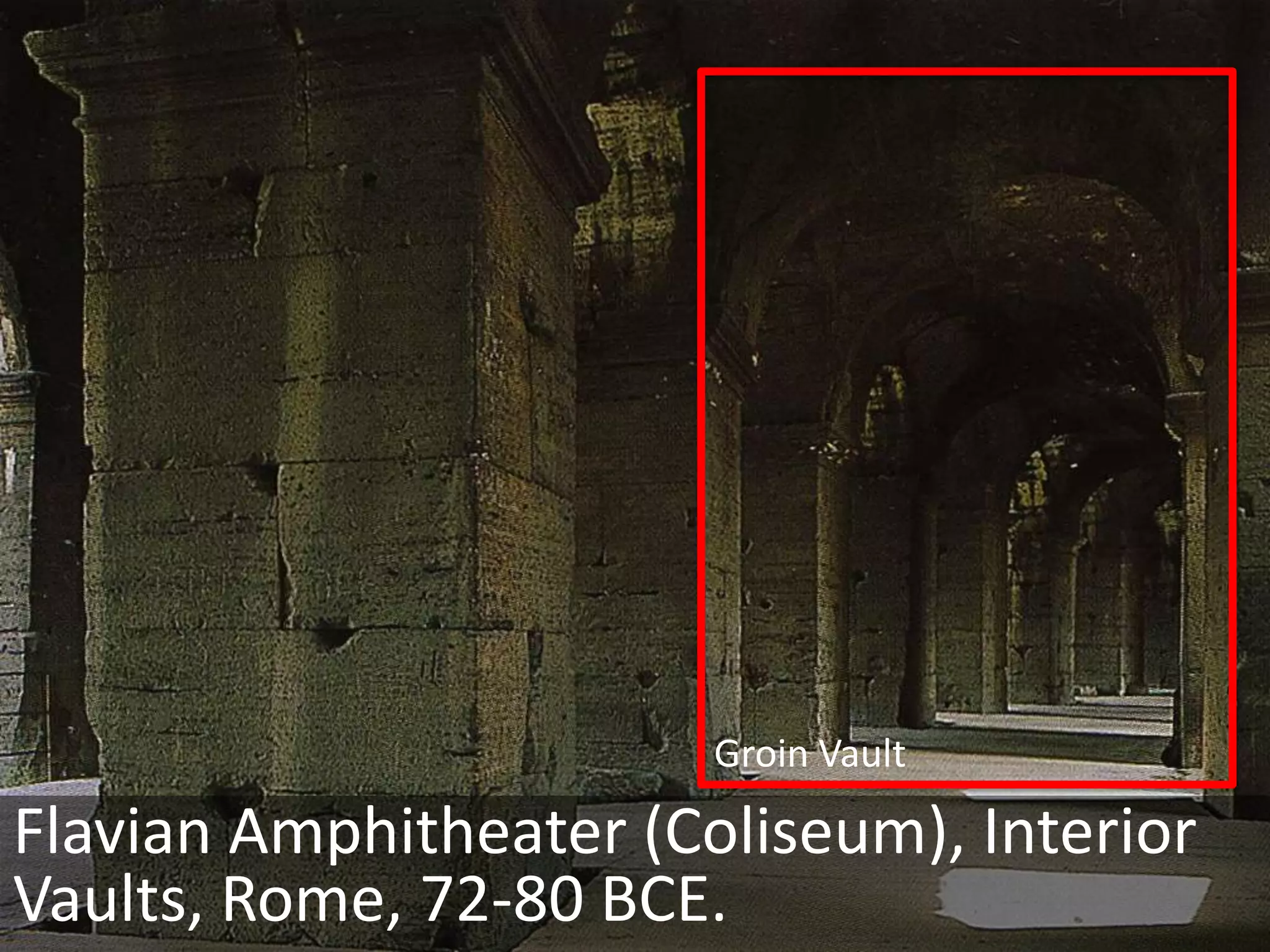
Groin VaultFlavian Amphitheater (Coliseum), Interior Vaults, Rome, 72-80 BCE.
Diagram of an archDiagram of a barrel vaultVaults supported the seats and substructure of the Coliseum.
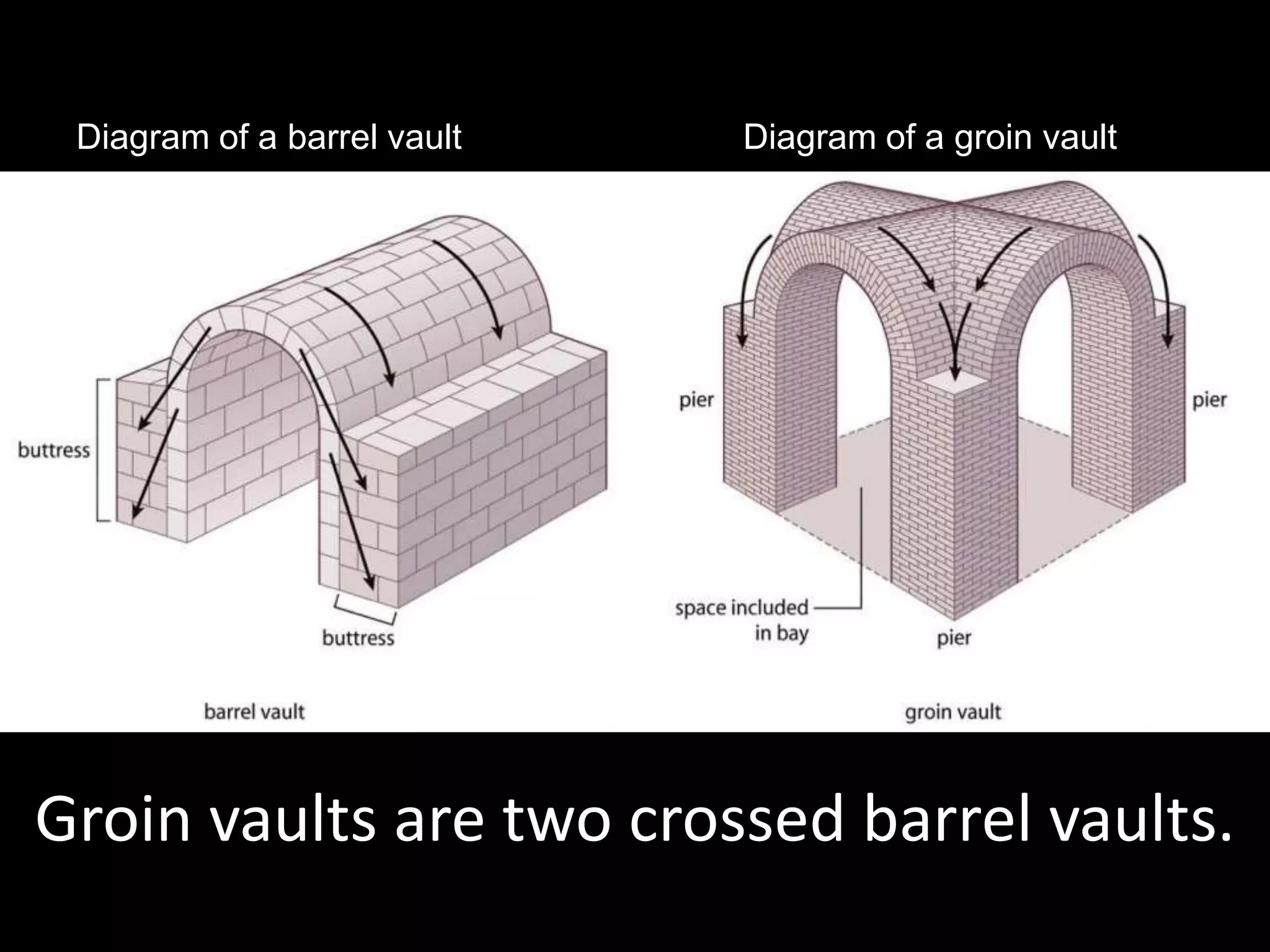
Diagram of a barrel vaultDiagram of a groin vaultGroin vaults are two crossed barrel vaults.
Flavian Amphitheater (Colosseum) Reconstruction, Rome, 72-80 BCE.
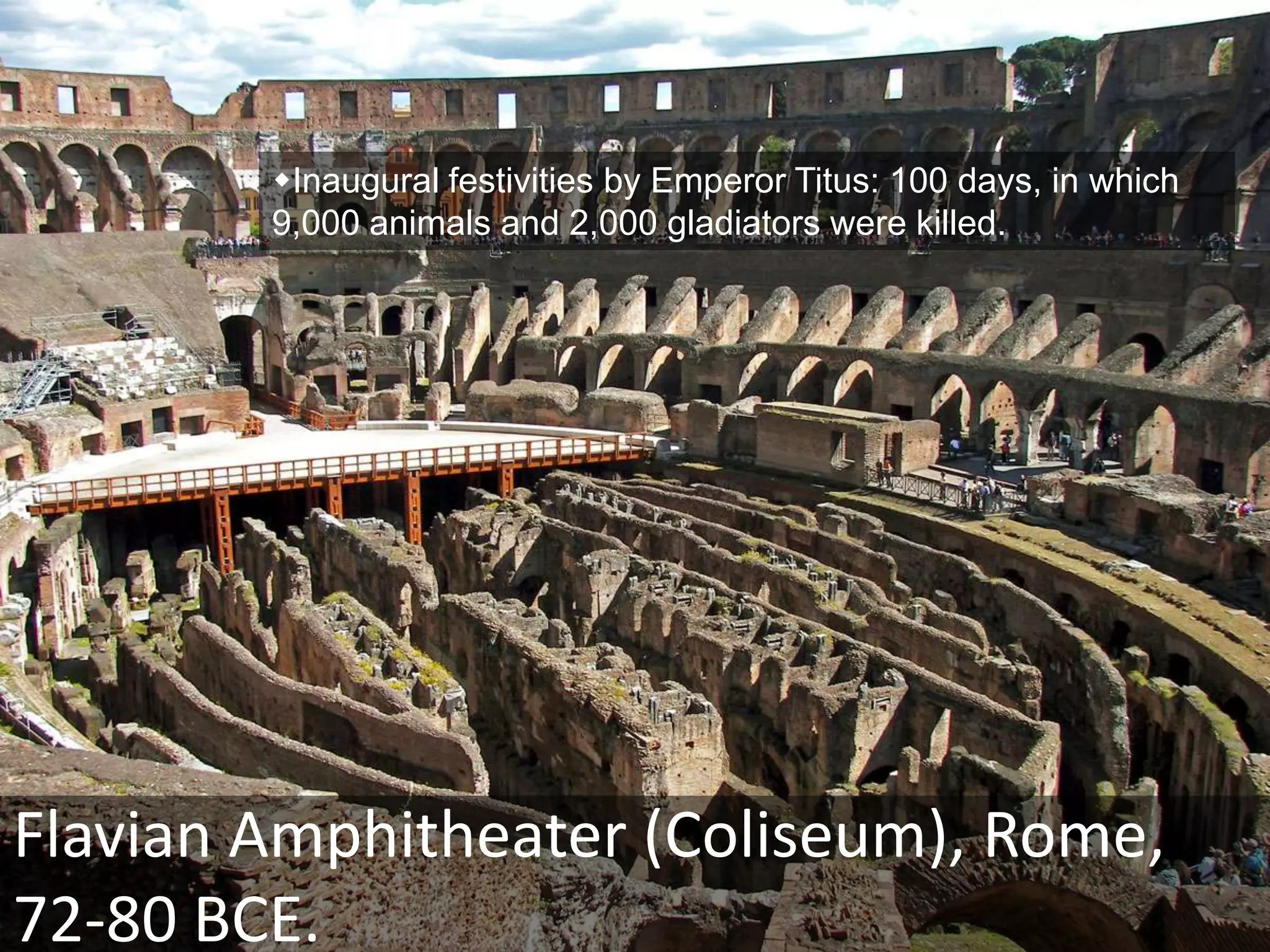
Inaugural festivities by Emperor Titus: 100 days, in which 9,000 animals and 2,000 gladiators were killed.Flavian Amphitheater (Coliseum), Rome, 72-80 BCE.
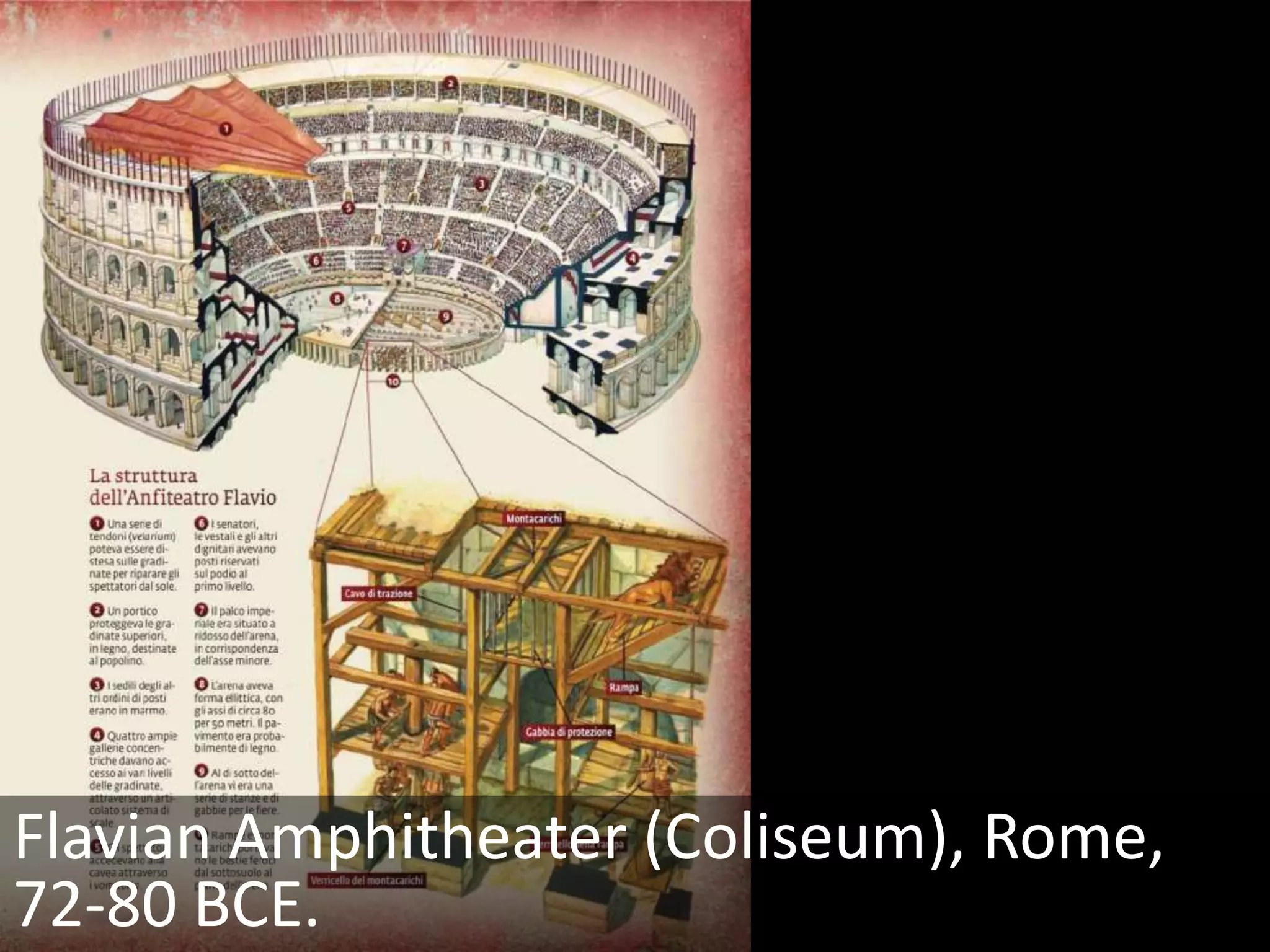
Flavian Amphitheater (Coliseum), Rome, 72-80 BCE.
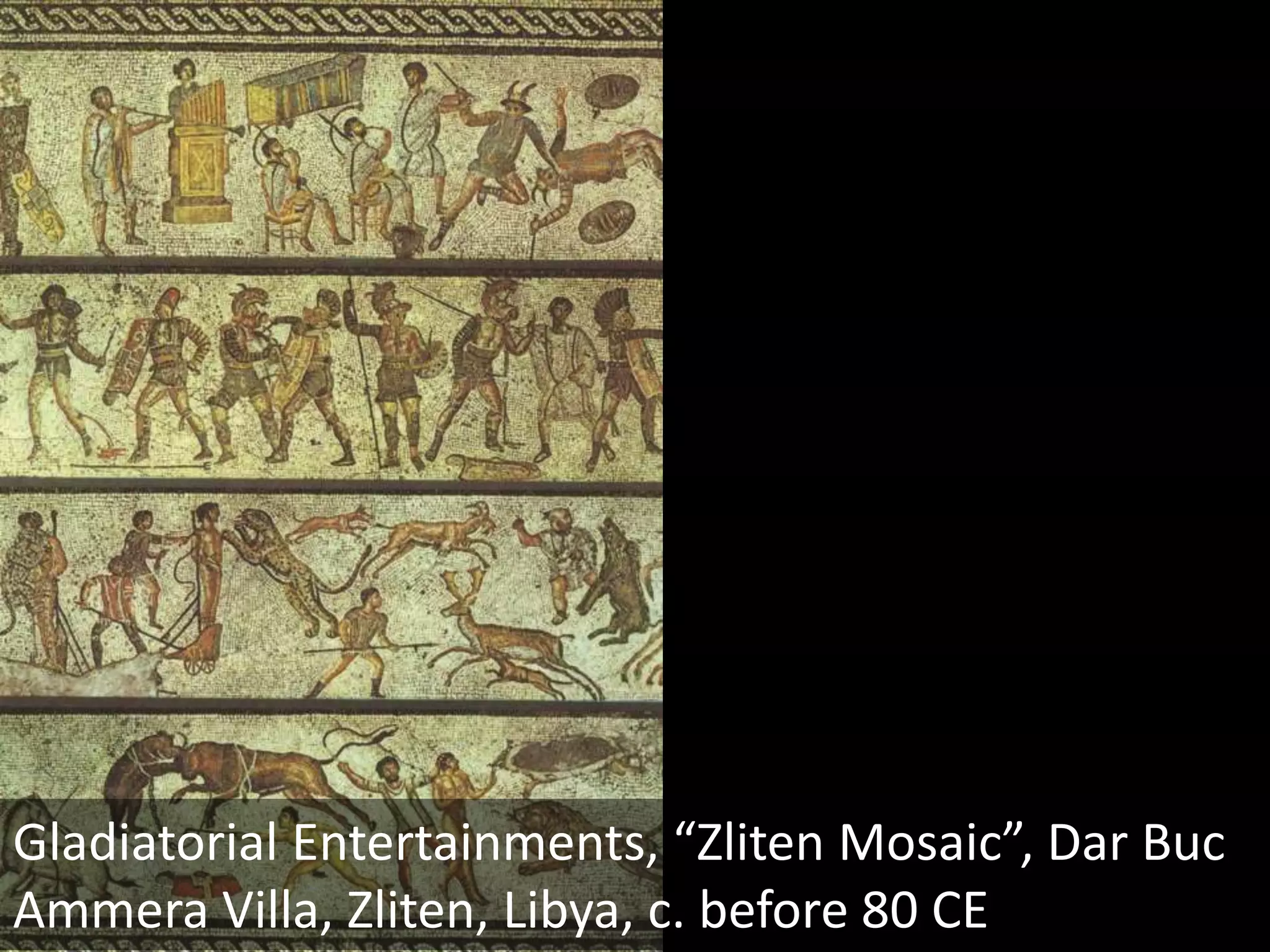
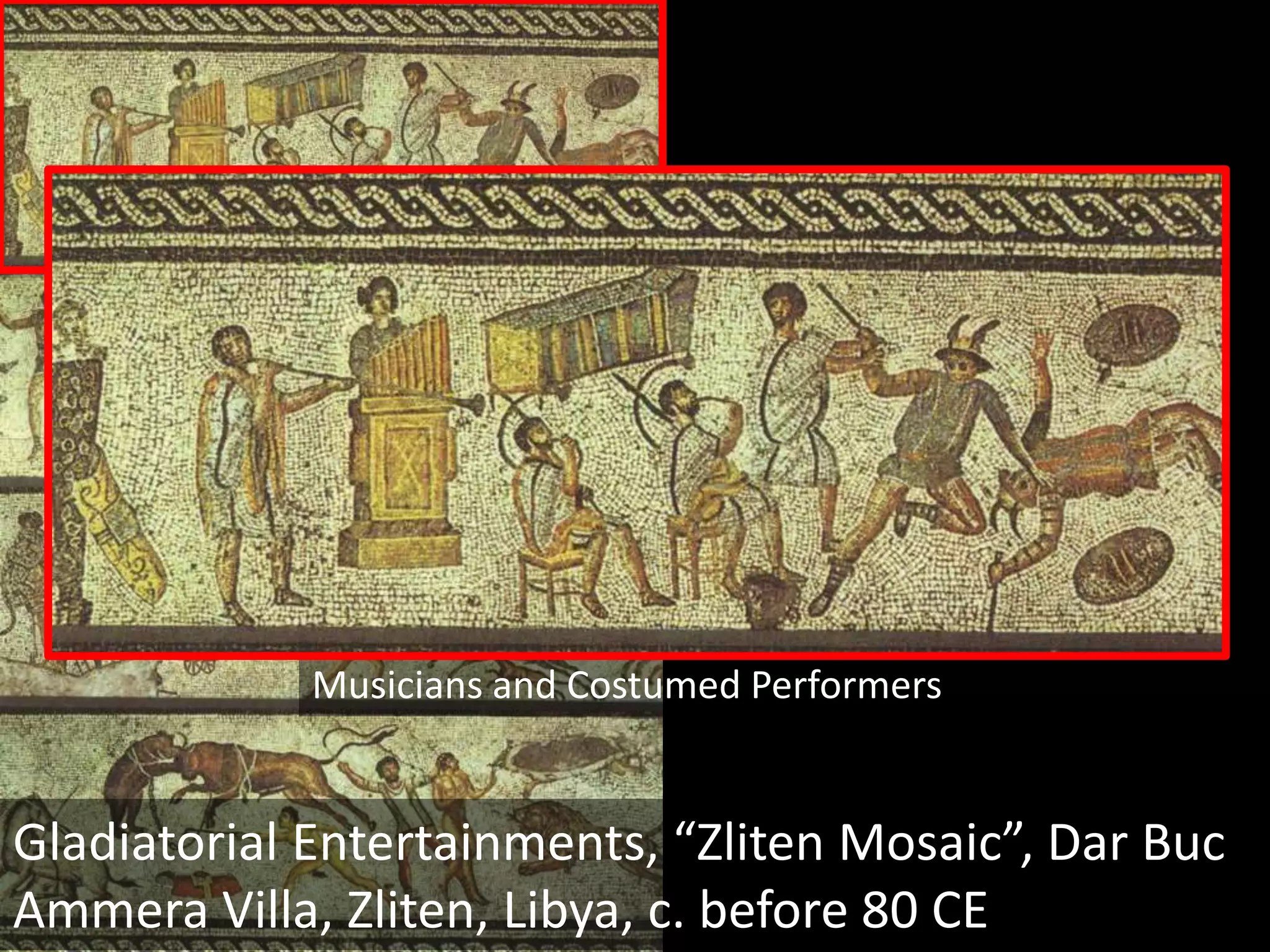
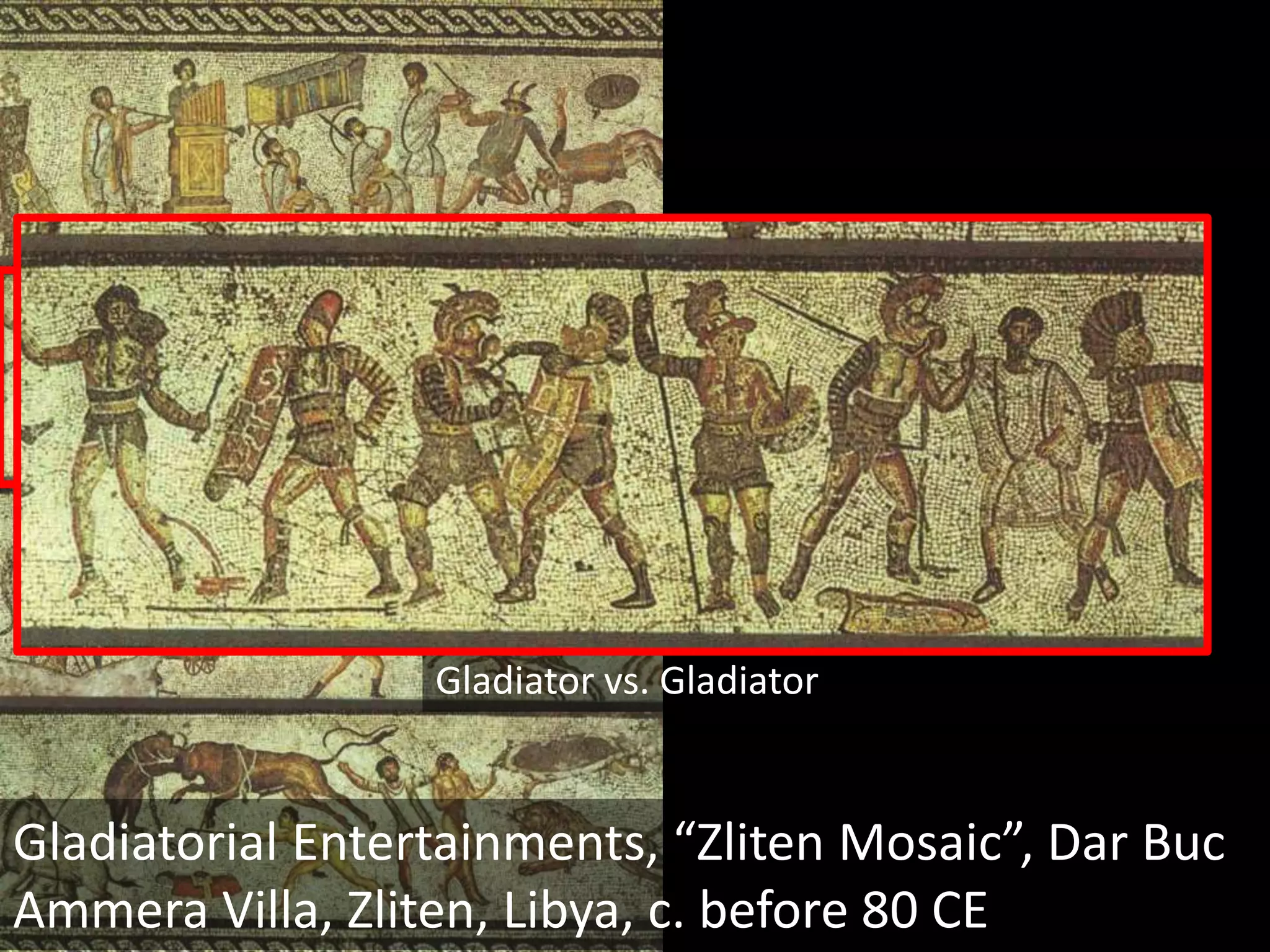
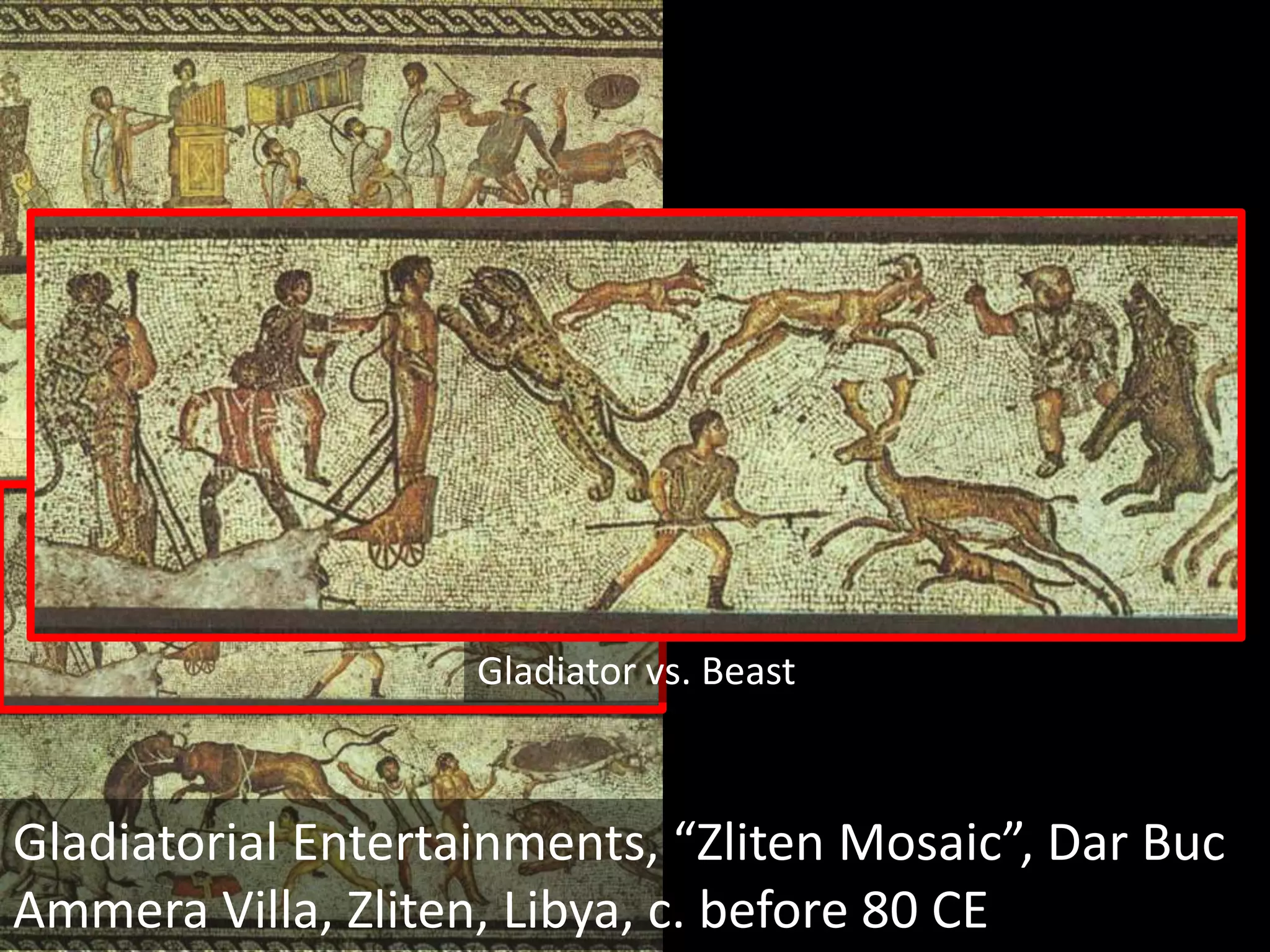
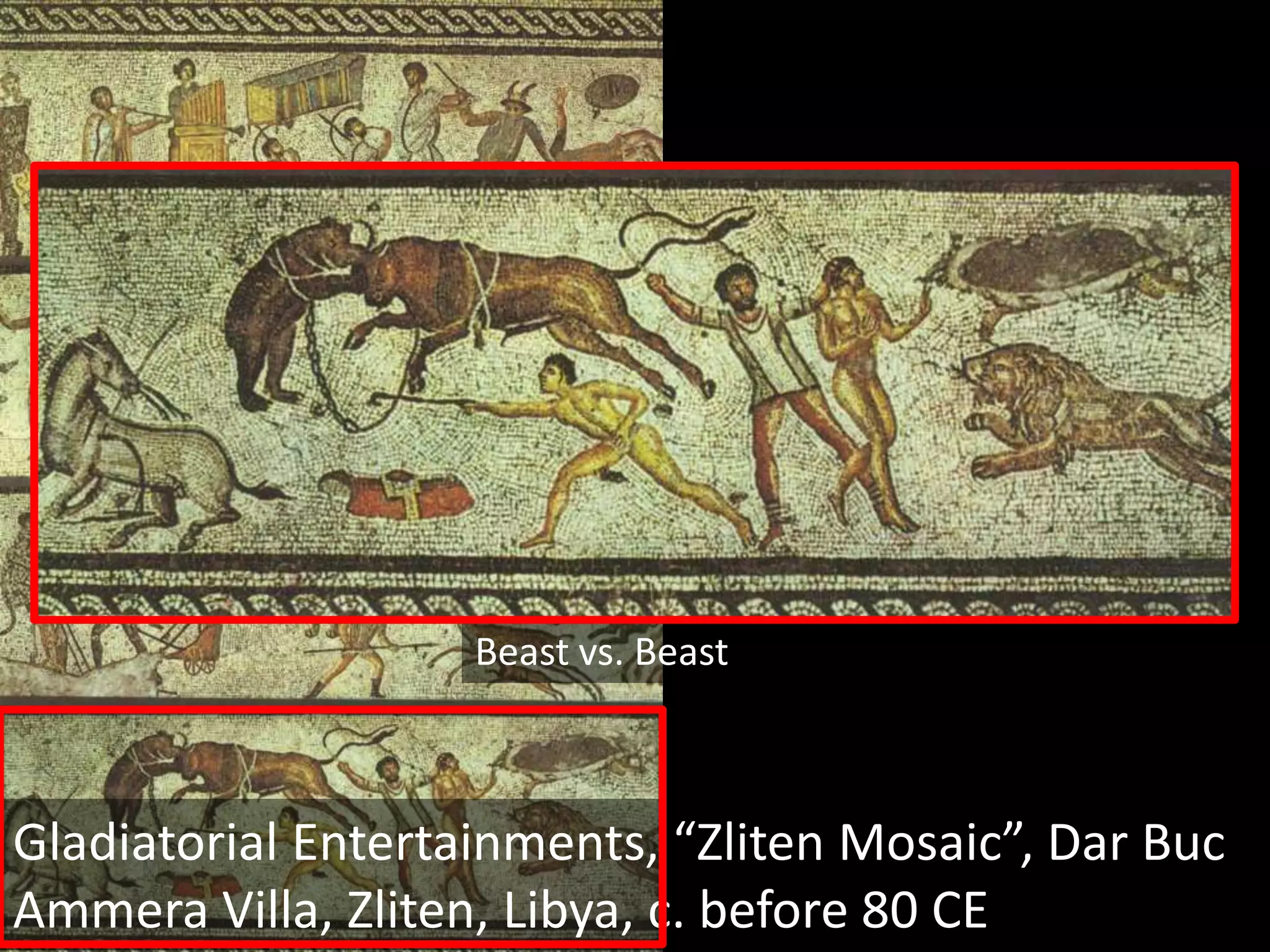
Gladiatorial Entertainments, “Zliten Mosaic”, Dar BucAmmera Villa, Zliten, Libya, c. before 80 CE
Musicians and Costumed PerformersGladiatorial Entertainments, “Zliten Mosaic”, Dar BucAmmera Villa, Zliten, Libya, c. before 80 CE
Gladiator vs. GladiatorGladiatorial Entertainments, “Zliten Mosaic”, Dar BucAmmera Villa, Zliten, Libya, c. before 80 CE
Gladiator vs. BeastGladiatorial Entertainments, “Zliten Mosaic”, Dar BucAmmera Villa, Zliten, Libya, c. before 80 CE
Beast vs. BeastGladiatorial Entertainments, “Zliten Mosaic”, Dar BucAmmera Villa, Zliten, Libya, c. before 80 CE
★ 80 exits to accommodate 50,000 spectators Flavian Amphitheater (Coliseum), Rome, 72-80 BCE.
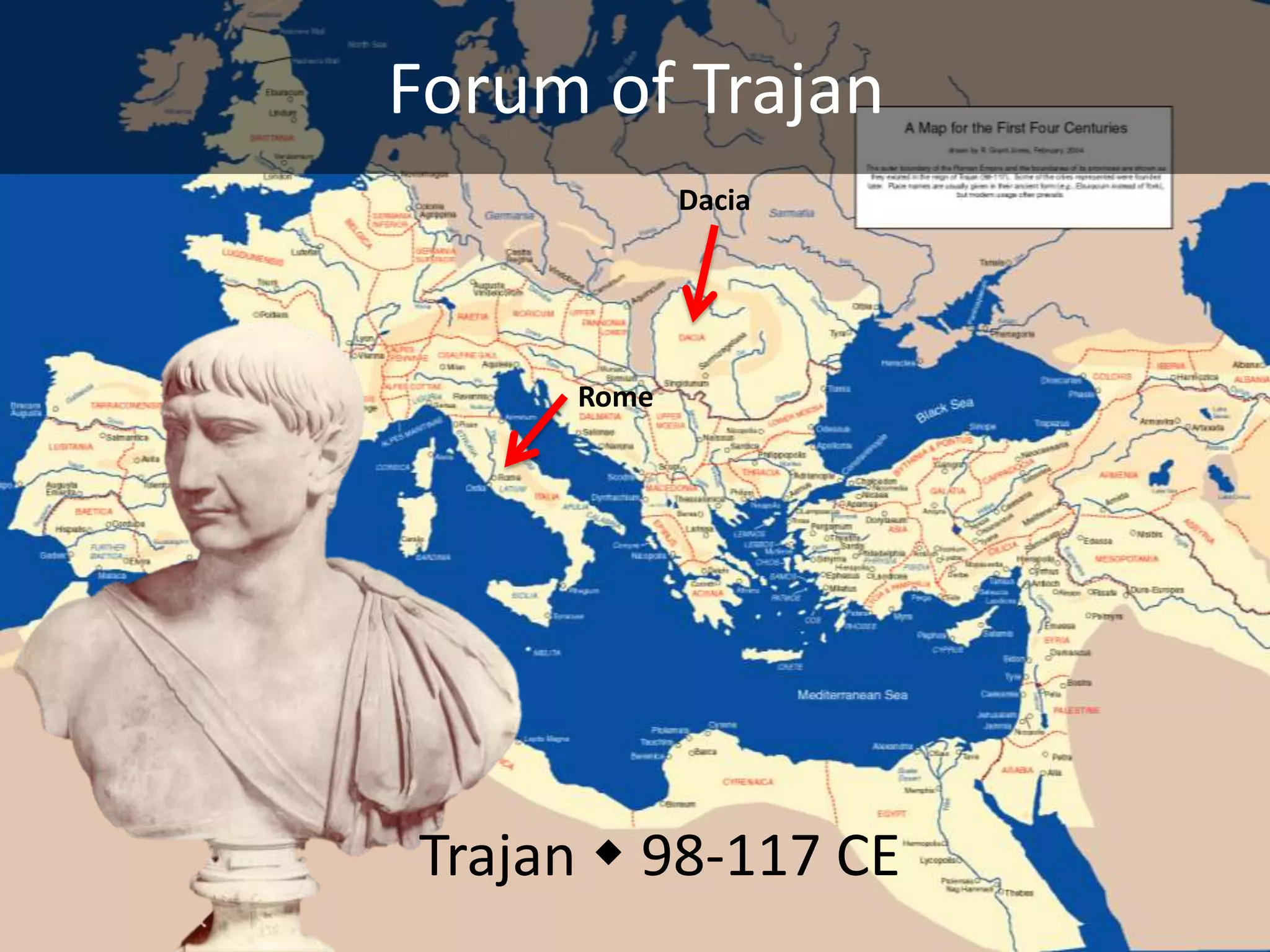
Forum of TrajanDaciaRomeTrajan  98-117 CE
Forum of Trajan
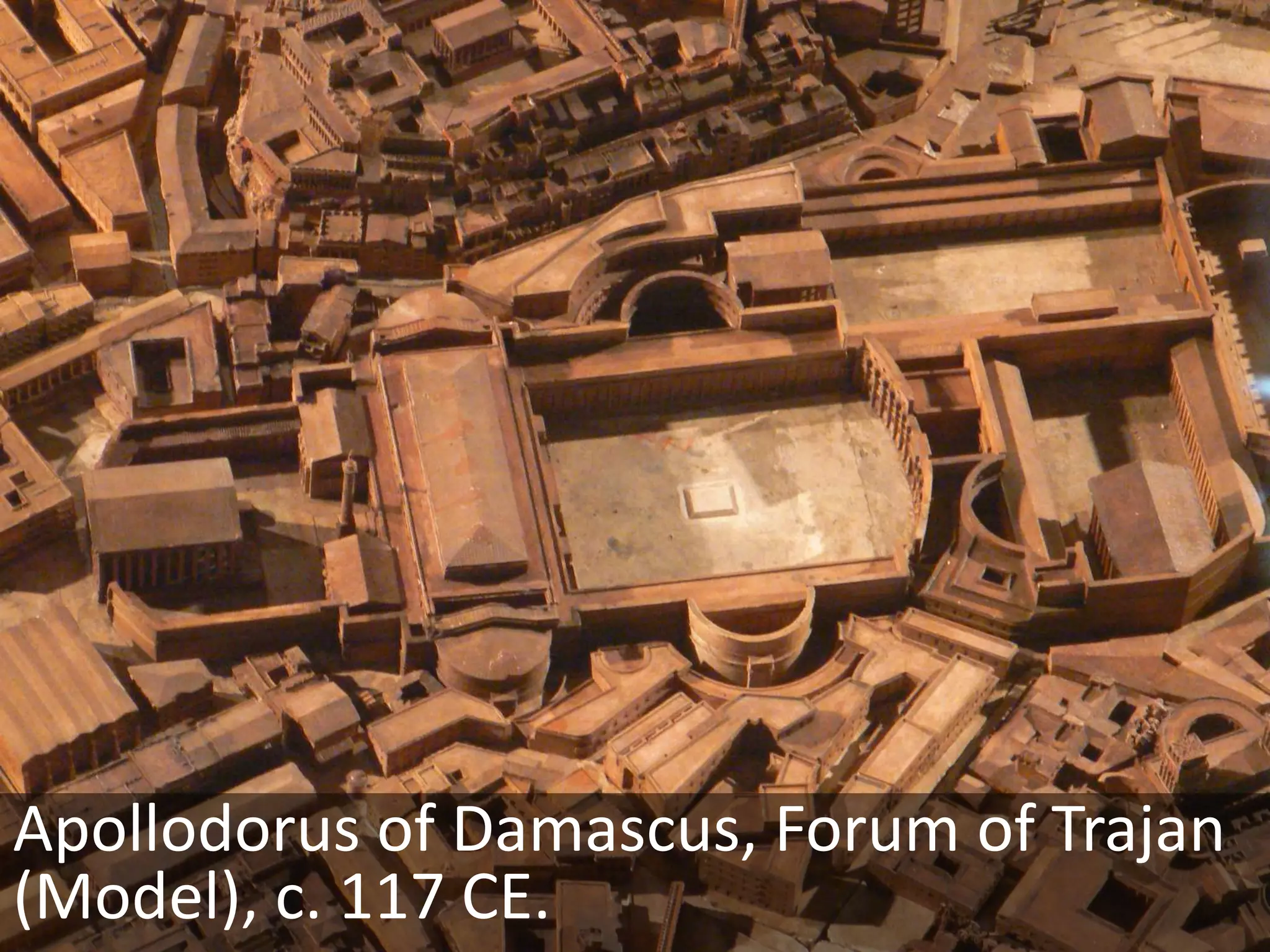
M  a  r  k  e  t  sTemple to the Divine TrajanBasilica UlpiaLibrariesLongitudinal AxisColumn of TrajanApollodorus of Damascus.  Forum of Trajan, (reconstruction), Dedicated in 112 CE.
Apollodorus of Damascus, Forum of Trajan (Model), c. 117 CE.
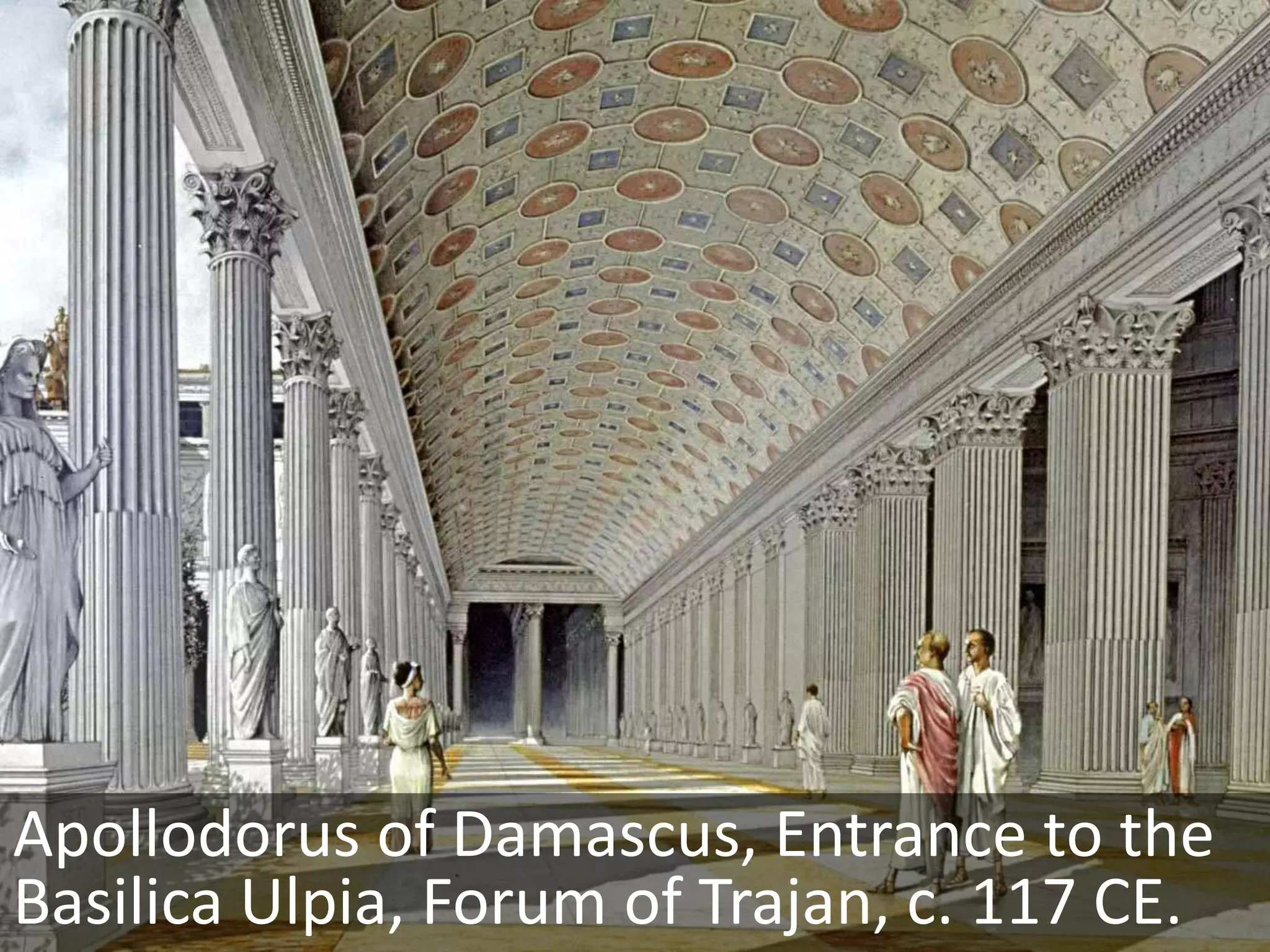
Apollodorus of Damascus, Entrance to the Basilica Ulpia, Forum of Trajan, c. 117 CE.
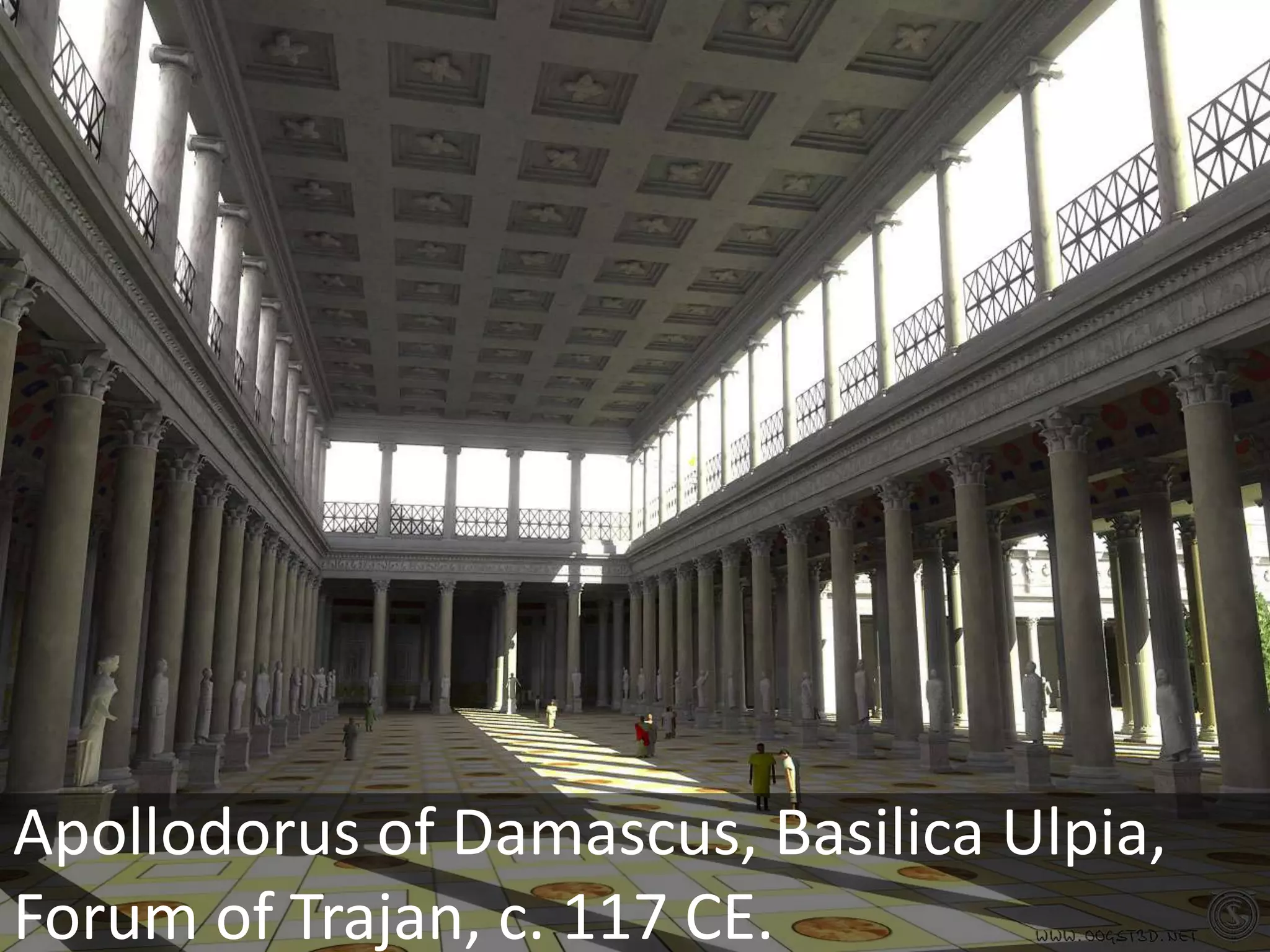
Apollodorus of Damascus, Basilica Ulpia, Forum of Trajan, c. 117 CE.
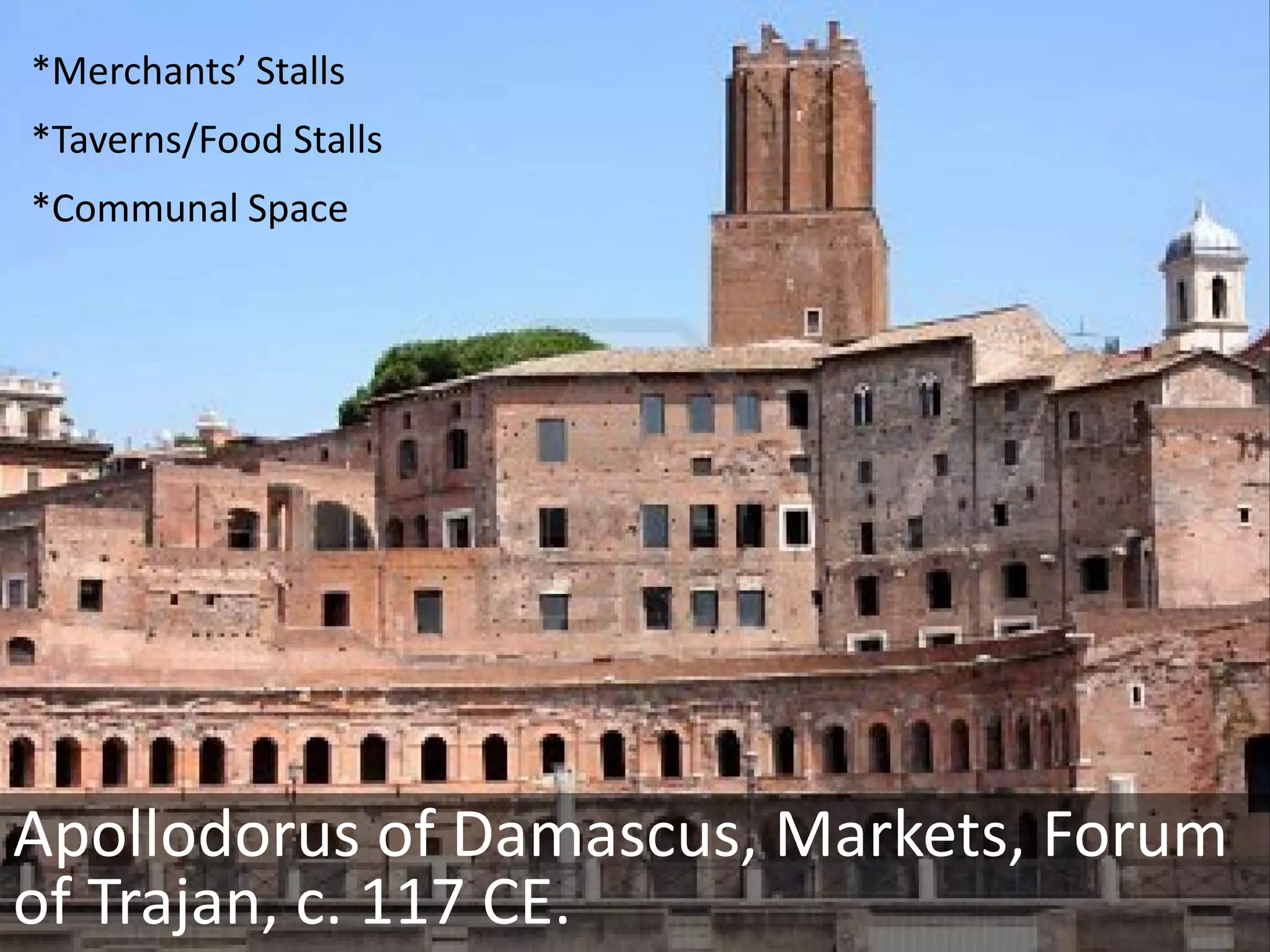
*Merchants’ Stalls*Taverns/Food Stalls*Communal SpaceApollodorus of Damascus, Markets, Forum of Trajan, c. 117 CE.
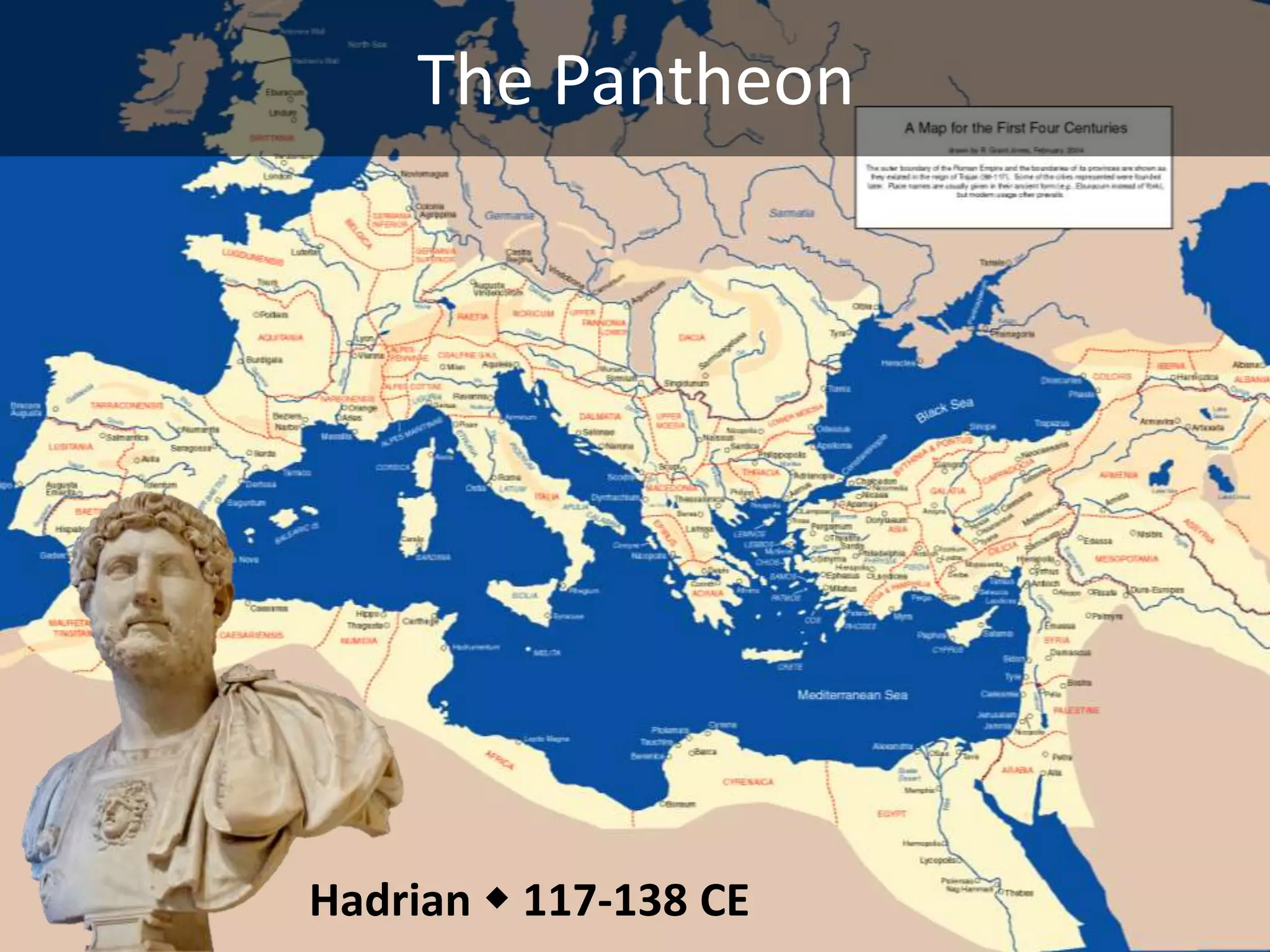
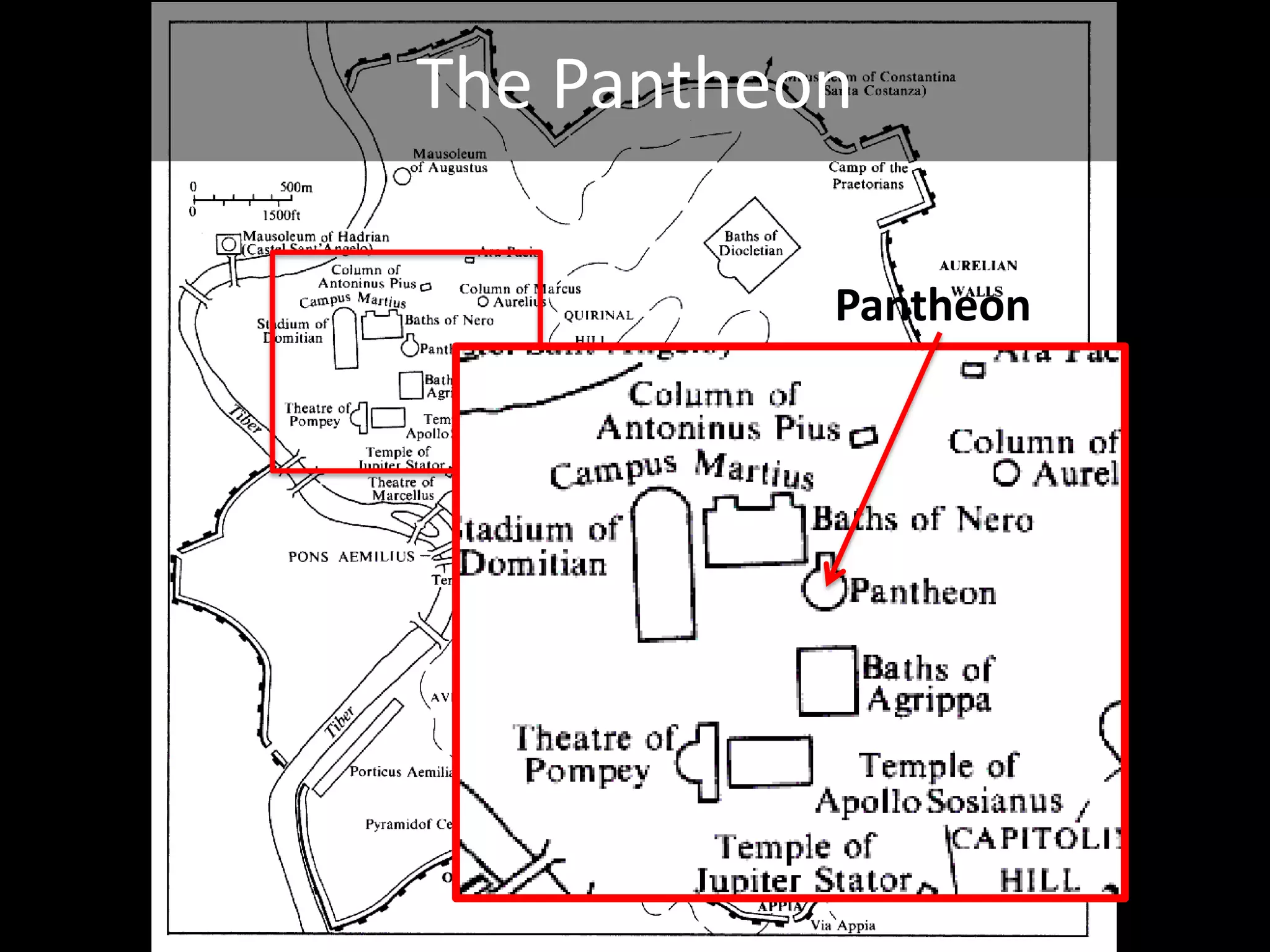
The PantheonHadrian  117-138 CE
The PantheonPantheon
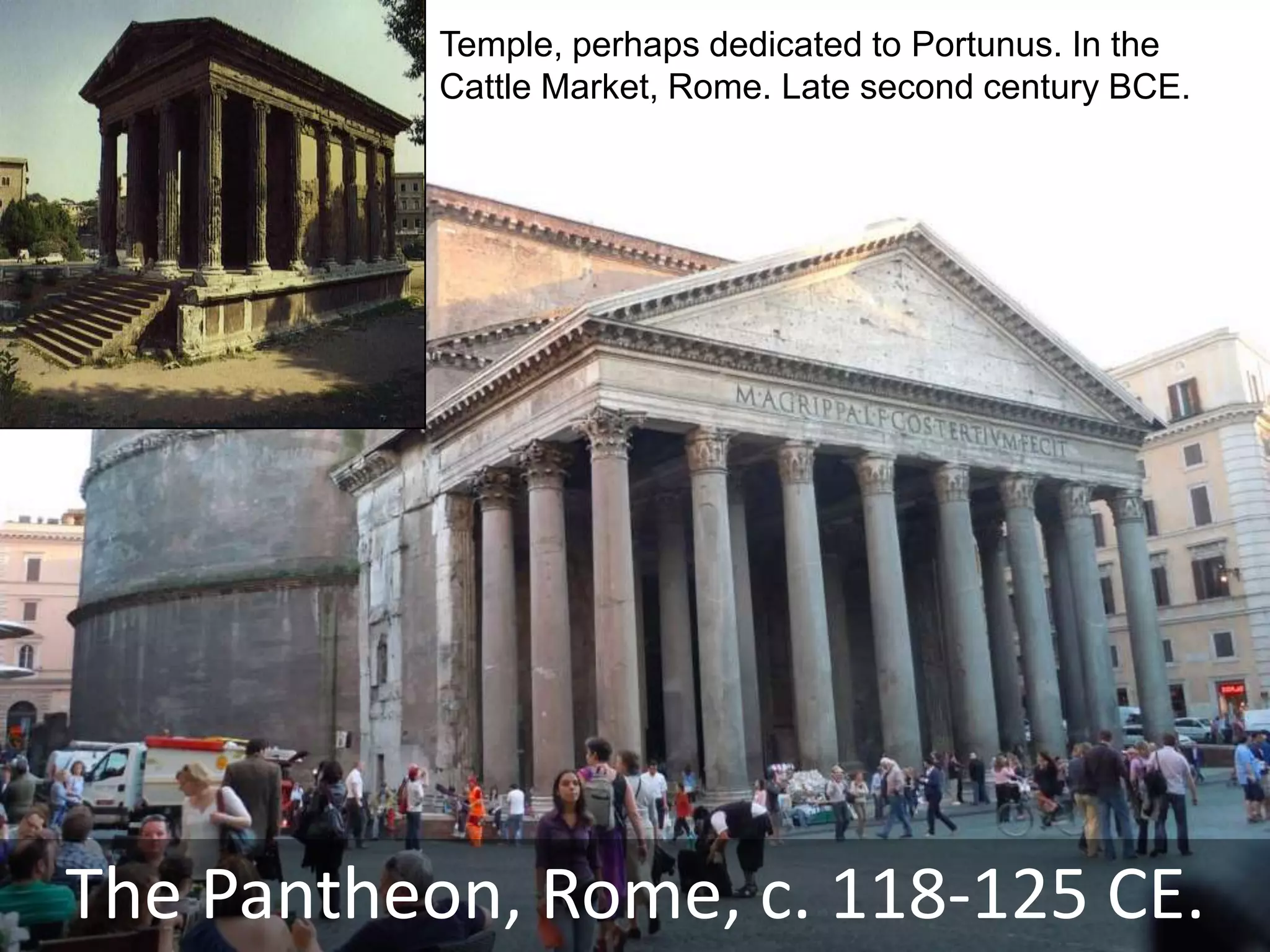
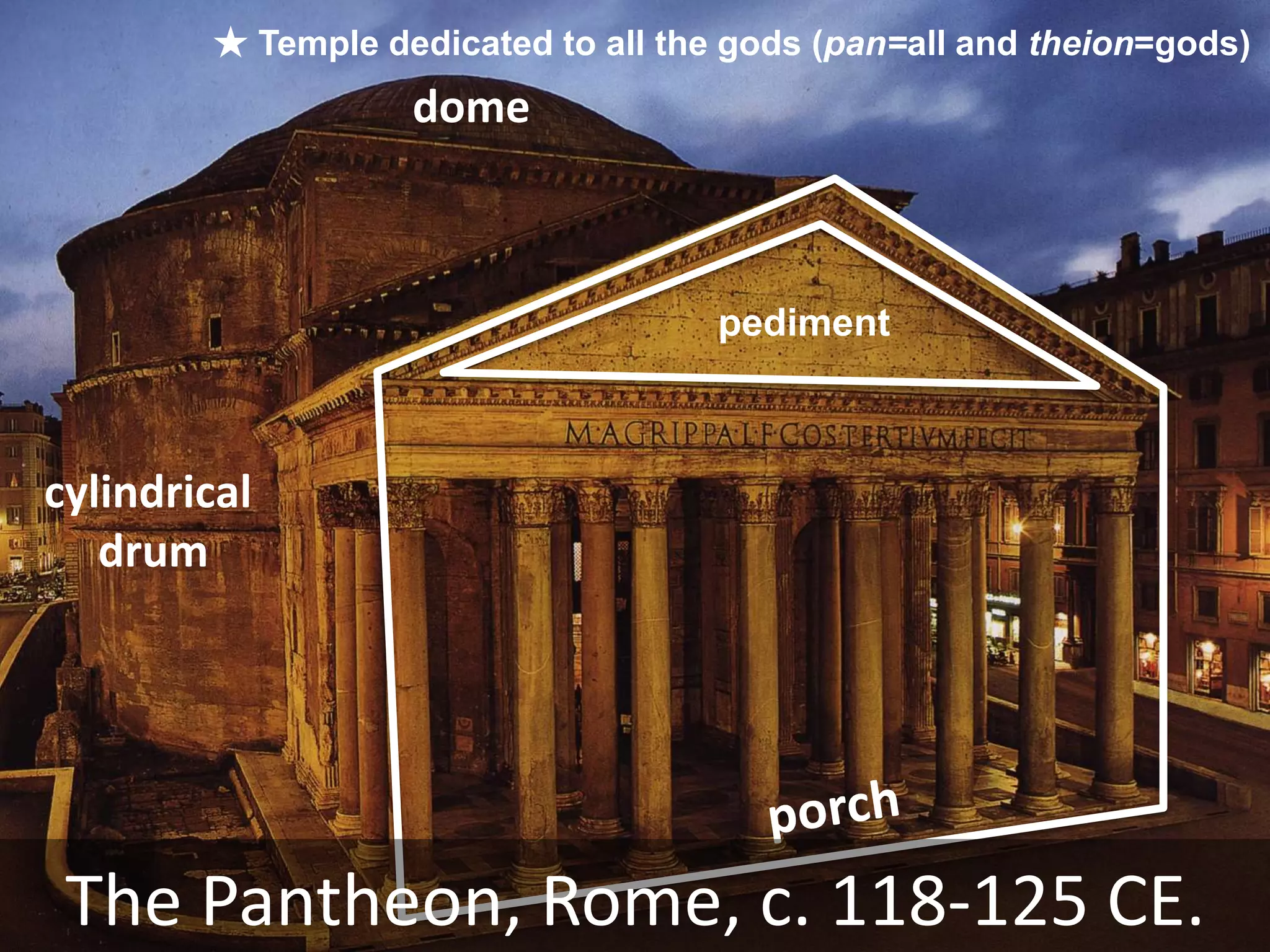
★Temple dedicated to all the gods (pan=all and theion=gods)domepedimentcylindrical drumporchThe Pantheon, Rome, c. 118-125 CE.
Temple, perhaps dedicated to Portunus. In the Cattle Market, Rome. Late second century BCE.  The Pantheon, Rome, c. 118-125 CE.
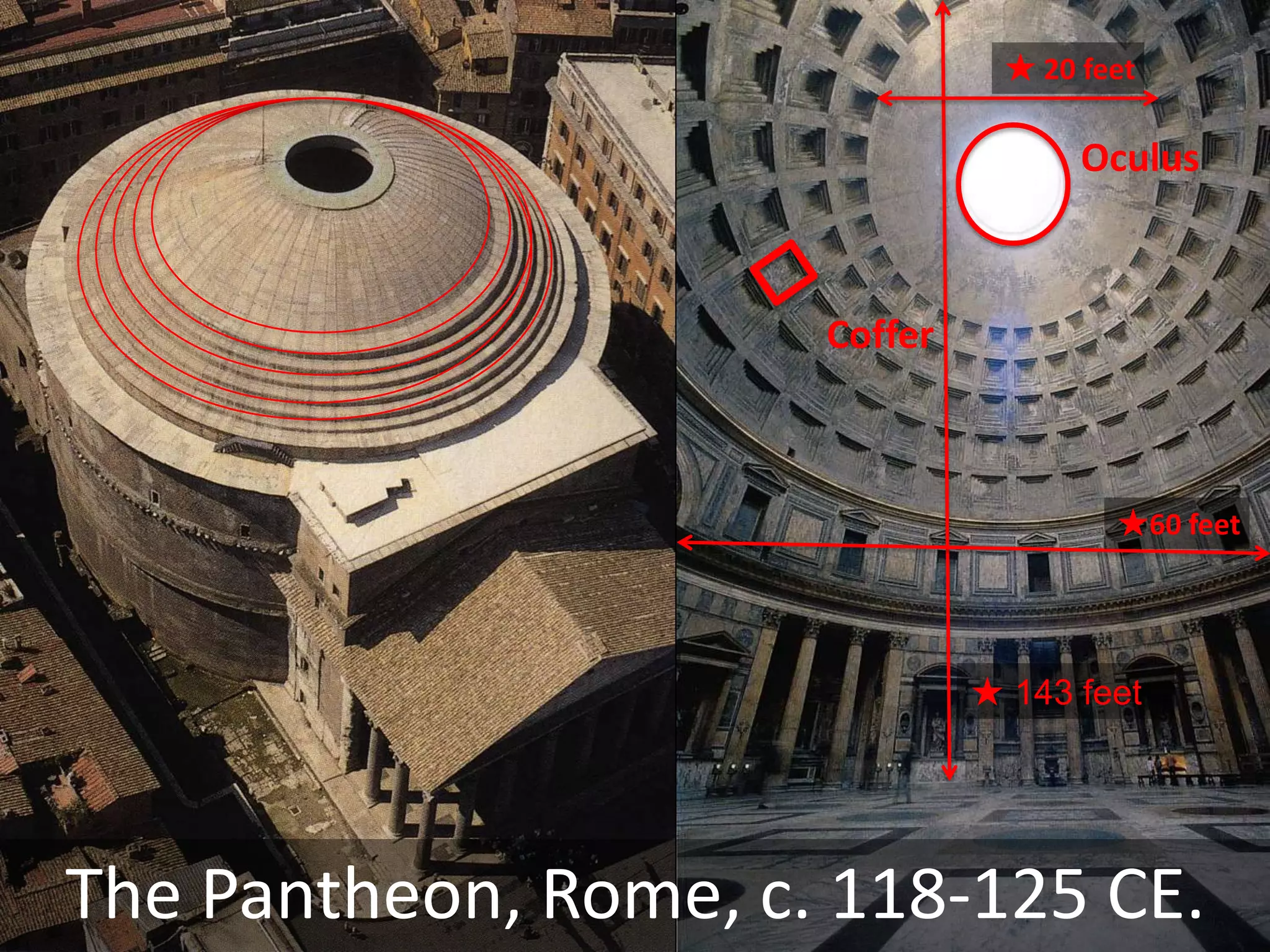
★20 feetOculusCoffer★60 feet★ 143 feetThe Pantheon, Rome, c. 118-125 CE.
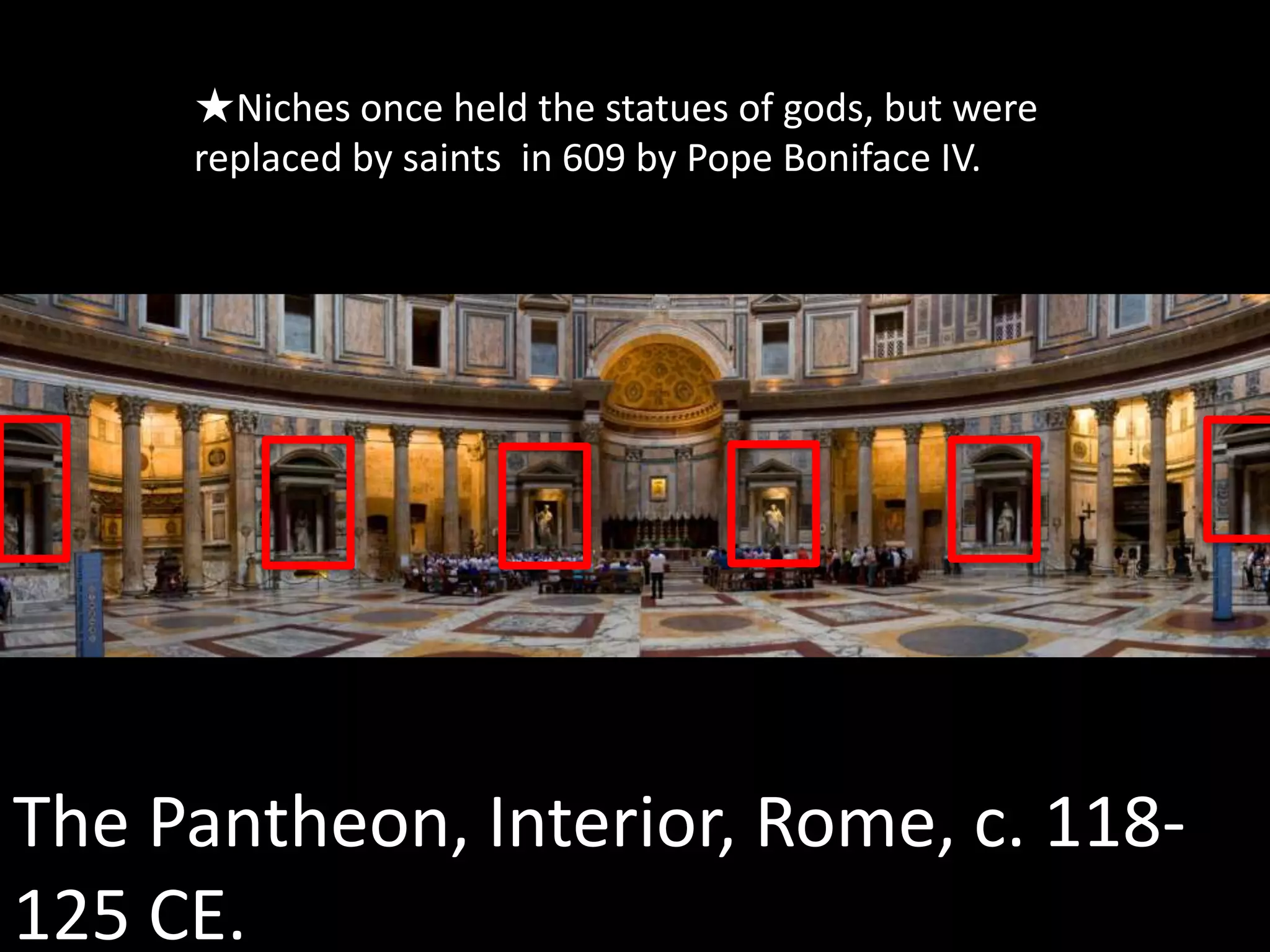
★Niches once held the statues of gods, but were replaced by saints  in 609 by Pope Boniface IV.The Pantheon, Interior, Rome, c. 118-125 CE.
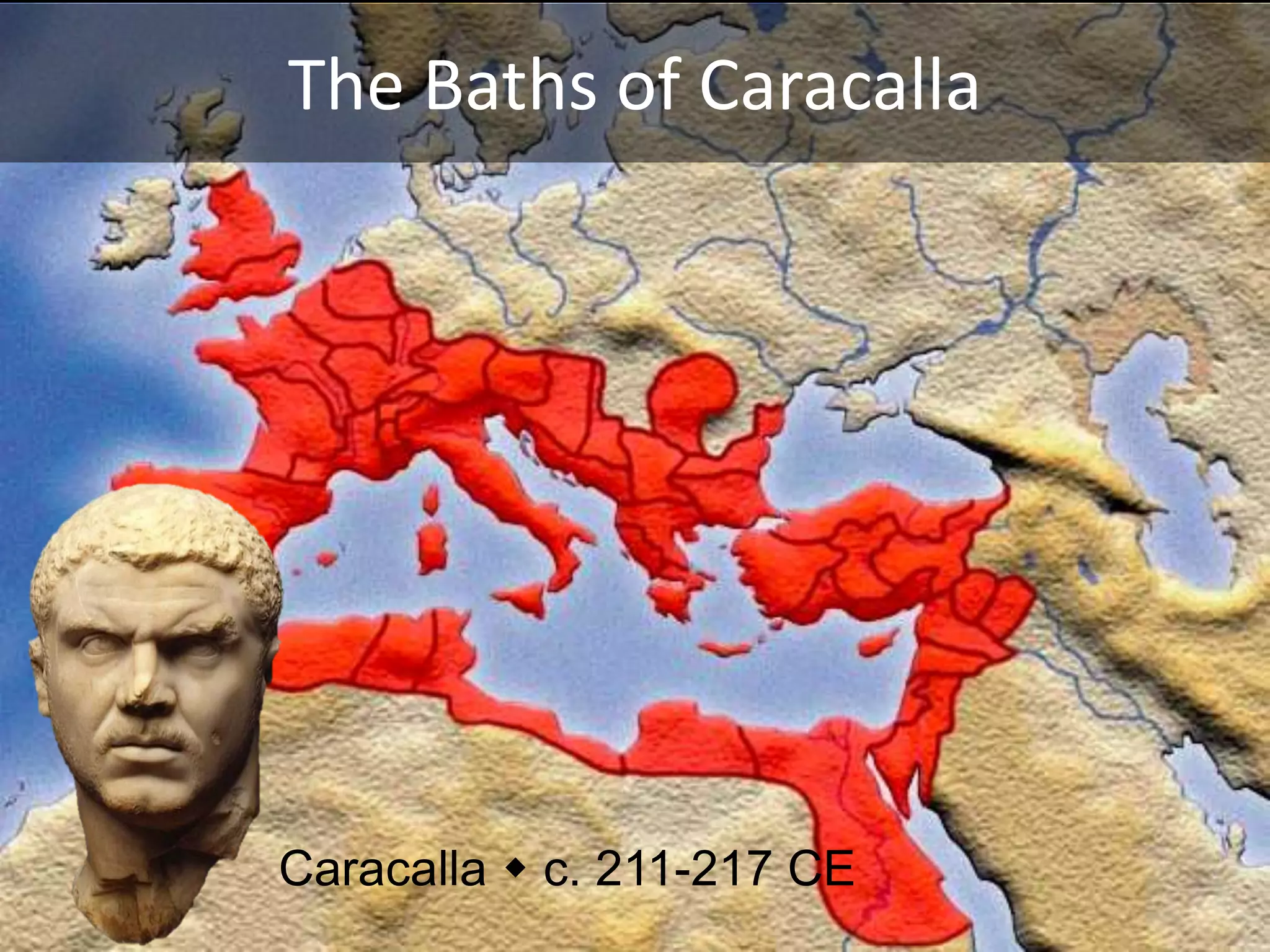
The Baths of CaracallaCaracalla  c. 211-217 CE
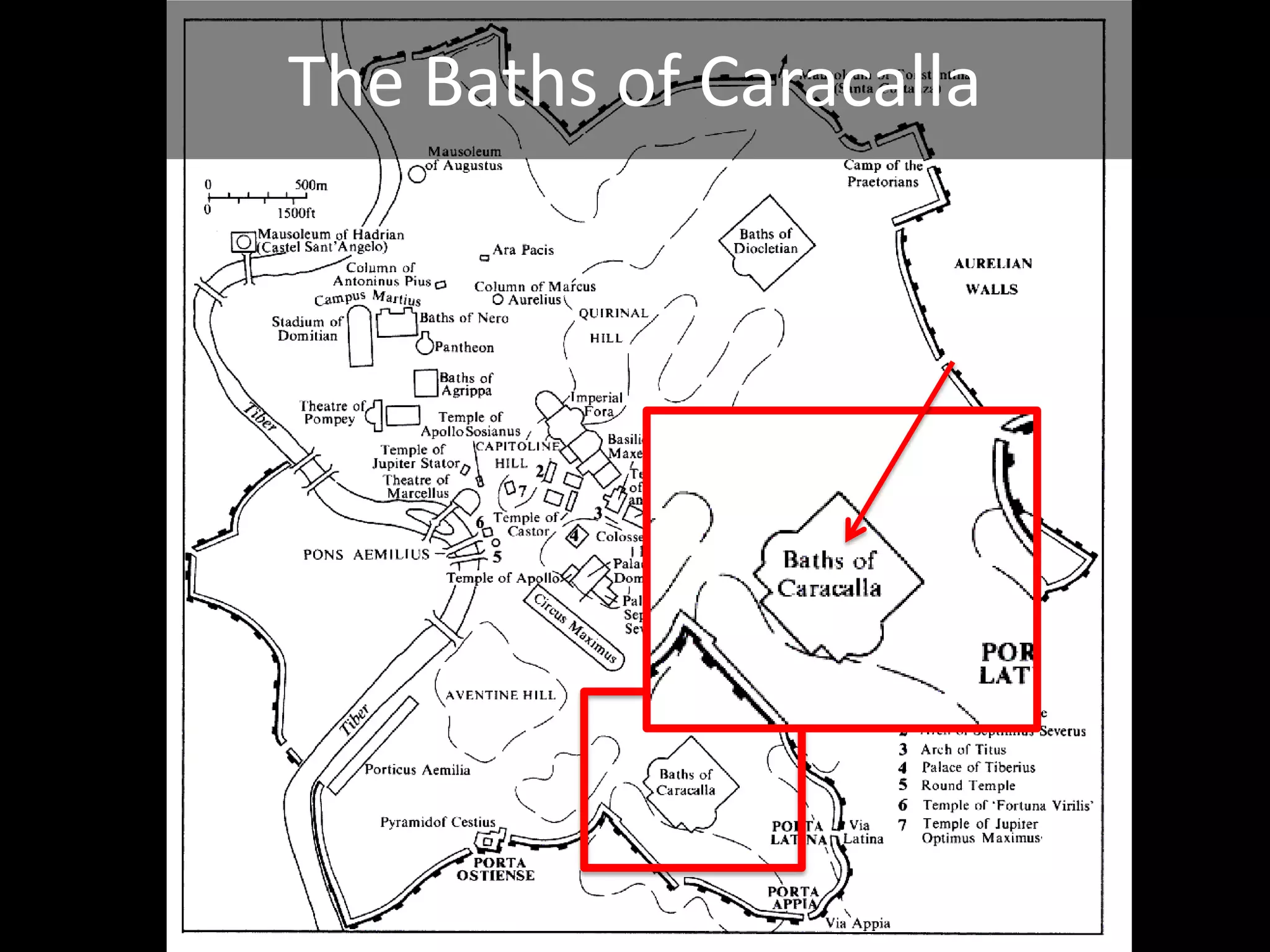
The Baths of Caracalla
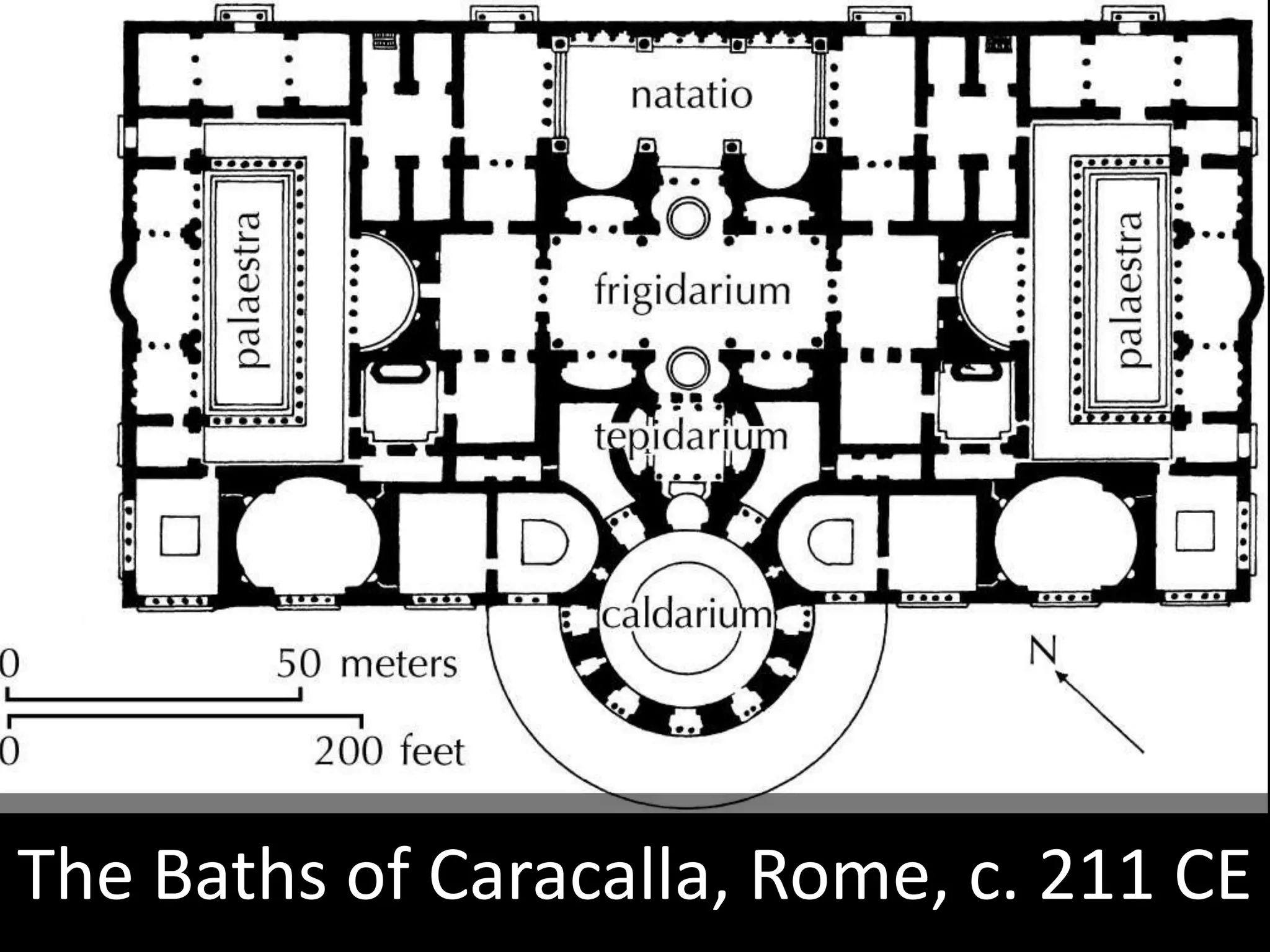
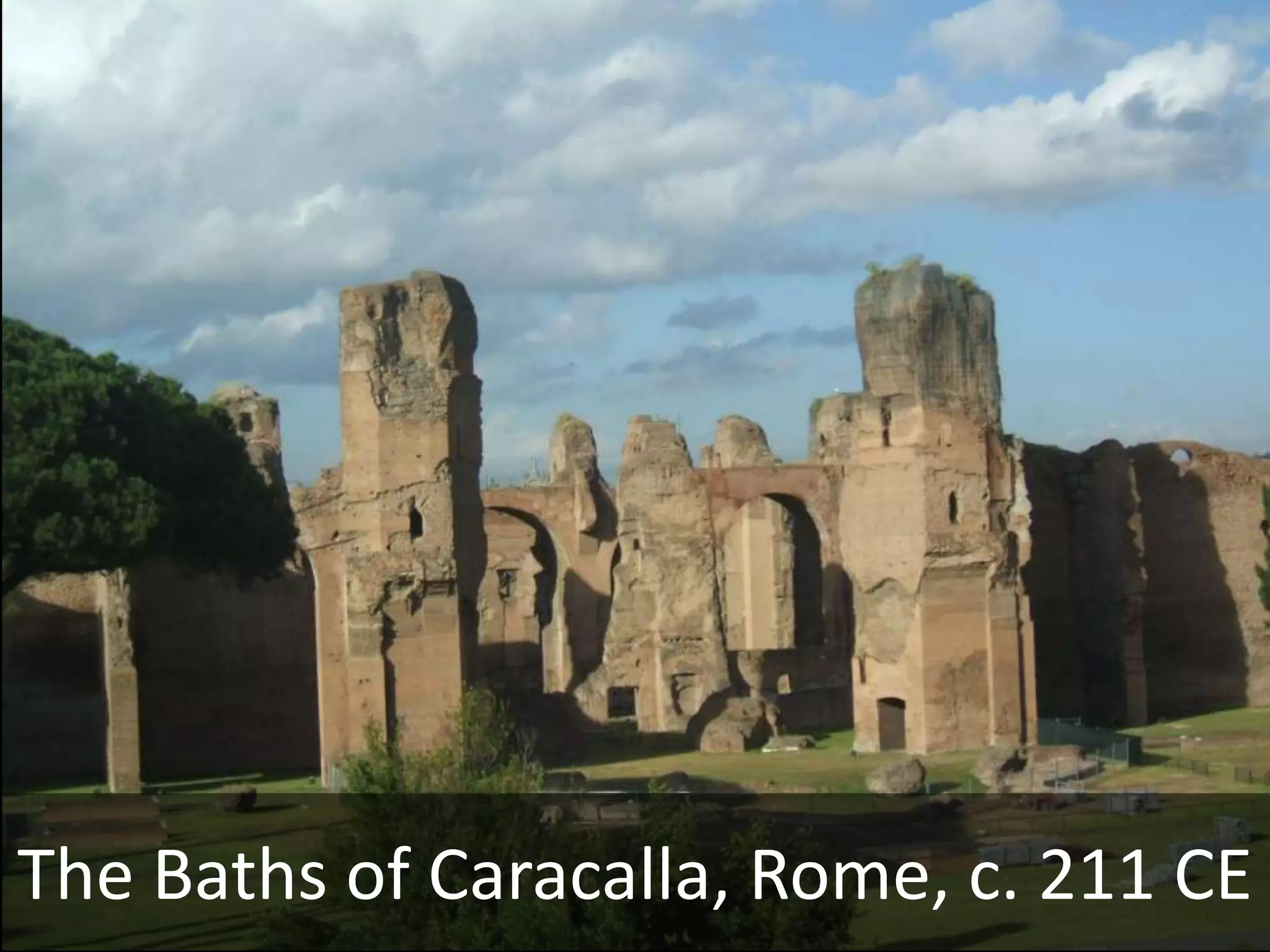
The Baths of Caracalla, Rome, c. 211 CE
Calderium, The Baths of Caracalla, Rome, c. 211 CE

Roman architecture

Editor's Notes

  • #10 Height above river 160’. Width of road bed on lower arcade is 20’.