By: Diksha
M. Pharmacy (Pharmacology)
*
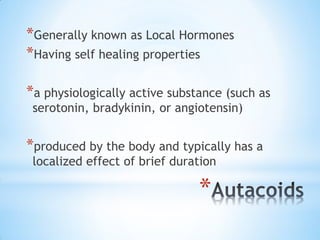
*Generally known as Local Hormones
*Having self healing properties
*a physiologically active substance (such as
serotonin, bradykinin, or angiotensin)
*produced by the body and typically has a
localized effect of brief duration
*
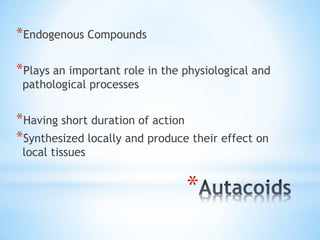
*Endogenous Compounds
*Plays an important role in the physiological and
pathological processes
*Having short duration of action
*Synthesized locally and produce their effect on
local tissues
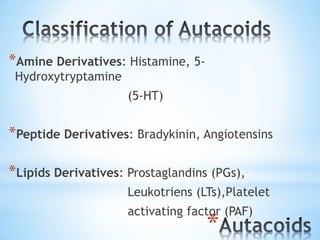
*Amine Derivatives: Histamine, 5-
Hydroxytryptamine
(5-HT)
*Peptide Derivatives: Bradykinin, Angiotensins
*Lipids Derivatives: Prostaglandins (PGs),
Leukotriens (LTs),Platelet
activating factor (PAF)
*
Pharmacology of
Histamine
*
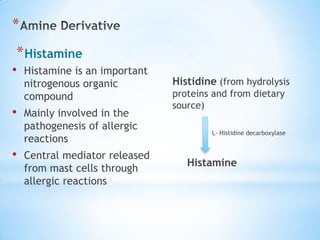
Histidine (from hydrolysis
proteins and from dietary
source)
L- Histidine decarboxylase
Histamine
• Histamine is an important
nitrogenous organic
compound
• Mainly involved in the
pathogenesis of allergic
reactions
• Central mediator released
from mast cells through
allergic reactions
*Histamine
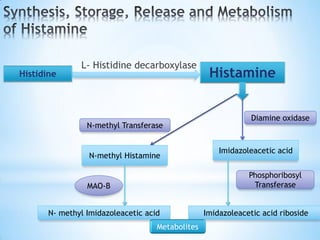
L- Histidine decarboxylase
Histamine
Histidine
N-methyl Transferase
Diamine oxidase
N-methyl Histamine
Imidazoleacetic acid
N- methyl Imidazoleacetic acid
MAO-B
Phosphoribosyl
Transferase
Imidazoleacetic acid riboside
Metabolites
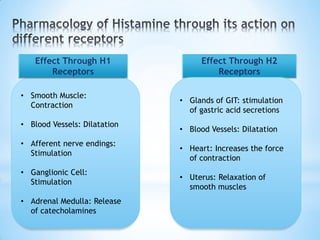
• Smooth Muscle:
Contraction
• Blood Vessels: Dilatation
• Afferent nerve endings:
Stimulation
• Ganglionic Cell:
Stimulation
• Adrenal Medulla: Release
of catecholamines
Effect Through H1
Receptors
Effect Through H2
Receptors
• Glands of GIT: stimulation
of gastric acid secretions
• Blood Vessels: Dilatation
• Heart: Increases the force
of contraction
• Uterus: Relaxation of
smooth muscles
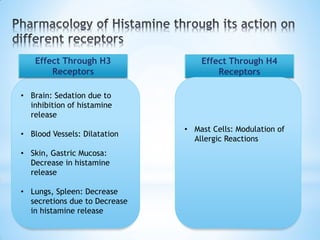
• Brain: Sedation due to
inhibition of histamine
release
• Blood Vessels: Dilatation
• Skin, Gastric Mucosa:
Decrease in histamine
release
• Lungs, Spleen: Decrease
secretions due to Decrease
in histamine release
Effect Through H3
Receptors
Effect Through H4
Receptors
• Mast Cells: Modulation of
Allergic Reactions
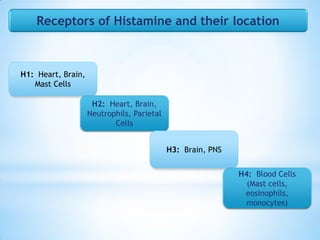
Receptors of Histamine and their location
H1: Heart, Brain,
Mast Cells
H2: Heart, Brain,
Neutrophils, Parietal
Cells
H3: Brain, PNS
H4: Blood Cells
(Mast cells,
eosinophils,
monocytes)
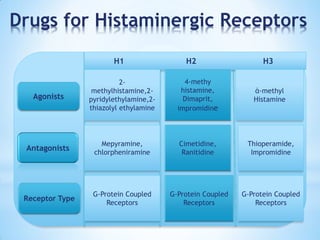
Drugs for Histaminergic Receptors
Agonists
Antagonists
Receptor Type
H1 H2 H3
2-
methylhistamine,2-
pyridylethylamine,2-
thiazolyl ethylamine
Mepyramine,
chlorpheniramine
G-Protein Coupled
Receptors
4-methy
histamine,
Dimaprit,
impromidine
Cimetidine,
Ranitidine
G-Protein Coupled
Receptors
ἀ-methyl
Histamine
Thioperamide,
Impromidine
G-Protein Coupled
Receptors
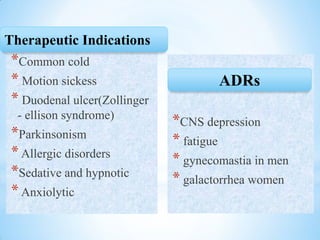
*Common cold
* Motion sickess
* Duodenal ulcer(Zollinger
- ellison syndrome)
*Parkinsonism
*Allergic disorders
*Sedative and hypnotic
*Anxiolytic
*CNS depression
* fatigue
* gynecomastia in men
* galactorrhea women
ADRs
Therapeutic Indications
Pharmacology of
Serotonin
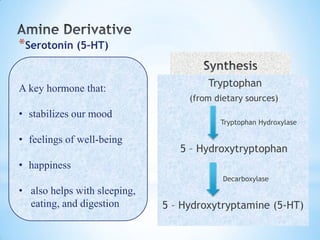
*Serotonin (5–HT)
Tryptophan
(from dietary sources)
Tryptophan Hydroxylase
5 – Hydroxytryptophan
Decarboxylase
5 – Hydroxytryptamine (5-HT)
A key hormone that:
• stabilizes our mood
• feelings of well-being
• happiness
• also helps with sleeping,
eating, and digestion
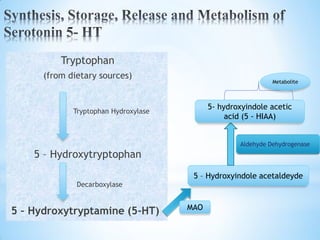
Tryptophan
(from dietary sources)
Tryptophan Hydroxylase
5 – Hydroxytryptophan
Decarboxylase
5 – Hydroxytryptamine (5-HT) MAO
5 – Hydroxyindole acetaldeyde
5- hydroxyindole acetic
acid (5 - HIAA)
Aldehyde Dehydrogenase
Metabolite
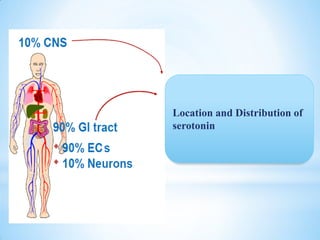
Location and Distribution of
serotonin
*
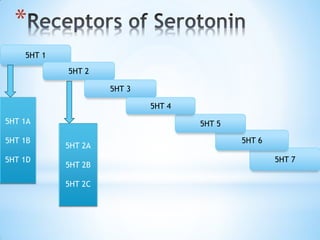
5HT 1
5HT 2
5HT 7
5HT 3
5HT 6
5HT 5
5HT 4
5HT 1A
5HT 1B
5HT 1D
5HT 2A
5HT 2B
5HT 2C
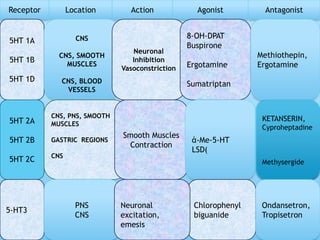
Receptor Location Action Agonist Antagonist
5HT 1A
5HT 1B
5HT 1D
CNS
CNS, SMOOTH
MUSCLES
CNS, BLOOD
VESSELS
Neuronal
Inhibition
Vasoconstriction
8-OH-DPAT
Buspirone
Ergotamine
Sumatriptan
Methiothepin,
Ergotamine
5HT 2A
5HT 2B
5HT 2C
CNS, PNS, SMOOTH
MUSCLES
GASTRIC REGIONS
CNS
Smooth Muscles
Contraction
ἀ-Me-5-HT
LSD(
KETANSERIN,
Cyproheptadine
Methysergide
5-HT3
PNS
CNS
Chlorophenyl
biguanide
Ondansetron,
Tropisetron
Neuronal
excitation,
emesis
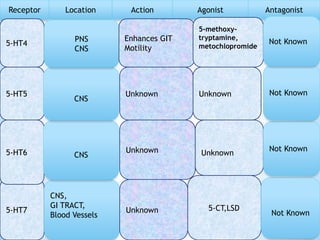
Receptor Location Action Agonist Antagonist
5-HT7
CNS,
GI TRACT,
Blood Vessels
Unknown 5-CT,LSD
Not Known
5-HT4
5-HT5
5-HT6 CNS
CNS
PNS
CNS
Unknown
Unknown
Enhances GIT
Motility
Unknown
Unknown
5-methoxy-
tryptamine,
metochlopromide
Not Known
Not Known
Not Known
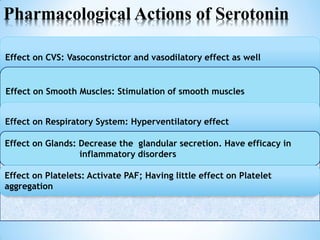
Pharmacological Actions of Serotonin
Effect on CVS: Vasoconstrictor and vasodilatory effect as well
Effect on Smooth Muscles: Stimulation of smooth muscles
Effect on Respiratory System: Hyperventilatory effect
Effect on Glands: Decrease the glandular secretion. Have efficacy in
inflammatory disorders
Effect on Platelets: Activate PAF; Having little effect on Platelet
aggregation
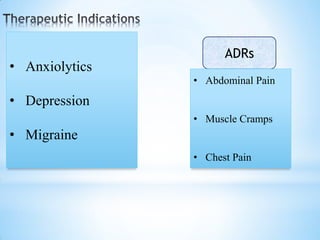
• Anxiolytics
• Depression
• Migraine
ADRs
• Abdominal Pain
• Muscle Cramps
• Chest Pain
Pharmacology of
Prostaglandins (PGs)
*
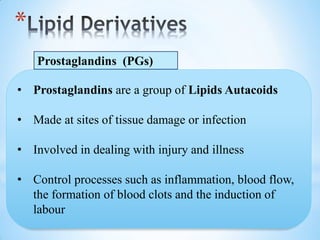
Prostaglandins (PGs)
• Prostaglandins are a group of Lipids Autacoids
• Made at sites of tissue damage or infection
• Involved in dealing with injury and illness
• Control processes such as inflammation, blood flow,
the formation of blood clots and the induction of
labour
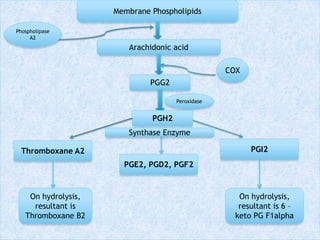
Membrane Phospholipids
Arachidonic acid
Phospholipase
A2
PGG2
COX
Peroxidase
PGH2
Thromboxane A2
PGE2, PGD2, PGF2
PGI2
Synthase Enzyme
On hydrolysis,
resultant is
Thromboxane B2
On hydrolysis,
resultant is 6 –
keto PG F1alpha
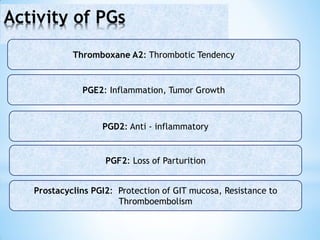
Activity of PGs
Thromboxane A2: Thrombotic Tendency
PGE2: Inflammation, Tumor Growth
PGD2: Anti - inflammatory
PGF2: Loss of Parturition
Prostacyclins PGI2: Protection of GIT mucosa, Resistance to
Thromboembolism
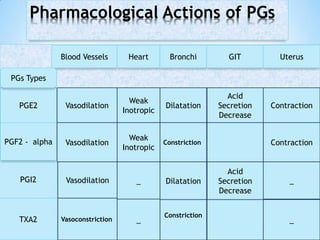
Pharmacological Actions of PGs
Blood Vessels
PGE2
PGI2
PGF2 - alpha
TXA2
Heart Bronchi GIT Uterus
PGs Types
Vasodilation
Vasodilation
Vasodilation
Vasoconstriction
Weak
Inotropic
Weak
Inotropic
_
_
Dilatation
Constriction
Dilatation
Constriction
Acid
Secretion
Decrease
Acid
Secretion
Decrease
Contraction
Contraction
_
_
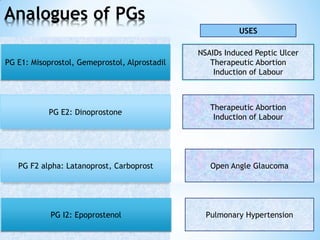
Analogues of PGs
PG E1: Misoprostol, Gemeprostol, Alprostadil
PG E2: Dinoprostone
PG F2 alpha: Latanoprost, Carboprost
PG I2: Epoprostenol
USES
NSAIDs Induced Peptic Ulcer
Therapeutic Abortion
Induction of Labour
Therapeutic Abortion
Induction of Labour
Open Angle Glaucoma
Pulmonary Hypertension
Pharmacology of
Leukotrienes (LTs)
Leukotriene's (LTs)
• Leukotrienes are inflammatory chemicals
• Releases after coming in contact with an allergen or allergy trigger
• Leukotrienes cause tightening of airway muscles and the production of
excess mucus and fluid
• These chemicals play a key role in allergy, allergic rhinitis, and
asthma, also causing a tightening of your airways, making it difficult
to breathe.
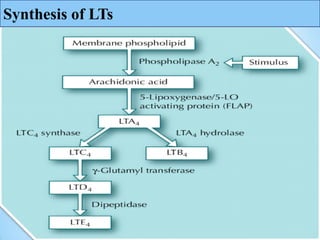
Synthesis of LTs
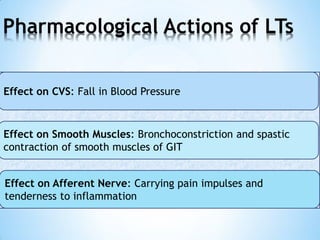
Pharmacological Actions of LTs
Effect on CVS: Fall in Blood Pressure
Effect on Smooth Muscles: Bronchoconstriction and spastic
contraction of smooth muscles of GIT
Effect on Afferent Nerve: Carrying pain impulses and
tenderness to inflammation
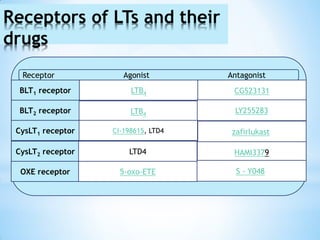
Receptors of LTs and their
drugs
BLT1 receptor
CysLT2 receptor
CysLT1 receptor
BLT2 receptor
OXE receptor
Receptor Agonist Antagonist
LTB4
LTB4
LTD4
5-oxo-ETE
CI-198615, LTD4
CGS23131
LY255283
zafirlukast
HAMI3379
S - Y048
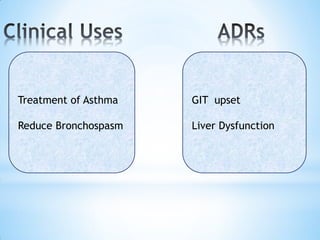
Treatment of Asthma
Reduce Bronchospasm
GIT upset
Liver Dysfunction
Pharmacology of Platelet
Activating Factor (PAF)
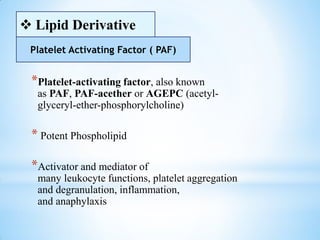
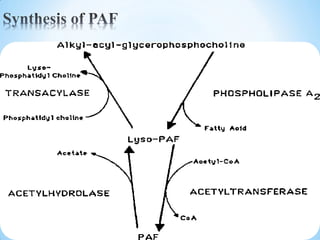
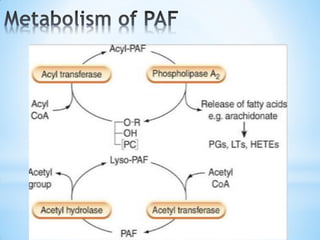
*Platelet-activating factor, also known
as PAF, PAF-acether or AGEPC (acetyl-
glyceryl-ether-phosphorylcholine)
* Potent Phospholipid
*Activator and mediator of
many leukocyte functions, platelet aggregation
and degranulation, inflammation,
and anaphylaxis
 Lipid Derivative
Platelet Activating Factor ( PAF)
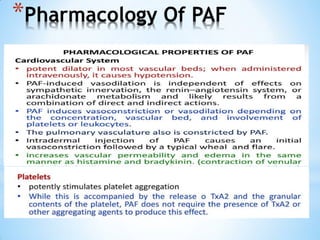
*Pharmacology Of PAF
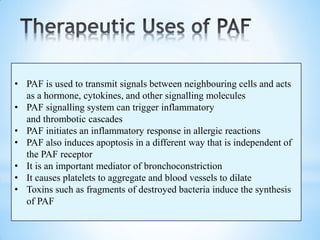
• PAF is used to transmit signals between neighbouring cells and acts
as a hormone, cytokines, and other signalling molecules
• PAF signalling system can trigger inflammatory
and thrombotic cascades
• PAF initiates an inflammatory response in allergic reactions
• PAF also induces apoptosis in a different way that is independent of
the PAF receptor
• It is an important mediator of bronchoconstriction
• It causes platelets to aggregate and blood vessels to dilate
• Toxins such as fragments of destroyed bacteria induce the synthesis
of PAF
Pharmacology of
Bradykinins
*Peptide Derivatives
Bradykinins
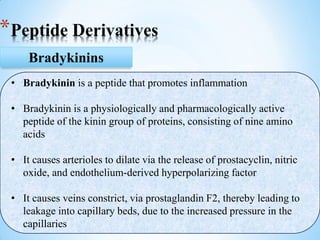
• Bradykinin is a peptide that promotes inflammation
• Bradykinin is a physiologically and pharmacologically active
peptide of the kinin group of proteins, consisting of nine amino
acids
• It causes arterioles to dilate via the release of prostacyclin, nitric
oxide, and endothelium-derived hyperpolarizing factor
• It causes veins constrict, via prostaglandin F2, thereby leading to
leakage into capillary beds, due to the increased pressure in the
capillaries
*
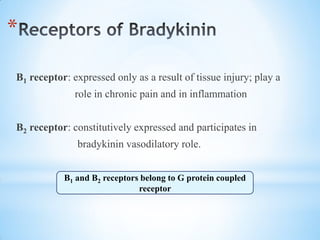
B1 receptor: expressed only as a result of tissue injury; play a
role in chronic pain and in inflammation
B2 receptor: constitutively expressed and participates in
bradykinin vasodilatory role.
B1 and B2 receptors belong to G protein coupled
receptor
*
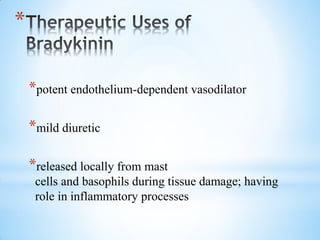
*potent endothelium-dependent vasodilator
*mild diuretic
*released locally from mast
cells and basophils during tissue damage; having
role in inflammatory processes
Pharmacology of
Angiotensins
*Angiotensin is a protein hormone that
causes blood vessels to become narrower
*It helps to maintain blood pressure and
fluid balance in the body
Angiotensin
*
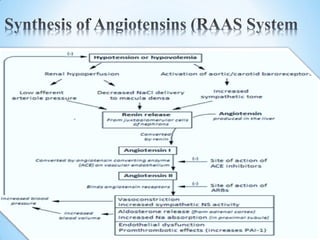
•The liver creates and releases a protein called angiotensinogen
• This is then broken up by renin, an enzyme produced in
the kidney, to form angiotensin I
• This form of the hormone is not known to have any particular
biological function in itself but, is an important precursor for
angiotensin II
• As it passes in the bloodstream through the lungs and kidneys, it
is further metabolised to produce angiotensin II by the action of
angiotensin-converting enzyme (ACE). The overall effect of
angiotensin II is to increase blood pressure, body water
and sodium content
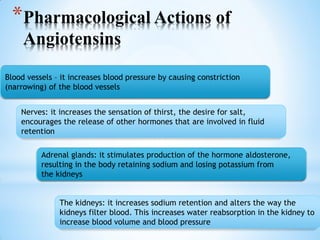
*Pharmacological Actions of
Angiotensins
Blood vessels – it increases blood pressure by causing constriction
(narrowing) of the blood vessels
Nerves: it increases the sensation of thirst, the desire for salt,
encourages the release of other hormones that are involved in fluid
retention
Adrenal glands: it stimulates production of the hormone aldosterone,
resulting in the body retaining sodium and losing potassium from
the kidneys
The kidneys: it increases sodium retention and alters the way the
kidneys filter blood. This increases water reabsorption in the kidney to
increase blood volume and blood pressure
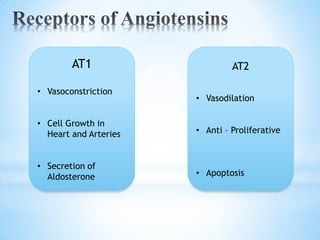
AT1
• Vasoconstriction
• Cell Growth in
Heart and Arteries
• Secretion of
Aldosterone
AT2
• Vasodilation
• Anti – Proliferative
• Apoptosis
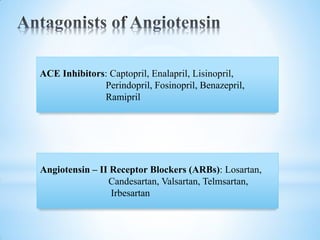
ACE Inhibitors: Captopril, Enalapril, Lisinopril,
Perindopril, Fosinopril, Benazepril,
Ramipril
Angiotensin – II Receptor Blockers (ARBs): Losartan,
Candesartan, Valsartan, Telmsartan,
Irbesartan
• Maintenance of Blood Pressure
• Maintenance of fluid balance
Introduction to autacoids and classification

Introduction to autacoids and classification

  • 1.
    By: Diksha M. Pharmacy(Pharmacology)
  • 2.
    * *Generally known asLocal Hormones *Having self healing properties *a physiologically active substance (such as serotonin, bradykinin, or angiotensin) *produced by the body and typically has a localized effect of brief duration
  • 3.
    * *Endogenous Compounds *Plays animportant role in the physiological and pathological processes *Having short duration of action *Synthesized locally and produce their effect on local tissues
  • 4.
    *Amine Derivatives: Histamine,5- Hydroxytryptamine (5-HT) *Peptide Derivatives: Bradykinin, Angiotensins *Lipids Derivatives: Prostaglandins (PGs), Leukotriens (LTs),Platelet activating factor (PAF) *
  • 5.
  • 6.
    * Histidine (from hydrolysis proteinsand from dietary source) L- Histidine decarboxylase Histamine • Histamine is an important nitrogenous organic compound • Mainly involved in the pathogenesis of allergic reactions • Central mediator released from mast cells through allergic reactions *Histamine
  • 7.
    L- Histidine decarboxylase Histamine Histidine N-methylTransferase Diamine oxidase N-methyl Histamine Imidazoleacetic acid N- methyl Imidazoleacetic acid MAO-B Phosphoribosyl Transferase Imidazoleacetic acid riboside Metabolites
  • 8.
    • Smooth Muscle: Contraction •Blood Vessels: Dilatation • Afferent nerve endings: Stimulation • Ganglionic Cell: Stimulation • Adrenal Medulla: Release of catecholamines Effect Through H1 Receptors Effect Through H2 Receptors • Glands of GIT: stimulation of gastric acid secretions • Blood Vessels: Dilatation • Heart: Increases the force of contraction • Uterus: Relaxation of smooth muscles
  • 9.
    • Brain: Sedationdue to inhibition of histamine release • Blood Vessels: Dilatation • Skin, Gastric Mucosa: Decrease in histamine release • Lungs, Spleen: Decrease secretions due to Decrease in histamine release Effect Through H3 Receptors Effect Through H4 Receptors • Mast Cells: Modulation of Allergic Reactions
  • 10.
    Receptors of Histamineand their location H1: Heart, Brain, Mast Cells H2: Heart, Brain, Neutrophils, Parietal Cells H3: Brain, PNS H4: Blood Cells (Mast cells, eosinophils, monocytes)
  • 11.
    Drugs for HistaminergicReceptors Agonists Antagonists Receptor Type H1 H2 H3 2- methylhistamine,2- pyridylethylamine,2- thiazolyl ethylamine Mepyramine, chlorpheniramine G-Protein Coupled Receptors 4-methy histamine, Dimaprit, impromidine Cimetidine, Ranitidine G-Protein Coupled Receptors ἀ-methyl Histamine Thioperamide, Impromidine G-Protein Coupled Receptors
  • 12.
    *Common cold * Motionsickess * Duodenal ulcer(Zollinger - ellison syndrome) *Parkinsonism *Allergic disorders *Sedative and hypnotic *Anxiolytic *CNS depression * fatigue * gynecomastia in men * galactorrhea women ADRs Therapeutic Indications
  • 13.
  • 14.
    *Serotonin (5–HT) Tryptophan (from dietarysources) Tryptophan Hydroxylase 5 – Hydroxytryptophan Decarboxylase 5 – Hydroxytryptamine (5-HT) A key hormone that: • stabilizes our mood • feelings of well-being • happiness • also helps with sleeping, eating, and digestion
  • 15.
    Tryptophan (from dietary sources) TryptophanHydroxylase 5 – Hydroxytryptophan Decarboxylase 5 – Hydroxytryptamine (5-HT) MAO 5 – Hydroxyindole acetaldeyde 5- hydroxyindole acetic acid (5 - HIAA) Aldehyde Dehydrogenase Metabolite
  • 16.
  • 17.
    * 5HT 1 5HT 2 5HT7 5HT 3 5HT 6 5HT 5 5HT 4 5HT 1A 5HT 1B 5HT 1D 5HT 2A 5HT 2B 5HT 2C
  • 18.
    Receptor Location ActionAgonist Antagonist 5HT 1A 5HT 1B 5HT 1D CNS CNS, SMOOTH MUSCLES CNS, BLOOD VESSELS Neuronal Inhibition Vasoconstriction 8-OH-DPAT Buspirone Ergotamine Sumatriptan Methiothepin, Ergotamine 5HT 2A 5HT 2B 5HT 2C CNS, PNS, SMOOTH MUSCLES GASTRIC REGIONS CNS Smooth Muscles Contraction ἀ-Me-5-HT LSD( KETANSERIN, Cyproheptadine Methysergide 5-HT3 PNS CNS Chlorophenyl biguanide Ondansetron, Tropisetron Neuronal excitation, emesis
  • 19.
    Receptor Location ActionAgonist Antagonist 5-HT7 CNS, GI TRACT, Blood Vessels Unknown 5-CT,LSD Not Known 5-HT4 5-HT5 5-HT6 CNS CNS PNS CNS Unknown Unknown Enhances GIT Motility Unknown Unknown 5-methoxy- tryptamine, metochlopromide Not Known Not Known Not Known
  • 20.
    Pharmacological Actions ofSerotonin Effect on CVS: Vasoconstrictor and vasodilatory effect as well Effect on Smooth Muscles: Stimulation of smooth muscles Effect on Respiratory System: Hyperventilatory effect Effect on Glands: Decrease the glandular secretion. Have efficacy in inflammatory disorders Effect on Platelets: Activate PAF; Having little effect on Platelet aggregation
  • 21.
    • Anxiolytics • Depression •Migraine ADRs • Abdominal Pain • Muscle Cramps • Chest Pain
  • 22.
  • 23.
    * Prostaglandins (PGs) • Prostaglandinsare a group of Lipids Autacoids • Made at sites of tissue damage or infection • Involved in dealing with injury and illness • Control processes such as inflammation, blood flow, the formation of blood clots and the induction of labour
  • 24.
    Membrane Phospholipids Arachidonic acid Phospholipase A2 PGG2 COX Peroxidase PGH2 ThromboxaneA2 PGE2, PGD2, PGF2 PGI2 Synthase Enzyme On hydrolysis, resultant is Thromboxane B2 On hydrolysis, resultant is 6 – keto PG F1alpha
  • 25.
    Activity of PGs ThromboxaneA2: Thrombotic Tendency PGE2: Inflammation, Tumor Growth PGD2: Anti - inflammatory PGF2: Loss of Parturition Prostacyclins PGI2: Protection of GIT mucosa, Resistance to Thromboembolism
  • 26.
    Pharmacological Actions ofPGs Blood Vessels PGE2 PGI2 PGF2 - alpha TXA2 Heart Bronchi GIT Uterus PGs Types Vasodilation Vasodilation Vasodilation Vasoconstriction Weak Inotropic Weak Inotropic _ _ Dilatation Constriction Dilatation Constriction Acid Secretion Decrease Acid Secretion Decrease Contraction Contraction _ _
  • 27.
    Analogues of PGs PGE1: Misoprostol, Gemeprostol, Alprostadil PG E2: Dinoprostone PG F2 alpha: Latanoprost, Carboprost PG I2: Epoprostenol USES NSAIDs Induced Peptic Ulcer Therapeutic Abortion Induction of Labour Therapeutic Abortion Induction of Labour Open Angle Glaucoma Pulmonary Hypertension
  • 28.
  • 29.
    Leukotriene's (LTs) • Leukotrienesare inflammatory chemicals • Releases after coming in contact with an allergen or allergy trigger • Leukotrienes cause tightening of airway muscles and the production of excess mucus and fluid • These chemicals play a key role in allergy, allergic rhinitis, and asthma, also causing a tightening of your airways, making it difficult to breathe.
  • 30.
  • 31.
    Pharmacological Actions ofLTs Effect on CVS: Fall in Blood Pressure Effect on Smooth Muscles: Bronchoconstriction and spastic contraction of smooth muscles of GIT Effect on Afferent Nerve: Carrying pain impulses and tenderness to inflammation
  • 32.
    Receptors of LTsand their drugs BLT1 receptor CysLT2 receptor CysLT1 receptor BLT2 receptor OXE receptor Receptor Agonist Antagonist LTB4 LTB4 LTD4 5-oxo-ETE CI-198615, LTD4 CGS23131 LY255283 zafirlukast HAMI3379 S - Y048
  • 33.
    Treatment of Asthma ReduceBronchospasm GIT upset Liver Dysfunction
  • 34.
  • 35.
    *Platelet-activating factor, alsoknown as PAF, PAF-acether or AGEPC (acetyl- glyceryl-ether-phosphorylcholine) * Potent Phospholipid *Activator and mediator of many leukocyte functions, platelet aggregation and degranulation, inflammation, and anaphylaxis  Lipid Derivative Platelet Activating Factor ( PAF)
  • 38.
  • 39.
    • PAF isused to transmit signals between neighbouring cells and acts as a hormone, cytokines, and other signalling molecules • PAF signalling system can trigger inflammatory and thrombotic cascades • PAF initiates an inflammatory response in allergic reactions • PAF also induces apoptosis in a different way that is independent of the PAF receptor • It is an important mediator of bronchoconstriction • It causes platelets to aggregate and blood vessels to dilate • Toxins such as fragments of destroyed bacteria induce the synthesis of PAF
  • 40.
  • 41.
    *Peptide Derivatives Bradykinins • Bradykininis a peptide that promotes inflammation • Bradykinin is a physiologically and pharmacologically active peptide of the kinin group of proteins, consisting of nine amino acids • It causes arterioles to dilate via the release of prostacyclin, nitric oxide, and endothelium-derived hyperpolarizing factor • It causes veins constrict, via prostaglandin F2, thereby leading to leakage into capillary beds, due to the increased pressure in the capillaries
  • 43.
    * B1 receptor: expressedonly as a result of tissue injury; play a role in chronic pain and in inflammation B2 receptor: constitutively expressed and participates in bradykinin vasodilatory role. B1 and B2 receptors belong to G protein coupled receptor
  • 44.
    * *potent endothelium-dependent vasodilator *milddiuretic *released locally from mast cells and basophils during tissue damage; having role in inflammatory processes
  • 45.
  • 46.
    *Angiotensin is aprotein hormone that causes blood vessels to become narrower *It helps to maintain blood pressure and fluid balance in the body Angiotensin
  • 47.
    * •The liver createsand releases a protein called angiotensinogen • This is then broken up by renin, an enzyme produced in the kidney, to form angiotensin I • This form of the hormone is not known to have any particular biological function in itself but, is an important precursor for angiotensin II • As it passes in the bloodstream through the lungs and kidneys, it is further metabolised to produce angiotensin II by the action of angiotensin-converting enzyme (ACE). The overall effect of angiotensin II is to increase blood pressure, body water and sodium content
  • 49.
    *Pharmacological Actions of Angiotensins Bloodvessels – it increases blood pressure by causing constriction (narrowing) of the blood vessels Nerves: it increases the sensation of thirst, the desire for salt, encourages the release of other hormones that are involved in fluid retention Adrenal glands: it stimulates production of the hormone aldosterone, resulting in the body retaining sodium and losing potassium from the kidneys The kidneys: it increases sodium retention and alters the way the kidneys filter blood. This increases water reabsorption in the kidney to increase blood volume and blood pressure
  • 50.
    AT1 • Vasoconstriction • CellGrowth in Heart and Arteries • Secretion of Aldosterone AT2 • Vasodilation • Anti – Proliferative • Apoptosis
  • 51.
    ACE Inhibitors: Captopril,Enalapril, Lisinopril, Perindopril, Fosinopril, Benazepril, Ramipril Angiotensin – II Receptor Blockers (ARBs): Losartan, Candesartan, Valsartan, Telmsartan, Irbesartan
  • 52.
    • Maintenance ofBlood Pressure • Maintenance of fluid balance