THE REFORM
MOVEMENT
CONCEPT OF NATIONHOOD
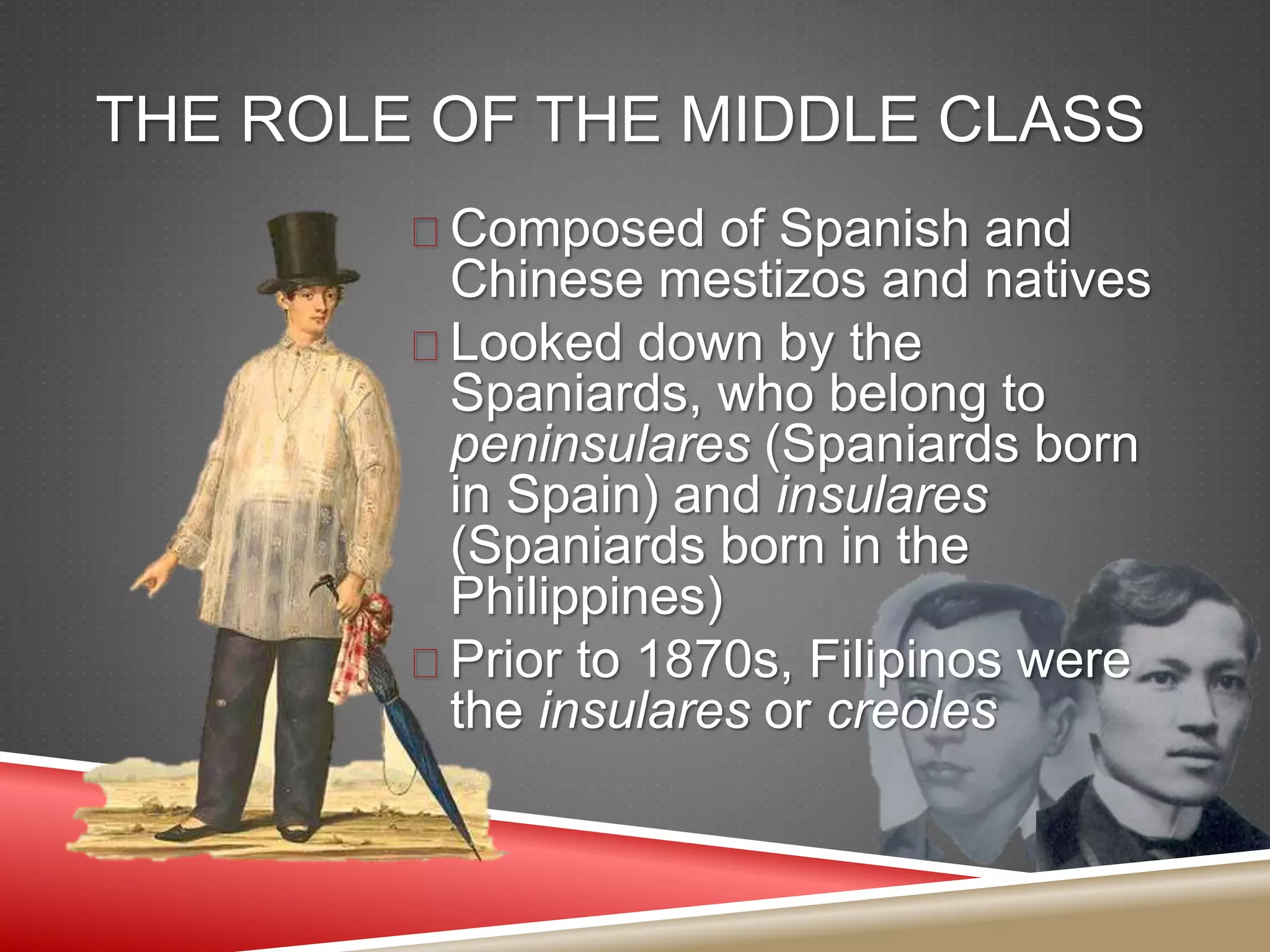
THE ROLE OF THE MIDDLE CLASS
 Composed of Spanish and
Chinese mestizos and natives
 Looked down by the
Spaniards, who belong to
peninsulares (Spaniards born
in Spain) and insulares
(Spaniards born in the
Philippines)
 Prior to 1870s, Filipinos were
the insulares or creoles
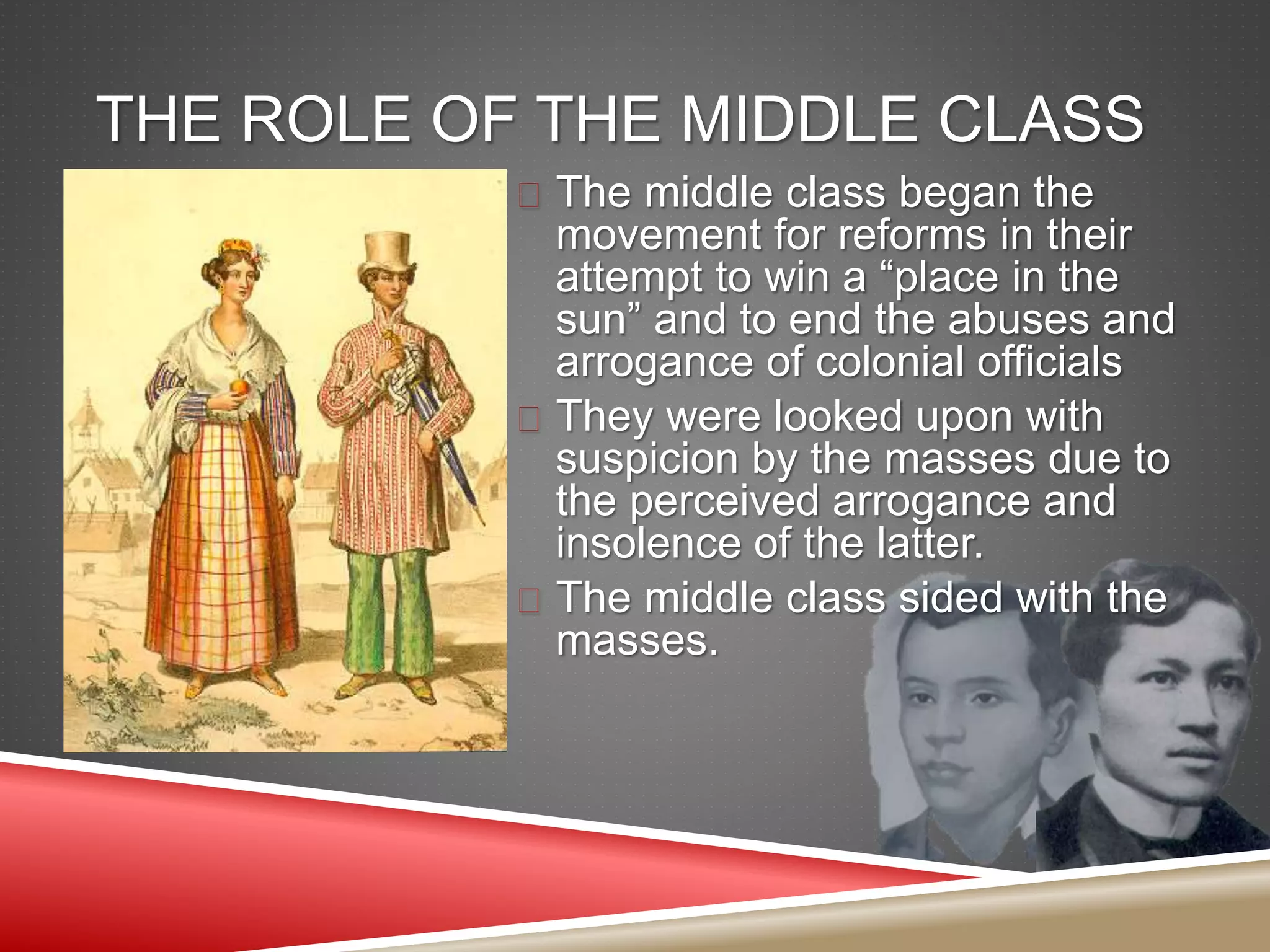
THE ROLE OF THE MIDDLE CLASS
 The middle class began the
movement for reforms in their
attempt to win a “place in the
sun” and to end the abuses and
arrogance of colonial officials
 They were looked upon with
suspicion by the masses due to
the perceived arrogance and
insolence of the latter.
 The middle class sided with the
masses.
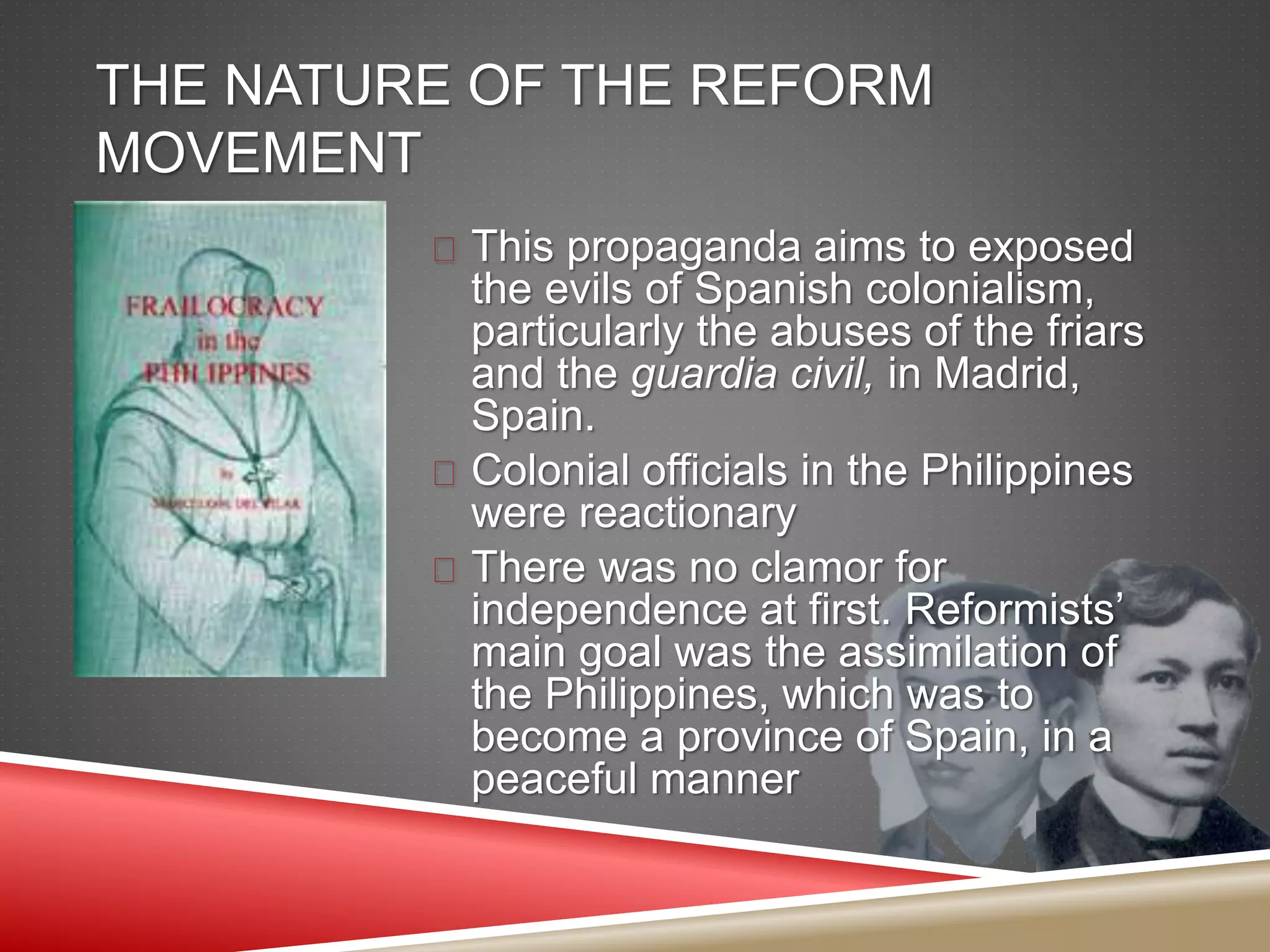
THE NATURE OF THE REFORM
MOVEMENT
 This propaganda aims to exposed
the evils of Spanish colonialism,
particularly the abuses of the friars
and the guardia civil, in Madrid,
Spain.
 Colonial officials in the Philippines
were reactionary
 There was no clamor for
independence at first. Reformists’
main goal was the assimilation of
the Philippines, which was to
become a province of Spain, in a
peaceful manner
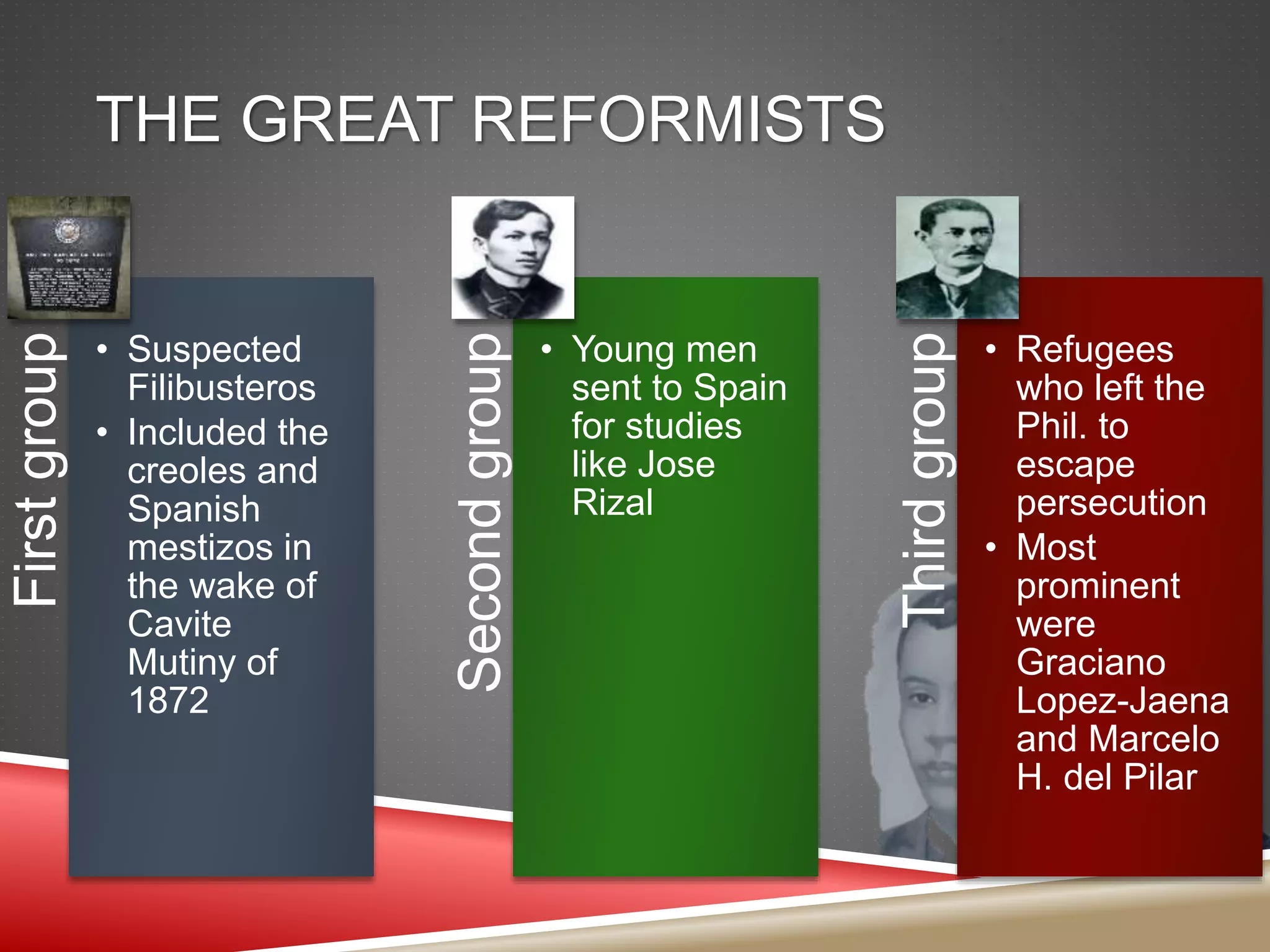
THE GREAT REFORMISTS
Firstgroup
• Suspected
Filibusteros
• Included the
creoles and
Spanish
mestizos in
the wake of
Cavite
Mutiny of
1872
Secondgroup
• Young men
sent to Spain
for studies
like Jose
Rizal
Thirdgroup
• Refugees
who left the
Phil. to
escape
persecution
• Most
prominent
were
Graciano
Lopez-Jaena
and Marcelo
H. del Pilar
THE RESULT AND
SIGNIFICANCE OF
PROPAGANDA MOVEMENT
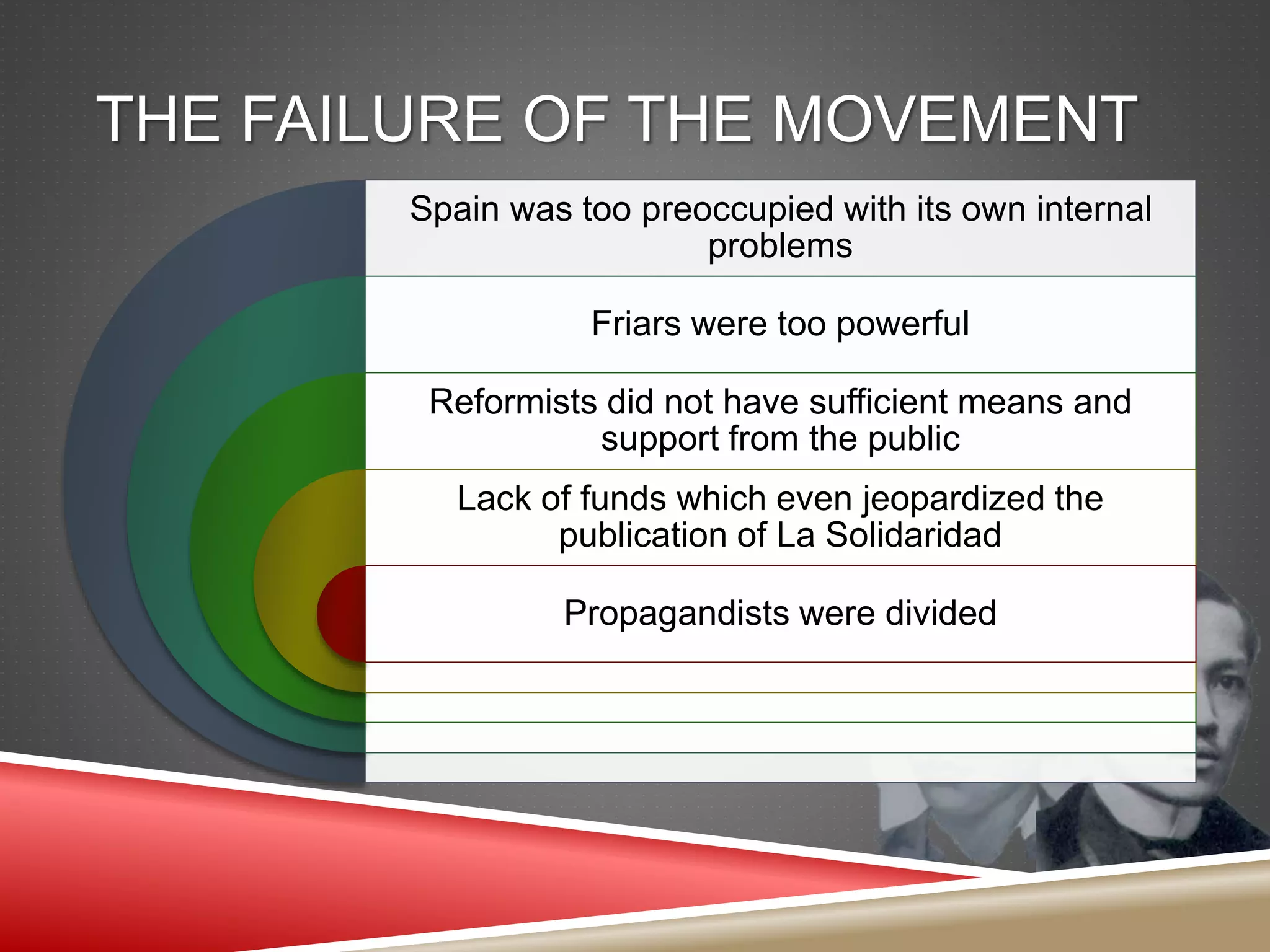
THE FAILURE OF THE MOVEMENT
Spain was too preoccupied with its own internal
problems
Friars were too powerful
Reformists did not have sufficient means and
support from the public
Lack of funds which even jeopardized the
publication of La Solidaridad
Propagandists were divided
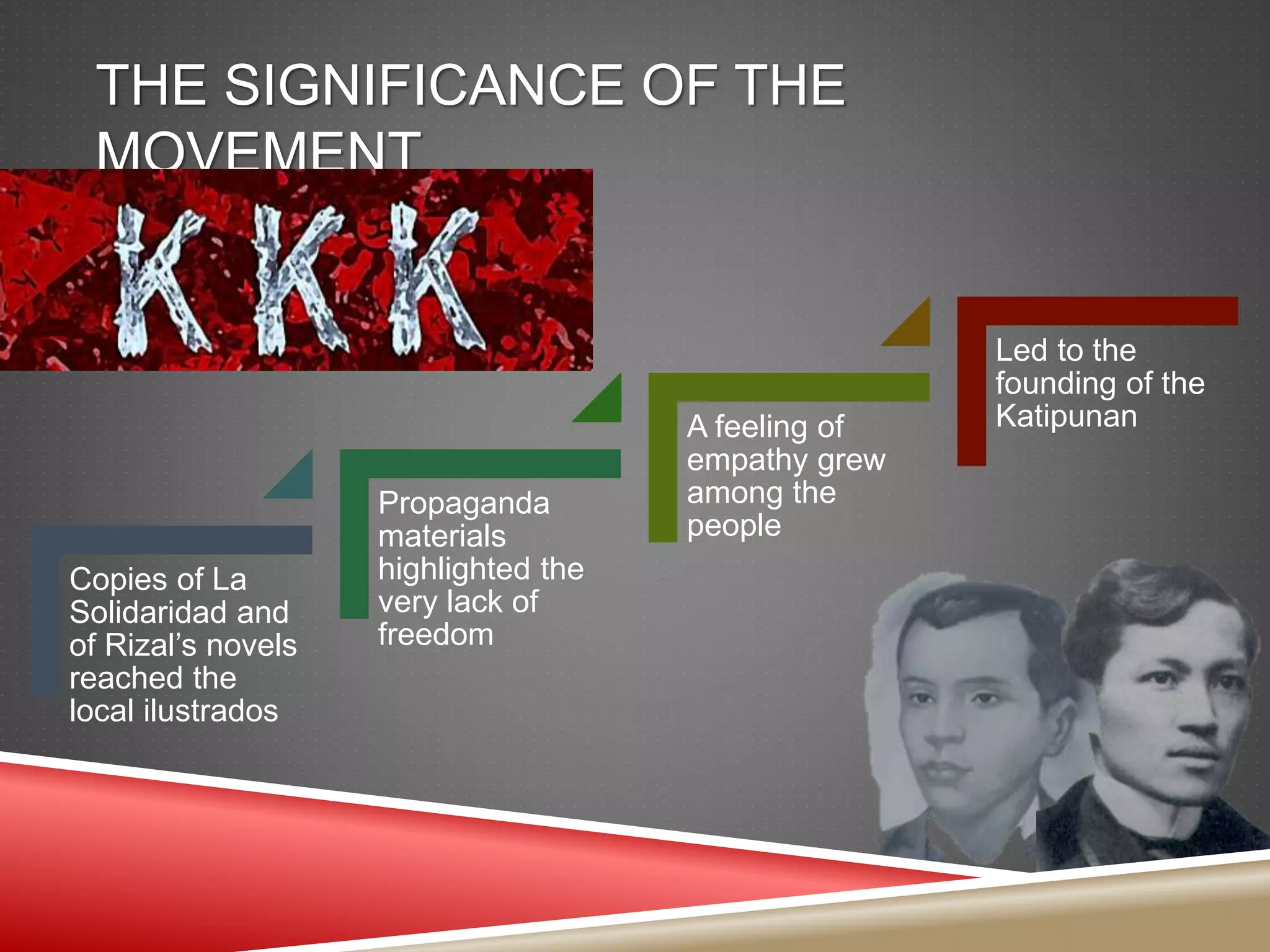
THE SIGNIFICANCE OF THE
MOVEMENT
Copies of La
Solidaridad and
of Rizal’s novels
reached the
local ilustrados
Propaganda
materials
highlighted the
very lack of
freedom
A feeling of
empathy grew
among the
people
Led to the
founding of the
Katipunan
FACTORS LEADING TO THE
PHILIPPINE REVOLUTION
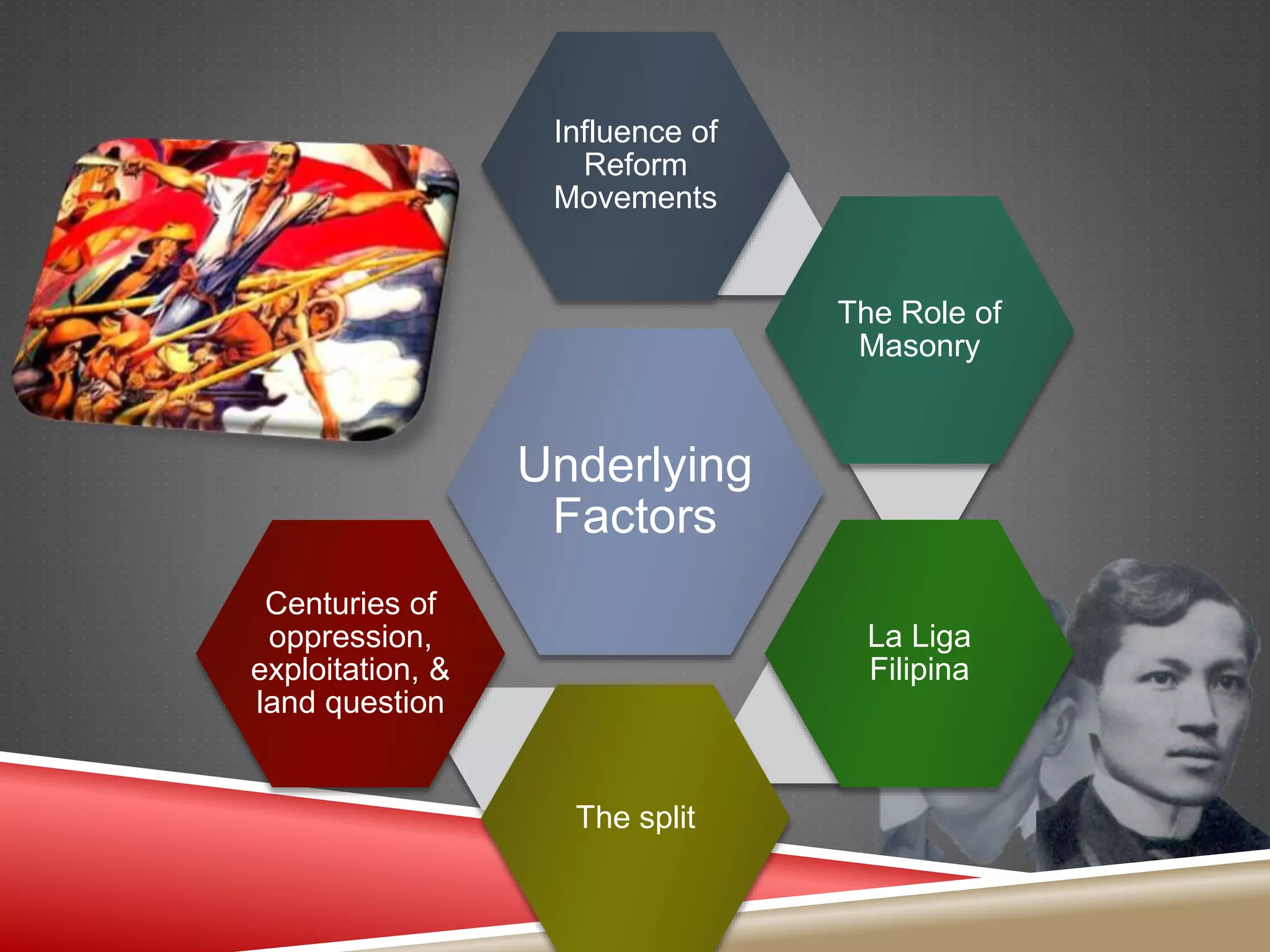
Underlying
Factors
Influence of
Reform
Movements
The Role of
Masonry
La Liga
Filipina
The split
Centuries of
oppression,
exploitation, &
land question
ROLE OF MASONRY
 Filipino propagandists in Spain were affiliated
with Masonic lodges in Spain
 Masonic movement were anti-friar
 They were responsible for founding the Masonic
lodges in the Philippines and, in turn, helped to
recruit members and to fund propaganda work in
Spain
 At the outbreak of the 1896 Revolution, Masonry
was already deeply entrenched in the Philippines
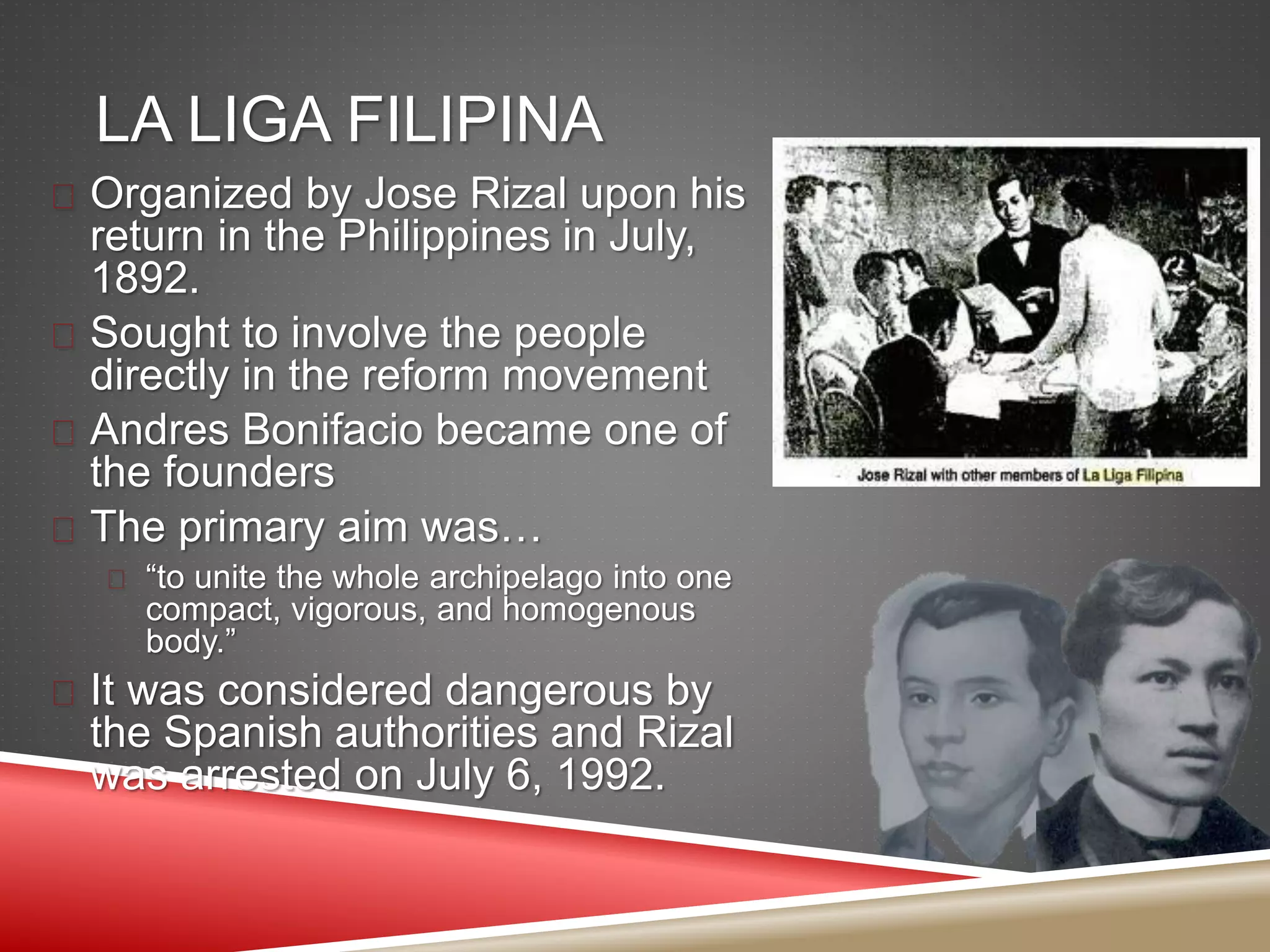
LA LIGA FILIPINA
 Organized by Jose Rizal upon his
return in the Philippines in July,
1892.
 Sought to involve the people
directly in the reform movement
 Andres Bonifacio became one of
the founders
 The primary aim was…
 “to unite the whole archipelago into one
compact, vigorous, and homogenous
body.”
 It was considered dangerous by
the Spanish authorities and Rizal
was arrested on July 6, 1992.
THE SPLIT
 La Liga lay low after Rizal was arrested and
deportted
Cuerpo de
Compromisaros
• Conservative
grouped which
pledge to continue
supporting the La
Solidaridad
Katipunan
• The radicals led
by Bonifacio
devoted to a new
secret society
CENTURIES OF OPPRESSION,
EXPLOITATION, AND THE LAND
QUESTION
 Colonial oppression caused common suffering
among the people. Since Bonifacio’s call for
separatism was a simple and direct solution, the
peasants quickly rallied to the revolutionary
movement
 Greater awareness of common deprivation and
oppression was made possible by economic
progress in Manila
 In the rural areas, the economic progress of the
19th century depressed the living standards of
the masses.
IMMEDIATE CAUSES
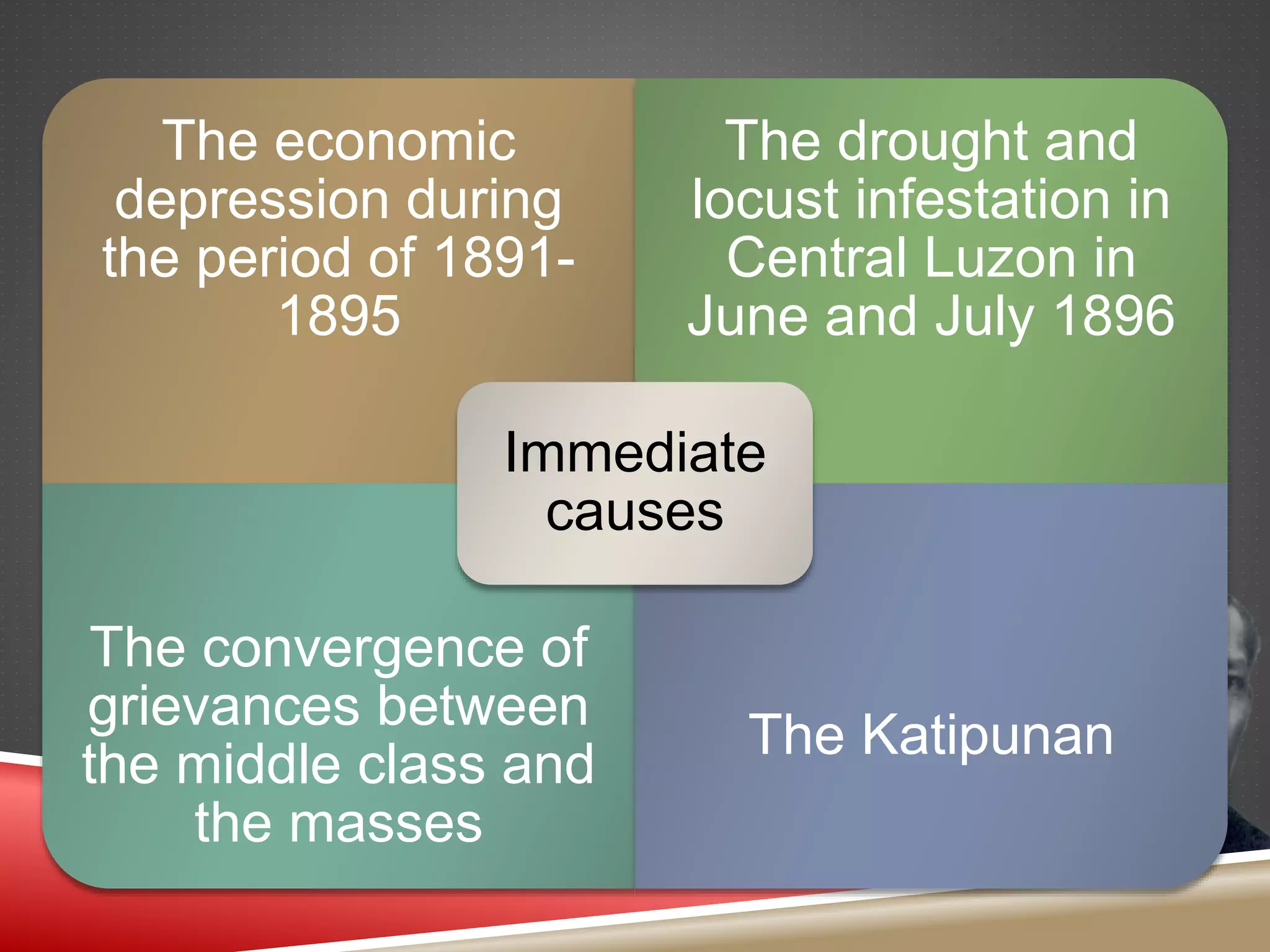
The economic
depression during
the period of 1891-
1895
The drought and
locust infestation in
Central Luzon in
June and July 1896
The convergence of
grievances between
the middle class and
the masses
The Katipunan
Immediate
causes
THE ECONOMIC DEPRESSION DURING
THE PERIOD OF 1891-1895
 Unstable currency and
exchange fluctuations
 Prices of sugar and hemp
fell disastrously
 Scarcity and the higher cost
of importation raised the
prices of rice
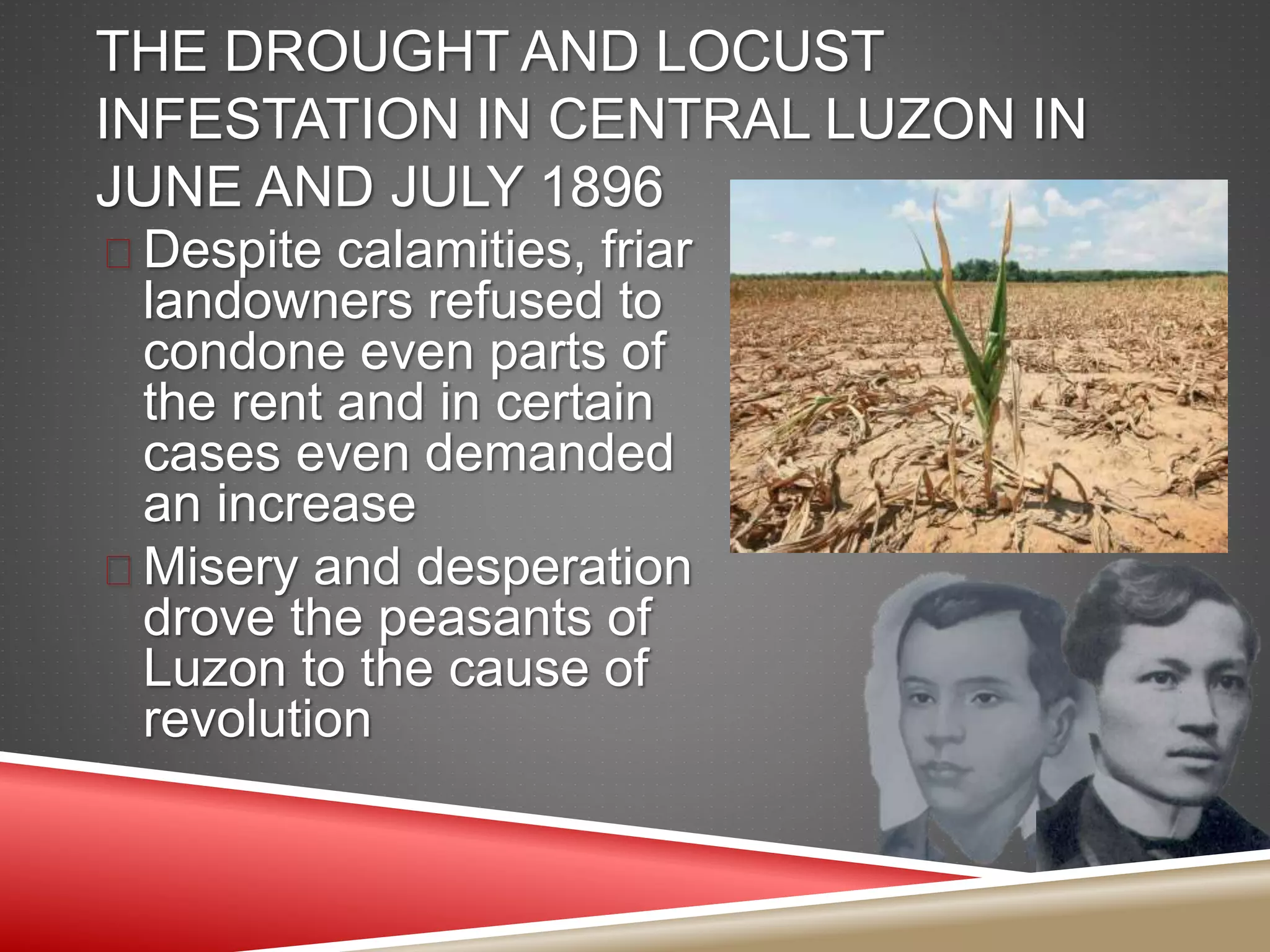
THE DROUGHT AND LOCUST
INFESTATION IN CENTRAL LUZON IN
JUNE AND JULY 1896
 Despite calamities, friar
landowners refused to
condone even parts of
the rent and in certain
cases even demanded
an increase
 Misery and desperation
drove the peasants of
Luzon to the cause of
revolution
THE CONVERGENCE OF
GRIEVANCES BETWEEN THE
MIDDLE CLASS AND THE MASSES
 It aggravated the unrest of Filipinos
 Filipino professionals and university
graduates were seldom appointed to
government positions. Finding
employment was also difficult because of
racial discrimination
THE KATIPUNAN
The three
objective
of the
Katipunan
Political objective: to work for the separation of
the Philippines
Moral objective: to teach good manners,
hygiene, good morals, and to attack
obscurantism, religious fanaticism, and
weakness of character
Civic aim: to develop self-help and concern for
the defense of the poor and the oppressed
THE KATIPUNAN
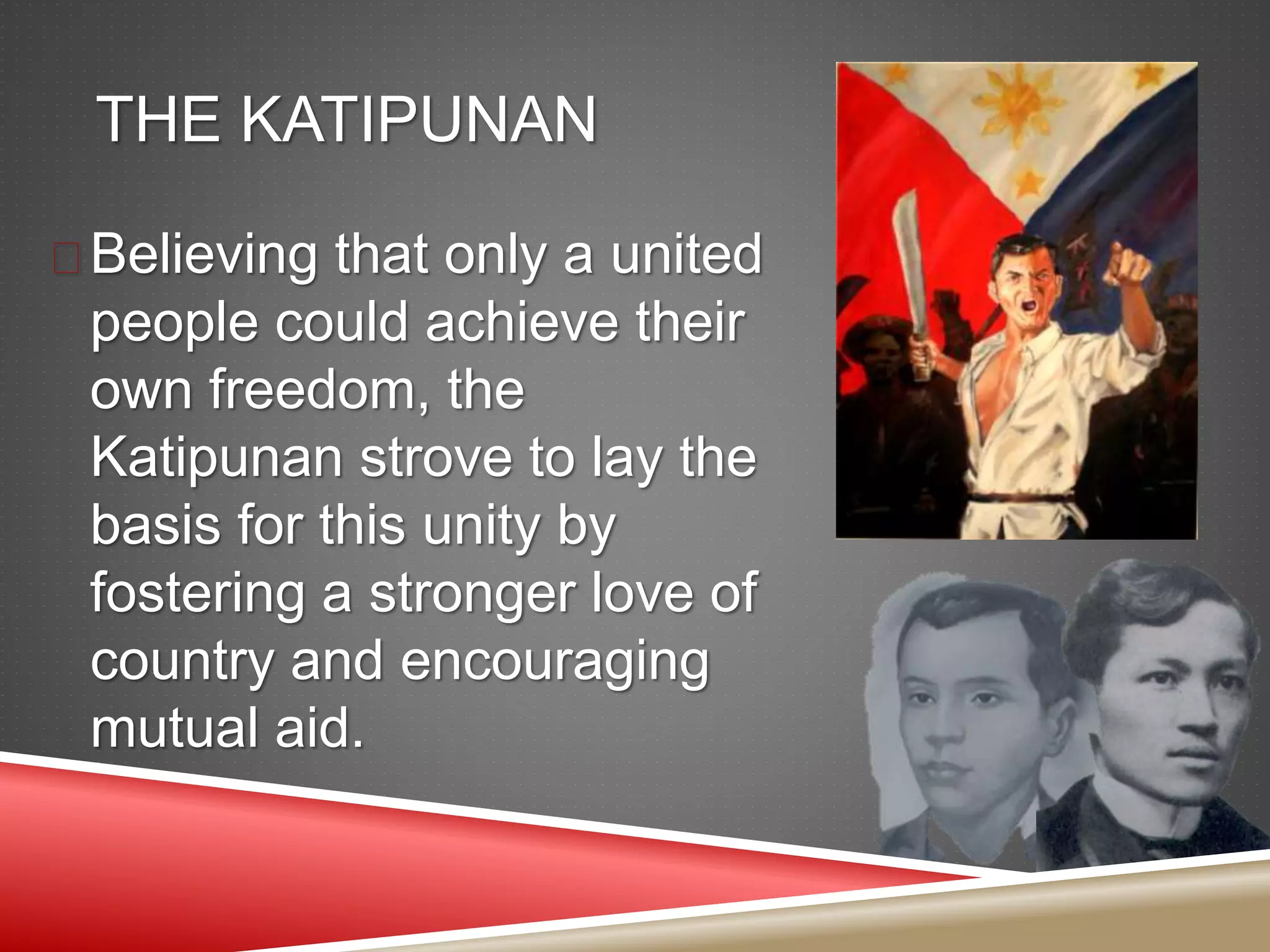
 Believing that only a united
people could achieve their
own freedom, the
Katipunan strove to lay the
basis for this unity by
fostering a stronger love of
country and encouraging
mutual aid.
PREPARATION FOR THE
REVOLUTIONARY STRUGGLE
RECRUITMENT, PROPAGANDA, AND
EXPANSION
 Their newspaper, the Kalayaan, was
edited by Emilio Jacinto and also the
Kartilla ng Katipunan, primer used to
indoctrinate the members of the
Katipunan in its ideals
 Tried to enlist the aid of wealthy Filipinos
but failed
RECRUITMENT, PROPAGANDA, AND
EXPANSION
 Women’s chapter was also established
 Attempted to seek the aid of the
Japanese but also failed
 Katipuneros stole rifles and pistols from
the Spanish maestranza (arsenal)
DISCOVERY OF THE KATIPUNAN AND
THE START OF THE REVOLUTION
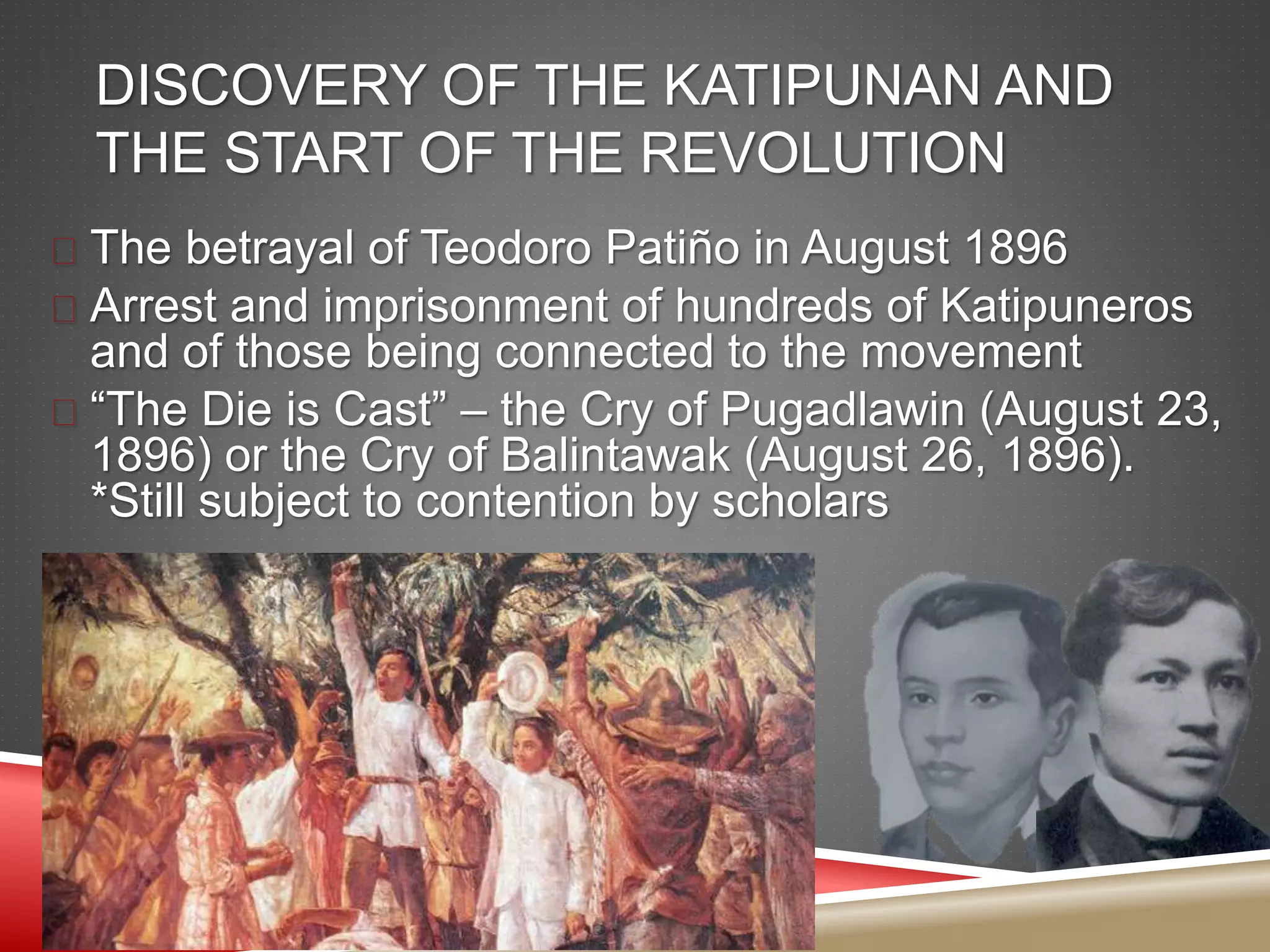
 The betrayal of Teodoro Patiño in August 1896
 Arrest and imprisonment of hundreds of Katipuneros
and of those being connected to the movement
 “The Die is Cast” – the Cry of Pugadlawin (August 23,
1896) or the Cry of Balintawak (August 26, 1896).
*Still subject to contention by scholars
THANK YOU!!

Hist2 9 the reform movement and the revolution

  • 1.
  • 2.
  • 3.
    THE ROLE OFTHE MIDDLE CLASS  Composed of Spanish and Chinese mestizos and natives  Looked down by the Spaniards, who belong to peninsulares (Spaniards born in Spain) and insulares (Spaniards born in the Philippines)  Prior to 1870s, Filipinos were the insulares or creoles
  • 4.
    THE ROLE OFTHE MIDDLE CLASS  The middle class began the movement for reforms in their attempt to win a “place in the sun” and to end the abuses and arrogance of colonial officials  They were looked upon with suspicion by the masses due to the perceived arrogance and insolence of the latter.  The middle class sided with the masses.
  • 5.
    THE NATURE OFTHE REFORM MOVEMENT  This propaganda aims to exposed the evils of Spanish colonialism, particularly the abuses of the friars and the guardia civil, in Madrid, Spain.  Colonial officials in the Philippines were reactionary  There was no clamor for independence at first. Reformists’ main goal was the assimilation of the Philippines, which was to become a province of Spain, in a peaceful manner
  • 6.
    THE GREAT REFORMISTS Firstgroup •Suspected Filibusteros • Included the creoles and Spanish mestizos in the wake of Cavite Mutiny of 1872 Secondgroup • Young men sent to Spain for studies like Jose Rizal Thirdgroup • Refugees who left the Phil. to escape persecution • Most prominent were Graciano Lopez-Jaena and Marcelo H. del Pilar
  • 7.
    THE RESULT AND SIGNIFICANCEOF PROPAGANDA MOVEMENT
  • 8.
    THE FAILURE OFTHE MOVEMENT Spain was too preoccupied with its own internal problems Friars were too powerful Reformists did not have sufficient means and support from the public Lack of funds which even jeopardized the publication of La Solidaridad Propagandists were divided
  • 9.
    THE SIGNIFICANCE OFTHE MOVEMENT Copies of La Solidaridad and of Rizal’s novels reached the local ilustrados Propaganda materials highlighted the very lack of freedom A feeling of empathy grew among the people Led to the founding of the Katipunan
  • 10.
    FACTORS LEADING TOTHE PHILIPPINE REVOLUTION
  • 11.
    Underlying Factors Influence of Reform Movements The Roleof Masonry La Liga Filipina The split Centuries of oppression, exploitation, & land question
  • 12.
    ROLE OF MASONRY Filipino propagandists in Spain were affiliated with Masonic lodges in Spain  Masonic movement were anti-friar  They were responsible for founding the Masonic lodges in the Philippines and, in turn, helped to recruit members and to fund propaganda work in Spain  At the outbreak of the 1896 Revolution, Masonry was already deeply entrenched in the Philippines
  • 13.
    LA LIGA FILIPINA Organized by Jose Rizal upon his return in the Philippines in July, 1892.  Sought to involve the people directly in the reform movement  Andres Bonifacio became one of the founders  The primary aim was…  “to unite the whole archipelago into one compact, vigorous, and homogenous body.”  It was considered dangerous by the Spanish authorities and Rizal was arrested on July 6, 1992.
  • 14.
    THE SPLIT  LaLiga lay low after Rizal was arrested and deportted Cuerpo de Compromisaros • Conservative grouped which pledge to continue supporting the La Solidaridad Katipunan • The radicals led by Bonifacio devoted to a new secret society
  • 15.
    CENTURIES OF OPPRESSION, EXPLOITATION,AND THE LAND QUESTION  Colonial oppression caused common suffering among the people. Since Bonifacio’s call for separatism was a simple and direct solution, the peasants quickly rallied to the revolutionary movement  Greater awareness of common deprivation and oppression was made possible by economic progress in Manila  In the rural areas, the economic progress of the 19th century depressed the living standards of the masses.
  • 16.
  • 17.
    The economic depression during theperiod of 1891- 1895 The drought and locust infestation in Central Luzon in June and July 1896 The convergence of grievances between the middle class and the masses The Katipunan Immediate causes
  • 18.
    THE ECONOMIC DEPRESSIONDURING THE PERIOD OF 1891-1895  Unstable currency and exchange fluctuations  Prices of sugar and hemp fell disastrously  Scarcity and the higher cost of importation raised the prices of rice
  • 19.
    THE DROUGHT ANDLOCUST INFESTATION IN CENTRAL LUZON IN JUNE AND JULY 1896  Despite calamities, friar landowners refused to condone even parts of the rent and in certain cases even demanded an increase  Misery and desperation drove the peasants of Luzon to the cause of revolution
  • 20.
    THE CONVERGENCE OF GRIEVANCESBETWEEN THE MIDDLE CLASS AND THE MASSES  It aggravated the unrest of Filipinos  Filipino professionals and university graduates were seldom appointed to government positions. Finding employment was also difficult because of racial discrimination
  • 21.
    THE KATIPUNAN The three objective ofthe Katipunan Political objective: to work for the separation of the Philippines Moral objective: to teach good manners, hygiene, good morals, and to attack obscurantism, religious fanaticism, and weakness of character Civic aim: to develop self-help and concern for the defense of the poor and the oppressed
  • 22.
    THE KATIPUNAN  Believingthat only a united people could achieve their own freedom, the Katipunan strove to lay the basis for this unity by fostering a stronger love of country and encouraging mutual aid.
  • 23.
  • 24.
    RECRUITMENT, PROPAGANDA, AND EXPANSION Their newspaper, the Kalayaan, was edited by Emilio Jacinto and also the Kartilla ng Katipunan, primer used to indoctrinate the members of the Katipunan in its ideals  Tried to enlist the aid of wealthy Filipinos but failed
  • 25.
    RECRUITMENT, PROPAGANDA, AND EXPANSION Women’s chapter was also established  Attempted to seek the aid of the Japanese but also failed  Katipuneros stole rifles and pistols from the Spanish maestranza (arsenal)
  • 26.
    DISCOVERY OF THEKATIPUNAN AND THE START OF THE REVOLUTION  The betrayal of Teodoro Patiño in August 1896  Arrest and imprisonment of hundreds of Katipuneros and of those being connected to the movement  “The Die is Cast” – the Cry of Pugadlawin (August 23, 1896) or the Cry of Balintawak (August 26, 1896). *Still subject to contention by scholars
  • 27.