Development of
Philippine
Nationalism
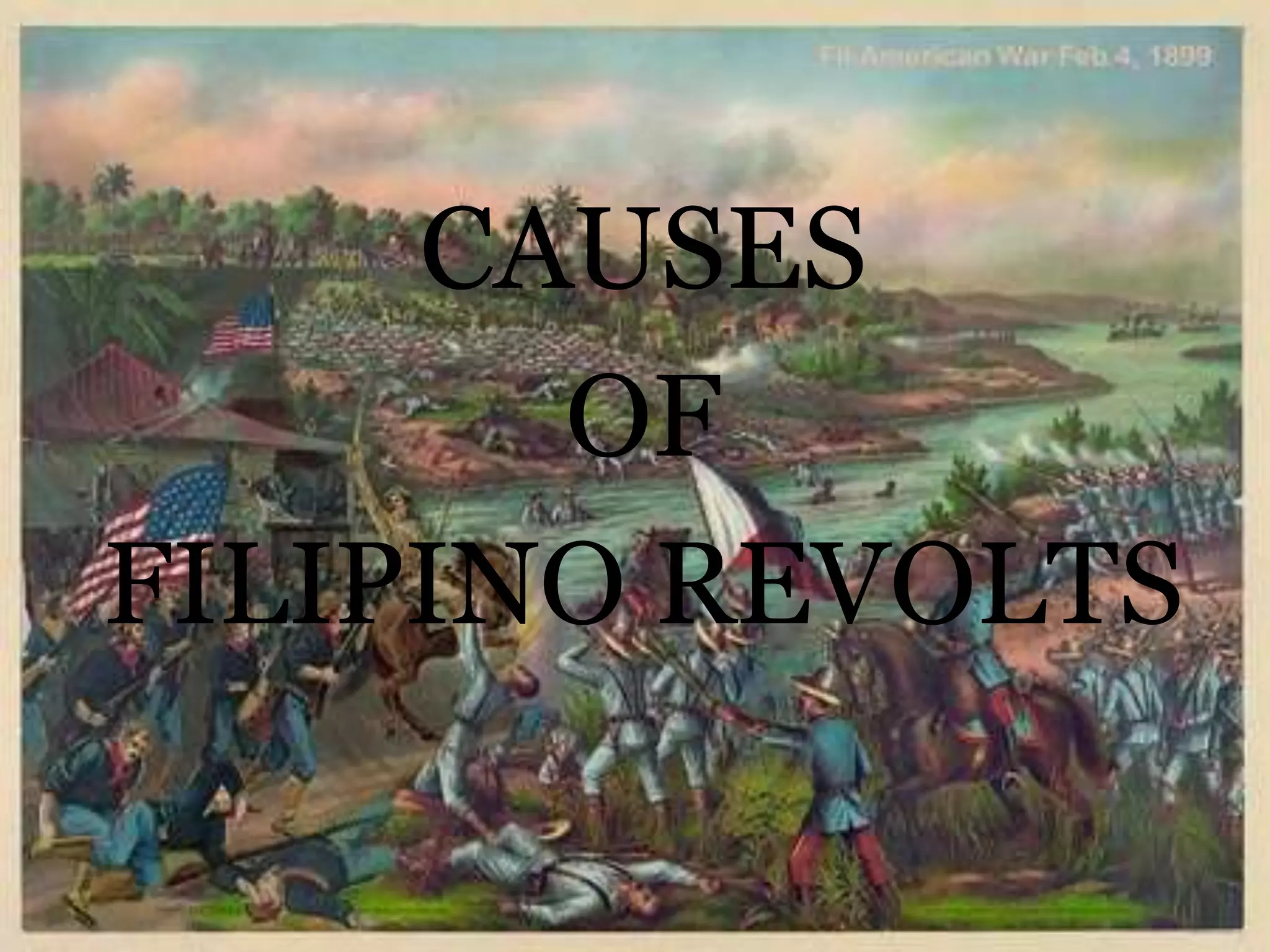
CAUSES
OF
FILIPINO REVOLTS
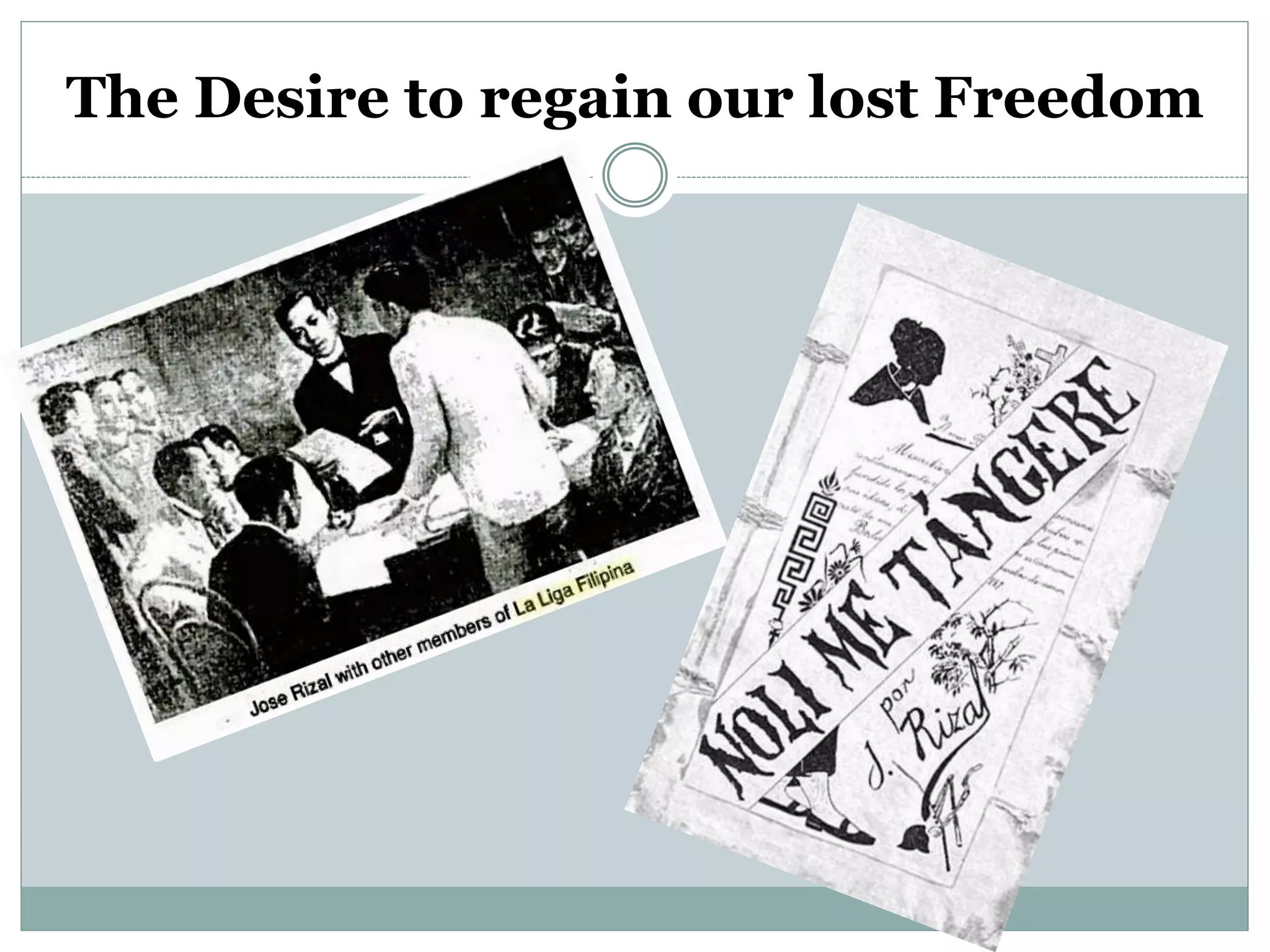
The Desire to regain our lost Freedom
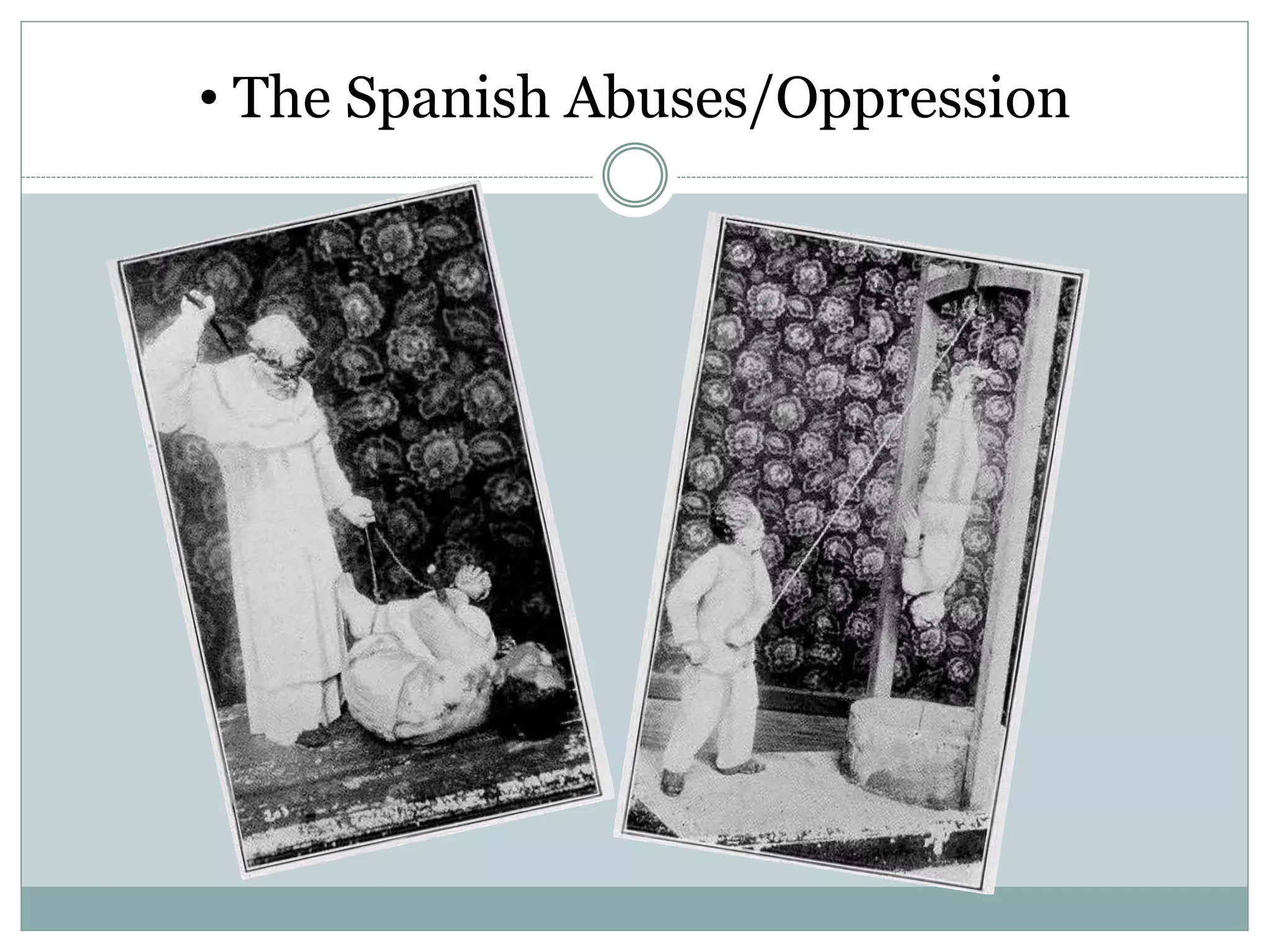
• The Spanish Abuses/Oppression
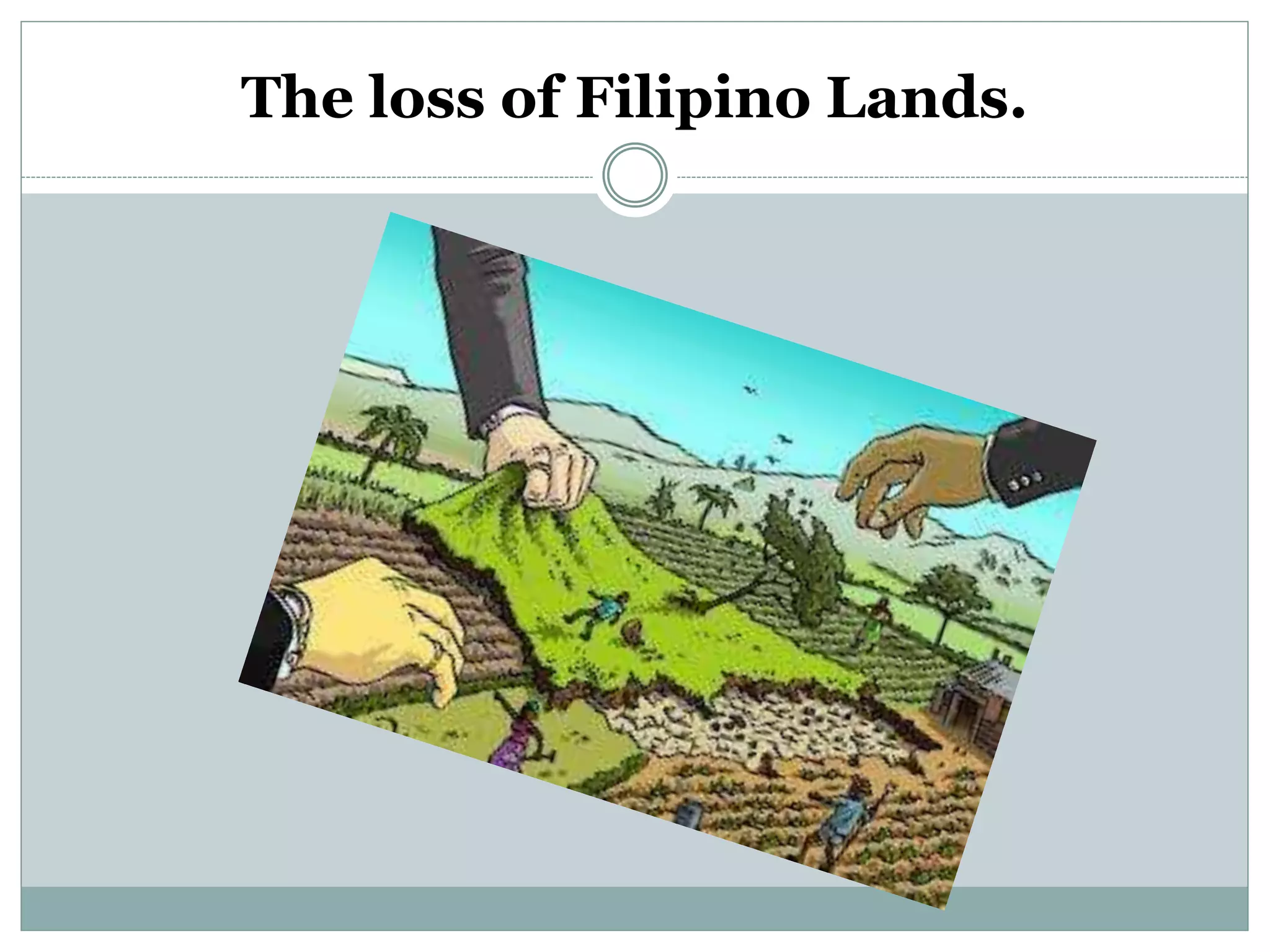
The loss of Filipino Lands.
Two reasons why the revolts against the
Spain failed:
Absence of Nationalism.
Lack of National Leaders.
Nationalism
Love of Country.
People of the nation become united and
work together for common aims.
Devotion to one’s country or fighting
for it’s independence.
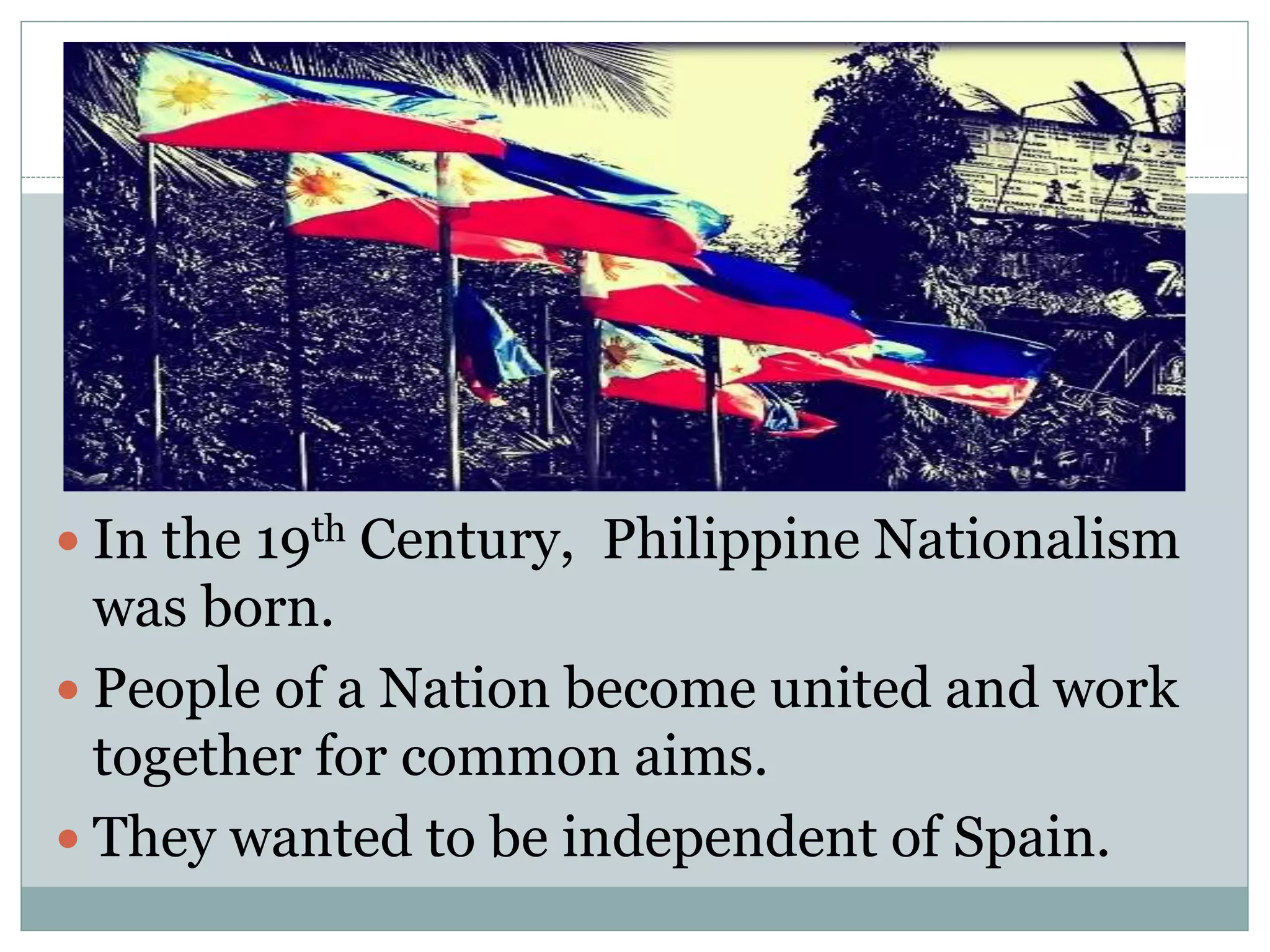
 In the 19th Century, Philippine Nationalism
was born.
 People of a Nation become united and work
together for common aims.
 They wanted to be independent of Spain.
Liberalism from Europe
 Origins of 19th Century Liberalism
The word was first used when the term was adopted
by the Spanish political party, the Liberales, in 1812.
1868-1870- the revolt in Spain, which had deposed
Isabella II, succeeded in establishing a Provisional
Republic, which for about two years put liberalism in
control.
General Carlos Maria de la Torre, a fierce liberal,
brought liberalism in the Philippines and was
appointed to be the Governor-General.
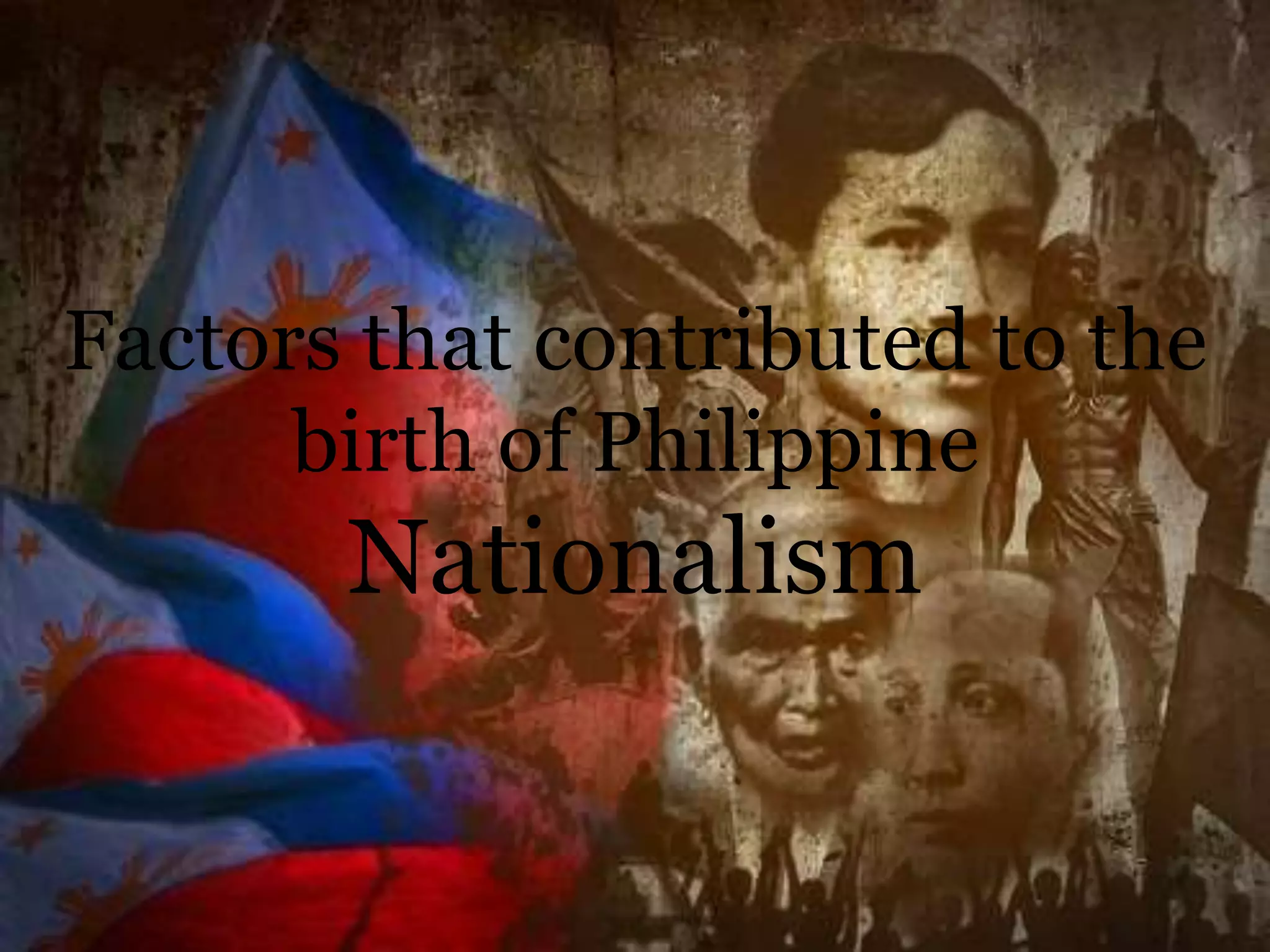
Factors that contributed to the
birth of Philippine
Nationalism
Mexico
 In 1821, Spain has lost their precious trade jewel
in the Pacific, Mexico.
 A revolution erupted and independence was
declared.
 The Viceroyalty of New Spain (Mexico) was the
first and largest provider of resources for the
Spanish Empire.
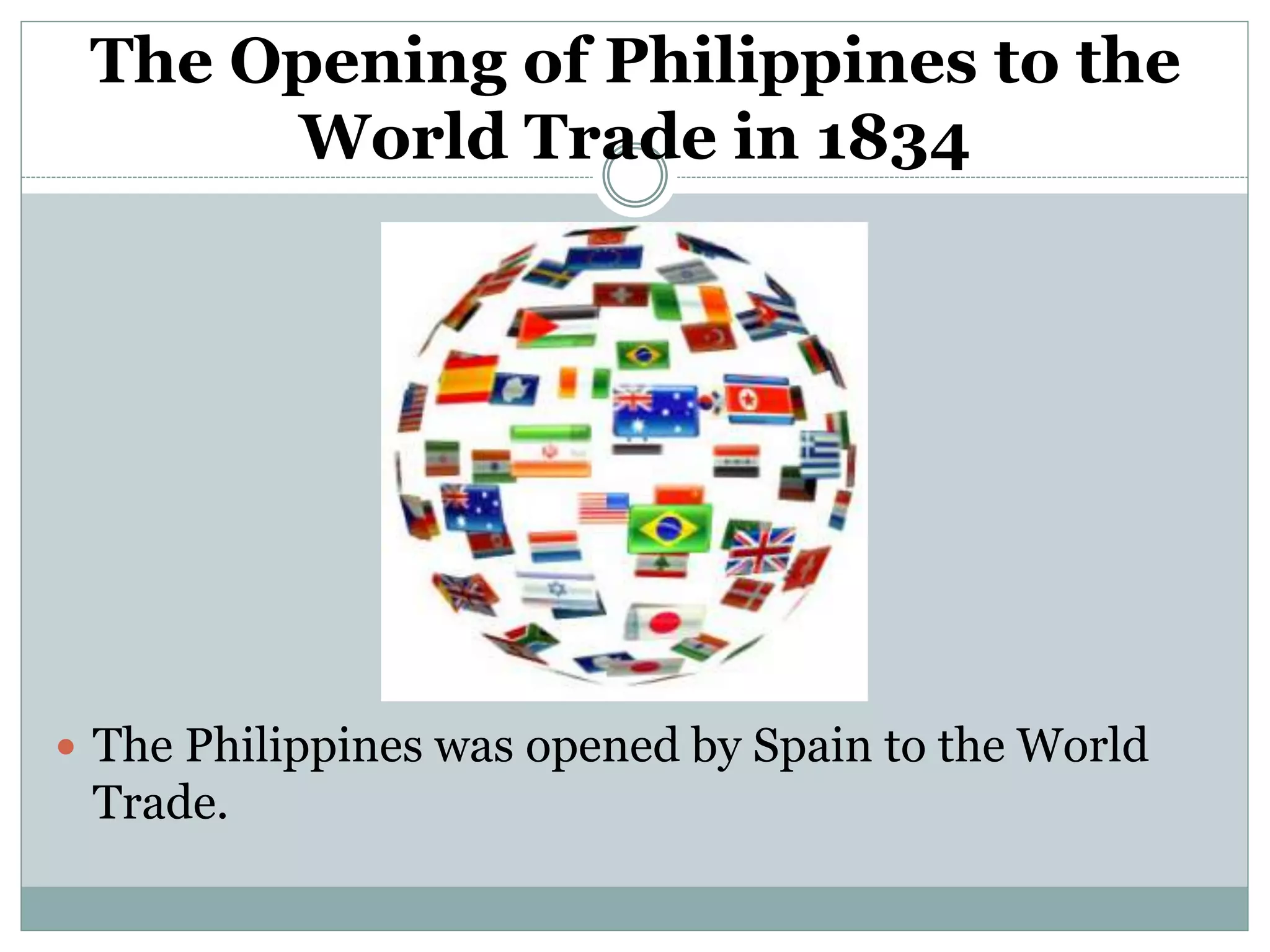
The Opening of Philippines to the
World Trade in 1834
 The Philippines was opened by Spain to the World
Trade.
The Influx of liberal ideas from Europe
 Liberal ideas contained in books and
newspaper, shipped from Europe and
America.
 It also contained the thoughts of different
political philosophers.
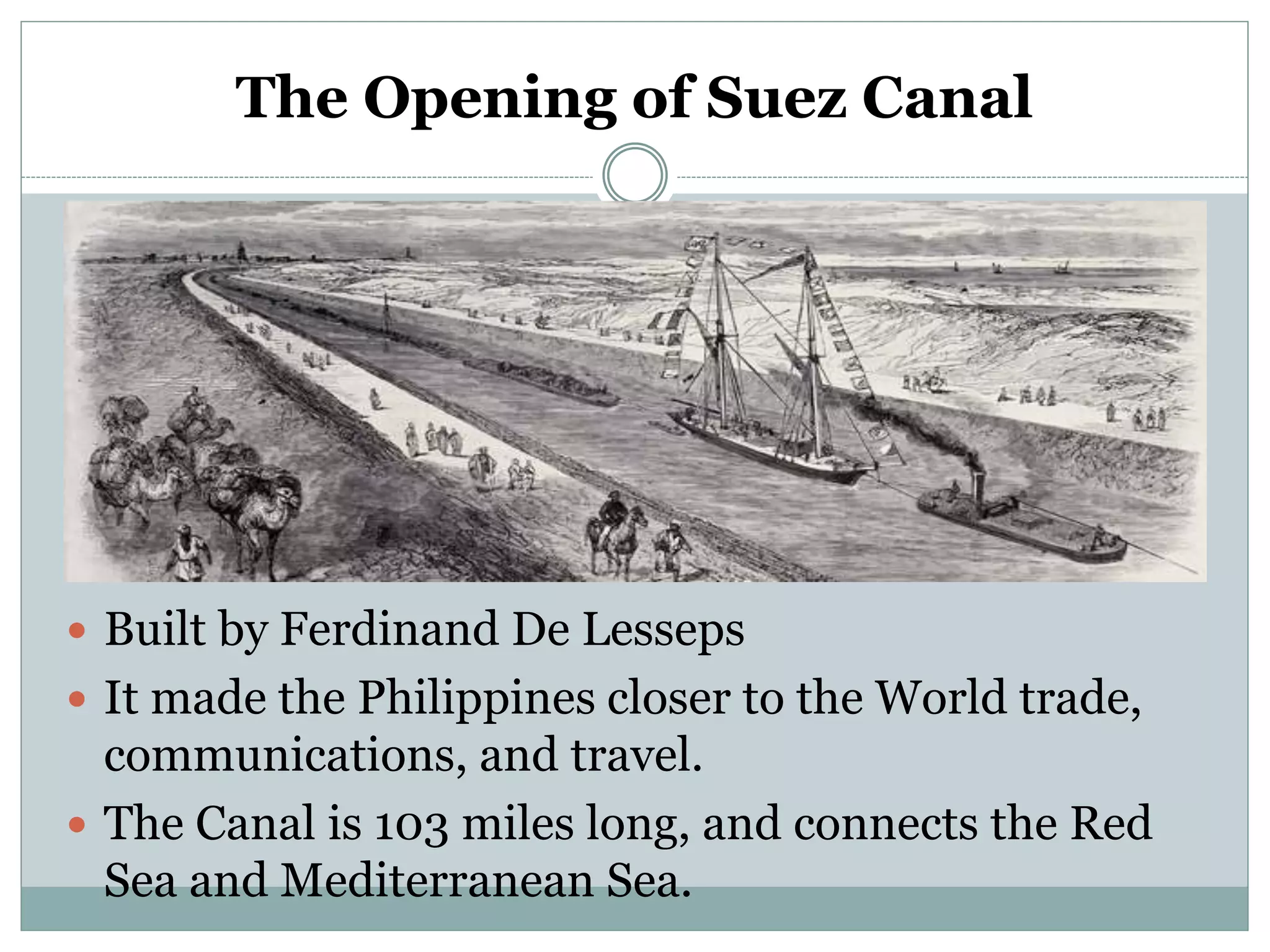
The Opening of Suez Canal
 Built by Ferdinand De Lesseps
 It made the Philippines closer to the World trade,
communications, and travel.
 The Canal is 103 miles long, and connects the Red
Sea and Mediterranean Sea.
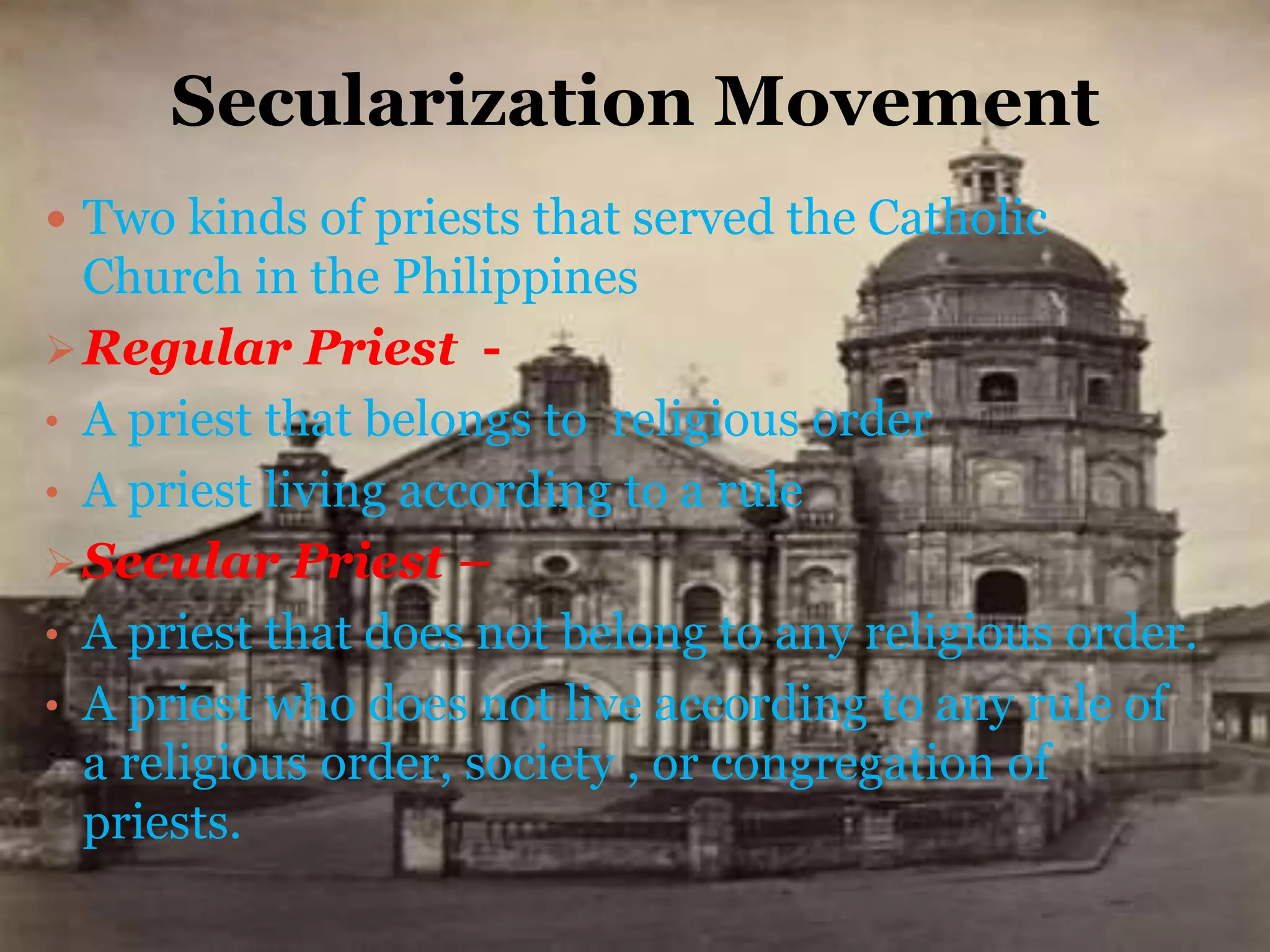
Secularization Movement
 Two kinds of priests that served the Catholic
Church in the Philippines
Regular Priest -
• A priest that belongs to religious order
• A priest living according to a rule
Secular Priest –
• A priest that does not belong to any religious order.
• A priest who does not live according to any rule of
a religious order, society , or congregation of
priests.
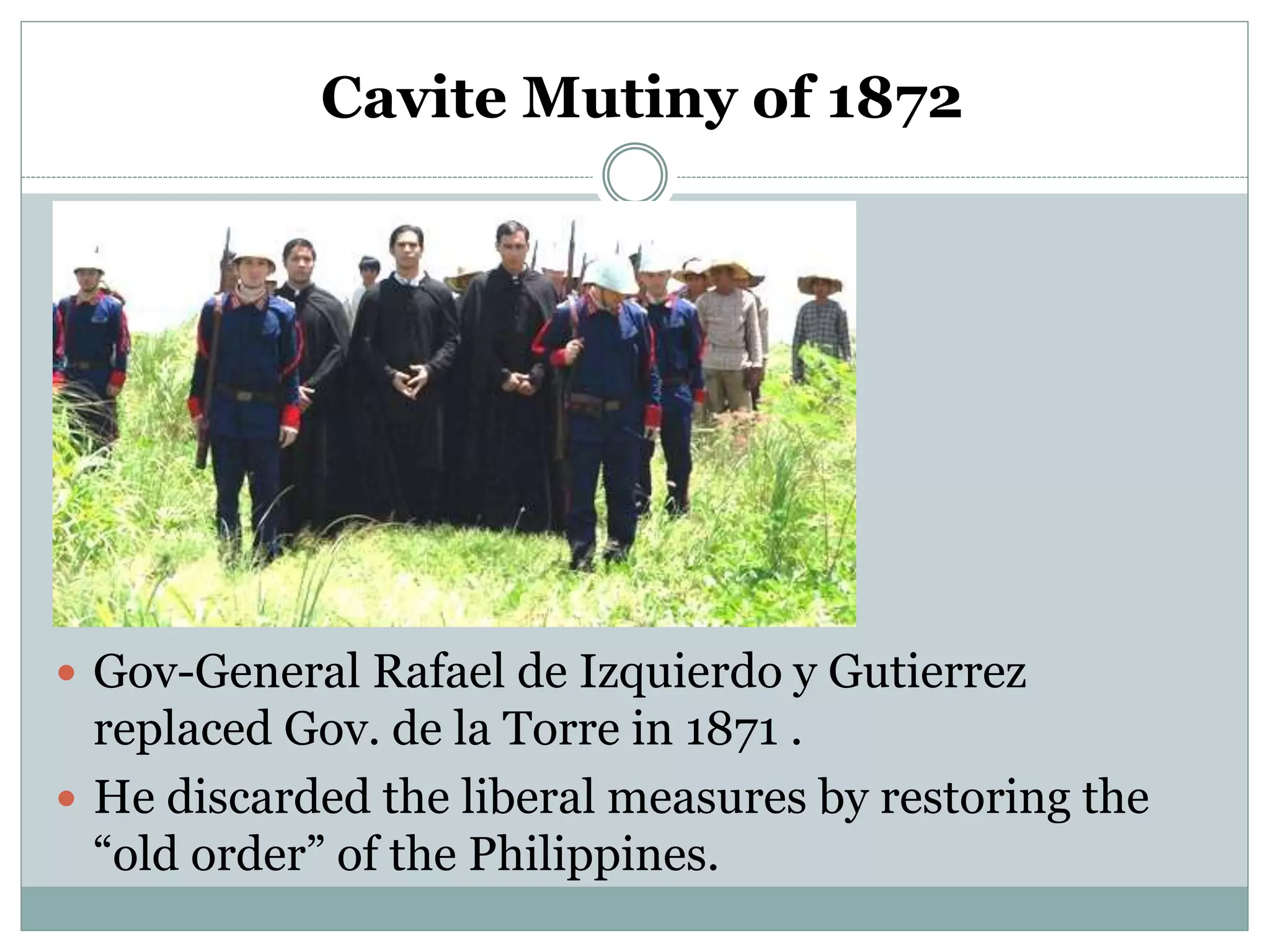
Cavite Mutiny of 1872
 Gov-General Rafael de Izquierdo y Gutierrez
replaced Gov. de la Torre in 1871 .
 He discarded the liberal measures by restoring the
“old order” of the Philippines.
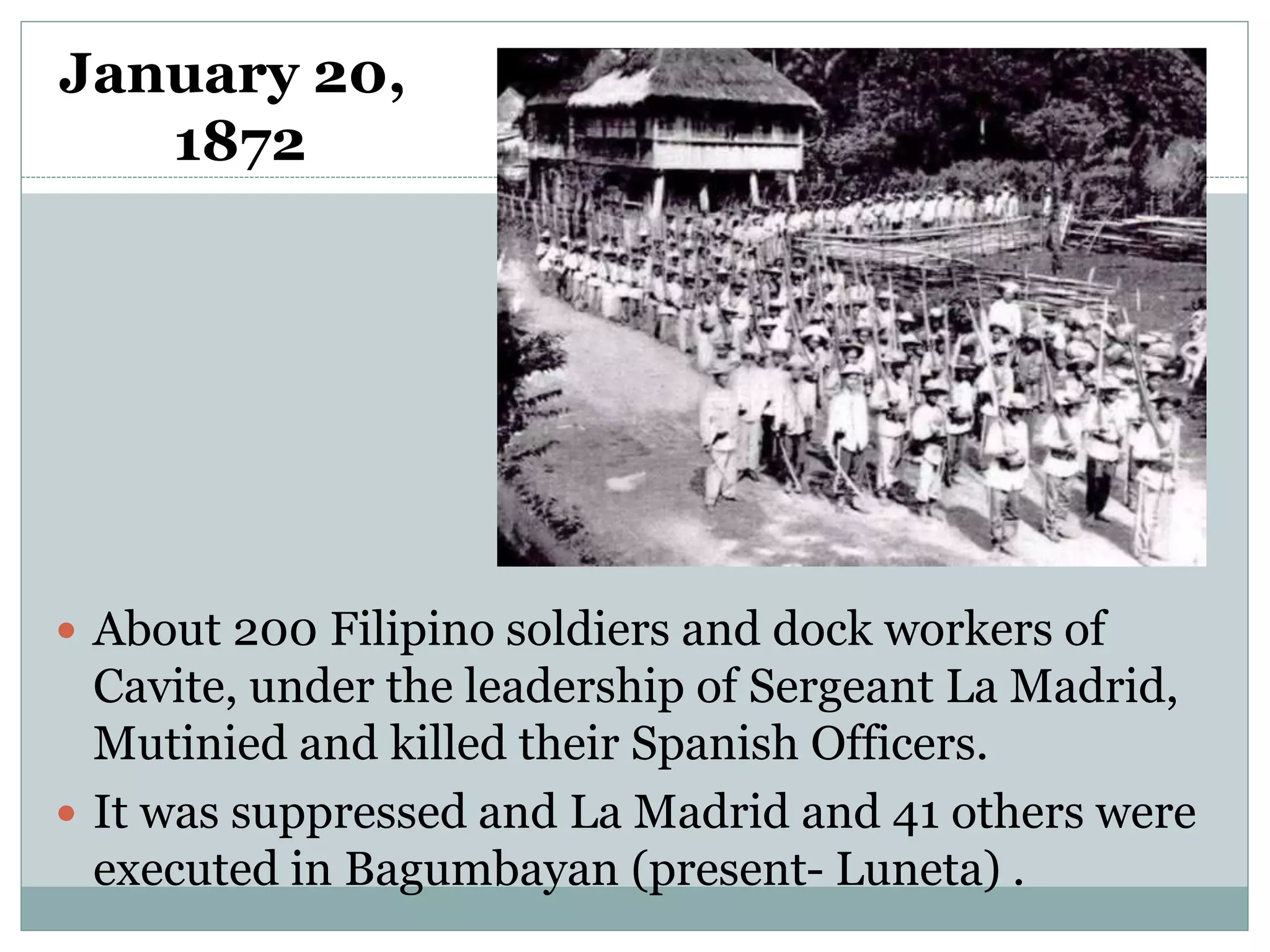
January 20,
1872
 About 200 Filipino soldiers and dock workers of
Cavite, under the leadership of Sergeant La Madrid,
Mutinied and killed their Spanish Officers.
 It was suppressed and La Madrid and 41 others were
executed in Bagumbayan (present- Luneta) .
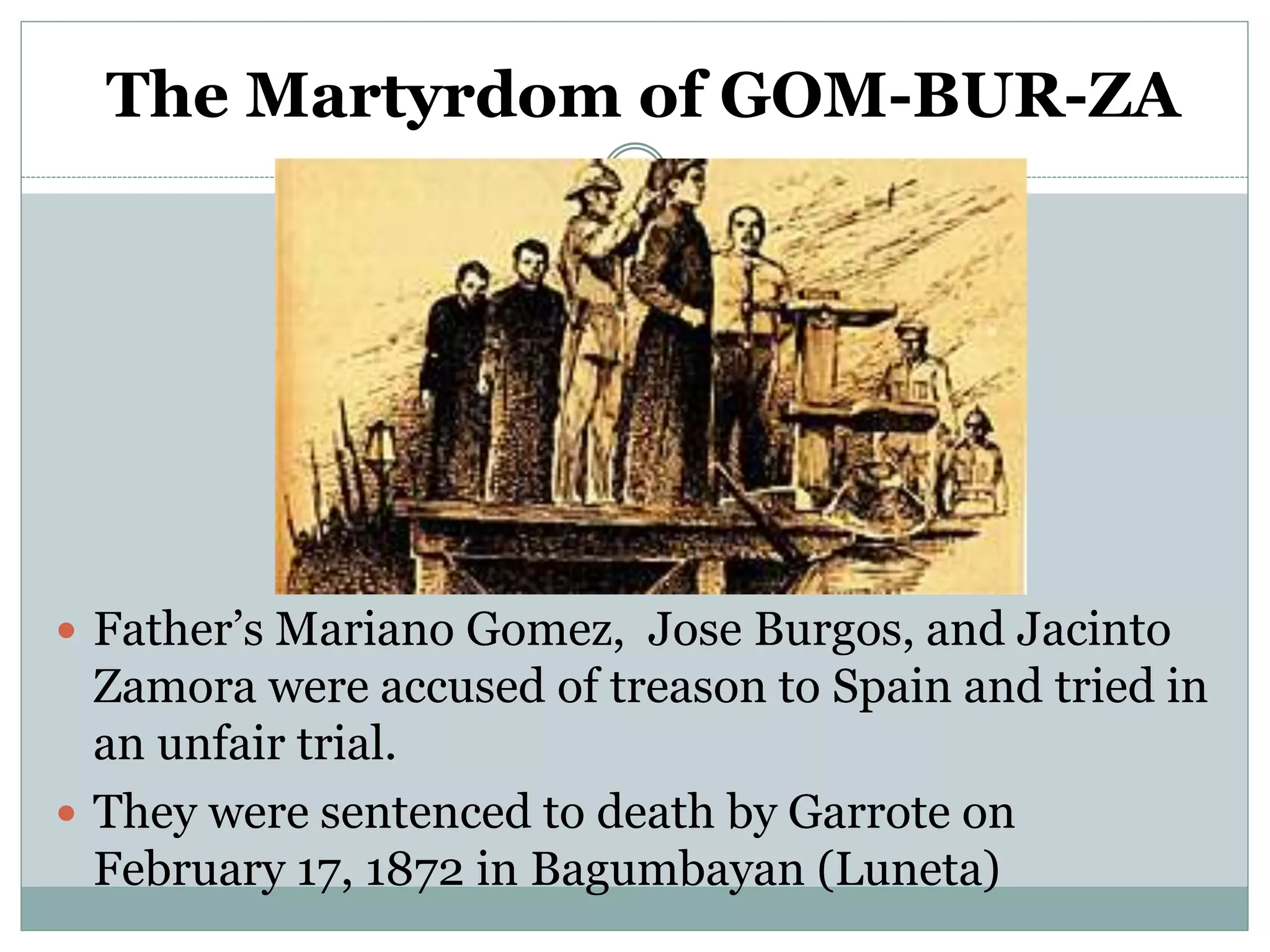
The Martyrdom of GOM-BUR-ZA
 Father’s Mariano Gomez, Jose Burgos, and Jacinto
Zamora were accused of treason to Spain and tried in
an unfair trial.
 They were sentenced to death by Garrote on
February 17, 1872 in Bagumbayan (Luneta)
 The Filipino people deeply resented the
unjust execution of GOM-BUR-ZA
 Father’s Gomez, Burgos, and Zamora was
acclaimed to be the true Martyr’s of their
Fatherland.
 The execution of GOMBURZA speed up the
development of Philippine Nationalism.
The demanded reforms were:
1. Equality of Filipinos and Spaniards before
the law;
2. Assimilation of the Philippines as a regular
province of Spain;
3. Restoration of the Philippine
representation in the Spanish Cortes (the
Parliament);
4. Filipinazation of Parishes;
5. Human Rights for Filipinos.
The
Leading
Propagandists
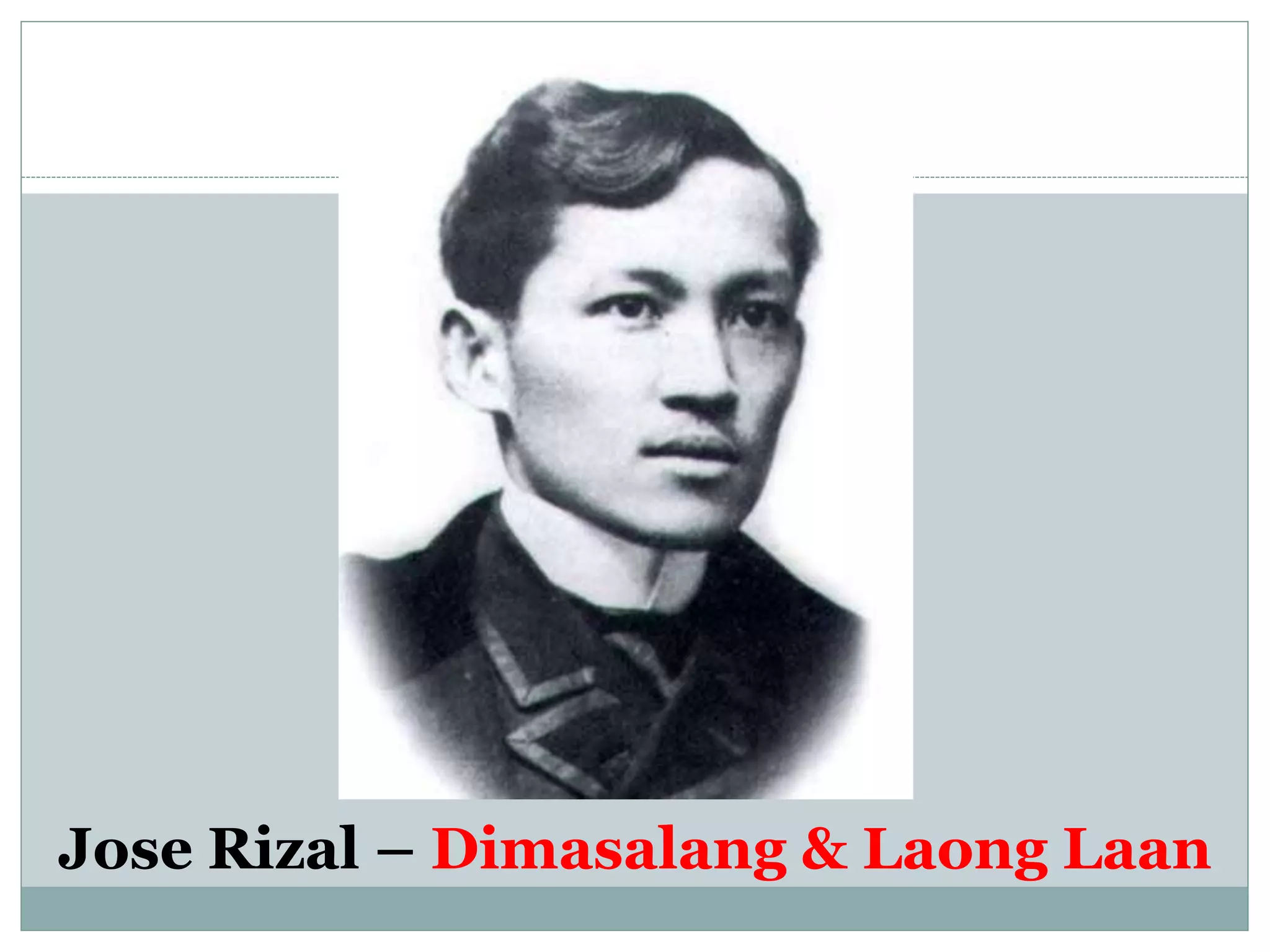
Jose Rizal – Dimasalang & Laong Laan
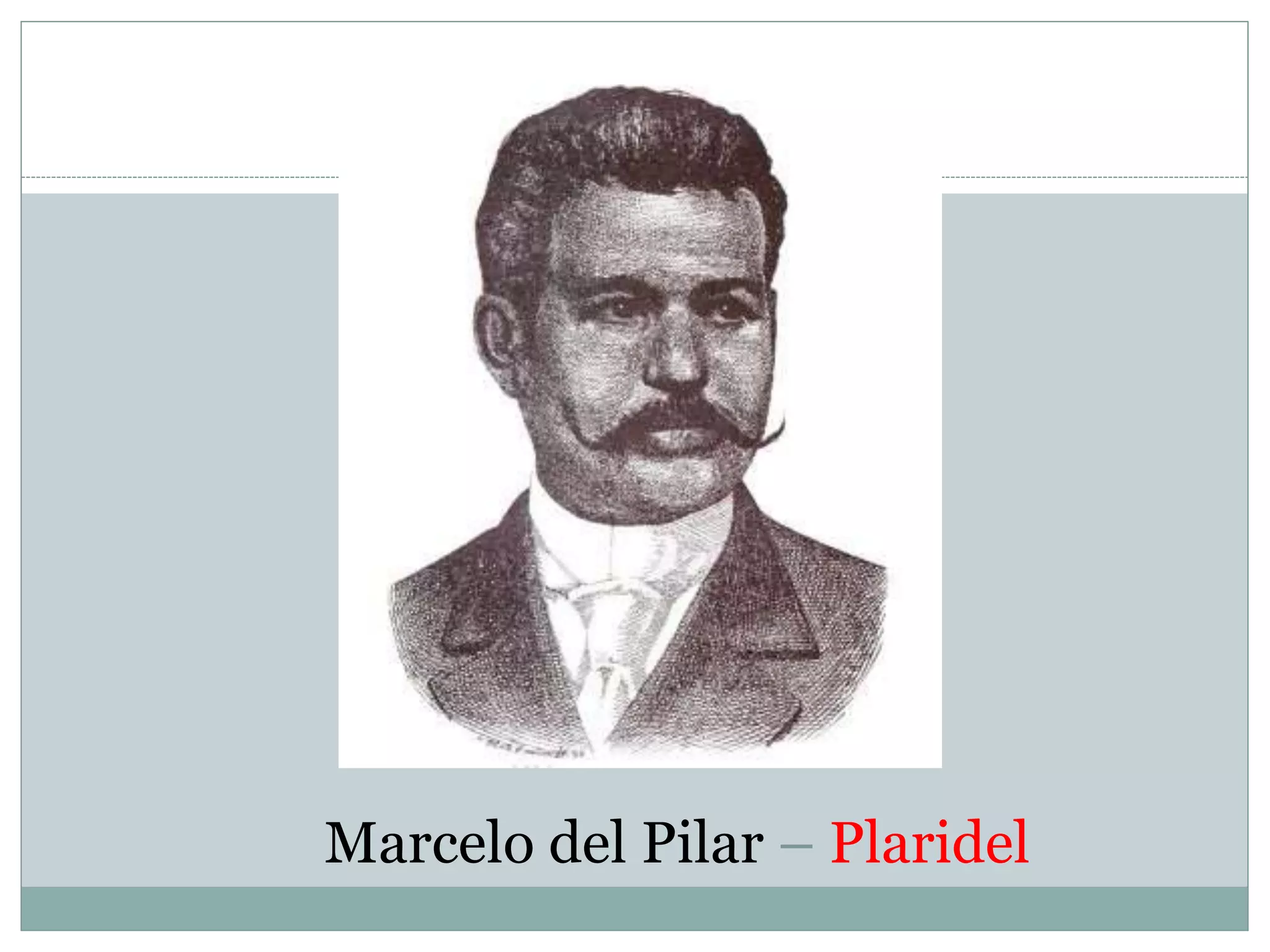
Marcelo del Pilar – Plaridel
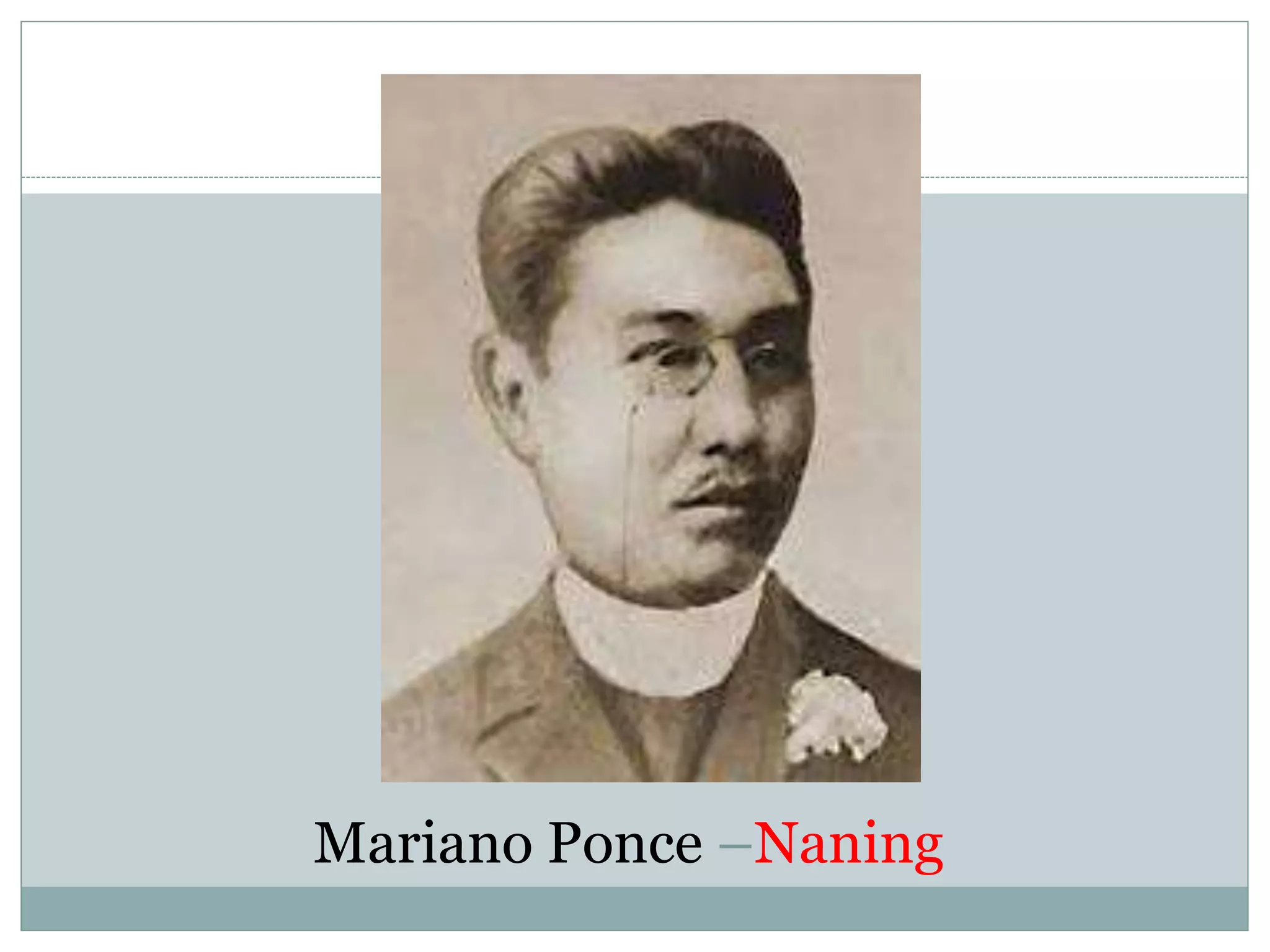
Mariano Ponce –Naning
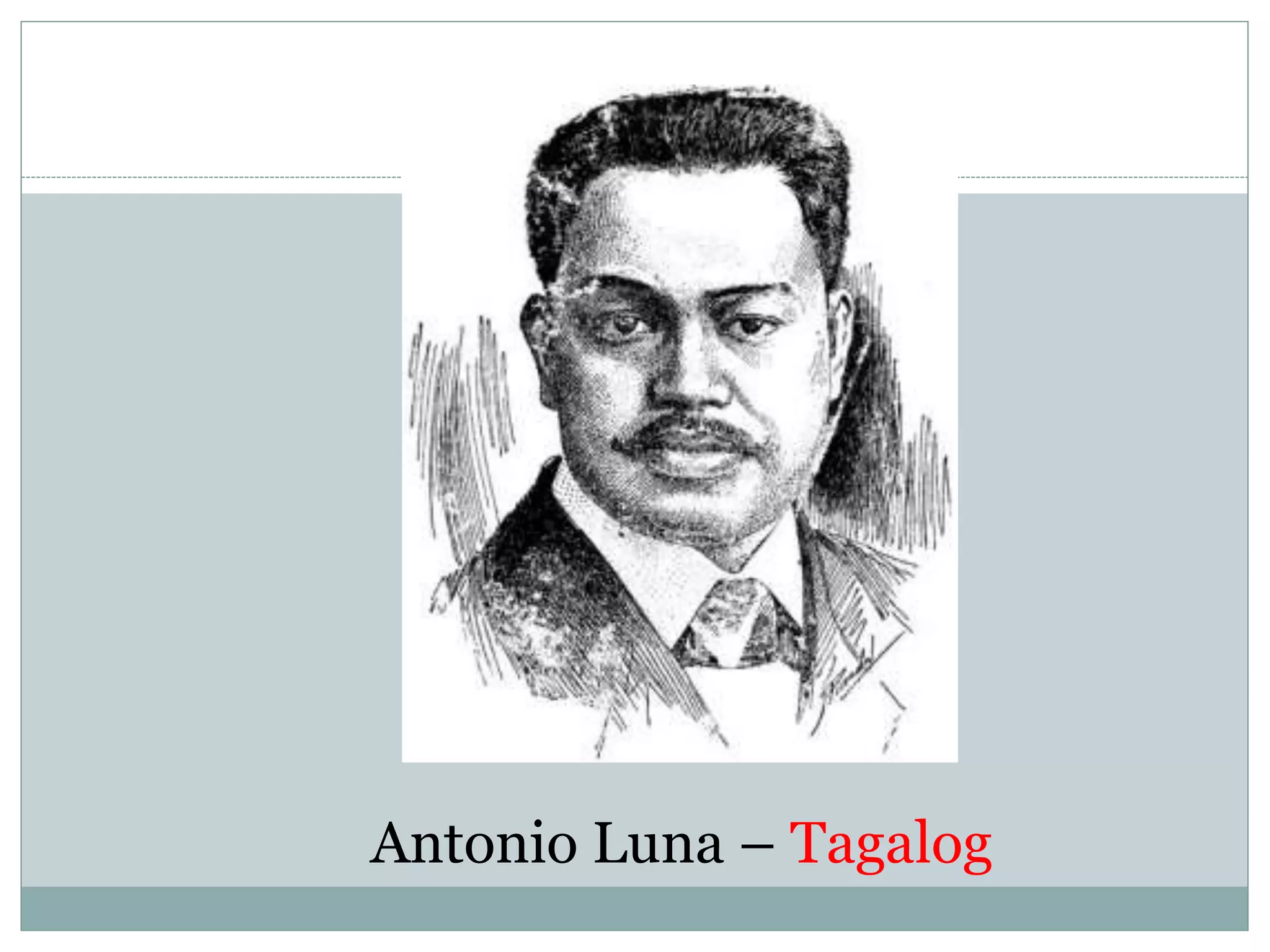
Antonio Luna – Tagalog
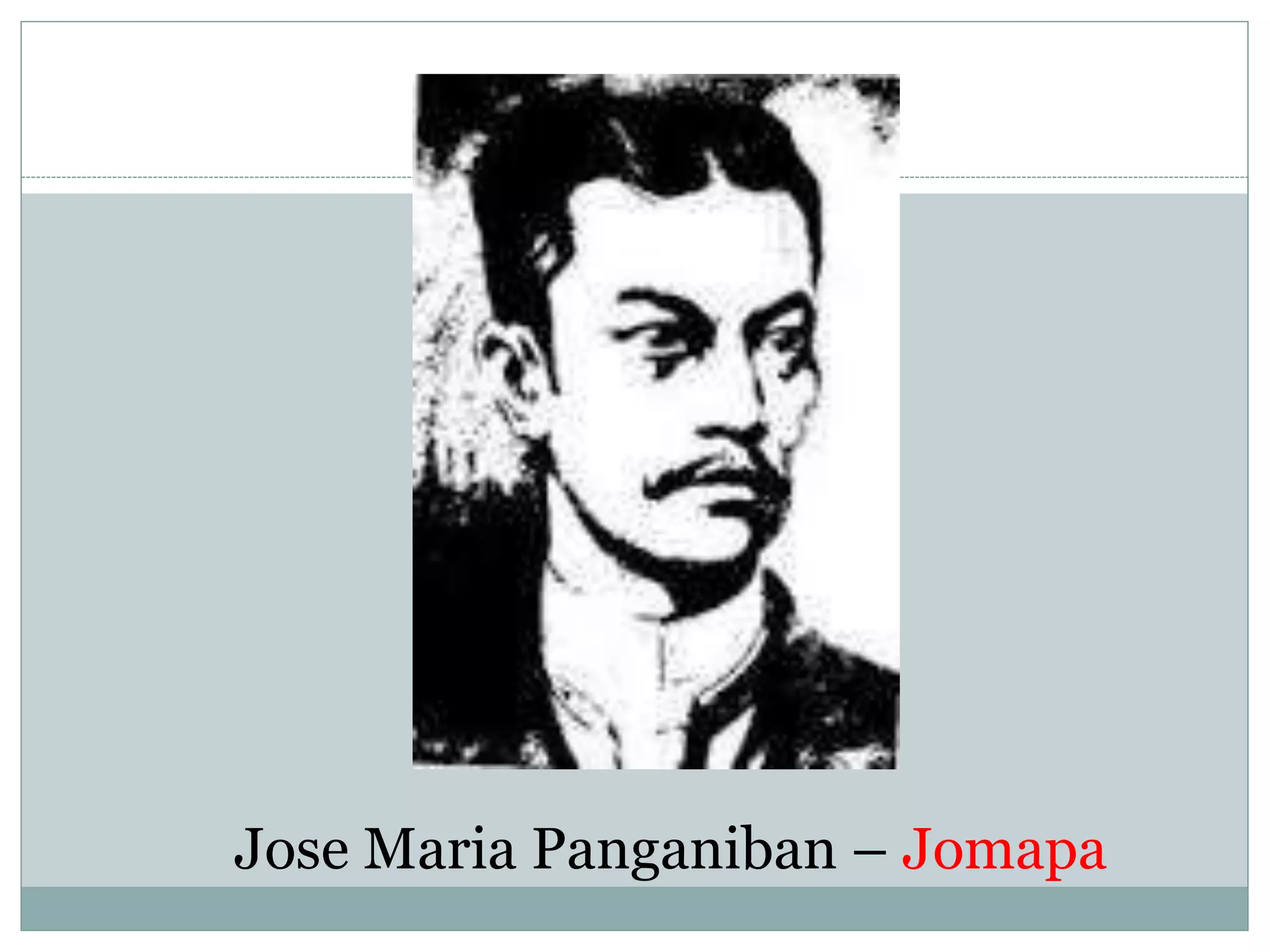
Jose Maria Panganiban – Jomapa
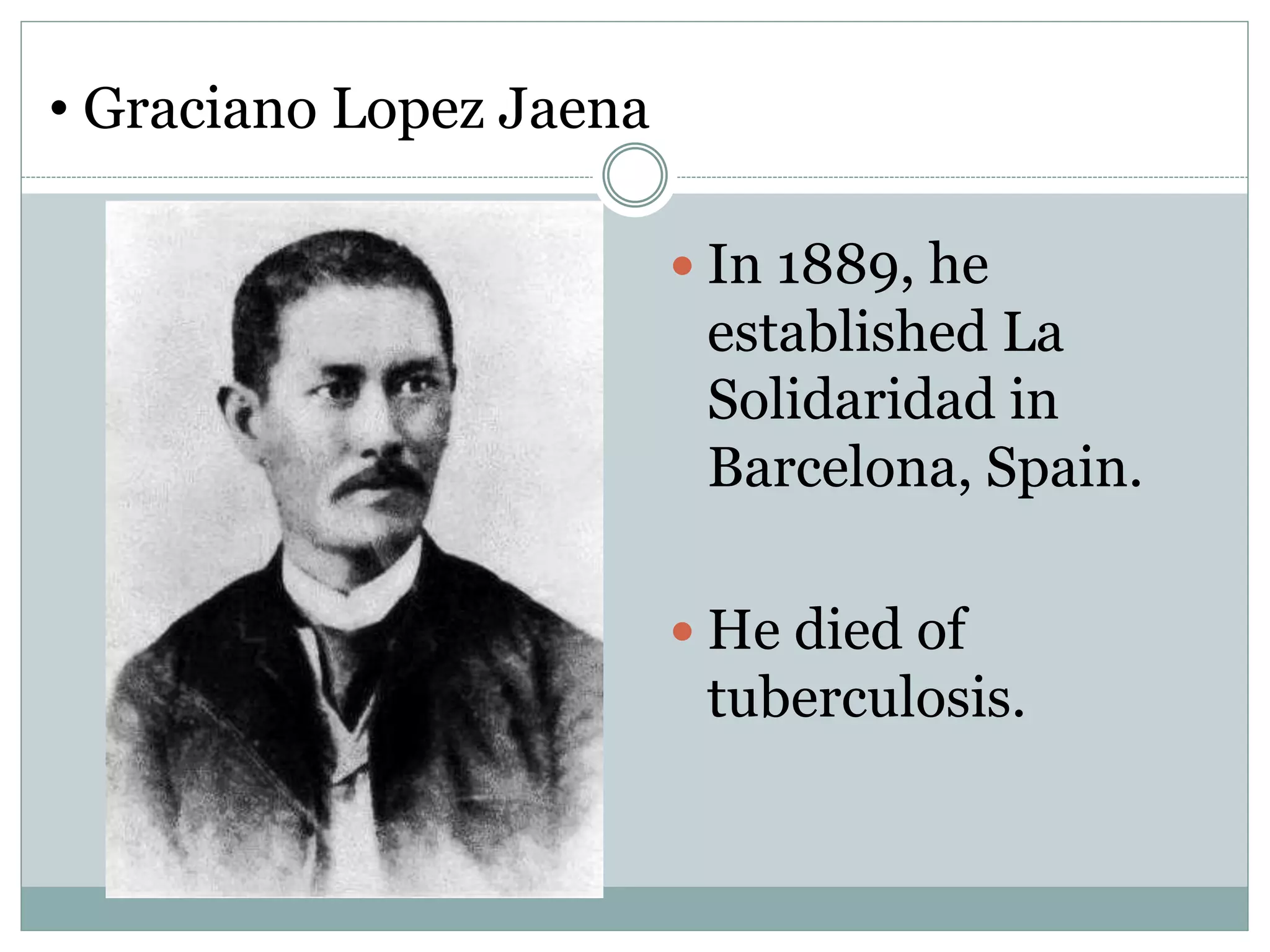
• Graciano Lopez Jaena
 In 1889, he
established La
Solidaridad in
Barcelona, Spain.
 He died of
tuberculosis.
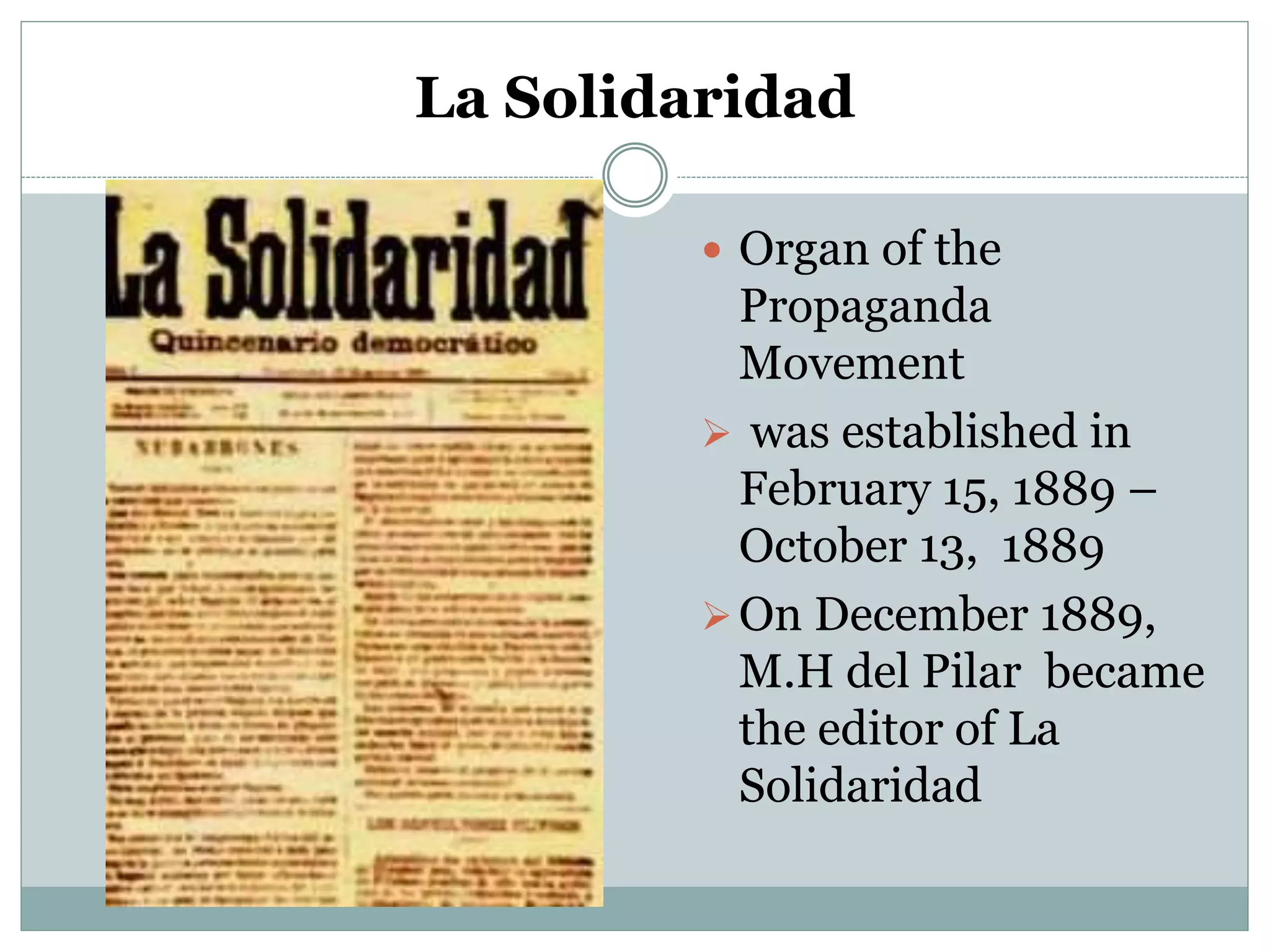
La Solidaridad
 Organ of the
Propaganda
Movement
 was established in
February 15, 1889 –
October 13, 1889
On December 1889,
M.H del Pilar became
the editor of La
Solidaridad
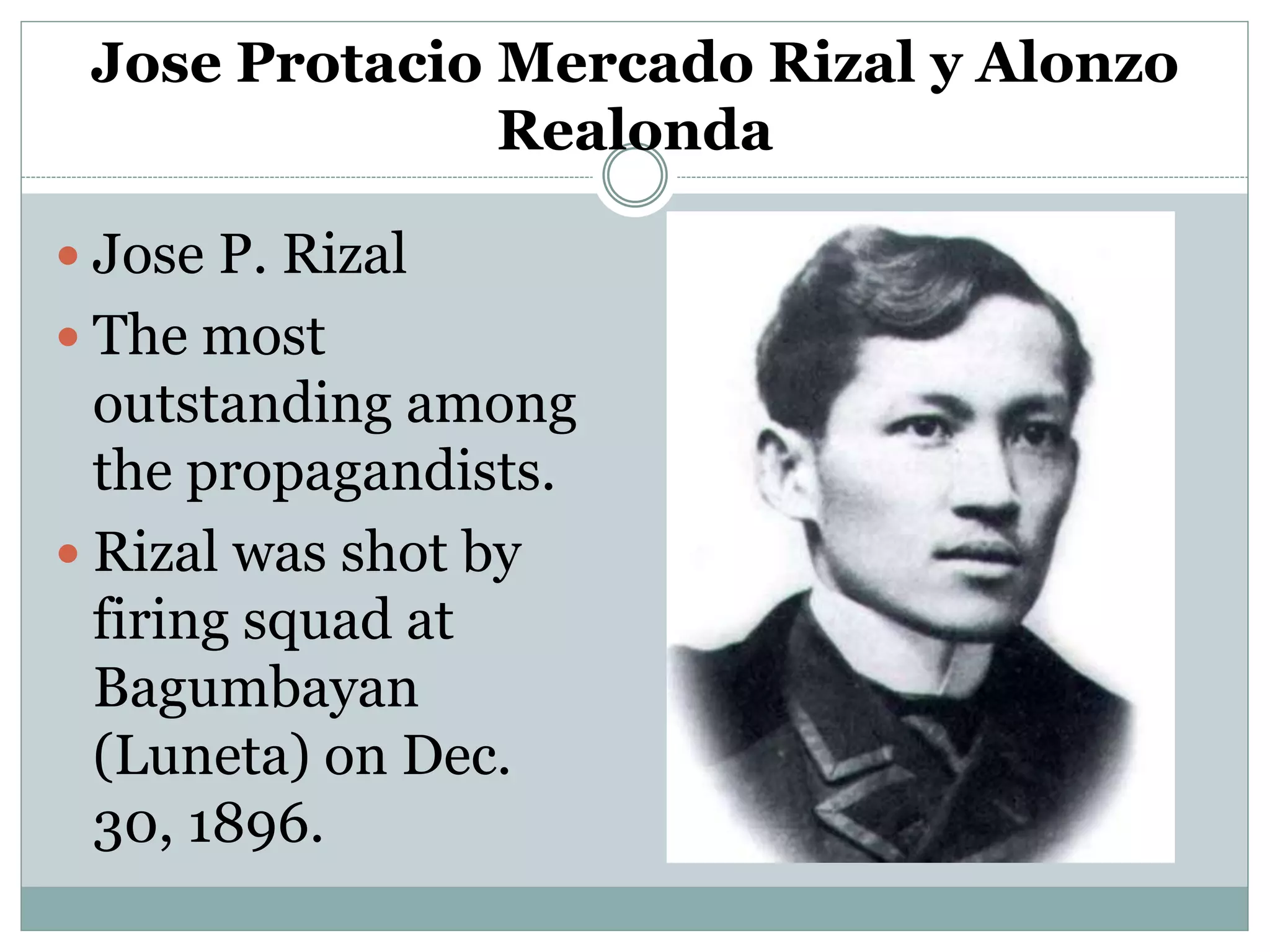
Jose Protacio Mercado Rizal y Alonzo
Realonda
 Jose P. Rizal
 The most
outstanding among
the propagandists.
 Rizal was shot by
firing squad at
Bagumbayan
(Luneta) on Dec.
30, 1896.
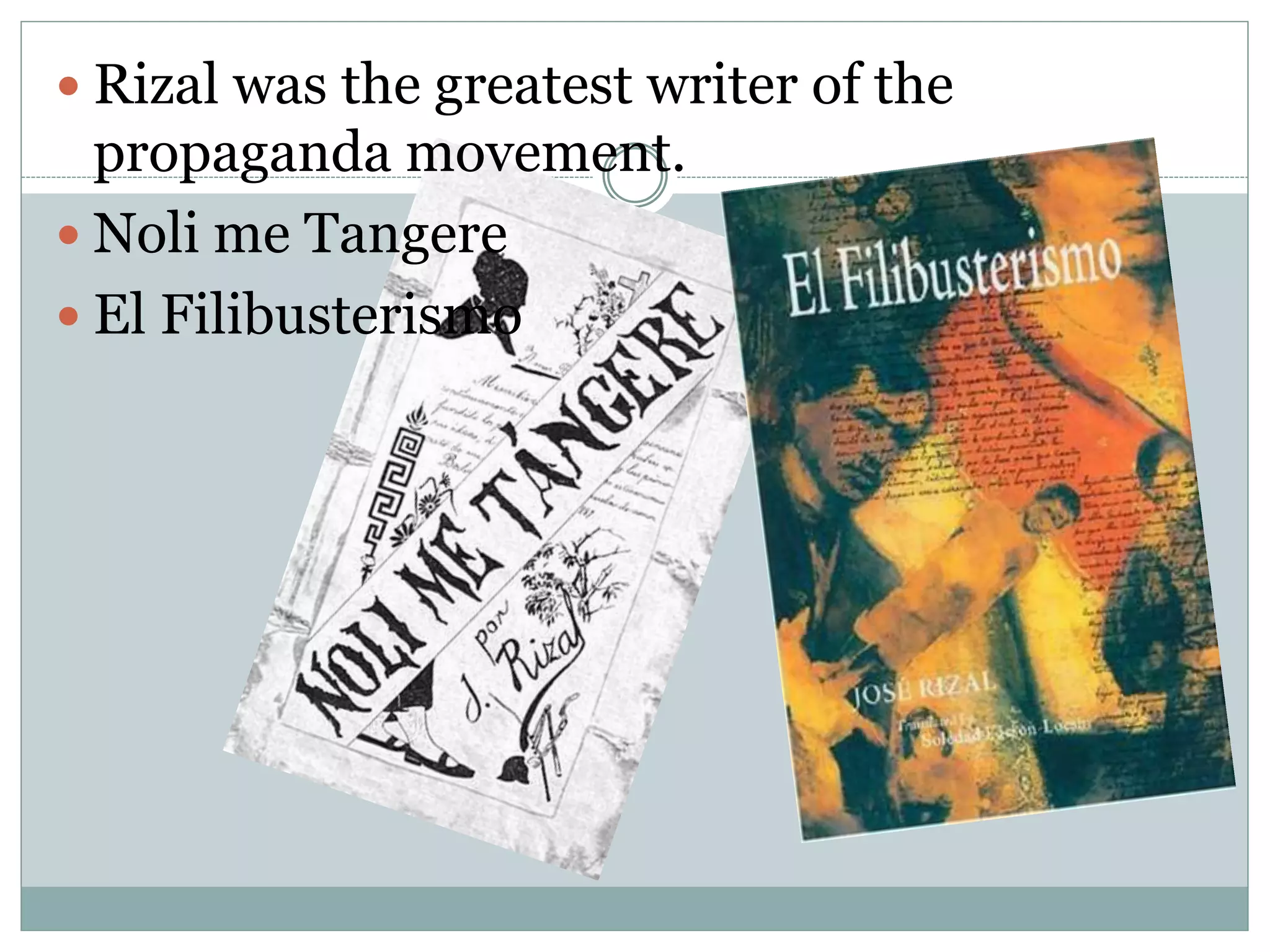
 Rizal was the greatest writer of the
propaganda movement.
 Noli me Tangere
 El Filibusterismo
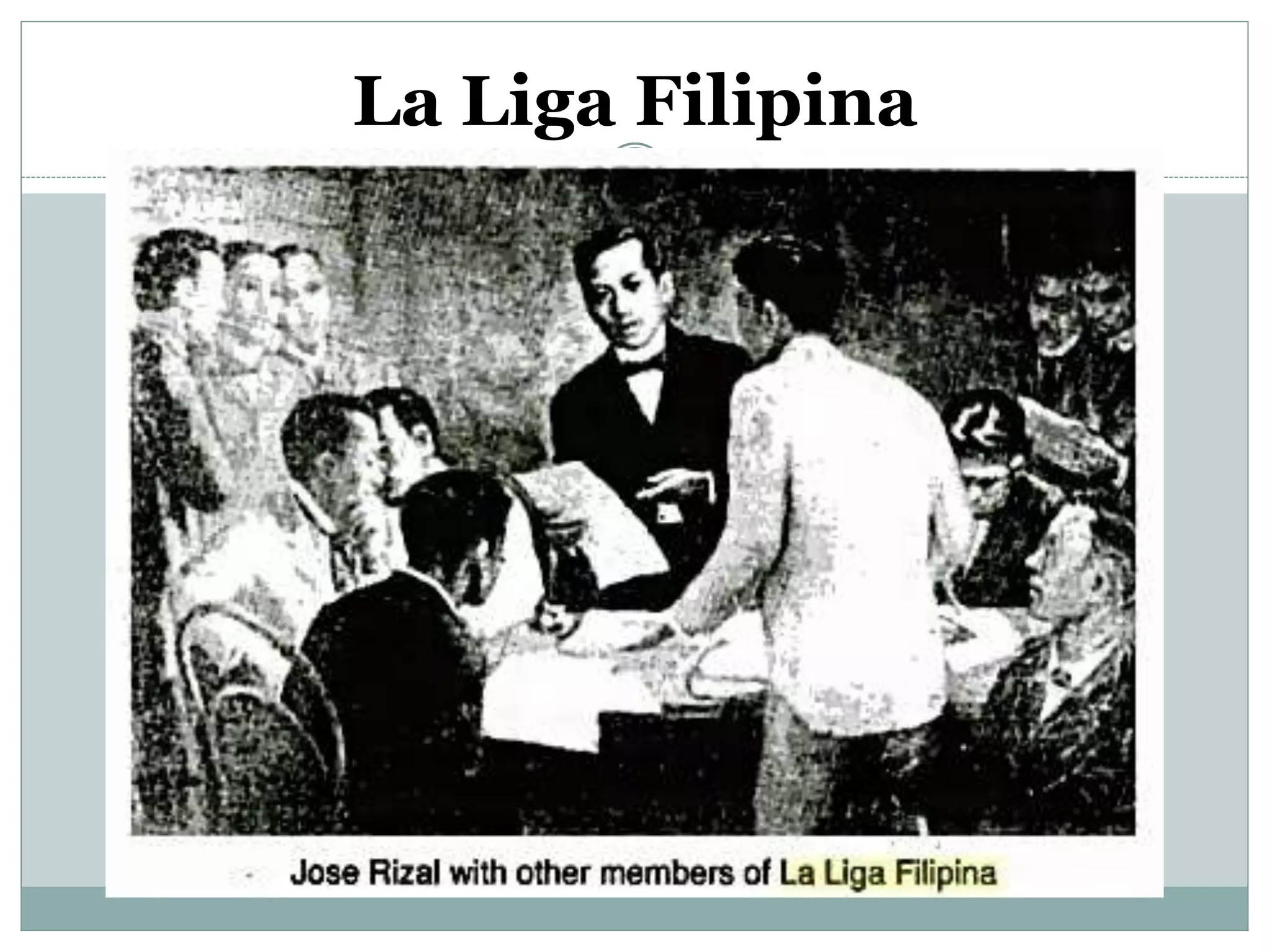
La Liga Filipina
 In 1892, Jose Rizal returned to the
Philippines and proposed the establishment
of an organization called “La Liga Filipina.”
On July 3, 1892, the following were elected
as its officers:
 Ambrosio Salvador as president:
Agustin dela Rosa, fiscal; Bonifacio Arevalo,
as treasurer;
and Deodato Arellano, as secretary.
Rizal as its adviser.
 “La Liga Filipina” aimed to:
1. Unite the whole country
2. Fight Violence and Injustice
3. Support Education, and implement reforms
 “La Liga Filipina” had no intention of rising
up in arms against the Spanish Government,
but the Spanish Officials still felt threatened.
 On July 6, 1892, Jose Rizal was arrested and
was deported to Dapitan, where he would stay
until 1896, shortly before the outbreak of the
revolution
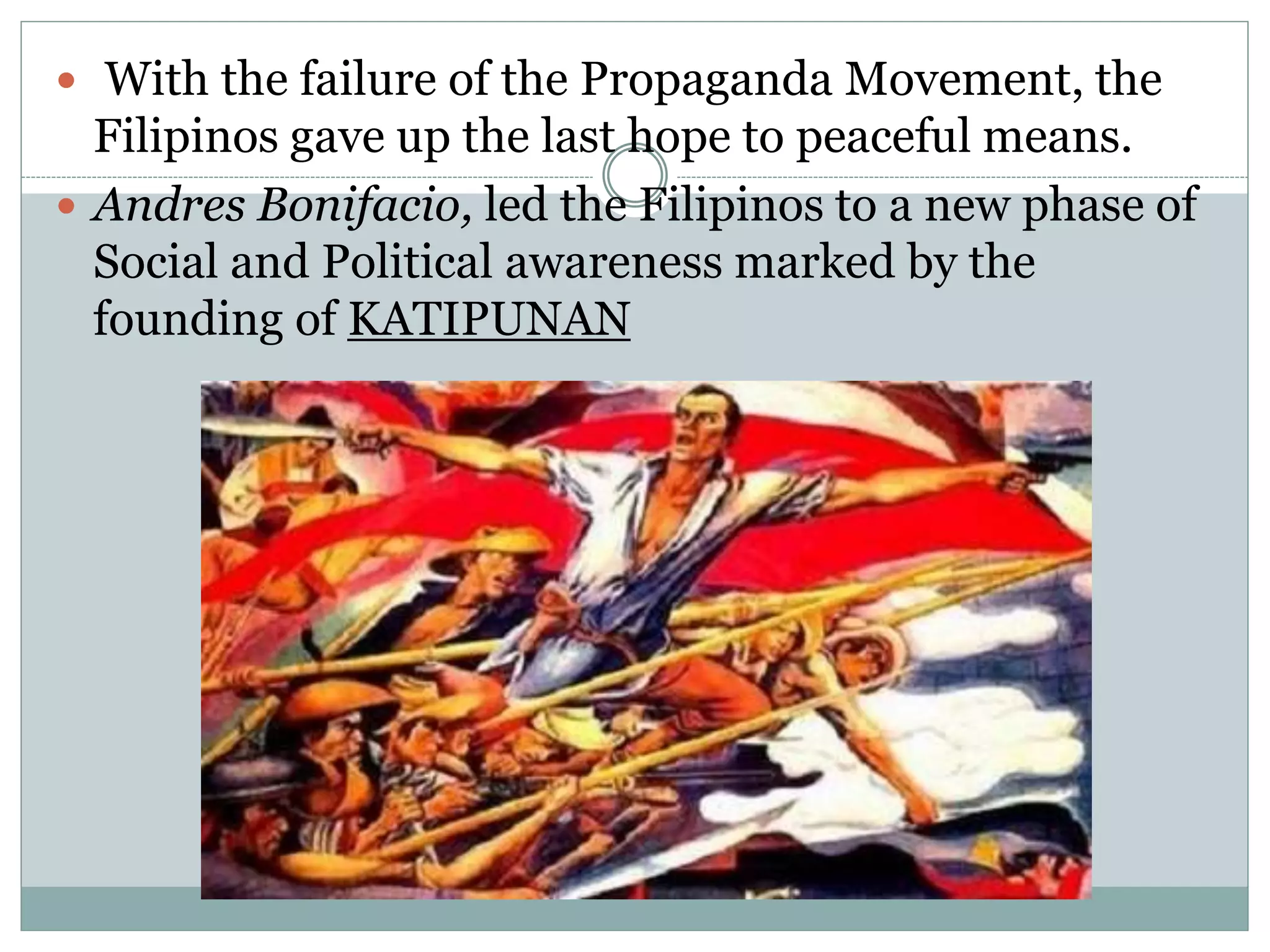
 With the failure of the Propaganda Movement, the
Filipinos gave up the last hope to peaceful means.
 Andres Bonifacio, led the Filipinos to a new phase of
Social and Political awareness marked by the
founding of KATIPUNAN

Development of Philippine Nationalism

  • 1.
  • 2.
  • 3.
    The Desire toregain our lost Freedom
  • 4.
    • The SpanishAbuses/Oppression
  • 5.
    The loss ofFilipino Lands.
  • 6.
    Two reasons whythe revolts against the Spain failed: Absence of Nationalism. Lack of National Leaders.
  • 7.
    Nationalism Love of Country. Peopleof the nation become united and work together for common aims. Devotion to one’s country or fighting for it’s independence.
  • 8.
     In the19th Century, Philippine Nationalism was born.  People of a Nation become united and work together for common aims.  They wanted to be independent of Spain.
  • 9.
    Liberalism from Europe Origins of 19th Century Liberalism The word was first used when the term was adopted by the Spanish political party, the Liberales, in 1812. 1868-1870- the revolt in Spain, which had deposed Isabella II, succeeded in establishing a Provisional Republic, which for about two years put liberalism in control. General Carlos Maria de la Torre, a fierce liberal, brought liberalism in the Philippines and was appointed to be the Governor-General.
  • 10.
    Factors that contributedto the birth of Philippine Nationalism
  • 11.
    Mexico  In 1821,Spain has lost their precious trade jewel in the Pacific, Mexico.  A revolution erupted and independence was declared.  The Viceroyalty of New Spain (Mexico) was the first and largest provider of resources for the Spanish Empire.
  • 12.
    The Opening ofPhilippines to the World Trade in 1834  The Philippines was opened by Spain to the World Trade.
  • 13.
    The Influx ofliberal ideas from Europe  Liberal ideas contained in books and newspaper, shipped from Europe and America.  It also contained the thoughts of different political philosophers.
  • 14.
    The Opening ofSuez Canal  Built by Ferdinand De Lesseps  It made the Philippines closer to the World trade, communications, and travel.  The Canal is 103 miles long, and connects the Red Sea and Mediterranean Sea.
  • 15.
    Secularization Movement  Twokinds of priests that served the Catholic Church in the Philippines Regular Priest - • A priest that belongs to religious order • A priest living according to a rule Secular Priest – • A priest that does not belong to any religious order. • A priest who does not live according to any rule of a religious order, society , or congregation of priests.
  • 16.
    Cavite Mutiny of1872  Gov-General Rafael de Izquierdo y Gutierrez replaced Gov. de la Torre in 1871 .  He discarded the liberal measures by restoring the “old order” of the Philippines.
  • 17.
    January 20, 1872  About200 Filipino soldiers and dock workers of Cavite, under the leadership of Sergeant La Madrid, Mutinied and killed their Spanish Officers.  It was suppressed and La Madrid and 41 others were executed in Bagumbayan (present- Luneta) .
  • 18.
    The Martyrdom ofGOM-BUR-ZA  Father’s Mariano Gomez, Jose Burgos, and Jacinto Zamora were accused of treason to Spain and tried in an unfair trial.  They were sentenced to death by Garrote on February 17, 1872 in Bagumbayan (Luneta)
  • 19.
     The Filipinopeople deeply resented the unjust execution of GOM-BUR-ZA  Father’s Gomez, Burgos, and Zamora was acclaimed to be the true Martyr’s of their Fatherland.  The execution of GOMBURZA speed up the development of Philippine Nationalism.
  • 21.
    The demanded reformswere: 1. Equality of Filipinos and Spaniards before the law; 2. Assimilation of the Philippines as a regular province of Spain; 3. Restoration of the Philippine representation in the Spanish Cortes (the Parliament); 4. Filipinazation of Parishes; 5. Human Rights for Filipinos.
  • 22.
  • 23.
    Jose Rizal –Dimasalang & Laong Laan
  • 24.
    Marcelo del Pilar– Plaridel
  • 25.
  • 26.
  • 27.
  • 28.
    • Graciano LopezJaena  In 1889, he established La Solidaridad in Barcelona, Spain.  He died of tuberculosis.
  • 29.
    La Solidaridad  Organof the Propaganda Movement  was established in February 15, 1889 – October 13, 1889 On December 1889, M.H del Pilar became the editor of La Solidaridad
  • 30.
    Jose Protacio MercadoRizal y Alonzo Realonda  Jose P. Rizal  The most outstanding among the propagandists.  Rizal was shot by firing squad at Bagumbayan (Luneta) on Dec. 30, 1896.
  • 31.
     Rizal wasthe greatest writer of the propaganda movement.  Noli me Tangere  El Filibusterismo
  • 32.
  • 33.
     In 1892,Jose Rizal returned to the Philippines and proposed the establishment of an organization called “La Liga Filipina.” On July 3, 1892, the following were elected as its officers:  Ambrosio Salvador as president: Agustin dela Rosa, fiscal; Bonifacio Arevalo, as treasurer; and Deodato Arellano, as secretary. Rizal as its adviser.
  • 34.
     “La LigaFilipina” aimed to: 1. Unite the whole country 2. Fight Violence and Injustice 3. Support Education, and implement reforms  “La Liga Filipina” had no intention of rising up in arms against the Spanish Government, but the Spanish Officials still felt threatened.  On July 6, 1892, Jose Rizal was arrested and was deported to Dapitan, where he would stay until 1896, shortly before the outbreak of the revolution
  • 35.
     With thefailure of the Propaganda Movement, the Filipinos gave up the last hope to peaceful means.  Andres Bonifacio, led the Filipinos to a new phase of Social and Political awareness marked by the founding of KATIPUNAN