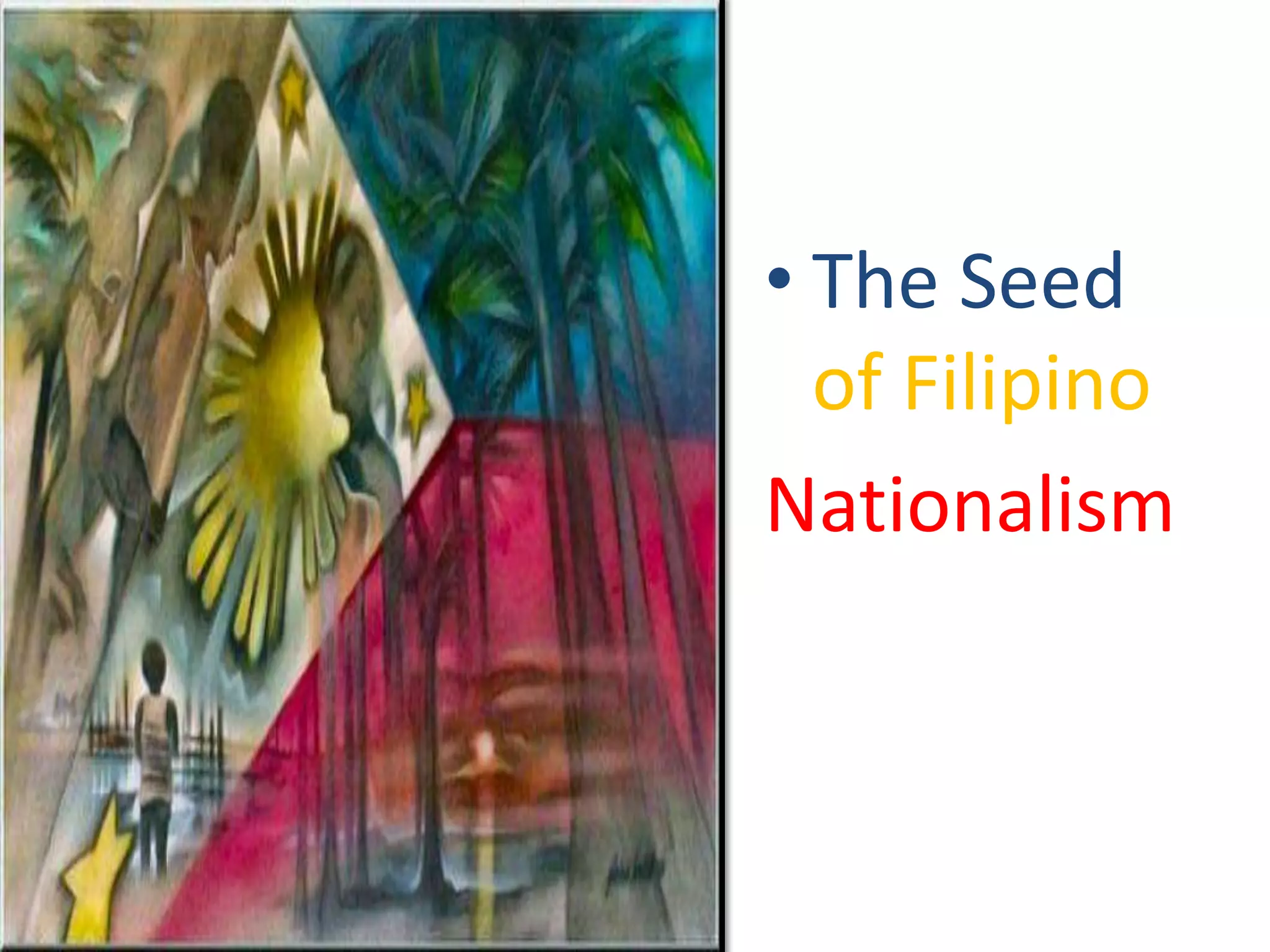
• The Seed
of Filipino
Nationalism
The Development of
Filipino Nationalism
Causes of Filipino Revolts
1. The desire to regain our lost
freedom.
2.The Spanish abuses/oppression.
3. Agrarian complaints or the loss of
the Filipino lands.
4. The Religious intolerance of the
Spanish authorities..
All Revolts, from Lakandula to
Apolinario Dela Cruz had failed.
There were two reasons why our
early revolts against Spain failed:
1.The Absence of Nationalism
2.Lack of National Leaders.
The Meaning of Nationalism
• Nationalism is simply love of country
with all its inhabitants.
• A state of awareness that a nation does
exist and is made of people who owe
allegiance not only to a tribe, clan, or
region nor to any religious or political
entity.
Factors that contributed to
the birth of Filipino
Nationalism:
1.The opening of the Philippines to the
international or world trade.
2. The Rise of the middle class.
3.The secularization controversy.
4.The influx of Liberal ideas from
Europe.
5. The Opening of the Suez Canal.
(Ferdinand De Lesseps)
7. The Martyrdom of Gomburza.
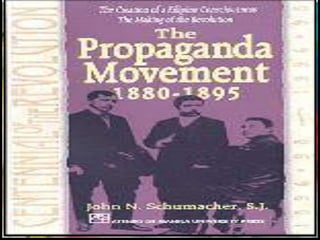
Propaganda Movement
The unjust execution of fathers
Mariano Gomez, Jose Burgos, and
Jacinto Zamora was a turning point
in the history of the Philippines.
It marked the beginning of
a new era as the propaganda period.
Propaganda Movement
A peaceful campaign
organization using literary
endeavor as mouthpiece to
publicize the political,
economic and religious
problems in the colony.
Among their specific goals
were:
>Representation of the
Philippines in the
Cortes(Spanish parliament).
>Secularization of the clergy;
>Legalization of Spanish and
Filipino equality;
>Creation of a public school
system independent of the
friars.
>Abolition of the polo(labor
service) and bandala (forced sale
of local products to the
government)
>Guarantee of basic freedom of
speech and association
>Equal opportunity for Filipinos
and Spaniards to enter
government service.
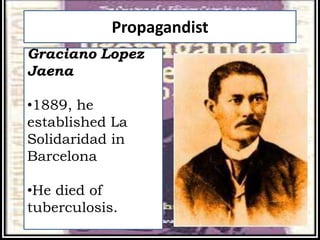
Propagandist
Graciano Lopez
Jaena
•1889, he
established La
Solidaridad in
Barcelona
•He died of
tuberculosis.
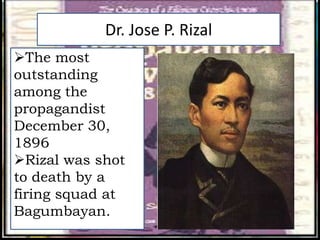
Dr. Jose P. Rizal
The most
outstanding
among the
propagandist
December 30,
1896
Rizal was shot
to death by a
firing squad at
Bagumbayan.
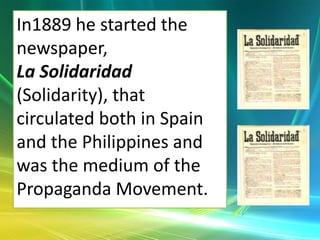
In1889 he started the
newspaper,
La Solidaridad
(Solidarity), that
circulated both in Spain
and the Philippines and
was the medium of the
Propaganda Movement.
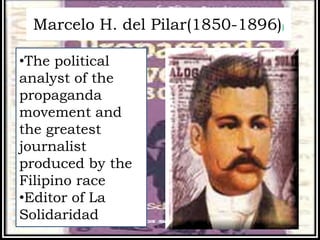
Marcelo H. del Pilar(1850-1896))
•The political
analyst of the
propaganda
movement and
the greatest
journalist
produced by the
Filipino race
•Editor of La
Solidaridad
Literatures of the Propaganda
Movement
• Marcelo H. del Pilar
• Diariong Tagalog, Caiingat Cayo, La
Frailocracia en Filipinas, Dasalan at Toksohan,
and La Sobrenia Monacal, dudas, Pasiong
Dapat Ipag-alab ng Taong Babasa, Dupluhan,
Sagot ng Espania sa Hibik ng Filipinas, and
Kadakilaan ng Diyos.
Graciano Lopez Jaena
• La Solidaridad, Fray Botod, Esperaza, and La
Hija del Fraile.
Jose Rizal
• Noli Me Tangere, El Filibusterismo, The
Indolence of the Filipinos, Philippines a
Century Hence, To the Filipino Youth, and Mi
Ultimo Adios. And the Organization of La Liga
Filipina.
Used pen names:
Rizal: Dimasalang and Laong Laan;
Mariano Ponce: Tikbalang, Naning
and Kalipulako;
Antonio Luna: Taga-ilog;
Marcelo H. del Pilar: Plaridel
Jose Ma. Panganiban: Jomapa
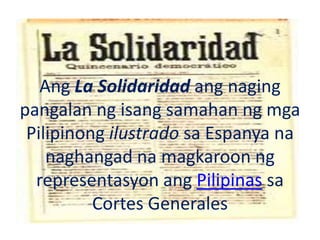
Ang La Solidaridad ang naging
pangalan ng isang samahan ng mga
Pilipinong ilustrado sa Espanya na
naghangad na magkaroon ng
representasyon ang Pilipinas sa
Cortes Generales
Reasons for the failure of the
Propaganda Movement
When the time came the financial
support from the Philippines gradually
lessened until finally it was put to an end;
Due to leadership crisis;
With the failure of the
Propaganda Movement,
the Filipinos gave up the
last ditch of hope to
peaceful means. Andres
Bonifacio led the Filipinos
to a new phase of social
and political awareness
marked by the founding of
Katipunan.

Development of Nationalism in the Philippines

  • 1.
    • The Seed ofFilipino Nationalism
  • 2.
  • 3.
    Causes of FilipinoRevolts 1. The desire to regain our lost freedom. 2.The Spanish abuses/oppression.
  • 4.
    3. Agrarian complaintsor the loss of the Filipino lands. 4. The Religious intolerance of the Spanish authorities..
  • 5.
    All Revolts, fromLakandula to Apolinario Dela Cruz had failed. There were two reasons why our early revolts against Spain failed:
  • 6.
    1.The Absence ofNationalism 2.Lack of National Leaders.
  • 7.
    The Meaning ofNationalism • Nationalism is simply love of country with all its inhabitants. • A state of awareness that a nation does exist and is made of people who owe allegiance not only to a tribe, clan, or region nor to any religious or political entity.
  • 8.
    Factors that contributedto the birth of Filipino Nationalism: 1.The opening of the Philippines to the international or world trade. 2. The Rise of the middle class. 3.The secularization controversy. 4.The influx of Liberal ideas from Europe.
  • 9.
    5. The Openingof the Suez Canal. (Ferdinand De Lesseps) 7. The Martyrdom of Gomburza.
  • 10.
    Propaganda Movement The unjustexecution of fathers Mariano Gomez, Jose Burgos, and Jacinto Zamora was a turning point in the history of the Philippines. It marked the beginning of a new era as the propaganda period.
  • 11.
    Propaganda Movement A peacefulcampaign organization using literary endeavor as mouthpiece to publicize the political, economic and religious problems in the colony.
  • 13.
    Among their specificgoals were: >Representation of the Philippines in the Cortes(Spanish parliament). >Secularization of the clergy;
  • 14.
    >Legalization of Spanishand Filipino equality; >Creation of a public school system independent of the friars.
  • 15.
    >Abolition of thepolo(labor service) and bandala (forced sale of local products to the government) >Guarantee of basic freedom of speech and association >Equal opportunity for Filipinos and Spaniards to enter government service.
  • 16.
    Propagandist Graciano Lopez Jaena •1889, he establishedLa Solidaridad in Barcelona •He died of tuberculosis.
  • 17.
    Dr. Jose P.Rizal The most outstanding among the propagandist December 30, 1896 Rizal was shot to death by a firing squad at Bagumbayan.
  • 18.
    In1889 he startedthe newspaper, La Solidaridad (Solidarity), that circulated both in Spain and the Philippines and was the medium of the Propaganda Movement.
  • 19.
    Marcelo H. delPilar(1850-1896)) •The political analyst of the propaganda movement and the greatest journalist produced by the Filipino race •Editor of La Solidaridad
  • 20.
    Literatures of thePropaganda Movement • Marcelo H. del Pilar • Diariong Tagalog, Caiingat Cayo, La Frailocracia en Filipinas, Dasalan at Toksohan, and La Sobrenia Monacal, dudas, Pasiong Dapat Ipag-alab ng Taong Babasa, Dupluhan, Sagot ng Espania sa Hibik ng Filipinas, and Kadakilaan ng Diyos.
  • 21.
    Graciano Lopez Jaena •La Solidaridad, Fray Botod, Esperaza, and La Hija del Fraile. Jose Rizal • Noli Me Tangere, El Filibusterismo, The Indolence of the Filipinos, Philippines a Century Hence, To the Filipino Youth, and Mi Ultimo Adios. And the Organization of La Liga Filipina.
  • 22.
    Used pen names: Rizal:Dimasalang and Laong Laan; Mariano Ponce: Tikbalang, Naning and Kalipulako; Antonio Luna: Taga-ilog; Marcelo H. del Pilar: Plaridel Jose Ma. Panganiban: Jomapa
  • 23.
    Ang La Solidaridadang naging pangalan ng isang samahan ng mga Pilipinong ilustrado sa Espanya na naghangad na magkaroon ng representasyon ang Pilipinas sa Cortes Generales
  • 24.
    Reasons for thefailure of the Propaganda Movement When the time came the financial support from the Philippines gradually lessened until finally it was put to an end; Due to leadership crisis;
  • 25.
    With the failureof the Propaganda Movement, the Filipinos gave up the last ditch of hope to peaceful means. Andres Bonifacio led the Filipinos to a new phase of social and political awareness marked by the founding of Katipunan.