THE
PROPAGANDA
MOVEMENT
PROPAGANDA MOVEMENT
 Propaganda – message designed to persuade its intended audience to
think and behave in a certain manner.
 Propaganda movement – A peaceful crusade or campaign for reform
was done by means of pen and tongue to pressure the Spanish
government.
 It was organized and participated by the ilustrados.
2
Factors that gave birth to Philippine
Nationalism
➢ Influx of liberal ideas
➢ The Spanish revolution
➢ Opening of Suez Canal 1869
➢ The martyrdom of father Gomez, Burgos and
Zamora
3
PROPAGANDA MOVEMENT
 It began in 1872, when Fathers Mariano Gomez, Jose
Burgos, and Jacinto Zamora were executed.
 The Filipino exiles of 1872 and many patriotic students
abroad met in Hong Kong, Singapore, Barcelona, Madrid,
Paris, London and other foreign cities
4
Cavite Mutiny
➢ January 20, 1872, about 200 Filipino soldiers
and dock workers of Cavite, under the
leadership of sergeant La Madrid, mutinied
and killed their Spanish officers.
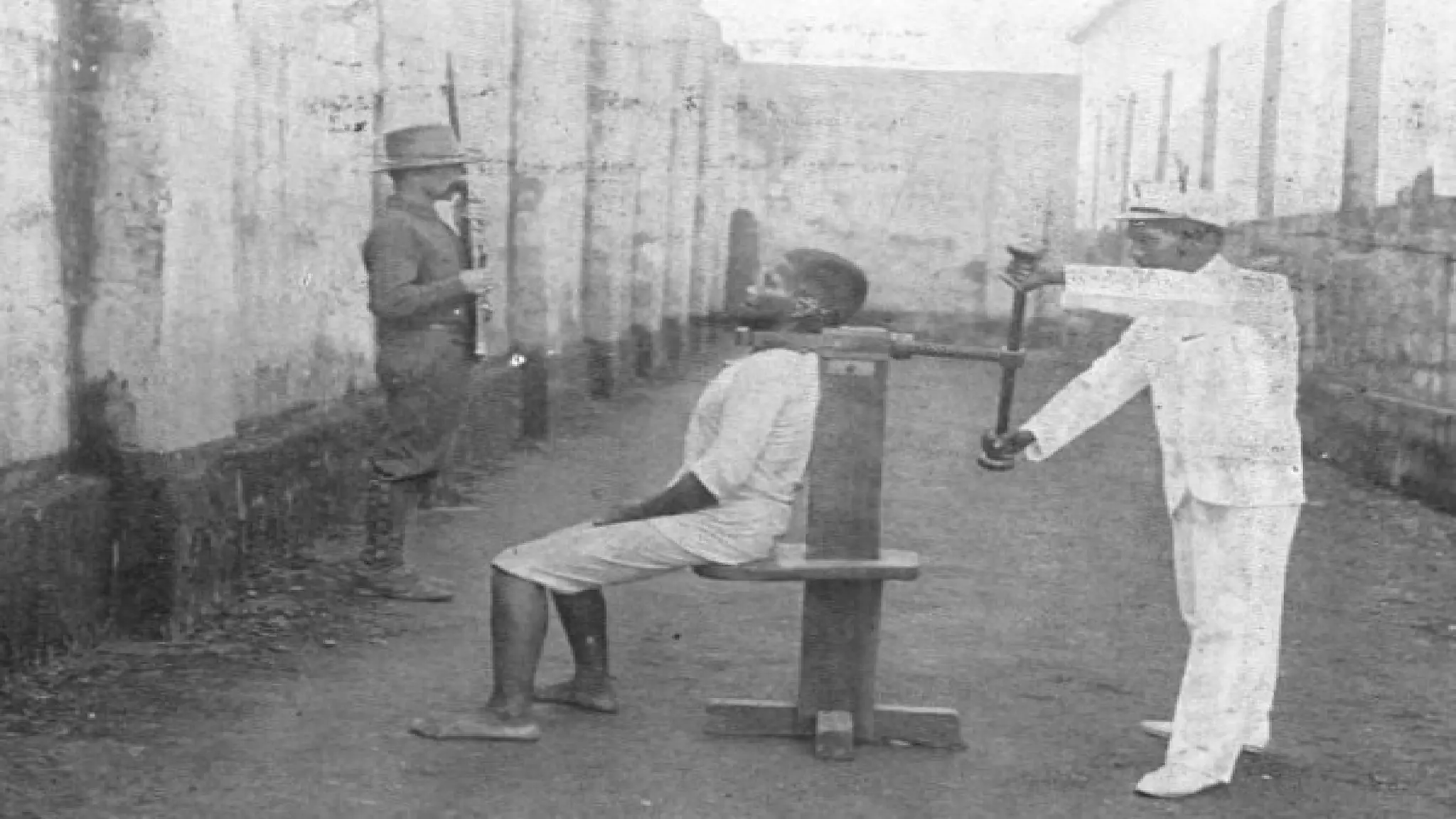
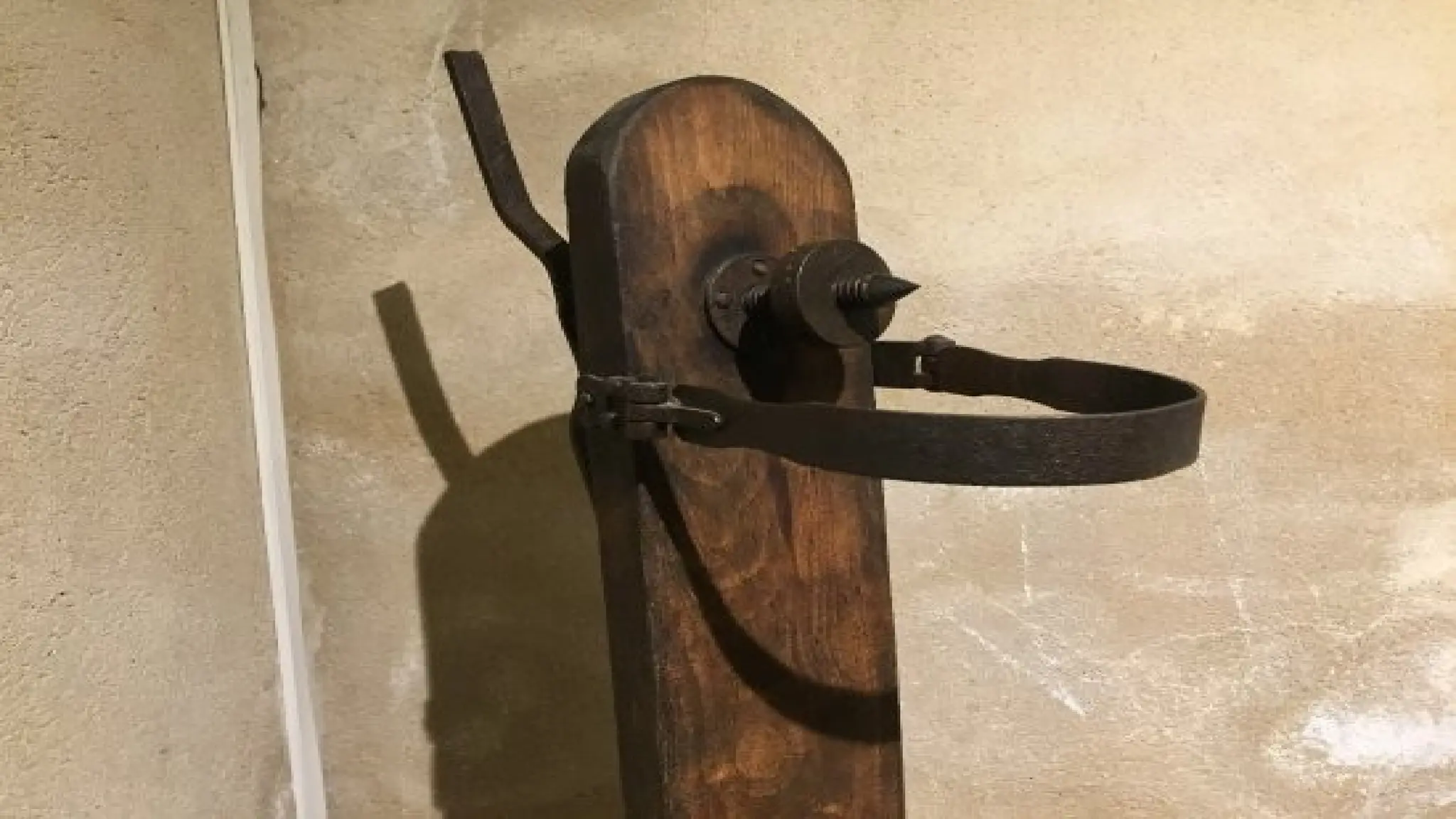
➢ Father Jose Burgos, Mariano Gomez, Jacinto
Zamora were accused of treason to Spanish
and tried in an unfair trial. They were
sentenced to death by “garrote” on February
17, 1872 in Bagumbayan.
5
6
7
PROPAGANDA MOVEMENT
 A peaceful crusade or campaign for reforms
was done by means of pen and tongue to
exposed the defects of Spanish rule in the
Philippines and the urgency of reforms to
remedy them.
 It was organized and prepared by the
Ilustrados.
 Dr. Jose Rizal
 Marcelo H. Del Pilar
 Graciano Lopez Jaena
8
PROPAGANDA MOVEMENT
 Work of promoting the welfare and happiness
of the fatherland.
 Aggressively but peacefully, by means of
writing speeches, they crusaded for reforms to
rectify the evils of Spanish colonial System.
9
PROPAGANDA MOVEMENT
 The ilustrados led the Filipinos’ quest for
reform. Because of their education and newly
acquired wealth, they felt more confident about
voicing out popular grievances.
10
REFORMS DESIRED BY THE PROPAGANDA MOVEMENT
11
Equality of Filipino and Spaniards before the laws;
Restoration of the Philippine representation in
the Spanish Cortes;
Filipinization of the Philippine parishes and the
expulsion of the friars;
Human rights for Filipinos.
Assimilation of the Philippines as a regular
province of Spain
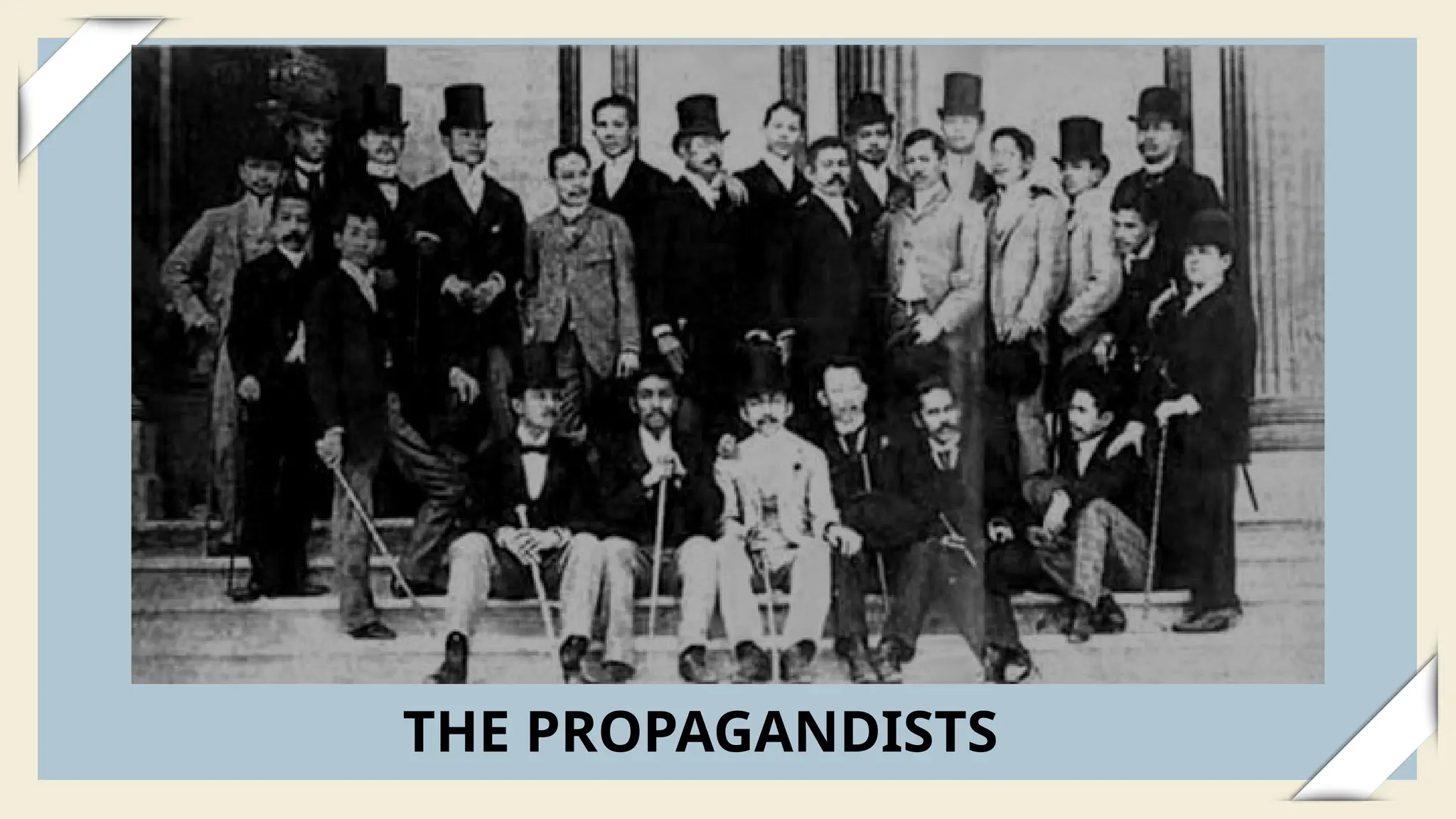
THE PROPAGANDISTS
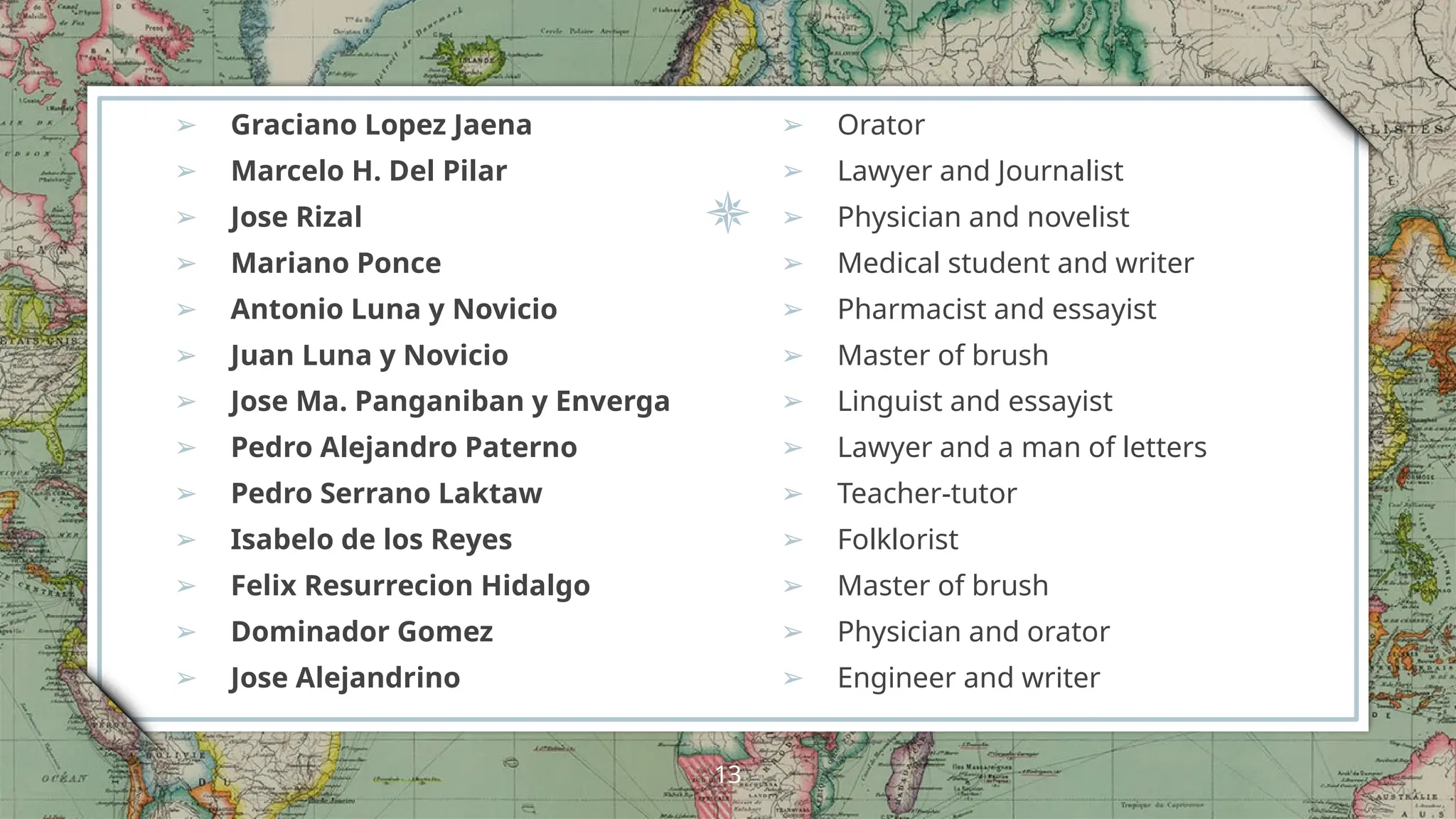
➢ Graciano Lopez Jaena
➢ Marcelo H. Del Pilar
➢ Jose Rizal
➢ Mariano Ponce
➢ Antonio Luna y Novicio
➢ Juan Luna y Novicio
➢ Jose Ma. Panganiban y Enverga
➢ Pedro Alejandro Paterno
➢ Pedro Serrano Laktaw
➢ Isabelo de los Reyes
➢ Felix Resurrecion Hidalgo
➢ Dominador Gomez
➢ Jose Alejandrino
➢ Orator
➢ Lawyer and Journalist
➢ Physician and novelist
➢ Medical student and writer
➢ Pharmacist and essayist
➢ Master of brush
➢ Linguist and essayist
➢ Lawyer and a man of letters
➢ Teacher-tutor
➢ Folklorist
➢ Master of brush
➢ Physician and orator
➢ Engineer and writer
13
THE PROPAGANDISTS
 They came from good families, highly
intelligent, educated, patriotic and courageous,
who symbolize the flower of Filipino manhood.
14
Graciano Lopez Jaena
 The greatest orator of the propaganda
 The first editor of the La Solidaridad
15
Marcelo H. Del Pilar
 • He was the first writer of the bilingual newspaper titled “Diariong
Tagalog” • Beloved by the masses because of his eloquent Tagalog and
fearless defense of the poor against the friar abuses. • He used Plaridel
as his pen name
16
Mariano Ponce
 A medical student and a biographical writer • He used Tikbalang,
Naning, and Kalipulako as his pen names
17
The Anti-Friar Manifesto of 1888
➢ March 1, 1888- Manila and the gevernment was shocked by this
event.
➢ Gobernadorcillos (head of town), marched to the Ayuntamiento
(municipality)
➢ Requested the expulsion of the friars from the Philippines.
➢ Addressed to Queen of Spain and signed by about 800 Filipinos
patriots
Result of the Anti-friar Manifesto
 The powerful friars avenged themselves by persecuting the leaders
and signers of the manifesto
 Having them arrested and thrown into prison
18
La Solidaridad
➢ An organization created in Spain on December 13, 1888.
➢ Graciano Lopez Jaena founded La solidaridad in Barcelona published
on February 15, 1889
Aims of La Solidaridad
➢ To portray vividly the deplorable conditions of the Philippines
➢ To work peacefully for political and social reforms
➢ To combat the evil forces of medievalism and reaction
➢ To advocate liberal ideas and progress
➢ To champion the legitimate aspirations of the Filipino people for
democracy and happiness
19
M.H Del Pilar’s farewell
➢ We are persuaded that there are no sacrifices
that are too little to win the rights and the
liberty of a nation that is oppressed by slavery.
➢ The publication of La Solidaridad ended on
Nov. 15 1895 after 7 years.
20
Masonry and the Propaganda Movement
➢ Masonry played a significant role in the Propaganda Movement.
➢ Many filipino patriots turned masons including:
Marcelo H. Del Pilar
Jose Rizal
Mariano Ponce
Graciano Lopez Jaena
 Revolucion- First Filipino Masonic Lodge
 Lodge Solidaridad- M.H. Del Pilar and Julio Llorante
 January 6, 1892- first Filipino Masonic lodge in the Philippines “Lodge
Nilad”
21
Asociacion Hispano-Filipina
➢ January 12, 1889 – the Filipino propagandist and their Spanish friends
organized Asociacion Hispano-Filipina in Madrid for the purpose of
securing reforms for the philippines.
Don Miguel Morayta- President
General Felipe de la Corte- Vice President
Dominador Gomez- Secretary
To facilitate its work, the association was divided into three sections:
1. Political Section headed by Marcelo H. Del Pilar
2. Literary Section, headed by Mariano Ponce
3. Recreation Section, headed by Tomas Arejola
23
La Liga Filipina
➢ When living in Hong Kong Rizal conceived the idea of
establishing a civic association composed of Filipinos.
➢ He wrote it with the help of Jose Ma. Basa, an exile of 1872.
➢ June 26, 1892, Rizal arrived in Manila
➢ July 3, 1892, Rizal founded the La Liga Filipina
24
The aims of the League
1. Union of the Archipelago into a compact, vigorous, and homogeneous
body.
2. Mutual protection in all cases of pressing necessity.
3. Defense against all violence and injustice.
4. Encouragement of education, agriculture, and commerce.
5. Study and application of reforms.
The motto of the La Liga Filipina was Unus Instar Omnium (One Like All)
25
The La Liga Filipina was a civil association of Filipinos. Its constitution
provided for the establishment of a supreme council for the whole
country, a provincial council in every province, and a popular council in
every town. Every Filipino who had at heart the best interest and welfare
of the fatherland was qualified to be a member.
However, three days after the founding of La Liga Filipina, Rizal was
arrested by order of Governor General Despujol. On July 14, 1892, Rizal
was exiled to Dapitan, Mindanao, until 1896.
26
The Failure of the Reform Movement
There are three (3) reasons why the reform movement failed:
1. The intensive campaign of La Solidaridad for reforms did not
yield any tangible result in the form of changes in the administration of
the Philippines.
2. The societies established in the Philippines whose purpose
was to campaign for reforms did not have sufficient means with which to
carry out their aims.
3. The propagandists were divided against themselves by petty
jealousies.
27
End of the Propaganda Movement
➢ The La Liga Filipina collapsed
➢ The radical Andres Bonifacio and other radical members separated
from it.
➢ Los Compromisarios
➢ La Solidaridad died out after its last issue on November 15,1895
28
The Katipunan
Government and
Revolution
End of the Propaganda Movement
➢ With the failure of the Propaganda
Movement, the Filipinos gave up the
last ditch of hope to peaceful means.
➢ Andres Bonifacio led the Filipinos to a
new phase of social and political
awareness marked by the founding of
Katipunan.
30
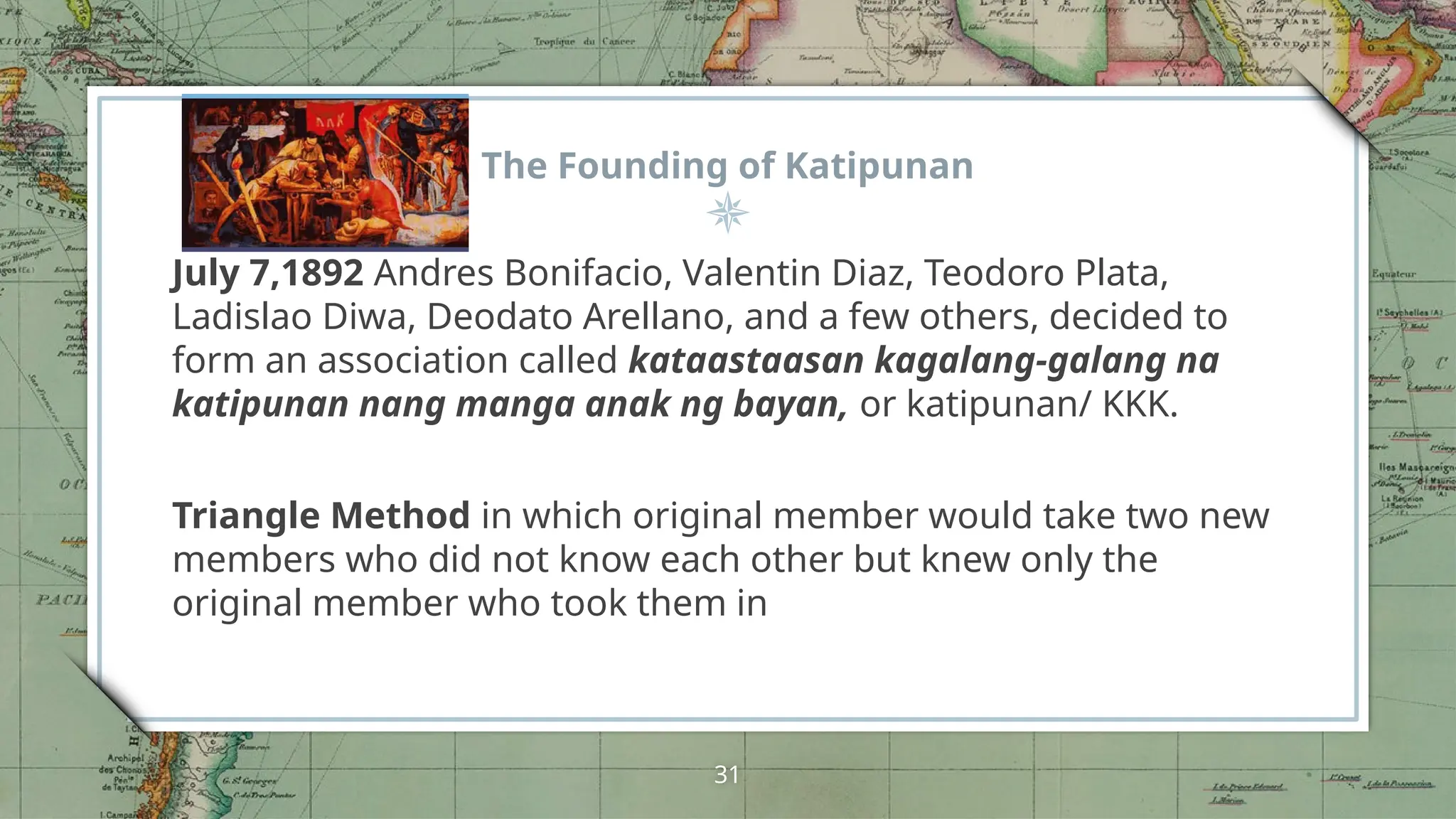
The Founding of Katipunan
July 7,1892 Andres Bonifacio, Valentin Diaz, Teodoro Plata,
Ladislao Diwa, Deodato Arellano, and a few others, decided to
form an association called kataastaasan kagalang-galang na
katipunan nang manga anak ng bayan, or katipunan/ KKK.
Triangle Method in which original member would take two new
members who did not know each other but knew only the
original member who took them in
31
AIMS O F THE KATIPUNAN
➢ To unite the Filipinos into one solid nation.
➢ To fight for Philippine independence from
Spain.
32
The Katipunan Objectives
The Political objective consisted in working for the separation of the
Philippines from Spain.
The Moral objective revolved around the teaching of good manners,
hygiene, good morals, and attacking obscurantism, religious fanaticism,
and weakness of character.
The Civil aim revolved around the principle of self-help and the defense of
the poor and the oppressed.
33
Three Governing Bodies
Kataastaasang Sanggunian was the highest governing body of the
society and was composed of a president, a fiscal, a secretary, a treasurer,
and a comtroller or interventor.
Sangguniang Bayan and Sangguniang Balangay represented,
respectively, the province and the municipality or town.
Sangguniang Hukuman it sat as a court of justice to pass judgments on
any members who violate the rules of the society or to mediate between
quarrelling brethen or faction
34
October 1892 Bonifacio change the method of recruiting members. It
was agreed that any member of the society could take in as many new
members as he could get.
Under this new method, the membership of the society reached more
than 100. thereupon an election was held, with the following as officers of
the first Supreme Council:
Deodato Arellano………………….. President or Supremo
Andres Bonifacio…………………... Interventor or Comptroller
Ladislao Diwa………………………. Fiscal
Teodoro Plata……………………… Secretary
Valentin Diaz………………………..Treasurer
35
February 1893, Bonifacio, disgusted over Arellano’s inaction, deposed
him and put Roman Basa in his place as Supremo.
Early in 1895, Bonifacio realized that Roman Basa was an ineffectual as
Deodato Arellano, he deposed Basa and he became the Supremo.
December 31, 1895, another election to the Supreme Council was held.
Eight months later, in August 1898, immediately before the discovery of
the Katipunan, the fifth and last Supreme Council took its oath of office.
Elected were:
36
Andres Bonifacio -----------------------------------Supremo
Emilio Jacinto ---------------------------------------Secretary of State
Teodoro Plata ---------------------------------------Secretary of War
Briccio Pantas----------------------------------------Secretary of Justice
Aguedo del Rosario --------------------------------Secretary of Interior
Enrique Pacheco ------------------------------------Secretary of Finance
37
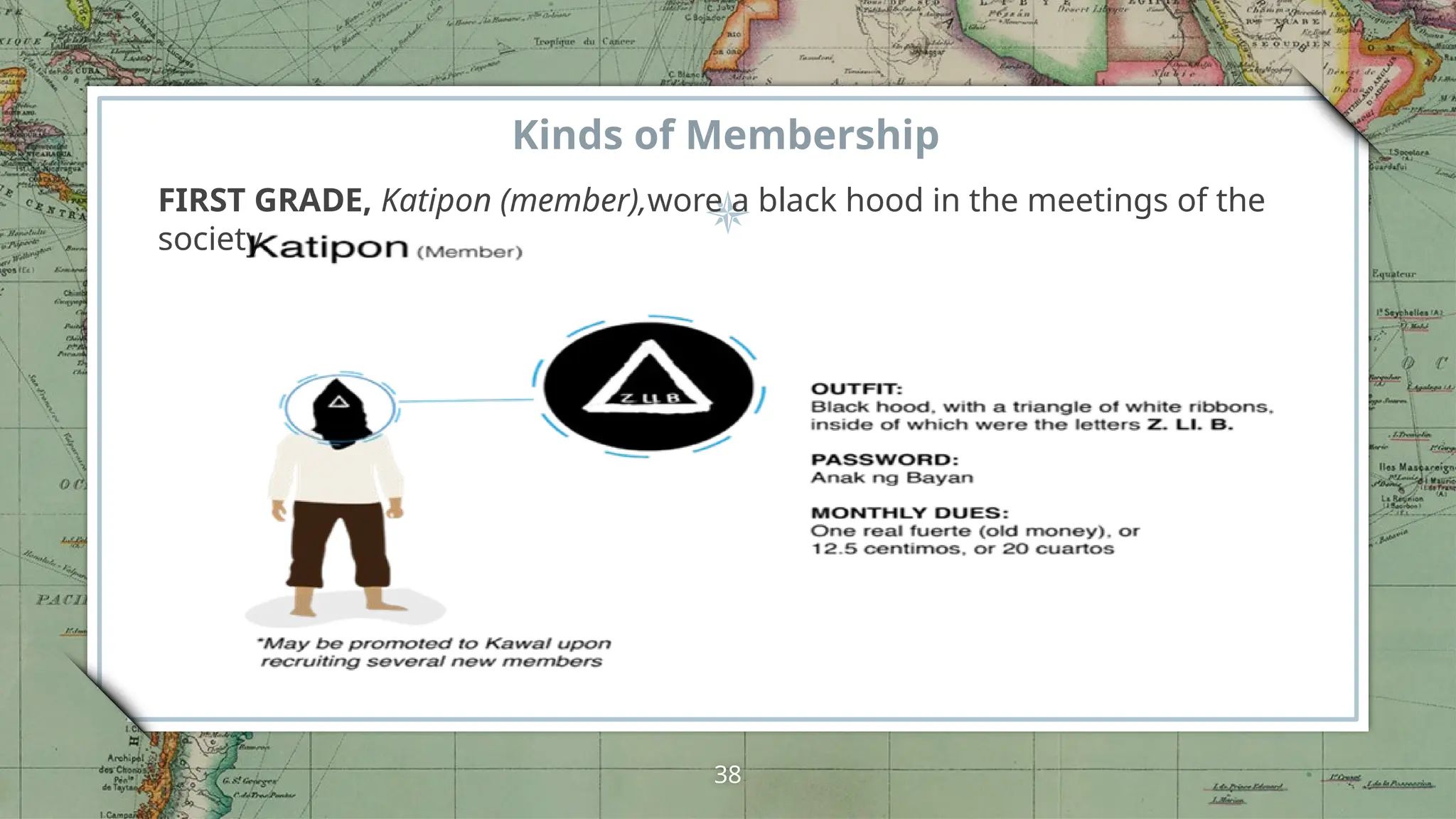
Kinds of Membership
FIRST GRADE, Katipon (member),wore a black hood in the meetings of the
society.
38
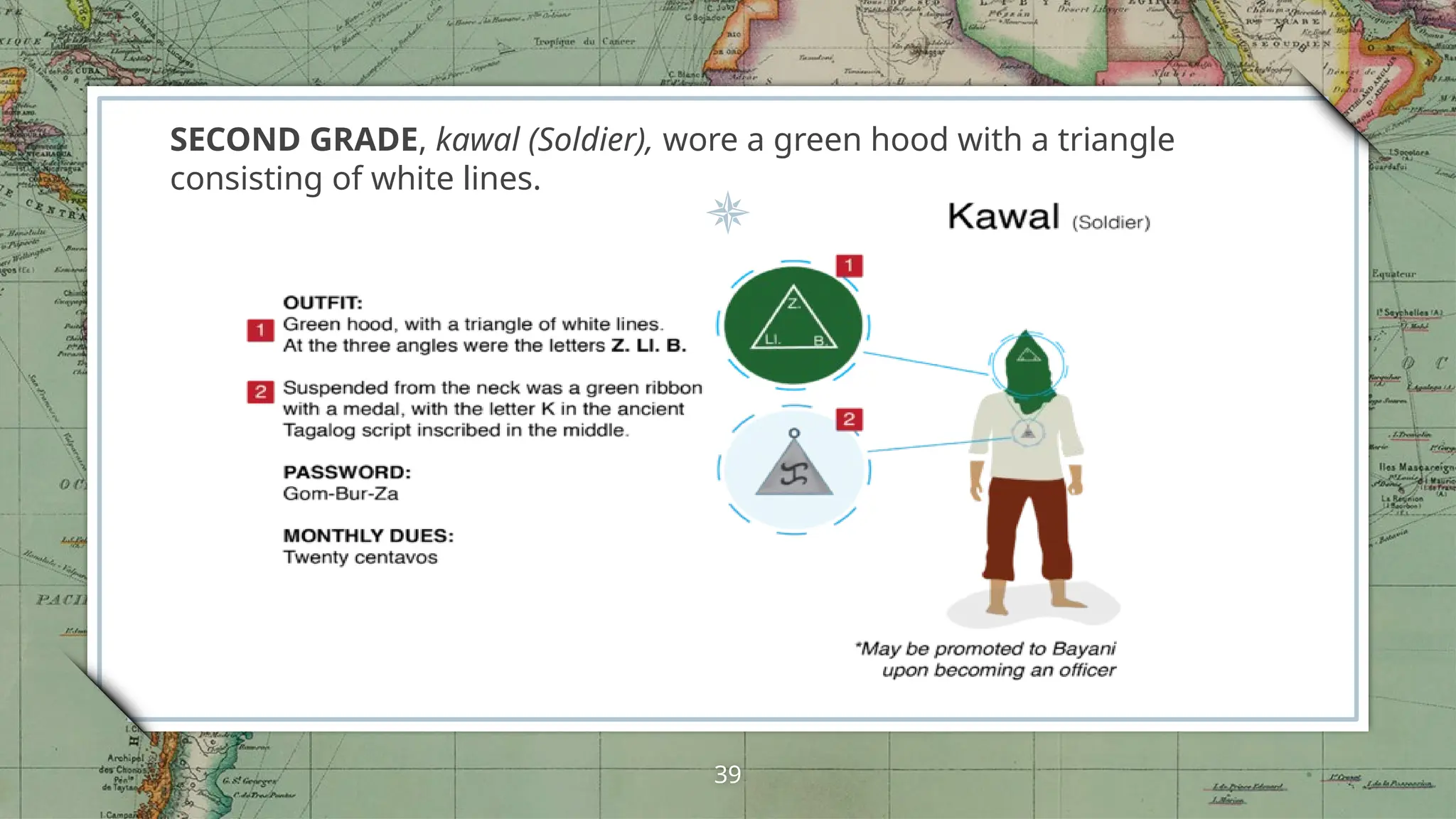
SECOND GRADE, kawal (Soldier), wore a green hood with a triangle
consisting of white lines.
39
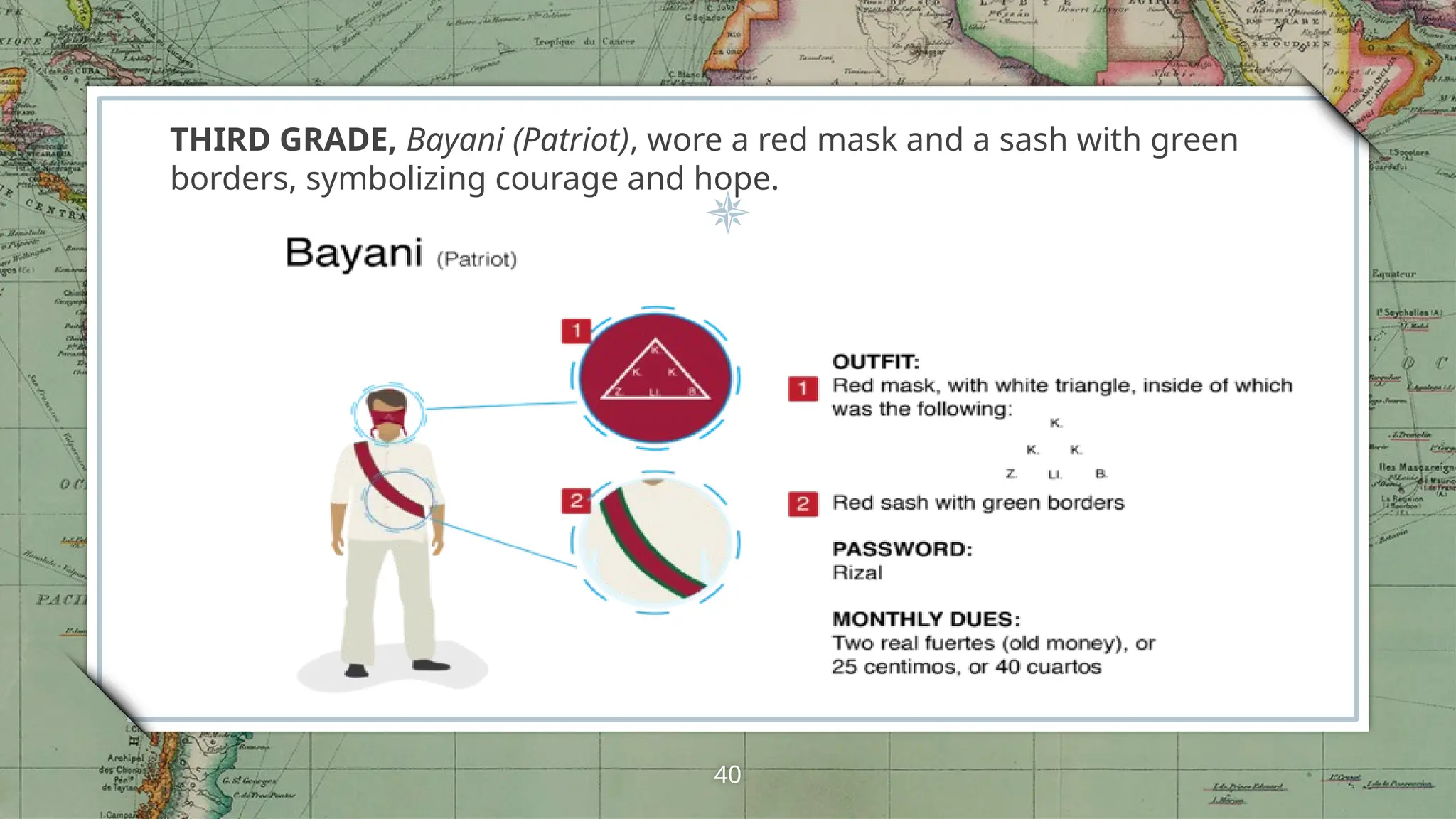
THIRD GRADE, Bayani (Patriot), wore a red mask and a sash with green
borders, symbolizing courage and hope.
40
The Women’s Chapter of the Katipunan
To be admitted in the women’s section, one had to be a wife; daughter, or
sister of a katipunero (male member) . It is estimated that about 25
women became members of the secret society.
Among the women members of the katipunan were Gregoria de Jesus,
Bonifacio’s wife, who was called the lakambini of th KKK; Mari Dizon,
wife of katipunero Jose Turiano Santiago and cousin of Emilio Jacinto;
Benita Rodriguez, who made the katipunan flag and was the wife of
katipunero Restituto Javier; Simeona de Remigio, wife of katipunero
Tomas Remigio;Josefa and Trinidad Rizal, sisters of Dr.Rizal; Delfina
Herbosa and Angelica Lopez, Dr. Rizal’s nieces; and Marta Saldana.
41
First Cry of Philippine Independence
 Holy Week in 1895
 April 10, 1895
 Cave of Bernardo Carpio/ Pamitian Cave
 “Viva la Independencia Filipina”
42
Dr. Rizal and the Katipunan
In June, 1896, Dr. Pio Valenzuela, acting as Bonifacio’s emissary, sailed for
Dapitan to solicit Rizal’s support for coming revolution.
According to Valenzuela, in his Memoirs, Rizal did not agree to the
Katipunan plan of starting a rebellion.
43
The Katipunan and Japan
 May 1896, a delegate of katipunan members, headed by Jacinto and
Bonifacio conferred with a visiting Japanese naval officer and the
Japanese consul at a Japanese bazaar in Manila.
 Moritori Tagawa- interpreter, who married a filipino woman, and a
friend of valenzuela.
 It was a good reason that the katipunan solicited Japan’s aid and
alliance.
 Bonifacio tried to purchase arms and ammunition in Japan but failed
for lack of funds.
44
Discovery of the Katipunan
➢ July 5, 1896, Reported the mysterious activities of certain filipinos who
were gathering arms and recruiting men for some unknown purpose.
➢ August 13, 1896, Denouncing the anti- Spanish meetings in his parish.
➢ August 19, 1896, the Katipunan was discovered by the Spanish
authorities
➢ 6:15 PM of that day, Teodoro Patiño revealed the secrets of the
Katipunan to Father Mariano Gil, Augustinian parish curate.
45
The Cry of Balintawak
➢ August 26, 1896, Bonifacio rallied the katipuneros to an emergency
meeting in Balintawak.
➢ Bonifacio informed them of the urgency of beginning the revolution
in view of the discovery of their society
➢ Produced a heated debate between those who favored the uprising
and the oppositionist.
➢ Bonifacio and the katipuneros took out their cedula and tore it to
pieces
46
➢ The Battle of Pinaglabanan, August 30, 1896- Bonifacio led his army to
attack the polverin (power depot) in San Juan.
➢ August 30, issued a decree declaring a state of war in Manila and
eight Luzon provinces. (Manila, Cavite, Laguna, Batangas, Bulacan,
Pampanga, Nueva Ecija, and Tarlac) and placed them under Martial
Law by Governor Blanco.
➢ Bonifacio soon set out to Naic, Cavite where he establsih a rival
government against Aguinaldo. He issued a coup d’etat against
Aguinaldo’s government.
47
The Pact of Biak na Bato
Three Documents:
1. “Program” provided that Primo de Rivera would pay P800,000 to those
in arms.
2. “Act of Agreement”, granting of general amnesty to those who would
lay down their arms and the privilege to live freely in the Philippines.
3. It stated that Spain would pay a total of 1,700,000 of which sum
P800,000 was to be paid to those who would laydown their arms and
the remaining P900,000 was to be distributed among the civilian
population who had suffered from the ravages of war.
48

The Propaganda Movement PowerPoint Presentation

  • 1.
  • 2.
    PROPAGANDA MOVEMENT  Propaganda– message designed to persuade its intended audience to think and behave in a certain manner.  Propaganda movement – A peaceful crusade or campaign for reform was done by means of pen and tongue to pressure the Spanish government.  It was organized and participated by the ilustrados. 2
  • 3.
    Factors that gavebirth to Philippine Nationalism ➢ Influx of liberal ideas ➢ The Spanish revolution ➢ Opening of Suez Canal 1869 ➢ The martyrdom of father Gomez, Burgos and Zamora 3
  • 4.
    PROPAGANDA MOVEMENT  Itbegan in 1872, when Fathers Mariano Gomez, Jose Burgos, and Jacinto Zamora were executed.  The Filipino exiles of 1872 and many patriotic students abroad met in Hong Kong, Singapore, Barcelona, Madrid, Paris, London and other foreign cities 4
  • 5.
    Cavite Mutiny ➢ January20, 1872, about 200 Filipino soldiers and dock workers of Cavite, under the leadership of sergeant La Madrid, mutinied and killed their Spanish officers. ➢ Father Jose Burgos, Mariano Gomez, Jacinto Zamora were accused of treason to Spanish and tried in an unfair trial. They were sentenced to death by “garrote” on February 17, 1872 in Bagumbayan. 5
  • 6.
  • 7.
  • 8.
    PROPAGANDA MOVEMENT  Apeaceful crusade or campaign for reforms was done by means of pen and tongue to exposed the defects of Spanish rule in the Philippines and the urgency of reforms to remedy them.  It was organized and prepared by the Ilustrados.  Dr. Jose Rizal  Marcelo H. Del Pilar  Graciano Lopez Jaena 8
  • 9.
    PROPAGANDA MOVEMENT  Workof promoting the welfare and happiness of the fatherland.  Aggressively but peacefully, by means of writing speeches, they crusaded for reforms to rectify the evils of Spanish colonial System. 9
  • 10.
    PROPAGANDA MOVEMENT  Theilustrados led the Filipinos’ quest for reform. Because of their education and newly acquired wealth, they felt more confident about voicing out popular grievances. 10
  • 11.
    REFORMS DESIRED BYTHE PROPAGANDA MOVEMENT 11 Equality of Filipino and Spaniards before the laws; Restoration of the Philippine representation in the Spanish Cortes; Filipinization of the Philippine parishes and the expulsion of the friars; Human rights for Filipinos. Assimilation of the Philippines as a regular province of Spain
  • 12.
  • 13.
    ➢ Graciano LopezJaena ➢ Marcelo H. Del Pilar ➢ Jose Rizal ➢ Mariano Ponce ➢ Antonio Luna y Novicio ➢ Juan Luna y Novicio ➢ Jose Ma. Panganiban y Enverga ➢ Pedro Alejandro Paterno ➢ Pedro Serrano Laktaw ➢ Isabelo de los Reyes ➢ Felix Resurrecion Hidalgo ➢ Dominador Gomez ➢ Jose Alejandrino ➢ Orator ➢ Lawyer and Journalist ➢ Physician and novelist ➢ Medical student and writer ➢ Pharmacist and essayist ➢ Master of brush ➢ Linguist and essayist ➢ Lawyer and a man of letters ➢ Teacher-tutor ➢ Folklorist ➢ Master of brush ➢ Physician and orator ➢ Engineer and writer 13
  • 14.
    THE PROPAGANDISTS  Theycame from good families, highly intelligent, educated, patriotic and courageous, who symbolize the flower of Filipino manhood. 14
  • 15.
    Graciano Lopez Jaena The greatest orator of the propaganda  The first editor of the La Solidaridad 15
  • 16.
    Marcelo H. DelPilar  • He was the first writer of the bilingual newspaper titled “Diariong Tagalog” • Beloved by the masses because of his eloquent Tagalog and fearless defense of the poor against the friar abuses. • He used Plaridel as his pen name 16
  • 17.
    Mariano Ponce  Amedical student and a biographical writer • He used Tikbalang, Naning, and Kalipulako as his pen names 17
  • 18.
    The Anti-Friar Manifestoof 1888 ➢ March 1, 1888- Manila and the gevernment was shocked by this event. ➢ Gobernadorcillos (head of town), marched to the Ayuntamiento (municipality) ➢ Requested the expulsion of the friars from the Philippines. ➢ Addressed to Queen of Spain and signed by about 800 Filipinos patriots Result of the Anti-friar Manifesto  The powerful friars avenged themselves by persecuting the leaders and signers of the manifesto  Having them arrested and thrown into prison 18
  • 19.
    La Solidaridad ➢ Anorganization created in Spain on December 13, 1888. ➢ Graciano Lopez Jaena founded La solidaridad in Barcelona published on February 15, 1889 Aims of La Solidaridad ➢ To portray vividly the deplorable conditions of the Philippines ➢ To work peacefully for political and social reforms ➢ To combat the evil forces of medievalism and reaction ➢ To advocate liberal ideas and progress ➢ To champion the legitimate aspirations of the Filipino people for democracy and happiness 19
  • 20.
    M.H Del Pilar’sfarewell ➢ We are persuaded that there are no sacrifices that are too little to win the rights and the liberty of a nation that is oppressed by slavery. ➢ The publication of La Solidaridad ended on Nov. 15 1895 after 7 years. 20
  • 21.
    Masonry and thePropaganda Movement ➢ Masonry played a significant role in the Propaganda Movement. ➢ Many filipino patriots turned masons including: Marcelo H. Del Pilar Jose Rizal Mariano Ponce Graciano Lopez Jaena  Revolucion- First Filipino Masonic Lodge  Lodge Solidaridad- M.H. Del Pilar and Julio Llorante  January 6, 1892- first Filipino Masonic lodge in the Philippines “Lodge Nilad” 21
  • 22.
    Asociacion Hispano-Filipina ➢ January12, 1889 – the Filipino propagandist and their Spanish friends organized Asociacion Hispano-Filipina in Madrid for the purpose of securing reforms for the philippines. Don Miguel Morayta- President General Felipe de la Corte- Vice President Dominador Gomez- Secretary
  • 23.
    To facilitate itswork, the association was divided into three sections: 1. Political Section headed by Marcelo H. Del Pilar 2. Literary Section, headed by Mariano Ponce 3. Recreation Section, headed by Tomas Arejola 23
  • 24.
    La Liga Filipina ➢When living in Hong Kong Rizal conceived the idea of establishing a civic association composed of Filipinos. ➢ He wrote it with the help of Jose Ma. Basa, an exile of 1872. ➢ June 26, 1892, Rizal arrived in Manila ➢ July 3, 1892, Rizal founded the La Liga Filipina 24
  • 25.
    The aims ofthe League 1. Union of the Archipelago into a compact, vigorous, and homogeneous body. 2. Mutual protection in all cases of pressing necessity. 3. Defense against all violence and injustice. 4. Encouragement of education, agriculture, and commerce. 5. Study and application of reforms. The motto of the La Liga Filipina was Unus Instar Omnium (One Like All) 25
  • 26.
    The La LigaFilipina was a civil association of Filipinos. Its constitution provided for the establishment of a supreme council for the whole country, a provincial council in every province, and a popular council in every town. Every Filipino who had at heart the best interest and welfare of the fatherland was qualified to be a member. However, three days after the founding of La Liga Filipina, Rizal was arrested by order of Governor General Despujol. On July 14, 1892, Rizal was exiled to Dapitan, Mindanao, until 1896. 26
  • 27.
    The Failure ofthe Reform Movement There are three (3) reasons why the reform movement failed: 1. The intensive campaign of La Solidaridad for reforms did not yield any tangible result in the form of changes in the administration of the Philippines. 2. The societies established in the Philippines whose purpose was to campaign for reforms did not have sufficient means with which to carry out their aims. 3. The propagandists were divided against themselves by petty jealousies. 27
  • 28.
    End of thePropaganda Movement ➢ The La Liga Filipina collapsed ➢ The radical Andres Bonifacio and other radical members separated from it. ➢ Los Compromisarios ➢ La Solidaridad died out after its last issue on November 15,1895 28
  • 29.
  • 30.
    End of thePropaganda Movement ➢ With the failure of the Propaganda Movement, the Filipinos gave up the last ditch of hope to peaceful means. ➢ Andres Bonifacio led the Filipinos to a new phase of social and political awareness marked by the founding of Katipunan. 30
  • 31.
    The Founding ofKatipunan July 7,1892 Andres Bonifacio, Valentin Diaz, Teodoro Plata, Ladislao Diwa, Deodato Arellano, and a few others, decided to form an association called kataastaasan kagalang-galang na katipunan nang manga anak ng bayan, or katipunan/ KKK. Triangle Method in which original member would take two new members who did not know each other but knew only the original member who took them in 31
  • 32.
    AIMS O FTHE KATIPUNAN ➢ To unite the Filipinos into one solid nation. ➢ To fight for Philippine independence from Spain. 32
  • 33.
    The Katipunan Objectives ThePolitical objective consisted in working for the separation of the Philippines from Spain. The Moral objective revolved around the teaching of good manners, hygiene, good morals, and attacking obscurantism, religious fanaticism, and weakness of character. The Civil aim revolved around the principle of self-help and the defense of the poor and the oppressed. 33
  • 34.
    Three Governing Bodies KataastaasangSanggunian was the highest governing body of the society and was composed of a president, a fiscal, a secretary, a treasurer, and a comtroller or interventor. Sangguniang Bayan and Sangguniang Balangay represented, respectively, the province and the municipality or town. Sangguniang Hukuman it sat as a court of justice to pass judgments on any members who violate the rules of the society or to mediate between quarrelling brethen or faction 34
  • 35.
    October 1892 Bonifaciochange the method of recruiting members. It was agreed that any member of the society could take in as many new members as he could get. Under this new method, the membership of the society reached more than 100. thereupon an election was held, with the following as officers of the first Supreme Council: Deodato Arellano………………….. President or Supremo Andres Bonifacio…………………... Interventor or Comptroller Ladislao Diwa………………………. Fiscal Teodoro Plata……………………… Secretary Valentin Diaz………………………..Treasurer 35
  • 36.
    February 1893, Bonifacio,disgusted over Arellano’s inaction, deposed him and put Roman Basa in his place as Supremo. Early in 1895, Bonifacio realized that Roman Basa was an ineffectual as Deodato Arellano, he deposed Basa and he became the Supremo. December 31, 1895, another election to the Supreme Council was held. Eight months later, in August 1898, immediately before the discovery of the Katipunan, the fifth and last Supreme Council took its oath of office. Elected were: 36
  • 37.
    Andres Bonifacio -----------------------------------Supremo EmilioJacinto ---------------------------------------Secretary of State Teodoro Plata ---------------------------------------Secretary of War Briccio Pantas----------------------------------------Secretary of Justice Aguedo del Rosario --------------------------------Secretary of Interior Enrique Pacheco ------------------------------------Secretary of Finance 37
  • 38.
    Kinds of Membership FIRSTGRADE, Katipon (member),wore a black hood in the meetings of the society. 38
  • 39.
    SECOND GRADE, kawal(Soldier), wore a green hood with a triangle consisting of white lines. 39
  • 40.
    THIRD GRADE, Bayani(Patriot), wore a red mask and a sash with green borders, symbolizing courage and hope. 40
  • 41.
    The Women’s Chapterof the Katipunan To be admitted in the women’s section, one had to be a wife; daughter, or sister of a katipunero (male member) . It is estimated that about 25 women became members of the secret society. Among the women members of the katipunan were Gregoria de Jesus, Bonifacio’s wife, who was called the lakambini of th KKK; Mari Dizon, wife of katipunero Jose Turiano Santiago and cousin of Emilio Jacinto; Benita Rodriguez, who made the katipunan flag and was the wife of katipunero Restituto Javier; Simeona de Remigio, wife of katipunero Tomas Remigio;Josefa and Trinidad Rizal, sisters of Dr.Rizal; Delfina Herbosa and Angelica Lopez, Dr. Rizal’s nieces; and Marta Saldana. 41
  • 42.
    First Cry ofPhilippine Independence  Holy Week in 1895  April 10, 1895  Cave of Bernardo Carpio/ Pamitian Cave  “Viva la Independencia Filipina” 42
  • 43.
    Dr. Rizal andthe Katipunan In June, 1896, Dr. Pio Valenzuela, acting as Bonifacio’s emissary, sailed for Dapitan to solicit Rizal’s support for coming revolution. According to Valenzuela, in his Memoirs, Rizal did not agree to the Katipunan plan of starting a rebellion. 43
  • 44.
    The Katipunan andJapan  May 1896, a delegate of katipunan members, headed by Jacinto and Bonifacio conferred with a visiting Japanese naval officer and the Japanese consul at a Japanese bazaar in Manila.  Moritori Tagawa- interpreter, who married a filipino woman, and a friend of valenzuela.  It was a good reason that the katipunan solicited Japan’s aid and alliance.  Bonifacio tried to purchase arms and ammunition in Japan but failed for lack of funds. 44
  • 45.
    Discovery of theKatipunan ➢ July 5, 1896, Reported the mysterious activities of certain filipinos who were gathering arms and recruiting men for some unknown purpose. ➢ August 13, 1896, Denouncing the anti- Spanish meetings in his parish. ➢ August 19, 1896, the Katipunan was discovered by the Spanish authorities ➢ 6:15 PM of that day, Teodoro Patiño revealed the secrets of the Katipunan to Father Mariano Gil, Augustinian parish curate. 45
  • 46.
    The Cry ofBalintawak ➢ August 26, 1896, Bonifacio rallied the katipuneros to an emergency meeting in Balintawak. ➢ Bonifacio informed them of the urgency of beginning the revolution in view of the discovery of their society ➢ Produced a heated debate between those who favored the uprising and the oppositionist. ➢ Bonifacio and the katipuneros took out their cedula and tore it to pieces 46
  • 47.
    ➢ The Battleof Pinaglabanan, August 30, 1896- Bonifacio led his army to attack the polverin (power depot) in San Juan. ➢ August 30, issued a decree declaring a state of war in Manila and eight Luzon provinces. (Manila, Cavite, Laguna, Batangas, Bulacan, Pampanga, Nueva Ecija, and Tarlac) and placed them under Martial Law by Governor Blanco. ➢ Bonifacio soon set out to Naic, Cavite where he establsih a rival government against Aguinaldo. He issued a coup d’etat against Aguinaldo’s government. 47
  • 48.
    The Pact ofBiak na Bato Three Documents: 1. “Program” provided that Primo de Rivera would pay P800,000 to those in arms. 2. “Act of Agreement”, granting of general amnesty to those who would lay down their arms and the privilege to live freely in the Philippines. 3. It stated that Spain would pay a total of 1,700,000 of which sum P800,000 was to be paid to those who would laydown their arms and the remaining P900,000 was to be distributed among the civilian population who had suffered from the ravages of war. 48