Haematological
Disorders
Dr. Mamta
Department of Pharmacy Practice
Syllabus (Topics which we have to study)
1) Anaemias
2) Venous Thromboembolism
3) Drug Induced blood Disorder
Anaemia
a) Introduction & Definition
b) Pathophysiology
c) Classification and Types
d) Risk factor and causes
e) Sign and Symptoms
f) Management goals and treatment options
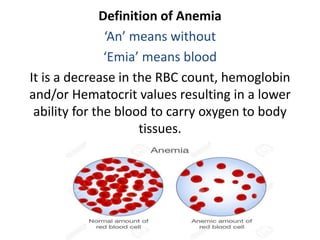
Definition of Anemia
‘An’ means without
‘Emia’ means blood
It is a decrease in the RBC count, hemoglobin
and/or Hematocrit values resulting in a lower
ability for the blood to carry oxygen to body
tissues.
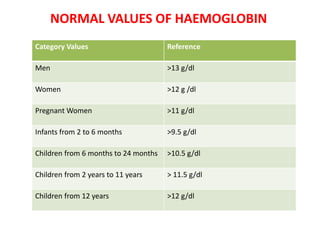
NORMAL VALUES OF HAEMOGLOBIN
Category Values Reference
Men >13 g/dl
Women >12 g /dl
Pregnant Women >11 g/dl
Infants from 2 to 6 months >9.5 g/dl
Children from 6 months to 24 months >10.5 g/dl
Children from 2 years to 11 years > 11.5 g/dl
Children from 12 years >12 g/dl
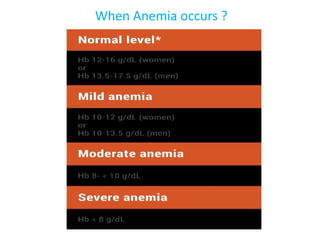
When Anemia occurs ?
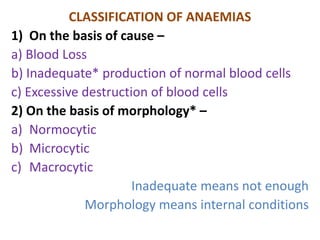
CLASSIFICATION OF ANAEMIAS
1) On the basis of cause –
a) Blood Loss
b) Inadequate* production of normal blood cells
c) Excessive destruction of blood cells
2) On the basis of morphology* –
a) Normocytic
b) Microcytic
c) Macrocytic
Inadequate means not enough
Morphology means internal conditions
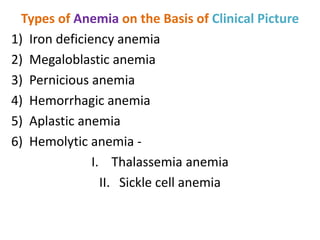
Types of Anemia on the Basis of Clinical Picture
1) Iron deficiency anemia
2) Megaloblastic anemia
3) Pernicious anemia
4) Hemorrhagic anemia
5) Aplastic anemia
6) Hemolytic anemia -
I. Thalassemia anemia
II. Sickle cell anemia
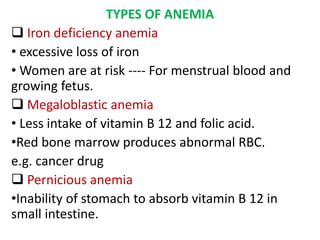
TYPES OF ANEMIA
 Iron deficiency anemia
• excessive loss of iron
• Women are at risk ---- For menstrual blood and
growing fetus.
 Megaloblastic anemia
• Less intake of vitamin B 12 and folic acid.
•Red bone marrow produces abnormal RBC.
e.g. cancer drug
 Pernicious anemia
•Inability of stomach to absorb vitamin B 12 in
small intestine.
 Hemorrhagic anemia
• Excessive loss of RBC through bleeding, stomach ulcers,
menstruation
 Hemolytic anemia
• RBC plasma membrane ruptures.
• may be due to parasites, toxins, antibodies.
 Thalassemmia
• Less synthesis of hemoglobin .Found in population of
Mediterranean sea.
 Sickle cell anemia
• Hereditary blood disorder, characterized by red blood cells
that assume an abnormal, rigid, sickle shape.
 Aplastic anemia
• destruction of red bone marrow.
• caused by toxins, gamma radiation.
 Normochromic, normocytic anemia (normal MCHC,normal
MCV) .These include : -
• Anemias of chronic disease
• Hemolytic anemias (those characterized by accelerated
destruction of rbc's)
• Anemia of acute hemorrhage
• Aplastic anemias (those characterized by disappearance of rbc
precursors from the marrow)
 Hypochromic, microcytic anemia (low MCHC, low MCV).These
include:
• Iron deficiency anemia
• Thalassemias
• anemia of chronic diseases
 Normochromic, macrocytic anemia (normal MCHHC,high
MCV).These include:
• Vitamin Bi2 deficiency.
• Folate deficiency
Anemia Caused by Iron Deficiency
People with an iron deficiency may experience these symptoms:
A hunger for strange substances such as paper, ice, or dirt (a condition
called pica)
Upward curvature of the nails, referred to as koilonychias
 Soreness of the mouth with cracks at the corners
Anemia Caused by Vitamin B12 Deficiency
People whose anemia is caused by a deficiency of VitaminB12 may have
these symptoms:
A tingling. "pins and needles" sensation in the hands or feet
Lost sense of touch
A wobbly gait and difficulty walking
Clumsiness and stiffness of the arms and legs
Dementia
Hallucinations, paranoia, and schizophrenia
RISK FACTORS
Poor socio economic class
Multiparity
Teenage pregnancy
Menstural problem
CAUSES
Increased Requirements –
Menstruating females
Pregnancy
Lactation
Growing infants and children
Erythropoietin treatment
Increased Loss -
GI bleeding
Menorrhagia
Persistent hematuria
Intravascular hemolytic anemias
Regular blood donors
Parasitic infections
Decreased Intake -
Vegetarian diet
Socioeconomic factors
Decreased Absorption
Upper Gl pathology (eg: Celiac and Crohn's disease)
Gastrectomy
Medications (antacids, Zantac)
SIGNS OF ANAEMIA
• Brittle nails
• Koilonychia (spoon shaped nails)
• Atrophy of the papillae of the tongue
• Angular stomatitis
• Brittle hair
• Dysphagia and Glossitis
• Plummer vinson/kelly patterson
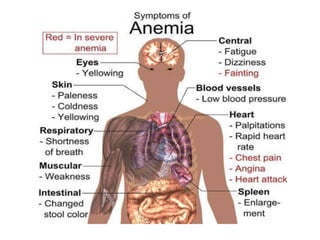
SYMPTOMS
Common symptoms of anemia
Easy fatigue and loss of energy
Unusually rapid heart beat, particularly with
exercise
Shortness of breath and headache, particularly
with exercise
 Difficulty concentrating
Dizziness
Pale skin
Leg cramps
Insomnia
Hematological Disorder Anemia.pptx

Hematological Disorder Anemia.pptx

  • 1.
  • 2.
    Syllabus (Topics whichwe have to study) 1) Anaemias 2) Venous Thromboembolism 3) Drug Induced blood Disorder Anaemia a) Introduction & Definition b) Pathophysiology c) Classification and Types d) Risk factor and causes e) Sign and Symptoms f) Management goals and treatment options
  • 3.
    Definition of Anemia ‘An’means without ‘Emia’ means blood It is a decrease in the RBC count, hemoglobin and/or Hematocrit values resulting in a lower ability for the blood to carry oxygen to body tissues.
  • 4.
    NORMAL VALUES OFHAEMOGLOBIN Category Values Reference Men >13 g/dl Women >12 g /dl Pregnant Women >11 g/dl Infants from 2 to 6 months >9.5 g/dl Children from 6 months to 24 months >10.5 g/dl Children from 2 years to 11 years > 11.5 g/dl Children from 12 years >12 g/dl
  • 5.
  • 6.
    CLASSIFICATION OF ANAEMIAS 1)On the basis of cause – a) Blood Loss b) Inadequate* production of normal blood cells c) Excessive destruction of blood cells 2) On the basis of morphology* – a) Normocytic b) Microcytic c) Macrocytic Inadequate means not enough Morphology means internal conditions
  • 7.
    Types of Anemiaon the Basis of Clinical Picture 1) Iron deficiency anemia 2) Megaloblastic anemia 3) Pernicious anemia 4) Hemorrhagic anemia 5) Aplastic anemia 6) Hemolytic anemia - I. Thalassemia anemia II. Sickle cell anemia
  • 8.
    TYPES OF ANEMIA Iron deficiency anemia • excessive loss of iron • Women are at risk ---- For menstrual blood and growing fetus.  Megaloblastic anemia • Less intake of vitamin B 12 and folic acid. •Red bone marrow produces abnormal RBC. e.g. cancer drug  Pernicious anemia •Inability of stomach to absorb vitamin B 12 in small intestine.
  • 9.
     Hemorrhagic anemia •Excessive loss of RBC through bleeding, stomach ulcers, menstruation  Hemolytic anemia • RBC plasma membrane ruptures. • may be due to parasites, toxins, antibodies.  Thalassemmia • Less synthesis of hemoglobin .Found in population of Mediterranean sea.  Sickle cell anemia • Hereditary blood disorder, characterized by red blood cells that assume an abnormal, rigid, sickle shape.  Aplastic anemia • destruction of red bone marrow. • caused by toxins, gamma radiation.
  • 10.
     Normochromic, normocyticanemia (normal MCHC,normal MCV) .These include : - • Anemias of chronic disease • Hemolytic anemias (those characterized by accelerated destruction of rbc's) • Anemia of acute hemorrhage • Aplastic anemias (those characterized by disappearance of rbc precursors from the marrow)  Hypochromic, microcytic anemia (low MCHC, low MCV).These include: • Iron deficiency anemia • Thalassemias • anemia of chronic diseases  Normochromic, macrocytic anemia (normal MCHHC,high MCV).These include: • Vitamin Bi2 deficiency. • Folate deficiency
  • 11.
    Anemia Caused byIron Deficiency People with an iron deficiency may experience these symptoms: A hunger for strange substances such as paper, ice, or dirt (a condition called pica) Upward curvature of the nails, referred to as koilonychias  Soreness of the mouth with cracks at the corners Anemia Caused by Vitamin B12 Deficiency People whose anemia is caused by a deficiency of VitaminB12 may have these symptoms: A tingling. "pins and needles" sensation in the hands or feet Lost sense of touch A wobbly gait and difficulty walking Clumsiness and stiffness of the arms and legs Dementia Hallucinations, paranoia, and schizophrenia
  • 12.
    RISK FACTORS Poor socioeconomic class Multiparity Teenage pregnancy Menstural problem CAUSES Increased Requirements – Menstruating females Pregnancy Lactation Growing infants and children Erythropoietin treatment Increased Loss - GI bleeding Menorrhagia Persistent hematuria Intravascular hemolytic anemias Regular blood donors Parasitic infections Decreased Intake - Vegetarian diet Socioeconomic factors Decreased Absorption Upper Gl pathology (eg: Celiac and Crohn's disease) Gastrectomy Medications (antacids, Zantac)
  • 13.
    SIGNS OF ANAEMIA •Brittle nails • Koilonychia (spoon shaped nails) • Atrophy of the papillae of the tongue • Angular stomatitis • Brittle hair • Dysphagia and Glossitis • Plummer vinson/kelly patterson
  • 14.
    SYMPTOMS Common symptoms ofanemia Easy fatigue and loss of energy Unusually rapid heart beat, particularly with exercise Shortness of breath and headache, particularly with exercise  Difficulty concentrating Dizziness Pale skin Leg cramps Insomnia