RADIATION POISONING
Name – Dr. Mamta
Class – Department of Pharmacy Practice
What is Radiation ?
Radiation is the energy that comes from a source
and travels through space at the speed of light.
1) It is the emission of energy as electromagnetic
waves or as moving subatomic particles (especially
high-energy particles) which cause ionization.
2) It is a form of energy whose sources are synthetic
and naturally occurring.
3) Small quantities of radioactive materials occur
naturally in the environment (atmosphere, water,
and food) and are referred to as internal exposure.
4) External exposure results from sunlight radiation
and from synthetic and naturally occurring
radioactive materials.
What is Radiation poisoning ?
It is also known as –1) radiation sickness ,
2) acute radiation syndrome ,
3) radiation toxicity.
 Definition : Radiation sickness is illness and symptoms
resulting from excessive exposure to ionizing radiation.
 Classification : Depending on the energy of the radiated
particles , Radiation is categorized into two divisions. These are
1) Ionizing ,
2) Non-ionizing
1) lonizing radiation: It is the radiation that has enough
energy to remove electrons from atoms which convert into
ions in the form of particles or rays (gamma rays, X- rays).
2) Non-ionizing radiation: It is the radiation that gives off
enough energy to make atoms vibrate, however not
enough energy to remove electrons (visible light, radio
waves, micro waves).
IONIZING RADIATION
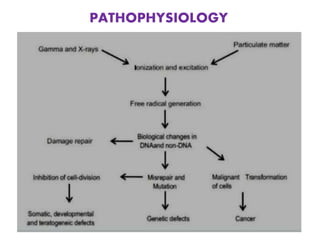
1. lonizing radiation induces somatic changes in cells and tissues
by displacing electrons from their atomic nuclei, resulting in
the intracellular ionization of molecules.
2. Depending on the dose and length of exposure, the effects
can be immediate, chronic, or delayed. The most important
targets are the DNA-molecules, where direct or indirect
actions of radiation could result in lesions, such as base
damage, single-strand breaks and double-strand breaks.
3. Double-strand breaks are considered the most serious DNA-
lesions, since they can result in the cleavage of chromatin and
might not be successfully repaired by the cell. The occurrence
of DNA-lesions and, especially, of double-strand breaks will
increase with increasing radiation exposure and will lead to a
higher risk of cell death.
4. Thus, reversible or irreversible DNA changes are induced,
initiating a series of events that culminate in the production
of a mutagenic response, a carcinogenic response, the
inhibition of cell replication, or cell death.
PATHOPHYSIOLOGY
SOURCE OF IONIZING RADIATION
1) Medical Sources
2) The largest source of medical exposure, when
averaged overall individuals, is from diagnostic x-rays,
including both chest or limb x-rays and dental x-rays.
3) Nuclear medicine also includes in treatment of
disease. Some examples are cobalt irradiation for the
treatment of cancers, or the injection of radioactive
iodine which concentrates in the thyroid for treatment
of Graves' disease.
4) High-energy diagnostic or therapeutic X-rays, used
in the treatment of cancer.
5) Occupational exposure involves variable amounts of
radioactivity from nuclear reactors, linear accelerators,
and sealed cesium, americium, and cobalt sources
used in therapeutic instruments and detectors.
6) Natural Sources of Radiation
7) Peoples are exposed to X rays and Gamma rays from
cosmic rays from our solar system and radioactive
elements normally present in the soil
8) Radium and radon gas are naturally occurring
hazardous isotopes embedded in the Earth's crust
9) An accident at a nuclear industrial facility
10) An attack on a nuclear industrial facility
11) Detonation of a small radioactive device
12) Detonation of a conventional explosive device that
disperses radioactive material (dirty bomb)
13) Detonation of a standard nuclear weapon
Signs and symptoms of radiation poisoning
Classically acute radiation syndrome is divided into
three main presentations:
1. Hematopoietic- aplastic anemia
2. Gastrointestinal- a) nausea
b) Vomiting
c) loss of appetite and
d) abdominal pain
3. Neurological/vascular- a) dizziness
b) headache
c) decreased level of
consciousness (occurring within minutes to a few
hours)
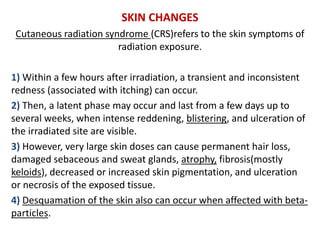
SKIN CHANGES
Cutaneous radiation syndrome (CRS)refers to the skin symptoms of
radiation exposure.
1) Within a few hours after irradiation, a transient and inconsistent
redness (associated with itching) can occur.
2) Then, a latent phase may occur and last from a few days up to
several weeks, when intense reddening, blistering, and ulceration of
the irradiated site are visible.
3) However, very large skin doses can cause permanent hair loss,
damaged sebaceous and sweat glands, atrophy, fibrosis(mostly
keloids), decreased or increased skin pigmentation, and ulceration
or necrosis of the exposed tissue.
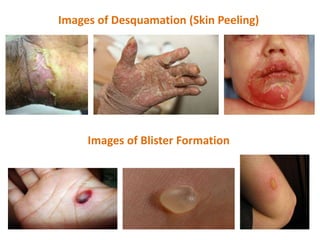
4) Desquamation of the skin also can occur when affected with beta-
particles.
Images of Desquamation (Skin Peeling)
Images of Blister Formation
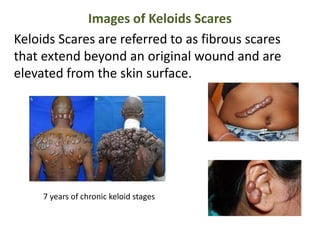
Images of Keloids Scares
Keloids Scares are referred to as fibrous scares
that extend beyond an original wound and are
elevated from the skin surface.
7 years of chronic keloid stages
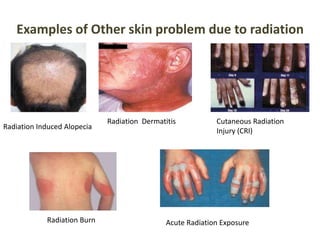
Examples of Other skin problem due to radiation
Radiation Induced Alopecia
Radiation Dermatitis
Radiation Burn Acute Radiation Exposure
Cutaneous Radiation
Injury (CRI)
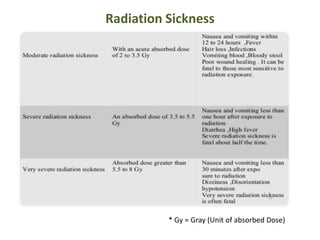
Radiation Sickness
* Gy = Gray (Unit of absorbed Dose)
UV RADIATION
1) Prolonged human exposure to solar UV radiation
may result in acute and chronic health effects on the
skin, eye and immune system.
2) UV rays (e.g., from sun exposure) is mediated
principally by the generation of reactive oxygen
species and the interruption of melanin production.
3) Sunburn (erythema) is the best-known acute effect
of excessive UV radiation exposure.
4) Another long-term effect is an inflammatory
reaction of the eye. In the most serious cases, skin
cancer and cataracts can Occur.
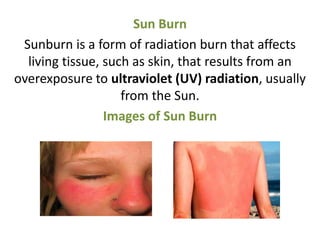
Sun Burn
Sunburn is a form of radiation burn that affects
living tissue, such as skin, that results from an
overexposure to ultraviolet (UV) radiation, usually
from the Sun.
Images of Sun Burn
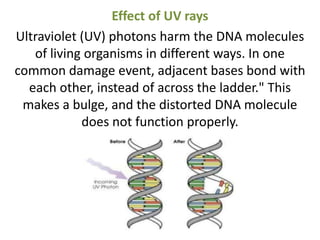
Effect of UV rays
Ultraviolet (UV) photons harm the DNA molecules
of living organisms in different ways. In one
common damage event, adjacent bases bond with
each other, instead of across the ladder." This
makes a bulge, and the distorted DNA molecule
does not function properly.
Sources of UV rays
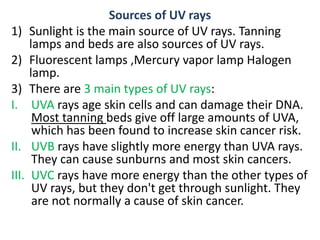
1) Sunlight is the main source of UV rays. Tanning
lamps and beds are also sources of UV rays.
2) Fluorescent lamps ,Mercury vapor lamp Halogen
lamp.
3) There are 3 main types of UV rays:
I. UVA rays age skin cells and can damage their DNA.
Most tanning beds give off large amounts of UVA,
which has been found to increase skin cancer risk.
II. UVB rays have slightly more energy than UVA rays.
They can cause sunburns and most skin cancers.
III. UVC rays have more energy than the other types of
UV rays, but they don't get through sunlight. They
are not normally a cause of skin cancer.
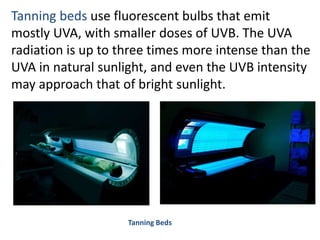
Tanning beds use fluorescent bulbs that emit
mostly UVA, with smaller doses of UVB. The UVA
radiation is up to three times more intense than the
UVA in natural sunlight, and even the UVB intensity
may approach that of bright sunlight.
Tanning Beds
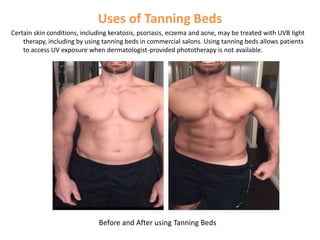
Uses of Tanning Beds
Certain skin conditions, including keratosis, psoriasis, eczema and acne, may be treated with UVB light
therapy, including by using tanning beds in commercial salons. Using tanning beds allows patients
to access UV exposure when dermatologist-provided phototherapy is not available.
Before and After using Tanning Beds
Different stages of Burns
• First-degree burns are generally red, sensitive, and moist.
The absence of blisters and blanching of the skin with
application of light pressure are characteristic features.
• Second-degree burns are classified as superficial
intermediate or deep, with partial skin loss. The presence
of erythematous blisters with exudate is typical of second-
degree burns.
• Third-degree burns involve deep dermal, whole skin loss.
The skin appears black, charred, and leathery. Sub dermal
vessels do not blanch with applied pressure and the areas
exposed are generally anesthetic or insensitive to pain
stimuli.
• Fourth-degree burns involve deep tissue and structure
loss. Hypertrophic scars and chronic granulations develop
unless skin grafting treatment is instituted.
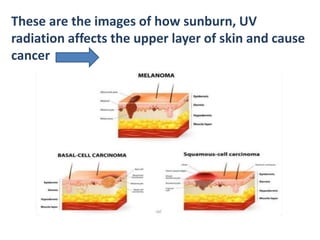
These are the images of how sunburn, UV
radiation affects the upper layer of skin and cause
cancer
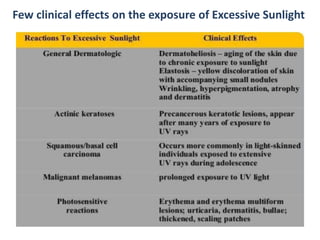
Few clinical effects on the exposure of Excessive Sunlight
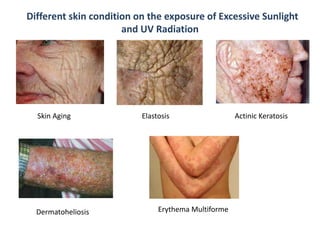
Different skin condition on the exposure of Excessive Sunlight
and UV Radiation
Skin Aging Elastosis
Dermatoheliosis Erythema Multiforme
Actinic Keratosis
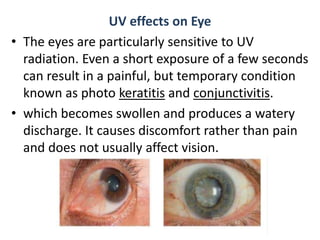
UV effects on Eye
• The eyes are particularly sensitive to UV
radiation. Even a short exposure of a few seconds
can result in a painful, but temporary condition
known as photo keratitis and conjunctivitis.
• which becomes swollen and produces a watery
discharge. It causes discomfort rather than pain
and does not usually affect vision.
Types of Non-ionizing radiation
1) Optical Radiation a) Ultraviolet,
b) Infrared and
c) Visible (including
lasers)
2) Radiofrequency Radiation-
a) Microwaves
b) Radio frequency
IR Sources and Effects
Sources - Most are thermal sources (plasma torches,
halogen lamps)
• Target Organs : skin and eyes
• Can damage : cornea, iris, retina and lens of the eye
• Skin : heats/burn surface of the skin and tissues
Biological Effects [Microwaves]
• Primarily thermal effects
• cataracts , biochemical changes
• Secondary problems (pace-makers, etc.)
• The latter are also capable of disrupting the normal
function of electronic medical devices such as
subcutaneously implanted cardiac pacemakers and
monitors.
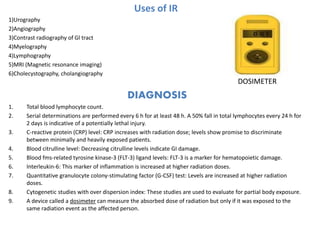
Uses of IR
1)Urography
2)Angiography
3)Contrast radiography of Gl tract
4)Myelography
4)Lymphography
5)MRI (Magnetic resonance imaging)
6)Cholecystography, cholangiography
DIAGNOSIS
1. Total blood lymphocyte count.
2. Serial determinations are performed every 6 h for at least 48 h. A 50% fall in total lymphocytes every 24 h for
2 days is indicative of a potentially lethal injury.
3. C-reactive protein (CRP) level: CRP increases with radiation dose; levels show promise to discriminate
between minimally and heavily exposed patients.
4. Blood citrulline level: Decreasing citrulline levels indicate GI damage.
5. Blood fms-related tyrosine kinase-3 (FLT-3) ligand levels: FLT-3 is a marker for hematopoietic damage.
6. Interleukin-6: This marker of inflammation is increased at higher radiation doses.
7. Quantitative granulocyte colony-stimulating factor (G-CSF) test: Levels are increased at higher radiation
doses.
8. Cytogenetic studies with over dispersion index: These studies are used to evaluate for partial body exposure.
9. A device called a dosimeter can measure the absorbed dose of radiation but only if it was exposed to the
same radiation event as the affected person.
DOSIMETER
PREVENTION
• Wear a sunscreen that has an SPF of at least 30 and
says "broad- spectrum" on the label, which means
that it protects against the sun's UVA and UVB rays.
• Limit sun exposure between 10 a.m. to 2 p.m.
• Wear sunglasses, a hat, and protective clothing.
• Avoid unnecessary exposure to radiation.
• Persons working in radiation hazard areas should
wear badges measure their exposure level.
• Protective shields should always be placed over the
parts of the body not being treated or studied
during x-ray imaging/radiation therapy.
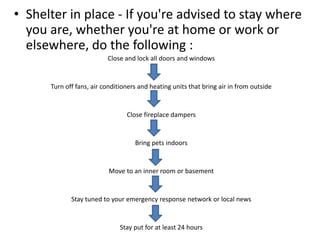
• Shelter in place - If you're advised to stay where
you are, whether you're at home or work or
elsewhere, do the following :
Close and lock all doors and windows
Turn off fans, air conditioners and heating units that bring air in from outside
Close fireplace dampers
Bring pets indoors
Move to an inner room or basement
Stay tuned to your emergency response network or local news
Stay put for at least 24 hours
Management Goals
o The treatment goals for radiation sickness are to
prevent further radioactive contamination.
o Treat life-threatening injuries, such as from burns
and trauma; reduce symptoms; and manage pain.
o Minimization of health care worker radiation
exposure and contamination.
o Treatment of external and internal contamination.
o Sometimes specific measures for particular radio
nuclides.
o Precautions for and treatment of compromised
immune system.
o Minimize inflammatory response.
o Supportive care
Decontamination
Decontamination is of two types . A) External and B) Internal
A) External Decontamination
• Decontamination prevents further distribution of
radioactive materials and lowers the risk of internal
contamination from inhalation, ingestion or open
wounds.
• Decontaminating wounds before decontaminating intact
skin.
• Cleaning the most contaminated areas first.
• Using a radiation survey meter to monitor progress of
decontamination.
• Removing clothing and shoes eliminates about 90
percent of external contamination.
• Gently washing with water and soap removes additional
radiation particles from the skin.
B) Internal decontamination
• Some treatments may reduce damage to internal organs
caused by radioactive particles.
• Ingested radioactive material should be removed promptly
by induced vomiting or lavage if exposure is recent.
• Frequent mouth rinsing with saline or dilute hydrogen
peroxide is indicated for oral contamination.
• Exposed eyes should be decontaminated by directing a
stream of water or saline laterally to avoid contaminating
the nasolacrimal duct
• Saturation of the target organ (e.g., potassium iodide [KI]
for iodine isotopes)
• Chelation at the site of entry or in body fluids followed by
rapid excretion (e.g., calcium or zinc diethylene triamine
penta acetate [DTPA] for americium, californium,
plutonium, and yttrium)
• Acceleration of the metabolic cycle of the
radionuclide by isotope dilution (eg, water for
hydrogen-3)
• Precipitation of the radionuclide in the intestinal
lumen followed by fecal excretion (eg, oral calcium or
aluminum phosphate solutions for strontium-90)
• lon exchange in the GI tract (eg, Prussian blue for
cesium-137,rubidium-82, thallium-201)
These treatments include the following:
Potassium iodide.
Prussian blue Diethylenetriamine penta acetic acid.
Filgrastim.
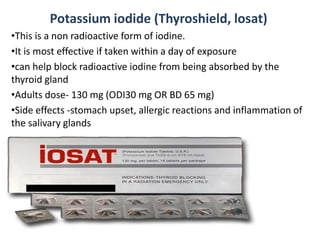
Potassium iodide (Thyroshield, losat)
•This is a non radioactive form of iodine.
•It is most effective if taken within a day of exposure
•can help block radioactive iodine from being absorbed by the
thyroid gland
•Adults dose- 130 mg (ODI30 mg OR BD 65 mg)
•Side effects -stomach upset, allergic reactions and inflammation of
the salivary glands
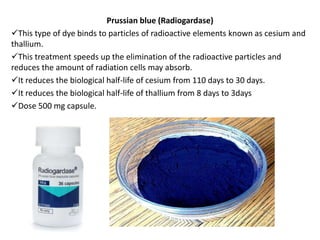
Prussian blue (Radiogardase)
This type of dye binds to particles of radioactive elements known as cesium and
thallium.
This treatment speeds up the elimination of the radioactive particles and
reduces the amount of radiation cells may absorb.
It reduces the biological half-life of cesium from 110 days to 30 days.
It reduces the biological half-life of thallium from 8 days to 3days
Dose 500 mg capsule.
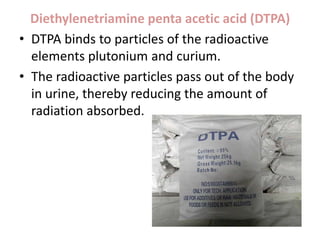
Diethylenetriamine penta acetic acid (DTPA)
• DTPA binds to particles of the radioactive
elements plutonium and curium.
• The radioactive particles pass out of the body
in urine, thereby reducing the amount of
radiation absorbed.
Treatment for damaged bone marrow
A protein called granulocyte colony-stimulating factor,
which promotes the growth of white blood cells, may
counter the effect of radiation Sickness on bone marrow.
Treatment with this protein-based medication, which
includes filgrastim (Neupogen), and pegfilgrastim
(Neulasta), may increase white blood cell production and
help prevent subsequent infections.
10 mcg/kg SC as a single daily injection for patients
exposed to myelosuppressive doses of radiation.
Administer as soon as possible after suspected or
confirmed exposure to radiation doses > 2 grays (gy).
Sargramostim (granulocyte macrophage colony-
stimulating factor [GM-CSF]) 5 to 10 mcg/kg sc once/day
or 200 to 400mcg/m2 sec once/day.
Filgrastim
Must follow the labeling instruction before
administration.
Do not shake. Shaking will cause damage the
filgrastim.
Before using the drug take it from refrigerator &
keep it room temperature for 30 min.
Choose new site for injection every time.
Discard the unused part of drug.
Up to 2 weeks, by subcutaneous injection.
Pegfilgrastim (Neulasta)
• Dose of 6mg/0.6ml SC
• Can administer when exposure to radiation > 2gy
• Having ADRs of bone pain and pain in extremity
• Do not administer between 14days before and 24
hours after administration of cytotoxic
chemotherapy.
Sargramostim
• 250mcg/vial
• IV, lyophilized powder for reconstitution
• ADRs of abdominal pain,diarrhea, asthenia,
malaise.
Evacuate: If you're advised to evacuate, follow the
instructions provided by your local authorities. Try to
stay calm and move quickly and in an orderly manner.
In addition, travel lightly, but take supplies, including:
• Flashlight
• Portable radio
• Batteries
• First-aid kit
• Necessary medicines
• Sealed food, such as canned foods, and bottled water
• Manual can opener
• Cash and credit cards
• Extra clothes
References:
• https://www.slideshare.net/NandhiniSekar3/radia
tion-poisoning
• https://www.msdmanuals.com/en-
in/professional/injuries-poisoning/radiation-
exposure-and-contamination/radiation-exposure-
and-contamination
• https://www.mayoclinic.org/diseases-
conditions/radiation-sickness/symptoms-
causes/syc-20377058
• https://en.wikipedia.org/wiki/Acute radiation
syndrome
• www.PharmaDost.info
• Medscape
RADIATION POISONING (1).pptx

RADIATION POISONING (1).pptx

  • 1.
    RADIATION POISONING Name –Dr. Mamta Class – Department of Pharmacy Practice
  • 2.
    What is Radiation? Radiation is the energy that comes from a source and travels through space at the speed of light. 1) It is the emission of energy as electromagnetic waves or as moving subatomic particles (especially high-energy particles) which cause ionization. 2) It is a form of energy whose sources are synthetic and naturally occurring. 3) Small quantities of radioactive materials occur naturally in the environment (atmosphere, water, and food) and are referred to as internal exposure. 4) External exposure results from sunlight radiation and from synthetic and naturally occurring radioactive materials.
  • 3.
    What is Radiationpoisoning ? It is also known as –1) radiation sickness , 2) acute radiation syndrome , 3) radiation toxicity.  Definition : Radiation sickness is illness and symptoms resulting from excessive exposure to ionizing radiation.  Classification : Depending on the energy of the radiated particles , Radiation is categorized into two divisions. These are 1) Ionizing , 2) Non-ionizing 1) lonizing radiation: It is the radiation that has enough energy to remove electrons from atoms which convert into ions in the form of particles or rays (gamma rays, X- rays). 2) Non-ionizing radiation: It is the radiation that gives off enough energy to make atoms vibrate, however not enough energy to remove electrons (visible light, radio waves, micro waves).
  • 4.
    IONIZING RADIATION 1. lonizingradiation induces somatic changes in cells and tissues by displacing electrons from their atomic nuclei, resulting in the intracellular ionization of molecules. 2. Depending on the dose and length of exposure, the effects can be immediate, chronic, or delayed. The most important targets are the DNA-molecules, where direct or indirect actions of radiation could result in lesions, such as base damage, single-strand breaks and double-strand breaks. 3. Double-strand breaks are considered the most serious DNA- lesions, since they can result in the cleavage of chromatin and might not be successfully repaired by the cell. The occurrence of DNA-lesions and, especially, of double-strand breaks will increase with increasing radiation exposure and will lead to a higher risk of cell death. 4. Thus, reversible or irreversible DNA changes are induced, initiating a series of events that culminate in the production of a mutagenic response, a carcinogenic response, the inhibition of cell replication, or cell death.
  • 5.
  • 6.
    SOURCE OF IONIZINGRADIATION 1) Medical Sources 2) The largest source of medical exposure, when averaged overall individuals, is from diagnostic x-rays, including both chest or limb x-rays and dental x-rays. 3) Nuclear medicine also includes in treatment of disease. Some examples are cobalt irradiation for the treatment of cancers, or the injection of radioactive iodine which concentrates in the thyroid for treatment of Graves' disease. 4) High-energy diagnostic or therapeutic X-rays, used in the treatment of cancer. 5) Occupational exposure involves variable amounts of radioactivity from nuclear reactors, linear accelerators, and sealed cesium, americium, and cobalt sources used in therapeutic instruments and detectors.
  • 7.
    6) Natural Sourcesof Radiation 7) Peoples are exposed to X rays and Gamma rays from cosmic rays from our solar system and radioactive elements normally present in the soil 8) Radium and radon gas are naturally occurring hazardous isotopes embedded in the Earth's crust 9) An accident at a nuclear industrial facility 10) An attack on a nuclear industrial facility 11) Detonation of a small radioactive device 12) Detonation of a conventional explosive device that disperses radioactive material (dirty bomb) 13) Detonation of a standard nuclear weapon
  • 8.
    Signs and symptomsof radiation poisoning Classically acute radiation syndrome is divided into three main presentations: 1. Hematopoietic- aplastic anemia 2. Gastrointestinal- a) nausea b) Vomiting c) loss of appetite and d) abdominal pain 3. Neurological/vascular- a) dizziness b) headache c) decreased level of consciousness (occurring within minutes to a few hours)
  • 9.
    SKIN CHANGES Cutaneous radiationsyndrome (CRS)refers to the skin symptoms of radiation exposure. 1) Within a few hours after irradiation, a transient and inconsistent redness (associated with itching) can occur. 2) Then, a latent phase may occur and last from a few days up to several weeks, when intense reddening, blistering, and ulceration of the irradiated site are visible. 3) However, very large skin doses can cause permanent hair loss, damaged sebaceous and sweat glands, atrophy, fibrosis(mostly keloids), decreased or increased skin pigmentation, and ulceration or necrosis of the exposed tissue. 4) Desquamation of the skin also can occur when affected with beta- particles.
  • 10.
    Images of Desquamation(Skin Peeling) Images of Blister Formation
  • 11.
    Images of KeloidsScares Keloids Scares are referred to as fibrous scares that extend beyond an original wound and are elevated from the skin surface. 7 years of chronic keloid stages
  • 12.
    Examples of Otherskin problem due to radiation Radiation Induced Alopecia Radiation Dermatitis Radiation Burn Acute Radiation Exposure Cutaneous Radiation Injury (CRI)
  • 13.
    Radiation Sickness * Gy= Gray (Unit of absorbed Dose)
  • 14.
    UV RADIATION 1) Prolongedhuman exposure to solar UV radiation may result in acute and chronic health effects on the skin, eye and immune system. 2) UV rays (e.g., from sun exposure) is mediated principally by the generation of reactive oxygen species and the interruption of melanin production. 3) Sunburn (erythema) is the best-known acute effect of excessive UV radiation exposure. 4) Another long-term effect is an inflammatory reaction of the eye. In the most serious cases, skin cancer and cataracts can Occur.
  • 15.
    Sun Burn Sunburn isa form of radiation burn that affects living tissue, such as skin, that results from an overexposure to ultraviolet (UV) radiation, usually from the Sun. Images of Sun Burn
  • 16.
    Effect of UVrays Ultraviolet (UV) photons harm the DNA molecules of living organisms in different ways. In one common damage event, adjacent bases bond with each other, instead of across the ladder." This makes a bulge, and the distorted DNA molecule does not function properly.
  • 17.
    Sources of UVrays 1) Sunlight is the main source of UV rays. Tanning lamps and beds are also sources of UV rays. 2) Fluorescent lamps ,Mercury vapor lamp Halogen lamp. 3) There are 3 main types of UV rays: I. UVA rays age skin cells and can damage their DNA. Most tanning beds give off large amounts of UVA, which has been found to increase skin cancer risk. II. UVB rays have slightly more energy than UVA rays. They can cause sunburns and most skin cancers. III. UVC rays have more energy than the other types of UV rays, but they don't get through sunlight. They are not normally a cause of skin cancer.
  • 18.
    Tanning beds usefluorescent bulbs that emit mostly UVA, with smaller doses of UVB. The UVA radiation is up to three times more intense than the UVA in natural sunlight, and even the UVB intensity may approach that of bright sunlight. Tanning Beds
  • 19.
    Uses of TanningBeds Certain skin conditions, including keratosis, psoriasis, eczema and acne, may be treated with UVB light therapy, including by using tanning beds in commercial salons. Using tanning beds allows patients to access UV exposure when dermatologist-provided phototherapy is not available. Before and After using Tanning Beds
  • 20.
    Different stages ofBurns • First-degree burns are generally red, sensitive, and moist. The absence of blisters and blanching of the skin with application of light pressure are characteristic features. • Second-degree burns are classified as superficial intermediate or deep, with partial skin loss. The presence of erythematous blisters with exudate is typical of second- degree burns. • Third-degree burns involve deep dermal, whole skin loss. The skin appears black, charred, and leathery. Sub dermal vessels do not blanch with applied pressure and the areas exposed are generally anesthetic or insensitive to pain stimuli. • Fourth-degree burns involve deep tissue and structure loss. Hypertrophic scars and chronic granulations develop unless skin grafting treatment is instituted.
  • 21.
    These are theimages of how sunburn, UV radiation affects the upper layer of skin and cause cancer
  • 22.
    Few clinical effectson the exposure of Excessive Sunlight
  • 23.
    Different skin conditionon the exposure of Excessive Sunlight and UV Radiation Skin Aging Elastosis Dermatoheliosis Erythema Multiforme Actinic Keratosis
  • 24.
    UV effects onEye • The eyes are particularly sensitive to UV radiation. Even a short exposure of a few seconds can result in a painful, but temporary condition known as photo keratitis and conjunctivitis. • which becomes swollen and produces a watery discharge. It causes discomfort rather than pain and does not usually affect vision.
  • 25.
    Types of Non-ionizingradiation 1) Optical Radiation a) Ultraviolet, b) Infrared and c) Visible (including lasers) 2) Radiofrequency Radiation- a) Microwaves b) Radio frequency
  • 26.
    IR Sources andEffects Sources - Most are thermal sources (plasma torches, halogen lamps) • Target Organs : skin and eyes • Can damage : cornea, iris, retina and lens of the eye • Skin : heats/burn surface of the skin and tissues Biological Effects [Microwaves] • Primarily thermal effects • cataracts , biochemical changes • Secondary problems (pace-makers, etc.) • The latter are also capable of disrupting the normal function of electronic medical devices such as subcutaneously implanted cardiac pacemakers and monitors.
  • 27.
    Uses of IR 1)Urography 2)Angiography 3)Contrastradiography of Gl tract 4)Myelography 4)Lymphography 5)MRI (Magnetic resonance imaging) 6)Cholecystography, cholangiography DIAGNOSIS 1. Total blood lymphocyte count. 2. Serial determinations are performed every 6 h for at least 48 h. A 50% fall in total lymphocytes every 24 h for 2 days is indicative of a potentially lethal injury. 3. C-reactive protein (CRP) level: CRP increases with radiation dose; levels show promise to discriminate between minimally and heavily exposed patients. 4. Blood citrulline level: Decreasing citrulline levels indicate GI damage. 5. Blood fms-related tyrosine kinase-3 (FLT-3) ligand levels: FLT-3 is a marker for hematopoietic damage. 6. Interleukin-6: This marker of inflammation is increased at higher radiation doses. 7. Quantitative granulocyte colony-stimulating factor (G-CSF) test: Levels are increased at higher radiation doses. 8. Cytogenetic studies with over dispersion index: These studies are used to evaluate for partial body exposure. 9. A device called a dosimeter can measure the absorbed dose of radiation but only if it was exposed to the same radiation event as the affected person. DOSIMETER
  • 28.
    PREVENTION • Wear asunscreen that has an SPF of at least 30 and says "broad- spectrum" on the label, which means that it protects against the sun's UVA and UVB rays. • Limit sun exposure between 10 a.m. to 2 p.m. • Wear sunglasses, a hat, and protective clothing. • Avoid unnecessary exposure to radiation. • Persons working in radiation hazard areas should wear badges measure their exposure level. • Protective shields should always be placed over the parts of the body not being treated or studied during x-ray imaging/radiation therapy.
  • 29.
    • Shelter inplace - If you're advised to stay where you are, whether you're at home or work or elsewhere, do the following : Close and lock all doors and windows Turn off fans, air conditioners and heating units that bring air in from outside Close fireplace dampers Bring pets indoors Move to an inner room or basement Stay tuned to your emergency response network or local news Stay put for at least 24 hours
  • 30.
    Management Goals o Thetreatment goals for radiation sickness are to prevent further radioactive contamination. o Treat life-threatening injuries, such as from burns and trauma; reduce symptoms; and manage pain. o Minimization of health care worker radiation exposure and contamination. o Treatment of external and internal contamination. o Sometimes specific measures for particular radio nuclides. o Precautions for and treatment of compromised immune system. o Minimize inflammatory response. o Supportive care
  • 31.
    Decontamination Decontamination is oftwo types . A) External and B) Internal A) External Decontamination • Decontamination prevents further distribution of radioactive materials and lowers the risk of internal contamination from inhalation, ingestion or open wounds. • Decontaminating wounds before decontaminating intact skin. • Cleaning the most contaminated areas first. • Using a radiation survey meter to monitor progress of decontamination. • Removing clothing and shoes eliminates about 90 percent of external contamination. • Gently washing with water and soap removes additional radiation particles from the skin.
  • 32.
    B) Internal decontamination •Some treatments may reduce damage to internal organs caused by radioactive particles. • Ingested radioactive material should be removed promptly by induced vomiting or lavage if exposure is recent. • Frequent mouth rinsing with saline or dilute hydrogen peroxide is indicated for oral contamination. • Exposed eyes should be decontaminated by directing a stream of water or saline laterally to avoid contaminating the nasolacrimal duct • Saturation of the target organ (e.g., potassium iodide [KI] for iodine isotopes) • Chelation at the site of entry or in body fluids followed by rapid excretion (e.g., calcium or zinc diethylene triamine penta acetate [DTPA] for americium, californium, plutonium, and yttrium)
  • 33.
    • Acceleration ofthe metabolic cycle of the radionuclide by isotope dilution (eg, water for hydrogen-3) • Precipitation of the radionuclide in the intestinal lumen followed by fecal excretion (eg, oral calcium or aluminum phosphate solutions for strontium-90) • lon exchange in the GI tract (eg, Prussian blue for cesium-137,rubidium-82, thallium-201) These treatments include the following: Potassium iodide. Prussian blue Diethylenetriamine penta acetic acid. Filgrastim.
  • 34.
    Potassium iodide (Thyroshield,losat) •This is a non radioactive form of iodine. •It is most effective if taken within a day of exposure •can help block radioactive iodine from being absorbed by the thyroid gland •Adults dose- 130 mg (ODI30 mg OR BD 65 mg) •Side effects -stomach upset, allergic reactions and inflammation of the salivary glands
  • 35.
    Prussian blue (Radiogardase) Thistype of dye binds to particles of radioactive elements known as cesium and thallium. This treatment speeds up the elimination of the radioactive particles and reduces the amount of radiation cells may absorb. It reduces the biological half-life of cesium from 110 days to 30 days. It reduces the biological half-life of thallium from 8 days to 3days Dose 500 mg capsule.
  • 36.
    Diethylenetriamine penta aceticacid (DTPA) • DTPA binds to particles of the radioactive elements plutonium and curium. • The radioactive particles pass out of the body in urine, thereby reducing the amount of radiation absorbed.
  • 37.
    Treatment for damagedbone marrow A protein called granulocyte colony-stimulating factor, which promotes the growth of white blood cells, may counter the effect of radiation Sickness on bone marrow. Treatment with this protein-based medication, which includes filgrastim (Neupogen), and pegfilgrastim (Neulasta), may increase white blood cell production and help prevent subsequent infections. 10 mcg/kg SC as a single daily injection for patients exposed to myelosuppressive doses of radiation. Administer as soon as possible after suspected or confirmed exposure to radiation doses > 2 grays (gy). Sargramostim (granulocyte macrophage colony- stimulating factor [GM-CSF]) 5 to 10 mcg/kg sc once/day or 200 to 400mcg/m2 sec once/day.
  • 38.
    Filgrastim Must follow thelabeling instruction before administration. Do not shake. Shaking will cause damage the filgrastim. Before using the drug take it from refrigerator & keep it room temperature for 30 min. Choose new site for injection every time. Discard the unused part of drug. Up to 2 weeks, by subcutaneous injection.
  • 39.
    Pegfilgrastim (Neulasta) • Doseof 6mg/0.6ml SC • Can administer when exposure to radiation > 2gy • Having ADRs of bone pain and pain in extremity • Do not administer between 14days before and 24 hours after administration of cytotoxic chemotherapy. Sargramostim • 250mcg/vial • IV, lyophilized powder for reconstitution • ADRs of abdominal pain,diarrhea, asthenia, malaise.
  • 40.
    Evacuate: If you'readvised to evacuate, follow the instructions provided by your local authorities. Try to stay calm and move quickly and in an orderly manner. In addition, travel lightly, but take supplies, including: • Flashlight • Portable radio • Batteries • First-aid kit • Necessary medicines • Sealed food, such as canned foods, and bottled water • Manual can opener • Cash and credit cards • Extra clothes
  • 41.
    References: • https://www.slideshare.net/NandhiniSekar3/radia tion-poisoning • https://www.msdmanuals.com/en- in/professional/injuries-poisoning/radiation- exposure-and-contamination/radiation-exposure- and-contamination •https://www.mayoclinic.org/diseases- conditions/radiation-sickness/symptoms- causes/syc-20377058 • https://en.wikipedia.org/wiki/Acute radiation syndrome • www.PharmaDost.info • Medscape