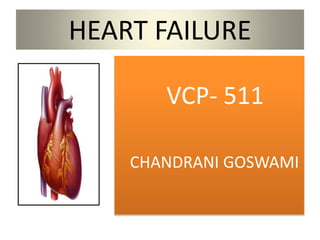
HEART FAILURE
VCP- 511
CHANDRANI GOSWAMI
DEFINITION-
Heart failure (HF), often used to mean chronic
heart failure (CHF), occurs when the heart is unable
to pump sufficiently to maintain blood flow to meet
the needs of the body.
**A heart failure is different from myocardial infarction.
** It is different from cardiac arrest
TYPES
 Heart Failure, Left-
Sided
 Heart Failure, Right-
Sided
Heart Failure, Left-Sided
Description-
Occurs when the left cardiac ventricle no
longer pumps blood efficiently.
This type of failure causes pulmonary
congestion and edema.
Left failure results in decreased blood
returning to the right and so both sides fail
simultaneously and vice versa.
CAUSES
1. Mitral Valve Problems (Stenosis or
Insufficiency)
2. Cardiomyopathies
3. Congenital Abnormalities
4. Myocardial Inflammation or Degeneration
SIGNS AND CLINICAL PATHOLOGY -
• Pulmonary congestion
• Pulmonary edema
• Pleural effusion
• low systemic blood pressure
• exercise intolerance
• Tachycardia
• weak femoral pulses
• pre-renal failure
• azotaemia.
Heart Failure, Right-Sided
 Occurs when the right cardiac ventricle no longer pumps blood
efficiently
 This type of failure causes congestion (backing up of blood)
throughout the veins and capillaries elevating the central venous
pressure and resulting in systemic edema.
 The areas of systemic edema formation are species specific
 Species Differences
• Horse & Ox: Ventral Abdomen & Brisket edema
• Dog: Ascites (abdominal edema)
• Cat: Hydrothorax (thoracic edema)
CAUSES
1. Left-Sided Heart Failure
2. Cardiomyopathies
3. Pericarditis
4. Hydropericardium
5. Increased Pulmonary Resistance
6. Myocardial Inflammation & Degeneration
7. Valvular Disease
8. Tumours (heart base)
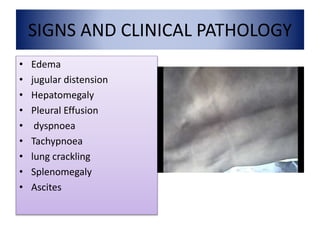
SIGNS AND CLINICAL PATHOLOGY
• Edema
• jugular distension
• Hepatomegaly
• Pleural Effusion
• dyspnoea
• Tachypnoea
• lung crackling
• Splenomegaly
• Ascites
DIAGNOSIS
1. History and Clinical Signs
2. Physical Examination
- Observation
- Palpation
• Jugular pulses and/or jugular venous distension
and/or enlarged ventral abdominal veins
(indicates high venous pressure).
• Abdomen: pitting oedema, ascites, splenomegaly,
hepatomegaly and fluid thrill (fluid movement
causes a palpable vibration).
DIAGNOSIS (Contd.)
- Percussion
- Ausculation
- Heart Sounds
- Heart Murmurs
3. Electrocardiography (ECG)
4. Radiology
TREATMENT
I* Drugs used to decrease venous tone and fluid volume
which can help to relieve congestion & oedema.
1. Diuretics
• Loop Diuretics eg. Frusemide
• Thiazide diuretics eg. Chlorothiazide or
Hydrochlorothiazide.
• Potassium sparing diuretics eg. Spironolactone and
Amiloride.
2. Vasodilators includes ACE inhibitors (Enalapril (dogs &
cats), Benazepril (cats), alpha-antagonists and
Nitroprusside.
TREATMENT (Contd.)
II* Drugs used to Increase Myocardial Systolic
Function
3.
digitalis compounds (e.g. Digoxin, Digitoxin),
calcium sensitisers/ phosphodiesterase III.
inhibitor (e.g. Pimobendan),
pure phosphodiesterase inhibitors (e.g. Milrinone,
Amrinone) and
catecholamines (e.g. Dobutamine, Dopamine).
TREATMENT (Contd.)
III* Drugs used to Increase Myocardial Diastolic
Function
4.
beta blockers (e.g. Atenolol, Propranolol) and
calcium channel blockers (e.g. Diltiazem).
5. Management
6. Surgery
Heart failure

Heart failure

  • 1.
  • 2.
    DEFINITION- Heart failure (HF),often used to mean chronic heart failure (CHF), occurs when the heart is unable to pump sufficiently to maintain blood flow to meet the needs of the body. **A heart failure is different from myocardial infarction. ** It is different from cardiac arrest
  • 3.
    TYPES  Heart Failure,Left- Sided  Heart Failure, Right- Sided
  • 4.
    Heart Failure, Left-Sided Description- Occurswhen the left cardiac ventricle no longer pumps blood efficiently. This type of failure causes pulmonary congestion and edema. Left failure results in decreased blood returning to the right and so both sides fail simultaneously and vice versa.
  • 5.
    CAUSES 1. Mitral ValveProblems (Stenosis or Insufficiency) 2. Cardiomyopathies 3. Congenital Abnormalities 4. Myocardial Inflammation or Degeneration
  • 6.
    SIGNS AND CLINICALPATHOLOGY - • Pulmonary congestion • Pulmonary edema • Pleural effusion • low systemic blood pressure • exercise intolerance • Tachycardia • weak femoral pulses • pre-renal failure • azotaemia.
  • 7.
    Heart Failure, Right-Sided Occurs when the right cardiac ventricle no longer pumps blood efficiently  This type of failure causes congestion (backing up of blood) throughout the veins and capillaries elevating the central venous pressure and resulting in systemic edema.  The areas of systemic edema formation are species specific  Species Differences • Horse & Ox: Ventral Abdomen & Brisket edema • Dog: Ascites (abdominal edema) • Cat: Hydrothorax (thoracic edema)
  • 8.
    CAUSES 1. Left-Sided HeartFailure 2. Cardiomyopathies 3. Pericarditis 4. Hydropericardium 5. Increased Pulmonary Resistance 6. Myocardial Inflammation & Degeneration 7. Valvular Disease 8. Tumours (heart base)
  • 9.
    SIGNS AND CLINICALPATHOLOGY • Edema • jugular distension • Hepatomegaly • Pleural Effusion • dyspnoea • Tachypnoea • lung crackling • Splenomegaly • Ascites
  • 10.
    DIAGNOSIS 1. History andClinical Signs 2. Physical Examination - Observation - Palpation • Jugular pulses and/or jugular venous distension and/or enlarged ventral abdominal veins (indicates high venous pressure). • Abdomen: pitting oedema, ascites, splenomegaly, hepatomegaly and fluid thrill (fluid movement causes a palpable vibration).
  • 11.
    DIAGNOSIS (Contd.) - Percussion -Ausculation - Heart Sounds - Heart Murmurs 3. Electrocardiography (ECG) 4. Radiology
  • 12.
    TREATMENT I* Drugs usedto decrease venous tone and fluid volume which can help to relieve congestion & oedema. 1. Diuretics • Loop Diuretics eg. Frusemide • Thiazide diuretics eg. Chlorothiazide or Hydrochlorothiazide. • Potassium sparing diuretics eg. Spironolactone and Amiloride. 2. Vasodilators includes ACE inhibitors (Enalapril (dogs & cats), Benazepril (cats), alpha-antagonists and Nitroprusside.
  • 13.
    TREATMENT (Contd.) II* Drugsused to Increase Myocardial Systolic Function 3. digitalis compounds (e.g. Digoxin, Digitoxin), calcium sensitisers/ phosphodiesterase III. inhibitor (e.g. Pimobendan), pure phosphodiesterase inhibitors (e.g. Milrinone, Amrinone) and catecholamines (e.g. Dobutamine, Dopamine).
  • 14.
    TREATMENT (Contd.) III* Drugsused to Increase Myocardial Diastolic Function 4. beta blockers (e.g. Atenolol, Propranolol) and calcium channel blockers (e.g. Diltiazem). 5. Management 6. Surgery