
Renal Calculi
Numan Shah
2nd Batch
Renal Dialysis
Outlines
• Defination of renal Calculi & its types
• Pathogensis
• Common sites
• Predisposing factors
• Copmlications
• Clinical features
Renal Stones
Urolithiasis
Renal Calculi
Nephrolithiasis
Kidney Stones
Urolithiasis(renal stones)
Definition:
The stone formation within the kidney or collecting system is called
Urolithiasis
OR
Urolithiasisis calculus formation at any level in the urinary collecting
system
• kidney (nephrolithiasis),
• ureter (ureterolithiasis),
• bladder (cystolithiasis),
Types of renal stones
Common stones:
 OXALATE (CALCIUM OXALATE)
 PHOSPHATE
 URIC ACID / URATE
 CYSTINE
Un-common
XANTHINE STONES – (Autosomal Recessive . Def of Xanthine
Oxidase leading to Xanthinuria)
DIHYDROXY ADENINE STONE – ( Def. of enzyme adenine phospo
ribosyl transferase )
SlLICATE STONES – Rare in humans ( excess intake of Antacid with
Mg Trisilicate. Mostly in cattle due to ingestion of Sand )
MATRIX - Infection by Proteus - Radiolucent (all calculi have some amt
( 3%) of matrix but matrix calculus has 65% Matrix content in calculi)
Types of stones
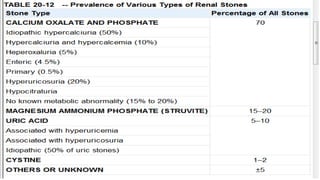
Calcium oxalate stones:
Most common type (70%) containing calcium oxalate or calcium
oxalate mixed with calcium phosphate
Triple phosphate stones:
(15%) composed of magnesium ammonium phosphate
Urate stones:
About (10%) copmmposed of uric acid
Cystine stones: (1-2%) made up cystine
Pathogenesis
Calcium oxalate stones
Hypercalcemia:
About (10%) of patients have hypercalcemia due to hyperparattyroidism,
or vitamin D intoxication etc.
Hypercalciuria:
About (55%) have hypercalciuria without hypercalcemia (idipathic
hypercalciuria). Probably it results from hyperabsorption from calcium
from intestine or impairment in renal tubular reabsorption of calcium
Idiopathic:
In about 20% patients,stone formation occurs without either
hypercalcemia or hypercalciuria
Pathogenesis
Triple phosphate stones:
The magnesium ammonium phosphate (struvite) stones usually follow
the infection by urea splitting bacteria(proteus and stayphlococcus)
which convert urea to ammonia,producing urine alkaline in which
magnesium ammonium phosphate salts precipitate to form stone.
Patogenesis
• Urate stones:
Composed by Uric acid
Caused by high intake of protein diet and gout
Cystine stones:
They are associated with genetically determined defect in the renal
transport of cystine aminoacid.
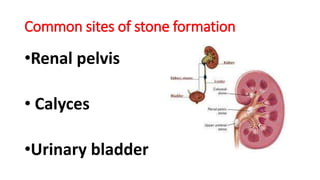
Common sites of stone formation
•Renal pelvis
• Calyces
•Urinary bladder
Predisposing factors
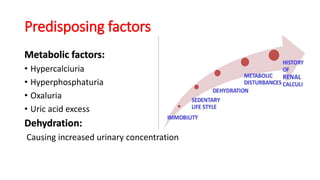
Metabolic factors:
• Hypercalciuria
• Hyperphosphaturia
• Oxaluria
• Uric acid excess
Dehydration:
Causing increased urinary concentration
Predisposing factors
Stasis:
Obstruction to urine flow encourages salt precipitation
Urinary pH:Uric acid and oxalate stones form in an acidic urine,while
the phophate stones develop in an alkaline urine
Renal disease:
Renal infections(producing urine alkaline)
Renal Tumors (producing renal stasis)
Copmlications
• Pyelonephritis
• Acute urinary retension
• Recurrent chances of infection
• Renal failure
• Pyonephrosis
Clinical features
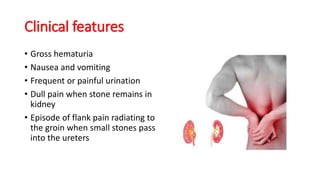
• Gross hematuria
• Nausea and vomiting
• Frequent or painful urination
• Dull pain when stone remains in
kidney
• Episode of flank pain radiating to
the groin when small stones pass
into the ureters
Clinical features
Acute obstruction of ureter---
severe colic
Flank pain referred to genitalia
Nausea, vomiting
Microhematuria
Chronic stone distends to be
associated with large or multiple
stones
can be little or no pain
may have impaired renal function,
anemia, weight loss etc.
concomitant infection more likely
THANK YOU

Renal calculi

  • 1.
    Renal Calculi Numan Shah 2ndBatch Renal Dialysis
  • 2.
    Outlines • Defination ofrenal Calculi & its types • Pathogensis • Common sites • Predisposing factors • Copmlications • Clinical features
  • 3.
  • 4.
    Urolithiasis(renal stones) Definition: The stoneformation within the kidney or collecting system is called Urolithiasis OR Urolithiasisis calculus formation at any level in the urinary collecting system • kidney (nephrolithiasis), • ureter (ureterolithiasis), • bladder (cystolithiasis),
  • 5.
    Types of renalstones Common stones:  OXALATE (CALCIUM OXALATE)  PHOSPHATE  URIC ACID / URATE  CYSTINE
  • 6.
    Un-common XANTHINE STONES –(Autosomal Recessive . Def of Xanthine Oxidase leading to Xanthinuria) DIHYDROXY ADENINE STONE – ( Def. of enzyme adenine phospo ribosyl transferase ) SlLICATE STONES – Rare in humans ( excess intake of Antacid with Mg Trisilicate. Mostly in cattle due to ingestion of Sand ) MATRIX - Infection by Proteus - Radiolucent (all calculi have some amt ( 3%) of matrix but matrix calculus has 65% Matrix content in calculi)
  • 7.
    Types of stones Calciumoxalate stones: Most common type (70%) containing calcium oxalate or calcium oxalate mixed with calcium phosphate Triple phosphate stones: (15%) composed of magnesium ammonium phosphate Urate stones: About (10%) copmmposed of uric acid Cystine stones: (1-2%) made up cystine
  • 8.
    Pathogenesis Calcium oxalate stones Hypercalcemia: About(10%) of patients have hypercalcemia due to hyperparattyroidism, or vitamin D intoxication etc. Hypercalciuria: About (55%) have hypercalciuria without hypercalcemia (idipathic hypercalciuria). Probably it results from hyperabsorption from calcium from intestine or impairment in renal tubular reabsorption of calcium Idiopathic: In about 20% patients,stone formation occurs without either hypercalcemia or hypercalciuria
  • 9.
    Pathogenesis Triple phosphate stones: Themagnesium ammonium phosphate (struvite) stones usually follow the infection by urea splitting bacteria(proteus and stayphlococcus) which convert urea to ammonia,producing urine alkaline in which magnesium ammonium phosphate salts precipitate to form stone.
  • 10.
    Patogenesis • Urate stones: Composedby Uric acid Caused by high intake of protein diet and gout Cystine stones: They are associated with genetically determined defect in the renal transport of cystine aminoacid.
  • 11.
    Common sites ofstone formation •Renal pelvis • Calyces •Urinary bladder
  • 12.
    Predisposing factors Metabolic factors: •Hypercalciuria • Hyperphosphaturia • Oxaluria • Uric acid excess Dehydration: Causing increased urinary concentration
  • 13.
    Predisposing factors Stasis: Obstruction tourine flow encourages salt precipitation Urinary pH:Uric acid and oxalate stones form in an acidic urine,while the phophate stones develop in an alkaline urine Renal disease: Renal infections(producing urine alkaline) Renal Tumors (producing renal stasis)
  • 14.
    Copmlications • Pyelonephritis • Acuteurinary retension • Recurrent chances of infection • Renal failure • Pyonephrosis
  • 15.
    Clinical features • Grosshematuria • Nausea and vomiting • Frequent or painful urination • Dull pain when stone remains in kidney • Episode of flank pain radiating to the groin when small stones pass into the ureters
  • 16.
    Clinical features Acute obstructionof ureter--- severe colic Flank pain referred to genitalia Nausea, vomiting Microhematuria Chronic stone distends to be associated with large or multiple stones can be little or no pain may have impaired renal function, anemia, weight loss etc. concomitant infection more likely
  • 18.