ARTIFICIAL/
SUPPLEMENTARY
FEEDING
ARTIFICIAL FEEDING
 It is the feeding of the child other than
breast milk.
 It involves the use of breast-milk-substitutes in
the form of liquid milk.
 Ex:- Fresh cow’s / buffalo’s milk
Commercially available dried whole milk
(Nan, Pre-nan, Lactogen)
 It is a form of supplementary feeding.
INDICATIONS
 Death or absence of mother
 Prolonged maternal illness
 Complete failure of breast milk production
 Tb & HIV +ve mothers
 Working mothers
 Non-lactating mother who adopted the baby
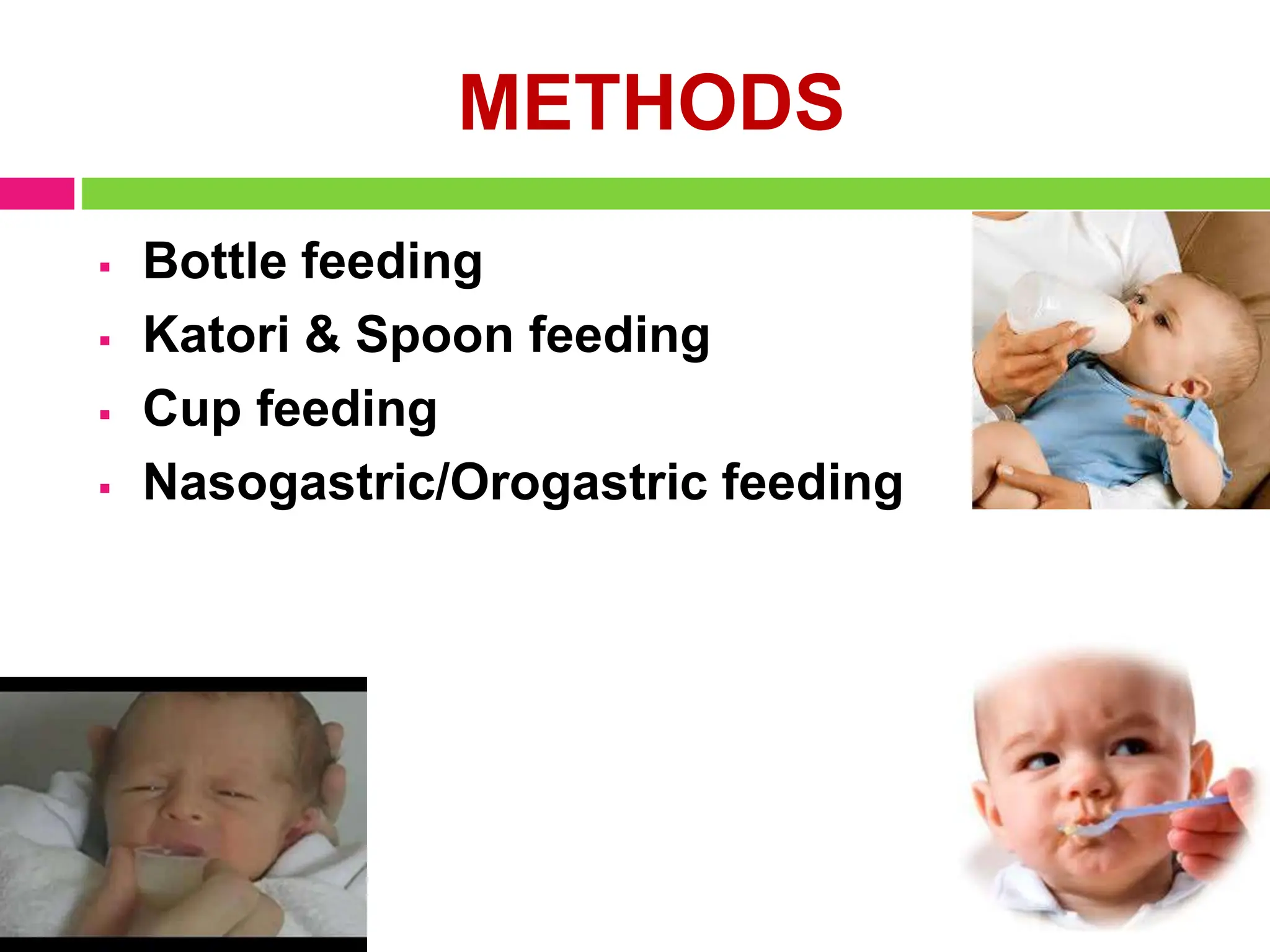
METHODS
 Bottle feeding
 Katori & Spoon feeding
 Cup feeding
 Nasogastric/Orogastric feeding
BOTTLE FEEDING
 Feeding of the baby with the help of bottle.
 Prolonged bottle feeding may lead to ‘Baby
Bottle Tooth Decay’.
 Contaminated / inadequately cleaned bottle
feeding results in GI infection causing
diarrhea.
PRINCIPLES OF BOTTLE
FEEDING
 After washing the bottle with brush & clean
water, it should be boiled for about 10
minutes.
 Hands should be washed thoroughly before
preparing feed.
 The hole of teat should be such that drip rate
is 1 drop/second.
TECHNIQUES OF BOTTLE
FEEDING
 Bottle should be sterilized & kept covered.
 Prepare formula as per requirement, when
baby is hungry.
 Wash hands & test flow of milk & its
temperature, by sprinkling a few drops on
inner aspect of wrist.
 Sit in a comfortable position. Head of the
baby should be higher than rest of the body.
BOTTLE FEEDING POSITION
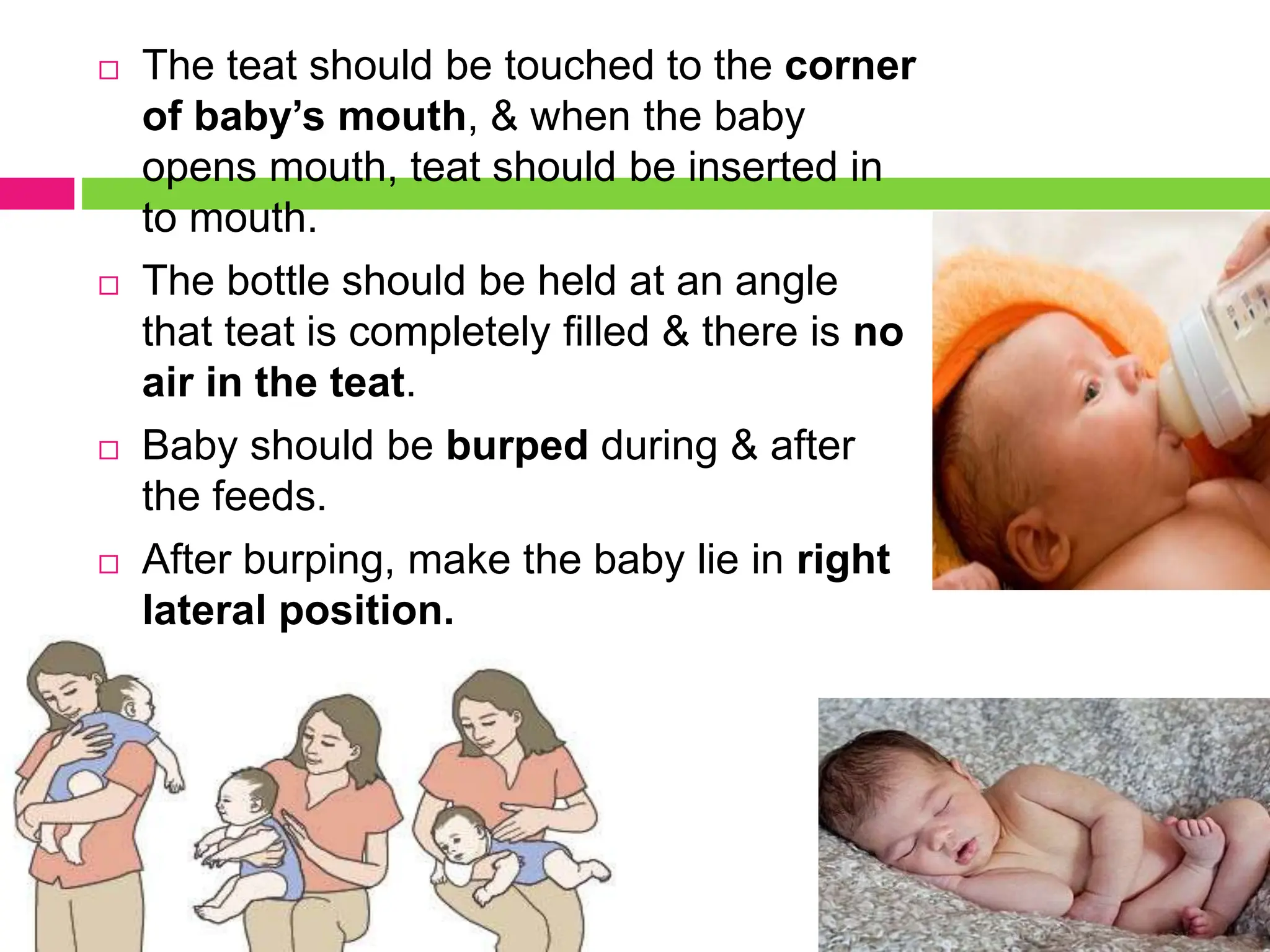
 The teat should be touched to the corner
of baby’s mouth, & when the baby
opens mouth, teat should be inserted in
to mouth.
 The bottle should be held at an angle
that teat is completely filled & there is no
air in the teat.
 Baby should be burped during & after
the feeds.
 After burping, make the baby lie in right
lateral position.
KATORI /SPOON FEEDING
 When the neonate cannot suck on the breast
due to prematurity or any congenital
malformation/ when milk is obtained from
sources other than mother, feeding with
katori or spoon is indicated.
TECHNIQUE
 Katori & spoon should be
washed thoroughly & boiled for
10 minutes.
 Take required amount of feed
in the cup & keep it covered.
 Wash hands & hold the baby
semi-upright in lap.
 Wrap a soft cloth around the
neck.
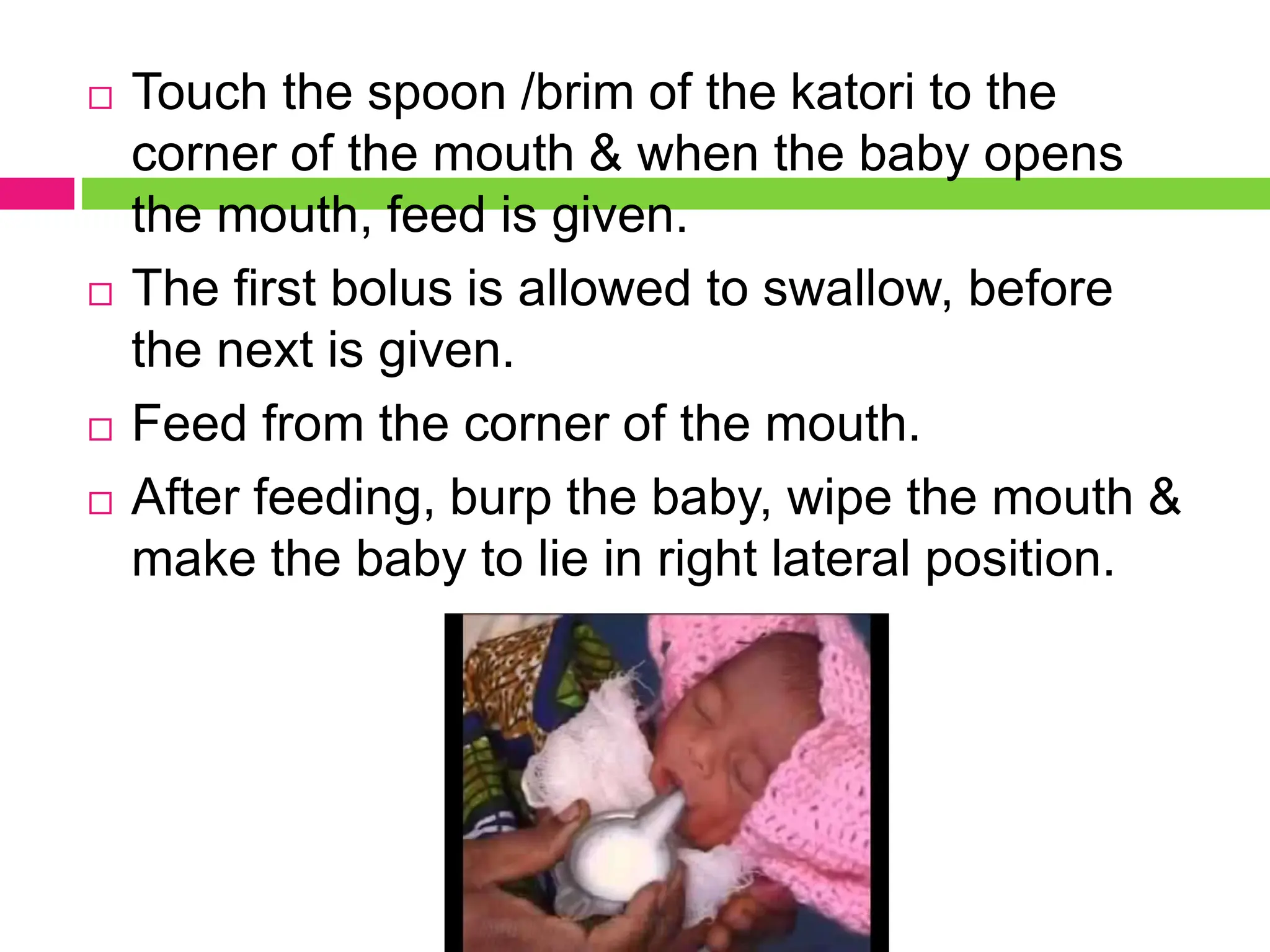
 Touch the spoon /brim of the katori to the
corner of the mouth & when the baby opens
the mouth, feed is given.
 The first bolus is allowed to swallow, before
the next is given.
 Feed from the corner of the mouth.
 After feeding, burp the baby, wipe the mouth &
make the baby to lie in right lateral position.
CUP FEEDING
 Feeding the baby directly by cup.
 A baby who is cup fed needs to be given 5 ml
extra at each feed to allow for spillage from
cup.
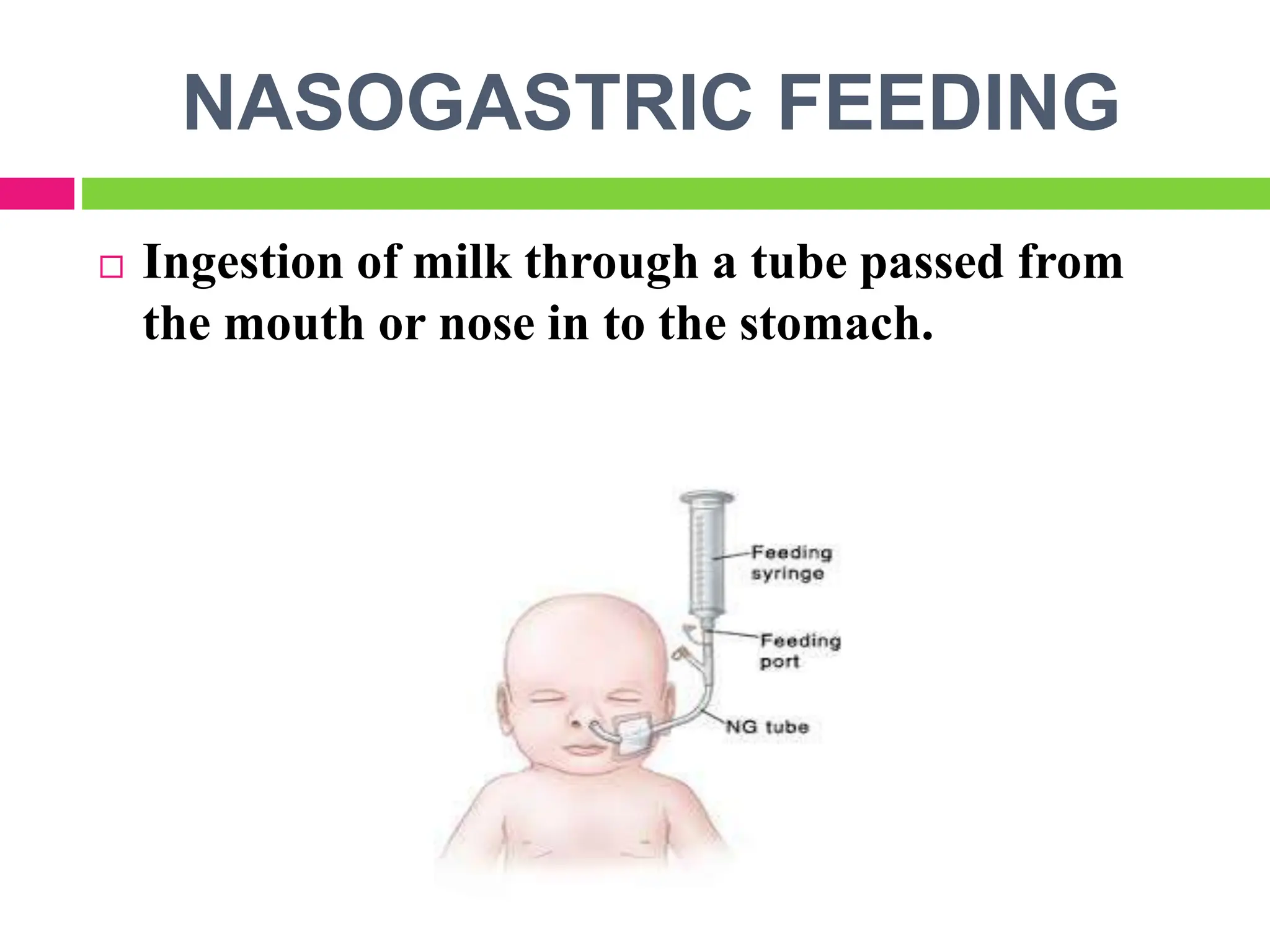
NASOGASTRIC FEEDING
 Ingestion of milk through a tube passed from
the mouth or nose in to the stomach.
PREPARATION OF INFANT
FORMULA
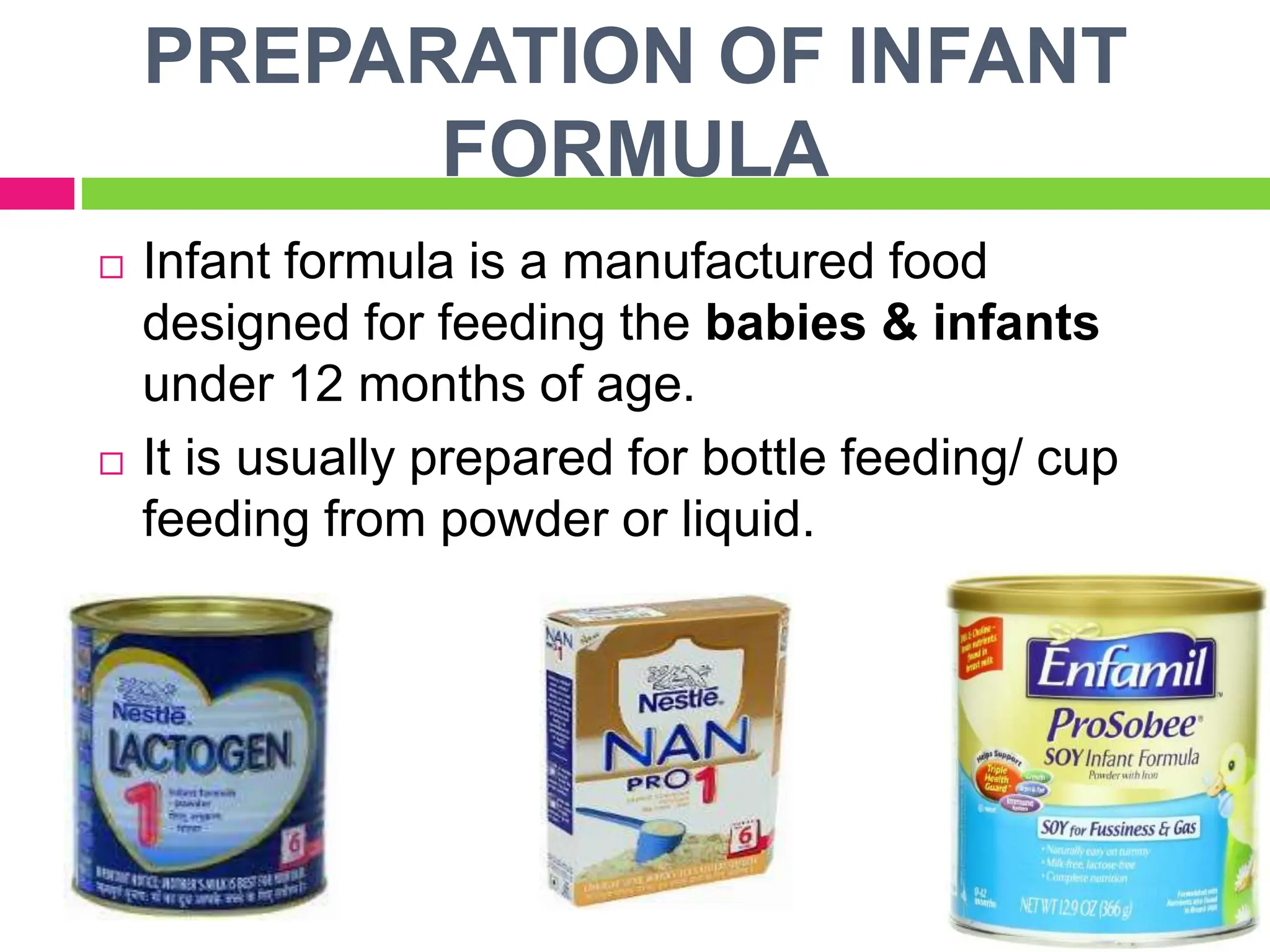
 Infant formula is a manufactured food
designed for feeding the babies & infants
under 12 months of age.
 It is usually prepared for bottle feeding/ cup
feeding from powder or liquid.
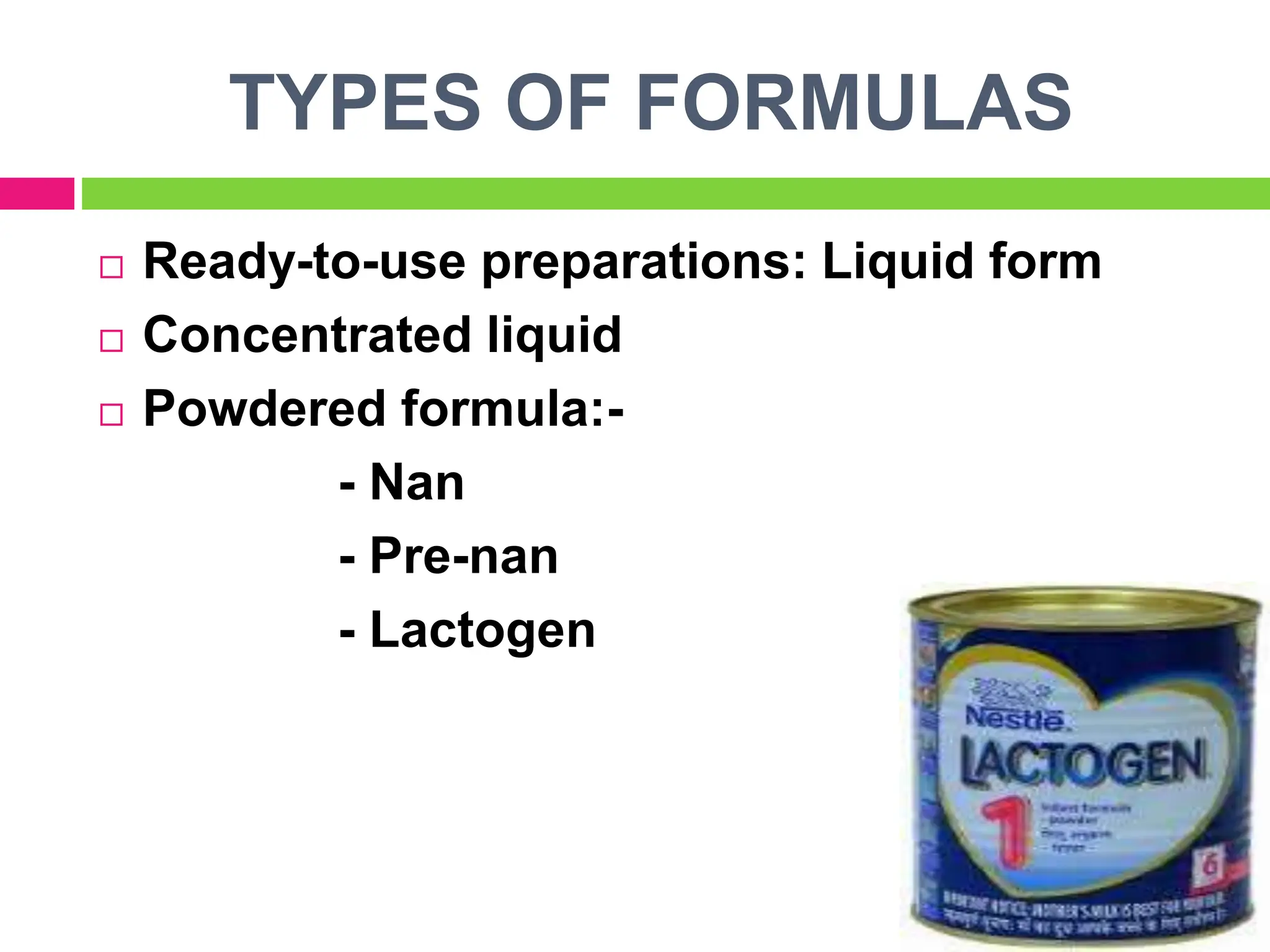
TYPES OF FORMULAS
 Ready-to-use preparations: Liquid form
 Concentrated liquid
 Powdered formula:-
- Nan
- Pre-nan
- Lactogen
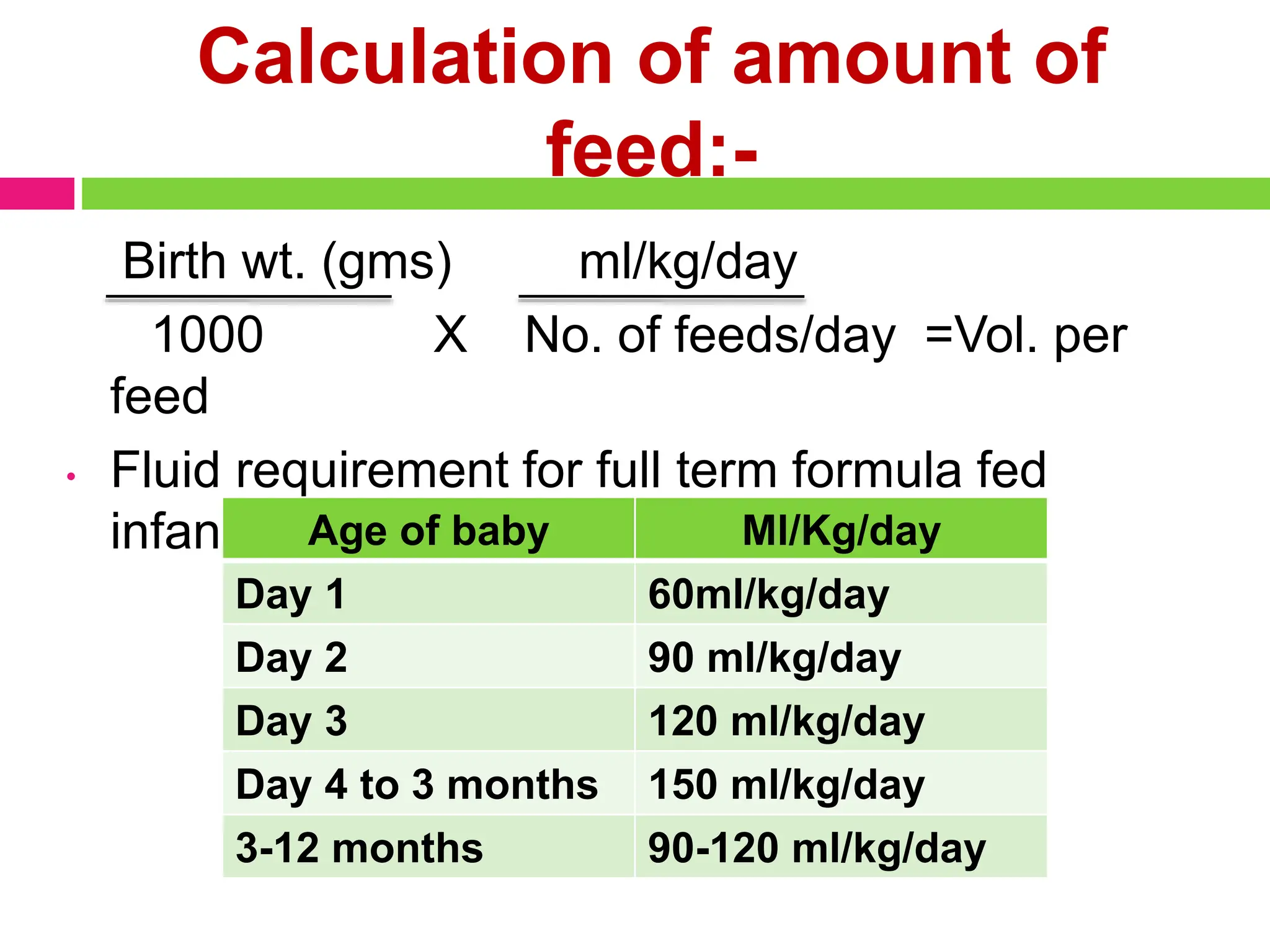
Calculation of amount of
feed:-
Birth wt. (gms) ml/kg/day
1000 X No. of feeds/day =Vol. per
feed
• Fluid requirement for full term formula fed
infants:- Age of baby Ml/Kg/day
Day 1 60ml/kg/day
Day 2 90 ml/kg/day
Day 3 120 ml/kg/day
Day 4 to 3 months 150 ml/kg/day
3-12 months 90-120 ml/kg/day
 Depending on the choice, can prepare a single
bottle or 24 hour supply.
 Bottles, nipples / katori sterilized by boiling for
5 minutes.
 Wash hands.
 Add 1 scoop of powder for 30 ml of warm
water.
 Shake the bottle to dissolve the powder
completely.
 Test the temperature of the formula by
sprinkling a few drops on the inside of the
wrist.
 Position the baby in the semi-upright position.
 Burp the infant frequently.
Problems associated with
artificial feeding
 Constipation /Diarrhea
 Underfeeding
 Overfeeding
 Aerophagy :- Leading to abd. distension, colic
 It is expensive
 Risk for infection
 Gastroenteritis, Anemia
SUMMARY
 Definition
 Indications
 Methods
 Preparation of infant formula
 Calculation of amount of feed
 problems
ARTIFICIAL FEEDING (2) child health nursing

ARTIFICIAL FEEDING (2) child health nursing

  • 1.
  • 2.
    ARTIFICIAL FEEDING  Itis the feeding of the child other than breast milk.  It involves the use of breast-milk-substitutes in the form of liquid milk.  Ex:- Fresh cow’s / buffalo’s milk Commercially available dried whole milk (Nan, Pre-nan, Lactogen)  It is a form of supplementary feeding.
  • 3.
    INDICATIONS  Death orabsence of mother  Prolonged maternal illness  Complete failure of breast milk production  Tb & HIV +ve mothers  Working mothers  Non-lactating mother who adopted the baby
  • 4.
    METHODS  Bottle feeding Katori & Spoon feeding  Cup feeding  Nasogastric/Orogastric feeding
  • 5.
    BOTTLE FEEDING  Feedingof the baby with the help of bottle.  Prolonged bottle feeding may lead to ‘Baby Bottle Tooth Decay’.  Contaminated / inadequately cleaned bottle feeding results in GI infection causing diarrhea.
  • 6.
    PRINCIPLES OF BOTTLE FEEDING After washing the bottle with brush & clean water, it should be boiled for about 10 minutes.  Hands should be washed thoroughly before preparing feed.  The hole of teat should be such that drip rate is 1 drop/second.
  • 7.
    TECHNIQUES OF BOTTLE FEEDING Bottle should be sterilized & kept covered.  Prepare formula as per requirement, when baby is hungry.  Wash hands & test flow of milk & its temperature, by sprinkling a few drops on inner aspect of wrist.  Sit in a comfortable position. Head of the baby should be higher than rest of the body.
  • 9.
  • 10.
     The teatshould be touched to the corner of baby’s mouth, & when the baby opens mouth, teat should be inserted in to mouth.  The bottle should be held at an angle that teat is completely filled & there is no air in the teat.  Baby should be burped during & after the feeds.  After burping, make the baby lie in right lateral position.
  • 11.
    KATORI /SPOON FEEDING When the neonate cannot suck on the breast due to prematurity or any congenital malformation/ when milk is obtained from sources other than mother, feeding with katori or spoon is indicated.
  • 12.
    TECHNIQUE  Katori &spoon should be washed thoroughly & boiled for 10 minutes.  Take required amount of feed in the cup & keep it covered.  Wash hands & hold the baby semi-upright in lap.  Wrap a soft cloth around the neck.
  • 13.
     Touch thespoon /brim of the katori to the corner of the mouth & when the baby opens the mouth, feed is given.  The first bolus is allowed to swallow, before the next is given.  Feed from the corner of the mouth.  After feeding, burp the baby, wipe the mouth & make the baby to lie in right lateral position.
  • 14.
    CUP FEEDING  Feedingthe baby directly by cup.  A baby who is cup fed needs to be given 5 ml extra at each feed to allow for spillage from cup.
  • 15.
    NASOGASTRIC FEEDING  Ingestionof milk through a tube passed from the mouth or nose in to the stomach.
  • 16.
    PREPARATION OF INFANT FORMULA Infant formula is a manufactured food designed for feeding the babies & infants under 12 months of age.  It is usually prepared for bottle feeding/ cup feeding from powder or liquid.
  • 17.
    TYPES OF FORMULAS Ready-to-use preparations: Liquid form  Concentrated liquid  Powdered formula:- - Nan - Pre-nan - Lactogen
  • 18.
    Calculation of amountof feed:- Birth wt. (gms) ml/kg/day 1000 X No. of feeds/day =Vol. per feed • Fluid requirement for full term formula fed infants:- Age of baby Ml/Kg/day Day 1 60ml/kg/day Day 2 90 ml/kg/day Day 3 120 ml/kg/day Day 4 to 3 months 150 ml/kg/day 3-12 months 90-120 ml/kg/day
  • 19.
     Depending onthe choice, can prepare a single bottle or 24 hour supply.  Bottles, nipples / katori sterilized by boiling for 5 minutes.  Wash hands.  Add 1 scoop of powder for 30 ml of warm water.  Shake the bottle to dissolve the powder completely.
  • 20.
     Test thetemperature of the formula by sprinkling a few drops on the inside of the wrist.  Position the baby in the semi-upright position.  Burp the infant frequently.
  • 21.
    Problems associated with artificialfeeding  Constipation /Diarrhea  Underfeeding  Overfeeding  Aerophagy :- Leading to abd. distension, colic  It is expensive  Risk for infection  Gastroenteritis, Anemia
  • 22.
    SUMMARY  Definition  Indications Methods  Preparation of infant formula  Calculation of amount of feed  problems